Showing posts with label mindfulness. Show all posts

Tuesday, August 23, 2022

Afterschool and the Education Culture Wars (Part 1)

Source: Unsplash.com

By Sam Piha

We live in a political climate where differences are not explored, they are weaponized. In recent months schools and educators have been attacked under the guise of critical race theory, parent rights and the call to ban certain books. The PBS News Hour offered a good segment on critical race theory and book bannings.

Are there many citizens who are leading this fight or is it a manufactured controversy, which is a product of the internet? Below is a quote from an article (NEA News) that attempts to explain this.1

“As the nation continues to reckon with the role racism plays in our society, a tiny but extremely vocal minority of voices is determined to turn our classrooms into battlegrounds for their vicious culture wars. These radical groups are using social media to spread disinformation and stoke fear about race in the classroom, pushing for laws to ban books about Ruby Bridges, Martin Luther King, Jr. and other civil rights figures, and seeking to censor teachers and deny students the right to a truthful and honest education.” – Edward Graham, NEA News

Source: PBS News Hour

While afterschool programs have not been attacked directly, there are certain core values and program initiatives that have come under scrutiny. They include equity, identity (LGBTQ+ and racial), mindfulness, growth mindsets, grit and social emotional learning (SEL).

A HISTORY OF BIPARTISAN SUPPORT
Before we discuss how to not get entangled in the educational culture wars, it is important to note that the support for the afterschool movement over the last 30 years has largely been bipartisan. According to Dr. Terry Peterson (Afterschool Alliance), “The roots in California involved bipartisan support in some key cities in the late 1980’s, like Los Angeles, San Francisco, San Diego and Sacramento and then spread greatly with the strong leadership of a Republican Governor, Schwarzenegger, and then much later, now, a huge expansion by a democratic Governor Newsom. This type of local, state and national expansion of an initiative overtime is very unusual and very important. 

The roots of the 21st Century Community Learning Centers in the 1990’s clearly involved Republican and Democratic members of Congress and a Democratic Administration.”  The 21st CCLC quickly became one of the fastest growing social programs in the history of America. (We interviewed Dr. Peterson in a previous LIAS Blog).

Source: History of Afterschool in America

HOW TO AVOID ENTANGLEMENT IN THE EDUCATION CULTURE WARS
It is important to not take the support for afterschool for granted. There are things we can do to prevent that the afterschool movement is not damaged by the educational culture wars. 

Be aware of what’s happening in your area and in the larger field. 
“In this environment, anything can be politicized,” said John Bridgeland, the CEO of Civic Enterprises, a public policy firm, who has worked extensively on building bipartisan support for SEL programs in schools.

To get a better sense of what’s happening in the larger field, below we cite some titles from articles with endnote references that have been published recently:

  • Socio-Emotional Learning (SEL) Is Anti-White, Anti-Christian, and Anti-American Indoctrination 2
  • Social Emotional Programming: The SEL Agenda to Enforce Thought Reform, Conformity, and Control 3
  • Schools Face Fears of ‘Critical Race Theory’ as They Scale Up Social-Emotional Learning 4
  • Hijacking Their Minds: How ‘Safe Schools’ & Social Emotional Learning Indoctrinate Our Children 5
Below we cite quotes that illustrate the thinking behind the culture wars:
  • “This curriculum goes far beyond helping first-graders get along with their peers and delves into political manipulation. It’s never too early, apparently, to use SEL to create little community organizers.” 6
  • “Book-banning attempts have grown in the U.S. over the past few years from relatively isolated battles to a broader effort aimed at works about sexual and racial identity.” 7
  • “Minnesota’s Child Protection League, a group active on conservative issues, said social-emotional learning is a vehicle for critical race theory, an effort to divide students from their parents, emotional manipulation and “the latest child-indoctrination scheme.” 8
  • “Students in several #US states are forced to participate in #Buddhist-based meditation. If a child refuses, he or she is moved to the hall as if being punished. These schools are indoctrinating our children.” 9
  • (VIDEO) Stella Morabito Presentation on Social Emotional Programming from Child Protection League Action on YouTube. 10

We continue our look into the education culture wars and offer more tips on how to avoid entanglement in the misinformation in part 2.


END NOTES

  1.  Edward Graham, Who is Behind the Attacks on Educators and Public Schools?
  2.   Savanah Hulsey Pointer, Socio-Emotional Learning (SEL) Is Anti-White, Anti-Christian, and Anti-American Indoctrination
  3.   Stella Morabito, Social Emotional Programming: The SEL Agenda to Enforce Thought Reform, Conformity, and Control
  4.   Arianna Prothero and Evie Blad, Schools Face Fears of ‘Critical Race Theory’ as They Scale Up Social-Emotional Learning
  5.   Karen Effrem, Hijacking Their Minds: How Social Emotional Learning Indoctrinates Children
  6.   Karen Effrem, M.D. and Jane Robbins, J.D., Social-Emotional Learning: K–12 Education as New Age Nanny State 
  7.   Claire Moses, The Spread of Book Banning
  8.   Laura Meckler, In ‘social-emotional learning,’ right sees more critical race theory
  9.   Katherine Hignett, Conservative Christians Want to Stop Kids Meditating At School
  10.   Stella Morabito: Social Emotional Programming (Video)
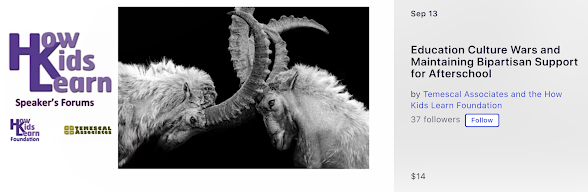


To learn more about the education culture wars and afterschool and to register for this informative webinar, click here.

Monday, May 23, 2022

Integrating Mindfulness into Afterschool Youth Programs


By Sam Piha

For the past decade we have been promoting the use of mindfulness activities in afterschool to address the needs of youth participants and the self-care of youth workers. Integrating mindfulness activities into youth programs to benefit young people and educators has been a very popular educational concept. It appears in the literature on emotional regulation, trauma-informed practice, social emotional learning, grief-responsive teaching, and other leading topics. 

Youth who engaged in mindfulness activities report a greater sense of optimism and well-being, and a reduction in depression, anxiety, stress, and anger. They also benefit academically. Mindfulness activities are also a valuable “self-care” strategy for teachers and afterschool staff, and these activities can be tailored to be used in staff meetings.

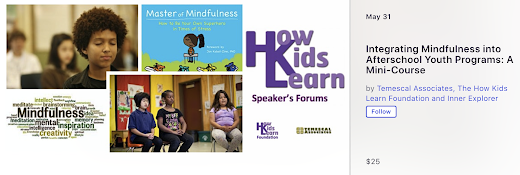
On May 31st we are hosting a zoommini-course on integrating mindfulness activities into afterschool youth programs. To learn more and register, click here.


We also recommend Mindfulness in Afterschool, a curriculum written by Temescal Associates. Temescal offers customized training on mindfulness for afterschool leaders. For more information on these resources, write to info@temescalassociates.com

Below we share some comments from a mindfulness leader, Laurie Grossman (Inner Explorer) and educators, Allison Haynes (Riverside County Office of Education), Ken Dyar (Delano Union School District) and Dr. Katarina Roy Schanz (Riverside Unified School District). Each of them has promoted mindfulness techniques at the school and district level and their responses below are from previous LIAS interviews

Q: CAN YOU BRIEFLY DESCRIBE WHAT MINDFULNESS IS?
Laurie Grossman
Laurie Grossman (LG):
Mindfulness is awareness of the present moment without judgment. Many of us miss a lot of our lives because we live in the past or the future; we spend most of the time in our heads reliving what has already happened or worrying about what is going to happen. By practicing mindfulness, one learns to live more often in the present moment; benefitting from what is actually occurring right now. One of the most common ways to practice mindfulness is to focus on the breath as an anchor to the present.  

Dr. Jon Kabat-Zinn founded Mindfulness Based Stress Reduction (MBSR) in 1979 at the University of Massachusetts Medical Center. Those benefits as described by the MBSR website include: 

  • Lasting decreases in physical and psychological symptoms
  • An increased ability to relax
  • Reductions in pain levels and an enhanced ability to cope with pain that may not go away
  • Greater energy and enthusiasm for life
  • Improved self-esteem
  • An ability to cope more effectively with both short and long-term stressful situations.

Q: WHY IS MINDFULNESS EFFECTIVE WITH YOUNG PEOPLE? 
LG: Mindfulness lessons are interactive, short and impactful. When teaching mindfulness, we are teaching children about themselves; the curriculum is relevant to them and therefore engaging. Students tell us they can concentrate more easily on their schoolwork, they can calm themselves down, and they feel less stress. The benefits of mindfulness occur rather quickly, students feel better as a result and they enjoy the practice. 

The very first lesson we offered in an Oakland public school resulted in this comment from a third grader, “I think if we do this every day we won’t fight anymore.” I was stunned because the school was one where violence in the community was common. 

Ken Dyar
Ken Dyar (KD):
Children living in poverty or in unhealthy environments are under constant, unending stress. Is it any wonder that they struggle to self-regulate, or attend to a school lesson? In an afterschool program, we are extending their learning day until 6 pm, five days a week. Mindfulness is the perfect way to do this, in my opinion. Additionally, it is a practice that the kids can extend to their lives outside of school. It is a life skill.

Q: WHAT BENEFITS DO YOU BELIEVE MINDFULNESS BRINGS TO YOUNG PEOPLE?
KD:
Stress management, regulating behavior, lowering blood pressure, increasing positiveness, increasing hopefulness, empowering youth to feel that they are in control of themselves. It develops a growth mindset in kids. It gives them a tool to move them forward emotionally and therefore academically.

Q: DO YOU BELIEVE THAT MINDFULNESS IS APPROPRIATE FOR ALL AGE YOUTH? 
Allison Haynes
Allison Haynes (AH):
YES. Why not? Why would we arbitrarily choose a number and determine that until one reaches that age, they are restricted from engaging in a practice that includes benefits such as relaxation, self-regulation of emotions, self-awareness, and compassion for others? 

KD: I do believe that mindfulness is appropriate. I have introduced it to my eighth graders this year. Students in middle school are truly "stuck in the middle." Anyone who has worked with middle school students will tell you that these kids are both babies and adults. They need a tool like mindfulness to manage the swings in mood and emotion. I also believe that educators who use mindfulness with their students will enhance the relationships they have with their kids. Sharing mindfulness with my students has certainly proven to them how much I care about them.

Q: WHAT BENEFITS DO YOU BELIEVE MINDFULNESS BRINGS TO ADULT STAFF? 
AH:
Mindfulness provides immediate feedback to adult staff. Taking a breath while letting the thought pass is indeed helpful when your inner voice is shouting doom and gloom. Interrupting the critical voices in one’s head allows a pathway for creative thinking (which is always necessary for afterschool program adult staff). But engaging in a practice before arriving to engage youth is most valuable because it is during that time that intentions can be set, loving kindness administered, and a stronger connection to compassion forged. 

Q: WOULD YOU RECOMMEND MINDFULNESS TO OTHER AFTERSCHOOL LEADERS?
AH: YES. I’d recommend mindfulness to other afterschool leaders because a practice is good self-care. Additionally, I know afterschool leaders are role models who can’t give what they don’t have. I say, give them what they need and watch it spread.

KD: When I share mindfulness with my kids, one comment I always hear at the beginning is that it is "weird." It's weird because no other teacher they've had has ever shared this with them. Taking a moment to do a body scan, be grateful, be in the moment, etc., is completely foreign to them. It is my wish that mindfulness becomes such a regular part of education that it is never considered "weird" anymore. I wish every teacher on my site spent time using mindfulness with their students. I would certainly recommend the practice to any leaders involved in educating our youth.

Q: WHY ARE YOU TEACHING MINDFULNESS TO SCHOOL DISTRICT STAFF?
Dr. Katarina Roy Schanz
Dr. Katarina Roy Schanz (KRS):
The primary target group for this mindfulness training are our Student Assistance Program (SAP) Counselors and SAP Behavior Support Teams. Additionally, adding mindfulness to their self-care practice will help the team both personally and professionally. We’re hoping that by implementing a mindfulness practice, we will see decreases in anxiety and improvements in self-awareness and social-emotional skills, among other positive changes.


Laurie Grossman is the Director of Social Justice & Educational Equity for Inner Explorer. She cofounded Mindful Schools in 2007. With Angelina Alvarez Manriquez and 4th & 5th grade students at Reach Academy in East Oakland, California, she wrote Master of Mindfulness: How To Be Your Own Superhero in Times of Stress & Breath Friends Forever.

Allison Haynes is the Administrator of Pupil and Administrative Services at the Riverside County Office of Education. She has worked in the field of education for 25 years, with the last five focused on Expanded Learning Programs. Her experience ranges from working with elementary, middle school, and high school students as a school counselor and/or a site administrator. 

Ken Dyar was named a California Teacher of the Year in 2006.  He is currently a Physical Educator at the Delano Union School District. Prior to this assignment, he was Director of Physical Education and After School Programs, including DUESD's afterschool programs. Ken has taught for over 18 years, teaching 3rd, 4th, 6th, 7th and 8th grades. 

Dr. Katarina Roy Schanz is the Coordinator of the Student Assistance Program with Riverside Unified School District. Dr. Roy Schanz has been an educator for 21 years. She has served as a school counselor, assistant principal, and principal.

Monday, February 21, 2022

Journaling with Teens to Promote Mental Health and SEL


By Sam Piha

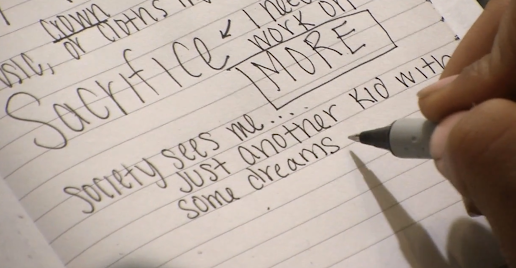
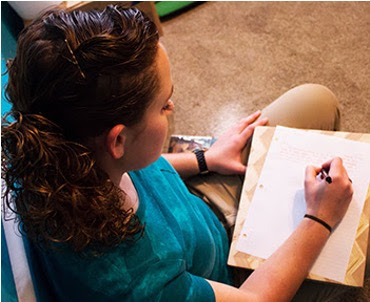
Introducing journal writing, whether it’s once a week or daily, is good for all, and fosters social emotional learning (SEL) skills, especially self-awareness. “Journaling activities can be designed to help young people gain insights into the major areas of their lives. Its purpose is to help adolescents gain a more positive perspective on their lives by developing an awareness of events, memories and feelings in their lives and learn coping skills that can be used throughout life. At the same time, journaling can also help adolescents to use their imaginations and natural creative talents, to improve their communication skills, and to realize self-interests and possibilities.” – Lynn Blinn Pike, Human Development and Family Studies

“It is important to provide youth with opportunities to reflect on and/or express themselves and their feelings because they HAVE them and don't always have space to express them. Journal writing is a good way to provide these opportunities. Even if it's just a stream of consciousness writing. Journaling allows you to slow down and notice yourself and your thoughts, which is greatly therapeutic!”Daniel Summerhill, California State University, Monterey Bay


Tips for Journaling with Teens

  • Ignore outsiders who proclaim “those kids won’t go along” [referring to adolescent boys or boys of color].
  • Agree with your teens whether their journals will be fully private or if the adult leaders are allowed to read them. Remember that entries may involve things that adults are required to report, such as endangerment or abuse. 
  • To personalize and encourage buy-in, begin by asking youth to decorate and personalize the cover of their journal. Be sure to have art materials and magazines with photos if some prefer to create collages. 
  • Choose a sturdy and inexpensive journal book, like a composition book.
  • Journal entries can take many forms: writing, drawing, collage, etc. Youth will be more interested if they don’t have to worry about spelling or grammar. They can use “inventive spelling.”
  • “A writing prompt is an excellent tool to get kids of all ages putting pencils to pages! Since it’s not always easy to think of something specific to write about, it’s not a bad idea to make a Journal Jar and fill it with ideas.” Youth can add their own ideas to the journal jar and be invited to pull out the journal prompts. There are many ideas for journal prompts on the internet, such as Daring to Live Fully. 

After doing these (journaling) activities I am glad...because it's good for me to think about myself and my thoughts and feelings, which I don't always do on a regular basis.— youth, 17-year-old


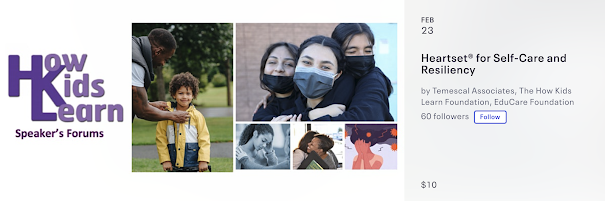
Temescal Associates and The How Kids Learn Foundation will be conducting a webinar featuring a presentation by Stu Semigran and his team from the EduCare Foundation on Heartset® for Self-Care and Resiliency on Wednesday, February 23, 2022 from 10:00am - 11:30am (PST). To learn more and register, click HERE.


Wednesday, April 29, 2020

Pause: Cultivate Grace for Yourself and Your Community

By Sam Piha

For many years we have been promoting the effectiveness of mindfulness activities in afterschool- both for adult staff and youth participants. We have posted blogs, offered trainings to schools and created a 16- week mindfulness curriculum for afterschool leaders.

In this COVID-19 world, activities that help adults and young people release stress, be aware of one’s emotions, and stay in the moment have never been more important.
Mindfulness provides immediate feedback to adult staff. Taking a breath while letting the thought pass is indeed helpful when your inner voice is shouting doom and gloom. Interrupting the critical voices in one’s head allows a pathway for creative thinking (which is always necessary for afterschool programs adult staff).”- Allison Haynes, Riverside County Office of Education 

On Thursday, May 7th, 2020 (10:00am-11:00am PST) we invite you to participate in an upcoming webinar entitled, Pause: Cultivate Grace for Yourself and Your Community. Grace is most easily found in the present moment. Journey with Laurie Grossman and Stacey Daraio to learn mindfulness practices that you can share with your community to live in the present. You will leave calmer than when you arrived and with resources to use and share.

Laurie Grossman
Laurie Grossman is the Director of Social Justice & Educational Equity for Inner Explorer. She cofounded Mindful Schools in 2007. With Angelina Alvarez Manriquez and 4th & 5th grade students at Reach Academy in East Oakland, California, she wrote Master of Mindfulness How to Be Your Own Superhero in Times of Stress and Breath Friends Forever.

Stacey Daraio
Stacey Daraio is Co-Director of Temescal Associates and The How Kids Learn Foundation. Along with Laurie Grossman, she co-authored the Mindfulness in Afterschool, a 16-week curriculum, and has supported its implementation in schools and afterschool programs throughout California.


To learn more and to register, click here.


Tuesday, September 3, 2019

One More Thing

By Sam Piha

We are committed to speaking out on the youth impacts of immigration policies, sustained funding for afterschool, access to mindfulness training and playful learning opportunities afterschool. Below, we offer some additional resources on these topics.

IMMIGRATION AND TERROR
Source: Denver Public Schools
“In the wake of the horrible tragedy in El Paso, Texas, and the ICE raids in Mississippi that have come crashing down on a nation already awash in rising racial tension and vilification of immigrant families, we…are now more than ever focused on being a safe harbor for all of our children and families.” -Denver School Superintendent Susana Cordova (Cordova’s full statement is available in several languages.)

We do know that some school districts have addressed these issues regarding immigrant youth. But what about afterschool programs? According to the Afterschool Alliance, “In communities across the country, anxiety and concern are growing among immigrant children and families in response to new immigration policies and efforts currently underway. Afterschool programs can play an important role in creating a safe and welcoming environment for immigrant students and families and cultivating a sense of belonging and overall wellbeing.” The Afterschool Alliance hosted a webinar with speakers from the National Immigration Law Center and Legal Services for Children. 

The Alliance is also in conversations with the American Constitutional Society for Law & Policy on hosting another webinar next month on the topic of the ICE raids. We will share more information once we know more.

FUTURE SUPPORT FOR AFTERSCHOOL 
We know that funding for afterschool is not guaranteed. Thus, it is important that we advocate every year. One way is participation in the yearly Lights On Afterschool events. 


“Join more than 8,000 communities and 1 million Americans in celebrating afterschool programs for this year's Lights On Afterschool! This nationwide event, organized by the Afterschool Alliance, calls attention to the importance of afterschool programs and the resources required to keep the lights on and the doors open. To learn more about Lights On Afterschool, register an event, access event planning tools, or to find out what’s going on in your area, visit afterschoolalliance.org.” -Youth Service America
Why not invite a policymaker to visit your program? By engaging them, you begin to build a relationship and educate them about the importance of your program and the issues that matter to you.

Check out Youth Service America’s site on GYSD Advocacy / Public Official Engagement Tools. This page will help you engage public leaders. Voices for National Service has tips for Hosting a Successful Site Visit. The Afterschool Alliance outlines five simple steps to set up a site visit and also provides these three case studies

PLAYFUL LEARNING
Too often we have avoided the “F” word, FUN, in afterschool programs.  The National Afterschool Association (NAA) dedicated an issue of Afterschool Today to playful learning. In 2019, The Genius of Play spread its message to afterschool professionals and parents through a new partnership with NAA.  

MINDFULNESS
Source: Laurie Grossman

For years we have been promoting the value of teaching mindfulness. We thought you might enjoy this brief radio interview with a school volunteer that teaches mindfulness to young people in an Oakland school.

Wednesday, January 9, 2019

A Mindfulness Story For Kids By Kids


“From the creators of the hugely successful Master of Mindfulness, this charming children’s book for readers ages 4 to 7 tells the story of Nessa and Leo’s friendship, and how mindfulness helps them deal with strong emotions such as fear, shyness, and anger.”
-Greater Good Science Center, UC Berkeley


By Sam Piha

We have been promoting the use of mindfulness techniques in afterschool, for both young people and adult staff self-care, for many years. We are happy to announce that a second book created by young people on this topic was recently released. Below is an interview with Laurie Grossman who organized this effort.  

Laurie Grossman
Q: Can you say a word about what this book is about?
A: Breath Friends Forever is a book about two best friends who share the same birthday. One is often calm and the other often frustrated. As a birthday present, Leo teaches mindfulness, the power of using her breath when she gets upset, angry, nervous or sad. Leo teaches readers a few mindfulness techniques that are easy to use, one of which, the Sharkfin was originally created by Temescal Associate’s own Stacey Daraio.

Our world has become, it seems to me, more difficult to navigate for all of us, little ones included. Teaching kids mindfulness to deal with the challenges they face even at very early ages, can help them develop emotional regulation, deal with difficulties with more calm and make their lives happier and healthier. 

Q: Can you share some of the back story about how it was developed? 
A: In 2014, I was doing lots of volunteer work bringing mindfulness to Reach Academy in Oakland, CA. One day, Mr. Musumeci, a fifth grade teacher, mentioned to me that in selecting superheroes, one of his students thought they should have a mindfulness superhero. 

Several weeks later, while practicing mindfulness, it occurred to me that we should write a book. I asked the teacher what he thought and he thought it would be a great learning experience for the kids. I came into the class and asked them if they liked mindfulness. 100% did. I asked them if they thought other kids should know about it. 100% did. Finally I asked them how we could tell other kids about it and eventually someone said we could write a book. Voila, the beginning of the first book, Master of Mindfulness: How To Be Your Own Superhero in Times of Stress


That book did well so the publisher, New Harbinger, asked us to do one for older kids. Angelina Manriquez, the book designer, thought it would be more important to begin with the little ones, thus Breath Friends Forever was born. 

Chasmin Moses, a fourth grade teacher at Reach was a huge advocate of mindfulness. When I inquired about her interest in participating, she jumped at the chance. This book seemed much harder because we wanted to make it a story book for Pre-K through 1st or 2nd graders. We had no idea what the story would be or if the characters would be animals, zombies or people. It took about three months but we finally got the ball rolling and things started coming into place. 

Q: Can you say something about how this book can be used in afterschool programs?
A: All kids love birthdays and all kids need mindfulness. It's a great read a loud. Kids could practice what is taught in the book and kids can also listen to the practices the authors dictated to learn mindfulness. 

Older kids could read it to little ones. Kids could act out the story and they could also write their own books about mindfulness. Knowing that kids like them wrote and published a book could inspire them to do the same. 

Q: Is this book only for children who have experienced mindfulness practice?
A: No, because Leo teaches Nessa how to practice mindfulness so readers can learn too! Also, the authors' audio practices lead students through a variety of mindfulness practices.

Q: Are there any resources that afterschool leaders could use?
A: There are many resources providing research evidence, case studies of how schools have used mindfulness techniques, and guidance to program practitioners. Many of these can be founds by doing an online search of mindfulness techniques for youth. I have listed a few below: 

  • Temescal Associates’ Mindfulness in Afterschool: A 16-Session Curriculum of Mindfulness Activities for Young People in Afterschool Programs 
  • Inner Explorer is a non-profit organization whose mission is to provide mindfulness in schools for PreK-12 classrooms, helping children develop self-awareness, self-control, resilience and compassion. Each series contains 90 audio-guided practices that can be used every day by simply logging in and pressing play. Students and their teachers participate together in the brief (5-10 minute) daily practices. No prep, planning or curriculum changes required.
  • Past LIAS Blog Posts on Mindfulness in Afterschool 

-------------------
Laurie Grossman, one of the founders of the mindfulness in education movement, has been an activist since 1975. She believes that mindfulness in schools is the tool most likely to help achieve social justice. Over the last two decades, she started two innovative programs: one that created partnerships between private and public schools, and one that brought mindfulness into schools. In 2007, as part of Park Day School's Community Outreach Program, she and two colleagues launched a pilot program of mindfulness in an Oakland, CA, elementary school that was covered in The New York Times and on NBC. Grossman is cofounder of Mindful Schools, now one of the largest mindfulness-in-education programs in the world. She currently works with Inner Explorer, an organization focused on bringing daily mindfulness practices into schools to improve educational outcomes and the well-being of children and teachers. She is passionate about Inner Explorer because the organization has made mindfulness scalable, providing easy and immediate access to every K-12 classroom, anywhere, anytime.

Wednesday, June 6, 2018

Mindfulness Techniques in Afterschool: Experiences of a Youth Worker

By Sam Piha

The use of mindfulness techniques with young people have been shown to promote social emotional skills (self-awareness, emotional regulation, social awareness, and empathy, etc.). For years now, they have been used by schools and expanded learning programs. Mindfulness techniques are also being used to promote self-care for adults in stressful jobs (youth workers, health workers, and others). 

For some, these techniques are about relaxation, self-care, and time to regain calm. For some, they involve awareness of breath or more formal lessons on meditation. 

For others, this sounds too “touchy-feely” or "religious" for expanded learning programs. We disagree and have created a 16-week curriculum for use with young expanded learning program participants and have offered trainings for school districts and county offices of education across California. 

Below is a guest blog from an afterschool worker describing her use of mindfulness techniques in her program. 

-------

My name is Erika Chavez. I am currently 22 years of age. I have been an after
Erika Chavez
school academic instructor for the POWER program at Pioneer school for 3 years now. I am also in the process of becoming a certified Holistic Health Coach. 


I am deeply passionate about bringing awareness concerning health and complete overall wellness to those around me, whether it is through social media, events, or in my classroom. My vision is to someday be able to start a movement that encourages and inspires a balanced and an all-round healthy lifestyle - physically, mentally, and spiritually. 

Mindfulness is a mental state achieved by focusing one’s own awareness on the present moment, while calmly acknowledging and accepting one’s feelings, thoughts, and bodily sensations. 

I have been practicing mindfulness with my students for 3 years now. It all began with a pretty Fiji water bottle full with gold glitter. You see, I needed a visual way for my students to understand what mindfulness was and the purpose it had. So, I showed them the still water bottle with the glitter resting at the bottom of it. I asked them if they were able to see through the water bottle and of course their response was “yes” since the water was clear and calm. 


Photo Credit: Able Data
After I shook the entire water bottle, I then asked them again, “can you see through the water bottle now?” They all responded “no” with such wonder in their eyes. I then explained to them how that water bottle was our brain and the glitter represented our thoughts. When I introduced mindfulness to them, I explained how it was a powerful tool to help us calm that glitter down in our brains so that we could be able to clear our waters in order to make wise decisions. They then understood how it all worked and they were all motivated to calm their glitter. [See "Just Breathe" video].

I had them all lay down on the floor with their eyes closed and focused on their breathing. I then played a children’s guided meditation and they followed… sure enough there was one or two students who couldn’t stay calm but what’s new, right? However, with lots of patience and understanding, those few students who couldn’t seem to settle down began to slowly sink into the activity. I must admit, seeing all my students laying down on the floor, with their eyes closed, hands crossed on their chest, and breathing calmly was one of the most rewarding and soothing feelings ever. 

Mindfulness has allowed us as a group to come together and form a bond of understanding, kindness and support. Now they even come to me asking if we can please meditate! Especially when they’re hyper, that’s when I realize they ask for it the most. Best part is seeing them tell one another, “calm your glitter, you need to relax and make better choices”. I’ve seen them grab the water bottle and take it to that student so they can be reminded of what’s going on. It’s seriously amazing!

I’ve seen some students mature, others striving to be better, and I’ve heard others open up with very intimate things that were weighing them down. One student in particular taught me a lesson I will never forget. She opened up and talked about a very serious, sensitive and painful situation that had occurred to her. She broke past a wall that had been holding her back for some time, making her feel trapped. I was able to see the strength coming through her as she let it go. She became present and was able to acknowledge her feelings and thoughts. 

This also helped me as a teacher to better understand why she acted the way she did and I was able to support her in a much more effective way. Now she is a better student and her behavior has improved radically. This is the POWER of mindfulness.

Thursday, June 1, 2017

Mindfulness Trickle Up - From Afterschool to School

By Sam Piha


Sam Piha
We have been promoting the use of mindfulness techniques in afterschool to address the self care of youth workers and the needs of youth participants. Mindfulness is well aligned with social emotional learning (SEL).

There is new information and growing evidence that confirms that mindfulness exercises within school and afterschool settings are excellent ways to promote the health and well-being of adult staff and increase impulse control and ability to stay focused among youth who participate in the exercises. 

Over the years, we have conducted trainings for the Riverside County Office of Education and Delano Union School District. We have posted interviews with Ken Dyar and Allison Haynes on their experience of Mindfulness in Afterschool.


Dr. Katarina Roy Schanz
We were thrilled when Dr. Katarina Roy Schanz, Student Assistance Program Coordinator at Riverside Unified School District, requested training for her in-school staff. This was a great example of "trickle up" -  from afterschool to school day.

Below Dr. Roy Schanz responded to a couple of questions for this blog post.

Q: Why are you bringing mindfulness into Riverside Unified School District?

A: The primary target group for this mindfulness training are our Student Assistance Program (SAP) Counselors and SAP Behavior Support Teams. We are hoping to add another skill set for them to use in their work with students. Additionally, adding mindfulness to their self-care practice will help the team both personally and professionally.


Photo Credit: http://www.theidproject.org/

Q: What are you hoping that you can accomplish with mindfulness training for school personnel? 

A: The research around mindfulness in schools prompted our decision to provide this training for our Student Assistance Program team. They will then take their learning to the staff and students at their respective schools. We’re hoping that by implementing a mindfulness practice, we will see decreases in anxiety and improvements in self-awareness and social-emotional skills, among other positive changes.

--------------------
Dr. Katarina Roy Schanz is the Coordinator of the Student Assistance Program with Riverside Unified School District. Dr. Roy Schanz has been an educator for 21 years. She has served as a school counselor, assistant principal, and principal. Dr. Roy Schanz holds two Master’s degrees, one in School Counseling from the University of La Verne and the other in Educational Administration from California State University, San Bernardino. Additionally, she earned her Doctorate in Organizational Leadership from the University of La Verne.
--------------------


Temescal Associates developed a 16-week curriculum for afterschool workers as well as a two-day training for school and afterschool staff. You can view the curriculum here and contact us if you wish to purchase a full color hard copy.


Monday, June 6, 2016

Master of Mindfulness

By Sam Piha


Sam Piha
We have seen through research and practice that mindfulness can be a very effective tool for schools and afterschool programs to promote social emotional learning (SEL) skills and "grit". 

In a previous post, we have described "Master of Mindfulness" - a book created by youth from Reach Academy in East Oakland, CA and our Mindfulness in Afterschool partner, Laurie Grossman. The book is in its third printing and is available on AmazonThe majority of royalties from the sales of this book will be donated to a fund to support the post high-school educational or vocational endeavors of the twenty five authors who co-wrote the book. 


These young authors, their book, and the power of mindfulness was featured in a recent piece aired on KTVU TV. You can check it out by clicking on the images below. 

Part 1
Part 2

For more information on how to bring mindfulness into your afterschool program, contact us by writing to info@temescalassociates.com

Thursday, April 28, 2016

Mindfulness in Afterschool: No Cost Resources Until May 31

By Sam Piha


Sam Piha
We know that teaching mindfulness in afterschool has great benefits for the young people as well as the staff who lead these activities. That is why we are expanding our efforts to help afterschool and summer programs incorporate mindfulness into their activities. Temescal Associates and the LIAS project are partnering with Inner Explorer to move this forward. 

Inner Explorer has answered the call for no/low cost resources through the end of May, 2016 that can sustain your efforts at bringing mindfulness to your afterschool program. These resources come in the form of daily audio sessions that are designed for different age groups and require only 20 minutes of staff training because staff learn with their students! These resources are no/low cost only if you sign up before May 31st, 2016 because Inner Explorer is in an expansion mode, Beta testing their new internet platform and hoping that once folks love the program, they will want to start an easy to use campaign to help pay it forward. Learn more here.


In addition, Laurie Grossman, a team member of Inner Explorer and Temescal Associates, and cofounder of Mindful Schools has published a children’s book entitled Master of Mindfulness: How To Be Your Own Superhero in Times of Stress. This book is authored and illustrated by 5th graders from Reach Academy in East Oakland, CA with Laurie and Angelina Alvarez. The majority of royalties from the sales of this book will be donated to a fund to support the post high-school educational or vocational endeavors of the twenty five authors who co-wrote the book. 


The book’s description begins by asking a question:

“Do you ever feel angry, disappointed, or stressed out about family problems, school, bullies, or trouble with friends? If so, mindfulness can help. Master of Mindfulness is a unique and empowering book written for kids by kids, with cool illustrations and tips that show you how to be confident, get focused, stay calm, and tap into your own inner strength so that you can be your own superhero—no matter what life throws your way!”

This book can be purchased at your local bookstore or through Amazon. You can also contact Temescal Associates for information on training to bring mindfulness to your staff (self-care strategies) and to your youth program.  

Temescal Associates is delighted about our partnership with Inner Explorer and we look forward to watching the fruits of this collaboration.


••• 
More About Inner Explorer 
The mission and vision of Inner Explorer are: To unlock the academic potential and foster well-being for millions of children through mindfulness and to break the cycle of poverty and violence.

Inner Explorer was created in 2011 by Laura Bakosh and Janice Houlihan, who together have 30 years of experience practicing mindfulness. The K – 12 programs, based on Jon Kabat-Zinn’s Mindfulness Based Stress Reduction Program, were developed to help teachers and students develop a daily mindfulness practice.  

The effective, sustainable and scalable programs are streamed through the internet. It’s a simple push and play; staff and teachers learn with their students and there is no daily preparation. Research has shown the use of Inner Explorer results in a 50% reduction in discipline issues, a 43% reduction in teacher stress and a 10 – 30% increase in grades and test scores. For questions about how to sign onto Inner Explorer, please go to www.innerexplorer.org or contact Laurie Grossman.

•••
You can read other blogs by the LIAS project by going to: 
  • Expanded Learning 360°/365 Project website 
  • LIAS Blog Written for the California Afterschool Network

Voices from the Field: Youth Activist, Hadley Gray

Source: Hadley's Hope By Sam Piha We first learned about Hadley Gray from an article by Giving Tuesday, which we posted last week. She ...