Showing posts with label ken dyar. Show all posts

Monday, May 23, 2022

Integrating Mindfulness into Afterschool Youth Programs


By Sam Piha

For the past decade we have been promoting the use of mindfulness activities in afterschool to address the needs of youth participants and the self-care of youth workers. Integrating mindfulness activities into youth programs to benefit young people and educators has been a very popular educational concept. It appears in the literature on emotional regulation, trauma-informed practice, social emotional learning, grief-responsive teaching, and other leading topics. 

Youth who engaged in mindfulness activities report a greater sense of optimism and well-being, and a reduction in depression, anxiety, stress, and anger. They also benefit academically. Mindfulness activities are also a valuable “self-care” strategy for teachers and afterschool staff, and these activities can be tailored to be used in staff meetings.

On May 31st we are hosting a zoommini-course on integrating mindfulness activities into afterschool youth programs. To learn more and register, click here.
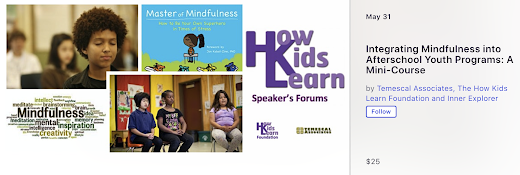


We also recommend Mindfulness in Afterschool, a curriculum written by Temescal Associates. Temescal offers customized training on mindfulness for afterschool leaders. For more information on these resources, write to info@temescalassociates.com

Below we share some comments from a mindfulness leader, Laurie Grossman (Inner Explorer) and educators, Allison Haynes (Riverside County Office of Education), Ken Dyar (Delano Union School District) and Dr. Katarina Roy Schanz (Riverside Unified School District). Each of them has promoted mindfulness techniques at the school and district level and their responses below are from previous LIAS interviews

Q: CAN YOU BRIEFLY DESCRIBE WHAT MINDFULNESS IS?
Laurie Grossman
Laurie Grossman (LG):
Mindfulness is awareness of the present moment without judgment. Many of us miss a lot of our lives because we live in the past or the future; we spend most of the time in our heads reliving what has already happened or worrying about what is going to happen. By practicing mindfulness, one learns to live more often in the present moment; benefitting from what is actually occurring right now. One of the most common ways to practice mindfulness is to focus on the breath as an anchor to the present.  

Dr. Jon Kabat-Zinn founded Mindfulness Based Stress Reduction (MBSR) in 1979 at the University of Massachusetts Medical Center. Those benefits as described by the MBSR website include: 

  • Lasting decreases in physical and psychological symptoms
  • An increased ability to relax
  • Reductions in pain levels and an enhanced ability to cope with pain that may not go away
  • Greater energy and enthusiasm for life
  • Improved self-esteem
  • An ability to cope more effectively with both short and long-term stressful situations.

Q: WHY IS MINDFULNESS EFFECTIVE WITH YOUNG PEOPLE? 
LG: Mindfulness lessons are interactive, short and impactful. When teaching mindfulness, we are teaching children about themselves; the curriculum is relevant to them and therefore engaging. Students tell us they can concentrate more easily on their schoolwork, they can calm themselves down, and they feel less stress. The benefits of mindfulness occur rather quickly, students feel better as a result and they enjoy the practice. 

The very first lesson we offered in an Oakland public school resulted in this comment from a third grader, “I think if we do this every day we won’t fight anymore.” I was stunned because the school was one where violence in the community was common. 

Ken Dyar
Ken Dyar (KD):
Children living in poverty or in unhealthy environments are under constant, unending stress. Is it any wonder that they struggle to self-regulate, or attend to a school lesson? In an afterschool program, we are extending their learning day until 6 pm, five days a week. Mindfulness is the perfect way to do this, in my opinion. Additionally, it is a practice that the kids can extend to their lives outside of school. It is a life skill.

Q: WHAT BENEFITS DO YOU BELIEVE MINDFULNESS BRINGS TO YOUNG PEOPLE?
KD:
Stress management, regulating behavior, lowering blood pressure, increasing positiveness, increasing hopefulness, empowering youth to feel that they are in control of themselves. It develops a growth mindset in kids. It gives them a tool to move them forward emotionally and therefore academically.

Q: DO YOU BELIEVE THAT MINDFULNESS IS APPROPRIATE FOR ALL AGE YOUTH? 
Allison Haynes
Allison Haynes (AH):
YES. Why not? Why would we arbitrarily choose a number and determine that until one reaches that age, they are restricted from engaging in a practice that includes benefits such as relaxation, self-regulation of emotions, self-awareness, and compassion for others? 

KD: I do believe that mindfulness is appropriate. I have introduced it to my eighth graders this year. Students in middle school are truly "stuck in the middle." Anyone who has worked with middle school students will tell you that these kids are both babies and adults. They need a tool like mindfulness to manage the swings in mood and emotion. I also believe that educators who use mindfulness with their students will enhance the relationships they have with their kids. Sharing mindfulness with my students has certainly proven to them how much I care about them.

Q: WHAT BENEFITS DO YOU BELIEVE MINDFULNESS BRINGS TO ADULT STAFF? 
AH:
Mindfulness provides immediate feedback to adult staff. Taking a breath while letting the thought pass is indeed helpful when your inner voice is shouting doom and gloom. Interrupting the critical voices in one’s head allows a pathway for creative thinking (which is always necessary for afterschool program adult staff). But engaging in a practice before arriving to engage youth is most valuable because it is during that time that intentions can be set, loving kindness administered, and a stronger connection to compassion forged. 

Q: WOULD YOU RECOMMEND MINDFULNESS TO OTHER AFTERSCHOOL LEADERS?
AH: YES. I’d recommend mindfulness to other afterschool leaders because a practice is good self-care. Additionally, I know afterschool leaders are role models who can’t give what they don’t have. I say, give them what they need and watch it spread.

KD: When I share mindfulness with my kids, one comment I always hear at the beginning is that it is "weird." It's weird because no other teacher they've had has ever shared this with them. Taking a moment to do a body scan, be grateful, be in the moment, etc., is completely foreign to them. It is my wish that mindfulness becomes such a regular part of education that it is never considered "weird" anymore. I wish every teacher on my site spent time using mindfulness with their students. I would certainly recommend the practice to any leaders involved in educating our youth.

Q: WHY ARE YOU TEACHING MINDFULNESS TO SCHOOL DISTRICT STAFF?
Dr. Katarina Roy Schanz
Dr. Katarina Roy Schanz (KRS):
The primary target group for this mindfulness training are our Student Assistance Program (SAP) Counselors and SAP Behavior Support Teams. Additionally, adding mindfulness to their self-care practice will help the team both personally and professionally. We’re hoping that by implementing a mindfulness practice, we will see decreases in anxiety and improvements in self-awareness and social-emotional skills, among other positive changes.


Laurie Grossman is the Director of Social Justice & Educational Equity for Inner Explorer. She cofounded Mindful Schools in 2007. With Angelina Alvarez Manriquez and 4th & 5th grade students at Reach Academy in East Oakland, California, she wrote Master of Mindfulness: How To Be Your Own Superhero in Times of Stress & Breath Friends Forever.

Allison Haynes is the Administrator of Pupil and Administrative Services at the Riverside County Office of Education. She has worked in the field of education for 25 years, with the last five focused on Expanded Learning Programs. Her experience ranges from working with elementary, middle school, and high school students as a school counselor and/or a site administrator. 

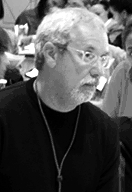
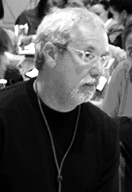
Ken Dyar was named a California Teacher of the Year in 2006.  He is currently a Physical Educator at the Delano Union School District. Prior to this assignment, he was Director of Physical Education and After School Programs, including DUESD's afterschool programs. Ken has taught for over 18 years, teaching 3rd, 4th, 6th, 7th and 8th grades. 

Dr. Katarina Roy Schanz is the Coordinator of the Student Assistance Program with Riverside Unified School District. Dr. Roy Schanz has been an educator for 21 years. She has served as a school counselor, assistant principal, and principal.

Monday, February 22, 2016

Mindfulness in Afterschool

By Sam Piha
Sam Piha
There is a growing trend in research and practice that shows that mindfulness is a very useful tool in school-based settings but few have translated this into afterschool programs. Temescal Associates has developed a 16-week mindfulness curriculum for afterschool workers and a two-day training – one day for the use of mindfulness techniques for the self-care of adult staff, and one day for staff who will lead young people in mindfulness activities.

We wanted to understand more about the use of mindfulness techniques in the afterschool setting. We posed a number of questions to leaders who are putting this to use on the ground: an afterschool leader for the Riverside County Office of Education (Allison Haynes) and a middle school teacher and former Director of Afterschool Programs for Delano Union School District (Ken Dyar). Below are some of their responses. 


Q: WHY DO YOU THINK THAT MINDFULNESS IS A GOOD TOOL FOR THE YOUTH AFTERSCHOOL PARTICIPANTS?
Allison Haynes, RCOE

Allison: I think that youth study their adult staff in after school programs. Their staff are their role models. A mindful staff models for youth how to self-regulate emotions. And let’s face it, emotions that are born out of a full day of school where anything can happen; a tired body from physically navigating said school day; and the sheer delight brought on by overstimulation due to fantastic enrichment opportunities can lead to negative outcomes. Students need a way to manage themselves. Mindfulness is an acceptable solution.

Ken: I read about "fighting the bear" with at-risk youth. This condition describes many of Delano's kids. When children are fighting the bear, new learning cannot take place. Recent brain research by authors such as John Medina (Brain Rules) and John Ratey (SPARK: The Revolutionary New Science of Exercise and the Brain) back this up. The brain is built to handle stress in short bursts; perhaps no longer than 20 to 30 seconds at a time. 
Ken Dyar,
Delano Union School District

Children living in poverty or in unhealthy environments are under constant, unending stress. Is it any wonder that they struggle to self-regulate, or attend to a school lesson? In an after school program, we are extending their learning day until 6 pm, five days a week. We needed a way to help our children be in the moment, release their stress, feel safe, and stop fighting the bear. Mindfulness is the perfect way to do this, in my opinion. Additionally, it is a practice that the kids can extend to their lives outside of school. It is a life skill.

Q: WHAT BENEFITS DO YOU BELIEVE MINDFULNESS BRINGS TO YOUNG PEOPLE?

Allison: I am sure that the research lays out many benefits. Through the lens of Allison, I say the best benefit is that students become more aware of self. I believe self-awareness builds confidence. Confident youth are likely to reach their potential. I need all youth to reach their potential.

Ken: Stress management, regulating behavior, lowering blood pressure, increasing positiveness, increasing hopefulness, empowering youth to feel that they are in control of themselves. It develops a growth mindset in kids. "I am not stuck forever in my current situation. I can control my thoughts, attitudes, and reactions to the events I encounter." It gives them a tool to move them forward emotionally and therefore academically.

Q: WHAT BENEFITS DO YOU BELIEVE MINDFULNESS BRINGS TO ADULT
STAFF? 

Allison: Mindfulness provides immediate feedback to adult staff. Taking a breath while letting the thought pass is indeed helpful when your inner voice is shouting doom and gloom. Interrupting the critical voices in one’s head allows a pathway for creative thinking (which is always necessary for afterschool programs adult staff). But engaging in a practice before arriving to engage youth is most valuable because it is during that time that intentions can be set, loving kindness administered, and a stronger connection to compassion forged. Mindfulness is a good way to start any day.

Ken: Teaching in an after school setting is very stressful. These are 3.75 hour positions with relatively low pay and no medical benefits. For most of my staff, this was the first "real" job they held. And what do we ask them to do? Be alone with 20 students from 2:15 until 6 pm. Five days a week. The staff had to learn curriculum, class management, instructional strategies, and grant compliance in a very short period of time.  

However, we also knew that staff could not bring that emotional baggage in front of the kids. So how do we help them be in the moment, manage their stress, and improve their overall outlook professionally? I thought mindfulness was the answer. I still think it is a game changer in after school programs.

Q: DO YOU BELIEVE THAT MINDFULNESS IS APPROPRIATE FOR INTRODUCING TO ALL AGE YOUTH? IF SO, WHY? 

Allison: YES. Why not? Why would we arbitrarily choose a number and determine that until one reaches that age they are restricted from engaging in a practice that includes benefits such as relaxation, self-regulation of emotions, self-awareness, and compassion for others? If we taught mindfulness to youth of all ages…what a wonderful world it would be.

Ken: I do believe that mindfulness is appropriate. I have introduced it to my eighth graders this year. The adolescent brain goes through huge changes. It begins to prune back connections that are no longer used or needed, and it grows new connections as it matures and learns new things.  

This is a huge leap forward toward adulthood. Students in middle school are truly "stuck in the middle." Anyone who has worked with middle school students will tell you that these kids are both babies and adults. They will chase and scream and giggle like little kids. Meanwhile, they push adults away, while at the same time longing for meaningful relationships and guidance with those same adults. They need a tool like mindfulness to manage the swings in mood and emotion. They need a way to manage the stress that comes from fighting the bear. I believe that educators who use mindfulness with their students will enhance the relationships they have with their kids. Sharing mindfulness with my students has certainly proven to them how much I care about them.

Q: WOULD YOU RECOMMEND MINDFULNESS TO OTHER AFTERSCHOOL LEADERS? IF SO, WHY? 

Allison: YES. I’d recommend mindfulness to other afterschool leaders because a practice is good self-care. Additionally, I know afterschool leaders are role models who can’t give what they don’t have. I say, give them what they need and watch it spread.

Ken: When I share mindfulness with my kids, one comment I always hear at the beginning is that it is "weird." It's weird because no other teacher they've had has ever shared this with them. Taking a moment to do a body scan, be grateful, be in the moment, etc., is completely foreign to them.  

It is my wish that mindfulness become such a regular part of education that it is never considered "weird" anymore. I wish every teacher on my site spent time using mindfulness with their students. I would certainly recommend the practice to any leaders involved in educating our youth.

----
Allison Haynes is the Administrator of Pupil and Administrative Services at the Riverside County Office of Education. She has worked in the field of Education for 25 years with the last five focused on Expanded Learning Programs.  Her experience ranges from working with elementary, middle school, and high school students as a school counselor and/or a site administrator. Her background as a social worker formed her personal calling as protector of the wee ones and her commitment and love for children, youth, and young adults. Allison remains steadfast in removing barriers to learning via social emotional support; youth advocacy; and social equity. In recent years Allison has turned her actions toward influencing those working directly with youth. Her easy manner and coaching style is well received in expanded learning settings. She is a sought after mentor leading the charge into uncharted waters to enact the next great idea for building leadership capacity that produces quality programming. 


Ken Dyar was named a California Teacher of the Year in 2006.  He is currently a Physical Educator at the Delano Union School District. Prior to this assignment, he was Director of Physical Education and After School Programs, including DUESD's after school program - POWER. Ken has taught for over 18 years, teaching 3rd, 4th, 6th, 7th and 8th grades (13 of those years as a physical educator and department chair at Cecil Avenue Middle School in Delano). Ken has led more than 200 PE workshops throughout California, and has done presentations for delegations across the western United States and in Boston and Washington DC.

Mindfulness in Afterschool is a training and curriculum offered by Temescal Associates. For more information, write to spiha@temescalassociates.com

Thursday, October 3, 2013

Bringing Mindfulness into Afterschool


By Sam Piha


Sam Piha
We first met Ken Dyar through training his staff in Mindfulness in Afterschool. We were very impressed with his enthusiasm and wisdom. It made sense when we learned that he was named California Teacher of the Year in 2006. Below is an interview about his past history and perceived benefits of bringing mindfulness into afterschool.


Q: You were named a California Teacher of the Year in 2006. Can you tell us what teaching attributes or methods were cited that influenced this honor? 


Ken Dyar, Delano Union
School District

A: It was our commitment to improving children's health & fitness in our school and our community.  We were making Physical Education relevant and critical to our student's lives.  We also pushed the link to increased student academic achievement through student wellness.  Healthy children learn better.  I was relentless in my advocacy for quality, daily physical education.  I wanted my content area, which is so frequently marginalized by school districts who consider it "non-essential", to be considered "core content" in the same way that math and language arts are considered core.  My passion for my community and for physical education put us on the map, and it got the attention of the CA Department of Education.  Simply, I love my kids.  I grew up in Delano.  I used to be one of those students who walked through a classroom (or gym) door every day hoping that my teachers would take an interest in me and help guide me toward my best life.  I understand my community.  So I pushed hard to make my community and my students healthier.  We're not there yet, but we've come a long way.

Q: You are now overseeing Delano Union School District afterschool programs. What influenced your interest in afterschool programs?

A: I got involved completely by accident!  My superintendent asked me to work at a district level to improve PE for all of our campuses (instead of just the one in which I was teaching).  After I move over to the district office, he gave me the after school program as well and said, "I need you to fix this."  I had no idea what a quality after school program looked like or what I was getting myself into.  But again, I knew that Delano kids needed this program, and they needed it to be great.  So I started reading and learning about after school.  I also visited another program that was near Delano that had a state-wide reputation for excellence in after school.  What an eye-opener!  After that visit, I had a clear picture in my mind of what after school should be and what we needed to do to improve the quality of our program. 

Kids go to after school for 3 hours every day for 180 days a year.  If we do the math, that equals an extra 90 days, or an extra HALF YEAR, of school for our kids.  Who wouldn't benefit from that if we do it right?  So we committed to making Delano's after school program great.  One of the first things we did was re-brand the program as POWER (Powerful Outcomes in Wellness, Education, & Recreation), including a logo and t-shirts.  We needed to present a fresh image to our community and let them know this was a safe and effective place for parents to enroll their children.  We sold it well (seems like I'm always selling!).  POWER has since expanded from 4 sites to 10, and we are serving over 830 children.  Every year has been an improvement over the previous year.

Q: You recently introduced Mindfulness in Afterschool as a strategy to promote self-care for your afterschool staff and for your afterschool program participants. Why did you make this decision?

A: I saw a presentation at one of our regional after school meetings called "Fighting the Bear."  Children who are fighting the bear are in survival mode when they come to school.  Fighting the bear has to do with children at the base level of Maslow's Hierarchy of Needs.  They may not know where they are going to sleep on a given night.  They may not be eating regularly.  They may be dealing with family problems or substance abuse in the home.  They are in survival mode.  Unfortunately, this is an all-too common occurrence in my town.  When a child is just trying to survive, he or she is not capable of learning. 

I needed something to help get these kids "out of their head," feeling safe, feeling cared for, and more ready to learn.  Mindfulness was presented to us at this same regional meeting.  I did some research, learned a lot, and decided that this is exactly what my kids need in their lives.  Of course, the stress and demands placed on our after school staff also cried out for some type of tool that they could use to manage their emotions and their stressors effectively.  Mindfulness fit the bill for our staff as well.  Additionally, as Laurie Grossman (Temescal Associate) so aptly stated, "You can't teach someone to play the piano if you can't play the piano."  So in order for our staff to effectively bring Mindfulness to our kids, they had to learn about it and practice it themselves.  In the short time we've been practicing Mindfulness, I can tell you that I already know it's one of the best decisions we've made...professionally, programmatically, and personally.

Q: Have you seen a positive impact of introducing mindfulness training for your staff? Can you describe?

A: I have seen a positive impact.  Staff have already shared stories of how their Mindfulness training has helped them through stressful situations - upset parents, demanding bosses (not me of course!), difficulties with students.  They've also shared how Mindfulness has aided them in their personal lives.  I expect these types of stories to become even more evident as we continue this journey.


Q: Have you seen a positive impact of introducing mindfulness exercises for program participants? Can you describe?

A: Our student's LOVE Mindfulness!  They are responding in such a positive manner!  I've had a few students stop and talk to me when I visit sites and tell me how Mindfulness has helped them focus, or in their words, "it just calms me down."  Staff report seeing less student impulsiveness in class, and more openness to differences among their peers.  They are learning to be more patient and tolerant.  They are learning kindness.  And this all comes out of their Mindful practice.  I truly believe the potential for this program is limitless.  I think it will be a game-changer for Delano children.
_____________________
Ken Dyar was named a California Teacher of the Year in 2006.  He is currently the Director of Physical Education & After School Programs, including DUSD's after school program - POWER.  He taught for 18 years prior to this assignment, teaching 3rd, 4th, 6th, 7th and 8th grades (13 of those years as a physical educator and department chair at Cecil Avenue Middle School in Delano).

He graduated from Cal Poly, San Luis Obispo in 1989 with a B.S. in Physical Education.  Ken has led more than 200 PE workshops throughout California, and has done presentations for delegations across the western United States and in Boston and Washington DC.

Mindfulness in Afterschool is a training and curriculum offered by Temescal Associates. For more information, write to spiha@temescalassociates.com. 

Understanding Attention-Deficit Hyperactivity Disorder

Source: www.pexels.com By Sam Piha PURPOSE The purpose of this blog is to advance understanding of Attention- Deficit Hyperactivity Disorder...