Showing posts with label physical education. Show all posts

Monday, April 21, 2025

4 Ways PE Teachers and Coaches Can Advance Social Emotional Learning

Source: Coaching Corps

“Sport has the power to change the world. It has the power to inspire. It has the power to unite people in a way that little else does. It speaks to youth in a language they understand. Sport can create hope where once there was only despair.” [1] – Nelson Mandela 

Research has shown that the involvement in organized sports can be an excellent way to promote social emotional learning and the building of character. However, this is dependent on coaches who do their work in a developmental way, often coming from good training. 

“School sports are widely recognized as having a positive developmental influence on children. Not only do those students get exercise, have a chance to make new friends, and learn about teamwork, but also they improve their self-confidence as they achieve their goals.” [2] 

Below is an excerpt from The Benefits of a Written Curriculum for Physical Education and School Sports. The original article can be found on Edutopia.org.

“1. Promote a positive team climate and essential virtues. Sport psychology and SEL show that teams and individuals who value safe, supportive, encouraging, and inclusive team climates perform better and learn faster. Having a positive team climate includes athletes possessing the psychological safety that allows them to be more collaborative and creative without fear.

2. Develop skills through thought recognition and relationship building. When adolescents are intentionally taught emotion regulation and focus skills, they are helped when shooting a foul shot with 0.1 seconds left on the clock. Learning how to problem-solve and learning how to make decisions are valuable skills when analyzing one’s own performance and looking to make improvements. Empathy and communication are essential when picking up your teammate when they miss a catch. Knowing and identifying these skills is the first step in having them take root within students’ and athletes’ lives....Students who are trained in thinking about what they are thinking about are more likely to be the best version of themselves in any athletic contest.

Source: Coaching Corps
3. Build student investment and responsibility through student voice. In 21st-century businesses, employee voice is valued because it increases their engagement and empowerment to ask questions, seek help, and try out new skills while providing valuable feedback, decreasing stress, and increasing morale. The employees feel ownership in the business because they contributed to its success.

4. Have the coach serve as a facilitator. Of course, for the above to happen, PE teachers and coaches must take on the role of guiding facilitator, mostly by asking pertinent questions of players and giving them the freedom to offer their answers without fear of being judged harshly. Ideally, it means establishing a written problem-solving protocol that is used regularly when difficulties or challenges exist—whether in a PE class or a game context, in preparation as well as in action.

This requires the coach to give up some power, but certainly not during games where split-second decisions must be made by only one person. When students are aware of this new role embraced by their coaches, their relationship changes, and students’ accountability and responsibilities are increased.
Teachers and coaches truly are guides, helping students get to a range of destinations, some expected, some not, in a systematic way. A written curriculum provides a map that allows many to follow it, not just those gifted with a good sense of direction. 


END NOTES


Thursday, October 3, 2013

Bringing Mindfulness into Afterschool


By Sam Piha


Sam Piha
We first met Ken Dyar through training his staff in Mindfulness in Afterschool. We were very impressed with his enthusiasm and wisdom. It made sense when we learned that he was named California Teacher of the Year in 2006. Below is an interview about his past history and perceived benefits of bringing mindfulness into afterschool.


Q: You were named a California Teacher of the Year in 2006. Can you tell us what teaching attributes or methods were cited that influenced this honor? 


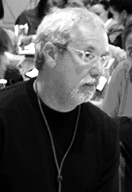
Ken Dyar, Delano Union
School District

A: It was our commitment to improving children's health & fitness in our school and our community.  We were making Physical Education relevant and critical to our student's lives.  We also pushed the link to increased student academic achievement through student wellness.  Healthy children learn better.  I was relentless in my advocacy for quality, daily physical education.  I wanted my content area, which is so frequently marginalized by school districts who consider it "non-essential", to be considered "core content" in the same way that math and language arts are considered core.  My passion for my community and for physical education put us on the map, and it got the attention of the CA Department of Education.  Simply, I love my kids.  I grew up in Delano.  I used to be one of those students who walked through a classroom (or gym) door every day hoping that my teachers would take an interest in me and help guide me toward my best life.  I understand my community.  So I pushed hard to make my community and my students healthier.  We're not there yet, but we've come a long way.

Q: You are now overseeing Delano Union School District afterschool programs. What influenced your interest in afterschool programs?

A: I got involved completely by accident!  My superintendent asked me to work at a district level to improve PE for all of our campuses (instead of just the one in which I was teaching).  After I move over to the district office, he gave me the after school program as well and said, "I need you to fix this."  I had no idea what a quality after school program looked like or what I was getting myself into.  But again, I knew that Delano kids needed this program, and they needed it to be great.  So I started reading and learning about after school.  I also visited another program that was near Delano that had a state-wide reputation for excellence in after school.  What an eye-opener!  After that visit, I had a clear picture in my mind of what after school should be and what we needed to do to improve the quality of our program. 

Kids go to after school for 3 hours every day for 180 days a year.  If we do the math, that equals an extra 90 days, or an extra HALF YEAR, of school for our kids.  Who wouldn't benefit from that if we do it right?  So we committed to making Delano's after school program great.  One of the first things we did was re-brand the program as POWER (Powerful Outcomes in Wellness, Education, & Recreation), including a logo and t-shirts.  We needed to present a fresh image to our community and let them know this was a safe and effective place for parents to enroll their children.  We sold it well (seems like I'm always selling!).  POWER has since expanded from 4 sites to 10, and we are serving over 830 children.  Every year has been an improvement over the previous year.

Q: You recently introduced Mindfulness in Afterschool as a strategy to promote self-care for your afterschool staff and for your afterschool program participants. Why did you make this decision?

A: I saw a presentation at one of our regional after school meetings called "Fighting the Bear."  Children who are fighting the bear are in survival mode when they come to school.  Fighting the bear has to do with children at the base level of Maslow's Hierarchy of Needs.  They may not know where they are going to sleep on a given night.  They may not be eating regularly.  They may be dealing with family problems or substance abuse in the home.  They are in survival mode.  Unfortunately, this is an all-too common occurrence in my town.  When a child is just trying to survive, he or she is not capable of learning. 

I needed something to help get these kids "out of their head," feeling safe, feeling cared for, and more ready to learn.  Mindfulness was presented to us at this same regional meeting.  I did some research, learned a lot, and decided that this is exactly what my kids need in their lives.  Of course, the stress and demands placed on our after school staff also cried out for some type of tool that they could use to manage their emotions and their stressors effectively.  Mindfulness fit the bill for our staff as well.  Additionally, as Laurie Grossman (Temescal Associate) so aptly stated, "You can't teach someone to play the piano if you can't play the piano."  So in order for our staff to effectively bring Mindfulness to our kids, they had to learn about it and practice it themselves.  In the short time we've been practicing Mindfulness, I can tell you that I already know it's one of the best decisions we've made...professionally, programmatically, and personally.

Q: Have you seen a positive impact of introducing mindfulness training for your staff? Can you describe?

A: I have seen a positive impact.  Staff have already shared stories of how their Mindfulness training has helped them through stressful situations - upset parents, demanding bosses (not me of course!), difficulties with students.  They've also shared how Mindfulness has aided them in their personal lives.  I expect these types of stories to become even more evident as we continue this journey.


Q: Have you seen a positive impact of introducing mindfulness exercises for program participants? Can you describe?

A: Our student's LOVE Mindfulness!  They are responding in such a positive manner!  I've had a few students stop and talk to me when I visit sites and tell me how Mindfulness has helped them focus, or in their words, "it just calms me down."  Staff report seeing less student impulsiveness in class, and more openness to differences among their peers.  They are learning to be more patient and tolerant.  They are learning kindness.  And this all comes out of their Mindful practice.  I truly believe the potential for this program is limitless.  I think it will be a game-changer for Delano children.
_____________________
Ken Dyar was named a California Teacher of the Year in 2006.  He is currently the Director of Physical Education & After School Programs, including DUSD's after school program - POWER.  He taught for 18 years prior to this assignment, teaching 3rd, 4th, 6th, 7th and 8th grades (13 of those years as a physical educator and department chair at Cecil Avenue Middle School in Delano).

He graduated from Cal Poly, San Luis Obispo in 1989 with a B.S. in Physical Education.  Ken has led more than 200 PE workshops throughout California, and has done presentations for delegations across the western United States and in Boston and Washington DC.

Mindfulness in Afterschool is a training and curriculum offered by Temescal Associates. For more information, write to spiha@temescalassociates.com. 

Screen Time and Young People

Source: www.pexels.com By Sam Piha There’s a general consensus that too much screen time is bad for kids. While limiting screen time and est...