Showing posts with label youth development. Show all posts

Monday, August 18, 2025

How to Help Girls Develop Through Sports and Role Models

Source: www.pexels.com


By Sam Piha

There is an exploding interest in girls’ sports, as our understanding of the benefits grow. Through girls’ sports afterschool programs can promote leadership, engagement and personal empowerment.

“We know that sport is empowering, particularly for girls, and challenge gender norms. Sport participation offers girls an opportunity to build their self-esteem, courage and self-efficacy. It is a place where they can take up leadership positions and through sport programs girls' belief in their own ability increases. This translates into everyday life – it encourages them to take initiative, raise their voices and attempt things they never assumed were possible.

When community members see girls achieve in sport, they often recognize their potential to achieve in other domains.  Lastly, sport is a powerful tool and platform to strengthen social ties, networks, engage the community and promote positive messages. In short, wins on the field translate into wins off the field – One Win Leads to Another.” [1]
 

TIPS FOR DEVELOPING LEADERSHIP
According to Women Win, “Girls’ leadership can and should be an important part of program design. Developing the leadership abilities and opportunities within a program for the adolescent girl participants creates a pool of potential coaches, facilitators and female leaders for your sport programs. This, in turn, increases the potential for these girls to grow as leaders in their communities.

One of the most powerful ways to build leadership qualities in girls is to put girls in leadership roles. When girls are expected to lead others, they find power within themselves they might not know existed. This can come in the form of formal positions or informal relationships between girls. Creative program leaders and coaches find subtle ways to facilitate this process and support all forms of leadership.
  • Be patient. Leadership is a skill that is developed over time. Ask girls what they are good at and how they want to build their skills and confidence. Encourage them to lead their own development.
  • Allow girls to elect their own leaders.
  • Highlight examples of good leadership.
  • Let girls train others in sport-specific, practical and life skills.
  • Show girls you value their opinions.
  • Explicitly talk about and encourage discussions about leadership values to girls regularly.
  • Lead by example as a coach or program leader.
  • Support positive role modelling.
  • Allow girls to choose if they want to fill leadership roles.
  • Encourage girls to go out in community and be recognized.
  • Reward acts of leadership with outward praise and formal honors.
  • Reward exceptional performance with leadership roles.
  • Give all girls opportunities to lead during practice, not just older, talented, non-disabled or more natural leaders.
  • Constantly encourage goal setting and evaluation.
  • Target inhibitors of leadership and address them, such as lack of confidence, peer pressure or poor mentoring.
  • Seek to help every girl develop to her highest personal potential, as opposed to constantly criticizing or comparing girls to one another.
  • Recognize quiet leadership in girls, those who are not outspoken or loud, but rather, those who will always run the extra lap with the slowest girl on the team.
  • Create standards of what it takes to be a leader from both girls with and without disabilities
Personal empowerment and control are closely linked. Program partners report that when a girl feels like she has control over her body, her future and her environment, she begins to feel strong and powerful. It is important to give participants in your program some degree of control over the design of the program, especially when the intent of the program is to increase girls’ self-esteem. Girls are more likely to fully engage in activities that they help design.” [2]

Source: www.pexels.com

PROGRAM DESIGN: HOW TO ENGAGE GIRLS IN SPORTS 
  • “Allow girls to choose paint colors and make decorations for the space where their sessions are held.
  • Ask girls to vote on how they would like to be grouped for competitions, for example, by age, by region or by skill level.
  • Give girls the choice of uniform colors and team names.
  • Consult with girls and their families about time and duration of practices and training sessions
  • Ask girls to create rules of conduct for sessions and penalties for breach of conduct.
  • Pick a group of girls to interview and evaluate potential coaches.
  • Ask girls which sport they would like to play.
  • Ask girls which life skills topics they would like to discuss.” [3]

THE IMPORTANCE OF ROLE MODELS FOR GIRLS 
According to Women Win, “Girls are exposed to both positive and negative role models every day: a strong mother who stands up against domestic abuse or a female celebrity that uses her sex appeal to be popular. All of these people affect how a girl views her own potential. These are the people who girls use as references for whom they will become and whose behavior they will emulate.

Local examples provide more easily imaginable visions of success. A key component to presenting girls with role models is to make sure the success experienced by the role models is attainable and replicable in their minds. Research has shown that when individuals feel that the role model in front of them has attained a status unreachable to them, their presence can actually be demoralizing. If possible, find role models who exemplify an area in which girls have an interest and where they need help in personal development. Find a person who can share their personal experience with personal growth in that area. Men can certainly serve as positive role models; however, there is an inherent value in same-gender role modelling.” [4]

Source: www.pexels.com

Role Models: Some Tips

“A girl needs to see confidence, leadership and accomplishment in other women in order to envision herself with those qualities. A program designed to empower girls must provide powerful, positive role models. As program directors, it is helpful to expose girls to a diverse set of role models as consistently as possible. Strong role models can be women who are older, skilled athletes, coaches, community leaders, successful business people, celebrities, politicians, religious leaders, confident peers or any strong woman whose presence will resonate with the girls. Although there is power to showing girls women who are international heroines, there is also a power to exposing them to local people.” [5] -  Women Win

Women Win offers these tips to promote women role models: 
  • “Organize events where role models speak to girls about their experiences.
  • Try to pair up individual girls with older mentors with the intention of creating long-lasting relationships.
  • Take girls to see athletic events with older participants. Arrange a meet-and-greet afterwards to allow girls to interact with players.
  • Set up guest coaching sessions with successful coaches from your region.
  • Ensure that all those in positions of power within the organization are serving as positive role models for participants.
  • Seek role models outside of the sport arena. Invite a successful businesswoman or female politician to come to the program and speak to the girls.
  • Consider inviting men or women with a disability to come speak, as they often have a powerful impact on girls with and without disabilities.
  • Discuss the concept of “negative role modelling” with girls, i.e., simply because a person is successful does not mean that they are worthy of being a role model. Challenge girls to evaluate virtues, values and expectations related to these role models.” [6]

RESOURCES TO LEARN MORE
In addition to the resources that are cited in the end notes (below), we also recommend a few additional resources.

END NOTES
[3] Women Win, Girl-Led Design
[5] IBID.
[6] IBID. 

Monday, April 21, 2025

4 Ways PE Teachers and Coaches Can Advance Social Emotional Learning

Source: Coaching Corps

“Sport has the power to change the world. It has the power to inspire. It has the power to unite people in a way that little else does. It speaks to youth in a language they understand. Sport can create hope where once there was only despair.” [1] – Nelson Mandela 

Research has shown that the involvement in organized sports can be an excellent way to promote social emotional learning and the building of character. However, this is dependent on coaches who do their work in a developmental way, often coming from good training. 

“School sports are widely recognized as having a positive developmental influence on children. Not only do those students get exercise, have a chance to make new friends, and learn about teamwork, but also they improve their self-confidence as they achieve their goals.” [2] 

Below is an excerpt from The Benefits of a Written Curriculum for Physical Education and School Sports. The original article can be found on Edutopia.org.

1. Promote a positive team climate and essential virtues. Sport psychology and SEL show that teams and individuals who value safe, supportive, encouraging, and inclusive team climates perform better and learn faster. Having a positive team climate includes athletes possessing the psychological safety that allows them to be more collaborative and creative without fear.

2. Develop skills through thought recognition and relationship building. When adolescents are intentionally taught emotion regulation and focus skills, they are helped when shooting a foul shot with 0.1 seconds left on the clock. Learning how to problem-solve and learning how to make decisions are valuable skills when analyzing one’s own performance and looking to make improvements. Empathy and communication are essential when picking up your teammate when they miss a catch. Knowing and identifying these skills is the first step in having them take root within students’ and athletes’ lives....Students who are trained in thinking about what they are thinking about are more likely to be the best version of themselves in any athletic contest.

Source: Coaching Corps
3. Build student investment and responsibility through student voice. In 21st-century businesses, employee voice is valued because it increases their engagement and empowerment to ask questions, seek help, and try out new skills while providing valuable feedback, decreasing stress, and increasing morale. The employees feel ownership in the business because they contributed to its success.

4. Have the coach serve as a facilitator. Of course, for the above to happen, PE teachers and coaches must take on the role of guiding facilitator, mostly by asking pertinent questions of players and giving them the freedom to offer their answers without fear of being judged harshly. Ideally, it means establishing a written problem-solving protocol that is used regularly when difficulties or challenges exist—whether in a PE class or a game context, in preparation as well as in action.

This requires the coach to give up some power, but certainly not during games where split-second decisions must be made by only one person. When students are aware of this new role embraced by their coaches, their relationship changes, and students’ accountability and responsibilities are increased.
Teachers and coaches truly are guides, helping students get to a range of destinations, some expected, some not, in a systematic way. A written curriculum provides a map that allows many to follow it, not just those gifted with a good sense of direction. 


END NOTES


Monday, November 25, 2024

Social Media Use by Youth

Source: www.pexels.com

By Sam Piha

“The Centers for Disease Control and Prevention reports that children in the U.S. spend between 6 to 14 hours a day in front of a screen, with much of that time viewing social media content.” [i]

This is one blog in a series of blogs regarding the issue of social media and youth mental health. 

According to the U.S. Surgeon General’s Advisory, entitled Social Media and Youth Mental Health, “In 2017, 85 percent of teens used social media daily, and in 2022, that number had reached 95 percent. This is in stark contrast to 2009, when only around half used it daily, according to the Pew Research Center. At the same time social media use by teens skyrocketed, teenagers found themselves at the precipice of a mental health crisis that hadn't been observed in previous generations.

The number of young adults and teenagers reporting negative psychological symptoms soared for those born in 1995 or later, and the greatest spike occurred in 2011, which is roughly when social media became prevalent across society, experts say.

U.S. social media platforms require users to be at least 13 years old, nearly 40% of kids ages 8 to 12 use social media. The advisory also noted: Adolescents who use social media more than three hours per day face twice the risk of experiencing poor mental health outcomes. A recent survey found that eighth and 10th grade students spend an average of 3.5 hours per day on these platforms.” [ii]


Source: Rawhide.org

“The average teen using social media has 300 Facebook friends, 79 Twitter followers, 150 Instagram followers, and receives more “snaps” from Snapchat than texts. Facebook, Twitter, and Instagram are used mainly to share images through their mobile device. 21% of teens believe using a mobile device allows them to hide information from their parents more effectively.” [iii]

A recent survey of teens showed that, on average, “youth spend 3.5 hours a day on social media, which is particularly concerning because research has shown that those who spend more than 3 hours a day face double the risk of poor mental health including experiencing symptoms of depression and anxiety.” [iv] 

Source: Ruling Our Experience (ROX)

“I would say just don’t use it. It’s kind of a waste of time. You’re just having conversations about pointless things, random pop culture stuff. It just sucks your time. You’re not really getting anything out of it, just short-term satisfaction. It’s kind of meaningless. I know this is kind of outlandish, but I feel like there should be some sort of age limit because I don’t think children should be on the internet.” [v] — Mikael Makonnen, 18, a freshman at American University 

“While social media offers numerous benefits, it is essential to acknowledge and manage the potential dangers it presents to teenagers. We must help teens navigate the hazards of social media and create a safer and more positive online experience. Together, let's empower teenagers to make informed decisions, build healthy relationships, and flourish in the digital landscape—their very lives may depend on it.” [vi] 

“A lot of people make their life artificial so that they’re perceived in a certain way. And I think going into social media, I wish I knew it is a tool to learn from. There’s so much information, and you’re able to learn so much about different things. ... I wish people had that outlook rather than the whole idea of other people viewing you and having to be seen a certain way.” [vii] - Nour Mahmoud, 21, a junior at Virginia Commonwealth University 


To read and download our briefing paper, Social Media and Youth Mental Health, click here.

To watch our webinar on this topic, click here

END NOTES

Monday, June 10, 2024

Reed Larson’s Research on Youth Development

Source: Reed Larson, The Youth Development Experience

Kate Walker
By Guest Blogger Kate Walker, Extension Specialist, Youth Development, University of Minnesota Extension. This blog was originally published by the University of Minnesota Extension.

I recently attended the annual meeting for the Society for Research on Adolescence where my mentor Reed Larson was invited to reflect on his influential research career in youth development. Reed first got interested in adolescence because he saw it as a critical period of awakening. Yet he noticed that most research focused on problems more than development, and he discovered that youth programs were powerful spaces for this awakening and development to occur. These insights propelled an impressive body of research that has tremendous implications for our work with and on behalf of young people. 

Young people’s daily experiences and emotions

With his mentor, Mihaly Csikszentmihalyi, Reed began by studying adolescents’ daily experiences and emotions, pioneering the Experience Sampling Method (ESM) where young people were prompted (with beepers back then!) to report on their feelings and the dynamics of their experiences in different domains in their daily lives. He explored their media use, time alone, experience with friends, and school experience.  

Reed Larson and Mihaly Csikszentmihalyi

He discovered that during their typical experiences in school, young people were challenged (deep attention) but not engaged (intrinsically motivated). Conversely during unstructured leisure time, they were engaged but not challenged. The one unique context where young people reported experiencing the rare combination of high levels of challenge and engagement was in organized youth programs (arts, STEM, leadership, sports). He was intrigued.

Youth programs as developmental contexts

This led Reed to develop a series of studies focused on young people’s developmental experiences in youth programs and how staff facilitate these experiences. His research teams identified the types of key experiences that young people have in high-quality youth programs that facilitate their development of skills for teamwork, solving problems, managing emotions, and sustaining motivation in challenging work. He found that project-based youth programs are settings in which Csikszentmihalyi’s "flow" experience serves as a powerful catalyst for developing vital adult skills.

These findings are widely used to design programs and train program staff. They were the basis for a researcher-practitioner collaboration that resulted in a field guide of key youth experiences and staff practices that build valuable social and emotional skills. His groundbreaking research on the lives of young people and the developmental role of youth programs helped to both launch and legitimize the field of positive youth development. 

I most appreciate how respectfully rooted Reed’s research is in the direct experiences and accounts of young people. Throughout he has always emphasized that youth are agents or producers of their own development. Are there aspects of his research that speak to or influence you and your work? 

MORE ABOUT...


Kate Walker, (she/her), is the Extension Specialist, Youth Development at University of Minnesota Extension. Kate provides leadership to the understanding and development of youth work practice. She studies the role that adult program leaders, staff and volunteers play in supporting youth development in programs. She also leads professional development efforts aimed at supporting and improving youth work practice. This includes trainings on social and emotional learning and on the dilemmas that practitioners face in their everyday work with young people. 


The University of Minnesota Extension has a long history of youth development leadership. They are best known for running Minnesota 4-H for more than 100 years. The 4-H program also serves as their laboratory of learning, in which they are constantly improving. Their mission is to improve the lives of all Minnesota young people - no matter where they live or which youth program they choose to join.


Monday, March 18, 2024

Creativity in Children: A Pathway to Growth and Exploration

By Guest Blogger Akoma Unity Center. (This blog was originally published on Akoma Unity Center.)

This blog offers insightful guidelines to help your children harness the immense benefits and rewards of creative thinking effectively.

Provide a Nurturing Environment for Creativity

Creating opportunities for creativity doesn’t require significant investment. Simple resources such as paper, pencils, dedicated time, and space can go a long way. Set up an environment that encourages creative expression, giving your children both room and time to explore their imagination. While material resources like paints, cameras, or musical instruments are important, fostering the right mindset is equally crucial, as we’ll discuss further.

Foster Openness and Freedom

Source: Akoma Unity Center

Resist the urge to provide directions when your children are engaged in creative activities. Embrace the fluidity of the creative process. Allowing your children to make their own decisions about subjects, materials, and pace is vital for reaping the full benefits of creative thinking. Embrace the mess that can accompany creative endeavors; it’s an integral part of the process. The ability to revel in creative freedom is a cornerstone of your children’s personal growth, helping them develop a strong sense of self while acquiring valuable life skills.

Engage in Conversations About Art

Initiate conversations about art with your children without hesitation. Normalizing art as a topic of daily discussion can also strengthen the parent-child bond. Share with your children why you’re drawn to a specific song or painting. Cultivate curiosity about their preferences without passing judgment. Consider asking open-ended questions, such as:

  • Who’s your favorite TV or literary character?
  • What is it about that movie that resonates with you?
  • If you were in that character’s shoes, how would you tackle the situation?
  • How do you envision that character solving this problem?

Encourage Idea Exchange

Recognize that creativity goes beyond artistic endeavors; it’s a way of life. Regularly exchange ideas with your children. Encourage them to contribute ideas and reciprocate by sharing your own. Be attentive to their feedback and engage in discussions together. This experience teaches your children that refining an idea is an essential part of creativity and that creativity thrives through collaboration. Remarkably, some of history’s most influential technological and artistic achievements are the outcome of collaborative effort.

Nurturing creativity in children is a gift that keeps on giving. By providing a conducive environment, embracing openness, and fostering dialogues, you’re not only helping your children flourish creatively but also equipping them with life skills that transcend artistic endeavors. Embrace the journey of creativity alongside your children, fostering a sense of exploration, innovation, and personal growth.

Ready to embark on this creative journey with your children? Implement these practical steps and witness the transformation in their creative thinking. Encourage them to explore, express, and engage, knowing that you’re nurturing a foundation for a lifetime of innovative thinking and self-discovery.

MORE ABOUT…

Akoma Unity Center (AUC) is a 501 (c)(3) non-profit, grassroots organization committed to the progress of African American youth, families, and communities. Akoma’s programs and services are specifically designed to meet the needs of historically excluded African American youth and communities. Programs include; Afterschool Program, Summer Day Camp, SOUL FOOD Community Dinner Night, male mentoring program, Rites of Passage, Advocacy for youth of color, STEAM Fair- Back to School Giveaway and Toy/Coat giveaway.

At Akoma Unity Center, their unwavering mission is to educate, heal, and transform historically excluded communities of Black, Indigenous, and People of Color (BIPOC). They are dedicated to creating a more equitable and just society by organizing individuals, cultivating healthy families, and empowering communities to overcome systemic barriers. Through their comprehensive programs and initiatives, they strive to foster holistic healing, educational empowerment, and economic opportunities. By addressing the unique challenges faced by BIPOC communities, they aim to dismantle inequities, uplift voices, and create sustainable change.


Monday, March 11, 2024

Impact of Sports on Youth Development

Source: www.pexels.com

By Guest Blogger Breakthrough Sports (This blog was originally published on the Breakthrough Sports Blog.)

At Breakthrough Sports, we believe in the profound impact of youth sports on children's lives. Engaging in sports activities not only promotes physical health but also offers invaluable life lessons, personal growth, and social development. In this blog post, we'll explore the far-reaching benefits of youth sports, backed by evidence from reputable studies, and highlight the positive effects they have on children. Join us as we delve into the transformative power of sports in shaping young athletes' futures.

The Physical Benefits of Youth Sports:
Engaging in regular physical activity through youth sports is essential for the overall well-being of children. According to the American Academy of Pediatrics (AAP), participating in sports helps children build and maintain healthy bones, muscles, and cardiovascular fitness. Studies have shown that youth involved in sports tend to have lower risks of obesity, type 2 diabetes, and other health issues, as physical activity plays a vital role in maintaining a healthy weight and improving overall health.

The Cognitive and Academic Benefits:
Participation in youth sports goes beyond physical development; it also enhances cognitive abilities and academic performance. Research published in the Journal of School Health highlights the positive correlation between sports participation and academic achievement. The study found that students involved in sports demonstrate improved focus, time management skills, and academic motivation. Engaging in structured physical activities through sports helps children develop discipline, goal-setting abilities, and enhances their cognitive function, all of which contribute to academic success.

Source: www.pexels.com

Social and Emotional Development:
Youth sports play a pivotal role in the social and emotional development of children. The teamwork, communication, and collaboration fostered in sports environments provide valuable life skills. According to a study published in the Journal of Youth and Adolescence, participating in team sports positively impacts the development of social skills, including leadership, cooperation, and conflict resolution . Furthermore, sports create a sense of belonging and provide opportunities for children to form friendships, build self-esteem, and develop resilience.

Character Building and Life Lessons:
Through both wins and losses, youth sports offer a platform for character building and teach vital life lessons. The competitive nature of sports helps children develop resilience, determination, and the ability to cope with challenges. According to the Aspen Institute's Project Play, participation in sports instills values such as perseverance, discipline, and sportsmanship. Athletes learn to set goals, work hard, and develop a growth mindset, transferring these skills to various aspects of their lives.

Source: www.pexels.com

Youth sports have a profound and positive impact on children's lives. The physical, cognitive, social, and emotional benefits they offer contribute to holistic development, shaping young athletes into well-rounded individuals. At Breakthrough Sports, we are committed to providing a nurturing and supportive environment for youth athletes to thrive, acquire essential life skills, and develop a lifelong love for sports.


To learn more and donate virtually, click here.

Monday, July 31, 2023

Defending LGBTQ+ Youth: Voices Beyond the Bubble Part 2

Source: www.pexels.com

By Sam Piha

When it comes to LGBTQ+ issues, those of us in California live in somewhat of a progressive bubble. To learn more about how leaders are responding to the recent political attacks on LGBTQ+ youth, we interviewed leaders residing outside of California to hear their views. We continue our interviews with these leaders below.

How can we support LGBTQ+ youth amid these attacks?

“Converse with the community! Educate those who are not aware of the harmful laws that are being placed and help them understand that this will not stop with us; this goes beyond our community. Reassure the youth that you will do your part and actively engage to do better for their community.” – Rex Barnes, Florida 

“Be a visible advocate and accomplice. Demonstrate you’re a supportive person by introducing yourself with your pronouns, incorporating LGBTQ+ themes and figures into your programming, and allowing space for them to process their feelings. Know and share local resources and supports and find ways for them to connect to others who share their identities.” – Nat Duran, Illinois   

What can we do to promote pro-LGBTQ+ policy and/or youth program practice?

 “Contact local organizations in your region or state that combat current legislators who are trying to silence our voices and ask them how you can get involved- whether by donating, spreading awareness, or even participating in marches.” – Rex Barnes, Florida

“Assess programmatic policies and procedures for gender inclusive language and practices - including dress codes, and gender segregated spaces. Learn how to make as many options available to all participants and let them choose their own adventure. Create regular mechanisms to get feedback from youth to ensure they feel affirmed as they move throughout your program. Connect with local LGBTQ+ advocacy organizations to stay informed about local policy changes (including school boards, local government, etc.) and advocacy asks.” – Nat Duran, Illinois   

“Programs can support LGBTQ+ youth by affirming them and creating inclusive spaces in which youth feel safe. Programs can provide spaces that affirm youths’ identities, using preferred pronouns and names, providing materials that represent identities of youth, addressing issues of discrimination openly and immediately when they happen. Inclusive materials can range from providing a variety of identities on a registration form to including members of the LGBTQ+ community in curriculum. Programs can further support LGBTQ+ youth by having explicit messages in program spaces that affirm that all young people are welcome and respected and creating spaces and opportunities for supportive and educational discussions led by experts that involve youth, staff, program leaders, and families. Programs should be educating their staff about appropriate ways to support LGBTQ+ youth from learning the vocabulary, acknowledging mistakes through training and conversation. Finally, be that caring adult and listen. LGBTQ+ youth, like their peers, want to feel heard and listened to without judgment can be what they need to feel supported.” – Patricia McGuiness, Massachusetts

“Everyone can take a step, large or small, to fight for LGBTQ+ rights and affirming policies in their community. In the K-12 school setting, educators, school support staff, and afterschool program leaders play a vital role in both directly supporting LGBTQ+ youth and advocating for better policies. 

LGBTQ+ youth need to feel seen, heard, and loved for who they are – just like any other young person. We know that having just one affirming adult in an LGBTQ+ young person’s life is correlated with a 40% lower likelihood of reporting a suicide attempt in the past year. When LGBTQ+ young people don’t feel safe or supported at home, their only access to forming positive relationships with adults who uplift and affirm their identities is often at school or in an afterschool program. People working in the afterschool space can access resources from GLSEN and local providers of Safe Zone/Safe Space trainings to learn more about being a strong advocate for LGBTQ+ youth.

K-12 school staff and afterschool program leaders also play an important role in setting the tone for LGBTQ+ inclusion at a local level. Folks who work on the ground and in the classroom with young people can directly address anti-LGBTQ+ bullying, proactively introduce positive representations of queer and transgender people in programming, and provide LGBTQ+ young people with access to resources and direct services to improve their health outcomes and help them to feel included. People who work with LGBTQ+ youth can also monitor their local school board meetings and advocate for best practice policies like introducing school Gender Support Plans, updating school dress codes, and making sure transgender students have access to restrooms and locker rooms matching their gender identity. There are lots of other ways that individuals can take action to stop these harmful bills. The Trevor Project has a great list of opportunities to get involved here.” – Brennan Lewis, North Carolina 

Who is responsible for these attacks?  

“Culturally conservative community members on the far right have been organizing for decades now against bodily autonomy. Queer and trans youth leadership programs (such as Gender Justice Leadership Programs) and GSA networks across the country are leading efforts to protect, uplift, and support LGBTQ+ young people.” – Nat Duran, Illinois    

“Many of the attacks on the LGBTQ+ community are a coordinated effort by far-right national political organizations like the Alliance Defending Freedom and Moms for Liberty. The Southern Poverty Law Center tracks these organizations as anti-LGBTQ hate groups.

National LGBTQ+ organizations like the GSA Network and GLSEN offer invaluable resources for afterschool leaders and educators to better support LGBTQ+ students and take action against harmful policy at the state and local level.” – Brennan Lewis, North Carolina

MORE ABOUT…

Rex Barnes (he/they) is the Youth & Family Services Coordinator at Compass LGBTQ+ Community Center in Lake Worth Beach, Florida. Compass is one of the largest gay and lesbian community centers in Florida and the Southeast United States and one of the largest and most respected of its kind in the nation. More than 25,000 people utilize its 14,000 square foot facility, and more than 17,000 referrals are fielded by more than 12,000 volunteer hours graciously contributed by hundreds of community-centered individuals each year.

Nat Duran (they/them) is a compassion-led and dedicated educator focused on community building and social justice across various realms of youth work. Nat has been a champion for putting youth voice to action throughout their career within school, housing, and advocacy settings; most recently they served as the Youth Engagement Manager for the Illinois Safe Schools Alliance providing statewide leadership for the safer schools movement. In addition to their role at Constellation Collective, Nat teaches within the Youth Development Masters program at University of Illinois at Chicago.

Patricia McGuiness-Carmichael MSW (she/her) is a Research Associate at the National Institute on Out-of-School Time (NIOST). Patricia has an extensive background in youth development and family engagement practice, research, and evaluation. She has worked in school and community based out-of-school time (OST) programs, creating and facilitating Social Emotional Learning (SEL) curricula, and coaching OST programs to integrate SEL into their everyday practices. Patricia participated as a National After School Matters Fellow contributing to research in the OST field. She has a background in evaluation of education initiatives, such as Reading First in South Carolina, treatment programs with Children’s Hospital Boston, and OST programs in and around Boston. As a Licensed Certified Social Worker (LCSW), Patricia began her career in the mental health and juvenile justice field before focusing on roles in prevention. 

Brennan Lewis (they/them) is Equality North Carolina's Education Policy Associate. They manage Equality NC's programs serving youth, students, and families, including the statewide Rural Youth Empowerment Fellowship. Previously, they served as the Regional Manager for the U.S. & Canada at Peace First, a global nonprofit that coaches and funds young people to create social action projects. Through work with Peace First, Equality NC, and as the founder of the Raleigh-based LGBTQ youth group QueerNC. Brennan is dedicated to mobilizing young people to lead change both in North Carolina and globally. They envision helping to build a North Carolina that elevates the voices, work, and lives of LGBTQ youth.

To see additional tools to ensure a sense of safety for all youth, see our Youth Development Guide 2.0 here. Also, we’ve developed a series of LIAS Blogs and a new briefing paper on supporting LGBTQ youth. Feel free to share these resources with your network.

Tuesday, October 25, 2022

What Researchers and Experts Have to Say: The Benefits of Music and Music Making for Young People


Source: The NAMM Foundation

By Sam Piha

We know through our own personal experience that music and music making is very important to youth. However, it is useful to identify research that speaks to this issue. We continue our spotlight on the power of music in afterschool. You can view our previous blogs here.

Research expands understanding about the impact of music making and music education, the importance of music at every stage of life, and relationships between music and physical and emotional wellness… There is an increasingly robust literature of recent research findings that support the developmental importance of music in adolescence.” – The NAMM Foundation

There is an abundance of research on the importance of music for adolescent development. Below we offer a few findings from research on the benefits of music and music making for youth development.  

Belonging
Music creates a much-needed sense of belonging in the lives of teenagers. Teenagers are known for feeling isolated from society and friends. Music, as an art form, can serve as an outlet to express the feelings of frustration that come with feeling isolated. Listening to music can also give teens the chance to feel connected to musicians and other fans of specific musicians. 

Music is also something that can be enjoyed fairly privately and away from judgement, allowing teens to tailor their experiences to what they actually would like to listen to or play. Learning how to play music also gives teens real, impressive, marketable skills, making them feel useful and capable. Writing and making music is also a way for teens to express themselves as privately or as publicly as they wish.” – Author and music therapist, Cara Jerniga 

Bridging Societal Gaps
Our society tends to be very racialized, and experiences tend to be very different depending on race or ethnicity. Music provides the opportunity for teens of all races and ethnicities to share a common bond and learn about each other's cultures and backgrounds. For instance, much of the Rap and R&B genres are rooted in Black culture, and many of the prominent performers and names in those genres are Black. Music is also usually very personal to the experience of the artist, so through those things, music can be used as an educational tool for teenagers to learn about backgrounds differing from theirs.” – Author and music therapist, Cara Jerniga 

Executive Functions
Music may expose the child to challenges and multi-sensory experiences which enhance learning abilities and encourage cognitive development. In particular, music can also engage cognitive functions, such as planning, working memory, inhibition, and flexibility. These functions are known as executive functions.” – Researcher, Dave Miranda

Source: Heart of LA

Developmental Resource 
Music influences important aspects of adolescent development; music can represent a protective and a risk factor; and music can serve as an adjunct component in prevention and intervention. Therefore, it is proposed how music is a developmental resource in adolescence. It is argued that research on the developmental role of music can create a window to the everyday psychological, social, and cultural needs of contemporary adolescents.” – Researcher, Dave Miranda

Engagement 
Music provides opportunities in school for teens’ engagement as performers, composers and intelligent listeners, and these activities and qualities appear to be deeply meaningful to them. For teens who are desperately seeking relevance, musical study may give them the balanced experience they require.” – NAMM 

Stress Relief and Coping 
Music is a well known outlet for stress relief. Many people actively turn to music as a coping strategy when processing stress or sadness, because it helps shut out the noise of the world and the noise inside our heads. Furthermore, music is increasingly being used as a form of therapy, and music therapy in some capacity has existed for centuries. Teenagers, especially those going through puberty, conflicts with friends, or the college process, are under a high amount of stress. Listening to music has been seen to help teens process or release difficult sensations or emotions in a healthy way.” – Author and music therapist, Cara Jerniga

Music helps adolescents release or control emotions and helps coping with difficult situations such as peer pressure, substance abuse, pressures of study and family, the dynamics of friendships and social life, and the pain of loss or abuse.” – The NAMM Foundation

Identity
What music and music making means to teens? It helps define them as they grow up, it gives them purpose and meaning, and contributes to their success in school and in life.” – Joe Lamond, president and CEO, NAMM

Source: DJ Mackswell

Music can also provide teenagers with a skill or hobby that is special to them, which can help further build identity and give teens something to be proud of during a period of life that is often characterized by low self-confidence. Music is an incredibly powerful tool that can be accessed and appreciated by people of all ages and backgrounds, and for that reason alone, it should be appreciated and utilized by anyone and everyone.” – Author and music therapist, Cara Jerniga

The Brain
Research shows that making music changes the brain, and that these brain changes have tangible impacts on listening skills, learning and cognition.” – Nina Kraus, Ph.D., Director, Auditory Neuroscience Laboratory, Northwestern University

Music training leads to greater gains in auditory and motor function when begun in young childhood; by adolescence, the plasticity that characterizes childhood has begun to decline. Nevertheless, our results establish that music training impacts the auditory system even when it is begun in adolescence, suggesting that a modest amount of training begun later in life can affect neural function.” – Tierney, Adam T., Jennifer Krizman, and Nina Kraus


VIDEOS
Below we cite 4 videos that explain the benefits of music and music making in the lives of young people. 


How Playing an Instrument Benefits Your Brain- Anita Collins


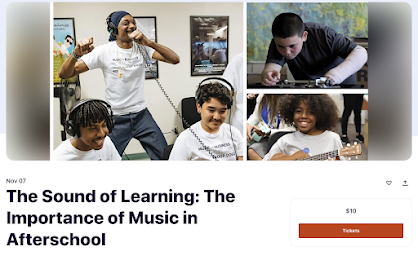
On November 7, 2022, from 10am- 12pm PST, Temescal Associates and The How Kids Learn Foundation will be sponsoring a webinar on this topic entitled, The Sound of Learning: The Importance of Music in Afterschool. Speakers will include researcher Patricia Shehan Campbell (UW), Les Peters (LBYMCA), Jon Bernson (BACR/SNBC), Kevin Peraza (Youth Institute Alumni) and Ren Daraio (Temescal Associates). To learn more and register for this informative webinar, click here.


Monday, April 18, 2022

COVID and Afterschool: Long Term Effects

Source: Good Morning America

By Sam Piha

When the COVID-19 pandemic struck in 2019, many of us thought that this would only last a couple weeks. For some time, we thought of it as an acute crisis, as opposed to a chronic crisis. When communities were locked down and schools were closed, our views changed. Afterschool programs quickly pivoted to ensure that their youth and their families received food, supplies and needed resources for learning.

Recently we surveyed 37 afterschool leaders (directors, coordinators, trainers, etc.) to learn more about how afterschool programs were affected by the pandemic over time. We asked two questions: “How has COVID-19 changed your afterschool program?” and “Do you think these changes are permanent?”

Below we offer a summary of what we learned and cite some direct quotes from respondents. 

Negative Impacts

Many responded that the pandemic created a staffing shortage (over 59%) and resulted in a reduction of afterschool services and attendance (both 30%). They reported other negative impacts on their programs, including

  • the elimination of field trips, 
  • decrease in budget and volunteer resources, 
  • decreased connection with the community, parents, and youth, 
  • increase in participant waitlists, 
  • increase in the need for SEL services, and
  • staff burnout.
Source: www.ibcces.org
"It has increased our waitlist significantly, which wouldn't be quite as severe, but hiring has been increasingly difficult and I need to open another class, but I can't find anyone to hire. Without staff I have to keep 20-22 kids on the waitlist that would otherwise be enrolled." – Afterschool Program Coordinator, California

"Covid protocols have changed the family interaction with our program as we have not been able to hold our in-person family events." – Afterschool Program Administrative Secretary, California

Source: Middlesex YMCA

The negative impact on schools included a shortage of teachers, substitutes, and school-bus drivers. The negative impact on youth included 

  • loss of school and peer relationships, 
  • fear of COVID, and 
  • learning loss. 

"COVID has shifted our focus to social and emotional support to students throughout the school day, especially in their classrooms and during non-structured times like lunch. Intentional community building is a big part of this kind of support -- with school-wide activities and initiatives to promote a sense of well-being. We are using contract funds to bring in mental health clinicians to support both students and families." – Afterschool Program Director, California

They also reported negative impacts on families, including family relationships and an increased demand for afterschool programs.

"COVID-19 has created a demand from families for after school care, families need a safe place for their children to be while they work. Families have more needs, not only for children to be safe after school, but for a place that is able to provide supper/snacks, assistance with homework and before school care as more and more families begin to work either graveyard or 2nd shifts in places of employment. Before and after school care programs offer many families working in education the ability to drop off their children at their own schools where they work." – Afterschool Program Staff, California

Positive Impacts

Many also reported positive impacts including a stronger relationship with host schools and a greater appreciation among parents and educators regarding the support offered by afterschool programs.

"The families in the community are coming to realize how important after school programs are for them to be able to have a safe place for their children." – Afterschool Program Coordinator, California

"When the pandemic started and schools were closed, the afterschool coordinators were key players on making sure the families received information and schools knew what families needed to support learning at home. From there, the leader’s roles changed to case management and technology ambassadors. We partnered with the district and other CBOs to ensure the families could have their basic needs met. These actions strengthened our relationship with teachers, school administrators and families." – Afterschool Program Director, California

"We developed more flexibility and creativity in delivering programs and serving our students. Our adapting to create and provide a large number of valuable virtual classes was greatly appreciated by students, parents, and school administrators." – Afterschool Provider, California 

Permanent?

When asked if these impacts were permanent, most thought they would eventually fade, but not for 2 or more years.

"I am hopeful that these impacts are not permanent, however, I expect it to take roughly 2 years to get back to where we need to be." – Afterschool Program Director, California

"I don't think that these negative impacts will be permanent. However, I do think that, academically, it will take a considerable amount of time to get these students back up to grade level. Emotionally, it may take years for these kids to recuperate from having a stifled social life due to the pandemic." –Afterschool Program Coach, California


YOU CAN SAY THANKS!

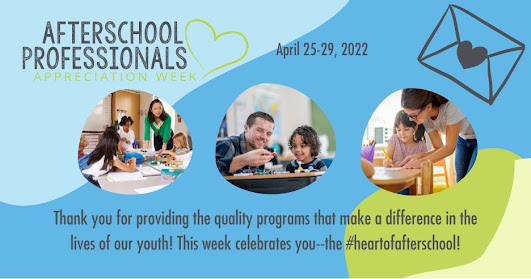
When the COVID-19 pandemic struck in 2019, we gained a new understanding of why afterschool workers are essential workers. Over the last two years, afterschool programs have pivoted to meet the new needs of schools, youth and their families. Afterschool Professionals Appreciation Week (April 25 – 29, 2022) is a perfect time to say “thanks” to afterschool workers. 

Begin planning how you will celebrate and acknowledge afterschool programs. To learn more, access talking points and a communication toolkit, go to https://naaweb.org/ideas.


A Book Drive for Children's Books Makes for a Fabulous Service- Learning Project

Source: The Children's Book Project  By Sam Piha   In our previous paper entitled, Reading Buddies: Promoting Literacy and Community Eng...