Showing posts with label engagement. Show all posts

Monday, November 17, 2025

How Rituals And Routines Foster A Supportive Environment

Source: WINGS for Kids

By Guest Blogger Wings for Kids. To view this original publication, click here.

Many of us follow an established morning routine: wake up, shower, eat breakfast, and get ready for the day. It’s routines like these that serve our mental, physical, and psychological well-being. In the same way, adults benefit from a daily routine, children feel more secure and confident when their day-to-day activities are familiar and predictable.

In fact, they are essential to their development and health. Research suggests that parents with preschool-aged children who regularly practice family routines like singing, reading, playing, and eating together have greater social-emotional health. Children depend on rituals and routines to provide structure throughout their day. These repeated events provide a foundation for daily life and can help establish an understanding of rules, expectations, and accountability. 

What’s The Difference Between a Routine and a Ritual?
Although sometimes used interchangeably, rituals and routines have their own specific attributes.

Routine
A routine, according to the National Association for the Education of Young Children (NAEYC) is defined as:

  • Predictable;
  • Repeated and;
  • Provides a foundation for daily tasks

As an example, at WINGS the Program Director establishes a routine for each day, week, and program year. This predictable schedule of events remains consistent, providing a basic framework around all program activities. Specifically, kids start each day with group time called Community Unity. There is a weekly routine of giving each other Positive Feedback or Heys & Praise on Mondays, and every year our programs routinely host a WINGS Graduation for students. This familiarity helps kids know what to expect and when to expect it.

Ritual
A ritual, on the other hand, is defined by the NAEYC as “a special action that helps…enhance aspects of our daily routines to deepen our connections and relationships.” As adults, we typically think of rituals similar to traditions like making certain snacks or food for the SuperBowl party. In this case, having the SuperBowl party is the routine and making the “family recipe” chili is the ritual. They provide ways to acknowledge the importance of such events and are usually comforting.

To illustrate, one daily WINGS routine is to say Words To Live By—seven kid-friendly verses that teach SEL skills—as a group. During this time, WINGS leaders can implement a ritual like a group chant, making up distinct hand motions to use during the Words, or ending the Words a certain way like making a unique face or hand gesture.

Why Are Rituals and Routines Important at School?
Like home, children thrive in a school environment that creates consistent rituals and routines throughout the day. A day with interspersed rituals and routines help children:

  • Know what is happening now and what comes next
  • Engage in learning
  • Feel in control of their environment
  • Reduce confusion or anxiety

Imagine this: you walk into your office at work in the morning and no one looks up to greet you. No “Hello!” or even a “Hey.” How does that make you feel? Uncomfortable? Maybe bitter or confused? Now imagine someone looked up, made eye contact, greeted you with a genuine smile, said your name, and maybe even gave you a fist bump. How much more welcomed would you feel?

A morning ritual like being greeted each day in this way helps to communicate simple messages:

  • You are valued and included.
  • We’re glad you’re in our community.
  • Greeting others by name and using good manners helps everyone feel more comfortable.

Even the simplest rituals and routines can have a remarkable impact. They help children feel supported, secure, and ready to learn.

“The impact of creating rituals and traditions is long-lasting. They build connections and provide an opportunity for everyone—children, families, and staff—to learn about themselves and others. They create a safe, warm, and secure environment where children are able to learn and grow. They offer learning experiences for children, staff, and families alike. They positively enhance both program and classroom environments.” - Jacky Howell & Kimberly Reinhard, Rituals and Traditions: Fostering a Sense of Community in Preschool, 2015

Make It Fun and Engaging

When teachers and staff develop creative routines and procedures, it’s a win-win. Adults provide kids with the necessary support structure to be successful and kids enjoy a fun and unique ritual or routine that helps them reduce stress or anxiety. These engaging environments provide excellent opportunities for positive interactions between children and adults, which are necessary for social emotional learning to be effective.

In addition, simple, repetitive activities can relieve stress on teachers and staff by taking the guesswork out of transitions between classrooms or gaps between lessons. Instead of making transitions feel like a chore, shake things up.

Make it fun! Here are a few ideas to make everyday tasks feel more like a game:

  • To get students’ attention, say “One, two, three. Eyes on me!” and the group replies “One, two. Eyes on you!”
  • Use a unique handshake for your group or even for each student to greet them each day
  • At the start of academic time, use a breathing technique or calming ritual to regain focus

Source: Ever Forward Club

Things To Consider
By approaching rituals and routines intentionally, you can find new ways to not only help support your kids, but also help them know what to expect, stay engaged, and feel a sense of community with you and their peers. Consider these tips as you dive in:

Include kids in decision-making: As you develop a thoughtful plan of routine activities in all learning areas, be sure to include children in discussions and planning. Don’t be afraid to have your kids help you put rituals in place and switch them up throughout the year. You’ll be surprised how quickly the kids will catch on and appreciate the consistency. Children are more motivated to work hard and learn more during daily academic time if they feel that they’ve made a contribution to plans and are emotionally engaged.

Understand expectations: When approaching established or new routines, it’s important that students understand the expectations, which will save time managing any behavior challenges later. It’s important for adults to address both inappropriate AND appropriate behavior with kids. Both actions serve as models for what’s acceptable behavior, so focus on developing a plan that reinforces positive behavior for optimal success. 

Build a sense of community: Rituals and routines can also be helpful in building a sense of community. Kids and adults alike crave a sense of belonging in and outside the classroom, and forming these bonds is the product of positive interactions over the course of time. Have a vision for what you want your community to stand for, what values it should have, and then authentically engage with your kids to build the foundation for your vision.

Be flexible: As with all activities, we know sometimes things don’t go according to plans. Life’s full of surprises, and when these surprises occur it’s important to be flexible. As significant as rituals and routines are, don’t exclude the opportunity to have a spontaneous experience once in a while or create a new ritual to keep things fresh and fun.

Ensure equity: Make sure your routines and rituals are equitable for all. An intentional design of routines and rituals—that value a range of student voices—will help to promote equitable and inclusive participation of students.

Flexibility and ingenuity are key when it comes to finding ways to support our kids and their social emotional health. Experiment with what you imagine might work for your students, observe the results, and make adjustments as needed. Continue to embrace the things that work, and gently let go of the things that don’t. 

Next Steps
Take a moment to reflect on the different routines and rituals you may already be using. Ask yourself a few questions to assess how you could improve or add other routines and rituals to your day:

  • Do you already use any rituals in your classroom? If so, what are they and when/why do you use them? How might you adjust them for various age groups and different purposes?
  • How could you take a routine and insert fun and engaging rituals into it? What, if any, benefit might there be to ritualizing certain practices in your classroom or program?
  • What preferred routines do you use in your classroom or program already? Why do you use them? (Be more specific than simply justifying your practices by saying you do them “to operate efficiently”).

To read previous LIAS Blogs on routines and rituals, click here.

Tuesday, October 25, 2022

What Researchers and Experts Have to Say: The Benefits of Music and Music Making for Young People


Source: The NAMM Foundation

By Sam Piha

We know through our own personal experience that music and music making is very important to youth. However, it is useful to identify research that speaks to this issue. We continue our spotlight on the power of music in afterschool. You can view our previous blogs here.

“Research expands understanding about the impact of music making and music education, the importance of music at every stage of life, and relationships between music and physical and emotional wellness… There is an increasingly robust literature of recent research findings that support the developmental importance of music in adolescence.” – The NAMM Foundation

There is an abundance of research on the importance of music for adolescent development. Below we offer a few findings from research on the benefits of music and music making for youth development.  

Belonging
“Music creates a much-needed sense of belonging in the lives of teenagers. Teenagers are known for feeling isolated from society and friends. Music, as an art form, can serve as an outlet to express the feelings of frustration that come with feeling isolated. Listening to music can also give teens the chance to feel connected to musicians and other fans of specific musicians. 

Music is also something that can be enjoyed fairly privately and away from judgement, allowing teens to tailor their experiences to what they actually would like to listen to or play. Learning how to play music also gives teens real, impressive, marketable skills, making them feel useful and capable. Writing and making music is also a way for teens to express themselves as privately or as publicly as they wish.” – Author and music therapist, Cara Jerniga 

Bridging Societal Gaps
“Our society tends to be very racialized, and experiences tend to be very different depending on race or ethnicity. Music provides the opportunity for teens of all races and ethnicities to share a common bond and learn about each other's cultures and backgrounds. For instance, much of the Rap and R&B genres are rooted in Black culture, and many of the prominent performers and names in those genres are Black. Music is also usually very personal to the experience of the artist, so through those things, music can be used as an educational tool for teenagers to learn about backgrounds differing from theirs.” – Author and music therapist, Cara Jerniga 

Executive Functions
“Music may expose the child to challenges and multi-sensory experiences which enhance learning abilities and encourage cognitive development. In particular, music can also engage cognitive functions, such as planning, working memory, inhibition, and flexibility. These functions are known as executive functions.” – Researcher, Dave Miranda

Source: Heart of LA

Developmental Resource 
“Music influences important aspects of adolescent development; music can represent a protective and a risk factor; and music can serve as an adjunct component in prevention and intervention. Therefore, it is proposed how music is a developmental resource in adolescence. It is argued that research on the developmental role of music can create a window to the everyday psychological, social, and cultural needs of contemporary adolescents.” – Researcher, Dave Miranda

Engagement 
“Music provides opportunities in school for teens’ engagement as performers, composers and intelligent listeners, and these activities and qualities appear to be deeply meaningful to them. For teens who are desperately seeking relevance, musical study may give them the balanced experience they require.” – NAMM 

Stress Relief and Coping 
“Music is a well known outlet for stress relief. Many people actively turn to music as a coping strategy when processing stress or sadness, because it helps shut out the noise of the world and the noise inside our heads. Furthermore, music is increasingly being used as a form of therapy, and music therapy in some capacity has existed for centuries. Teenagers, especially those going through puberty, conflicts with friends, or the college process, are under a high amount of stress. Listening to music has been seen to help teens process or release difficult sensations or emotions in a healthy way.” – Author and music therapist, Cara Jerniga

“Music helps adolescents release or control emotions and helps coping with difficult situations such as peer pressure, substance abuse, pressures of study and family, the dynamics of friendships and social life, and the pain of loss or abuse.” – The NAMM Foundation

Identity
“What music and music making means to teens? It helps define them as they grow up, it gives them purpose and meaning, and contributes to their success in school and in life.” – Joe Lamond, president and CEO, NAMM

Source: DJ Mackswell

“Music can also provide teenagers with a skill or hobby that is special to them, which can help further build identity and give teens something to be proud of during a period of life that is often characterized by low self-confidence. Music is an incredibly powerful tool that can be accessed and appreciated by people of all ages and backgrounds, and for that reason alone, it should be appreciated and utilized by anyone and everyone.” – Author and music therapist, Cara Jerniga

The Brain
“Research shows that making music changes the brain, and that these brain changes have tangible impacts on listening skills, learning and cognition.” – Nina Kraus, Ph.D., Director, Auditory Neuroscience Laboratory, Northwestern University

“Music training leads to greater gains in auditory and motor function when begun in young childhood; by adolescence, the plasticity that characterizes childhood has begun to decline. Nevertheless, our results establish that music training impacts the auditory system even when it is begun in adolescence, suggesting that a modest amount of training begun later in life can affect neural function.” – Tierney, Adam T., Jennifer Krizman, and Nina Kraus


VIDEOS
Below we cite 4 videos that explain the benefits of music and music making in the lives of young people. 


How Playing an Instrument Benefits Your Brain- Anita Collins


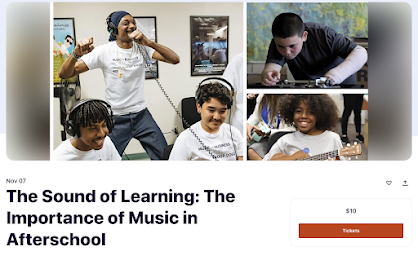
On November 7, 2022, from 10am- 12pm PST, Temescal Associates and The How Kids Learn Foundation will be sponsoring a webinar on this topic entitled, The Sound of Learning: The Importance of Music in Afterschool. Speakers will include researcher Patricia Shehan Campbell (UW), Les Peters (LBYMCA), Jon Bernson (BACR/SNBC), Kevin Peraza (Youth Institute Alumni) and Ren Daraio (Temescal Associates). To learn more and register for this informative webinar, click here.


Thursday, January 19, 2012

Extended Learning Time and More: An Interview with Karen Pittman, Part 1

, 
Karen Pittman
By Sam Piha


Karen Pittman is President and CEO of Forum for Youth Investment and is known nationally as the leading advocate for youth development. Many credit her with launching the youth development movement and being an important thought leader promoting policies and systemic approaches to supporting young people's development, including the Ready By 21 initiative. See her full bio below. 


Q: You have recently cautioned us to think more clearly about diverting funds and efforts to expand learning time by expanding the school day.  Can you briefly summarize your concerns?

A: Ensuring that all young people are ready for college, work and life requires integrated communitywide commitments to learning. While the current push to expand learning time offers some great opportunities, it could actually have the opposite effect of decreasing overall learning time in communities. This is because if public funding currently available to community-based organizations through programs like the 21st Century Community Learning Centers is redirected toward schools, some CBOs will have to reduce their programming or even shut down.  


Also, a shift toward schools alone being held accountable for expanded learning time could destabilize effective collaborations that are finally in place, actively supporting effective community-school partnerships. But the most important thing to remember is simply that more time doesn’t necessarily equal more learning. Learning opportunities must be high quality if they are going to produce more learning – whether they happen in classrooms or CBOs. 

Q: The Learning in Afterschool Project is stressing the need to increase learning engagement in OST programs by promoting 5 learning principles that should characterize how we design activities in afterschool programs.  These principles are: learning that is active, collaborative, meaningful, supports mastery and expands horizons. Can you comment on which of these you think are most important?

A: They are all critical. Your principles reflect what our own field experience and research suggest about the characteristics of effective learning environments. They speak to both staff practices and program content, which is important. I think that working toward mastery, which goes right to the intersection of program content and staff practices – is something we need to be more intentional about in out-of-school time (OST) settings. Ensuring that young people have opportunities to engage in activities that build their skills and interests over time can be difficult in settings where participation and staffing patterns aren’t always as consistent as school.


Q: Do you have any advice of how best to get these principles better integrated in our expectations of afterschool programs?

A: In our experience generating data that give staff concrete feedback about the extent to which they are implementing these principles and the kinds of practices that support them is extremely  powerful. We know that professional development as usual – sending staff off to a training here and a training there – does not change organizational practice in sustained ways.  The Forum’s Center for Youth Program Quality is working with over 60 networks of OST programs around the country to build their capacity to do this kind of continuous quality improvement work. This kind of data-driven continuous quality improvement approach is the direction that education and other human services fields are moving as well.

___________________________________________________________________
Karen Pittman is a co-founder, President and CEO of the Forum for Youth Investment. She started her career at the Urban Institute, conducting numerous studies on social services for children and families. Karen later moved to the Children’s Defense Fund, launching its adolescent pregnancy prevention initiatives and helping to create its adolescent policy agenda. In 1990 she became a vice president at the Academy for Educational Development, where she founded and directed the Center for Youth Development and Policy Research and its spin-off, the National Training Institute for Community Youth Work.
In 1995 Karen joined the Clinton administration as director of the President's Crime Prevention Council, where she worked with 13 cabinet secretaries to create a coordinated prevention agenda. From there she moved to the executive team of the International Youth Foundation (IYF), charged with helping the organization strengthen its program content and develop an evaluation strategy. In 1998 she and Rick Little, head of the foundation, took a leave of absence to work with ret. Gen. Colin Powell to create America’s Promise. Upon her return, she and Irby launched the Forum, which later became an entity separate from IYF.

Understanding Attention-Deficit Hyperactivity Disorder

Source: www.pexels.com By Sam Piha PURPOSE The purpose of this blog is to advance understanding of Attention- Deficit Hyperactivity Disorder...