Showing posts with label AfterSchool Today. Show all posts

Monday, April 24, 2023

A Place For Everyone: Supporting LGBTQ+ Youth In Out-Of-School Time Organizations

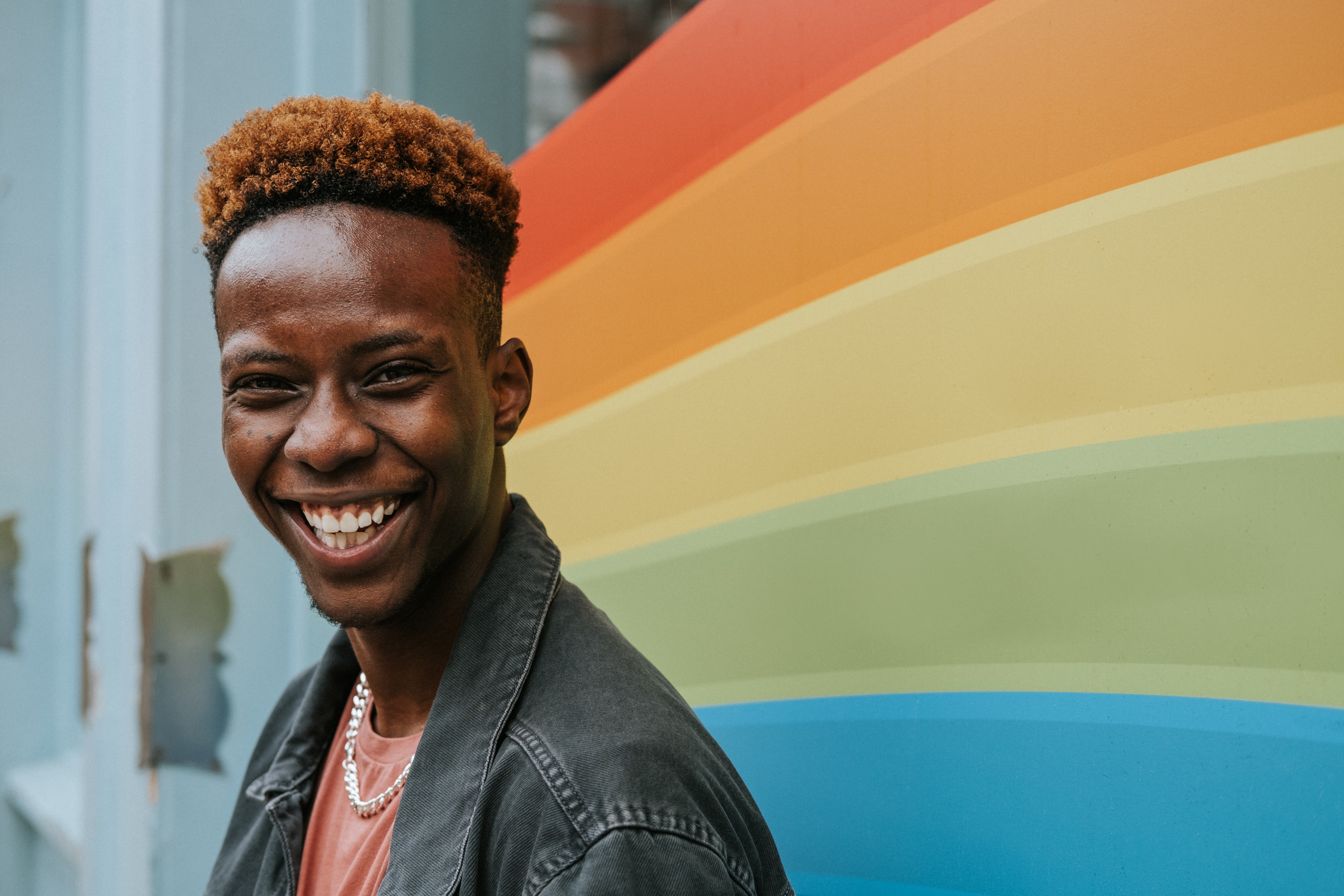
Source: Anete Lusina, www.pexels.com


By Guest Blogger, Clarke Hill
(This was originally published by the National Afterschool Association in the Spring 2023 Afterschool Today issue.)

In the world of youth development, very little is simple. More often than not, organizations are up against seemingly insurmountable odds in the fight for a just society for all young people. The battles young people face are everywhere, from mass shootings to global pandemics and crises related to mental health, housing, and extreme economic insecurity to name just a few. 

Advocating for LGBTQ+ young people can feel like one of these insurmountable tasks. The Trevor Project reports that in 2022 45% of LGBTQ youth seriously considered attempting suicide in the previous year, including 1 in 5 transgender and nonbinary youth, as a result of discrimination they faced in school, social gatherings, and at home. That is a staggering statistic. 

However, equally as staggering, is the finding that when trans and nonbinary young people have their pronouns respected by the adults in their lives they report suicide attempts at half the rate of other trans and nonbinary youth. In a world of big complex problems, using the correct pronoun is something we can all do without a whole lot of effort. When you start to dig into what else LGBTQ+ youth need to feel safe and supported, it turns out most of that is pretty simple too. 

Not only is it simple, out-of-school organizations actually have a unique ability to change those statistics by creating inclusive organizations for all and prioritizing the well-being of their LGBTQ+ youth. 

In this country, youth are provided a variety of places to feel safe and included; it is often taken for granted that home, community, church, school, sports teams, etc. are places for youth to find safety. The truth is that for many LGBTQ+ youth these are spaces that have caused trauma. In 2022 the Trevor Project found that only 37% of LGBTQ+ youth identified home as an affirming space and only 55% felt affirmed at school. Schools are often barred from supporting LGBTQ+ youth because of discriminatory policies instituted by school boards or local governments. The safety of one’s home is dependent upon the beliefs of one’s parents. Out-of-school time organizations often do not have to adhere to the same discriminatory policies and can ensure they are only hiring staff that are accepting and then provide continued training on active inclusion. 

Source: Afterschool Today Spring 2023

One of the easiest things your organization can do is ensure the use of correct pronouns. While it can feel difficult, asking someone for their pronouns and trying your best to use the correct pronouns gets easier as you practice. If you make a mistake and use the wrong pronoun, you can simply apologize and move forward with the correct pronoun. The effort is impactful to the young person even when mistakes are made. The use of they/them pronouns to address a singular person also might feel uncomfortable at first but it is something that we regularly do in the English language. For example, if you walked up to a table at a restaurant and saw a jacket left by a previous customer you might say “oh look, someone left their jacket, I’m going to take it to lost and found for them.” Change can be uncomfortable, and adjusting pronoun usage may have some bumps in the road, but in the end, our effort has real potential to reduce suicidal thoughts in young people. 

Remember, it is impossible to know everyone’s pronouns just by looking at them; staff can model sharing their pronouns when they introduce themselves and make sure to provide the option to share pronouns when they ask young people to introduce themselves. Additionally, you can offer name tags that have a blank for names and a blank for pronouns. Lastly, you may have seen the term “preferred pronouns” used in the past but the definition of preferred is an adjective to describe something that someone likes better than something else. If they were preferred pronouns, it means that other pronouns are acceptable to use which is not the case. 

Again, the youth development field faces big complex problems, but this is a solution with relatively low effort and extremely high impact. 

The lynchpin to creating an inclusive organization is ensuring your staff have received training specific to working with LGBTQ+ youth. Luckily, there are many fantastic resources that can help your organization with education: 

MORE ABOUT...

Clarke Hill, is the Principal and Founder of Clarke Hill Consulting and Co-Founder of Queer Connect. Clarke is a non-profit consultant with over 20 years of experience and her areas of focus as a consultant are non-profit organizational development, youth development, quality improvement, and data-driven DEI. She has worked with organizations across the country such as Boys and Girls Clubs of America, Washington Charters Association, Neighborhood House, and the Forum for Youth Investment. She also worked with government institutions including the Centers for Disease Control, King County, and the National Institute of Environmental Health Sciences. 


Tuesday, September 3, 2019

One More Thing

By Sam Piha

We are committed to speaking out on the youth impacts of immigration policies, sustained funding for afterschool, access to mindfulness training and playful learning opportunities afterschool. Below, we offer some additional resources on these topics.

IMMIGRATION AND TERROR
Source: Denver Public Schools
“In the wake of the horrible tragedy in El Paso, Texas, and the ICE raids in Mississippi that have come crashing down on a nation already awash in rising racial tension and vilification of immigrant families, we…are now more than ever focused on being a safe harbor for all of our children and families.” -Denver School Superintendent Susana Cordova (Cordova’s full statement is available in several languages.)

We do know that some school districts have addressed these issues regarding immigrant youth. But what about afterschool programs? According to the Afterschool Alliance, “In communities across the country, anxiety and concern are growing among immigrant children and families in response to new immigration policies and efforts currently underway. Afterschool programs can play an important role in creating a safe and welcoming environment for immigrant students and families and cultivating a sense of belonging and overall wellbeing.” The Afterschool Alliance hosted a webinar with speakers from the National Immigration Law Center and Legal Services for Children. 

The Alliance is also in conversations with the American Constitutional Society for Law & Policy on hosting another webinar next month on the topic of the ICE raids. We will share more information once we know more.

FUTURE SUPPORT FOR AFTERSCHOOL 
We know that funding for afterschool is not guaranteed. Thus, it is important that we advocate every year. One way is participation in the yearly Lights On Afterschool events. 


“Join more than 8,000 communities and 1 million Americans in celebrating afterschool programs for this year's Lights On Afterschool! This nationwide event, organized by the Afterschool Alliance, calls attention to the importance of afterschool programs and the resources required to keep the lights on and the doors open. To learn more about Lights On Afterschool, register an event, access event planning tools, or to find out what’s going on in your area, visit afterschoolalliance.org.” -Youth Service America
Why not invite a policymaker to visit your program? By engaging them, you begin to build a relationship and educate them about the importance of your program and the issues that matter to you.

Check out Youth Service America’s site on GYSD Advocacy / Public Official Engagement Tools. This page will help you engage public leaders. Voices for National Service has tips for Hosting a Successful Site Visit. The Afterschool Alliance outlines five simple steps to set up a site visit and also provides these three case studies

PLAYFUL LEARNING
Too often we have avoided the “F” word, FUN, in afterschool programs.  The National Afterschool Association (NAA) dedicated an issue of Afterschool Today to playful learning. In 2019, The Genius of Play spread its message to afterschool professionals and parents through a new partnership with NAA.  

MINDFULNESS
Source: Laurie Grossman

For years we have been promoting the value of teaching mindfulness. We thought you might enjoy this brief radio interview with a school volunteer that teaches mindfulness to young people in an Oakland school.

Monday, March 14, 2016

Spreading the Youth Development Gospel

By Sam Piha


Sam Piha
Temescal Associates and the LIAS Project are committed to promoting youth development and supporting and influencing the field of afterschool and summer programs. This comes in the form of webinars, authoring written pieces, trainings, and the hosting of Speaker's Forums and conferences.

Many of our efforts are done in collaboration with other thinkers and organizations. Below are some of the fruits of our labor. 


Stacey Daraio,
Co-Director
Temescal Associates
Webinar – Creating the conditions for social and emotional learning

This webinar offers a great discussion on best practices for encouraging social and emotional development in afterschool and summer learning programs. Speakers include Deb Moroney and Jaime Singer from American Institutes for Research (AIR), Stacey Daraio from Temescal Associates, and Aleah Rosario from California School-Age Consortium (CalSAC). 


Publication – AfterSchool Today: Supportive Afterschool Learning Environments

This Winter 2016 edition from the National AfterSchool Association (NAA) contains a number of articles on social emotional learning and practices that promote it. 

It contains an article authored by Ruth Obel-Jorgensen (CalSAC) and Sam Piha (Temescal Associates). The article is focused on Expanded Learning 360°/365: Skills for Success in School, Work, and Life and our paper, Student Success Comes Full Circle: Leveraging Expanded Learning Opportunities


Publication - Digital Badges in Education: Trends, Issues, and Cases

"In recent years, digital badging systems have become a credible means through which learners can establish portfolios and articulate knowledge and skills for both academic and professional settings. Digital Badges in Education provides the first comprehensive overview of this emerging tool." - Routledge.com

Temescal Associates and the Center for Digital Badges authored a chapter for this book entitled Afterschool and Digital Badges: Recognizing Learning Where It Happens. This book will be released in April 2016. 

_________________________
You can read other blogs by the LIAS project by going to: 

  • Expanded Learning 360°/365 Project website
  • LIAS Blog Written for the California Afterschool Network

A Book Drive for Children's Books Makes for a Fabulous Service- Learning Project

Source: The Children's Book Project  By Sam Piha   In our previous paper entitled, Reading Buddies: Promoting Literacy and Community Eng...