Showing posts with label expanded learning 360/365. Show all posts

Wednesday, April 18, 2018

SEL Drive in Schools Is Opportunity for Youth Developers

By Katie Brackenridge 

Originally Published in Youth Today

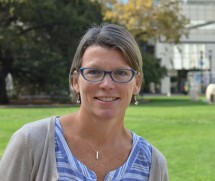
Katie Brackenridge
Schools are finally noticing what youth programs have known for decades. The way kids feel about themselves and how they connect with other people really matters. It matters narrowly for how they do in school and more importantly for their long-term choices and opportunities for a happy, productive, fulfilling life.

What we call youth development, the school day has started to focus on as social-emotional learning (SEL). Schools’ interest in SEL is a pendulum swing away from the No Child Left Behind focus on standards and standardized tests. This is exciting news for youth developers because we have expertise in this work. It allows us to partner authentically — not about homework help and test scores — but around the deep work of self-awareness, social connections, confidence and perseverance.

The drive for schools to embrace SEL is coming from a variety of national movements. The Every Student Succeeds Act (ESSA) requires states to define “nonacademic” indicators, giving examples like student engagement, school culture and climate, and staff engagement. This won’t feel different for many districts that have already noted the symbiotic relationship between SEL and Common Core-style teaching, both of which require and support collaboration, communication and critical thinking.


Photo Credit:
Rodel Foundation of Delaware
The shift is also driven by an extensive body of research showing that a foundational set of skills, beyond those traditionally identified as academic, are needed for students to really be prepared for the demands of higher education and the workplace. These skills, labeled SEL (or 21st Century Skills or noncognitive or soft skills), are ones that the education system had long taken for granted. When we look at them, they make perfect sense — the ability to control one’s emotions and behaviors, build relationships, feel confident in one’s ability — are skills that teachers and employers alike want to see in young people and adults.

Youth development programs — whether school- or community-based — offer an amazing resource for schools around SEL, but we need to be able to clearly communicate our value. The first and most obvious value is time. While schools last, on average, six hours per day and nine months of the year, kids are playing, learning and growing all day and all year. After-school and summer learning programs can offer an additional 690 hours (or 115 days) of learning time.

Another key asset is expertise in SEL. With deep roots in youth development, expanded learning programs help young people understand their potential and reach for it. Staff are deeply committed to creating safe spaces, giving kids the opportunity to learn and practice skills, encouraging their ideas and actions, and teaching them about their impact on each other and the world. The essence of youth worker skill is captured in the many after-school quality standards that many states including California have adopted.

In California, the Partnership for Children and Youth (PCY) has gathered best thinking from partners and stakeholders across the state to be as clear and concrete as possible about what expanded learning has to offer. A foundational document — Student Success Comes Full Circle — explicitly maps California’s quality standards and practices to defined SEL outcomes. Finding Common Ground clarifies how SEL is already embedded in many existing initiatives and practices — from youth development to Positive Behavior Intervention Systems to restorative justice. These reports may be helpful messaging tools in your community.

Beyond the reports, PCY has been running a learning community for nine districts and their after-school programs for the past three years. They are working together to plan and implement concrete strategies for better coordination and better programming in both the school day and expanded learning. The work is not easy, but districts and their partners have succeeded in creating joint staff development, shared meeting and planning time, assessments to measure and improve quality, and most importantly, a deeper understanding of the value and potential of each other’s work. Ultimately, we expect these steps will result in kids having a consistently positive SEL experience from 8 a.m. to 6 p.m. and throughout the year.

As SEL momentum grows across the country, we must seize the opportunity to communicate the value of after-school and summer learning, and become authentic partners with the school day. This work will stretch our own SEL skills, as well as our students’, as we find new ways to collaborate, communicate, think critically and be creative. The time is ripe for expanded learning programs and the school day to leverage each other’s expertise, resources and time so every child succeeds.


-------------
Katie Brackenridge is the vice president for programs for the Partnership for Children and Youth. She oversees initiatives to improve the quality of and access to after-school, summer and community schools efforts in California. She also makes recommendations and advises decision-makers about policies related to the expanded learning field, and is a member of the Expanded Learning 360°/365 project

Wednesday, February 14, 2018

#100Kmasks Challenge

By Sam Piha

The Ever Forward Club (Oakland) works with boys and young men to promote greater self awareness and awareness of others - both critical components to social emotional learning and character building. Their efforts include work in schools and trainings of educators and youth workers. They were also featured in a documentary entitled The Mask You Live In. 

Ashanti Branch, Founder and Executive Director of the Ever Forward Club, was a featured presenter and workshop leader at the recent How Kids Learn VII conference in Oakland, CA. 
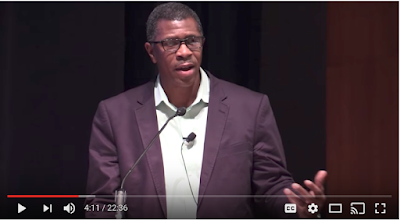
Darius Simpson

The Ever Forward Club has launched a #100Kmasks challenge. Below is an interview with Darius Simpson, Program Officer at the Ever Forward Club, about this challenge which can involve both adults and youth.

Q: Can you say a little bit about the Ever Forward Club?

A: Ever Forward aims to address the underlying causes of dropouts, the growing achievement gap of inner-city youth and youth violence in a preventive manner. The Ever Forward Club is a mentoring and youth development program for young men in grades 6-12. We have 3 programs, Ever Forward Club, Ever Forward Professional Development, and Ever Forward Experiences. 

Ever Forward is featured in a documentary called, The Mask You Live In (view the trailer below), which is an exploration of American Masculinity and how the hyper-masculine narrative of what it means to be a man, is failing our boys. 


Q: Can you describe the #100Kmasks challenge? 

A: The #100kMasks Challenge is a resource we provide to give a brief introduction to the larger work of the organization. With this challenge, we are connecting 100,000 people around the world to show that we are not alone in what we are going through. Students, parents, educators, families, employers, can all take advantage of this tool to build a deeper connection through taking the steps in this exercise. Our work is centered around young men, the #100kMasks cards are a way for us to reach more than just the youth we work with directly. 


Q: Why was this challenge created?

A: Ever Forward was featured in the documentary about American masculinity detailing the toxic ways we define and teach masculinity to our youth. Following the premiere of the documentary, The Mask You Live In, we began traveling all over the country with our signature 'Taking off the Mask' workshop. We wondered how we could make this work more impactful especially for those communities who could not afford to hire us. So using some of our design thinking principles learned at the Stanford D.school, we prototyped, tested and launched the mask card and set a goal of 100,000 masks. So far, we've found that, no matter the age or gender when people see each other's masks, it resonates and there's a community formed from that connection. 

Q: What is the significance of the "Mask"?

A: A mask is a metaphor representing what we allow the world to see about ourselves. We all wear masks for different reasons, at Ever Forward we don't believe the mask is an inherently bad thing. Sometimes a mask is necessary to survive, get from one place to the next. What we've found is that when people,  young men specifically, don't have a space to take off their masks and deal with what’s really happening for them, the mask becomes a part of them. That's where the conversation about what is living in what we call "the back of the mask" comes into our workshops and circles. 

Q: How can people get involved? For those who work with youth, how can they involve their youth?

A: We set a big goal and we really need the community's support in reaching our 100,000 mask goal. Folks can visit 100kmasks.com to let us know how many youth they work with and we can provide them with the tools to take them through the #100kMasks Challenge. We can also be reached @everforwardclub on all social networks. Please follow us, help connect us with people who we can partner with and who may be interested in funding this work. 

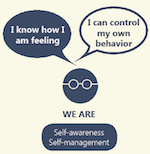
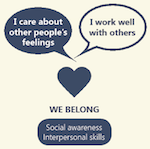
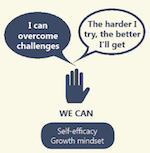
Q: The Expanded Learning 360°/365 collaborative is focused on promoting social emotional learning and character building and has defined this using three areas: We Are (self-awareness, self-management), We Belong (social awareness, interpersonal skills), We Can (self-efficacy, growth mindset). How does your mask exercise and workshop address these three areas? 

A: The Ever Forward Club was started to provide a safe space for young men to build connections in a brotherhood and to grow into men of character by helping them to develop healthy social-emotional tools. The work that Ever Forward - Siempre Adelante does with the Ever Forward Club, the Taking Off The Mask workshop and the #100kMasks Challenge is directly related to the areas that the collaborative has highlighted. 
http://partnerforchildren.org/selinelp/

We Are
: We help people see their individual unique selves and acknowledge 
what are the parts of themselves that they allow the world to see. Once they acknowledge this, they can see those things that they are perhaps not dealing with. 


http://partnerforchildren.org/selinelp/

We Belong: Once individuals recognize that they are not the only ones who are going through challenges, it helps them to more deeply connect to belonging to their own humanity and connection to others. 


http://partnerforchildren.org/selinelp/
We Can: I think that once people realize through our workshops or through seeing other masks in this campaign the encouragement is that they can make it, they can overcome the challenges that they face and most importantly they are not alone.

The social-emotional learning framework is so rich and sometimes young people and adults have one or two areas well organized and contextualized, but there are some of the areas that are in need of support and assistance. Our campaign is not designed to focus on any one area in particular, but we find that it helps individuals come alive to a deeper knowledge of themselves. 


——
Darius Simpson is an award-winning spoken word artist born in Akron, Ohio. He received his Bachelor’s Degree in Political Science from Eastern Michigan University. Darius uses poetry as a tool of healing, informing, and challenging his audience. His work was also featured in the film, Finding the Gold Within, a documentary by Karina Epperlein on what it means to be a young black male in America. Currently, Darius lives in Berkeley, CA and works as the Project Manager for the Ever Forward Club's #100kMasks Challenge. Before moving to Berkeley, Darius participated in several screenings and conferences, sponsored by Temescal Associates.

Wednesday, January 3, 2018

The Growing Importance of Social Emotional Learning and Character Building

By Sam Piha

Sam Piha
The pendulum is swinging back from our obsession with measuring learning using standardized tests to thinking about the whole child and the skills they will need to be successful. As a result, social emotional learning and character building have become important in schools and youth programs. Over the last year, we have been tracking recent articles, blogs, videos, and reports on these important issues. 


To view our listing of social emotional learning and character building resources, click here. All of the resources listed are links to the original documents.


Wednesday, July 19, 2017

Considering Cultural Context When Promoting SEL

By Sam Piha

Sam Piha
There is a growing consensus among educators and youth development experts that skills related to social emotional learning (SEL) are important to youth’s future success. We see this emphasized in the work promoting a positive school climate and the improvement of afterschool programs.

In fact, the California Department of Education - Expanded Learning Division (EXLD) has pulled together an ongoing SEL Planning Team. This Planning Team will offer recommendations on how best to integrate SEL into the System of Support for Expanded Learning, deepen SEL opportunities for students, and foster alignment around SEL strategies with the school day.

But how do we take into account cultural differences in framing SEL? Are SEL concepts culturally bound? We believe that these are important questions to explore.

In their support of California's CORE Districts and the integration of SEL, the Partnership for Children and Youth (PCY) amended their work on SEL concepts.

Katie Brackenridge
According to Katie Brackenridge (Vice President of Programs at PCY), “Based on input from several large school districts, we are shifting our language, from stressing the 'I' to 'We are, We belong, We can'. This is based on multiple conversations about a collectivist versus individualist world view and the reality that increasingly the kids in our schools are coming from countries and cultures that are more collectivist than the dominant white culture in the US.”

Below are two resources to explore these issues. How would you answer the questions around SEL and cultural differences?

- A brief video presentation, “The Limits and Possibilities of Social Emotional Learning” featuring Dr. Shawn Ginwright from San Francisco State University.


- An article entitled, Why Don’t Students Take Social-Emotional Learning Home? by Vicki Zakrzewski from the Greater Good Science Center at UC Berkeley.


Photo Credit: Hemera, via the Greater Good Science Center
_________________________

You can read other blogs by the LIAS project by going to: 

  • Expanded Learning 360°/365 Project website
  • LIAS Blog Written for the California Afterschool Network

Thursday, March 30, 2017

Strategies for Promoting Social-Emotional and Character Skills

By Sam Piha
Sam Piha
There is a growing consensus among school day and expanded learning educators that young people need social-emotional and character skills to be successful in school, work, and life.
The 360°/365 Project and Temescal Associates are offering a number of educational and training events for expanded learning program staff:
JOIN US AT BOOST
DAY I, Workshop 1: April 19th, 2017; 10:30-12:15 - Let’s Zoom in on Trust: The Role of Trusting Relationships in Expanded Learning
DAY I, Workshop 2: April 19th, 2017; 2:45 – 4:45 - Screening of Finding the Gold Within and Discussion

Day II, Workshop 1: April 20th, 2017; 10:00 – 12:00 - Social and Emotional Learning: Feedback and Communications Insights from the Field

Day II, Workshop 2: April 20th, 2017; 1:15 – 2:30 - Transforming Schools Through Restorative Practices and Engaging Youth Voice and Leadership

Day II, Workshop 3: April 20th, 2017; 3:45 – 5:15 - Promoting Success in School, Work, and Life!
Day III, Workshop 1: April 21st, 2017; 9:15 – 11:15 - I Belong
SPEAKER’S FORUMS
These Forums offer access to national thinkers and researchers, innovative practitioners, and networking opportunities.
Dr. Dale Blyth
April 6, 2017 (Los Angeles); 9:00am-12:00pm 
Getting Intentional about Social and Emotional Learning: Promise, Progress, and Priorities with Dr. Dale Blyth
April 10, 2017 (Oakland); 9:00am-12:30pm 
Getting Intentional about Social and Emotional Learning: Promise, Progress, and Priorities with Dr. Dale Blyth

April 28th, 2017 (Fresno); 9:00am-12:00pm
Ignite Learning with a Growth Mindset! with Emily Diehl (Mindset Works). Click here to request more information.


May 3rd, 2017 (Oakland); 9:00am-12:00pm
"Growth Heartset": Establishing a Culture of Caring with Stu Semigran

REQUESTS FOR ON-SITE TRAINING
The 360°/365 Project offers a number of no-cost and low-cost professional development training for expanded learning programs. These trainings are offered by CalSAC, Temescal Associates, and ASAPconnect. You can use this link to request more information.

Monday, October 3, 2016

LIAS Online Guide with Videos

By Sam Piha
Sam Piha

The Learning in Afterschool & Summer (LIAS) project has posted several video interviews on the relevance of the LIAS learning principles featuring afterschool and educational leaders from across the country. Now we have published an online, magazine-style guide to the LIAS learning principles with mini clips from these video interviews. This guide can be viewed with a computer, smartphone, or tablet. 

We also converted a number of important articles from the LIAS project and the Expanded Learning 360°/365 project. Click here to check it out. 


Monday, March 14, 2016

Spreading the Youth Development Gospel

By Sam Piha


Sam Piha
Temescal Associates and the LIAS Project are committed to promoting youth development and supporting and influencing the field of afterschool and summer programs. This comes in the form of webinars, authoring written pieces, trainings, and the hosting of Speaker's Forums and conferences.

Many of our efforts are done in collaboration with other thinkers and organizations. Below are some of the fruits of our labor. 


Stacey Daraio,
Co-Director
Temescal Associates
Webinar – Creating the conditions for social and emotional learning

This webinar offers a great discussion on best practices for encouraging social and emotional development in afterschool and summer learning programs. Speakers include Deb Moroney and Jaime Singer from American Institutes for Research (AIR), Stacey Daraio from Temescal Associates, and Aleah Rosario from California School-Age Consortium (CalSAC). 


Publication – AfterSchool Today: Supportive Afterschool Learning Environments

This Winter 2016 edition from the National AfterSchool Association (NAA) contains a number of articles on social emotional learning and practices that promote it. 

It contains an article authored by Ruth Obel-Jorgensen (CalSAC) and Sam Piha (Temescal Associates). The article is focused on Expanded Learning 360°/365: Skills for Success in School, Work, and Life and our paper, Student Success Comes Full Circle: Leveraging Expanded Learning Opportunities


Publication - Digital Badges in Education: Trends, Issues, and Cases

"In recent years, digital badging systems have become a credible means through which learners can establish portfolios and articulate knowledge and skills for both academic and professional settings. Digital Badges in Education provides the first comprehensive overview of this emerging tool." - Routledge.com

Temescal Associates and the Center for Digital Badges authored a chapter for this book entitled Afterschool and Digital Badges: Recognizing Learning Where It Happens. This book will be released in April 2016. 

_________________________
You can read other blogs by the LIAS project by going to: 

  • Expanded Learning 360°/365 Project website
  • LIAS Blog Written for the California Afterschool Network

Wednesday, November 25, 2015

Social-Emotional and Character Skills: Keeping it Simple

By Sam Piha and Ruth Obel-Jorgensen

There is a growing body of research that affirms that social-emotional skills and character development increase academic performance and are essential to success in work and career. Expanded learning programs are uniquely positioned to develop these skills. As a result there is a growing dialogue between expanded learning programs and the school day. 

By design, expanded learning programs are uniquely positioned to promote social-emotional and character development of young people. However, if afterschool and summer programs are to provide active and engaged learning opportunities and build skills through sequencing and mastery, they must be very intentional in their work. 
The problem with the acceptance of the importance of these skills is the large number of “lists” and frameworks that describe these skills. This often adds confusion and a sense of overwhelm. 

In California, a collaborative of intermediary organizations (ASAPconnect, California School-Age Consortium, Partnership for Children and Youth, and Temescal Associates/LIAS) came together to develop a simplified framework. With funding from the S. D. Bechtel, Jr. Foundation, we convened a research advisory group. This group looked at the available literature and contributed to a concept paper to synthesize the research. The result was a concept paper entitled, Student Success Comes Full Circle: Leveraging Expanded Learning Opportunities

The paper identified the foundational social-emotional and character skills that high-quality expanded learning programs should foster. These skills include self-awareness, self-management, social awareness, interpersonal skills, self-efficacy and growth mindset. It represents a call to action to school district leaders and expanded learning professionals to forge and strengthen partnerships to build social-emotional and character skills of children and youth. 

As the Common Core standards focus the school day on promoting interpersonal and social skills, now is the time for expanded learning programs to intentionally build these skills and to increase their partnership with the school day. 

For a copy of this framework and concept paper, click here. For more information and resources, visit www.expandedlearning360-365.com

_____________________________________________________________


Voices from the Field: The Importance of Teamwork and Collaboration Skills

Source: www.unsplash.com We are told by business leaders that soft skills, like team work and collaboration, are very important. We believe ...