Showing posts with label ever forward club. Show all posts

Monday, February 10, 2025

Why Are Boys Facing More Mental Health Issues?

Source: The Daniel Calazans Foundation 

There is growing concern regarding boys and mental health issues. Below is a guest blog by the Daniel Calazans Foundation entitled “Why Are Boys Facing More Mental Health Issues?”

“Men and women are traditionally socialized to act, think, and emote differently based on gender...Dominant conceptions of masculinity depict and encourage boys and men to be assertive, competitive, and independent, which fits with work in the public sphere.” - Reviewing the Assumptions About Men’s Mental Health: An Exploration of the Gender Binary

“From an early age, boys are encouraged to bury their feelings and present a tough exterior. Experts say these social dynamics have long-term implications for their mental health. While there is no one cause, psychologists and educators point to increasing pressures to succeed in school and a growing reliance on technology that can leave kids feeling isolated and vulnerable.

According to experts, boys can struggle more than girls because they have fewer tools to cope with emotions and stressors and are less likely to get the help they need. Without the means to effectively process emotions, boys are more prone to lash out in unhealthy ways or alienate themselves. 

Many boys—though certainly not all—have trouble talking about emotions and feelings because social norms have encouraged them to conform to masculine ideals that emphasize values like stoicism, toughness, and competitiveness. Generosity and compassion, in contrast, are seen as feminine characteristics and therefore present a threat to their socially constructed identities.

“Social norms and societal pressures deprive boys of the self-awareness and emotional vocabulary to recognize and process their feelings. In turn, they’re less likely to seek help when they struggle.” - The Daniel Calazans Foundation  

These pressures, which begin when they are very young, deprive boys of the self-awareness and emotional vocabulary to recognize and process their feelings; they are, in turn, unlikely to seek help from an adult or peers when they struggle.

Despite the uptick in depression among teens generally, a recent study found that only one-third of boys ages 12–17 sought help for depression in 2021, compared with 45 percent of girls. Sometimes, even when boys have the emotional language and recognize the flaws in societal norms, they still conceal their emotions to fit in.

Source: Harvard Gazette

Experts say that when boys can’t express emotions in a healthy way, they may become depressed or act out with anger and violence. Data shows that boys are nearly twice as likely to get into physical fights as girls, for example. Often, rather than an exploration of the cause of the behavior, these outbursts result in punishment by schools and parents being biased and unfair, particularly for students of color and students with disabilities. Because boys tend to lack emotional vocabulary—or they don’t feel free to express their feelings—their behavior becomes their communication. So, when a boy acts out or is disrespectful, we have to target their behaviors and not assault their character.

While boys can be reluctant to talk to therapists without nudging, one way to grow their emotional muscles is through affinity support groups at school, which research shows can be an effective tool for mitigating the impacts of distress and trauma. There, boys can start discussing common interests and superficial issues, then progress to talking about the pressures of growing up as a boy.”

An afterschool program that focuses on the needs of boys and masculinity, is the Ever Forward Club in Oakland, California. Their website offers numerous resources on this topic.

To view our paper “Thinking About Masculinity and the Needs and Wants of Boys,” click here. To view our webinar “Serving the Needs of Boys in Afterschool,” click here.


MORE ABOUT...

The Daniel Calazans Foundation (DCF) is committed to raising awareness of the scientific evidence that substance abuse and mental health conditions are often tied together and that certain underlying medical conditions can mimic the symptoms of psychiatric illnesses. They are a 501(c)(3) nonprofit on a mission to build awareness of the interconnection between mental health, substance use disorders, and possible physical conditions associated with emotional dysregulation and substance abuse issues, primarily as it affects our young people.

Ever Forward Club is a support program where at-risk young men could gather over lunch in a mentor-led safe environment, process emotions, and sustain each other through their struggles. Their mission is to address the underlying causes of dropout rates, youth violence, and the growing achievement gap through mentoring and social emotional development.


Tuesday, July 6, 2021

SEL and Character Building Program Practices

By Sam Piha

There is great agreement that social emotional learning skills are very beneficial in preparing youth for success. While we hear a lot about the “why” of SEL and character building, little is heard about the application (the “what” and “how”) within expanded learning (afterschool) programs. Expanded learning practices need to be uplifted so that the field can begin to see what good character/SEL practices look like.
Source: CASEL

We were interested in how programs promote these skills, so we put out an announcement asking afterschool programs to submit a program practice. We compiled these practices into a paper entitled, “Promising Activities, Practices and Resources: Promoting SEL and Character Skills in Expanded Learning Programs”. Each submission included a description of the submitting organization, a contact person within the organization, and a description of the practice or activity (i.e. purpose, time needed/frequency, target audience, and supporting resources).
The concept of social emotional learning has come to a frenzy in the past couple of years. Where does afterschool fit in to all of this? You would hope that we’d be right at the forefront. We’ve been doing this for years we know how to do it. – Karen Pittman, Forum for Youth Investment
Below are some practices that programs submitted:

Source: Temescal Associates
EDUCARE- Guided Visualizations. Visualizations are guided around a particular theme. There are a variety of mindfulness and centering practices they enjoy using and have found valuable. An example theme: Gratefulness. Youth close their eyes and review on an imaginary movie screen, images of who and what they are grateful for or appreciate - friends, family members, their health, people who support or inspire them, opportunities they have at school or elsewhere, etc.

Source: Ever Forward Club
EVER FORWARD CLUB- Mask Making. Youth are given a handout and asked to follow 3 steps anonymously. They are also asked to keep their eyes on their own paper. 1. Draw a mask on the left side. 2. Write 3 words on the front of the mask that represent qualities they let people see. 3. Write 3 words on the back of the mask that represent the things they don’t usually let people see. Adult leaders collect the masks and then have a few volunteers read a few of the responses anonymously. Youth are then invited to share how it felt hearing about the front and back of the masks of their peers. This would be a good time to discuss their commonalities and differences. Deeper processes can be created depending on the level of safety that has been generated in the room.

Source: LA's BEST
LA’S BEST- Sanford Harmony Cards. These cards provide engaging questions and activities to explore with a "buddy". The students then get to know each other and connect, which prepares them to handle future challenges and conflicts and opportunities to collaborate in a meaningful and constructive way. Sanford Harmony also provides recommendations of how and why to pair students together. The "Meet Up" strategy provides a way to strengthen a program's daily routine by incorporating practices that allow the entire group of students to explore how they treat each other and how they communicate with one another.

CALSAC- Regular Check Ins. This is an intentional space created for staff and youth to share how they are showing up in that space. Participants typically sit or stand in a circle during the check in. Next, a volunteer is asked to start and then chooses a direction for participants to follow. The information shared allows everyone in the room to understand what may be going on for them and honor that each individual may be coming into the space with varying life experiences. This allows everyone to see each other more wholly and create safety for people to be authentic in the space. It is recommended to create an opportunity for everyone to lead the check-in. (From Temescal Associates: It is recommended that each speaker holds a talking piece, such as a feather or item chosen by the group. The talking piece is held by the person speaking and then passed around the circle. Those not holding the talking piece are engaged in active listening.)

Source: Greater Good Science Center
GREATER GOOD SCIENCE CENTER- Gratitude Letter. In this activity, youth are guided to complete the Gratitude Letter practice, where they write a letter of thanks and then try to deliver it in person. To introduce the activity, the following script may be helpful: 'Most everyone enjoys thanks for a job well done or for a favor done for a friend, and most of us remember to say “thank you” to others. But sometimes our “thank you” is said so casually or quickly that it is nearly meaningless.' In this activity, you will have the opportunity to express your gratitude in a very thoughtful manner. Think of the people—parents, friends, coaches, teammates, and so on—who have been especially kind to you but whom you have never properly thanked. Choose one person you could meet individually for a face-to-face meeting in the next week. Your task is to write a gratitude letter (a letter of thanks) to this individual and deliver it in person. The letter should be specific about what he or she did that affected your life. It is important that you meet him or her in person. Don’t tell this person, however, about the purpose of this meeting. This activity is much more fun when it is a surprise to the person you are thanking.
-----------------


Wednesday, February 14, 2018

#100Kmasks Challenge

By Sam Piha

The Ever Forward Club (Oakland) works with boys and young men to promote greater self awareness and awareness of others - both critical components to social emotional learning and character building. Their efforts include work in schools and trainings of educators and youth workers. They were also featured in a documentary entitled The Mask You Live In. 

Ashanti Branch, Founder and Executive Director of the Ever Forward Club, was a featured presenter and workshop leader at the recent How Kids Learn VII conference in Oakland, CA. 
Darius Simpson

The Ever Forward Club has launched a #100Kmasks challenge. Below is an interview with Darius Simpson, Program Officer at the Ever Forward Club, about this challenge which can involve both adults and youth.

Q: Can you say a little bit about the Ever Forward Club?

A: Ever Forward aims to address the underlying causes of dropouts, the growing achievement gap of inner-city youth and youth violence in a preventive manner. The Ever Forward Club is a mentoring and youth development program for young men in grades 6-12. We have 3 programs, Ever Forward Club, Ever Forward Professional Development, and Ever Forward Experiences. 

Ever Forward is featured in a documentary called, The Mask You Live In (view the trailer below), which is an exploration of American Masculinity and how the hyper-masculine narrative of what it means to be a man, is failing our boys. 


Q: Can you describe the #100Kmasks challenge? 

A: The #100kMasks Challenge is a resource we provide to give a brief introduction to the larger work of the organization. With this challenge, we are connecting 100,000 people around the world to show that we are not alone in what we are going through. Students, parents, educators, families, employers, can all take advantage of this tool to build a deeper connection through taking the steps in this exercise. Our work is centered around young men, the #100kMasks cards are a way for us to reach more than just the youth we work with directly. 


Q: Why was this challenge created?

A: Ever Forward was featured in the documentary about American masculinity detailing the toxic ways we define and teach masculinity to our youth. Following the premiere of the documentary, The Mask You Live In, we began traveling all over the country with our signature 'Taking off the Mask' workshop. We wondered how we could make this work more impactful especially for those communities who could not afford to hire us. So using some of our design thinking principles learned at the Stanford D.school, we prototyped, tested and launched the mask card and set a goal of 100,000 masks. So far, we've found that, no matter the age or gender when people see each other's masks, it resonates and there's a community formed from that connection. 

Q: What is the significance of the "Mask"?

A: A mask is a metaphor representing what we allow the world to see about ourselves. We all wear masks for different reasons, at Ever Forward we don't believe the mask is an inherently bad thing. Sometimes a mask is necessary to survive, get from one place to the next. What we've found is that when people,  young men specifically, don't have a space to take off their masks and deal with what’s really happening for them, the mask becomes a part of them. That's where the conversation about what is living in what we call "the back of the mask" comes into our workshops and circles. 

Q: How can people get involved? For those who work with youth, how can they involve their youth?

A: We set a big goal and we really need the community's support in reaching our 100,000 mask goal. Folks can visit 100kmasks.com to let us know how many youth they work with and we can provide them with the tools to take them through the #100kMasks Challenge. We can also be reached @everforwardclub on all social networks. Please follow us, help connect us with people who we can partner with and who may be interested in funding this work. 

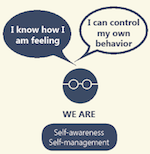
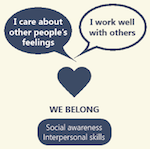
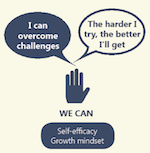
Q: The Expanded Learning 360°/365 collaborative is focused on promoting social emotional learning and character building and has defined this using three areas: We Are (self-awareness, self-management), We Belong (social awareness, interpersonal skills), We Can (self-efficacy, growth mindset). How does your mask exercise and workshop address these three areas? 

A: The Ever Forward Club was started to provide a safe space for young men to build connections in a brotherhood and to grow into men of character by helping them to develop healthy social-emotional tools. The work that Ever Forward - Siempre Adelante does with the Ever Forward Club, the Taking Off The Mask workshop and the #100kMasks Challenge is directly related to the areas that the collaborative has highlighted. 
http://partnerforchildren.org/selinelp/

We Are
: We help people see their individual unique selves and acknowledge 
what are the parts of themselves that they allow the world to see. Once they acknowledge this, they can see those things that they are perhaps not dealing with. 


http://partnerforchildren.org/selinelp/

We Belong: Once individuals recognize that they are not the only ones who are going through challenges, it helps them to more deeply connect to belonging to their own humanity and connection to others. 


http://partnerforchildren.org/selinelp/
We Can: I think that once people realize through our workshops or through seeing other masks in this campaign the encouragement is that they can make it, they can overcome the challenges that they face and most importantly they are not alone.

The social-emotional learning framework is so rich and sometimes young people and adults have one or two areas well organized and contextualized, but there are some of the areas that are in need of support and assistance. Our campaign is not designed to focus on any one area in particular, but we find that it helps individuals come alive to a deeper knowledge of themselves. 


——
Darius Simpson is an award-winning spoken word artist born in Akron, Ohio. He received his Bachelor’s Degree in Political Science from Eastern Michigan University. Darius uses poetry as a tool of healing, informing, and challenging his audience. His work was also featured in the film, Finding the Gold Within, a documentary by Karina Epperlein on what it means to be a young black male in America. Currently, Darius lives in Berkeley, CA and works as the Project Manager for the Ever Forward Club's #100kMasks Challenge. Before moving to Berkeley, Darius participated in several screenings and conferences, sponsored by Temescal Associates.

Tuesday, September 5, 2017

"Taking Off the Mask": Working with School-Age Boys

By Sam Piha


What does it mean to be male? There are many messages that are absorbed by boys and young men - some of which are useful and others that are destructive. 

When Ashanti Branch was a teacher in Oakland, he recognized that boys and young men needed a place to explore this. He left teaching and founded the Ever Forward Club. “At the Ever Forward Club, we believe that all young men have the desire to be fully alive – to be loved, respected, held in high regard, held to high expectations, held accountable for their actions and supported to help achieve their goals.” - Ever Forward Club Website 

In 2014, the Ever Forward Club partnered with The Representation Project to develop the documentary, “The Mask You Live In”. (The Mask You Live In follows boys and young men as they struggle to stay true to themselves while negotiating America’s narrow definition of masculinity. Experts in neuroscience, psychology, sociology, sports, education, and media also weigh in, offering empirical evidence of the “boy crisis” and tactics to combat it.) See the trailer below. 


We invited Mr. Branch to serve as a speaker and workshop leader On October 17, 2017 as part of our Speaker’s Forum series. 

We also recently conducted a video interview with Mr. Branch asking him about his views on the needs of boys and young men and how we can serve these needs in afterschool. Below are some of his responses.
"Taking Off the Mask": Working with School-Age Boys with Ashanti BranchOctober 17, 2017 in Oakland, CA

“I think that after school programs are becoming aware that there is a need to support young men in really specific ways. This is coming out of this idea that for so long there's been just a place of ignoring boys and allowing certain behaviors to be left as 'boys will be boys' or 'that's just the way boys are.' I think that what has happened is that has been let go for so long that young men have found themselves in a crisis. 

Society doesn't give our young men really good tools with dealing with sadness and fear and shame and other kind of emotions like that. They're clear in what you do when you're angry. They're clear about what you do when you're happy. So if you don't fit in happy or angry, what do you do with the other (not so positive) emotions? Usually it comes out as anger. 

Everything is converted to anger or I just pretend like it doesn't matter, then I get checked out to the world. 

They isolate, many feeling that ‘no one cares about me’. They begin to self-medicate, self-fulfill those feelings of not being a part of the group - engaging in drugs, alcohol, rampant unprotected sex, gangs, etc. Many of these behaviors are about  the need to cover up the feelings that they're really trying to figure out. How do I deal with this real feeling?

The afterschool space gives us a space to help our young men know that, ‘You're valuable. You may not do so good in your bookwork, but you've got a lot of skills.’

The afterschool system works because it allows for some students to get a taste for something else, to get to see how good they can be at something that's not going to be marked as a grade. Their creativity is not going to be taken away and crushed when somebody tells you, ‘your drawing is not according to the rubric’. Afterschool just provides a safer space. 

That's what we're trying to do in Ever Forward. We're trying to do more work around the social-emotional development of our young men, teaching them to be social-emotional leaders, so that it doesn't just happen afterschool. It happens all day long.”
-------------------------

Ashanti Branch is Founder and Executive Director of The Ever Forward Club. Ashanti works to change how young men of color interact with their education and how their schools interact with them. Raised in Oakland by a single mother on welfare, Ashanti left the inner city to study civil engineering at Cal Poly – San Luis Obispo. A construction project manager in his first career, his life changed after he tutored struggling students and realized his passion for teaching. In 2004, during Ashanti’s first year teaching high school math, he started The Ever Forward Club to provide support for African American and Latino males who were not achieving to their potential. Since then, Ever Forward has helped all of its more than 150 members graduate from high school, and 93% of them have gone on to attend two- or four-year colleges, military or trade school.


The Ever Forward Club was featured last year in the documentary, “The Mask You Live In,” which premiered at the 2015 Sundance Film Festival. After completing a fellowship at the Stanford d.school in 2016, Ashanti, stepped away from working for a school district and began working as the Founding Executive Director for Ever Forward-Siempre Adelante, in an effort to grow the organization to serve thousands of Bay Area students. In April 2017, Ashanti was awarded a fellowship from the national organization CBMA - Campaign for Black Male Achievement.

Friday, April 28, 2017

Expanding Horizons, Positive Youth Development, and SEL: The Power of Nature, Part 2

By Sam Piha


Sam Piha
Offering young people the chance to experience nature, particularly wilderness settings, provides powerful opportunities to promote social-emotional learning, build character skills, and build relationships and a sense of belonging. (See Part 1 of this blog post here.)

Below we continue our interview with youth program leaders who can speak directly to the power of outdoor and wilderness experiences for youth, especially inner-city youth.


Q: Exposing youth to the outdoors can be an expensive and complex task. For programs that do not have access to transportation or camping equipment, what is your recommendation for how they can expose their youth to the outdoors?
Bob Cabeza,
Youth Institute

Bob Cabeza, Youth Institute: I would strongly recommend partnering with agencies who have lots of experience in outdoor education as well as experience in Youth Development. Make sure that they have diverse staff as role models and leaders for the youth. Otherwise, its usually white enfranchised staff from wealthier socio-economic backgrounds and environments who are totally into the wilderness and environment due to life long access but know very little nor can empathize with inner city minority youth. 

A day trip does not give any type of long term impact that a multi-day camping wilderness experience does. They are not the same thing. Also, minority low-income youth need to gain access to beautiful nature, not just a local park. According to National Park data, over 92% of people who visit the parks are caucasian and older. We need to turn that around quickly or this generation will not have the love of the outdoors and advocate for the environment when they get older. 

We contract with other agencies and YMCA's nationally to take youth into the wilderness. I would advise programs to start small. Start with a few youth and staff and maybe a three day camping experience. That way, the cost is less and the staff gain confidence and experience as they move forward.

Brad Lupien,
arc
Brad Lupien and Staff from arc: Transportation in particular is expensive which poses a challenge for may programs. Adventure Sports and camping can be costly too.  But, parks, beaches, forests are cheap. 

Some ideas:
  • There are lots of curriculum books out there for activities that can be done on a campus.  These may be east coast based and out of date but examples include; “Keepers of the Earth” and “And This our Life.”  Activities include leaf identification, nature art, gardening etc.  Essentially, you can bring nature to the schools. At the same time, getting OUT in nature is preferred.
  • There are cheaper ways to get kids into nature. Los Angeles added bus routes that have stops at State Parks.  “Surf Bus” offers surf instruction and the bus for free.  Online pages offer geocaching in local parks. The DOCENTS at city, state and national parks will do group specific walks/talks for free.
  • Finally, we, at arc, use the adventure outings as part of the leadership curriculum.  On campus classes and workshops on communication, problem solving, critical thinking, group dynamics are paired with culminating adventure/nature trips. This allows more expensive programs to be paired with less expensive programs which gets the overall budget to align.

Ashanti Branch, Ever Forward Club: I love the outdoor element, but it
requires an enormous amount of time and planning. To make this happen, we
Ashanti Branch,
Ever Forward Club
take advantage of the offerings of programs that specialize in taking youth on wilderness and camping trips. We partner with Bay Area Wilderness Training, which provides a gear library so that the cost barrier to getting youth outdoors is not a factor. We also partner with Young Men's Ultimate Weekend, a modern day Rites of Passage for young men. We have taken over 60 of our youth to this weekend over the years. This organization creates an outdoor weekend initiation for young men as they are making the journey from young men into mature adulthood. 


Q: What kind of experiences does your program offer youth? 

Bob Cabeza, Youth Institute: We offer a one week wilderness retreat for our Youth as an entry point to the Youth Institute to help them develop socially and emotionally before we delve into the academic and workforce skill building parts of our program. These experiences are not 'cabin camp'. They are outward bound type of experiences where youth sleep on the ground, build their own shelters, cook, clean, do orienteering, hike, climb, swim in lakes and rivers. They are intense group work learning impactful transformational experiences for youth. Our Youth bond as one family through these experiences and in numerous evaluations, this experience is what keeps them actively engaged in all areas of our program for many years. 


Photo Credit: Youth Institute
Brad Lupien and Staff from arc: What arc Adventure doesn’t offer is a cookie-cutter program. Every kid, every teenager, and every adult is unique in every possible way, so our trips are as well. The most important thing an outdoor education experience can be is accessible, so that participants feel welcome in the new environment and are encouraged to come back. We don’t make assumptions about the groups that we work with, making them fit into the “arc” culture and way of running programs. We take the time to learn the school or team culture, the comfort and participation level of the group, and the things the group wants to accomplish in their time with us, so that our program is a natural extension of their learning and a singularly memorable experience that they’ll want to repeat again and again.

Arc programming ranges from single day adventures (rock climbing, snorkeling, kayaking, mountain biking, hiking, surfing, canyoneering) to multi-day camping and backpacking trips.  Staff consist of certified guides to handle the adventures and naturalist/scientist to layer in the hands-on science.  Everyone is trained on youth development, leave-no-trace philosophy and group facilitation.  Whether working with a college, elementary school, church, or after school program we design the program to meet the unique needs of the group while always blending the “sport” with life and social skills lessons.  A day of rock climbing teaches figure 8 knots and ATC use but also how to deal with fear in our lives and how communication is a critical tool in goal setting.


Photo Credit: arc


Dr. Mark Schillinger, DC
YMUW
Dr. Mark Schillinger, Young Men's Ultimate Weekend: The Young Men's Ultimate Weekend is a modern, nonreligious, wilderness rite of passage initiation for young men ages 13 – 20. Young men of all socio - economic backgrounds attend our event in order to freely voice their concerns about becoming a man and acquire the leadership skills necessary for a responsible adulthood. Young men are in an environment where they can voice their concerns about adulthood, learn leadership skills and discover their own, personal values. The YMUW has a one-to-one ratio of mentors to young men, so young men are in a village with well-trained caring adult men who know how to model the right values.


------------
Bob Cabeza is Vice President of Community Development at the YMCA of Greater Long Beach and Founder of the Youth Institute. The Youth Institute is a year-round program that uses technology as an integral mechanism for promoting positive youth development and developing pathways to post secondary education and career readiness of low-income, culturally diverse urban high school youth. They built their program culture by exposing their youth to wilderness experiences. 

Brad Lupien is President and CEO at arc. arc is an after school and experiential education provider. They bridge the opportunity gap by creating transformational learning opportunities that empower youth to realize their full potential. They rely heavily on engaging youth in outdoor sports and wilderness activities.


Ashanti Branch is Founder and Executive Director at Ever Forward Club. Founded in 2004, the Ever Forward Club mentors young men of color in middle and high school by providing them with safe, brave communities that build character and transform lives.  


Dr. Mark Schillinger, DC, is Co-Founder of Young Men's Ultimate Weekend (YMUW). The purpose of YMUW is to provide young men with a weekend filled with incredible fun and challenges, while building a foundation for a confident and successful adulthood, through learning the importance of teamwork, developing a sense of accomplishment and acquiring leadership skills.

Thursday, April 13, 2017

Expanding Horizons, Positive Youth Development, and SEL: The Power of Nature, Part 1

By Sam Piha


Sam Piha
When I managed afterschool programs in West Contra Costa County (CA), we found that taking young people into nature and the wilderness were very powerful experiences. These included backpacking, canoe trips, and a week long outdoor experience at the YMCA camp on the eel river. 

Below we offer two videos that capture the importance of taking young people into nature. The first video focuses on older youth who are learning to rock climb. The second video focuses on Oakland children who are visiting nearby Muir Woods. For many, this is the first time that they have been outside of the city.


Youth Development, Entrepreneurship, and Rock Climbing
Nature Now


National parks turn into classrooms to turn a 
new generation into nature lovers

You can view an article from the Greater Good Science Center and another article authored by Bob Cabeza. 

Below we offer an interview with youth program leaders who can speak directly to the power of outdoor and wilderness experiences for youth, especially inner-city youth.

Q: What are benefits to exposing young people to nature and the wilderness - benefits to individuals, the group, even the adult supervisors?


Bob Cabeza,
Youth Institute
Bob Cabeza, Youth Institute: Nature is therapy to the nature deprived. Both young staff and youth create family bonds, learn about themselves and their place in the world and truly developed multiple skills simultaneously. It's layered hyper learning for all of the senses. Nature heals the wounds that society inflicts upon young people. Nature can be used as a rite of passage and as a medium to impact young people's lives in meaningful and productive ways. Such as helping them come to terms with issues in their lives. Helping them understand their potential and place in the world. There are numerous opportunities for metaphorical learning that are directly transferred into real life problem solving, academic and workforce skills. Nature unto itself teaches introspection and develops an appreciation of beauty and peace. It is meditative to the brain, heart and soul. 


Brad Lupien,
arc
Brad Lupien and Staff from arc: A hike, paddle, peddle, climb, or adventure in the back country truly expands horizons.  By stripping away the noises, stresses and chaos of daily life, one’s mind can open up.  There is a reason that across all cultures and religions prolonged time in nature is a rite of passage, a path to a higher being, and method for enlightenment.  More practically, adventure sports, gear and experience has become a pastime of the wealthy.  But, our parks, forests and beaches are free … or very inexpensive.  

Taking kids into nature is a simple and inexpensive way to close an opportunity gap. If we know that learning happens when it is active learning and/or collaborative learning, then outdoor education is a no brainer.  Young people must work together to reach a common goal (the top of a mountain, a distant island, or a the other side of a stream) and passive observation as you ascend, paddle, or traverse is simply not an option.   At arc, we often find that the adults staff joining the group as “chaperones” become “co-players” without prompt or push.  They come as the adult authority and leave as a co-participant.  The experience brings out the inner child and melts the traditional student/teacher, learner/presenter relationships.  Learning becomes collaborative with the adult vs for the adult.


Ashanti Branch,
Ever Forward Club

Ashanti Branch, Ever Forward Club: 
Outdoors are a bonding opportunity for youth. Getting young men out of their regular environment allows for an opening of the mind and a deepening of the heart. Often times within the confines of the concrete jungles with all of the radio waves and search for bars and likes; our young people often miss out on deep conversations and connections that they desperately want and need.  


Dr. Mark Schillinger, DC
YMUW
Dr. Mark Schillinger, Young Men's Ultimate Weekend: As a youth mentor, I have dealt with many young men who are having a hard time in school, struggling to have healthy relationships, and suffering from emotional problems because of their lack of exposure to the healing qualities of nature and to the lessons it offers.

I have seen how getting young men active and involved in group outdoor activities has helped them develop analytical skills. The demands of being outdoors force them to evaluate situations carefully and to hone their masculine wisdom and logic to make good decisions. Being outside, as it turns out, is not only good for their bodies—it’s also good for cognition. Something magical happens when young men are given the freedom to experience nature. Socially, physically, and mentally, they grow. Nature is the best classroom for them to discover who they really are, practice accepting and dealing with real-world situations, and gain trust in other males and their ability to work together to get things done. They develop confidence in their instincts and overcome their fears of the unknown.

Q: This is important for all children and youth. Why is it especially important for low-income and inner-city youth?

Bob Cabeza, Youth Institute: Well run outdoor education programs in nature teach problem solving, social and emotional learning, build intense positive relationships between peers and adults. It also tests ones confidence and develops critical, analytical, abstract and sequential thinking skills. These experiences can be tailored to teach communication skills, diversity and decision-making, and intense long term team building. – Bob Cabeza

Brad Lupien and Staff from arc: The importance of exposing low-income and inner-city youth to the outdoors cannot be overstated. Many students form our urban centers have no exposure to the state parks, forest areas, public beaches, and lakes right in their backyards.  Once they experience nature’s classroom and playground for the first time an awakening can occur within them. 

Half of the kayaking trips we take with low-income Los Angeles youth find that the kids have lived in LA their whole life, but have never seen the ocean. Most of the trips we lead with inner-city youth see the most common questions not being about the bugs or the dirt, but “Is this free?” and “Can I take my family?” After playing in the outdoors and feeling that instant connection to nature, it opens up a whole new world that students want to be part of, and they want to take their families with them. It exposes them to healthy lifestyles, environmental awareness, and a love of wildlife that they might not otherwise have access to. 

Dr. Mark Schillinger, Young Men's Ultimate Weekend: Getting young children out into nature is important for inner-city youth. Inner-city youth tend to be closed-in by buildings, buses and bulldozers. Nature is the perfect playground for them to more fully challenge their brains in a healthy way to develop their learning skills. Because movement and learning go hand-in-hand, nature affords young people the ability to move more freely, without worry of getting hurt or hurting others. Additionally, inner-city youth are under a great deal of stress. Nature is the perfect playground to release their pent-up energy safely and freely. Additionally, by being out in nature – especially at night – children learn to develop the virtue of, "awe". It's important for inner-city youth to begin to contemplate that nature does not only include the earth, but also includes a vast and mysterious universe that needs to be explored.

------------
Bob Cabeza is Vice President of Community Development at the YMCA of Greater Long Beach and Founder of the Youth Institute. The Youth Institute is a year-round program that uses technology as an integral mechanism for promoting positive youth development and developing pathways to post secondary education and career readiness of low-income, culturally diverse urban high school youth. They built their program culture by exposing their youth to wilderness experiences. 

Brad Lupien is President and CEO at arc. arc is an after school and experiential education provider. They bridge the opportunity gap by creating transformational learning opportunities that empower youth to realize their full potential. They rely heavily on engaging youth in outdoor sports and wilderness activities.

Ashanti Branch is Founder and Executive Director at Ever Forward Club. Founded in 2004, the Ever Forward Club mentors young men of color in middle and high school by providing them with safe, brave communities that build character and transform lives.  

Dr. Mark Schillinger, DC, is Co-Founder of Young Men's Ultimate Weekend (YMUW). The purpose of YMUW is to provide young men with a weekend filled with incredible fun and challenges, while building a foundation for a confident and successful adulthood, through learning the importance of teamwork, developing a sense of accomplishment and acquiring leadership skills.

Serving Pregnant Teens in Afterschool Programs

Source: www.azcentral.com By Sam Piha Several years ago we partnered with the Long Beach Youth Institute to film a documentary on high schoo...