Showing posts with label CASEL. Show all posts

Wednesday, November 9, 2022

How Afterschool Programs Should Address COVID Learning Loss? Staying In Their Lane

Source: Photo by Ketut Subiyanto: https://www.pexels.com

By Sam Piha

Much has been discussed and written recently about learning loss during the pandemic. Headlines like those below raise alarms among educators and parents.

“These are some of the largest declines we have observed in a single assessment cycle in 50 years of the NAEP program,” said Daniel McGrath, the acting associate commissioner of NCES. “Students in 2022 are performing at a level last seen two decades ago.” - Associated Press, Reading and math scores fell sharply during pandemic, data show

But children and youth suffered more than academic learning loss. They experienced trauma due to family death/illness, fear, and isolation. Two years of upheaval as schools and community-based afterschool youth programs, including those offering sports, the arts and music activities were shut down. Young people spent this time learning, playing and socializing from home. Virus outbreaks among adult staff and youth continued the disruption even after kids returned to school and afterschool programs. In addition to academic learning loss in math and reading, we also saw social learning loss, increased absences and behavior problems.

“Three years into the pandemic, K-12 students continue to face deep social-emotional learning (SEL) challenges. Now is a crucial time for districts and schools to address students’ social-emotional needs to help them be resilient, ready to learn, and able to succeed academically. Before students can recover academically, districts and schools must first address their social-emotional learning needs.” Hanover Research, Program Planning Guide, Social Emotional Learning

Source: Photo by Charlotte May: https://www.pexels.com

“Adolescents coming of age during the pandemic have experienced social “learning loss,” and will need remedial support in social, not just academic, development, suggests new research presented this week at the Society for Neuroscience’s virtual annual conference.” – Sarah D. Sparks, ED Week

HOW SHOULD AFTERSCHOOL PROGRAMS RESPOND TO THE ACADEMIC LEARNING LOSS? 

Allow schools and educators to do what they do best- teaching reading and math in ways that will impact test scores.

“Even as U.S. school districts return to traditional modes of instruction, K–12 students continue to face deep social-emotional learning (SEL) challenges — a reality that’s seeping into their ability to reach expected academic progress.”Hanover Research, Program Planning Guide, Social Emotional Learning

Instead of diverting resources away from learning that is kid-centered to academic activities, afterschool programs should stay in their lane and do what they do best:

  • re-engage youth with peers and promote the excitement of learning;
  • address social isolation by providing an environment of safety and belonging, and positive peer interaction;
  • provide young people a place where they can be physically active; 
  • build skills associated with social emotional learning. According to CASEL, these skills include:
    • self-awareness (this includes capacities to recognize one’s strengths and limitations with a well-grounded sense of confidence and purpose and understanding your emotions and thoughts and how they influence your behavior).
    • self-management (the abilities to manage one’s emotions, thoughts, and behaviors effectively in different situations and to achieve goals and aspirations. This includes the capacities to delay gratification, manage stress, and feel motivation and agency to accomplish personal and collective goals).  
    • responsible decision-making (the abilities to make caring and constructive choices about personal behavior and social interactions across diverse situations. This includes the capacities to consider ethical standards and safety concerns, and to evaluate the benefits and consequences of various actions for personal, social, and collective well-being).
    • social awareness (the abilities to understand the perspectives of and empathize with others, including those from diverse backgrounds, cultures, and contexts. This includes the capacities to feel compassion for others, understand broader historical and social norms for behavior in different settings, and recognize family, school, and community resources and supports).
    • relationship skills (the abilities to establish and maintain healthy and supportive relationships and to effectively navigate settings with diverse individuals and groups. This includes the capacities to communicate clearly, listen actively, cooperate, work collaboratively to problem solve and negotiate conflict constructively, navigate settings with differing social and cultural demands and opportunities, provide leadership, and seek or offer help when needed).

Source: CASEL.org


POSITIVE YOUTH DEVELOPMENT 

Crafting afterschool programs around youth development principles naturally addresses issues of social learning loss and earlier trauma. 

“PYD has been defined as voluntary education outside school hours aiming to promote generalized (not just health) and positive (not just avoiding risk) development of assets such as bonding, resilience, social, emotional, cognitive, behavior or moral competence, self-determination, spirituality, self- efficacy, clear and positive identity, belief in the future, recognition for positive behavior, opportunities for pro-social involvement and/or pro- social norms.”BMC Public Health, What is positive youth development and how might it reduce substance use and violence? 

“Positive youth development (PYD) strategies offer ways to support and respond to mental health needs at different levels: promoting resilience through positive youth development; and adopting trauma-informed practices…” – National Center on Afterschool & Summer Enrichment, Supporting and Promoting Mental Health in Out-of-School Time 

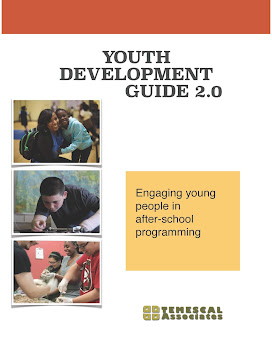
To learn more about positive youth development strategies for afterschool, see Youth Development Guide 2.0. 
The Power of Us Workforce Survey is administered by the American Institutes for Research (AIR), an independent, nonpartisan, not-for-profit organization that conducts behavioral and social science research and delivers technical assistance, both domestically and internationally. This reliable survey will be administered throughout 2022. 

Monday, May 2, 2022

A Brief History of the Social Emotional Learning Movement and the Challenges for Teens


By Sam Piha

The ideas around social emotional learning (SEL) are not new. The importance of social emotional learning is built into many early and more recent youth development program frameworks. However, few know the history of the SEL movement. 

According to Edutopia, “The roots of SEL are as old as ancient Greece. When Plato wrote about education in The Republic, he proposed a holistic curriculum that requires a balance of training in physical education, the arts, math, science, character, and moral judgment. ‘By maintaining a sound system of education and upbringing, you produce citizens of good character,’ he explained.

Preparing children to be responsible, productive, caring, and engaged citizens is a timeless pursuit that continues to be the goal of education today. How best to do this in our modern school system, however, is a relatively recent and still evolving area of study and practice, and it's the main question the SEL movement seeks to answer.

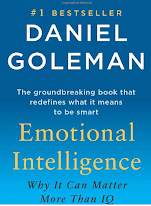
The concept of SEL was propelled into the popular culture in 1995 with a book by New York Times science reporter, Daniel Goleman. With support from Fetzer, Goleman published Emotional Intelligence: Why It Can Matter More Than IQ, in which he argued that character matters and, more significantly, the skills that build character can be taught.”

The history of the social and emotional learning (SEL) movement is the story of a simple, but powerful idea: What if education fully supported the social, emotional, and academic development of all children? Beginning in 1994, to address this question, CASEL was formed, growing from a small conference in New Haven to partnerships across the country and an audience around the globe. Since then, CASEL has served as a leader of the global movement and a trusted voice in the rapidly growing SEL field to make SEL an integral part of education.- The Collaborative for Academic, Social, and Emotional Learning (CASEL)


THE CHALLENGE OF SEL FOR TEENS


“Social and emotional learning approaches used with young children are unlikely to be effective with teens. As part of their natural urge to become independent, teenagers often will disengage from programs that directly teach skills. Using SEL programs that make teens feel valued. How can an SEL solution instill these feelings among a discerning teenage audience.” Professor David YeagerUniversity of Texas,  Austin


In Why High School SEL Programs Feel ‘Lame'—and How to Fix Them, author Stephen Sawchuk writes “The big problem, researchers and practitioners say, is that too much of what constitutes SEL learning feels patronizing to teenagers and fails to address their core psychological needs and motivations.

Programs that explicitly teach SEL skills generally have a good track record for younger children. But for older students, the paradigm looks different. It’s less explicit and requires creating leadership opportunities—formal and informal—where students will have to exercise their relationship and self-regulation muscles.
” 

Source: A World Fit For Kids

According to Professor David Yeager, a developmental psychology researcher at the University of Texas in Austin, “as part of their natural urge to become independent, teenagers often will disengage from programs that directly teach skills.” He suggests using SEL programs that make teens feel competent, autonomous, and valued. 


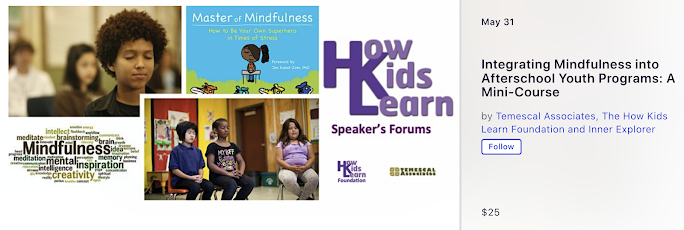
Integrating mindfulness activities into youth programs to benefit young people and educators has been a very popular educational concept. It appears in the literature on emotional regulation, trauma-informed practice, social emotional learning, grief-responsive teaching, and other leading topics. Youth who engaged in mindfulness activities report a greater sense of optimism and well-being, and a reduction in depression, anxiety, stress, and anger. They also benefit academically. Mindfulness activities are also a valuable “self-care” strategy for teachers and afterschool staff, and these activities can be tailored to be used in staff meetings.

Integrating Mindfulness into Afterschool Youth Programs: A Mini-Course (2 hours) will teach the basics of mindfulness and provide multiple opportunities to experience its benefits through practice. It will provide attendees with hands-on training to support the integration of mindfulness activities in afterschool, curriculum, teaching tips and other tools. This mini-course will also include implementation examples as well as the challenges and benefits of integrating mindfulness into afterschool programs.

To learn more and register, click here.


Tuesday, July 6, 2021

SEL and Character Building Program Practices

By Sam Piha

There is great agreement that social emotional learning skills are very beneficial in preparing youth for success. While we hear a lot about the “why” of SEL and character building, little is heard about the application (the “what” and “how”) within expanded learning (afterschool) programs. Expanded learning practices need to be uplifted so that the field can begin to see what good character/SEL practices look like.
Source: CASEL

We were interested in how programs promote these skills, so we put out an announcement asking afterschool programs to submit a program practice. We compiled these practices into a paper entitled, “Promising Activities, Practices and Resources: Promoting SEL and Character Skills in Expanded Learning Programs”. Each submission included a description of the submitting organization, a contact person within the organization, and a description of the practice or activity (i.e. purpose, time needed/frequency, target audience, and supporting resources).
The concept of social emotional learning has come to a frenzy in the past couple of years. Where does afterschool fit in to all of this? You would hope that we’d be right at the forefront. We’ve been doing this for years we know how to do it. – Karen Pittman, Forum for Youth Investment
Below are some practices that programs submitted:

Source: Temescal Associates
EDUCARE- Guided Visualizations. Visualizations are guided around a particular theme. There are a variety of mindfulness and centering practices they enjoy using and have found valuable. An example theme: Gratefulness. Youth close their eyes and review on an imaginary movie screen, images of who and what they are grateful for or appreciate - friends, family members, their health, people who support or inspire them, opportunities they have at school or elsewhere, etc.

Source: Ever Forward Club
EVER FORWARD CLUB- Mask Making. Youth are given a handout and asked to follow 3 steps anonymously. They are also asked to keep their eyes on their own paper. 1. Draw a mask on the left side. 2. Write 3 words on the front of the mask that represent qualities they let people see. 3. Write 3 words on the back of the mask that represent the things they don’t usually let people see. Adult leaders collect the masks and then have a few volunteers read a few of the responses anonymously. Youth are then invited to share how it felt hearing about the front and back of the masks of their peers. This would be a good time to discuss their commonalities and differences. Deeper processes can be created depending on the level of safety that has been generated in the room.

Source: LA's BEST
LA’S BEST- Sanford Harmony Cards. These cards provide engaging questions and activities to explore with a "buddy". The students then get to know each other and connect, which prepares them to handle future challenges and conflicts and opportunities to collaborate in a meaningful and constructive way. Sanford Harmony also provides recommendations of how and why to pair students together. The "Meet Up" strategy provides a way to strengthen a program's daily routine by incorporating practices that allow the entire group of students to explore how they treat each other and how they communicate with one another.

CALSAC- Regular Check Ins. This is an intentional space created for staff and youth to share how they are showing up in that space. Participants typically sit or stand in a circle during the check in. Next, a volunteer is asked to start and then chooses a direction for participants to follow. The information shared allows everyone in the room to understand what may be going on for them and honor that each individual may be coming into the space with varying life experiences. This allows everyone to see each other more wholly and create safety for people to be authentic in the space. It is recommended to create an opportunity for everyone to lead the check-in. (From Temescal Associates: It is recommended that each speaker holds a talking piece, such as a feather or item chosen by the group. The talking piece is held by the person speaking and then passed around the circle. Those not holding the talking piece are engaged in active listening.)

Source: Greater Good Science Center
GREATER GOOD SCIENCE CENTER- Gratitude Letter. In this activity, youth are guided to complete the Gratitude Letter practice, where they write a letter of thanks and then try to deliver it in person. To introduce the activity, the following script may be helpful: 'Most everyone enjoys thanks for a job well done or for a favor done for a friend, and most of us remember to say “thank you” to others. But sometimes our “thank you” is said so casually or quickly that it is nearly meaningless.' In this activity, you will have the opportunity to express your gratitude in a very thoughtful manner. Think of the people—parents, friends, coaches, teammates, and so on—who have been especially kind to you but whom you have never properly thanked. Choose one person you could meet individually for a face-to-face meeting in the next week. Your task is to write a gratitude letter (a letter of thanks) to this individual and deliver it in person. The letter should be specific about what he or she did that affected your life. It is important that you meet him or her in person. Don’t tell this person, however, about the purpose of this meeting. This activity is much more fun when it is a surprise to the person you are thanking.
-----------------


Tuesday, July 14, 2020

Re-Opening Programs and More

By Sam Piha

There is a lot of discussion and debate about how and when to re-open schools and youth programs. For youth programs that are located within schools, it is important that afterschool leaders stay abreast of the current thinking on this topic and ensure that any re-opening encompasses youth development values. Because the pandemic situation is very fluid, ideas about re-opening schools are very dynamic.


“As you prepare to welcome students and adults back to school, you face the layered impact of schools closures, the pandemic, racial inequities amplified by nationwide mobilization, and more.”
-CASEL Newsletter, 7/9/20 


The Collaborative for Academic, Social and Emotional Learning (CASEL) has released a roadmap for re-opening schools. CASEL collaborated with over 40 leading organizations in developing 4 critical practices:

  1. Take time to cultivate and deepen relationships, build partnerships, and plan for SEL.
  2. Design opportunities where adults can connect, heal, and build their capacity to support students.
  3. Create safe, supportive, and equitable learning environments that promote all students’ social and emotional development.
  4. Use data as an opportunity to share power, deepen relationships, and continuously improve support for students, families, and staff.


"As we sit down and really try to figure out what is going to be a long haul of reopening slowly...we're going to need such a different approach to the traditional 'show up and sit in your seat.' We need all partners at the table together."

-Karen Pittman
President & CEO, Forum for Youth Investment

Below we have offered a link to this entire report as well as some other resources. (Because the plans for re-opening is developed locally, it is important that afterschool leaders track their local plans.)


IN CASE YOU MISSED IT...

  • Two medical students, Samantha Harris and Devon Scott, recently wrote a children’s book about coronavirus, Why We Stay Home, to help parents communicate with their children about why so many families across the nation have been staying home. For a free download of the book, click here. To access video read aloud, click here. To view an interview with the authors on PBS News Hour, click here.


Tuesday, January 19, 2016

What Is the Connection Between Social and Emotional Learning and Employability?

By Sam Piha


Sam Piha
Recently, the Office of Career, Technical, and Adult Education (OCTAE) developed an employability skills framework and created a website to assist educators and youth workers with tools to promote these skills in their settings.

Laura Rasmussen Foster (RTI International), a leader in developing this framework, shared it with participants at the recent How Kids Learn V conference in Berkeley. Below is a 15-minute video of her presentation.


Beyond the Bell at AIR published a paper discussing how the skills cited in the Employability Skills Framework relate to social emotional learning. They gave us permission to cite a portion of this paper. See below. 

"Although some researchers argue that schools are not doing enough to support the development of the necessary skills for workforce readiness, evidence suggests that we already know a lot about how to develop some of the employability skills outlined in the OCTAE framework—we may just be calling them something else. School-day and afterschool programs across the country have been implementing what are called social and emotional learning (SEL) programs for years. These programs support the development of social and emotional competencies such as problem solving, critical thinking, interpersonal and intrapersonal skills, and social awareness through both explicit SEL instruction (this is more common in school-day settings) and broader SEL strategies and practices (this is more common in afterschool settings). Although not termed as such, the social and emotional skills that these programs target are also key employability skills. In fact, the framework developed by the Collaborative for Academic, Social, and Emotional Learning (CASEL) bears a strong resemblance to OCTAE’s Employability Skills Framework.


As these two frameworks illustrate, there is a great deal of connection between social and emotional competencies and employability skills. Although not identical, when you dig deeper into the two frameworks, the alignment is clear. For example:

  • Interpersonal skills (OCTAE) and social awareness (CASEL) both require the ability to understand social norms and work with others from diverse backgrounds. 
  • Personal qualities (OCTAE) and self-awareness (CASEL) both require the ability to recognize one’s emotions and have a sense of confidence. 
  • Communication skills (OCTAE) and relationship skills (CASEL) both require the ability to communicate clearly, listen well, and resolve conflicts. 

Given these similarities, it makes sense that SEL programs that explicitly target the development of social and emotional competencies could also be considered workforce readiness programs or programs targeting the development of employability skills." 

You will note that these employability skills and SEL skills (above) are well aligned to the California Quality Standards for Expanded Learning Programs. You can review Beyond the Bell's entire paper by clicking here

Wednesday, November 28, 2012

The Importance of Social-Emotional Learning


By Sam Piha

Joseph Durlak
Joseph Durlak and his team have produced some seminal studies that examine the impact of in-school and afterschool programs that promote social-emotional learning. Two of his most important studies offered a meta-analysis, examining high-quality evaluations of the programs and their many effects on youth outcomes. We urge the readers to review these studies when reflecting on the implementation of their own programs. Readers should also visit the Collaborative for Academic, Social, and Emotional Learning (CASEL) website. Below we offer a brief interview with Dr. Durlak. 

Q: In partnership with a number of your colleagues, you conducted two meta-analyses regarding the effectiveness in school and after school efforts to promote social-emotional learning. Can you briefly explain what is meant by social-emotional learning and competencies? 

A: In brief, social and emotional learning (or SEL) focuses on the systematic development of a core set of five interrelated social, cognitive, emotional, and behavioral competencies that help children more effectively handle life challenges and thrive in both their learning and their social environments. These skills fall into five areas:   self-awareness, self-management, social awareness, relationship skills, and responsible decision making. Representative competencies in these areas include the abilities to recognize and manage emotions, set and achieve positive goals, appreciate the perspectives of others, establish and maintain positive relationships, make responsible decisions, and handle interpersonal situations constructively (Collaborative for Academic, Social, and Emotional Learning, 2013).

Q: In your research you were interested in whether youth gained social-emotional competencies and whether this had an impact on school behavior and academic success. What did you learn?

A: Overall, we found that the 213 programs that we evaluated were successful in improving students functioning in all six of the outcome areas we examined.  
In perhaps the most important finding, programs were able to improve students’ academic performance (grades and test scores) to a degree that corresponds to an 11% percentile gain in academic performance.  This type of gain corresponds to what many educational interventions have been able to do based on other evaluative research.  SEL Programs also significantly improved students’ self-perceptions, their social and emotional skills, and their prosocial attitudes (e.g., toward school ) and significantly reduced levels of conduct problems and emotional distress (e.g., symptoms of anxiety and depression).   

Q: In these studies, the effectiveness of these efforts were conditional on the quality of the implementation. You identified some key characteristics of implementation that were vital to the program’s success. Can you briefly describe these characteristics? 

A: Extensive research on both children and adults suggests that skills training is most effective when certain principles are followed. Many of these principles are consistent with educational research on effective teaching practices. 

We found that four characteristics representing four of these principles were associated with programs that were more effective than others.  We constructed the acronym, SAFE, to capture these features. ‘S’ stands for Sequential, meaning that programs had a carefully sequenced plan that was designed to develop SEL skills.   This was usually accomplished by a specific curriculum or protocol that built competencies in a coordinated, step-by-step fashion.  ‘A’ stands for Active and means that active forms of learning involving practice and feedback were used to develop skills. Hands-on learning followed by constructive feedback leads to skills acquisition. ‘F’ stands for Focused, meaning that sufficient time was set aside exclusively for skill training, ‘E’ stands for Explicit and means that the skills targeted in each program were clearly explained to students so they knew what was expected of them. 

Aside from these four program characteristics, we also found that programs that were associated with better implementation were more effective than those that experienced problems with implementation.  Implementation involves several dimensions but basically refers to the extent to which intended programs are conducted as planned. 

In other words, effective SEL programs are both well-designed from the start and well executed when they are put into action.   

Q: There is growing discussion of the importance of non-cognitive skills. How are these non-cognitive skills related to the SEL skills that are promoted by the Collaborative for Academic, Social, and Emotional Learning (CASEL)?
A: In general, there is now growing evidence that success in school and later life is not dependent solely on one’s cognitive or intellectual abilities.  The different domains of functioning are not independent. We have shown that fostering students’ personal and social development via SEL programs can also improve their academic development.   

Q: The LIAS project is promoting 5 key principles that we should apply in our afterschool and summer programs: learning that is active, collaborative, meaningful, supports mastery, and expands horizons. Can you say a bit about the relevance of these principles and how they overlap, or not with social-emotional learning?

A: There is considerable overlap and sometimes only the terms are different. For example, learning that is active and that supports mastery relates to both the ‘A’ and ‘F’ of our acronym in that students need to practice new skill and we must devote sufficient time and attention to foster student mastery. 

The LIAS principles of collaboration, meaningfulness, and expanded horizons are each consistent with the types of skills that compose SEL such as skills relating to managing one’s emotions, developing and maintaining satisfactory relationships with others, and enhancing self-awareness.  In general, the LIAS principles and the five SEL domains allows flexibility and adaptations to occur for work with different types of youth at different developmental stages, and with different needs and interests.

___________________________
Joseph Durlak is Emeritus Professor of Clinical Psychology at Loyola University, Chicago. He currently lives in Santa Fe. New Mexico, where he remains active writing, editing, consulting, and reviewing. His primary interests are in prevention programs for children and adolescents, meta-analysis, community psychology, and social and emotional learning programs. He has published major reviews on prevention programs for youth, after-school programs, program implementation, and school-based social and emotional learning programs.  He is currently editing contributions for the Handbook of Social and Emotional Learning, to be published by Guilford in late 2013.   

What We Get Wrong About Teaching Kids to Apologize and Forgive

Source: www.pexels.com By Guest Blogger Suzanne Freedman. This article, What We Get Wrong About Teaching Kids to Apologize and Forgive , was...