Showing posts with label HKL5. Show all posts

Tuesday, January 19, 2016

What Is the Connection Between Social and Emotional Learning and Employability?

By Sam Piha


Sam Piha
Recently, the Office of Career, Technical, and Adult Education (OCTAE) developed an employability skills framework and created a website to assist educators and youth workers with tools to promote these skills in their settings.

Laura Rasmussen Foster (RTI International), a leader in developing this framework, shared it with participants at the recent How Kids Learn V conference in Berkeley. Below is a 15-minute video of her presentation.


Beyond the Bell at AIR published a paper discussing how the skills cited in the Employability Skills Framework relate to social emotional learning. They gave us permission to cite a portion of this paper. See below. 

"Although some researchers argue that schools are not doing enough to support the development of the necessary skills for workforce readiness, evidence suggests that we already know a lot about how to develop some of the employability skills outlined in the OCTAE framework—we may just be calling them something else. School-day and afterschool programs across the country have been implementing what are called social and emotional learning (SEL) programs for years. These programs support the development of social and emotional competencies such as problem solving, critical thinking, interpersonal and intrapersonal skills, and social awareness through both explicit SEL instruction (this is more common in school-day settings) and broader SEL strategies and practices (this is more common in afterschool settings). Although not termed as such, the social and emotional skills that these programs target are also key employability skills. In fact, the framework developed by the Collaborative for Academic, Social, and Emotional Learning (CASEL) bears a strong resemblance to OCTAE’s Employability Skills Framework.


As these two frameworks illustrate, there is a great deal of connection between social and emotional competencies and employability skills. Although not identical, when you dig deeper into the two frameworks, the alignment is clear. For example:

  • Interpersonal skills (OCTAE) and social awareness (CASEL) both require the ability to understand social norms and work with others from diverse backgrounds. 
  • Personal qualities (OCTAE) and self-awareness (CASEL) both require the ability to recognize one’s emotions and have a sense of confidence. 
  • Communication skills (OCTAE) and relationship skills (CASEL) both require the ability to communicate clearly, listen well, and resolve conflicts. 

Given these similarities, it makes sense that SEL programs that explicitly target the development of social and emotional competencies could also be considered workforce readiness programs or programs targeting the development of employability skills." 

You will note that these employability skills and SEL skills (above) are well aligned to the California Quality Standards for Expanded Learning Programs. You can review Beyond the Bell's entire paper by clicking here

Tuesday, January 12, 2016

Dr. Pedro Noguera: PBS News Hour and HKL V in Los Angeles

By Sam Piha


Sam Piha
Pedro Noguera is a Distinguished Professor of Education at the Graduate School of Education and Information Sciences at UCLA. Dr. Noguera has been a long time supporter of the LIAS project and the How Kids Learn conferences. He will also be a featured speaker at our upcoming How Kids Learn V conference in Los Angeles on January 21, 2016. 

Dr. Noguera was recently interviewed by PBS correspondent, Charlayne Hunter-Gault, on the PBS News Hour. The interview was part of their ongoing series entitled “Race Matters”. Dr. Noguera addressed the question, “How do we solve stubborn segregation in schools?” Click below to view the interview (8 minutes). 

Dr. Pedro Noguera

You can view an interview that we did with Dr. Noguera on the LIAS learning principles by clicking hereYou can also view his last presentation at the How Kids Learn II conference by clicking here. To register for the HKL V conference in Los Angeles, click here


Friday, December 4, 2015

A New Framework for Youth Development

By Sam Piha

Sam Piha
The Wallace Foundation asked the University of Chicago Consortium on School Research (UCCSR) to conduct a study on the factors that influence young adult success. Foundations for Young Adult Success is not the first youth development framework, but it does offer an improved guide to factors influencing positive development. We believe that this study is well aligned with the California Quality Standards for Expanded Learning Programs and the LIAS principles

Jenny Nagaoka, lead author of this study, will share the report findings at the HKL V conference in Berkeley on December 10, 2015 at the David Brower Center. She will also be the featured speaker at the HKL Speaker’s Forum on December 11, 2015. 
Jenny Nagaoka

Her colleague, Camille Farrington, will share the study at the HKL V conference in Los Angeles on January 21, 2016 at the California Endowment. Below are some of our questions that Camille responded to. 

Q: There have been previous frameworks for youth development. What inspired you to develop this updated version? 

A: In 2013, the Wallace Foundation asked us to take a broader look at the range of factors that support college and career readiness. We proposed to broaden that even further to look at Young Adult Success across a variety of domains, including education, work, relationships, and civic engagement. The project gave us the opportunity to bring together our colleagues with expertise in early childhood (Stacy Ehrlich), adolescence and the transition to high school (Camille Farrington), young adulthood/transition to college (Jenny Nagaoka), and after-school/youth development (Ryan Heath). 
Dr. Camille Farrington

It also allowed us to expand on our 2012 report, Teaching Adolescents to Become Learners, which focused much more narrowly on course performance for students aged 10-20. In both projects, our goal was to translate some very complex research from across a wide range of disciplines to make it accessible, relevant, useful, and actionable for educators and youth practitioners (and parents) who work with children, adolescence, or young adults.


Q: What do you believe the chief takeaways are from the report? 

A: For me, the three big takeaways are: 
  • Development is multifaceted, and even if you're only interested in one domain (for example, cognitive domain and knowledge development), you will be much more successful in that domain if you recognize the interrelationship with all the other domains (social, emotional, behavioral, ethical, as well as the psychological tasks young people are engaged in) and intentionally address and leverage those other domains in your work. If you don't engage those other domains intentionally, they can end up working against you and undermining your efforts at knowledge development. I think this is a particularly salient message for teachers! 
  • No matter what age of children/youth you are working with, it is powerful to keep in mind a "north star" destination of a young adult with agency, integrated identity, and a set of competencies (our 3 "key factors"). How is the work you are doing today helping to move this young person toward that goal? 
  • Developmental experiences are powerful levels for moving toward this young adult goal. Over the past couple decades, we have swung from a focus on inputs to a focus on outcomes. Inputs are important, outcomes are important, but we also have to pay a lot more attention to the process whereby inputs become outcomes -- and that is the role of the young person's EXPERIENCE in a learning setting. What kinds of active and reflective experiences are young people having, and how does this shape their opportunities for development? In schools, this means expanding our focus beyond curriculum and instruction and looking at what kids are actually DOING in their classes.

Q: Unlike previous frameworks, your report offers a developmental picture for different age youth. What inspired this? 

A: The Wallace Foundation was particularly interested in understanding how important factors develop over time. We took the project as an opportunity to really dig into that question. It seemed important to acknowledge that each of the key factors and foundational components can look quite different at different stages of early development, and understanding those differences is crucial to better knowing how to interact with and support youth in varying developmental stages.


Q: This is an excellent educational tool. Do you have any plans on a follow up toolbox that will help programs translate the report into practice? 

A: We loved this project and the opportunity it provided for us to really go deeply and broadly into the empirical research and practice knowledge about youth development and learning. After 25 years of working in partnership with the Chicago Public Schools, one of our strengths as an organization is our ability to do effective "translational research" and create coherent frameworks that provide new insights and knowledge for practitioners. That said, we also recognize our limitations. While we would be very interested in acting in an advisory capacity on a toolbox project, we think that is work that is best carried out by practitioners. One of our Steering Committee members, a gentleman who was a principal and is now a district administrator in CPS, said that Consortium research tells practitioners "What" and "So what", but that the answer to the question "Now what?" is the responsibility of those working directly with young people. I think that same edict applies here!

Q: What are the implications of this work for those who work in community-based youth programs?

A: A fundamental role for adults is to create rich developmental experiences for young people and to pay attention to what kids "take away" from those experiences. Adults can create a variety of "action" experiences that provide opportunities for kids to encounter, tinker, practice, choose, and contribute. Adults can also provide critical "reflection" experiences, where kids have opportunities to describe, evaluate, connect, envision, and integrate their experiences. 

We shouldn't leave it to chance that kids make the most beneficial meaning out of the experiences they have, but neither should we tell them what meaning they ought to make. The research suggests that asking questions and letting young people talk about their thoughts and experiences may be one of the most important roles adults can play in fostering development. 

----
Dr. Camille A. Farrington is Senior Research Associate at the University of Chicago Consortium on School Research. She is one of the authors of the recently released Wallace Report entitled, Foundations for Young Adult Success. Her work focuses on policy and practice in urban high school reform, particularly classroom instruction and assessment, academic rigor, academic failure, and the role of noncognitive factors in academic performance. Dr. Farrington is lead author of Teaching Adolescents to Become Learners: The Role of Noncognitive Factors in Shaping School Performance (2012, CCSR), author of Failing at School: Lessons for Redesigning Urban High Schools (2014, Teachers College Press), and Principal Investigator for the UChicago Becoming Effective Learners Survey Development Project.

Friday, November 20, 2015

Register Now: How Kids Learn V Conference

By Sam Piha


Sam Piha
Preparing youth for success in career and work is an important responsibility of the expanded learning movement. If we are to achieve economic equity, young people must have access to activities that prepare them. This means starting with activities for young children to build their "soft" skills and help make them aware of diverse career fields. It also means offering experiences for older youth that build their "soft" and "hard" skills and experiences in workplace settings. (See previous posts on Employability Skills and on the Work-Based Learning Continuum.)


This will be the focus of our upcoming How Kids Learn V Conference, in Berkeley on December 10, 2015 and Los Angeles on January 21, 2016. 

Hear from leading thinkers and researchers, and innovative afterschool practitioners. We will also feature a number of young people who will tell us how preparation experience in expanded learning programs affected their lives and how we can be more successful. 

Speakers will include: 
  • Pedro Noguera, Distinguished Professor of Education, UCLA (LA Only)
  • Jenny Nagaoka, Deputy Director, University of Chicago and lead author of the recently released Wallace Report entitled, Foundations for Young Adult Success (Berkeley Only)
  • Alvaro Cortes, Executive Director, Beyond the Bell/LAUSD (LA Only)
  • Alex Taghavian, Vice President, Linked Learning Alliance
  • Michael Funk, Director, After School Division at the California Department of Education 
  • Beth Kay, Linked Learning Manager, Foundation for California Community Colleges
In addition to the above speakers, we will host a bevy of workshops led by innovative practitioners who work with young people, K-12. Workshop topics include:
  • Serving Elementary School Youth
  • Serving Middle School Youth
  • Serving High School Youth
  • Partnering with Community Colleges
  • Youth Entrepreneurship and Social Enterprise
  • “Girl Power”: Serving the Needs of Girls and Young Women (Berkeley Only)
  • “Cyber Patriots”: Preparing Youth for Success (LA Only)
For more information, go to www.howkidslearn.org.

To register:

Friday, November 13, 2015

The Town Kitchen: Walking the Talk, Putting Great Food in a Box

By Sam Piha


Sam Piha
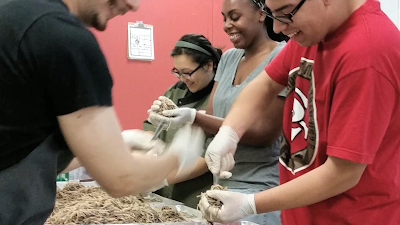
We are proud to use The Town Kitchen to cater our How Kids Learn V - Berkeley conference on December 10 and our HKL Speaker's Forum on December 11. The Town Kitchen is a social enterprise which is focused on training youth for work and career success. 

Their vision is to create community through local food; a community where low-income Oakland youth can shine; a community where they will introduce under-served youth to talented chefs & start-up entrepreneurs so they have the skills and network to pursue their future.

You can learn more about The Town Kitchen by visiting their website. Click on the photo below to view their video. 


The Town Kitchen was founded by Sabrina Mutukisna. Sabrina will also present The Town Kitchen story at the How Kids Learn V conference in Berkeley. Below, she responded to a number of our questions.


Sabrina Mutukisna,
Co-Founder and CEO
The Town Kitchen
Q: Can you say a little bit about the Town Kitchen? What is your mission and what is it that you offer for youth? 

A: The Town Kitchen is a community-driven food business that employs and empowers low-income youth. We deliver chef-crafted boxed lunch to Bay Area corporate clients. We also provide fair-wage jobs, entrepreneurial training, and access to college course credit for young people with barriers to employment. 

Q: In what way do you consider the Town Kitchen as a social enterprise? 

A: As a for-profit benefit corporation, we're both positioned for growth and committed to supporting young people. We measure our impact not only through our revenue but through the number of young people who have completed our training, who are actively employed, and are enrolled in post-secondary education.

Q: What do you think that youth value most about being involved in your organization? 

A: That's a great question. I think they value the community the most. They get to come to work and there are multiple people invested in their well-being. They get to be themselves and talk about what's going on in their lives. To be honest, I think we all need this at work but it's especially important for young people who are carrying so much on their shoulders.

I think our youth employees also value being an important part of the business. We're a small company, so they play a pivotal role in our growth. It's important we all produce a high-quality product and make customer service a priority.


Q: Do you believe that there is an equity problem in offering youth of color opportunities for workplace learning? If yes, do you think this is important? And why? 

A: Employing young people means they are less likely to be incarcerated and more likely to graduate from college. Currently, white youth are twice more likely to be employed than young people of color.  This is an issue in the immediate -- oftentimes youth of color need jobs to support their families. It's also a longterm issue. Access to workplace learning helps young people build transferable skills, expand professional networks and, most importantly, become confident in their abilities. 

Workplace learning is also a place where we expose youth to different careers across the educational spectrum. I think this is a huge issue when we think of systemic privilege. People do what they know. If youth of color never meet another person of color with an advanced degree, chances are, they aren't going to pursue it. 

Q: Do you encourage your youth to think of the food preparation industry as a career choice? Or do you encourage them to think in another way? 

A: Yes and no. We recognize that there are systemic inequities within the food system too. Oftentimes, folks of color are in the back of restaurants. As a minority-owned business, we hope to disrupt this hierarchy. We're inspired by our partners at Red Bay and Mamacitas Cafe who are championing change. And by the folks at People's Kitchen that actively work for food workers rights. Some of our young people are really passionate about becoming executive chefs and we certainly want to encourage them. Our job is to prepare them to be competitive and employable if and when they leave us.

The majority of our employees are still figuring out their futures. We don't want to rush them. We want to provide them with a great job while they're working towards their degree. While they're with us, they have conversations about race and privilege, explore entrepreneurship and receive formal and informal mentorship.  Having them employed while in school is a win for us too. The food industry is notorious for high turnover. Retaining employees who are equally passionate about our mission, allows us to build a great company.


Tuesday, November 3, 2015

Preparing Youth for Work and Career Success: A Research Perspective

By Sam Piha


Sam Piha
We hear from researchers and the business community that preparing youth for work and career success is an essential responsibility of communities, educators, and youth program leaders. Young people should be prepared by the time they leave high school. Expanded learning programs are perfectly situated to contribute to this preparation. This is the theme of our upcoming How Kids Learn conference. 

Regie Stites is Senior Researcher at SRI International who has been evaluating Linked Learning strategies in 9 California school districts. The Linked Learning Alliance is a statewide coalition of education, industry, and community organizations dedicated to improving California’s high schools and preparing students for success in college, career, and life.

Dr. Stites will be one of our featured speakers at the upcoming How Kids Learn V conferences in Berkeley and Los Angeles. He agreed to answer a few of our questions:

Q: Can you highlight some of the evidence we have for positive 
Dr. Regie Stites,
SRI International
outcomes from work-based learning? 


A: Our quantitative analyses have focused on the impacts of the overall Linked Learning experience on student outcomes. The most recent findings from the evaluation indicate that, on average, students in Linked Learning pathways completed more high school credits, were less likely to drop out, were more likely to graduate, had higher GPAs, and were more likely to be classified as ready for college when compared with similar students in traditional high school programs.

We see the most direct evidence of positive student outcomes related to work-based learning in our student survey and focus group data. Students who had participated in work-based learning reported that it gave them opportunities to gain teamwork experience, to practice hands-on skills working with tools, and to apply knowledge and skills gained in the classroom. In focus groups, Linked Learning pathway students frequently described the ways that work-based learning experiences helped them develop awareness of the norms and expectations for behavior in the workplace, helped them develop work-related interpersonal and communication skills, and gave them motivation and clarity in planning further education and choosing a career path. 

Q: Why is preparing youth for work and career success important for young people from low-income neighborhoods? Is there an issue of equity that we should seek to address? 

A: Equity in educational outcomes and in access to college and career are central goals of the Linked Learning work. One of the most fundamental premises of Linked Learning is that all students should be prepared for college and careers. The 9 school districts included in the California Linked Learning District Initiative were chosen for initiative, in part, because they serve predominantly low-income students and communities. In the current economy, a postsecondary credential is the key to employability. But simply getting more low-income students to graduate from high school and enroll in college is not enough. For example, we know that 70% of low-income students who start at a two-year college do not complete a credential within 5 years.

Q: What are some of the challenges and opportunities in this work?

A: The biggest challenge is breaking down the silos that separate educators from each other and from employers. To create seamless transitions from school to college and to employment we need seamless systems. To prepare young people for work and career success we need educators who understand work and employers who understand education. With the Career Pathway Trust Grants and related efforts, California is moving in the direction of developing regional partnerships that bridge gaps between K-12, postsecondary, workforce development, and employment systems. These efforts are just getting off the ground but the potential for fostering greater collaboration across sectors to improve and expand access to a range of high-quality work-based learning opportunities is encouraging.   

Q: Do you think that the out-of-school setting is a good place to prepare youth for success in work and career?

A: The simple answer is yes, the out-of-school setting is essential for preparing youth for work and career success. This is so because out-of-school programs can play a key role in supporting the types of integrated learning activities that connect school learning to real-world applications of knowledge and skills. For many young people, especially young people from low-income neighborhoods, one of the most important keys to educational engagement, persistence, and success is relevance. 

Simple common sense (and research) supports the notion that young people who can clearly see the relevance of what they are learning to their own lives and futures are more likely to persist and be successful in education and, as a result, are more likely to be ready for career success.

The best methods for connecting school learning to real-world applications of knowledge and skills are well known. These methods include project-based learning, experiential learning, service learning, and a range of work-based learning activities. Some of these integrated learning activities, such as project-based learning and some forms of work-based learning may not require an out-of-school setting, but they are stronger when they do.  


Q: Can you offer any advice on what out-of-school programs could do?

A: To give more low-income youth opportunities to participate in extended, high-quality integrated learning activities, out-of-school programs should look for opportunities to work together with classroom teachers and with employers and with community organizations to co-design and jointly deliver such learning activities. Youth will be more motivated and experience deeper learning when they can connect classroom learning with applied learning in an out-of-school setting.

-----------
Regie Stites, Ph.D., will share his research on the impact of Linked Learning projects with schools and youth at the How Kids Learn V Conference. He has two decades of experience in the design and management of large-scale educational research and evaluation in the areas of literacy education, integrated academic and career-technical education, college and career readiness, and workforce development. Major projects include the Evaluation of the California Community College Linked Learning Initiative, the Evaluation of the Linked Learning Health Career Pathways Project in Oakland Unified School District (OUSD), and the Equipped for the Future National Work Readiness Credential Assessment Development and Validation. 

Monday, October 19, 2015

Work-Based Learning Continuum: Can You Locate Your Program?


By Sam Piha


Sam Piha
We know that, as adults, it is our job to help prepare young people for success in adulthood. This is becoming obvious to educators and those who provide expanded learning programs for youth as we see an increase in opportunities to explore careers and gather work-based skills. 

The Linked Learning Alliance has created a continuum of work-based learning activities. This continuum offers educators and youth program leaders  shared language and activity definitions as a means to locate oneself on this developmental continuum. You can review a paper on this continuum authored by the Linked Learning Alliance here. (The Linked Learning Alliance is a statewide coalition of education, industry, and community organizations dedicated to improving California’s high schools and preparing students for success in college, career, and life.)


Above: Alex Taghavian
Below: Regie Stites
Alex Taghavian, Vice President of the Linked Learning Alliance, will speak at our upcoming How Kids Learn V conference. The focus of this conference is Preparing Youth for Work and Career Success. Alex will share the work-based learning continuum and researcher, Regie Stites from Center for Education Policy at SRI International, will focus on some of the challenges and opportunities for implementation of work-based learning systems based on his findings from the Linked Learning District Initiative evaluation. He will also highlight some of the evidence he has for positive outcomes from work-based learning.

Below we asked Hilary McLean, Executive Vice President of the Linked Learning Alliance, more about the Linked Learning work-based continuum. 

Q: Can you briefly say how and why this continuum was developed? 


Hilary McLean,
Executive Vice President
Linked Learning
Alliance
A: The Linked Learning Work-Based Learning continuum was developed by leaders in the Linked Learning field who have expertise in education and workforce development. It was designed to be a resource to help build understanding about the range of work-based learning opportunities that a student could and should experience as they move through their Linked Learning experience. With that greater understanding, we hoped that this resource would help schools and employer partners design coherent sequenced opportunities for students to interact with employers, apply what they are learning in the classroom in real-world contexts, and gain professional skills that are needed in college and in the workforce. 

Q: This continuum uses the term “work-based”. People often think about "work-based” learning activities that only happen within a work setting and with older youth and young adults. Can you comment on this perception?  

A: Work-based learning can actually start much earlier, by introducing children in primary grades or even preschool to careers and professionals in a range of occupations.  With Linked Learning, the career awareness phase of the continuum typically starts in the students’ freshman year of high school. Some districts that have embraced Linked Learning as a system-wide school improvement strategy start this phase in middle school. 


Q: Who is the intended audience for this continuum and how do you hope it will be used?  

A: We hope that the Linked Learning Work-Based Learning Continuum is used by Linked Learning educators, workforce development boards, intermediaries such as Chambers of Commerce or other organizations that are serving as a connection point between schools and the employer community, coordinators for mayors’ summer jobs initiatives, and anyone who is interested in economic development and improving the workforce pipeline.

Q: Do you believe that it is useful and relevant for youth programs that happen in the out-of-school hours? 

A: Yes we think that this is a huge area of opportunity that has not yet been fully tapped. 

Q: What benefits do you believe this continuum provides to program
Photo Credit: Techbridge Girls
designers and youth workers?  


A: The Linked Learning Work-Based Learning Continuum can provide guidance on how to sequence opportunities for youth so that they are prepared for each step in the process, and can succeed in both learning in and contributing to real-world professional workplaces. 


---

Friday, October 16, 2015

LIAS Effectiveness Study

By Sam Piha


Sam Piha
The Learning in Afterschool & Summer (LIAS) project was launched in 2010. In the summer of 2015, the LIAS staff conducted a LIAS Effectiveness Study to gauge our impact on the field and how best to further the project goals. The objectives of this LIAS Effectiveness Study were to:
  • Learn how effective the LIAS campaign was in reaching and impacting expanded learning stakeholders and program leaders;
  • Learn how effective the individual LIAS strategies were;
  • Improve the LIAS campaign going forward; and
  • Share with the larger field any learnings that may be helpful to future efforts to improve expanded learning program quality.

We collected 91 surveys completed by Regional Leads, those who oversee or work directly with youth, or provide technical assistance. In terms of geography, most of the respondents are located in Regions 3, 4, 9, and 11. These four regions contain 57% of the total California ASES and 21st CCLC programs. (Source: California Afterschool Network). We also conducted follow up interviews with 20 afterschool leaders across the state. 

Below is a summary of findings from our study. To view the study Executive Summary, click here. To view the full report, click here

LIAS effectiveness
  • The LIAS project has successfully raised awareness of the LIAS principles across the state.
  • On average, 74% of respondents reported their contact with LIAS materials. Of those, 67% on average, rated their experience as a 4 or 5 on a 1-5 scale of effectiveness, with 1 being the lowest.
  • On average, only 30% of respondents reported an involvement with LIAS support activities. Of those, on average, 79% rated their experience as a 4 or 5 on a 1-5 scale of effectiveness, with 1 being the lowest.
  • Of those surveyed, over 84% reported that the LIAS materials and supports impacted their programs. They reported that the LIAS project either changed the way they talk about their programs (49%) or effected their program design (35%).


LIAS strengths: Respondents reported that the language of the LIAS learning principles are clear and understandable (nearly 84%) and the LIAS learning principles can easily be applied to program design and improvement (nearly 69%). 

LIAS weaknesses: A fair number of respondents (22%) thought that the LIAS project can do more outreach to educate practitioners about the LIAS learning principles. Nearly 46% of respondents replied, “No comment”. 

Challenges and barriers to program improvement: Respondents named staff turnover (92%), insufficient funding (86%), and insufficient time (80%) as the largest barrier or challenge. 

Takeaways
Objective 1: Learn how effective the LIAS campaign was in reaching and impacting expanded learning stakeholders and program leaders
  • LIAS outreach – The LIAS project has been very successful in spreading the word on the LIAS principles. The newly designed website and LIAS blog have been well received.  
  • LIAS impact – The LIAS project reportedly has impacted many by changing the way they talk with others about their program activities and/or changing actual day-to-day practice. Program leaders want more guidance on how to apply LIAS and character building strategies into practice. 
Objective 2: Learn how effective the individual LIAS strategies were
  • LIAS materials – The LIAS postcard has been widely distributed across the state and well received by program leaders. However, some of the LIAS materials such as the webinar, are not reaching a large audience. 
  • LIAS training opportunities – The LIAS orientations and introductory trainings are an effective educational outreach strategy. However, they do not go far enough in changing practice at the program level. The LIAS learning communities have been well received and judged as effective ways to impact program quality. However, they are not widely available due to issues of cost, commitment, and geography. 
Objective 3: Improve the LIAS campaign going forward
  • Diversify audience – It would be useful if the LIAS project could reach out to diverse audiences that impact young people’s learning. These additional audiences include youth program providers outside of the “afterschool circle”, principals and educational administrators, instructors in higher education, museums, libraries, and Parks & Recreation departments. 
  • Access to online tools – Because of issues of cost and distance, and because young workers grew up in the digital age, we have been advised to ensure that materials and tools include short videos of actual program practice, are accessible via the Internet, be multimedia, and viewable on smartphones and tablets. 
  • Integrate new concepts - materials should include the new state Quality Standards. They should also integrate 21st century learning skills, social emotional learning, building character skills, non-cognitive skills, growth mindsets, and foundations for young adult success. There is also the demand that programs respond to the new state Quality Standards for Expanded Learning Programs and the Common Core State Standards. While it is true that some of these are overlapping, they still present an overwhelming set of “lists”. The LIAS project has been advised to create an approach that integrate these “lists” and the Quality Standards.
Objective 4: Learnings that may be helpful to future efforts to improve expanded learning program quality
  • Cost as a barrier - Due to rising labor costs and stagnant grant awards, programs have cut the amount of resources for professional development and program tools. For all of us that work to improve program quality, we have been advised to consider the issue of cost – program materials and training - and even offer stipends to training participants in exchange for a commitment to attendance and program improvement efforts. 
  • Other barriers to program improvement – Any effort to improve program quality requires educational outreach that is ongoing due to staff turnover. In addition to continuing these efforts, we have been encouraged to target program leaders, who have longer tenures than frontline staff.  
------
We invite you to join us at the How Kids Learn V conference: Preparing Youth for Work and Career Success. To see more information and register, click here


Wednesday, September 9, 2015

Checking In with Dr. Pedro Noguera

By Sam Piha


Sam Piha
Pedro Noguera has been an important voice in the areas of school reform, race, and poverty. He has been a dedicated warrior to address the inequity that young people face, especially low-income youth of color, in learning opportunities. Pedro worked with others to found the Broader, Bolder Approach to Education initiative. 

Today, Pedro is a Distinguished Professor of Education at the Graduate School of Education and Information Sciences at UCLA. Prior to his moving to UCLA, Pedro served as a tenured professor and holder of endowed chairs at New York University (2003 – 2015), Harvard University (2000 – 2003), and the University of California, Berkeley (1990 – 2000). He was a member of the Berkeley School Board from 1990-1994.


Dr. Pedro Noguera
Pedro has been a strong advocate for the afterschool movement and a friend to the LIAS project. He was a speaker at our HKL II conference and provided a video interview on the LIAS principles. Below we asked Dr. Noguera a few questions for our LIAS blog. We were excited about his return to the west coast. Pedro will also be a speaker for our upcoming HKL V conference

Q: You are returning to the west coast and will be an education professor at UCLA. Why did you make this move? 

A: I’m making the move back to the west coast and to UCLA for personal and professional reasons.  All four of my older children live on the west coast and I want to be closer to them.  Additionally, I have many close colleagues at UCLA and I'm looking forward to working within a community of scholars rather than in isolation as I have at NYU.  


Q: You will be presenting again at the upcoming How Kids Learn conference. Was there a particular reason why you agreed to return to address the attendees at HKL V? 

A: I am a big fan of the How Kids Learn conference because I think it's focused on the right questions. Too often, we expect kids to adjust to the way schools teach, rather than adapting the instruction to their learning needs. By focusing more intently on the needs and interests of the learner, we could be far more successful at engaging them in powerful educational experiences. This is what I believe the conference supports and encourages.

Q: Can you speak to one or more of the LIAS principles that most resonate for you when you think about creating learning environments and activities for kids? 

Dr. Pedro Noguera at our
How Kids Learn II conference
A: Meaningfulness, I think is really important, especially for kids who come from low-income communities, and kids who come from families where no one has gone to college. If they don't see the relevance and understand why what they're learning is meaningful and important, they're more likely to become disengaged. 

Many times middle-class kids will learn something simply because they're told by adults, this will get you into college. But for someone who is not necessarily on a path to college, just saying you need this to go to college is not enough. You actually have to show them why learning something like algebra or biology or reading Shakespeare, why is that important?  What does that have to do with their lives? And teachers who can't make those kinds of connections for their students, often fail in being able to address their learning needs. 

I would say similarly that education always has to expand horizons for young people, to expand their sense of what’s possible. One of the things we're constantly working against, again particularly with young men of color, is the negative and pernicious effect of stereotypes. Stereotypes which lead them to believe they have a better chance of being a ball player, or a rap star, than of being a scientist or a writer, or being an elected official or lawyer. 

Part of expanding horizons means giving concrete experiences, which allow them to see and learn about how knowledge is applied in the real world, in professional settings, and why in fact that is a course of action and a career path that they may want to choose, and most importantly, what does it take to get there? So that kind of work, of expanding the sense of what's possible, of exploiting the stereotypes, and of tapping into that deeply seeded sense of identity is essential to the work of really capturing the imagination of young people.
_____________________________________________________________


How Kids Learn V: For more information and to register, go to www.howkidslearn.org.

Monday, August 24, 2015

HKL V: Preparing Youth for Work and Career Success

By Sam Piha

Sam Piha

In the winter of 2015/2016, we will sponsor our fifth How Kids Learn conference. If we are to achieve economic equity, young people must have access to activities that prepare them for work and career success. This means starting with young children through high school. 

Hear from leading thinkers and afterschool practitioners on research and strategies for Preparing Youth for Work and Career Success


Speakers will include: 

  • Pedro Noguera, Distinguished Professor of Education, UCLA
  • Jenny Nagaoka, Deputy Director, University of Chicago and lead author of the recently released Wallace Report entitled, Foundations for Young Adult Success
  • Alvaro Cortes, Executive Director, Beyond the Bell/LAUSD
  • Alex Taghavian, Vice President, Linked Learning Alliance
  • Michael Funk, Director, After School Division at the California Department of Education
  • Beth Kay, Linked Learning Manager, Foundation for California Community Colleges
In addition to the above speakers, we will host a bevy of workshops led by innovative practitioners who work with young people, K-12. 


For more information, go to www.howkidslearn.org.

To register:

A Book Drive for Children's Books Makes for a Fabulous Service- Learning Project

Source: The Children's Book Project  By Sam Piha   In our previous paper entitled, Reading Buddies: Promoting Literacy and Community Eng...