Showing posts with label youth employment. Show all posts

Monday, September 4, 2023

The Power of Work and Afterschool (Part 2)

Source: A World Fit for Kids

By Sam Piha

In his book, The Means to Grow Up: Reinventing Apprenticeship as a Developmental Support in Adolescence, author Robert Halpern describes the developmental tasks of older youth. Halpern’s descriptions of these tasks include:

  • Asserting control over their lives and the forces that affect them and their communities, 
  • Beginning to think about the adult world, how it works, make sense of it, and discern their role 
  • Ability to carry out more complex tasks: to plan, apportion time, sustain attention and effort, gather and organize information, and monitor one’s work.
  • Forging a sense of identity and voice as someone who has power, can positively impact others, and can demonstrate real accomplishment and achievement that has meaning. 

We believe that afterschool programs can play an essential role in workforce development and providing opportunities for older youth to work. We think that youth employment can help address the developmental tasks of older youth as described above. To learn more about this we interview Bill Fennessy, who is an expert on workforce development in afterschool, educational researcher, Regie Stites and Normandie Nigh, Chief Executive Officer and Founder of A World Fit For Kids!.

Q: Do you think young people's engagement in work provides special benefits? 

Bill Fennessy
A: There is no question that young people’s engagement in work provides benefits, and that engagement could be pivotal to their success in life. Most of our students will need a to know how to get job after high school to support themselves or contribute financially to the household. They will also need a job to financially be positioned to be able to attend college and other post-secondary educational opportunities.

Engagement in work is especially important for our students of color. Gallup results show that 65% of students of color will follow the educational and career advice from someone in the workplace, over the advice from their parents, teachers, and counselors combined.

Normandie Nigh

A: (Normandie Nigh) Absolutely! When young people join the workforce they benefit in so many ways, including earning a pay check and experiencing the pride that comes with having a job and learning a variety of skills such as writing a resume, interviewing, expectations, responsibility, punctuality and workplace professionalism. For many of our students they’re also grateful to be able to contribute to their families or save towards their education. At A World Fit For Kids! we believe that it is also important to assist students in learning financial management, time management, safety protocols & procedures, and laws pertaining to teen employment.

Q: How did you discover the power of work for older youth? 

A: (Bill Fennessy) The discovery started with the belief that our programs must be student-driven both in content and delivery, and with we adults serving as facilitators. From there I took the opportunity to require the student leadership to participate in employment skills and position specific trainings to be able to attain those leadership positions. The level of student interest, despite the required training, was incredibly high. So, students that wanted these opportunities, also learned how to get a job.

I also strongly believe that students should be encouraged and supported in looking at what career or careers they are interested in. With that information, students, parents, and counselors can make decisions on the student’s education based, both secondary and post-secondary, on the relevancy to that career. The value of workforce opportunities such as Work Exploration, Work Experience, Internships, Apprenticeships, and Employment is immeasurably positive and will support life changing success.

A: (Normandie Nigh) When I starting working with inner-city teens in Los Angeles in 1994 I saw first hand the power of providing training, requiring community service and then allowing students to apply and get a job in our afterschool programs where they coached and mentored elementary kids. It truly changed both lives in the process!

Q: Do you think that the out-of-school setting is a good place to prepare youth for success in work and career?

Regie Stites
A: (Regie Stites) The simple answer is yes, the out-of-school setting is essential for preparing youth for work and career success. This is so because out-of-school programs can play a key role in supporting the types of integrated learning activities that connect school learning to real-world applications of knowledge and skills. For many young people, especially young people from low-income neighborhoods, one of the most important keys to educational engagement, persistence, and success is relevance. 

Simple common sense (and research) supports the notion that young people who can clearly see the relevance of what they are learning to their own lives and futures are more likely to persist and be successful in education and, as a result, are more likely to be ready for career success. The best methods for connecting school learning to real-world applications of knowledge and skills are well known. These methods include project-based learning, experiential learning, service learning, and a range of work-based learning activities. Some of these integrated learning activities, such as project-based learning and some forms of work-based learning may not require an out-of-school setting, but they are stronger when they do.

A: (Bill Fennessy) Absolutely! The Expanded Learning setting (afterschool) is where young people can feel comfortable to learn and practice the skills they want to experience, in this case “Employability Skills Workshops”. Work is something many of them are curious about or are already very interested in, so it is a very relevant activity for them. For those high school students that will serve at the elementary school Expanded Learning programs, the relationships they have with their own Expanded Learning program staff gives them the great opportunity to watch someone they trust model what would be expected when they work with elementary students. They also are implicitly introduced to the thought of an actual Expanded Learning job after high school, and they will likely need a job if they plan to attend college.

MORE ABOUT…

Regie Stites, Ph.D., is an author, social science researcher, and family historian. He served for twenty years at SRI International as a senior researcher and program manager. He conducted research on policies and practices designed to improve educational quality and outcomes for all students, but particularly for linguistic and racial minority students and for students living in poverty. 


Bill Fennessy currently serves with the California AfterSchool Network (CAN) as a Program Specialist on Equity, Quality and Workforce Development. In 2004 at Blair IB School in Pasadena, CA, Bill launched California’s first ASSETs pilot programs. Bill is recognized as a pioneer, innovator, exemplary practitioner, and thought leader in High School Expanded Learning nationwide. During the pandemic, Bill served as the Director of High School Programs for “A World Fit for Kids!”. 

Normandie Nigh is the Chief Executive Officer and Founder of A World Fit For Kids! (WFIT), a leading youth development organization that has been providing healthy behaviors and self-empowerment programs and training for inner-city youth and their families since 1994. She is an active advocate on behalf of healthy kids, families and communities and is an authority in the program development and training. She currently serves on many distinctive boards and steering committees that influence public policy in regards to physical education, physical activity, nutrition education, workforce development and additional aspects of developing the emotional, mental and physical well-being of kids.

Below are two briefing papers and three webinar recordings you should check out on the topic of youth workforce development in afterschool. 


[New Briefing Paper]

Restorative Justice Practices in Afterschool Programs
Restorative justice is a values-based practice. It creates a safe environment and builds trusting relationships, which are critical features of quality afterschool programs. These are the foundation on which afterschool programs can integrate restorative justice practices.
​
This paper is designed to raise understanding and awareness of restorative justice practices and identify ways afterschool leaders can integrate them. We recommend that program leaders share this paper with organizational leaders and program staff and consider the best ways to respond to personal harm and conflicts among youth participants.

To view and download this paper, click here.

Monday, August 28, 2023

The Power of Work and Afterschool (Part 1)

Source: Town Kitchen

By Sam Piha

The opportunity to work is a powerful experience. I first learned this in observing the work of my wife, Leslie Gravino, as she used employment as an intervention in the mental health system and community college setting. I have seen the power of work also in afterschool settings. We begin this blog with an interview with Leslie Gravino.

Q: How did you discover the power of work?

Leslie Gravino
A: I first discovered the amazing power of work in a psychiatric halfway house, Conard House, in San Francisco. We started a catering business. As our business grew and we employed more and more clients from the halfway house. With the success of the catering business under our belts, we started a janitorial service and a messenger service, since Conard House was made up of a hallway house and several “single occupancy” hotels. Our premise was to replace any outside contracts Conard House held with residents from our own organization. 

When the catering business grew, we moved to a commercial space in downtown San Francisco. Since the location was central to local businesses, we converted the commercial space into a café and bakery naming it “Expresso Thyself”. We hired professional cooks and bakers and served the financial district with lunch and baked goods for over 5 years. The outcome was a successful business that was able to train and employ many of the Conard House residents, as well as provide vocational counseling to find jobs.

The outcomes from employing adults with psychiatric disabilities revealed themselves every day. The residents gained an income and became more independent. They gained skills that helped them get jobs in the “real world”. When asked about their feelings and thoughts towards working, they often said they felt “normal”, doing what most people do all the time. Feeling included, gaining self-confidence, having a purpose and reaching their highest potential is what I observed as the power of work.

After 18 years in the mental health system, I moved to Las Positas Community College in Livermore, CA where I launched businesses with students and women in the welfare system.  

Q: Can you speak to the benefits that come with work?

A: In my opinion, the benefits of work are invaluable because work not only provides an income but a sense of participating in life. Having established several businesses within the mental health system in San Francisco and Las Positas Community College, I learned that working helped people feel “normal”. Residents felt a reprieve from the symptoms of mental illness when they were engaged in work activities. They not only learned the technical/hard skills of a job, but the ability to communicate and socialize (soft skills) with people in a professional manner.

Q: Much of your work has been with adults. Do you think the power of work applies to older youth? 

A: I most definitely believe that the building of skills and self-esteem that work provides would benefit older youth. To feel that one is part of a community, serving a cause they believe in, or just earning extra income are invaluable assets earned by participating in work. 

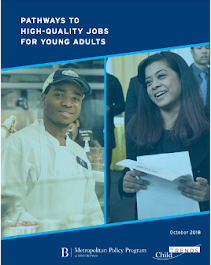
According to a report by the Brookings Institution and Child Trends: Pathways to High-Quality Jobs for Young Adults, the report examined employment outcomes for young people of color and those from low-income backgrounds, finding that:

  • work-based learning experiences in high school, including internships and apprenticeships, that incorporate positive relationships with adults really helps;
  • young people of color and those from low-income backgrounds gain higher-quality jobs by age 30; and
  • having a job as a teenager (ages 16 to 18) predicts higher job quality in adulthood and higher wages at age 23.

The report suggests strengthening work-based learning programs in high schools and helping teens and young adults — particularly those without a post-secondary degree — find on-ramps to employment. 

MORE ABOUT…

Leslie Gravino, MA, is an Art Therapist and adjunct professor at Las Positas Community College in Livermore, CA. She began her work in the mental health field as a counselor in a residential treatment center for adolescents. She then became a therapist at Conard House in San Francisco, where she started a catering business, a café in downtown San Francisco, that employed adults who had been homeless and were psychiatrically disabled. Ms. Gravino later served as the Work Based Learning Coordinator at Las Positas College, where she launched a computer repair business that trained women receiving welfare to gain skills in technology.  

Below are two briefing papers and three webinar recordings you should check out on the topic of youth workforce development in afterschool. 


[New Briefing Paper]

Restorative Justice Practices in Afterschool Programs
Restorative justice is a values-based practice. It creates a safe environment and builds trusting relationships, which are critical features of quality afterschool programs. These are the foundation on which afterschool programs can integrate restorative justice practices.
​
This paper is designed to raise understanding and awareness of restorative justice practices and identify ways afterschool leaders can integrate them. We recommend that program leaders share this paper with organizational leaders and program staff and consider the best ways to respond to personal harm and conflicts among youth participants.

To view and download this paper, click here.

Monday, June 5, 2023

Make It A Summer of Service

By Sam Piha

Source: www.pexels.com

Afterschool summer programs are a great time to engage young people in activities that serve others. These could be community service projects (which are often unpaid) or service within the afterschool program, such as tutoring, mentoring, yard supervision, leading games, etc. (These can be unpaid or volunteer). Summer schedules are more flexible, we have longer days and there is usually good weather. These opportunities can be one time or 1 or more times a week. 

Below we cite some benefits of community service and volunteering, additional resources on community service ideas and other information to help get started engaging youth through volunteering. (If it is too late to include in your summer program, consider it for the fall program.)

“Teenagers are not only a valuable source of energy, goodwill and creativity, but they’re also the key to our future. Volunteering allows them to tap into all those values while also learning about the world around them.” – St. Louise Children’s Hospital, Teaching Teens the Importance of Community Service

Source: www.help4kidssc.org
Benefits 
There are many benefits that participants accrue when youth engage in community service and/or volunteering. Research has shown that teens who volunteer are:

  • more responsible
  • have higher self-esteem and greater self-confidence.
  • gain skills such as leadership, good communication, time management and decision making.  
  • more likely to build connections with others. 
  • more likely to do well in school, graduate, vote and build a stronger resume for college and scholarship applications.
  • 50% less likely to abuse alcohol, cigarettes, become pregnant, or engage in other destructive behavior.
  • gain practical life skills while feeling valued and appreciated. 
  • less depressed, experience increased positive emotions, and experience reduced stress.

Source: www.goodfreephotos.com
“The Dalai Lama said it best in a post that has been shared all over the world. ‘When you care for others, you manifest an inner strength despite any difficulties you face. Your own problems will seem less significant and bothersome to you. Reaching beyond your own problems and taking care of others, you gain confidence, courage, and a greater sense of calm.’” – Kidz That Care, Volunteering and Teen Mental Health

Teens Have Their Own Reasons. 
According to the University of Nevada, Reno, the “major reasons cited by teens for volunteering:

  • Youth feel compassion for people in need
  • They can do something for a cause in which they believe
  • They believe that if they help others, others will help them.
  • Seventy-three percent of young people think their efforts can have a positive impact on their communities.
  • Teens rank volunteering, the environment and eating healthy, as top three activities they consider ‘cool’.
  • Youth who volunteer gain important job skills and experience, while exploring career options.
  • Young volunteers expand their social circle and enhance their social awareness.
  • Teens say the benefits received from volunteering are: Learning to respect others; learning to be helpful and kind; learning to understand people who are different; developing leadership skills, becoming more patient, and better understanding of citizenship.”

Source: www.pexels.com
How to Choose
If your program is school-based, check if your school already has a community service partnership with a local non-profit. It is best when your young people select the cause and activity they are most interested in. They can do research and/or map the neighborhood for possible partner organizations. For instance, afterschool youth interviewed workers at a local homeless shelter and determined that collecting donations of warm gloves was what was needed. Another afterschool program in North Dakota decided after doing research, that they wanted to collect and distribute ice skates for kids in low-income families. 

Service activities can also focus on the needs of the other children in the afterschool program offering tutoring, mentoring, yard supervision, leading games, etc. 

It is important to consider the interests and abilities of your program participants, the time that is required, the attitude of the staff they may be working with, as well as how they will get to and from the location of the partner organization. 

Project Ideas
There are many possible service project ideas. Below are some links that can assist you and your program participants in considering ideas for service projects:

Service projects can also focus on educating the community on local issues like hunger, homelessness or environmental issues. 

Other Resources and Links

Source: Youth Service America

In addition to the links in the blog, additional information may be found using the links below: 


Monday, May 15, 2023

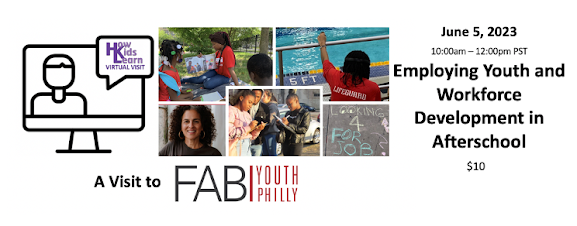
Employing Youth and Workforce Development in Afterschool


Source: Fab Youth Philly

By Sam Piha

When asked, older youth cite they are most interested in opportunities to gain work experience that is meaningful, making the real world a better place, and that can translate into their ability to earn their own money. Fab Youth Philly (FYP) is a Philadelphia-based youth development organization that provides innovative, award-winning programming for youth, with a programmatic focus on workforce development opportunities for teens ages 15-19. Below we interview Rebecca Fabiano, Founder and ED of Fab Youth Philly about their program offerings that promote youth employment and workforce development.  

Source: Fab Youth Philly

Q: FAB Youth Philly has emphasized the importance of engaging youth in work through your summer program and school year offerings. Why is this? 

A: We have emphasized the importance of engaging youth in work/employment during the summer for several reasons. First, the summer presents an opportunity for deeper and extended engagement with teens. We can see them five days a week for 5-8 weeks, which allows us to build and deepen our relationships with them, and for them to build and deepen relationships with their peers, other stakeholders (partner organizations, community members, etc.). That can be up to 200-250 hours of time to support teens developmental needs, including establishing financial independence, exploring their passions and interests, and building social capital & professional networks. We know that people who are employed in their teens are more employable as an adult and have greater lifetime earnings than those that do not. 

Q: Many of your program offerings engage youth in work that serves their community. Why is this important? 

A: Our work is guided by three youth development principles: 

  • Positive relationships;
  • Clear, fair and high expectations;
  • Opportunities for teens to connect, navigate and be productive. 

We are also keenly aware of teens developmental needs and with these things in mind, we know that teens need and want the opportunity to give back to their community. 

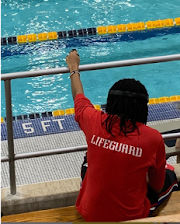
For our Play Captain, Safety Captain and our new Lifeguard Training Certificate, the teens often talk about what drew them to these opportunities was to be of service to their community. They talk with pride as a Play Captain about their work “decreasing summer slide and helping children to return to school prepared to learn”; as a Safety Captain, they talk about “a desire to solve problems in their community”, and our new Lifeguard trainees, talk about wanting to “help open pools in their neighborhood so kids have a fun place to go in the summer”.

“Many of our Play Captains report that they enjoy being a Play Captain because they can help children reduce the summer learning slide from the games and activities they play and facilitate.” – Rebecca Fabiano 

Q: Can you describe each of your youth employment program components?  

A: Work Permits for Teens: In many cities, teens need a “work permit” or “working paper”. Our staff has been trained to provide that permit to youth in Philadelphia. It is considered one of the (MANY) vital documents they need to be able to work.

Source: Play Captain Initiative
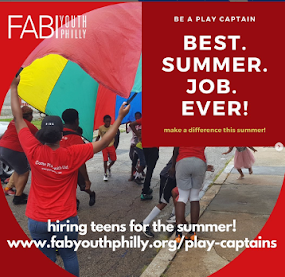
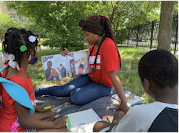
Play Captain Initiative: Every summer, Fab Youth Philly implements our award-winning Play Captain Initiative (PCI): a workforce development and civic engagement initiative with the mission to empower and train teens in leadership, playful learning and facilitation to make Playstreets, playgrounds and neighborhoods in Philadelphia more playful. Each year we get up to 200 applications and we are able to hire about 50 teens. Those teens facilitate over 70 hours of playful learning activities. During the spring and fall, our Play Captains facilitate activities at neighborhood parks and playgrounds, providing an opportunity to continue working throughout the year. 

“For more than 85% of our teens, this is their first job experience; and we take that very seriously. We build in from application to exit survey opportunities for them to experience and practice things they may encounter again with future employers.” – Rebecca Fabiano 

Source: Fab Youth Philly
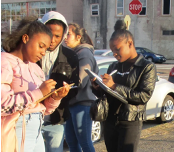
Safety Captain Initiative: Teens are paid to use a project-based-learning approach to answer questions like: What makes a neighborhood youth-friendly? What makes a neighborhood safe for teens? They conduct research, complete community asset mapping, go on field trips and have guest speakers. Upon completion of the 12-week program, they present their findings to the public. 


Source: Fab Youth Philly
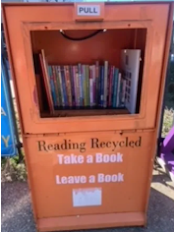
Little Library Stewards: In November 2022, we launched a new initiative called the Little Library Stewards (LLS). LLS creates a job for teens and helps a community asset from becoming a community nuisance. Many little libraries, where you can take a book and/or leave a book in a former newspaper box, are cared for by a resident or are left without a caretaker. As a Steward, teens are responsible for maintaining, cleaning, and stocking little libraries. We have piloted this initiative with some of our older teens, though in the fall, we are looking to make this opportunity available to 14-year-olds (the youngest age a teen can legally work in Pennsylvania), as way for them practice and develop various workplace “muscles,” such as punctuality, communication, attendance, and workplace technology.  

Youth Advisory Board: In December 2022, we launched our Youth Advisory Board with eight teens, who have been part of previous FYP programming. Being on the Youth Advisory Board is a paid position and members meet weekly between the months of September and May. The Youth Advisory Board is tasked with planning events, reviewing Play Captain & Little Library training, supporting participant recruitment and outreach. They are learning about budgeting, planning and decision making. We plan to keep these numbers relatively low, employing up to 10 teens per year.

Source: Fab Youth Philly
Lifeguard Certification Training: One of our newest initiatives is our Lifeguard Certificate Training program in collaboration with Philadelphia Parks & Recreation (PPR). We had 248 applicants for 15 slots. Every summer PPR needs to hire nearly 300 lifeguards to be able to open all of the public pools, but falls short every year, leaving some pools closed in the neediest neighborhoods. With this in mind and knowing that teens are looking to establish financial independence, we have established a partnership that capitalizes on each organization's assets. Drexel University is providing the pool, PPR is providing the Water Safety Instructors, and we have raised funds with our partner Drexel’s West Philadelphia Promise Neighborhood to pay teens and to outfit each of them with a bathing cap, goggles, bathing suits, towel, and flip flops. The teens participate in weekly workshops about how to create a resume and a cover letter, as well as how to apply for and interview for lifeguard positions. 

Our plan in the fall is to pay teens $10 to learn how to swim (thereby increasing the number of young people who have this important life skill, possibly decreasing water safety issues at public pools); then, for those who want to, they can test into the Lifeguard Certification program at $12 hour, and then be hired by PPR at $16 in the summer. Teens learning to swim will go on field trips and have guest speakers to help connect them to the rich history of public pools and swimming and to help develop their identity as a swimmer, while the teens in the Lifeguard Training program will continue to get workforce development workshops.

Q: For many youth participants who obtain first time jobs, do you offer any financial literacy info on how to handle their money? 

A: Yes. We provide a workshop on How to Read Your First Paycheck, one on creating a budget and in January, we invite them back for a workshop called I Got My W2, Now What Do I Do? so they learn about filing taxes.

Q: How can programs learn more about replicating one of these components and does your organization offer any staff trainings or coaching for youth programs outside of Philadelphia? 

A: We LOVE to visit other cities and conduct trainings on a WIDE range of topics pertaining to workforce development, youth development, trauma-informed youth development practices, and effective facilitation. For more information you can contact me at rebecca@fabyouthphilly.com.

MORE ABOUT...

For nearly 25 years, Rebecca Fabiano (She/Her) has worked in various capacities across nonprofit and youth-serving organizations, served on boards and helped to build solid youth programs that engage, encourage, and create spaces for positive development. As a program leader, she has successfully raised funds and managed program budgets; hired and supervised staff; developed and sustained strong community partnerships and designed award-winning programming. 

To learn more from Rebecca on the topic of program strategies to promote youth employment and workforce development, join us for this webinar:

Other resources you may find useful: 


Monday, October 11, 2021

Policy Recommendations to Promote Youth Employment in Afterschool Programs

By Sam Piha

Involving older youth as workers within afterschool programs makes a great deal of sense. Engaging youth in this way addresses their developmental tasks and personal interests, helps develop their workforce skills, offers opportunities for leadership and service to others, and brings youth input, making the program more relevant. 

This is even more important post COVID. A recent study entitled, The State of Youth Employment-Navigating the World of Work During COVID-19 found:

  1. Young people in America are struggling—they are financially strained, emotionally drained, and facing significant barriers to employment. 
  2. COVID-19 and the related economic recession have disrupted young people’s work lives in myriad ways and prompted extraordinary levels of concern about the future. 
  3. The professional connections and supportive relationships that can help young people advance their work-related goals are out of reach for most youth. 
  4. Young people’s hope about their future work lives is in jeopardy. 
Afterschool programs can be part of the solution. Based on our conversations with program providers, we offer the following recommendations to policy makers:

  1. State departments of education develop and distribute clear policies and guidelines on the use of 21st CCLC funds to engage youth as workers within the afterschool program. They should issue guidelines for the use of government funding to support high school workers within elementary and middle school programs. These guidelines should be designed to encourage, not restrict, programs from using the funds for this purpose. 
  2. Document promising practices being successfully used at afterschool programs and share them with those who are seeking to expand their programs’ capacity to engage youth as workers. This can be done by those who support the implementation of high school afterschool programs, including state afterschool networks, and those who receive technical assistance funds from private sources. 
  3. Identify supplemental funding to support career pathways to engage older youth working within afterschool settings. If needed, policy changes should be enacted to encourage access or eliminate any barriers impeding access to these funds by afterschool programs. Identifying funds is a form of technical assistance and can be done by those named in recommendation #2, above. Efforts needed to change policy can be led by afterschool advocacy organizations within your state. 
  4. Assist afterschool leaders in identifying and obtaining workforce and other supplemental dollars to support efforts that engage youth as workers in the afterschool setting. If needed, policy changes should be enacted to encourage access or eliminate any barriers impeding access to these funds by afterschool programs. 
  5. Incorporate into existing studies or identify dedicated funding to evaluate the efficacy in providing youth with work opportunities within afterschool settings. This can be achieved by local afterschool grantees who are charged with evaluating their programs, as well as larger evaluations that are funded by state departments or private sources. 

We wrote a detailed briefing paper on this topic to guide afterschool programs. The paper entitled, Engaging Youth as Workers Within High School Afterschool Programs, which includes discussion of policies and guidelines regarding youth employment, use of stipends and other forms of compensation. It also includes examples from actual programs and quotes from youth employed in their afterschool program. You can download this briefing paper here.
We also developed a less detailed paper on this topic, which can be downloaded here.


We are hosting a webinar/ Speaker’s Forum on Wednesday, October 20, 2021 from 10:00am- 12:00pm (PST) entitled, Engaging Youth as Workers in Afterschool. The purpose of this webinar is to inform and encourage afterschool programs to offer youth opportunities to serve as workers within these programs. It is our intention to capture and share valuable and intriguing ideas and information to help programs enlist youth as workers. To learn more and register, click the banner below.

Monday, April 5, 2021

A Summer Youth and Community Engagement Model: Play Captains

By Sam Piha

Source: www.playcaptains.com

The Play Captain model is an excellent way to engage older youth over the summer in community service and promote safety for younger kids. This model was developed in Philadelphia by Rebecca Fabiano and her organization, Fab Youth Philly. Below Rebecca responds to a few of our interview questions. If you are interested in learning more or having an exchange with Rebecca, contact us and we will arrange a Zoom discussion. Rebecca is also available for remote or in-person training.

Q: Can you briefly describe the Play Captain’s Initiative?

Source: www.playcaptains.com
A:
Coined after the Block Captain and Jr. Block Captain roles, the Play Captains Initiative is a workforce development and civic-engagement initiative with the mission to empower and train teens in leadership, playful learning and facilitation to make the Playstreets and neighborhoods of Philadelphia more playful. 

There are over 400 Playstreets in Philadelphia every summer, which are part of the Free Summer Meal Program, overseen by Parks & Recreation and serve as a safe place for children to receive two free meals a day during the summer. The Playstreets are closed off to cars between 10am-4pm and a resident on the block applies to be a Playstreet Supervisor; they distribute the meals. Not all of the Play Streets are as ’playful’ as they could be, which is why I created this initiative. I saw the opportunity to tap-in-to two underutilized resources in our City; the Playstreets and teens. 

Q: Do you provide training for the Play Captains? 

A: We do provide training for the Play Captains. Play Captains are teens ages 15-19 and they receive about a week (35 hours) of pre-employment training where they learn about concepts like playful learning and effective facilitation. They spend a lot of time playing games and learning how to modify them for a number of conditions and situations they may face on the Playstreet. They ALSO receive weekly professional development (PD) on Fridays on a variety of topics. They are paid ($9/ hr) for their time in training and for PD.

Q: How do you work with the community?

A: We work all year round with the community to build relationships with both individuals and other organizations. We attend community meetings both to learn about the happenings in the neighborhood and to promote the program. We also work with the Police Department and the Community Relations Officers (CROs) and created a “how to work with our Play Captains” guide for the CROs to encourage positive interactions.

Q: How are youth selected and assigned? 

A: Youth complete an application and typically participate in a group interview. For most teens (over 85%) this is their first job and so we want them to have a positive experience that really reflects what it takes to get a job. If we don’t hire a teen, we provide them with resources where they can keep looking for jobs. 

Source: www.playcaptains.com

The Play Captains work on a team of 5 teens, supported by 1 adult Group Leader. The Group Leaders are youth work professionals that we hire and train. We are often able to hire youth work professionals that are from the neighborhoods where we are playing/on the Playstreets, which helps in a number of ways. They are often known to others, so that helps bridge a connection between our organization and the community and, then after the program is over, they are able to maintain connections to the teens. We prioritize placing teens on Playstreets in the neighborhoods where they live. Then, day to day, they follow a schedule where they rotate to a number of Playstreets throughout the day, for a total of 4 days per week (Mon-Thur) for 5 weeks. They go to the same streets over the course of their employment in order to build consistency and relationships with the children that play on the Playstreets.

Q: How are you amending the model in response to the COVID pandemic? 

A: We ran the program last summer in the height of the Pandemic and put several safety measures into place, which we plan to put into place again this summer. For example: everyone wore masks indoors and outside; we did a deep clean of our indoor space 3x per day; we deep cleaned all of the supplies (balls, jump ropes, etc.) at the end of each day; and we created special socially distance arm signals to help the children on the play streets keep a distance. For example: Airplane arms (arms out to the side) when we wanted to have them stand in a circle or near each other, Frankenstein arms for when we needed them to line up and maintain some distance and Hands on Hips, once they are in their socially distance position.  

Q: What do you believe are the benefits to the youth participants? 

A: One of the biggest benefits is that this opportunity provides teens with a first job experience. About a quarter of our teens go on to get afterschool jobs the fall after they are a Play Captain. Other benefits that the teens often report include: feeling valued by their community and feeling like they can make a difference in the lives of younger children; and many teens that self-define as shy say that they had a chance to meet new people and “come out of their shell.”

Q: What do you believe are the benefits to the community? 

A: I’ve been told by residents how much they appreciate seeing the teen Play Captains engaged in something positive and that they feel it is good for the community that the teens have something meaningful to do. 

Q: How do you assess the impact of the program? 

A: For the past three years we’ve worked with a Playful Learning Landscape Action Network (PLANN) who developed a data collection tool and who train data collectors to collect data on the Playstreets to see if the activities the Play Captains facilitate help foster the Six Cs of Playful learning (collaboration, communication, content, critical thinking, creative innovation, and confidence). We also pre/post survey our teens to understand what they learn during training, and what they retain over the course of their employment. We conduct exit interviews with staff and engage in post programming focus groups with residents, Street Supervisors and other stakeholders. We use the data to revise training and to improve the selection of the activities that the teens facilitate on Playstreets, as some examples of how we strive to be a data-driven project. 

Q: If there is interest, would you be able to assist others in replicating this initiative?  

Source: www.playcaptains.com
A: Absolutely! We’ve built a program based on best practices in youth development, workforce development and community engagement, yet it is adaptable and flexible. I would encourage people to check out our website: www.playcaptains.com and watch our videos on YouTube to see the Play Captains in action. 


Rebecca Fabiano (She/Her/Hers) is the President and Founder of Fab Youth Philly and The Play Captain Initiative. For nearly 25 years, Rebecca has worked in various capacities across nonprofit and youth-serving organizations, served on boards and helped to build solid youth programs that engage, encourage, and create spaces for positive development. As a program leader, she has successfully raised funds and managed program budgets; hired and supervised staff; developed and sustained strong community partnerships and designed award-winning programming.​

Tuesday, January 5, 2021

Pre-COVID Resources Taking on a New Value

By Sam Piha

Before the COVID-19 pandemic Temescal Associates and The How Kids Learn Foundation created several resources and initiatives that have taken on a new value to the field given the emphasis on distance learning and the lack of opportunities for youth to gain employment. Some of these resources and initiatives are reviewed below. Check them out!

VIRTUAL VACATION: Because afterschool programs are looking for inspiring approaches for virtual/ distance learning, our program guide introducing Virtual Vacation may be just the thing. Virtual Vacation is an academic, cultural, and creativity-based program. It was developed specifically for an afterschool setting and can be utilized through distance learning as well. During a Virtual Vacation, participants virtually travel to a destination or period in history and learn about it through academic and creative components. Participants are enveloped by the culture of the chosen destination through a multitude of activities that also promote positive youth development. Take a look at our Virtual Vacation Guide to inspire your virtual learning planning.


DIGITAL BADGES: Afterschool programs that are offering distance learning are faced with a number of questions. One question is, "how do you incentivize young people's participation?" A second question is, "how do we best acknowledge young people who have completed participation in assignments related to distance learning 'classes'?" The answer may be the awarding of digital badges that can be stored in a digital backpack.

Temescal Associates developed the Center for Digital Badges (CDB) to serve as a clearinghouse for information and research on digital badges. It also offers a number of case studies on the use of digital badges by expanded learning programs and implementation support.


EMPLOYING YOUTH IN AFTERSCHOOL PROGRAMS: We know that many Summer youth employment programs were closed due to COVID-19, as well as many small businesses that traditionally employ young people. Can afterschool programs fill some of this gap by hiring older, school-age youth? 

We developed a briefing paper on employing youth in afterschool programs. The purpose of this brief is two fold: the first is to inform high school afterschool program leaders and stakeholders on policies and guidelines related to employing high school age youth and the use of 21st CCLC funds for compensation. The second purpose of this paper is to document strategies currently being used by California programs to engage high school age youth through work within their afterschool programs. 


Temescal Associates is dedicated to building the capacity of leaders and organizations in education and youth development who are serious about improving the lives of young people. Our clients include leaders of youth serving institutions and organizations, school and youth program practitioners, public and private funders, intermediary organizations, and policy makers. Their work ranges from building large scale youth and community initiatives to providing services to young people on a day-to-day basis. To accomplish this, Temescal Associates draws on a pool of gifted and highly experienced consultants who excel at eliciting the internal knowledge and wisdom of those we work with while introducing new knowledge and strategies that can transform the day-to-day practices that lead to improved youth outcomes.

​The How Kids Learn (HKL) Foundation is a 501(c)(3) organization. It is dedicated to improving the effectiveness of settings that support the education and healthy development of youth. This includes schools and out-of-school time programs. It provides educational and training activities that promote the capacity of organizations that support the education and healthy development of youth. Examples of activities include conferences, speaker forums, screenings of relevant films, training sessions, coaching sessions, the awarding of digital badges to acknowledge exemplar programs and the learning that happens within these settings. Activities also include the development and distribution of educational materials (papers, self-assessment tools, videos, program guides, etc.).

Serving Pregnant Teens in Afterschool Programs

Source: www.azcentral.com By Sam Piha Several years ago we partnered with the Long Beach Youth Institute to film a documentary on high schoo...