Showing posts with label rebecca fabiano. Show all posts

Monday, July 22, 2024

Let Youth Lead

Source: FAB Youth Philly

By Guest Blogger, Rebecca Fabiano, Founder & President, FAB Youth Philly
(This was originally published on the FAB Youth Philly Blog for Youth Workers.)

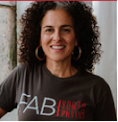
Rebecca Fabiano
We know that Out-of-School Time programs are in a unique position to support young people in their demands for safer schools, equity and justice. For many of us, a social justice lens is at the core of our work with children and teens. Helping them develop their voice and providing opportunity for them to develop leadership skills is key to our approach in support of their moral, social, emotional and cognitive developmental needs. 

Whether it is through a project-based learning (PBL) approach, through service learning, in support of their social & emotional learning (SEL) or through college and career preparation with an emphasis on 21st Century Skills like communication, problem solving and team work. It's one of the things we do best. As youth are finding their voice and establishing their demands, we must continue to offer safe spaces for them. 

Source: www.pexels.com

This includes spaces where participants are looking out for each other and empower them to look for signs of depression, anxiety and trauma. Do you have a process whereby youth can get help when they think something is 'wrong' and a peer might be depressed or acting differently? Does your program encourage and embrace mistakes? 

Do you look for teachable moments as opportunities for growth? Life is an iterative process and sometimes we learn the most when a caring adult or peer is there to help us reflect on our experiences. Include young people in the rules- making; and include them in the process for establishing and upholding the consequences. Do participants know it's OK to be 'different'? Safety also means being able to make mistakes or to be different without fear or ridicule. Is your space decorated with artifacts that represent the people you work with? Are you using language that is inclusive and culturally appropriate? Are there mechanisms in place for everyone to come together as a community? Some programs start and each day collectively, others come together for special occasions or other traditions. The more we can come together as a whole, the more we can take care of each other. Provide time for your staff to come together to get support and for training if they need it or ask for it. 

While there are many other things you already do to keep youth safe, remember: always be honest. Because we work with children and youth of all ages, do it in a way that meets them where they are at. You don't have to have all of the answers or be right. Go back to the suggestion about creating teachable moments; when we show youth that we are learning too, and often learning FROM them, it is empowering. If we have a different opinion than a colleague or our agency or a difference in politics, it's an opportunity to learn and connect. 

Source: www.pexels.com

Something to keep in mind during this time: Schools may have a harder time doing some of the things that we do so well; what ways can you partner with schools during these times? Can youth provide peer to peer support? Workshops or training? Can your staff mentor or work on a project alongside a school teacher? While the OST field plays an important role is supporting and empowering youth, we must also take seriously their demands and put pressure on the systems and policy makers to meet those demands. When we do, everyone can be more safe, and our world more equitable and just. Read this statement from the National Afterschool Association on their stance on the #PowerOfAfterschool and their commitment to supporting the filed.

MORE ABOUT...

Rebecca Fabiano is the president and founder of Fab Youth Philly. For nearly 25 years, she has worked in various capacities across nonprofit and youth-serving organizations, served on boards and helped to build solid youth programs that engage, encourage, and create spaces for positive development. 


Fab Youth Philly (FYP) has a unique, holistic model for youth development. Their three-pronged approach to youth development is aimed at creating relevant, engaging, and empowering learning opportunities at the individual, professional, and community level. First, they provide innovative, award-winning summer and afterschool programs for teens with a focus on workforce development programming. Second, they connect with youth development professionals working with or on behalf of youth through their Center for Youth Development Professionals (CYDP), which offers competency-based professional development and networking opportunities. Third, they consult with other youth-serving organizations to provide a range of consulting services, ranging from curriculum development to retreats and small

conferences. 

Monday, July 8, 2024

Field Trips Are Good for Adults Too and Great for Professional Development

Source: www.thinktogether.org

By Guest Blogger Rebecca Fabiano, Founder and ED of Fab Youth Philly

I recently wrote a blog about why field trips are a good idea for adults and a great tool for professional development. Read more of our blogs here. 

Some of my most memorable experiences of school and my time afterschool are of the field trips I took! Tons of research reports that field trips can make learning more engaging, they can deepen social skills, expose young people to things they may not have known about or thought they had access to, and also provide the opportunity for young people to make real-life connections to what they are learning.

Why limit all of these great things to young people? As adults, our learning can also deepen when have the opportunity to make real-life connections, when we can apply what we are learning in meaningful ways and when we can strengthen and expand our networks or access to information and opportunity. These are a few reasons why we include field trips in the professional development strategies we facilitate. Whether it's hosting the monthly Sandbox in a local coffee shop, or visiting various youth programs through one of professional learning communities we facilitate or with our own staff to expand our networks or resources. 

Before heading out on your field trip, provide some context. For example, before I took a group up to visit the Wooden Boat Factory, I had them watch a brief video about their work and peruse their website. This allows staff to ask informed questions. Maybe you have them do a 'scavenger hunt' while they are at the location, where they have to meet certain people, or gather certain information about the program. Just the same way you would if you were taking a group of youth. Being intentional about the experience you want your staff to have is 50% of what makes it meaningful.  

There are SO many places to go on a field trip, and quite a number of them don't have to cost very much, if anything at all! 

Below are some examples of potential field trips for your staff that would also make for great professional development opportunities. 

  • Go visit another OST program! There are scores of youth programs in your city. Go for a walk with your staff in the neighborhood where your program takes place, and map or count how many other youth programs there are within .25 miles. You might be surprised. 
  • Visit your local library. Many are FILLED with all kinds of resources; computers, maker spaces; some even have a café. They are not the old, dark places where the librarian used to come around and ‘shush’ you if you were too loud. Many have recently undergone serious make overs!
  • Visit a Board Member’s office. Some of us have board members that work in fancy or interesting places; take your staff to visit a board member at his or her office. It’s a great way for staff to learn more about the board (at least that particular board member) and, depending on where the office is may expose staff to a new business or organization or a new part of the city.

If you're still not sure where to go, ask your staff. Then, get out there! 

MORE ABOUT…

For nearly 25 years, Rebecca Fabiano (She/Her/Hers) has worked in various capacities across nonprofit and youth-serving organizations, served on boards and helped to build solid youth programs that engage, encourage, and create spaces for positive development. As a program leader, she has successfully raised funds and managed program budgets; hired and supervised staff; developed and sustained strong community partnerships and designed award-winning programming.

Fab Youth Philly (FYP) is a Philadelphia-based youth development organization that provides innovative, award-winning programming for youth, with a programmatic focus on workforce development opportunities for teens ages 15-19. 


Monday, March 25, 2024

Engaging Youth in the 2024 Elections


Source: Center for Tech and Civic Life

By Sam Piha

The 2024 election offers a number of opportunities to engage older youth. But these opportunities require input from youth and staff, organizing and planning- so start program planning NOW! 
 
There is no better time for youth to be involved in making a change through the ballot box. We can frame these efforts as “meaningful participation”, “civic engagement”, “youth leadership” or “community service”. There are a number of organizations and initiatives that have designed curriculums, program tools and other materials to assist afterschool providers in their efforts to engage youth in the 2024 elections. This blog is an excerpt from our recently released briefing paper entitled, How Can Afterschool Programs Promote Civic Engagement and the Youth Vote in 2024.
 
MYTHS ABOUT YOUTH AND VOTING

Dispelling Myths about Youth Voting
“When many members of the public talk about young people's civic and political participation, they often rely on and perpetuate myths about youth voting and youth attitudes toward civic life. These myths can reflect a lack of understanding of the complex dynamics that shape young people's engagement in democracy. At best, they paint an incomplete picture of these dynamics; at worst, they misrepresent them entirely. These inaccuracies can hinder efforts to increase youth voting and other forms of civic participation.
 
“Young people today are constantly depicted as disengaged and irresponsible. In fact, we are anything but. We are more progressive than our parents, more educated, and far more connected. We are powerful, engaged, and ready to lead.” [i]
 
CIRCLE's two decades of research on these topics, and our work on the ground with a diverse set of partners and practitioners, have given us the data and understanding to dispel some of these myths:
·       Young People Are Apathetic
·       Youth Voting Has Been Declining for Decades

Source: CIRCLE


(The estimates above are from CIRCLE analysis of voter file data in recent elections. Estimates based on the Census data produce slightly different results but allow us to examine historical trends over the past 50 years.)
 
·       Young People Just Choose Not to Vote
·       Young People Are All Liberal College Students
·       Young Voters Don't Impact Elections.” 

Dispelling these myths is crucial for understanding and addressing the barriers that may prevent young people from fully participating in the democratic process. Encouraging youth engagement and empowering young voters are essential for ensuring a vibrant and inclusive democracy.” [ii] 

VOICES OF FIELD LEADERS
We interviewed several afterschool leaders on the importance of youth involvement in the elections. 


Q: Do you think it is important to encourage youth to be involved in the 2024 election? (this could involve making a plan to vote, registering students who will be eligible to vote, volunteering for a campaign or candidate that they agree with, etc.) If yes, why?

RF- YES! We think it is very important to encourage youth to be involved in 2024 election at both the local and national level. One of our greatest rights, and responsibility as an American, is the right to Vote – which was not afforded to everyone throughout our history. I happen think everyone should be given a voter registration card when they are issued their birth certificate, it’s that important.

JF- Yes, I think it's very important and so do the youth we work with. Our youth feel that their voice matters even if they can not "vote". At a few of our high schools in Oakland, we have lots of civic leadership/action groups including a group of students in our program who go to Sacramento every year to meet with Legislators and share their stories about the importance of expanded learning programs. We'll be there again with over 60 young people on March 12th. 

SV- I do think it's absolutely imperative to encourage and support youth to be involved in the 2024 election. Although youth can be quite vocal (and influential) on social media about issues important to them, statistically speaking however, they are one of the least engaged groups when it comes to voter turnout. 

Q: Could you describe what you are planning to do with engaging youth in the 2024 election?

RF - We plan to host registration events, and possibly even parties; on election day, we plan to go with teens who are voting for the first time and to make a big deal of it (e.g., “It’s my first time voting” hats or sashes).

Q: When should programs begin planning for this? 

RF- NOW! States will have different deadlines for voter registration so be sure you know what they are.

SV- I think it's never too early for programs to plan for this. 

Q: How should youth be involved? 

RF- They can be involved in planning, they can be trained to help register others to vote, they can create messages about the importance of voting, they can schedule meetings with various candidates or attend Town Hall events and submit questions for prospective candidates- they can host their own forums with the candidates.

JF- There are many ways youth can be involved and one of the ways that we support, especially during expanded learning programs, is to provide a space for youth to discuss the topics, issues and challenges they feel are important to them and their communities, then, discuss the possible solutions and who can support the possible solutions and resolutions. This includes local, state and national elected officials. It's important that students continue to explore local officials and the causes that are on top for them.  

Bay Area Community Resources (BACR) is part of a statewide youth civic action group called TACA (Teens Advocating for Civic Action) and students meet monthly on zoom to discuss the issues they're facing and the action steps they're taking including the upcoming election and its impact on those issues.

SV- I think youth should be involved in the planning and implementation as much as possible, from informing the creation of lesson plans/contents (via advisory committees, polls, surveys, etc.) to co-facilitation for their peers and helping these programs be student-driven/led as much as possible. At the end of the day, students listen to their peers more than adults. Involving youth is crucial to ensure their voices are heard, and we are not addressing these topics through our adult lens.


END NOTES
[i] Chat GPT, How is youth engagement in elections and voting good for the community?

Monday, November 13, 2023

Hiring Part-Time, Temporary Staff to Work with Youth Isn’t Okay Anymore

Source: Rebecca Fabiano 

By Guest Blogger Rebecca Fabiano, Founder & President of FAB Youth Philly. (Note: This blog was originally published in Youth Today.)

We did something revolutionary with our two newest job postings in our youth program: offered them as full-time, year-round positions. Typically, these positions are part-time, hourly, temporary positions — and that is simply not working for us, or for our field, any longer.

Like many out-of-school time and afterschool programs, we’ve had to hire program staff at least two, even three times per year. While the function of these positions might be similar or even the same, because the time of day for the programs differs so greatly, we often have to hire different staff.

This creates a cycle of recruiting, interviewing, on-boarding, training, and off-boarding that is counterintuitive and counterproductive to the things we stand for in our field: positive relationships between youth and adults and equitable, career paths that have a living wage. It costs organizations of all sizes, but especially small organizations like ours, significant amounts of time and money, including for job postings, clearances, swag, and staff salaries. It takes up valuable time that could be put towards programming, staff training, community engagement and more, because we are doing it every three, six and nine months to be able to staff our afterschool and summer programs.

This approach to hiring is rooted in the nonprofit industrial complex and concepts like scarcity thinking. It is a waste of time, money and talent and keeps the very people we say add value to our organizations poor and less able to establish a meaningful career in our field. But most of all, for us, at Fab Youth Philly, this hamster wheel of hiring keeps us from building and maintaining trusting, caring and consistent relationships with the teens and their families we work with. If there is a new person from an unknown phone number calling or texting or sending an email every six months, how is a teen supposed to feel connected to us? How do caregivers know who to contact if they have a question or concern?

Source: Temescal Associates

“But what will these new hires do all day?” you ask. They will do and get paid for the things we ask them to do for free or outside of their work hours or for the “passion for the work”.

They will be able to attend community meetings and conduct outreach and build relationships. They will have time for planning and curriculum development. They will have time to collaborate with their colleagues — and we are hoping, as we continue to build relationships with schools and other youth-serving, nonprofit organizations and businesses. They can provide additional support in schools or public libraries or offer clubs during the day at school or at childcare centers. We see these full-time positions serving as a bridge between the school day and out-of-school time.

If you or someone you know are interested in this approach, check out the job description and others currently available on our FAB Youth Philly website. And if you’re a youth-serving organization who wants to follow the same path, here are three ways to get started:

1. Talk with your board of directors. Consider whether this move aligns with your organizational values and goals; if not, work with your board on what might need to shift. 

2. Review your budget and see where there is room to create full-time positions. We had some under-spending and talked with one of our funders about allocating this funding for the purpose of hiring full-time staff. You may have to plan a year or more out before you can offer a full-time position.

3. Talk with current or potential funders about your hiring goals and see if they are interested in testing this concept with you.


Rebecca Fabiano is the president and founder of Fab Youth Philly. For nearly 25 years, she has worked in various capacities across nonprofit and youth-serving organizations, served on boards and helped to build solid youth programs that engage, encourage, and create spaces for positive development. 

Monday, October 9, 2023

High School Afterschool Programs: One Size Doesn’t Fit All

Source: FAB Youth Philly

By Guest Blogger: Rebecca Fabiano, MSED, Executive Director of FAB Youth Philly 
(previously published on FAB Youth Philly)
 
For seven years I ran a high school out-of-school time (OST) program that I started from scratch. It was by far one of the most rewarding jobs I’ve ever had. I did a LOT of on the job learning from, and with my students. Here’s what I came to know that helped me to design activities and programs for participants.  

High school students come to our programs for various reasons and they utilize our program in accordance to their developmental needs. This means that we need to develop activities, supports, etc. that intentionally meet those needs, and making sure that staff is adequately trained and supported to meet those needs. 

Here are a few tips that I’m excited to share with you, which you can use to design your high school OST programs: 

Ways OST programs can support 9th graders making the transition to high school. This includes: 
  • Developing new friendships (have a buddy or big bro/sister program with older/experienced youth in the OST; workshops on peer pressure, bullying etc.) 
  • Developing study & time management skills (offer workshops, games like Minute to Win It, Jeopardy, etc.) 
  • Understanding how to ‘be’ a high school student (what classes to take, how to read transcripts through workshops, etc.) 
  • Lots of exposure activities (that also involve making new friends- trips, movies, guest speakers, etc.) 
Source: Beyond Expectations- The Power of High School Afterschool

Ways OST programs can support 10th graders by helping them to build their friendships, explore their identity and other life skills and start to expand their networks towards post-high school goals-college/career. This includes: 
  • Health & wellness & sexuality activities (Sept-Dec) 
  • Identity exploration through guest speakers (Sept-Dec) 
  • Prep for 1st summer job (Jan-June) (bring a nurse on campus to expedite work papers, etc.) 
  • Help them develop skills and experiences that will prep them for work including civic engagement/ project based learning activities. 
  • Offer PSAT classes 

Ways OST programs can support 11th graders by focusing on college and career exploration via work-readiness clubs, leadership opportunities (this could be the big bro/sister program) and internships; continue with civic engagement activities: 
  • Career panels (fall) 
  • Career days (fall) 
  • Develop a workshop on a fave topic for younger youth (spring) 
  • Developing career related documents (cover letter, resume, etc) (spring) 
  • Start college tours/hold college spirit days, etc. (spring) 
  • College essay writing workshops/games/contests, etc. (spring) 
  • Offer SAT classes (fall & spring) 

Ways OST programs can support 12th graders by zooming in on the college prep and post high school process: 
  • College tours (fall) 
  • College panelists (fall) 
  • Essay writing workshops/games/contests, etc. (fall) 
  • “Now that you’ve been accepted to college” workshops also: getting along with roommates, developing resistance skills (avoiding peer pressure for drinking, sex, etc.), how to avoid using all your meal plan points in one week, etc. (spring) 

Let us know: How do YOU design programs to intentionally meet the developmental needs of young people? Email your ideas to: info@temescalassociates.com.

[For more information on high school afterschool, check out Temescal Associates High School Afterschool Resources.]

MORE ABOUT…

For nearly 25 years, Rebecca Fabiano has worked in various capacities across nonprofit and youth-serving organizations, served on boards and helped to build solid youth programs that engage, encourage, and create spaces for positive development. As a program leader, she has successfully raised funds and managed program budgets; hired and supervised staff; developed and sustained strong community partnerships and designed award-winning programming.
 
Fab Youth Philly (FYP) has a unique, holistic model for youth development. Their three-pronged approach to youth development is aimed at creating relevant, engaging, and empowering learning opportunities at the individual, professional, and community level. First, they provide innovative, award-winning summer and afterschool programs for teens with a focus on workforce development programming. Second, they connect with youth development professionals working with or on behalf of youth through their Center for Youth Development Professionals (CYDP), which offers competency-based professional development and networking opportunities. Third, they consult with other youth-serving organizations to provide a range of consulting services, ranging from curriculum development to retreats and small
conferences.

UPCOMING WEBINAR:

To learn more and register, click here.


Monday, July 10, 2023

The Importance of Routines and Rituals in Afterschool Programs

Source: www.pexels.com

By Guest Blogger: Rebecca Fabiano, MSED, Executive Director of FAB Youth Philly
 
I saw this tweet several years ago and it’s stayed with me: “Structure provides predictability. Predictability enables preparation. Preparation raises confidence. Confidence is energy.” It made me think about the ways afterschool and out-of-school time (OST) programs use rituals and routines to achieve similar results for the children and youth we serve. They even often benefit our adult staff.
 
Routines are the day-to-day habits that help create and maintain structure and predictability, thus, leading to better preparation. This could be standing at the door and saying hello to everyone as they enter your space.
 
Or adhering to a specific schedule, daily chores, etc. Routines create a sense of predictability, which is very important to children and youth of all ages. 
 
“Predictability, or being able to know what to expect, is an important ingredient for healthy development. Predictable routines and consistent relationships provide a foundation of trust and security for children. When children know what to expect and who they can rely on, they have the confidence to explore the world around them and develop new skills.” - Future Learn, Predictability and Development

Predictability can help children who need consistency every day to stay on task, and routines can help reduce off-task behaviors, especially during transitions, which is when children tend to be most off track (think in between classes in the hallways, transitioning from independent stations to group work). Predictability provides those who need a sense of control something they can count on. Routines also become the ‘boss’ and they can diminish arguments about what is and isn’t fair, and what is and isn’t going to happen, or how it is or isn’t going to happen. This is important both for younger children who care about right and wrong from the perspective of concrete thinking to older teens who are trying to understand the nuances of right and wrong.

“Predictability is a stabilizing force for teens, but it’s been disrupted by the pandemic.” - Teen Mental Health: A Vulnerable Stage of Life

Here are a few more examples of routines you may expect to see in an OST program:
  • Procedures are in place for getting materials, sharpening pencils, discarding paper, etc.
  • Group leaders use signals and/or cues (clapping, music, chimes, quotes, etc.) to gain students’ attention.
  • Expectations for productive group work are established and clearly communicated orally and/or in writing.  
Adults benefit from routines too (and naps!), and the predictability of them can help them to better prepare. Having a deadline to submit lesson plans, a weekly learning community meeting with peers, scheduled prep time, are all examples of routines that provide structure for adults. Think about how more confident you often feel when you are prepared. Children and youth also feel more confident when they are prepared. OST programs by nature are designed to help children and youth to build confidence and that happens most when we implement intentional strategies like rituals and routines.

Different from a routine (the day-to-day things that create predictability), a ritual is something that has special meaning. For example, on the first day of the program, roll out a ‘red carpet’ and have people dance into the building or classroom. Decorate a classroom or library door to celebrate historical figures during Black History Month. When distributing certificates of completion, give them out in alphabetical order by participant to participant, starting with the person with the last name starting with an “A” and them giving the certificate to the person with the last name starting with a “B”; and have that person give to the person with a last name starting with “C” and so on. Rituals can also be energizing because they evoke a different energy from the day-to-day routines. Think campfires at the end of a long week of summer camp, or an end of semester talent showcase by the senior class.
 
If you’re looking to re-energize your OST program, or to inspire more confidence, or looking to add a little more structure to your program, take some time to assess what rituals and routines you have in place. Ask your staff if they have any favorite rituals from when they were in school, or summer camp or as an OST participant themselves. Try them out! Assess whether your current routines are effectively creating structure and predictability, or if they just create bureaucracy. If people aren’t feeling prepared or energized by them, maybe it’s time to find new routines for your OST program.
 
[Note: Pictures and quotes added by Temescal Associates.] 

MORE ABOUT…

For nearly 25 years, Rebecca Fabiano has worked in various capacities across nonprofit and youth-serving organizations, served on boards and helped to build solid youth programs that engage, encourage, and create spaces for positive development. As a program leader, she has successfully raised funds and managed program budgets; hired and supervised staff; developed and sustained strong community partnerships and designed award-winning programming.
 
Fab Youth Philly (FYP) has a unique, holistic model for youth development. Their three-pronged approach to youth development is aimed at creating relevant, engaging, and empowering learning opportunities at the individual, professional, and community level. First, they provide innovative, award-winning summer and afterschool programs for teens with a focus on workforce development programming. Second, they connect with youth development professionals working with or on behalf of youth through their Center for Youth Development Professionals (CYDP), which offers competency-based professional development and networking opportunities. Third, they consult with other youth-serving organizations to provide a range of consulting services, ranging from curriculum development to retreats and small conferences.

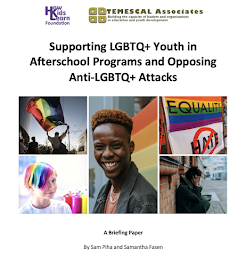
To see additional tools to ensure a sense of safety for all youth, see our Youth Development Guide 2.0 here. Also, a new briefing paper on supporting LGBTQ youth. Feel free to share this resource with your network.


Monday, May 15, 2023

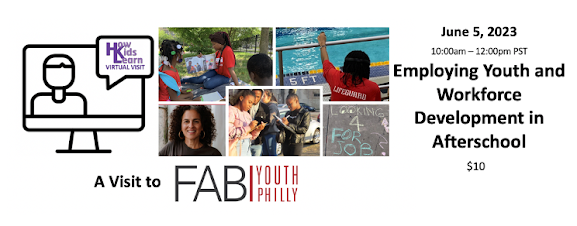
Employing Youth and Workforce Development in Afterschool


Source: Fab Youth Philly

By Sam Piha

When asked, older youth cite they are most interested in opportunities to gain work experience that is meaningful, making the real world a better place, and that can translate into their ability to earn their own money. Fab Youth Philly (FYP) is a Philadelphia-based youth development organization that provides innovative, award-winning programming for youth, with a programmatic focus on workforce development opportunities for teens ages 15-19. Below we interview Rebecca Fabiano, Founder and ED of Fab Youth Philly about their program offerings that promote youth employment and workforce development.  
Source: Fab Youth Philly

Q: FAB Youth Philly has emphasized the importance of engaging youth in work through your summer program and school year offerings. Why is this? 

A: We have emphasized the importance of engaging youth in work/employment during the summer for several reasons. First, the summer presents an opportunity for deeper and extended engagement with teens. We can see them five days a week for 5-8 weeks, which allows us to build and deepen our relationships with them, and for them to build and deepen relationships with their peers, other stakeholders (partner organizations, community members, etc.). That can be up to 200-250 hours of time to support teens developmental needs, including establishing financial independence, exploring their passions and interests, and building social capital & professional networks. We know that people who are employed in their teens are more employable as an adult and have greater lifetime earnings than those that do not. 

Q: Many of your program offerings engage youth in work that serves their community. Why is this important? 

A: Our work is guided by three youth development principles: 

  • Positive relationships;
  • Clear, fair and high expectations;
  • Opportunities for teens to connect, navigate and be productive. 

We are also keenly aware of teens developmental needs and with these things in mind, we know that teens need and want the opportunity to give back to their community. 

For our Play Captain, Safety Captain and our new Lifeguard Training Certificate, the teens often talk about what drew them to these opportunities was to be of service to their community. They talk with pride as a Play Captain about their work “decreasing summer slide and helping children to return to school prepared to learn”; as a Safety Captain, they talk about “a desire to solve problems in their community”, and our new Lifeguard trainees, talk about wanting to “help open pools in their neighborhood so kids have a fun place to go in the summer”.

“Many of our Play Captains report that they enjoy being a Play Captain because they can help children reduce the summer learning slide from the games and activities they play and facilitate.” – Rebecca Fabiano 

Q: Can you describe each of your youth employment program components?  

A: Work Permits for Teens: In many cities, teens need a “work permit” or “working paper”. Our staff has been trained to provide that permit to youth in Philadelphia. It is considered one of the (MANY) vital documents they need to be able to work.
Source: Play Captain Initiative
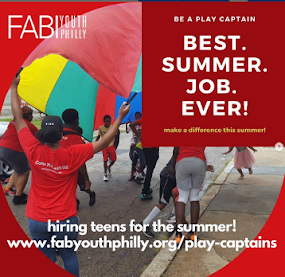
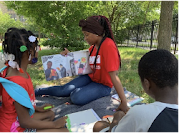
Play Captain Initiative: Every summer, Fab Youth Philly implements our award-winning Play Captain Initiative (PCI): a workforce development and civic engagement initiative with the mission to empower and train teens in leadership, playful learning and facilitation to make Playstreets, playgrounds and neighborhoods in Philadelphia more playful. Each year we get up to 200 applications and we are able to hire about 50 teens. Those teens facilitate over 70 hours of playful learning activities. During the spring and fall, our Play Captains facilitate activities at neighborhood parks and playgrounds, providing an opportunity to continue working throughout the year. 

“For more than 85% of our teens, this is their first job experience; and we take that very seriously. We build in from application to exit survey opportunities for them to experience and practice things they may encounter again with future employers.” – Rebecca Fabiano 
Source: Fab Youth Philly
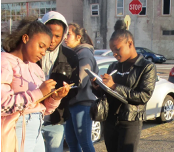
Safety Captain Initiative: Teens are paid to use a project-based-learning approach to answer questions like: What makes a neighborhood youth-friendly? What makes a neighborhood safe for teens? They conduct research, complete community asset mapping, go on field trips and have guest speakers. Upon completion of the 12-week program, they present their findings to the public. 


Source: Fab Youth Philly
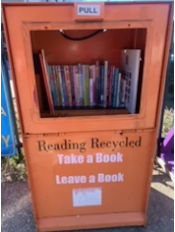
Little Library Stewards: In November 2022, we launched a new initiative called the Little Library Stewards (LLS). LLS creates a job for teens and helps a community asset from becoming a community nuisance. Many little libraries, where you can take a book and/or leave a book in a former newspaper box, are cared for by a resident or are left without a caretaker. As a Steward, teens are responsible for maintaining, cleaning, and stocking little libraries. We have piloted this initiative with some of our older teens, though in the fall, we are looking to make this opportunity available to 14-year-olds (the youngest age a teen can legally work in Pennsylvania), as way for them practice and develop various workplace “muscles,” such as punctuality, communication, attendance, and workplace technology.  

Youth Advisory Board: In December 2022, we launched our Youth Advisory Board with eight teens, who have been part of previous FYP programming. Being on the Youth Advisory Board is a paid position and members meet weekly between the months of September and May. The Youth Advisory Board is tasked with planning events, reviewing Play Captain & Little Library training, supporting participant recruitment and outreach. They are learning about budgeting, planning and decision making. We plan to keep these numbers relatively low, employing up to 10 teens per year.
Source: Fab Youth Philly
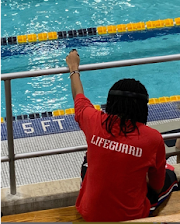
Lifeguard Certification Training: One of our newest initiatives is our Lifeguard Certificate Training program in collaboration with Philadelphia Parks & Recreation (PPR). We had 248 applicants for 15 slots. Every summer PPR needs to hire nearly 300 lifeguards to be able to open all of the public pools, but falls short every year, leaving some pools closed in the neediest neighborhoods. With this in mind and knowing that teens are looking to establish financial independence, we have established a partnership that capitalizes on each organization's assets. Drexel University is providing the pool, PPR is providing the Water Safety Instructors, and we have raised funds with our partner Drexel’s West Philadelphia Promise Neighborhood to pay teens and to outfit each of them with a bathing cap, goggles, bathing suits, towel, and flip flops. The teens participate in weekly workshops about how to create a resume and a cover letter, as well as how to apply for and interview for lifeguard positions. 

Our plan in the fall is to pay teens $10 to learn how to swim (thereby increasing the number of young people who have this important life skill, possibly decreasing water safety issues at public pools); then, for those who want to, they can test into the Lifeguard Certification program at $12 hour, and then be hired by PPR at $16 in the summer. Teens learning to swim will go on field trips and have guest speakers to help connect them to the rich history of public pools and swimming and to help develop their identity as a swimmer, while the teens in the Lifeguard Training program will continue to get workforce development workshops.

Q: For many youth participants who obtain first time jobs, do you offer any financial literacy info on how to handle their money? 

A: Yes. We provide a workshop on How to Read Your First Paycheck, one on creating a budget and in January, we invite them back for a workshop called I Got My W2, Now What Do I Do? so they learn about filing taxes.

Q: How can programs learn more about replicating one of these components and does your organization offer any staff trainings or coaching for youth programs outside of Philadelphia? 

A: We LOVE to visit other cities and conduct trainings on a WIDE range of topics pertaining to workforce development, youth development, trauma-informed youth development practices, and effective facilitation. For more information you can contact me at rebecca@fabyouthphilly.com.

MORE ABOUT...

For nearly 25 years, Rebecca Fabiano (She/Her) has worked in various capacities across nonprofit and youth-serving organizations, served on boards and helped to build solid youth programs that engage, encourage, and create spaces for positive development. As a program leader, she has successfully raised funds and managed program budgets; hired and supervised staff; developed and sustained strong community partnerships and designed award-winning programming. 

To learn more from Rebecca on the topic of program strategies to promote youth employment and workforce development, join us for this webinar:

Other resources you may find useful: 


Tuesday, November 29, 2022

More On Learning Loss and Afterschool

Source: Fab Youth Philly

By Sam Piha

There is a lot of concern that the COVID disruption resulted in significant learning loss and mental health issues (anxiety, depression, etc.). Should afterschool shift their focus to learning loss and academic support and move away from promoting a sense of safety, belonging and offering learning in non- academic areas?

Rebecca Fabiano
We asked Rebecca Fabiano, who is a respected afterschool leader and founder of FAB Youth Philly, to share her thoughts on these questions. Fab Youth Philly focuses three things: support youth-serving organizations through a variety of consulting services; connect youth development professionals to training and networking, and innovate summer and afterschool programming for children & teens. Rebecca has over 25 years of experience working in the afterschool field.


"I think afterschool should lean into its tradition of supporting Social and Emotional Learning (SEL) and promoting a sense of safety & belonging as a primary goal and supporting academics as a secondary goal. The afterschool field has a long history of creating spaces that encourage and promote physical and emotional safety and center relationship building as a key tool in this effort. 

Source: Fab Youth Philly

Afterschool staff often serve as critical supports and advocates for youths’ social and mental well-being and should continue to do so. They can also serve as a bridge between the school day and non-school day activities, such as academic support, including things like SAT test prep. They can partner with other organizations that provide tutoring or special academic supports to offer that either during the day or afterschool, as afterschool programs often have flexibility in terms of partnerships, hiring, funding, etc. that school systems do not have.   

Afterschool programs should respond to learning loss and mental health concerns by continuing to center positive, trusting relationships between young people and their peers and with caring adults. They should also include youth in conversations about their own mental health needs and wishes. From there, they may offer, depending on their expertise and comfort, workshops or counseling services to meet these requests. Afterschool programs can also do some additional leg work to identify resources for youth that include multilingual resources, supports for LGBTQ, undocumented and other particularly and traditionally vulnerable youth. This might include resources for the whole family."

To learn more about Rebecca Fabiano and Fab Youth Philly, click here.

MORE ABOUT
For nearly 25 years, Rebecca Fabiano (She/Her/Hers) has worked in various capacities across nonprofit and youth-serving organizations, served on boards and helped to build solid youth programs that engage, encourage, and create spaces for positive development. As a program leader, she has successfully raised funds and managed program budgets; hired and supervised staff; developed and sustained strong community partnerships and designed award-winning programming. 

Tuesday, August 17, 2021

"Misnakes" Are OK

Source: "Learning From Mistakes: Helping Kids See the Good 
Side of Getting Things Wrong"

By Sam Piha

When I was a classroom teacher, I always had a large sign that read, “Misnakes are OK.” Early in the year my students would eventually ask if I misspelled the word “mistakes”. I would reply that I misspelled the word intentionally to emphasize that mistakes are ok. 

Most people, particularly older youth, are often ashamed or embarrassed if they make a mistake publicly. It’s no wonder that many are afraid to engage to avoid the shame and judgement that comes with mistakes.

Embracing our mistakes is an important part of a growth mindset. GoZen, an online social emotional learning resource, writes, “Carol Dweck rocked the world of education with her research into something she called a Growth Mindset: the belief that a person’s basic abilities can be improved by hard work and determination. A growth mindset is central to a love of learning, perseverance and resiliency. Adopting a growth mindset also allows adults and kids to reframe mistakes into learning opportunities, making them less frightening and less debilitating.” (see LIAS Blog on Growth Mindsets).

I say to myself that I never lose, that I only learn. Because when you lose, you have to make a mistake to lose that game. So you learn from that mistake, and so you learn [overall]. So losing is the way of winning for yourself."- Tanitoluwa Adewumi, America’s 10- year- old Chess Master

And, we are more than our mistakes. Afterschool programs are particularly good at helping youth see themselves as more than their mistakes or school grades.

I particularly struggled with math. But after-school activities redefined the school for me. It wasn’t just the place where I failed my first test. It was where I learned how to sew. And I wasn’t just a person with a bad grade. I was a dancer.”- Meril, 17- year- old student

How do afterschool workers view their own mistakes? How do young people in your program think about mistakes? How are program staff trained to address the times when youth may make a mistake? I asked these questions to several afterschool leaders and share their responses below.

Carol Tang,
ED Children's Creativity Museum,
former Director, Coalition for
Science After School
Carol Tang -“If you take a step back and look at science, it's not about facts and figures or rote memorization. If you think about what scientists do- they are active, hands on, they make things and break things, they talk to their peers, learn from their mistakes and get better through time.”


Autrilla Gillis,
Director of Expanded Learning,
ISANA Academies
Autrilla Gillis -“I think that mistakes identify areas of opportunity for both young people and staff. Often times both staff and young people view mistakes as failures, while in reality mistakes are opportunities to try again with targeted supports or a focused action plan to improve the results.

From the district level, mistakes identify areas of future professional development for my staff and I. We veer away from vilifying staff members and instead investigate what led to the mistake, using our findings to determine whether an individual, school site, or district wide training should occur to ensure that the mistake is avoided in the future. 

Addressing mistakes is one of the most common conversations our staff encounters. Whether the mistakes involve academic feats, student responses to personality clashes, or poor decision making. As adults, we’ve taken the stance that young people must be empowered to work through their mistakes so that they acquire that skill, one that they’ll use for the rest of their lives. 

For our youngest scholars it begins with one-on-one conferences that utilize visuals and worksheets to help students identify the root causes of their decision making that led to the mistake, next we set goals to avoid making the same mistake when the situation is encountered again. As our scholars progress through grade levels we increase the reflective aspect of the process by incorporating journaling and peer support. It is rewarding to see scholars encounter mistakes and work their way through the same process using “self-talk” to get themselves through.” 


Rebecca Fabiano
President & Founder,
FAB Youth Philly

Rebecca Fabiano - “'Mistakes are Ok!; Take accountability for, and learn from your mistakes!'

That is the first line of our guiding principles, which we recite in a call and response fashion when we come together as a group. One person chanting the first part, the rest of us responding the second part. We actually changed it this fall to this current statement from 'Mistakes are Ok!; It’s Ok to ask a lot of questions' because we wanted to focus more on accountability and learning. 

The original statement was part of a job description for college interns; we wanted them to really see their time with us as a learning experience and that we didn’t expect them to know everything right away or to even ‘get’ everything the first time, which is why we encourage asking questions. Several interns noted that very sentence was why they wanted to work at Fab Youth Philly (FYP).

We also ask about mistakes during interviews as we see mistakes as teachable moments. As a learning organization, we are constantly making mistakes in part because we are also risk-takers, we are somewhat nontraditional in some of our work and so there are bound to be mistakes made. We also primarily work with teens for whom it is their first job being employed by us so we want them to develop a ‘muscle’ around mistake making, but also seeing mistakes as an opportunity.

The way staff addresses mistakes varies from staff, to staff, and sometimes has to do with confidence and experience. But all of us TRY to approach it as a teachable moment. The more experienced staff tend to see right away the opportunity for learning, and working with the teen to address the issue, as opposed to blaming or shaming. Sometimes as adults, we need coaching too, around suggestions for how to support teens when they make a mistake.”  

LEARN MORE

Mistakes are a natural part of learning, but students cannot develop into critical thinkers if they regularly freeze out of the fear of making a mistake.”- Colin Seale, Thinking Like a Lawyer 

Screen Time and Young People

Source: www.pexels.com By Sam Piha There’s a general consensus that too much screen time is bad for kids. While limiting screen time and est...