Showing posts with label afterschool workforce. Show all posts

Monday, November 13, 2023

Hiring Part-Time, Temporary Staff to Work with Youth Isn’t Okay Anymore

Source: Rebecca Fabiano 

By Guest Blogger Rebecca Fabiano, Founder & President of FAB Youth Philly. (Note: This blog was originally published in Youth Today.)

We did something revolutionary with our two newest job postings in our youth program: offered them as full-time, year-round positions. Typically, these positions are part-time, hourly, temporary positions — and that is simply not working for us, or for our field, any longer.

Like many out-of-school time and afterschool programs, we’ve had to hire program staff at least two, even three times per year. While the function of these positions might be similar or even the same, because the time of day for the programs differs so greatly, we often have to hire different staff.

This creates a cycle of recruiting, interviewing, on-boarding, training, and off-boarding that is counterintuitive and counterproductive to the things we stand for in our field: positive relationships between youth and adults and equitable, career paths that have a living wage. It costs organizations of all sizes, but especially small organizations like ours, significant amounts of time and money, including for job postings, clearances, swag, and staff salaries. It takes up valuable time that could be put towards programming, staff training, community engagement and more, because we are doing it every three, six and nine months to be able to staff our afterschool and summer programs.

This approach to hiring is rooted in the nonprofit industrial complex and concepts like scarcity thinking. It is a waste of time, money and talent and keeps the very people we say add value to our organizations poor and less able to establish a meaningful career in our field. But most of all, for us, at Fab Youth Philly, this hamster wheel of hiring keeps us from building and maintaining trusting, caring and consistent relationships with the teens and their families we work with. If there is a new person from an unknown phone number calling or texting or sending an email every six months, how is a teen supposed to feel connected to us? How do caregivers know who to contact if they have a question or concern?

Source: Temescal Associates

“But what will these new hires do all day?” you ask. They will do and get paid for the things we ask them to do for free or outside of their work hours or for the “passion for the work”.

They will be able to attend community meetings and conduct outreach and build relationships. They will have time for planning and curriculum development. They will have time to collaborate with their colleagues — and we are hoping, as we continue to build relationships with schools and other youth-serving, nonprofit organizations and businesses. They can provide additional support in schools or public libraries or offer clubs during the day at school or at childcare centers. We see these full-time positions serving as a bridge between the school day and out-of-school time.

If you or someone you know are interested in this approach, check out the job description and others currently available on our FAB Youth Philly website. And if you’re a youth-serving organization who wants to follow the same path, here are three ways to get started:

1. Talk with your board of directors. Consider whether this move aligns with your organizational values and goals; if not, work with your board on what might need to shift. 

2. Review your budget and see where there is room to create full-time positions. We had some under-spending and talked with one of our funders about allocating this funding for the purpose of hiring full-time staff. You may have to plan a year or more out before you can offer a full-time position.

3. Talk with current or potential funders about your hiring goals and see if they are interested in testing this concept with you.


Rebecca Fabiano is the president and founder of Fab Youth Philly. For nearly 25 years, she has worked in various capacities across nonprofit and youth-serving organizations, served on boards and helped to build solid youth programs that engage, encourage, and create spaces for positive development. 

Tuesday, April 7, 2020

Dr. Dale Blyth on Afterschool 2020 and Beyond

By Sam Piha
(Note: The COVID-19 pandemic has been very disruptive to afterschool providers and we will cover this topic ongoing. However, as afterschool leaders plan for Summer and next Fall, we will also offer posts that advances thinking for the afterschool movement.)

Dr. Dale Blyth has been a leader in the fields of youth development and afterschool for many years, and has many accomplishments. In late 2019, we asked Dr. Blyth a few questions and to look ahead as we enter a new decade of the afterschool movement. Below are some of his responses.

Q: In looking ahead to 2020 and beyond, what do you see as the important emerging trends in expanded learning programs?

DALE: Three emerging trends are on my radar screen. First, the growing international work on creating a field of youth work and youth development. We have much to learn from other countries and how they support young people and how the workforce working with young people are prepared and supported. It has great implications for our field.

Q: How might international work be collected and disseminated to practitioners?

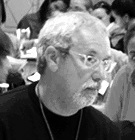
Dr. Dale Blyth
DALE: There are at least three ways we can increase our knowledge of what is happening internationally in our field: (1) consider joining the new World Education Research Association’s Extended Learning International Research Network.

While more research focused, it does provide a connection to what is happening in other places; (2) consider traveling, particularly to Europe, and explore their rich history in youth work. This can be done through the National Afterschool Association’s International Learning Exchange which travels to a country every June. This year we are going to Berlin, Germany – and also meeting the leads of the Extended Learning group noted above.

This is a great way to make connections and meet new colleagues that can become a great source of international information. The web site also includes information from previous visits; (3) the journals, magazines, and meetings in our field need to seek out and publish more news from abroad in ways that provide insights and ideas for practice. This can happen by inviting international practice leaders and researchers to our conferences as well as devoting space to regular international perspectives or doing a special issue.

Q: What is the second trend you would like to share?

DALE: As schools discover / rediscover the importance of the social and emotional dimensions of learning and development and as more and more national groups bring attention to the science of learning and development, it offers new opportunities for our field.

Our field can shine a light on what we do and build on the capacities we have in these critical areas and help avoid an overly content and school-centric approach to developing these skills. This will help schools and communities find a new and more balanced partnership. Some are calling for new forms of practice research partnerships that are less driven by a research study and more about engaging together to better understand and advance practice.

Q: How might practitioners get involved with researchers to form these partnerships?

DALE: Searching out the right research partner can be difficult but rewarding. Start by identifying what you want to learn and looking at who is doing work in this area in bridging journals such as the Journal of Youth Development. Contact these folks to find out who else might be doing work in this area close to home.  Check with colleges and universities in your area as well as research and evaluation organizations. Look for people interested in applied research and/or evaluation. Also contact your state afterschool network and/or associations for possible leads and perhaps consider joining a learning cohort or professional learning community that is looking at practice issues through many lenses – including research. Like all good partnerships, you need to develop a relationship with the researchers and affirm your mutual commitment to the project which can be time intensive but enormously valuable.

Q: What is the third trend you would like to share? 


DALE: The role of data to both inform, shape and even inspire practice is at a turning point in our field where we need to move from just evaluating what we do to be accountable to others to the point where we are using data to complement our deep and rich understanding of youth and the ways we work with them.

Q: Can you give an example of what this might look like?

Dr. Gil Noam
DALE: The work of Gil Noam and colleagues at the PEAR (Partnerships for Education and Resilience) Institute at Harvard is a good example of how getting data on STEM and social emotional learning can both inform and change practice. Seeing the youth in your program through data that you can sort by topic and look at individuals can reshape how you approach practice. Another good set of examples comes from the work on social and emotional learning that was part of the SEL Challenge created by the Susan Crown Exchange and captured in Preparing Youth to Thrive.

Q: Looking ahead to 2020 and beyond, what do you see as the most significant challenge facing the field of expanded learning? 

DALE: The major challenge I see is the very fragmented nature of the field's people working with youth and the lack of a clear taxonomy that addresses our commonalities as well as unique contributions as professionals and as programs and activities of different types. This includes the lack of a coherent identity for youth workers.  Understanding the workforce - from paid to volunteers - and the settings and purposes of their work with young people requires our attention.

If we are to be a force in the future and mobilize the types of resources needed to both open education and support high quality youth work, we need to better understand, promote and improve the workforce delivering opportunities to young people.

Q: We know that improving the afterschool work force is challenging because of the lack of program funding (due to the reduced number of funders interested in youth development and the increase in minimum wage), the lack of time, and staff turnover. Do you have any thoughts on how these challenges can be overcome?

DALE: While the challenges are real and difficult to meet one program at a time, I am inspired by the work of intermediaries, local systems, networks, and associations to create meaningful opportunities.  Also some of the national youth serving programs offer training that others can sometimes tap – for example, 4-H and related university extension services and the YMCA Character Development Learning Institute. I would start by making sure my organization was connected to these networks and local leaders to best discover what I need.
.................................
For a full bio on Dr. Dale Blyth, click here.

Wednesday, December 27, 2017

Feedback from the Field

By Sam Piha


We recently issued an online survey of those that have attended our conferences and Speaker’s Forums. The purpose of the survey was to assist us with planning for 2017-18, especially as it relates to our promotion of SEL and character building. We received 59 survey responses. 

We were surprised by some of the responses. Below we share this data with our comments beneath. 


Photo credit: focusforhealth.org

• Most of the survey respondents were either technical assistance providers or oversee one or more afterschool or summer programs.


While it is important to reach line staff, it may be more important to reach program leaders who can then direct appropriate training for line staff. 

• A vast majority of respondents have been working in the field of afterschool
for many years (55% – more than 10 years; 26% - 5-10 years). 

While there is high turnover among line staff, there is a large number of people who have made afterschool a career. 

• Nearly 45% of respondents replied that educational events or activities to build awareness and gain buy-in from parents are strongly needed. Nearly 43% replied that it is somewhat needed. 

We believe that activities that target parents are important. However, this population has been largely ignored. We can learn more about the challenges of engaging parents of afterschool participants and what is needed. 

• Over 65% of respondents replied that educational events or activities to build awareness and buy-in from educators are strongly needed. Nearly 29% replied that it is somewhat needed. 

It is clear that because many afterschool programs are housed in schools and receive funds from the Department of Education, we need to do a better job of reaching out to and targeting educators. This is reflected in our current support of the CORE Districts to integrate social emotional learning and the promoting of mindfulness to counselors and SAP staff.  

• When asked to rank five challenges for programs that seek to integrate strategies that promote character building and SEL, two issues were ranked the highest: “lack of training dollars” and “lack of time for professional development”.

The issue of lack of time is partially due to the high prevalence of part-time staff and volunteers and budget restrictions. Thus, it is important that we reach full-time program coordinators and other technical assistance providers with low-cost and convenient learning opportunities.


_________________________

You can read other blogs by the LIAS project by going to: 


  • Expanded Learning 360°/365 Project website
  • LIAS Blog Written for the California Afterschool Network

Building a Trauma Informed Care Approach for Afterschool Programs & Community-based Organizations

Source: Afterschool Alliance Many of the young people we work with in afterschool have suffered from individual or collective trauma. Below ...