Showing posts with label normandie nigh. Show all posts

Monday, September 4, 2023

The Power of Work and Afterschool (Part 2)

Source: A World Fit for Kids

By Sam Piha

In his book, The Means to Grow Up: Reinventing Apprenticeship as a Developmental Support in Adolescence, author Robert Halpern describes the developmental tasks of older youth. Halpern’s descriptions of these tasks include:

  • Asserting control over their lives and the forces that affect them and their communities, 
  • Beginning to think about the adult world, how it works, make sense of it, and discern their role 
  • Ability to carry out more complex tasks: to plan, apportion time, sustain attention and effort, gather and organize information, and monitor one’s work.
  • Forging a sense of identity and voice as someone who has power, can positively impact others, and can demonstrate real accomplishment and achievement that has meaning. 

We believe that afterschool programs can play an essential role in workforce development and providing opportunities for older youth to work. We think that youth employment can help address the developmental tasks of older youth as described above. To learn more about this we interview Bill Fennessy, who is an expert on workforce development in afterschool, educational researcher, Regie Stites and Normandie Nigh, Chief Executive Officer and Founder of A World Fit For Kids!.

Q: Do you think young people's engagement in work provides special benefits? 

Bill Fennessy
A: There is no question that young people’s engagement in work provides benefits, and that engagement could be pivotal to their success in life. Most of our students will need a to know how to get job after high school to support themselves or contribute financially to the household. They will also need a job to financially be positioned to be able to attend college and other post-secondary educational opportunities.

Engagement in work is especially important for our students of color. Gallup results show that 65% of students of color will follow the educational and career advice from someone in the workplace, over the advice from their parents, teachers, and counselors combined.

Normandie Nigh

A: (Normandie Nigh) Absolutely! When young people join the workforce they benefit in so many ways, including earning a pay check and experiencing the pride that comes with having a job and learning a variety of skills such as writing a resume, interviewing, expectations, responsibility, punctuality and workplace professionalism. For many of our students they’re also grateful to be able to contribute to their families or save towards their education. At A World Fit For Kids! we believe that it is also important to assist students in learning financial management, time management, safety protocols & procedures, and laws pertaining to teen employment.

Q: How did you discover the power of work for older youth? 

A: (Bill Fennessy) The discovery started with the belief that our programs must be student-driven both in content and delivery, and with we adults serving as facilitators. From there I took the opportunity to require the student leadership to participate in employment skills and position specific trainings to be able to attain those leadership positions. The level of student interest, despite the required training, was incredibly high. So, students that wanted these opportunities, also learned how to get a job.

I also strongly believe that students should be encouraged and supported in looking at what career or careers they are interested in. With that information, students, parents, and counselors can make decisions on the student’s education based, both secondary and post-secondary, on the relevancy to that career. The value of workforce opportunities such as Work Exploration, Work Experience, Internships, Apprenticeships, and Employment is immeasurably positive and will support life changing success.

A: (Normandie Nigh) When I starting working with inner-city teens in Los Angeles in 1994 I saw first hand the power of providing training, requiring community service and then allowing students to apply and get a job in our afterschool programs where they coached and mentored elementary kids. It truly changed both lives in the process!

Q: Do you think that the out-of-school setting is a good place to prepare youth for success in work and career?

Regie Stites
A: (Regie Stites) The simple answer is yes, the out-of-school setting is essential for preparing youth for work and career success. This is so because out-of-school programs can play a key role in supporting the types of integrated learning activities that connect school learning to real-world applications of knowledge and skills. For many young people, especially young people from low-income neighborhoods, one of the most important keys to educational engagement, persistence, and success is relevance. 

Simple common sense (and research) supports the notion that young people who can clearly see the relevance of what they are learning to their own lives and futures are more likely to persist and be successful in education and, as a result, are more likely to be ready for career success. The best methods for connecting school learning to real-world applications of knowledge and skills are well known. These methods include project-based learning, experiential learning, service learning, and a range of work-based learning activities. Some of these integrated learning activities, such as project-based learning and some forms of work-based learning may not require an out-of-school setting, but they are stronger when they do.

A: (Bill Fennessy) Absolutely! The Expanded Learning setting (afterschool) is where young people can feel comfortable to learn and practice the skills they want to experience, in this case “Employability Skills Workshops”. Work is something many of them are curious about or are already very interested in, so it is a very relevant activity for them. For those high school students that will serve at the elementary school Expanded Learning programs, the relationships they have with their own Expanded Learning program staff gives them the great opportunity to watch someone they trust model what would be expected when they work with elementary students. They also are implicitly introduced to the thought of an actual Expanded Learning job after high school, and they will likely need a job if they plan to attend college.

MORE ABOUT…

Regie Stites, Ph.D., is an author, social science researcher, and family historian. He served for twenty years at SRI International as a senior researcher and program manager. He conducted research on policies and practices designed to improve educational quality and outcomes for all students, but particularly for linguistic and racial minority students and for students living in poverty. 


Bill Fennessy currently serves with the California AfterSchool Network (CAN) as a Program Specialist on Equity, Quality and Workforce Development. In 2004 at Blair IB School in Pasadena, CA, Bill launched California’s first ASSETs pilot programs. Bill is recognized as a pioneer, innovator, exemplary practitioner, and thought leader in High School Expanded Learning nationwide. During the pandemic, Bill served as the Director of High School Programs for “A World Fit for Kids!”. 

Normandie Nigh is the Chief Executive Officer and Founder of A World Fit For Kids! (WFIT), a leading youth development organization that has been providing healthy behaviors and self-empowerment programs and training for inner-city youth and their families since 1994. She is an active advocate on behalf of healthy kids, families and communities and is an authority in the program development and training. She currently serves on many distinctive boards and steering committees that influence public policy in regards to physical education, physical activity, nutrition education, workforce development and additional aspects of developing the emotional, mental and physical well-being of kids.

Below are two briefing papers and three webinar recordings you should check out on the topic of youth workforce development in afterschool. 


[New Briefing Paper]

Restorative Justice Practices in Afterschool Programs
Restorative justice is a values-based practice. It creates a safe environment and builds trusting relationships, which are critical features of quality afterschool programs. These are the foundation on which afterschool programs can integrate restorative justice practices.
This paper is designed to raise understanding and awareness of restorative justice practices and identify ways afterschool leaders can integrate them. We recommend that program leaders share this paper with organizational leaders and program staff and consider the best ways to respond to personal harm and conflicts among youth participants.

To view and download this paper, click here.

Monday, May 9, 2022

Social Emotional Learning and Teens: The Importance of Adult Staff and Focused Program Practices


By Sam Piha

For successful delivery of SEL content has to do with the need to model it to the students to effectively teach it. SEL is necessarily responsive and works moment-to-moment over time; because it’s all about behaving and interacting, a “do as I say, not as I do” approach doesn’t work. Students learn and emulate self-awareness from someone who is demonstrating it. For this reason, educators must continue to develop their own social emotional skills so they can set the example — working on their personal development, becoming more self- and socially aware, learning how to manage their own stress, and walking the talk.  - Heather Daly, Courageous Hearts and Normandie Nigh,  A World Fit for Kids 

Dr. Dale Blyth
Dr. Dale Blyth, University of Minnesota, emphasizes that social emotional skills are “taught” through direct instruction and “caught” through adult modeling and the program values and culture. We know that the success of any program to promote social emotional and character skills is partially dependent on the social emotional and character skills of the adult leaders. 

Whoever our students may be, whatever subject we teach, ultimately we teach who we are. - Parker Palmer, Educator


Below is a reflection from Stu Semigran, Founder of EduCare Foundation, on the importance of adult staff and their social emotional skills. 

Stu Semigran
“We can only truly teach or impact our students in the value and competencies of SEL to the degree that SEL is becoming part of our own repertoire… our own way of being.  As we commit to our personal SEL self-development, this naturally influences our instructional practices, programs, and decisions. SEL becomes more than a collection of lesson plans, activities, or programs. It becomes a way of teaching… a way of being… a way of living. Then we as role models can deeply assist our students as they evolve in their own mastership of SEL. This has implications for how we hire and provide professional development.

There are a variety of valuable SEL skills that can be addressed through staff professional development. EduCare Foundation teaches “Eight Skills for Heartset® Education”.  Some of these include tools for self-awareness, mindfulness, self-forgiveness, and empathetic listening.  When these and other SEL skills are personalized and become our baseline, then we are more equipped to create an SEL styled climate with SEL curriculum and activities that can really “stick with” and impact our students.”


FOCUSED PROGRAM PRACTICES

Social emotional learning (SEL) is very important for teens and afterschool programs are well equipped to promote SEL skills. Below are some social emotional learning practices and activities for older youth that can be seamlessly incorporated into afterschool programs:

MindfulnessThe term ‘mindfulness’ is often associated with calm or total peace. But that’s not what it’s about. Mindfulness is a practice — meaning, something to be returned to again and again — that involves focusing on the present moment and accepting whatever is showing up. Doing this each day can help foster a feeling of centeredness, which in turn can result in reduced stress and more regulated emotions.  

You can register for Integrating Mindfulness into Afterschool Youth Programs: A Mini-Course to learn more here.


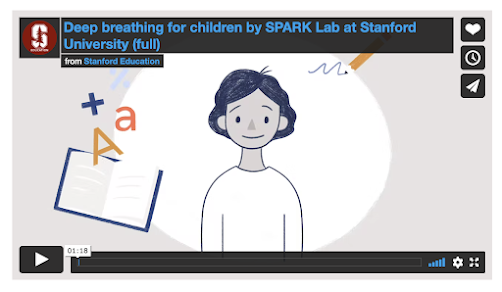
This animated video shows young children how to slowly inhale by pretending to smell a flower and to exhale by pretending to blow out a candle. The video was developed for a study by the Stanford Project on Adaptation and Resilience in Kids (SPARK Lab) at Stanford University.


Engaging Youth in Civic Action - In her article, How to Teach Older Students Social-Emotional Skills? Try Civics,  Arianna Prothero makes the case that “Understanding other points of view, solving problems collaboratively, and building relationship skills all come to mind [in teaching civics]. For many educators, those skills will sound familiar, because they’re many of the same taught through social-emotional learning…Civic engagement can be a meaningful way to teach and reinforce social and emotional skills. That’s especially true for middle and high schoolers who are searching for their place in their communities and the world and might not otherwise connect with traditional social-emotional lessons.” 


Source: Ever Forward Club
Circle Meetings - We know that bringing together young people and offering them the opportunity to have their individual voices heard in the larger community is an important practice. We are referring to ‘talking or sharing circles’ - bringing youth together in a circle and asking each individual to speak while the rest of the group practices active listening. In youth programs, these circle meetings are often called ‘sharing circles’ or ‘community circles.’ Click here to read more about sharing circles.


Source: Ever Forward Club
"Who I Am" Masks - The Ever Forward Club developed an exercise where young people write down words that describe who they are on the outside (the outside mask) and words that describe who they are on the inside (the inside mask)- the things that no one sees. (On their website, Ever Forward Club offers a curriculum on how to utilize this exercise). 

According to Darius Simpson, a former Ever Forward staff member, “A mask is a metaphor representing what we allow the world to see about ourselves. We all wear masks for different reasons, at Ever Forward we don't believe the mask is an inherently bad thing. Sometimes a mask is necessary to survive, get from one place to the next. What we've found is that when people, young men specifically, don't have a space to take off their masks and deal with what’s really happening for them, the mask becomes a part of them. That's where the conversation about what is living in what we call ‘the back of the mask’ comes into our workshops and circles.

* * *


How Hadley Gray is Mobilizing Youth-Led Blood Drives

Source: Giving Tuesday Guest Blog by Giving Tuesday. This article originally was published on Giving Tuesday .  When Hadley Gray first helpe...