Showing posts with label teens. Show all posts

Tuesday, August 9, 2022

Promoting Workforce Skills and Growing Your Own Staff


By Sam Piha

We know that when asked, older youth say they are most interested in acquiring the skills needed to get a job. As youth program leaders, it is our job to help prepare young people for success in adulthood, which includes creating opportunities to explore careers and gather work-based skills, and we are well positioned to help older youth to acquire these skills. 

We also know that afterschool programs are experiencing a worker shortage, and one way to address this is “Growing Your Own” by creating a pipeline for young people to move into youth work. 

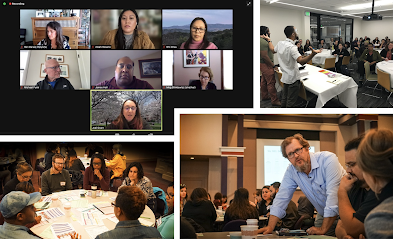
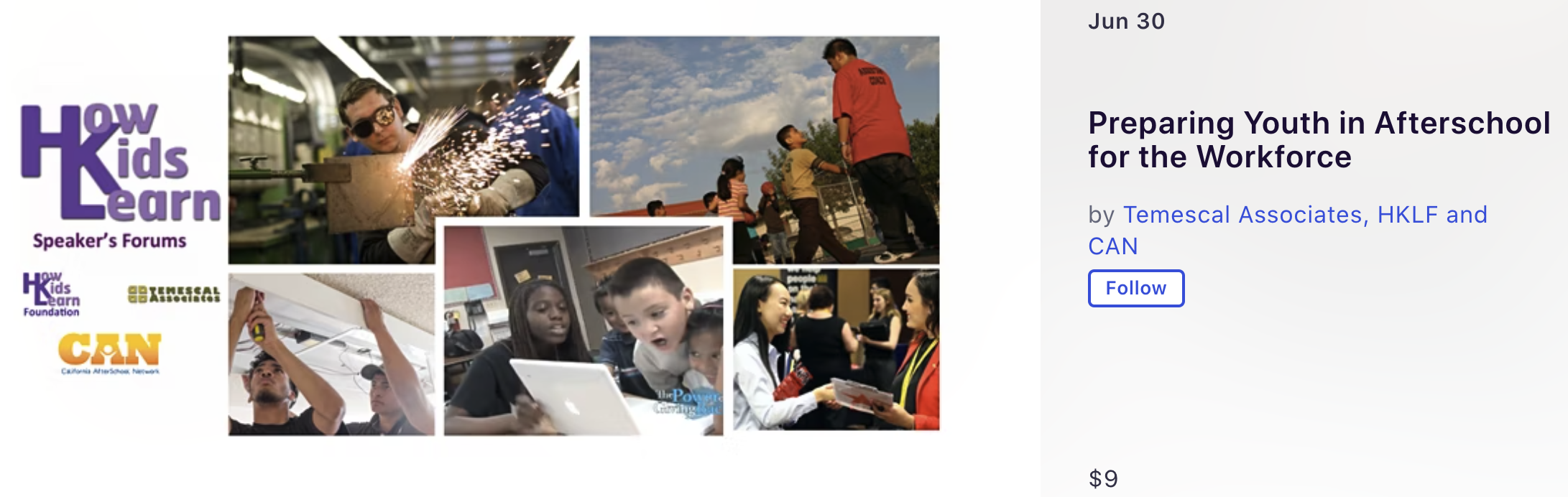
To explore these issues we hosted a webinar on June 30, 2022 entitled Preparing Youth in Afterschool for the Workforce and Building Your Own Youth Worker Pipeline. This webinar was hosted by Bill Fennessy (California Afterschool Network) and several youth work professionals who have developed these kinds of programs.

We highly recommend you view the recording of this webinar and review the very informational Powerpoint that accompanied the presentation. To access, click on the images below.

Webinar Recording


Powerpoint Presentation

Additional Resources:
Engaging Youth as Workers Within High School Afterschool Programs: A Briefing Paper
This paper (50 pages) offers experiences that build workforce and career skills, create leadership roles and opportunities for service. These experiences also create career pathways to professions such as teaching and social work, and ensures the program is more relevant to other youth. The purpose of this paper is to inform and encourage expanded learning programs to engage youth as workers in these programs.

Engaging Youth as Workers in Afterschool Programs 
The purpose of this paper (12 pages) is to clarify guidelines regarding the employment of youth and to share strategies that are currently being used by After School Safety and Enrichment for Teens (ASSETs) programs to engage high school age youth through work within their afterschool programs.


Program leaders are now thinking about using a “hybrid” model for professional development - a mixture of recorded/online training offerings and written briefing papers that can be shared with local staff, followed by on-site discussions facilitated by in-person leaders. This hybrid model can be tailored to the needs of the local program, to be more relevant, intimate, inexpensive, and COVID safe.

In this guide we identify “Basics” professional development resources with links for free, easy access (recorded videos, briefing papers, blogs, etc.). These were developed by Temescal Associates and The How Kids Learn Foundation (HKLF). Also included are worksheets, discussion guides and other resources to support programs in leading their own professional development and reflection activities.

To download and read the full guide, click here.

Tuesday, June 7, 2022

Preparing Youth for the Workforce in Afterschool and Building Your Own Youth Worker Pipeline (Part 1)

Source: Alexandriava.gov

By Sam Piha

We know that when asked, older youth say they are most interested in acquiring the skills needed to get a job. Also, we know that as youth program leaders, it is our job to help prepare young people for success in adulthood, which includes creating opportunities to explore careers and gather work-based skills. Afterschool, sometimes referred to as Expanded Learning (ExL), is well positioned to help older youth to acquire these skills. 

Bill Fennessy
Bill Fennessy is a Program Specialist for Workforce Initiatives at the California AfterSchool Network (CAN). I first met Bill years ago when he innovated a new high school afterschool program in Pasadena, CA. Bill was part of the first round of ASSETs (After School Safety and Enrichment for Teens) program funding. He subsequently joined Think Together as their first Director of High School Programs and continued this role later at A World Fit for Kids. We recently invited Bill to lead a How Kids Learn Speaker’s Forum webinar entitled, Preparing Youth for the Workforce in Afterschool and Building Your Own Youth Worker Pipeline. To learn more and register, click here.


In preparation of this webinar, we asked Bill a few questions on the importance of youth workforce development in afterschool programs, and his responses are below.

Q: What do you mean by workforce preparation?   
A: Preparing older youth for the workforce is giving students both the skill building instruction, practice and experience to prepared them for the employment process, and then provide additional specific preparation previous to an actual workplace environment to provide a truly beneficial experience and real context for working. Starting to expose and prepare older youth to serve in afterschool or expanded learning (ExL) elementary programs can be a significant help to developing and finding potential quality staff, thereby creating your own ExL program staffing pipeline.

Q: What do we hear from the business community in regard to preparing youth for the workforce?
A: Businesses and corporations are looking for a diverse workforce of young employees that can assimilate into the workplace smoothly, quickly, and carry themselves in a professional manner. Being able to thrive in a team environment and/or on team projects is also a highly sought ability. They are also looking more now at what an employee can actually do, rather than what level of education they have attained. Then once employed, advancing in the workplace also has far more to do with an employee’s “people-skills” than the volume of work completed. In addition, Community Colleges are considering giving credits for employment completed in general. Resumes are very important in demonstrating what skills potential employees possess, and ExL employment provides an opportunity to acquire a vast number of skills and competencies.


Q: Why is preparing youth for work and career success important for young people from low-income neighborhoods? Is there an issue of equity that we should seek to address?  
A: Preparing young people from low-income neighborhoods is absolutely critical for their success in both education and the workforce. Results from a Gallup Poll showed that 65% of underserved and youth of color will take their educational and career advice from someone in the workplace, over their parent, teacher, or counselor combined. Thus, it is incredibly clear that preparing and placing our underserved and youth of color in the workforce is a MUST.  

Our ExL youth participants are the diversified workforce we are looking for in our ExL programs. Having students serving in elementary ExL programs, can also be a start towards an education pathway, which should then help provide the diversified Exl workforce and potentially continuing on to the diversified teaching workforce desired.  

I would tell the other afterschool programs that it is an excellent idea to bring student youth workers to their program because it is giving them a chance to succeed in life, and they won't be just in the streets doing nothing. Instead, they will be in the programs learning about new experiences and how to be better in the future.” – HS youth, Richmond Village Beacon Center, SF, Ca 
 
Q:  Is this an appropriate concept for elementary, middle and/or high school?  
A: This is most appropriate for high school students, as they are old enough to get a work-permit from their school district. Employing high school youth in elementary school ExL programs does have a positive effect on those programs. Also, older youth students serving in our elementary school ExL programs do not require a Work-Permit, so the opportunity is open for ALL high school students. (We do avoid high school students working with middle school students to avoid potential over-identification issues.) 


Bill Fennessy is a Program Specialist for Workforce Initiatives at the California AfterSchool Network (CAN). Bill was part of the first round of ASSETs (After School Safety and Enrichment for Teens) programs funding. He subsequently joined Think Together as their first Director of High School Programs and continued this role later at A World Fit for Kids, before joining CAN.

Summer Fundraiser:
The How Kids Learn Foundation is hosting a summer fundraiser to support our work in 2023. Learn more here!


Monday, May 9, 2022

Social Emotional Learning and Teens: The Importance of Adult Staff and Focused Program Practices


By Sam Piha

For successful delivery of SEL content has to do with the need to model it to the students to effectively teach it. SEL is necessarily responsive and works moment-to-moment over time; because it’s all about behaving and interacting, a “do as I say, not as I do” approach doesn’t work. Students learn and emulate self-awareness from someone who is demonstrating it. For this reason, educators must continue to develop their own social emotional skills so they can set the example — working on their personal development, becoming more self- and socially aware, learning how to manage their own stress, and walking the talk.  - Heather Daly, Courageous Hearts and Normandie Nigh,  A World Fit for Kids 

Dr. Dale Blyth
Dr. Dale Blyth, University of Minnesota, emphasizes that social emotional skills are “taught” through direct instruction and “caught” through adult modeling and the program values and culture. We know that the success of any program to promote social emotional and character skills is partially dependent on the social emotional and character skills of the adult leaders. 

Whoever our students may be, whatever subject we teach, ultimately we teach who we are. - Parker Palmer, Educator


Below is a reflection from Stu Semigran, Founder of EduCare Foundation, on the importance of adult staff and their social emotional skills. 

Stu Semigran
“We can only truly teach or impact our students in the value and competencies of SEL to the degree that SEL is becoming part of our own repertoire… our own way of being.  As we commit to our personal SEL self-development, this naturally influences our instructional practices, programs, and decisions. SEL becomes more than a collection of lesson plans, activities, or programs. It becomes a way of teaching… a way of being… a way of living. Then we as role models can deeply assist our students as they evolve in their own mastership of SEL. This has implications for how we hire and provide professional development.

There are a variety of valuable SEL skills that can be addressed through staff professional development. EduCare Foundation teaches “Eight Skills for Heartset® Education”.  Some of these include tools for self-awareness, mindfulness, self-forgiveness, and empathetic listening.  When these and other SEL skills are personalized and become our baseline, then we are more equipped to create an SEL styled climate with SEL curriculum and activities that can really “stick with” and impact our students.”


FOCUSED PROGRAM PRACTICES

Social emotional learning (SEL) is very important for teens and afterschool programs are well equipped to promote SEL skills. Below are some social emotional learning practices and activities for older youth that can be seamlessly incorporated into afterschool programs:

MindfulnessThe term ‘mindfulness’ is often associated with calm or total peace. But that’s not what it’s about. Mindfulness is a practice — meaning, something to be returned to again and again — that involves focusing on the present moment and accepting whatever is showing up. Doing this each day can help foster a feeling of centeredness, which in turn can result in reduced stress and more regulated emotions.  

You can register for Integrating Mindfulness into Afterschool Youth Programs: A Mini-Course to learn more here.


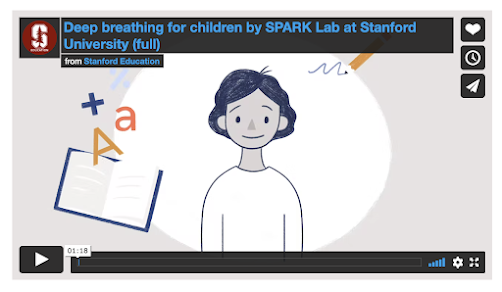
This animated video shows young children how to slowly inhale by pretending to smell a flower and to exhale by pretending to blow out a candle. The video was developed for a study by the Stanford Project on Adaptation and Resilience in Kids (SPARK Lab) at Stanford University.


Engaging Youth in Civic Action - In her article, How to Teach Older Students Social-Emotional Skills? Try Civics,  Arianna Prothero makes the case that “Understanding other points of view, solving problems collaboratively, and building relationship skills all come to mind [in teaching civics]. For many educators, those skills will sound familiar, because they’re many of the same taught through social-emotional learning…Civic engagement can be a meaningful way to teach and reinforce social and emotional skills. That’s especially true for middle and high schoolers who are searching for their place in their communities and the world and might not otherwise connect with traditional social-emotional lessons.” 


Source: Ever Forward Club
Circle Meetings - We know that bringing together young people and offering them the opportunity to have their individual voices heard in the larger community is an important practice. We are referring to ‘talking or sharing circles’ - bringing youth together in a circle and asking each individual to speak while the rest of the group practices active listening. In youth programs, these circle meetings are often called ‘sharing circles’ or ‘community circles.’ Click here to read more about sharing circles.


Source: Ever Forward Club
"Who I Am" Masks - The Ever Forward Club developed an exercise where young people write down words that describe who they are on the outside (the outside mask) and words that describe who they are on the inside (the inside mask)- the things that no one sees. (On their website, Ever Forward Club offers a curriculum on how to utilize this exercise). 

According to Darius Simpson, a former Ever Forward staff member, “A mask is a metaphor representing what we allow the world to see about ourselves. We all wear masks for different reasons, at Ever Forward we don't believe the mask is an inherently bad thing. Sometimes a mask is necessary to survive, get from one place to the next. What we've found is that when people, young men specifically, don't have a space to take off their masks and deal with what’s really happening for them, the mask becomes a part of them. That's where the conversation about what is living in what we call ‘the back of the mask’ comes into our workshops and circles.

* * *


Monday, February 21, 2022

Journaling with Teens to Promote Mental Health and SEL


By Sam Piha

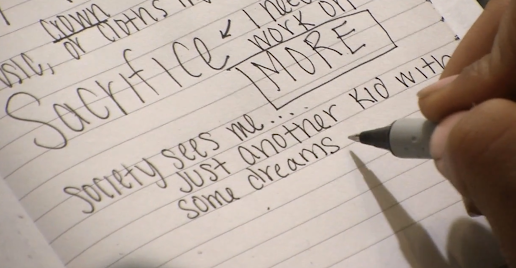
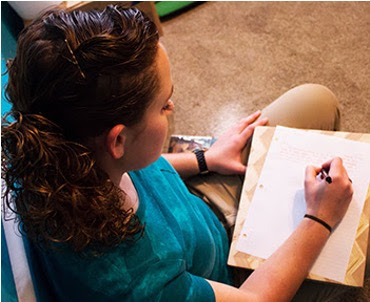
Introducing journal writing, whether it’s once a week or daily, is good for all, and fosters social emotional learning (SEL) skills, especially self-awareness. “Journaling activities can be designed to help young people gain insights into the major areas of their lives. Its purpose is to help adolescents gain a more positive perspective on their lives by developing an awareness of events, memories and feelings in their lives and learn coping skills that can be used throughout life. At the same time, journaling can also help adolescents to use their imaginations and natural creative talents, to improve their communication skills, and to realize self-interests and possibilities.” – Lynn Blinn Pike, Human Development and Family Studies

“It is important to provide youth with opportunities to reflect on and/or express themselves and their feelings because they HAVE them and don't always have space to express them. Journal writing is a good way to provide these opportunities. Even if it's just a stream of consciousness writing. Journaling allows you to slow down and notice yourself and your thoughts, which is greatly therapeutic!”Daniel Summerhill, California State University, Monterey Bay


Tips for Journaling with Teens

  • Ignore outsiders who proclaim “those kids won’t go along” [referring to adolescent boys or boys of color].
  • Agree with your teens whether their journals will be fully private or if the adult leaders are allowed to read them. Remember that entries may involve things that adults are required to report, such as endangerment or abuse. 
  • To personalize and encourage buy-in, begin by asking youth to decorate and personalize the cover of their journal. Be sure to have art materials and magazines with photos if some prefer to create collages. 
  • Choose a sturdy and inexpensive journal book, like a composition book.
  • Journal entries can take many forms: writing, drawing, collage, etc. Youth will be more interested if they don’t have to worry about spelling or grammar. They can use “inventive spelling.”
  • “A writing prompt is an excellent tool to get kids of all ages putting pencils to pages! Since it’s not always easy to think of something specific to write about, it’s not a bad idea to make a Journal Jar and fill it with ideas.” Youth can add their own ideas to the journal jar and be invited to pull out the journal prompts. There are many ideas for journal prompts on the internet, such as Daring to Live Fully. 

After doing these (journaling) activities I am glad...because it's good for me to think about myself and my thoughts and feelings, which I don't always do on a regular basis.— youth, 17-year-old


Temescal Associates and The How Kids Learn Foundation will be conducting a webinar featuring a presentation by Stu Semigran and his team from the EduCare Foundation on Heartset® for Self-Care and Resiliency on Wednesday, February 23, 2022 from 10:00am - 11:30am (PST). To learn more and register, click HERE.


Monday, January 10, 2022

SEL and Teens: Program Design and Culture, Staff Practices, And Organizational Practices


By Sam Piha

Reed Larson and Natalie Rusk
Reed Larson is a pioneer researcher on youth development and has studied youth programs for decades. Dr. Larson and Natalie Rusk recently published a study entitled, Youth Programs are Important Spaces for Emotional Learning. Based on their research findings, they made several suggestions of how to ensure that program design and culture and staff and organizational practices support the learning of emotional skills. These suggestions are listed below. 

Program Design and Culture - The program culture is dependent on values that are represented by the program and constantly reinforced by its leaders. The program design is fully aligned with these values, from a program culture in which SEL skills are both taught and “caught.” 
  • Design programs to provide environments of trust, safety, and mutual caring. 
  • Cultivate a program culture where youth are respected and supported as active agents 
  • of their learning, including their emotional learning. Recognize how they learn through feeling, noticing, describing, managing, and reflecting. 
  • Provide opportunities for youth to talk about emotions and share strategies for managing and using emotions. 
  • Structure programs to engage teens in meaningful projects. These provide authentic experiences of learning to manage and use emotions in work youth care about. 
  • Recognize that people from different cultural backgrounds may have different experiences, values, and strategies for handling emotions. 

Staff Practices - These are done by all adult workers within the program. They are explicitly expected of all staff and are aligned with how staff are evaluated. 
  • Acknowledge youth’s emotions and be ready to talk about them. 
  • Encourage youth to view emotions as signals to pay attention to and interpret, to examine the causes and effects of emotions and learn from peers and support each other’s emotional learning. 
  • Help youth view emotional situations from different perspectives. 
  • When appropriate, offer strategies that youth might try for managing emotions. 
  • Encourage youth to reflect on the usefulness of emotions, for example, for motivating 
  • work, evaluating situations, cultivating relationships, and ethical learning. 
  • Support youth as they develop standards and criteria for feeling satisfaction or pride in their work. 
  • Recognize that staff are valuable emotional models for youth. 

Organizational Practices - These are things that the organization, not individual youth workers, are responsible for. These often come in the form of policies and formal agreements.
  • Provide resources and support for staff to develop their skills for facilitating youth’s emotional learning. 
  • Arrange regular time and support for staff members to process and discuss unfolding emotion-related issues in the program (e.g., issues in youth projects, youth’s reactions to a situation, and staff’s self-care needs.) 
  • Encourage and invest in research on emotional learning in adolescence, especially applied research on staff practices and youth’s emotional learning in programs. 

Temescal Associates and The How Kids Learn Foundation will be conducting a webinar featuring a presentation from Reed Larson and Natalie Rusk on their new youth development research on Thursday, January 20, 2022 from 10:00am - 12:00pm (PST). To learn more and register, click here.


Tuesday, April 14, 2020

Teens in the Age of COVID-19

By Sam Piha

Many teenagers have been effected by the COVID-19 crisis including the closure of schools and youth programs. But how are they experiencing this crisis and how are they responding? Below are some examples of how teens are coping during this time.

Source: KALW

YOUTH VOICES
“tbh” stands for “to be honest “. It is also the name of a podcast on KALW that is made by, about, and for teenagers. And for anybody else who wants to hear what's on their minds.

Source: KALW

Many schools are shut down which leaves tens of thousands of students at home, finding ways to learn, to cope, and to find joy. The teenagers who make “tbh" put together a special edition dedicated to life during the coronavirus crisis.

To listen to the full podcast, click here.

Source: KALW.org

HOW TEENS ARE COPING AND CONNECTING IN THE TIME OF THE CORONAVIRUS
Common Sense Media conducted a poll of teenagers, age 13-17, to gather their experiences of the Coronavirus restrictions. Below we offer the key findings and you can read more here.

  1. Teens are worried about how the coronavirus will affect their families. (61%) Hispanic/Latino teenagers are especially worried about the financial effects: Nearly nine in 10 Hispanic/Latino teens say they're worried about the impact on their family's ability to make a living.
  2. The coronavirus pandemic is making many teens feel lonely. (42%) Girls are more likely than boys to say they feel more lonely than usual (49% vs. 36%).
  3. Texting and social media are providing social outlets for teens
  4. But texting and social media with friends may not be enough. (48%) 
  5. The outbreak is bringing many families together. (40%)
  6. Teens are connecting to others through a variety of means—even phone calls! The top ways to stay connected to people they can no longer see in person are texting (83%), phone calls (72%), social media (66%), and video chats (66%).
  7. The spread of the coronavirus has upended school for teens, with 95% of 13- to 17-year-olds in the U.S. reporting the cancellation of in-person classes at their schools. Black and Hispanic/Latino teens are significantly more likely than White teens to be worried about keeping up with schoolwork. Girls are more likely than boys to say they're worried about keeping up with both schoolwork and extracurriculars.
  8. Many teens aren't connecting with their teachers. 
  9. Finding space to do schoolwork is a challenge for many teens. (28%)
  10. Compared to pre-pandemic times, teens are looking to news organizations for information. (47%)

“Teenagers of color are more likely to say they're worried that they or someone in their family will be exposed to the virus and about the potential economic effect on their family. Hispanic/Latino teenagers are especially worried about the financial effects: Nearly nine in 10 Hispanic/Latino teens say they're worried about the impact on their family's ability to make a living.” - Common Sense Media

YOUTH BREADHEADS 
(Text by KTVU)

Source: BoredBreadHeads on Instagram
Talia is usually a busy teenager in Oakland, Calif. She plays soccer, studies hard and hangs out with friends. Or at least she used to. Her life looked very different before the coronavirus stay-at-home order was issued three weeks ago, upending her life, along with most of the rest of the country. So she and countless others across the country are turning to one of the few hobbies that hasn't been banned: Baking bread.

"I find it so satisfying," the Oakland Technical High senior said. "I have so much time, and I can wait for the dough to rise."

Locked in her home for much of the day, the 18-year-old's kitchen and culinary feats look extremely professional. She said she watches YouTube videos to help her hone her newfound craft. And she's not alone. She and her friends created a BoredBreadHeads Instagram account, where they are sharing photos of their finished products. So far, they've made bagels, cinnamon buns, focaccia, babka and donuts. Their bio reads: "Sum bored teens during q-time."

Source: BoredBreadHeads on Instagram

Clyde, 18, also of Oakland, was baking long before coronavirus shook his world. But now, he's making his own sourdough starter, pretty much out of necessity. "We didn't have any bread in the house and my parents are really resistant to go to the grocery store," he said. "So, if I wanted to make a sandwich, I had to bake my own bread."

Clyde said he has always loved the scientific wonders of turning a bacteria in the air into something that could be nourishing. But now that process is even more significant. "It just shows that not everything out there in the air is dangerous or contagious," he said.

TEEN TRAINING AND EMPLOYMENT

The Town Kitchen, a catering company located in Oakland, Ca provides youth with culinary training and employment. During this time, they are offering home catering and food delivery. Check them out here.

Source: The Town Kitchen
MORE RESOURCES FOR THE TEENS IN YOUR PROGRAM

"We're excited to share some new resources that have been added to our Virtual Resources for Teens document.  Each week, we are going to add additional resources that are teen-specific. This week we added three new topics and resources on VOTING, HISTORY and COLLEGE READINESS. For some teens, this is a good time for them to learn a new skill. There's also resources for mindfulness and mental health, because we know that this is a stressful and unusual time for everyone."



How Hadley Gray is Mobilizing Youth-Led Blood Drives

Source: Giving Tuesday Guest Blog by Giving Tuesday. This article originally was published on Giving Tuesday .  When Hadley Gray first helpe...