Showing posts with label learning in afterschool and summer. Show all posts

Monday, August 7, 2023

The LIAS Learning Principles: Then and Now


By Sam Piha

We launched the Learning in Afterschool & Summer (LIAS) project over ten years ago. The LIAS project was designed to unify the field of afterschool and focus the movement on quality through promoting young people’s learning. The LIAS project promotes five core, evergreen learning principles that should guide the design and implementation of quality afterschool programs. These learning principles are strongly supported by recent research on brain development, education, youth development, and the growing science of learning. The LIAS Learning Principles had a foundational influence on the development of the California Quality Standards for Expanded Learning Programs.

We believe these Learning Principles are still very relevant. Because of the recent turnover of afterschool staff, exacerbated by the COVID pandemic, the LIAS Learning Principles should be foundational to orientation and training of new staff. The Learning Principles are also very relevant to STEM and other trends in afterschool programming. Below we have interviewed several afterschool and educational leaders regarding the relevancy of the LIAS Learning Principles.  

“On June 16, 2010, 20 adult and youth leaders gathered in Oakland to discuss and determine what five principles would be a guide to our community educators as they designed their programs to provide rich learning opportunities. The five principles would communicate to school-day educators how expanded learning was intentionally designed with learning principles that are widely recognized by all educators. At that time, California’s State afterschool funding was $550 million serving about 50 percent of the State’s Local Educational Agencies (LEAs). Now, the State funding is over $4.5 billion, and almost 100 percent of LEAs receive funding.” – Michael Funk, Director of Expanded Learning, California Department of Education
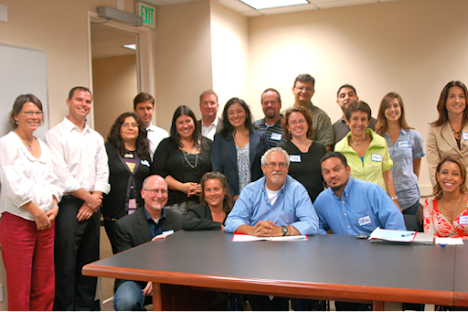
  June 16, 2010, meeting with afterschool leaders to formulate the LIAS Learning Principles. 

At the end of this blog, we review the 5 LIAS Learning Principles. You can learn more about the LIAS Learning Principles by viewing this video. You can also view past LIAS Blogs on this topic here.

“I think that the Learning Principles in the Learning in Afterschool and Summer Project really get at the core of learning for students starting in early childhood going through the university.” – Dr. Deborah Vandell, former Dean of the School of Education, UC Irvine, and leading afterschool researcher

Michael Funk, Director of Expanded Learning, California Department of Education

Q: These principles were developed before the California Expanded Learning Standards. How did they influence the California Standards?

A: In 2014, the California Department of Education worked with the California Afterschool Network and a statewide workgroup of diverse stakeholders to create California’s Quality Standards for Expanded Learning. As the work commenced, I directed this workgroup to use the LIAS Principals and the Youth Development Framework as the foundation for the new Quality Standards.

Q: Why do you believe these learning principles are important?

A: The LIAS principles must be elevated to guide our community and school-day educators as they develop any high-quality Expanded Learning Opportunities Program. When I came to the California Department of Education nearly 12 years ago, hardly anyone understood what a high-quality afterschool program looked like. Furthermore, for summer programs, people only pictured traditional summer school. I set up meetings with other Division Directors, and I presented the LIAS postcard as the vehicle to explain what makes an expanded learning program high-quality. As they reviewed the card, within the first minute I heard, “This is what high-quality teaching looks like during the school day!” The LIAS principles were developed to provide youth workers (community educators) a succinct approach to communicate that afterschool and summer programs were places of learning.

The LIAS principles are more relevant now than ever. With the massive expansion of Expanded Learning in California, there are hundreds of school districts and charter schools that still believe Expanded Learning is “after-care.” The LIAS principles, combined with the quality standards, are necessary to help leaders understand how every student and family should have access to and in fact deserve high-quality Expanded Learning opportunities. 

Dr. Carol Tang, Executive Director at the Children’s Creativity Museum in San Francisco and Former Director of the Coalition for Science After School

Q: Can you briefly speak to the value of the LIAS Learning Principles to the Science, Technology, Engineering & Math (STEM) movement?

A: By coupling STEM with LIAS principles, we elevate the discussion about science in afterschool--rather than debate which topics to cover, we can instead focus on the characteristics evident in high quality science programming. If youth workers embrace LIAS, they will understand the fundamental elements which will make STEM successful in their programs. In this way, we not only increase the quality of afterschool science, but we can also foster an environment where science activities are sustainable in the long-term.

Q: Can you speak a bit more about the need you have experienced for training on Learning Principles to guide the development of quality STEM activities? 

A: There is a misconception that STEM is about imparting a set of facts or concepts. Thus, training staff on effective learning principles in general is a way to guide the selection, development, and implementation of high-quality STEM activities. If youth workers can recognize the factors which promote active engagement and learning, then they can select science activities which engage youth and foster scientific skills--such as asking good questions, sharing ideas and testing hypotheses.

“LIAS principles outline the program characteristics most likely to foster scientific inquiry and sense-making in youth and help them recognize the relevance of science and technology to their future. LIAS principles help clarify what high-quality science in out-of-school settings should look like and makes STEM accessible to youth development and afterschool staff. What I like best about LIAS is that it allows OST professionals to view STEM as a way to achieve their youth outcomes using existing best practices in youth development--science afterschool is seen as part of good youth development, rather than an added burden on afterschool program staff.” - Dr. Carol Tang, former Director of Coalition for Science After School

Bill Fennessy, Program Specialist for Workforce Initiatives, Equity and Quality at the California Afterschool Network (CAN) 

Q: Can you speak to the value of the LIAS Learning Principles for afterschool programs?

A: The LIAS principles speak directly to the components required to create a quality instructional delivery framework. When implemented, programs can truly engage the youth of today. While many successful afterschool and summer programs already embody and demonstrate the LIAS principles, these principles now being clearly identified, defined, and articulated, will provide for an understandable and intentional approach to attain successful quality programming across the field. In addition, the LIAS principles provide a common language for the field of afterschool that has been up until now, missing and desperately needed.   

I have personally seen the LIAS principles easily taught to line staff, which might not have been intuitive to them previously. I have witnessed the empowering affect it has had on them, resulting in improved program quality. The LIAS principles have also given them the ability to understand for themselves, and communicate with others, their vital role and the value of afterschool and summer programming.  

LIAS Learning Principles 

1. Effective Learning is Active: Learning and memory recall of new knowledge is strengthened through different exposures – seeing, hearing, touching, and doing. Afterschool learning should be the result of activities that involve young people in “doing” – activities that allow them to be physically active, stimulate their innate curiosity, and that are hands-on and project-based. 

2. Effective Learning is Collaborative: Knowledge should be socially centered, as collaborative learning provides the best means to explore new information. Afterschool programs are well positioned to build skills that allow young people to learn as a team. 

3. Effective Learning is Meaningful: Young people are intrinsically motivated when they find their learning meaningful. This means having ownership over the learning topic and the means to assess their own progress. Motivation is increased when the learning is relevant to their own interests, experiences, and the real world in which they live. 

4. Effective Learning Supports Mastery: Young people tell us they are most engaged when they are given opportunities to learn new skills. If young people are to learn the importance and joy of mastery, they need the opportunity to learn and practice a full sequence of skills that will allow them to become “really good at something.” 

5. Effective Learning Expands Horizons: Young people benefit by learning opportunities that take them beyond their current experience and expand their horizons. Learning about new things and new places promotes a greater sense of potential of what they can achieve and brings a sense of excitement and discovery to the learning environment.

Tuesday, March 16, 2021

Evergreen Learning Principles for Afterschool Programs

Source: Learning in Afterschool & Summer
By Sam Piha

We launched the Learning in Afterschool & Summer (LIAS) project ten years ago. At the time, there was a great debate as to whether afterschool programs should be focused on academic or youth development outcomes. The LIAS project was designed to unify the field of afterschool and focus the movement on promoting young people’s learning. This is especially important as youth return to afterschool programs after a year of isolation.  

We believe that if afterschool programs are to achieve their full potential, they must be known as important places of learning that excite young people in the building of new skills, the discovery of new interests, and opportunities to achieve a sense of mastery. The LIAS Learning Principles became a foundational part of the California Quality Standards for Expanded Learning Programs.

"We spend so much time focused on 'achievement' and so little time focused on how to motivate students to learn.  The principles advocated by LIAS strikes the right balance and make sense… The principles contained in LIAS promote such an approach, and if applied with fidelity, could lead to real improvements in educational outcomes for kids."
- Pedro Noguera
Dean, USC Rossier School of Education


The LIAS project promotes five core, evergreen learning principles that should guide the design and implementation of afterschool programs. These learning principles are strongly supported by recent research on brain development, education, youth development, and the growing science of learning. They are also well aligned with the 21st century learning skills and workforce skills that young people will need to succeed in the years ahead, as well as efforts to increase young people’s interest in science, technology, engineering, and math (STEM). Each of the learning principles cited below support each other and together provide an important framework for afterschool programming.

"All five principles are critical. They collectively provide the relevance so desperately needed for students to become engaged and for learning to become alive for them. They also provide the deeper understanding and the discovery of learning that is critical for success in school and life."
- Dr. Willard Daggett
Founder and Chairman
Int'l Center for Leadership in Education

Below are the LIAS Learning Principles.

1. Effective Learning is Active: 
Learning and memory recall of new knowledge is strengthened through different exposures – seeing, hearing, touching, and doing. Afterschool learning should be the result of activities that involve young people in “doing” – activities that allow them to be physically active, stimulate their innate curiosity, and that are hands-on and project-based. Hands-on learning involves the child in a total learning experience, which enhances the child’s ability to think critically.


"Either we work to replicate limiting, and even oppressive, conditions for learners or we create experiences that empower them to fully realize their potential as individuals and to engage in transformative action that promotes justice and equity. I think that the LIAS principles are essential to guaranteeing an education for freedom and for fully realizing the promise of all students and that of our great nation of immigrants."
- Pilar O’ Cadiz
Education Director, TANMS Engineering Research Center at UCLA


2. Effective Learning is Collaborative:
Knowledge should be socially centered, as collaborative learning provides the best means to explore new information. Afterschool programs are well positioned to build skills that allow young people to learn as a team. This includes listening to others, supporting group learning goals, resolving differences and conflicts, and making room for each member to contribute his or her individual talents. Collaborative learning happens when learners engage in a common task where each individual depends on and is accountable to each other.
  • 1st degree conn

Source: Club Timberwolf

3. Effective Learning is Meaningful: 
Young people are intrinsically motivated when they find their learning meaningful. This means having ownership over the learning topic and the means to assess their own progress. Motivation is increased when the learning is relevant to their own interests, experiences, and the real world in which they live. Community and cultural relevance is especially important to new immigrant youth and those from minority cultures.

Rather than learning that is focused on academic subjects, young people in afterschool can apply their academic skills to their areas of interest and real world problems. Also, when learning involves responsibility, leadership, and service to others, it is experienced as more meaningful.

4. Effective Learning Supports Mastery: 
Young people tell us they are most engaged when they are given opportunities to learn new skills. If young people are to learn the importance and joy of mastery, they need the opportunity to learn and practice a full sequence of skills that will allow them to become “really good at something.” Afterschool activities should not promote the gathering of random knowledge and skills. Rather, afterschool learning activities should be explicitly sequenced and designed to promote the layering of skills that allows participants to create a product or demonstrate mastery in a way they couldn’t do before. Programs often achieve this by designing activities that lead to a culminating event or product that can be viewed and celebrated by peers and family members. For older youth, many programs are depending on apprenticeship models to assist youth in achieving a sense of mastery.

5. Effective Learning Expands Horizons: 
Young people, especially those from low-income families and neighborhoods, benefit by learning opportunities that take them beyond their current experience and expand their horizons. Learning about new things and new places promotes a greater sense of potential of what they can achieve and brings a sense of excitement and discovery to the learning environment. Afterschool programs have the flexibility to go beyond the walls of their facilities. They can use the surrounding community as a classroom and bring in individuals and businesses that young people may not otherwise come into contact with. Expanding young people’s horizons also includes helping them to develop a global awareness. This includes increasing their knowledge of other cultures and places and their understanding of the issues and problems we have in common across cultural and political divides.

"The five LIAS principles are perfectly aligned with a 21st century learning approach – active, meaningful, collaborative learning projects that provide opportunities to expand one’s horizons and master important knowledge and skills – this is the heart of 21st century learning."
- Bernie Trilling
Founder & CEO,
21st Century Learning Advisors


We have developed a number of resources to guide the design and implementation of afterschool programs. These resources include videos, reports on exemplary practices, educational materials and program guides. These all can be found on our LIAS website.


As schools prepare to re-open, afterschool program staff need to consider the experiences of youth who have been away from school and their friends due to the COVID-19 pandemic. We know these vary greatly depending on family income and racial/ ethnic background. What are young people's needs? What should we, as afterschool staff, do to help youth thrive when they return to afterschool programs post COVID? How might we build back school and program culture and a sense of "family" spirit and connection in our afterschool programs? Join Stu Semigran and a panel of afterschool program experts to learn how best to help youth thrive as they return to school and afterschool. To get more information and to register for our next Speaker's Forum, click here.

Monday, October 3, 2016

LIAS Online Guide with Videos

By Sam Piha
Sam Piha

The Learning in Afterschool & Summer (LIAS) project has posted several video interviews on the relevance of the LIAS learning principles featuring afterschool and educational leaders from across the country. Now we have published an online, magazine-style guide to the LIAS learning principles with mini clips from these video interviews. This guide can be viewed with a computer, smartphone, or tablet. 

We also converted a number of important articles from the LIAS project and the Expanded Learning 360°/365 project. Click here to check it out. 


Monday, March 21, 2016

Announcing the How Kids Learn Foundation and Wallace Foundation Survey

By Sam Piha


Sam Piha
Over the last five years, we have sponsored an annual How Kids Learn conference. This year, we are sponsoring a number of How Kids Learn Speaker’s Forums.

Temescal Associates/LIAS is proud to announce that we have created a new non-profit entitled, the How Kids Learn Foundation. This was done to expand our reach and the effectiveness of our educational efforts. This will also allow us to diversify our funders. 


The HKL Foundation is dedicated to improving the effectiveness of settings that support the education and healthy development of youth. This includes schools and out-of-school time programs. 

The Foundation will provide educational activities such as Speaker's Forums, trainings, and conferences for organizations that promote the healthy development of youth.

We have assembled a prestigious board to help guide our activities and will provide an update as we go forward. 


----------------------------------
The Wallace Foundation has been a longtime supporter of the afterschool movement. The Foundation is currently conducting market research to better understand Policymaker, K-12 Public School Leader and Afterschool Leader opinions about trends relating to desired outcomes of K-12 education and afterschool programs. They are especially interested in the importance of social emotional learning.


We urge you to take the time to complete this survey. It is important that those
who understand the work of afterschool and summer programs provide their unique perspectives on this work. This survey will take about 15 minutes to complete. Your responses will be strictly confidential and not be attributed to you or your organization. To begin the survey, please click here.


_________________________
You can read other blogs by the LIAS project by going to: 
  • Expanded Learning 360°/365 Project website
  • LIAS Blog Written for the California Afterschool Network

Wednesday, December 30, 2015

The LIAS Principles Impact Both Students and Staff Alike

By Guest Blogger, Frank Escobar


Frank Escobar,
Manager of After School Programs
Visalia USD
Running after school programs is no easy task.  Ask anyone in the field and they’ll show you there battle wounds. However, insert 11-14 year olds and the difficult meter goes through the roof.  Sometimes its just better to not know what you don’t know. Perhaps that’s why I’m still here.  Leaning a bit but still standing.  

In the early years it was the kids, the parents, the politics. I was new to the field and trying to identify the secret sauce for recruiting and retaining enough students to keep the grant. At the same time, keeping the ratio low enough to prevent our college-age staff from getting completely run over by the middle school mack truck. Not sure we ever completely figured it out but we’ve certainly made improvements.  

Great advice from experienced veterans, thoughtful tools from the field, some amazing trainings from some amazing trainers and even a few out-of-town tours.  And as we got better on attendance we began to focus on impact.  One of the tools that helped us in that area was, at the time, the newly released Learning in After School and Summer Principles.  

The principles gave us tangible targets to shoot towards. They were clear, relatable, and reasonably identifiable in everyday program. As we improved in our understanding of these principles, we naturally improved in the facilitating of these principles.  We saw active learning in our programs, increased student collaboration, learning that was thoughtful and meaningful, mastery-building and horizons being expanded. It was enlightening, exciting and honestly, still is.  

As we became better versed in offering these types of experiences and outcomes in our program, I began to notice something interesting.  I noticed that not only were our students benefitting from the affect of these important principles but so were our college-age workers. You see, unintentionally, while we were building the capacities of our staff members to implement the principles in their programming with students, we were also implementing them with our staff. 

Our training and professional development was becoming more active, our instruction (and play) in the training room more meaningful. Our learning environments were becoming more collaborative and our training focuses narrowed in on building mastery skill-sets, particularly around behavior management (if you know what I mean). And at the end of the day, we began to see our staff expanding their own horizons. They were learning about things they never had interest in. Seeing things they never bothered looking for. Doing things they never believed important. The LIAS Principles were becoming an integral part of our program cultural for both students and staff. 

PULSE Staff Holiday Dinner
Today, with the significant workforce challenges we face in after school and expanded learning, we attempt to do our best in sustaining the best and brightest. Unfortunately, that’s rarely possible. The best and brightest normally move on (and up) and take their talents to better paying playgrounds. However, it is in most cases that what contributed to their best and bright was what they learned and practiced right here in the expanded learning field. With so many tangible, transferrable skill-sets acquired in this work many of our best and brightest are shining even brighter right now in their warm and cozy classrooms. Particularly those who were fortunate enough to work in programs that asked them to integrate those 5 LIAS Principles. It’s called the bi-product affect. A secondary or incidental result, often unforeseen or unintended.  

Although, I find it pretty hard to believe that the engineer behind these principles would do anything unintended. All to say, I sincerely believe that the introduction, acceptance, and application of the LIAS Principles have meant more to our field than what might have been expected. These principles, while aimed at our young ones, have also impacted our other young ones teaching our young ones. That they say, is a double-whammy. Or, maybe in this case, a double-Sammy!

--------------
Frank is currently the Manager of After School Programs at Visalia Unified School District in Visalia, CA as well as speaker, trainer and consultant for the after school and youth development fields. A popular speaker and trainer at school assemblies, youth and after school conferences, Frank has spoken to thousands of middle and high school youth and trained hundreds of educators and youth program workers across the country.  

A former collegiate and professional football player, Frank realized his passion for working with youth during his high school years mentoring younger athletes. Knowing one day he'd be hanging up his football cleats for a more practical profession, Frank obtained his degree in education from Austin Peay State University in Clarksville, TN.

Friday, September 25, 2015

The "HOW" Versus the "WHAT"

By Sam Piha


Sam Piha
I want to comment on the distinction between "HOW KIDS LEARN" and "WHAT KIDS LEARN". The Learning in Afterschool & Summer (LIAS) learning principles are focused on how kids learn. They are based on recent research, combining brain research, the new science of learning, and what we know from practice.

The "how" is separate from "what": the "how" is absent of any content. Different programs and adults think that young people should acquire certain skills - this is "what". The "what" could be STEM, social emotional learning, character building, workforce readiness, or academic proficiency. The "how" is about how best to shape the strategies and activities to promote learning - regardless of what content or skills we are seeking to teach. The difference may be subtle and confusing to some, but it is fundamental to teaching and learning. 

Below are some quotes that may be helpful: 

  • "I think that the learning principles in after school and summer really get at the core of learning for students really starting in early childhood, going through to university." - Deborah Vandell, Department of Education, UCI
  • “The LIAS principles are all critical. These principles reflect what our own field experience and research suggest about the characteristics of effective learning environments." - Karen Pittman, Forum For Youth Investment 
  • “When you think about what it means to create an environment where a child is excited, supported, and ultimately takes ownership of their learning, LIAS hits the nail on the head. The principles resonate across communities of practice and in our fragmented policy context." - Samantha Tran, Children NOW


Monday, May 4, 2015

Dr. Tony Smith - Former OUSD Superintendent Now State Superintendent of Education, Illinois

By Sam Piha

Sam Piha


Oakland Unified School District lost a superb superintendent when Tony Smith left in 2013. He recently resurfaced as new State Superintendent of Education in Illinois this April 2015.

Below we share an interview we did with Dr. Smith when he was in Oakland. You can also view this interview in a 2-part video with Dr. Smith by clicking here and here


Q: The LIAS learning principles were not intended to apply to strictly afterschool settings. In your experience, how are these principles, when taken together, relevant to young people’s learning? 
Dr. Tony Smith, State Superintendent of Education, Illinois
Photo Credit: http://www.chicagotribune.com/
A: I think the principles about learning and afterschool time are really about engaging the whole child, which is what I think good educators do and good school systems should be thinking about all the time. The research that has been happening reminds us that young people are active learners in the larger world around them and that we, as adults and communities, must support young people in their learning as they become more pro-socially integrated into the life of our communities.

Q: How are these LIAS principles related to what we are doing in school reform efforts? 
A: The guiding principles that have been pushed forward recently in the afterschool time are helping us think more about the whole child, about community schools, and connecting the world that our young people and families live in with the school house. We have to get much more thoughtful by engaging with community. We want to advance reform so that it’s not just about school reform, its about changing our notions of learning, engaging and inviting a fuller experience for what learning can be. The afterschool time is really pushing that and helping change ideas about what we should be doing inside of school.  

Q: We are focusing our efforts on the idea of improving our approaches to how children learn. Do you see this as an important shift in how we talk about learning in afterschool and summer programs? 
A: The really exciting part of what’s coming from brain research and our knowledge of how young people learn is that we need to change the daily experience inside of school and also remember that kids are in school for only a very short amount of their time. So how are we supporting young people to know, learn, and be productive citizens? 

Photo Credit: http://www.techbridgegirls.org/
Adults  have to start thinking differently. All of us need to stay close to learning theory and realize that there is more to learn about learning. If we can continue to basically teach and help people who are responsible for education know that they have to be learners themselves, I think that helps us change the conversation. I think staying grounded in the research and talking about the ideas of learning help to change the conversation over time. Then, with more evidence, we can change our behaviors and begin saying, “Hey the whole community should be the learning environment”. We should have more structured opportunities for kids to take the lead on stuff and bring what they’re learning outside of the school back in. That way, I think educators can be the learners also.  

Q: Can you speak to one or more of the LIAS principles that most resonate for you when you think about creating learning environments and activities for kids? 
A: I think the guiding principles are essential. I think it’s so important to have a set of core ideas that you can work around. The way these principles have been compiled are really important. 

Obviously the work of being in a relationship with people, working deeply on stuff, really stuff you care about, matters.  The principle that is fundamentally important to me though is about expanding horizons, about the opportunity for young people to see possible futures. Sometimes, particularly in the urban setting or quite frankly in any setting, young people don’t have folks around them that are helping to expand the notions of what’s possible for them, who are looking into their eyes and saying, “I see greatness in you, and I see more than you see in yourself right now”. 

I think that afterschool time should offer those opportunities. Those in afterschool are less tethered to the school building, can do other stuff, can get further a field and actually get into some uncomfortable and different situations that provoke “huh, I never really thought about it like that”, or maybe “I could”, or “I really liked when we went there”. I think that when you have young people who only know a few square blocks, exposing them to new things can be fundamentally transformative. All of the other guiding principles are really important, but taking seriously that we have a responsibility to encourage, activate, and energize notions of possible futures, expanding horizons, that’s the one where I really think afterschool is uniquely and importantly positioned to do. 

Photo credit: http://content.time.com/
Q:What happens when we structure youth programs without paying attention to these learning principles? 
A: I think when we don’t pay attention to what really works for young people - about developing mastery, about caring about things, about working closely with others - then we create the conditions for young people to disengage.  This idea of young people dropping out of high school is a slow process of pushing kids out of the system.  If we don’t pay attention to what we know works for human beings, what we’re learning about human development, and all the learning research, then we’re responsible for making it less likely that young people realize their potential, that they’re connected, that they take leadership in positive ways.  

Young people are powerful and they want to have agency and exert energy on the world. Unless we’re helping them do that, working together, and helping with some boundaries,  I think we’re responsible for young people checking out and being outside of the system. 

Q: Which principle do you ultimately want every student to walk away with, more than any other principle?
A: At the end of the day, there’s no excuse for a young person or anybody not developing mastery over time. Many of these principles are facilitating conditions to develop mastery over time.  If in fact we don’t hold ourselves as a community, as adults, as educators, responsible for ensuring that people develop mastery, then we’ve failed in our responsibility. Having some sense of strength and agency is critical for every young person. It is not about seat time, it is about competence. It’s not about how long you did it, it’s about how well you do it. And we need to find ways to help every young person be great at something. 

Monday, February 23, 2015

Looking into the Future: Words of Important Afterschool and Education Leaders

By Sam Piha


Sam Piha


To welcome in the new year, we posted a blog asking a number of afterschool leaders, "Looking into the future, what do you believe are the most important challenges and opportunities facing the afterschool movement?". Below is part 2, where we share responses of other afterschool leaders. 


Lucy Friedman,
President
The After School Corporation
"The challenge facing the after-school movement is that too many educators, funders and policy makers want to judge its quality by standardized test scores alone. And in the desire to close the achievement gap, there's too much emphasis on test prep and not enough focus on the life-enriching activities that foster curiosity, instill confidence, and ultimately lead to a passion for learning. Research, and anyone who’s ever watched a kid grow up, tells us that these characteristics are critically important for a successful adulthood." 


Pedro Noguera
Professor of Education
New York University
"The biggest challenge facing the afterschool movement involve equity; equity in access, equity in the quality of what is provided to children, equity in the skills and training of those who provide services to children.  Lack of equity is ultimately the critical factor driving disparities in learning outcomes (i.e. the so-called achievement gap), and it is manifest in the afterschool sector as well.  Access to high quality afterschool programs could also play a decisive role in reducing educational disparities but this will only occur if we remain vigilant in advocating for equity in the sector.  Clearly, it's not good enough for afterschool educators to do good work.  We must be sure that access to good, stimulating learning experiences are available to all children, regardless of where they live, what language they speak, who their parents are, or how much money they earn. This is really the civil rights issue of the 21st century.  The question we must ask ourselves is: how can each of us play a role in advancing equity in the communities where we work and live?"


Jane Quinn,
Vice President and Director of
National Center for Community Schools
Children's Aid Society
“Opportunities: Build on the emerging positive results from a variety of approaches, models and programs; capitalize on young people’s interests in high quality, active learning experiences; and help principals, teachers and other educators understand that after-school staff can be allies in helping young people rise to the occasion presented by the Common Core State Standards.

Challenges: Competition for funding; over-emphasis on standardized testing as the only measure of success; policy-makers searching for the quick fix rather than the real deal; and growing inequality as represented in nearly every phase of American life.”

Chris Smith
President & ED
Boston After School
and Beyond
"The greatest opportunity seems to be the broader recognition of the developmental and environmental factors that contribute to learning.  This should create a big opening for those in the after-school movement that are ready to put their approaches to the test in measurable ways.  In Boston, we are measuring critical aspects of the learning environment (aka, program quality) and transferable skills such as self-management, critical thinking, collaboration, and perseverance, which we call “power skills.”  When we begin to use the same vocabulary, we will see that the skills we focus on after school and during the summer are the very same ones that that young people need to succeed in college and the ones that employers value.

The major challenge we face is the field’s fragmented nature.  However, this challenge can become an opportunity when you look see fragmentation as diversity of approach and consider the vastly different learning needs of young people.  For this to happen, we need to unify ourselves in ways that allow policy-makers, school leaders, and funders to pursue a coherent and scalable solution.  In Boston, we do this through common standards and measurement.  In a sense, we are creating the equivalent of a box score for baseball or an exchange for the stock market.  This shared measurement platform allows programs to shine.  More than 50 organizations, serving thousands of young people, have stepped up to meet this challenge by collecting and sharing data so that we can identify programs’ strengths and address challenges, both as individual programs and as a unified network of providers."

Tuesday, February 17, 2015

"Expanded" or "Extended" Learning: An Interview with President and Co-Founder of the National Center on Time & Learning

By Sam Piha

Sam Piha
The afterschool and summer learning movement is not immune from collecting new jargon. As we move forward, there are two new terms that are being used in often confusing ways. Those terms are "expanded learning" and "extended learning". How are these terms different and are they meant to replace "afterschool" and "summer learning" programs. To add to the confusion, they are being used in different ways depending on what part of the country you come from.

To help us better understand these terms, we interviewed a host of afterschool leaders to ask them to help clarify. Below is an interview with Jennifer Davis, Co-Founder & President at The National Center on Time & Learning (NCTL). We offered a previous blog on this topic that included an interview with Jennifer Peck (Partnership for Children and Youth) and a second one that featured Lucy Friedman (TASC). 


Q: The term “expanded learning” is used differently by different people in different parts of the country. Can you give your definition of “expanded learning time and programs”?

Jennifer Davis,
Co-Founder & President
The National Center
on Time & Learning
A: NCTL’s definition of expanded learning time (ELT) is a school redesign model that provides students significantly more and better learning opportunities within an expanded school day and year. High quality expanded learning time schools provide students more individualized instruction and a well-rounded education that includes art, music, robotics, drama, sports, step dance and many other enrichments that make learning fun and engaging. In many ELT schools, community partners run these activities.  Adding significantly more time to the school calendar makes these things possible and also enables teachers to have more collaboration time to strengthen their craft.  Overall these school models are designed to ensure that all children in the high poverty schools have the opportunities they need to succeed. I recommend Wikipedia’s page on expanded learning time since it provides an overview and history of the movement. 

Q: In your mind, what is the difference between the terms “expanded learning” and “extended learning”?

A: In my experience, I have found that parents, teachers, and students rightfully fear “more of the same” and that’s exactly what “extended learning” conveys. However, “expanded learning” connotes offering children broader educational experiences, which is what NCTL advocates for. Everyone agrees, we can’t simply tack time on to the school calendar and expect to see our schools improve and our students to be engaged. Instead, expanded learning time enables schools to truly rethink the entire school day/year and produce significant improvements in the overall design of the school that can result in much more engaged learning that better prepares students for their futures.
   
Q: Are you hoping that the field begins using the terms “expanded learning programs” to replace “afterschool and summer programs”? 

A: No. I think it’s important to differentiate between these terms even though after-school, summer and ELT programs are all important and parents should have choices among these options.  Expanded learning time differs from afterschool and summer programs because ELT requires all students in a given school to attend the longer day and/or year, and the additional time becomes a dependent component of the school’s educational practices and objectives. Afterschool and summer programs are crucial as well but they are voluntary.

___________________
For twenty years, Jennifer Davis has held positions at the federal, state, and local levels focused on improving educational opportunities for children across the United States. Jennifer’s previous positions have included serving as U.S. Department of Education Deputy Assistant Secretary, Special Assistant to U.S. Secretary of Education Richard W. Riley, Special Assistant to the Executive Director of the National Governors Association, and Executive Director of Boston Mayor Tom Menino’s after-school learning initiative.  

In 2000, Jennifer became the co-founder and president of Massachusetts 2020, an education organization dedicated to expanding learning opportunities for children across Massachusetts. Massachusetts 2020 led eight strategic initiatives to improve education and after-school learning opportunities for high poverty students across the state. 


On October 2, 2007, Massachusetts 2020 launched a national organization, the National Center on Time & Learning (NCTL), which is dedicated to expanding and modernizing the American school calendar to meet the needs of students in the 21st century. 

Friday, January 16, 2015

Expanded Learning Time: An Interview with Lucy Friedman, President of TASC

By Sam Piha

Sam Piha

Lucy Friedman is President of The After-School Corporation (TASC) in New York. Lucy continues to be a leader and innovator within the afterschool movement. Recently, Lucy and her organization have been an outspoken advocate for expanded learning and a partnership between schools and community organizations that focus on the healthy development of youth. We asked Lucy to respond to a few questions and her responses are below. 


Lucy Friedman
President
TASC

Q: The term “expanded learning” is used differently by different people in different parts of the country. Can you give your definition of “expanded learning time?" 

A: Expanded learning re-imagines the traditional school day by adding extra hours, partnering schools and community organizations, and enhancing the quality of education. Through this three-pronged approach, students get additional talent and role models in the classroom and a balanced curriculum that includes the arts, physical movement and hands-on, personalized learning. TASC’s model of expanded learning adds the equivalent of 72 more days to the school year.

We define expanded learning time as an integration between the school day and after-school time. The experiences during the traditional day and those typically in the later hours build upon each other. Lessons and activities perceived as "the fun stuff" are connected to core subjects - reinforcing, making relevant or enhancing what a student learns in, say, math or language arts. At the same time, these learning experiences foster social and emotional development and greater student engagement with school, which leads to greater academic outcomes. In this way, kids get the chance to discover their talents and develop their full potential.

Q: In your mind, what is the difference between the terms “expanded learning” and “extended learning”?

A: 'Extended learning' implies more of the same - a longer school day filled with more time at desks or doing test prep. 'Expanded learning,' on the other hand, sees community partners as a critical component to bringing a broader curricular focus on social and emotional learning, hands-on engagement and learning enrichments that expand horizons and opportunities.

Q: Are you hoping that the field begins using the terms “expanded learning programs” to replace “afterschool and summer programs”?

A: Replacing the terms may lead to confusion for schools and families to whom "summer" and "after-school programs" often mean enriched child care during non-school hours. Rather, we'd like to see expanded learning time be not just an option available to schools and communities, but also a movement that raises expectations and makes it the norm for kids in low-income neighborhoods to have access to the same quality of education and enrichment that middle-class kids currently enjoy in and out of school. We’ve calculated that by 6th grade, kids from low-income communities suffer a 6,000-hour learning gap compared with their middle-class peers. Expanded learning time helps close those learning and opportunity gaps.

__________________
Lucy Friedman is the founder and President of The After-School Corporation (TASC). TASC is dedicated to giving all kids opportunities to grow through after-school and summer programs that support, educate and inspire them. She has served on a variety of advisory commissions and boards, including the National Academy of Science, the Afterschool Alliance and Bryn Mawr College. Lucy has been a member of The Coalition for Science After School Steering Committee since 2004 and served as its chair from 2006 to 2008. 

Tuesday, January 13, 2015

New Afterschool Jargon: "Expanded" or "Extended" Learning

By Sam Piha


Sam Piha
The afterschool and summer learning movement is not immune from collecting new jargon. As we move forward, there are two new terms that are being used in often confusing ways. Those terms are "expanded learning" and "extended learning". How are these terms different and are they meant to replace "afterschool" and "summer learning" programs? To add to the confusion, they are being used in different ways depending on what part of the country you come from.

To help us better understand these terms, we interviewed a host of afterschool leaders to ask them to help clarify. We begin with an interview with Jennifer Peck, Executive Director, Partnership for Children and Youth. We will follow this post with interviews with other afterschool leaders. 

Q: The term “expanded learning” is used differently by different people in different parts of the country. Can you give your definition of “expanded learning time and programs"?


Jennifer Peck,
Executive Director
Partnership for
Children and Youth
A: I’m going to refer to the definition developed with the After School Division at California Department of Education (CDE), which I think captures it well: Expanded Learning Time is defined as before and after school, summer and intersession learning programs that focus on developing the academic, social, emotional and physical needs and interests of students through hands-on, engaging learning experiences. Expanded learning programs should be student-centered, results-driven, include community partners, and complement but not replicate learning activities in the regular school day/year.

Q: In your mind, what is the difference between the terms “expanded learning” and “extended learning”? 

A: I want to be careful here because they are just terms, and they often get used interchangably without a lot of intention.  But in my mind, “extended learning” implies an extension of the regular school day or year, or simply more time.  But we know time in and of itself isn’t enough.  When we say “expanded”, it’s not limited to time – it also refers to the different kinds of experiences we want young people to have as part of their overall educational experience.  “Expanding” learning means bringing learning to life in new and different ways that are hopefully engaging and exciting and relevant to young people. Schools and expanded learning programs can and should be expanding learning for all students – and ideally doing it with some coherence and alignment of effort.

Q: Are you hoping that the field begins using the terms “expanded learning programs” to replace “afterschool and summer programs”? 

A: We have certainly been pushing that in our own work, because we believe that the word “learning” is critical to include in descriptions of what we do, especially as we work hard to create more coherence between schools and expanded learning program providers.  However, we will need to continue to articulate the “when”, since the expanded learning term is still relatively new and can be perplexing to our partners in the K-12 education world. 

However, as much as we like the expanded learning language, what we call it isn’t, in the end, the most important thing. Some providers have adopted “extended” because it’s more clear to their school partners.  Whether it’s expanded, extended, or the good old fashioned “after school”, it’s most important that programs are expanding horizons for kids, as well as striving to embody all the principles laid out in the Learning in Afterschool & Summer frame. 

Understanding Attention-Deficit Hyperactivity Disorder

Source: www.pexels.com By Sam Piha PURPOSE The purpose of this blog is to advance understanding of Attention- Deficit Hyperactivity Disorder...