Showing posts with label Jennifer Peck. Show all posts

Tuesday, January 17, 2023

Bay Area Afterschool Pioneer to Retire

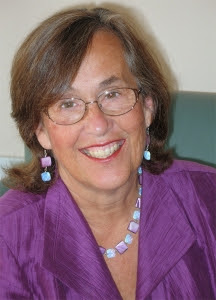
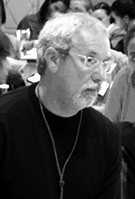
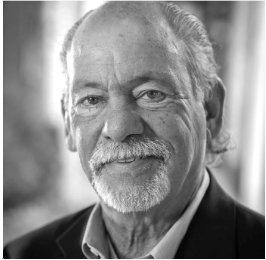
Martin Weinstein

By Sam Piha

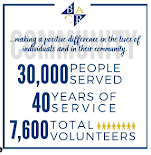
Forty years ago, Martin Weinstein founded New Perspectives, a Marin-based youth drug & alcohol abuse prevention program. New Perspectives expanded to serve youth across the San Francisco Bay area and changed its name to Bay Area Community Resources (BACR)

Marty pioneered school-based afterschool programs. He saw the importance of integrating mental health services by hiring staff with a counseling and social work background. He was also known for collaborating with other organizations in service delivery. (Note: Martin Weinstein helped launched my career in afterschool when he hired me in 1987. I worked for Marty for 8 years, managing BACR programs in the East Bay.)

Upon learning of his plans to retire, we interviewed Marty about his career and accomplishments, as well as other afterschool leaders, on his impact on the afterschool field. 

Q: Marty, what drew you to the field of youth prevention and positive development? 
A: In the early 1970s I decided I wanted to do something in my life that would benefit others, and I fortunately was given the opportunity to become the executive director of New Perspectives, which is now BACR. 

Q: Can you name one thing during your career that you were surprised by? 
A: I am surprised by the great careers built at BACR. Many of our staff make BACR their lifelong professional home.

Q: Was there an innovation you engineered that stands out to you? 
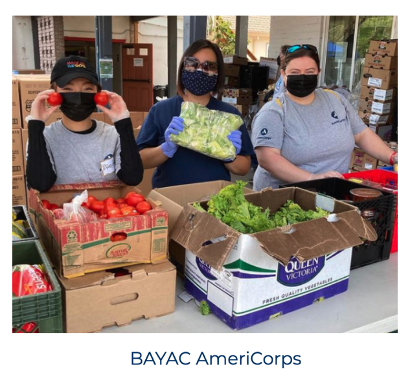
A: We created what is now known as an intermediary when AmeriCorps first started, and we are the longest running AmeriCorps program in California. Initially, the AmeriCorps agency didn't understand the value of this model.

Q: What is one of your fondest memories? 
A: I was visiting an afterschool program at an elementary school. The instructor was working with students on the concept of community. He asked the question, "how can we build a strong community?" A third-grade boy jumped up and said, "we gotta start doing push ups!" That is what I call a literal response.

Q: What are you most proud of? 
A: I am most proud of having had the opportunity to work with so many wonderful people who have become both leaders in the field and dear friends of mine. 

Q: Looking ahead to the future of afterschool, what do you believe will be the challenges and opportunities? 
A: Recruiting and retaining high quality staff has become a significant challenge as a result of the cost structure of expanded learning programs. The opportunities in after school are great. We have the potential to totally and positively impact the lives of countless youth through the work of committed and passionate people working in our most vulnerable schools. 


"Over 25 years ago in the Bay Area, Marty became a mentor, then a collaborator, and most importantly, my friend. Marty is leaving an impressive legacy in California that has touched and changed thousands of lives. Mine included. I love and appreciate you, Marty!"
- Michael Funk, Director, Afterschool Division, California Department of Education

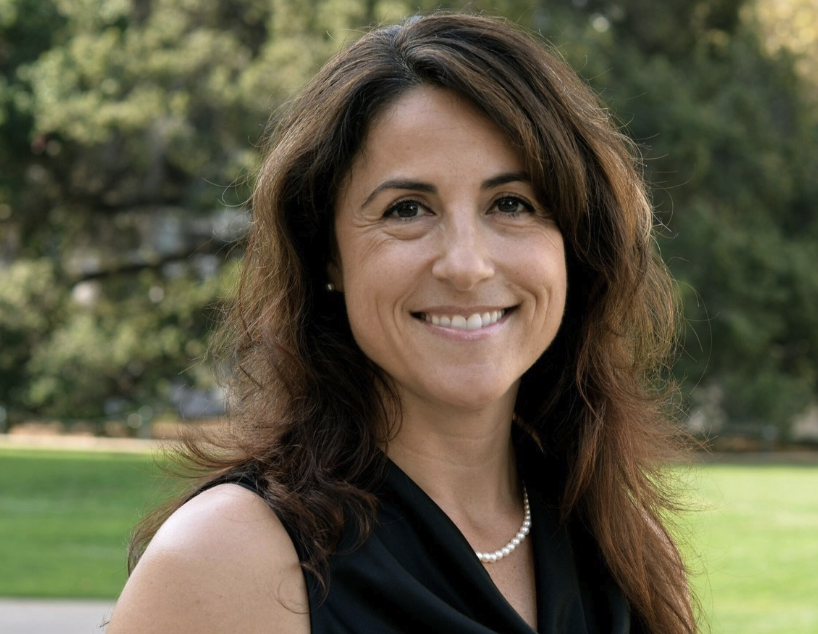
Jennifer Peck
It's hard to imagine BACR without Marty. He's been the steady, strategic, patient, driving force behind this organization for longer than most of us can remember. Marty has never veered from his mission, but always found ways to adjust and adapt based on community needs and remains a reliable, impactful force in so many communities. I am especially grateful for Marty's understanding of the importance of nonprofits serving kids and being active and engaged advocates at the local, state and federal level. Marty invested time and resources in advocacy coalitions that leveraged the strength of many other organizations, which made a real difference with AmeriCorps funding at the national level and ASES funding in California. Marty will certainly be missed, and he's leaving a solid organization with a great reputation. BACR will undoubtedly continue to be a huge asset in Bay Area communities.” – Jennifer Peck, Founder of Partnership for Children & Youth 

Don Lau
I was introduced to Marty around 1986 by my YMCA's Y- Team Director, Alf Johnson. Marty and Alf had an idea to have the YMCA and New Perspectives (now BACR) partner on a prevention program targeting middle school students at risk of getting involved with "gateway" drugs. That was how the innovative Gateway Program was started by our two agencies. Gateway provided individual and group counseling, social services and recreation therapy. Each agency would provide services that were a part of their expertise. The Gateway Project was very successful in helping adolescents turn away from the drug and gang infested neighborhoods they lived in by exposing them to positive alternatives and giving them the tools needed to make good decisions. Gateway was an effective collaborative program model that was ahead of its time and I want to thank Marty for taking the risk with Alf and me to make it happen. All the best to you in your retirement Marty and hope you enjoy it as much as I do.” - Don Lau, former West Contra Costa YMCA, Executive Director & President/CEO YMCA of the East Bay


MORE ABOUT

Martin Weinstein is the Chief Executive Officer of Bay Area Community Resources and has been a leader within the organization and the community for over 40 years. With his guidance, BACR has developed into a dynamic and highly diversified nonprofit agency. Martin's professional history combines a solid theoretical background in business and a successful application in the social service arena. He holds an undergraduate degree from the Wharton School of Finance, University of Pennsylvania, and an MBA from New York University.

Tuesday, August 2, 2022

An Interview with Outgoing PCY Founder, Jennifer Peck


By Sam Piha

“After 21 years of incredible service, Jennifer Peck, Partnership for Children & Youth (PCY) founding CEO, will step down from her leadership role in the organization on June 30th." - Partnership for Children & Youth

I've had the pleasure of working with Jennifer on promoting access to quality afterschool programs for over 20 years. She has partnered with Temescal Associates on several projects throughout the years and has proved to be an incredible leader and innovator. I interviewed Jennifer recently about her career and accomplishments and we share her responses below. To read comments from afterschool leaders who share their thoughts on Jennifer's impact on the field of afterschool, click here.

Q: What has influenced you to focus your energies on young people’s well-being?  
A: It’s been multiple things – one is that I came from a family of educators so that was sort of ingrained in me, though my career path was very unplanned and really a series of opportunities that I took advantage of at different moments. I started my career in politics and after working on a presidential campaign, found myself at the U.S. Department of Education which was an incredible learning experience and where I became inspired to pursue the career I’ve had.

Q: Why did you think it was necessary to found a new non-profit organization to promote this mission?  
A: When the federal government and California first began investing in afterschool, a lot of communities in great need for these resources couldn’t or didn’t access them, because the funding and policies didn’t  reflect the realities of running programs on the ground. There was a need for an entity to better communicate those realities and improve how public funding and policies served kids, so we dove in.

Q: What accomplishment are you most proud of? 
A: It’s such a hard question to answer, there’s a lot I’m proud of, but right now I’m feeling immensely proud that there’s so much more attention to and investment in summer learning. PCY’s staff and partners over a lot of years did so much to raise up summer as a critical time and opportunity for young people, and it feels like it’s really arrived.

Q: What accomplishment was the most difficult? 
A: Also hard to answer, a lot of things were difficult! But I’d say winning an increase to the daily rate for ASES and 21st CCLC -- it’s a tough sell in a political environment to be fighting for more money to serve the same number of kids, but that’s what was needed.

Q: What do you see as the greatest challenge for the afterschool movement? 
A: The biggest challenges on my mind, are figuring out how to build systems to recruit, train and adequately pay the workforce, and how to sustain the positive attention on afterschool and summer right now. Both will take really focused and smart policy, communications and system-building work – and PCY’s new leadership is ready and able to take these things on!

Q: Looking ahead, what do you see as the greatest opportunities for the afterschool movement? 
A: The big one in my opinion, is to really solidify a change in the public education mindset from one that saw learning as happening primarily from 8-3 and between September and June, to one that sees learning as happening all day and all year, with a diverse set of adults facilitating. I also can’t help but be really, really excited about summer and the opportunity to expose so many more kids to amazing, fun, life-changing summer experiences.

Q: Looking back, what do you think you will treasure most? 
A: Most definitely the people and the relationships I’ve developed over all these years. There’s so many amazing people in this work – like my old friend Sam Piha. 

Q: What did you learn most from being a parent to Emilia?  
A: Wow – so many things, and an interesting moment to think about it as Emilia is headed off to college in a month. If I had to pick one thing, it’s that you have to meet kids where they are – my daughter is really different from me in some ways, and I had to learn how to adjust my parenting over time to support her in the way that best helped her grow. It has made me think a lot about the work of educators and how important it is to know and care about every kid -- at the end of the day, it’s the most important thing.


Jennifer Peck
MORE ABOUT... Jennifer Peck led Partnership for Children & Youth since its founding in 2001. During her tenure she developed and implemented initiatives to build high-quality afterschool and summer learning programs, access to meals and health care for students, and integration of social and emotional learning in the education system across the state. Prior to forming PCY, Jennifer spent eight years as an appointee of President Bill Clinton at the United States Department of Education, where she supported implementation of initiatives including student loan reform, School-to-Work, and 21st Century Community Learning Centers. Jennifer is the proud mother of Emilia.

Tuesday, July 19, 2022

A Shout Out to PCY Founder, Jennifer Peck


By Sam Piha

“After 21 years of incredible service, Jennifer Peck, Partnership for Children & Youth (PCY) founding CEO, will step down from her leadership role in the organization on June 30th. Jennifer will assume the role of Senior Advisor during the transition to support the organization and its new leadership.” 
- Partnership for Children & Youth

I've had the pleasure of working with Jennifer on promoting access to quality afterschool programs for over 20 years. She has partnered with Temescal Associates on several projects throughout the years and has proved to be an incredible leader and innovator. I interviewed Jennifer recently about her career and accomplishments and we will share her responses in a future blog post. Below we hear from afterschool leaders who share their thoughts on Jennifer's impact on the field of afterschool. 


Michael Funk
The creation of a new Division at CDE in 2011 can be entirely credited to Jennifer. The After School Division was created then under the newly elected SSPI Tom Torlakson and Jennifer co-led his Transition Team. I would have never considered serving as the Director of this new division if Jennifer had not twisted both of my arms off to do so! (Thank you, Jennifer.) I have now been in this position for over 10 years and Jennifer (and countless others, have been with me for every step of this amazing journey.) California's communities, schools, families and students owe an incalculable debt of gratitude to Jennifer Peck. Her vision, leadership and tenacity are "hall-of-fame" caliber.” – Michael Funk, Director, Expanded Learning Division, California Department of Education

Jodi Grant
“Jennifer Peck did remarkable work to create, build and strengthen the federal 21st Century Community Learning Centers initiative, which is today a major success that has improved the lives of millions of children and families. After leaving Washington, D.C., Jennifer remained a passionate advocate, working at the local, state and national levels to create after school and summer learning opportunities for students across the country. She had a powerful, holistic vision for out-of-school-time programs that engaged not only with schools, but also with local community organizations. It was a privilege to work with Jennifer for almost two decades. The entire afterschool community will miss her, and her legacy will carry on.” - Jodi Grant, Executive Director, Afterschool Alliance

Eric Gurna
“Jennifer is an amazing leader for our field, and an inspiring colleague for so many of us. I learn so much from working with her. I don't think it is an exaggeration to say that without Jennifer's leadership and vision, the field of expanded learning in California would not have the depth, quality and scale that we see today - that means that she has had a profound impact on so, so many children and families and an entire workforce. And she made that long-term impact with a joyful spirit and great humor! Jennifer you will forever have our gratitude and appreciation.” - Eric Gurna, former Director of LA’s BEST

Margaret Brodkin
“Jennifer understood the combined importance of practice, policy and politics. She created an organization that excelled at all three, and each enhanced the other.  Her leadership particularly lifted the quality, visibility and progressive policies in youth development, summer learning, afterschool and community schools. She has been one of the most influential people in California’s children and youth arena. Her legacy is alive and well at the organization she founded.”Margaret Brodkin, Nationally recognized children’s advocate and policy pioneer

Rebecca Goldberg
“Jennifer Peck has left an indelible mark on the California education landscape. Because of her perseverance, foresight, strategy, and leadership, California continues to lead the nation in its investments in kids and serves as a model for all other states that aspire to dedicate significant, ongoing funding for expanded learning and summer learning opportunities. While she will be missed in her role at PCY, I know she will continue to advocate for kids in new and great ways. With California poised to once again realize the largest expansion of publicly funded expanded learning programs in the country, Jennifer should feel nothing but pride in all that she has done to help get the field to where it is to be ready for this type of unprecedented expansion. Thank you, Jennifer!”
– Rebecca Goldberg, Non-profit & philanthropy consultant; Board Member at Forum for Youth Investment, MENTOR California, and Playworks Northern California

Aaron Dworkin
Thank you, Jennifer, for your partnership, leadership and tireless efforts on behalf of young people, families and communities across California and the country. You set a high bar for what is possible, and our field and leaders and partner programs are all stronger for your efforts, passion and wisdom. I personally thank you for helping me grow and learn over so many years. You will be missed but your organization will continue on your legacy.” – Aaron Dworkin, CEO, National Summer Learning Association

Brian Lee
“Jennifer has been an impactful leader in the after school and summer field. With her vision and dedication, she has helped transform California into the national leader on after school and summer, through both her (and her stellar staff’s) close collaboration with California policymakers and her empowerment of voices from the field.”Brian Lee, Policy Advocate previously with Fight Crime: Invest in Kids California


"Millions of professionals and volunteers work with young people every day in the many settings where youth play, learn, and grow outside of the school day. Yet, we have little collective information about this essential workforce. You can help change this!"- California Afterschool Network

Take the survey today, click here.

Wednesday, May 13, 2020

COVID-19 Crisis: Articles by Dr. Shawn Ginwright (SFSU) and Jennifer Peck (PCY)

Shawn Ginwright and Jennifer Peck are important leaders in the afterschool and youth development movements. They have both been frequent contributors to our blogs and conferences. Below are articles they recently published during the COVID-19 crisis.

Coronavirus Underscores Need for Healing America's Racial Divisions 

By Dr. Shawn Ginwright

A history of policies that exclude and inflict harm have led to higher rates of persistent traumatic stress environment, leaving African Americans and Lations more vulnerable in the fight against COVID-19.

Now is the time to shape a new world and remedy past injustices. The reports of racial disparities among COVID-19 victims should not surprise us. African Americans and Latinos have typically experienced disproportionate exposure to a range of health issues. (Read the full article published in the San Francisco Chronicle on April 14, 2020.)

Source: Getty Images/ iStockphoto

Summer Matters More Than Ever

By Jennifer Peck

There are some unique challenges in front of us as we think about this coming summer, when learning loss, social disconnection and mental health challenges will be as intense as ever.

We should be doubling down on supports for kids over the summer, but there are a lot of unknowns. We don’t yet know to what extent we will be allowed to congregate in groups and when. We don’t know what the resource picture will look like. We don’t know how we can staff programs. The barriers seem immense, and feel overwhelming while our system is still trying to implement distance learning at scale.

What we cannot do is become paralyzed. There is too much at stake. Right now, we must be planning for different scenarios so that we can be ready to serve as many students as possible with various combinations of virtual and small group in-person time, including creative, project-based activities for students. (Read the full article published on Ed100.org on April 24, 2020.)
Source: Partnership for Children & Youth (PCY)

________________
Shawn Ginwright is professor of Education, and African American Studies at San Francisco State University and chairman of the Board of Directors for the California Endowment. He is the author of the forthcoming book, Pivot: A Dramatic Shift Toward a Healing Centered Society. Dr. Ginwright has been a frequent contributor and speaker for Temescal Associates and The How Kids Learn Foundation.

Jennifer Peck, Executive Director of the Partnership for Children & Youth (PCY), has led the organization since its founding in 2001.  During this time, she has grown PCY to be the leading California intermediary building access to high quality expanded learning opportunities for students living in our state’s lowest-income communities. Jennifer led the creation of the California Afterschool Advocacy Alliance, the California Summer Matters Campaign, the California Community Schools Network, and HousED which builds on-site learning supports for students living in public and affordable housing.

Wednesday, January 27, 2016

What Does ESSA Mean For Expanded Learning?

By Guest Blogger, Jennifer Peck, Executive Director at the Partnership for Children and Youth

Jennifer Peck
We at the Partnership for Children & Youth are very pleased that Congress and the President reached agreement to move past the era of No Child Left Behind, and approve the Every Student Succeeds Act (ESSA) last month. We are particularly pleased that the 21st Century Community Learning Centers (21st CCLC) program has remained a focused funding stream for expanded learning programs, and has received a small funding increase. This program certainly needs to grow to meet the enormous demand, and this is an important step in the right direction.

In addition to the funding news, there are several policy changes to the 21st CCLC program that California will have to implement in Federal Fiscal Year 2017, one of the most significant being new flexibility for 21st CCLC funds to be used to support longer school days. Under this new provision, the law makes clear that the funds cannot supplant regular school day activities, that students receive at least 300 hours of additional program hours beyond the regular school day, and that the additional time be carried out with one or more partner entities.  

We are still analyzing all the changes to 21st CCLC, including some adjustments to how grants are prioritized, which students should be prioritized for enrollment, and potential resources available for technical assistance. We will post more updates as we gather information and clarify the new law’s intent for the various changes. We will also be closely communicating with the California Department of Education as we digest these changes and work collaboratively with our partners and the state to implement new provisions of the law so that we maintain our strong focus on community partnerships and program quality.  

Please see our recent ESSA Huffington Post blog co-authored with Every Hour Counts, which represents expanded learning intermediaries around the country, and stay tuned for more information in the coming months.

Thank you to all of you who took the time in recent months to communicate with Congress about the importance of maintaining the 21st CCLC program, which is a critical resource for children and families across the state of California.

Wednesday, January 6, 2016

Looking Ahead to 2016: An Interview with Jennifer Peck, ED of the Partnership for Children and Youth

By Sam Piha


Sam Piha

The Partnership for Children and Youth (PCY) has provided important leadership in California and across the country to support the growth of the expanded learning movement. 

As we begin the new year, we asked Jennifer Peck, Executive Director of PCY, to help us look ahead. 


Jennifer Pec

Q: In looking ahead to 2016, what do you see as the important emerging trends in expanded learning programs?

A: 2016 is going to be a year of even greater opportunity for the expanded learning field in California, given continuing implementation of education, finance, and accountability reform, and the great strides the expanded learning field has made in two critical and related areas:  Prioritizing the importance of program quality; and demonstrating to our K-12 partners the real value of our programs in educating young people for successful futures.  

We have new Quality Standards in California which everyone will play a role in implementing from the state to the site level.  We are also implementing a new law which places much greater focus on quality improvement, and there are systems of support all around the state that are responding to the need for training and support for programs in the interest of meeting the Quality Standards.  These are critical steps because we know quality matters to student outcomes, and these tools and policy advances support the work of practitioners in this field who are deeply committed to improving the lives of young people.  

The focus on quality also helps us demonstrate to our school day partners in the K-12 world that expanded learning programs are a necessary and critical component to the task of providing equitable and effective educational opportunities to all young people.  With our ability to demonstrate quality and impact, we are better able to firmly assert that without high quality expanded learning opportunities, the education system will never meet its goals of all students achieving success in school, higher education, and career.  

In 2016, we will capitalize on the great strides we have made in building relationships with our partners in the K-12 world such as school administrators, school board members, teachers and other leaders at the state and local levels by demonstrating how our programs keep students engaged, support Common Core skills, support Social and Emotional Learning skills, and much more.


Q: Looking ahead to 2016, what do you see as the most significant challenge facing the field of expanded learning?  

A: Our biggest challenge by far is grappling with the financing crisis our state funded programs are facing.  The state set a daily per child, per day rate of $7.50 back in 2006, and despite enormous cost of living increases and more recent increases in the state minimum wage, that daily rate remains stagnant and programs are suffering.  While program providers do everything they can to stay afloat and maintain services for students, they can only stretch so far.  
In 2015, many programs reported the need to eliminate some professional development, eliminate some enrichment services, and eliminate full time site coordinators.  In 2016, we may begin to see some programs have to shut their doors.   

In response, last winter our advocacy community came together and rapidly put together a bill and a budget request for our state legislature which was very successful – the legislature recommended a $25 million increase to ASES. However, the Governor was not convinced this was a priority and did not include this in his final budget.  

We are now gearing up for an even bigger effort in 2016 to secure additional resources for ASES so our programs can survive and thrive into the future. This Campaign to preserve California’s investment and leadership in expanded learning needs to be a priority for everyone who cares about this work – see the Campaign’s brand new website to learn how to get involved at www.saveafterschool.com
------------------
Jennifer Peck was a founding staff member of the Partnership in 2001 and became its Executive Director in 2003.  Through her leadership, the Partnership has developed and implemented initiatives to finance and build after-school and summer-learning programs, and increase access to school meals and nutrition education programs in the Bay Area’s lowest-income communities. Jennifer leads a coalition of California organizations advocating for new federal policies to improve the effectiveness of after-school and summer-learning programs. To learn more about the Partnership and sign up for their e-newsletter, visit their website.

Friday, June 26, 2015

Promoting Social Emotional Skills

By Guest Blogger, Jennifer Peck, Executive Director, Partnership for Children and Youth

(Note: Much of this commentary first appeared on EdSource on April 29, 2015. To view the entire article, along with others, please click here.)


Jennifer Peck
With the introduction of new Common Core State Standards, teachers and administrators can concentrate on helping students develop the ability to collaborate, create, communicate and think critically. There is growing recognition that strengthening students’ social and emotional skills is essential to developing those abilities, and thus critical to success in school, the workplace, and in life generally.

Further good news is that schools don’t have to do this work on their own. In California, a strong network of expanded learning programs – operating after school and in the summer – are already experienced at helping young people build social-emotional skills. Their practices are specifically designed to help children:

learn about themselves,
relate to other people, and
develop confidence about learning.


This work by California’s expanded learning community is guided by new Quality Standards for Expanded Learning. The state is using these standards to inform its decisions about program funding, and schools, program providers and parents can use them to identify high quality programs and practices.

A robust after-school and summer strategy helps ensure that all children are developing the social-emotional skills they need to function well in the classroom. It also adds at least 740 hours to the 1,080 hours of school year learning. That extra learning time is not a luxury. The research on summer learning loss, for example, documents that the failure to use this time well has significant negative impacts on children, particularly those whose families cannot afford to pay for camps, trips, and other enriching activities.


California has more than 4,500 publicly funded expanded learning programs, most of which are located in schools in our state’s lowest-income communities. These programs add great value to the work of schools, but too often work in isolation. As a recent Partnership for Children and Youth report documents, when schools think outside the classroom and develop partnerships that expand the day and the year and offer opportunities to learn in different ways, kids benefit.

Let’s use this additional learning time to make sure all children have the social-emotional skills they need to thrive in school, work and life.
_______________________
Jennifer Peck was a founding staff member of the Partnership in 2001 and became its executive director in 2003.  Through her leadership, the Partnership has developed and implemented initiatives to finance and build after-school and summer-learning programs, and increase access to school meals and nutrition education programs in the Bay Area’s lowest-income communities. Jennifer leads a coalition of California organizations advocating for new federal policies to improve the effectiveness of after-school and summer-learning programs. To learn more about the Partnership and sign up for their e-newsletter, visit their website

Tuesday, January 13, 2015

New Afterschool Jargon: "Expanded" or "Extended" Learning

By Sam Piha


Sam Piha
The afterschool and summer learning movement is not immune from collecting new jargon. As we move forward, there are two new terms that are being used in often confusing ways. Those terms are "expanded learning" and "extended learning". How are these terms different and are they meant to replace "afterschool" and "summer learning" programs? To add to the confusion, they are being used in different ways depending on what part of the country you come from.

To help us better understand these terms, we interviewed a host of afterschool leaders to ask them to help clarify. We begin with an interview with Jennifer Peck, Executive Director, Partnership for Children and Youth. We will follow this post with interviews with other afterschool leaders. 

Q: The term “expanded learning” is used differently by different people in different parts of the country. Can you give your definition of “expanded learning time and programs"?


Jennifer Peck,
Executive Director
Partnership for
Children and Youth
A: I’m going to refer to the definition developed with the After School Division at California Department of Education (CDE), which I think captures it well: Expanded Learning Time is defined as before and after school, summer and intersession learning programs that focus on developing the academic, social, emotional and physical needs and interests of students through hands-on, engaging learning experiences. Expanded learning programs should be student-centered, results-driven, include community partners, and complement but not replicate learning activities in the regular school day/year.

Q: In your mind, what is the difference between the terms “expanded learning” and “extended learning”? 

A: I want to be careful here because they are just terms, and they often get used interchangably without a lot of intention.  But in my mind, “extended learning” implies an extension of the regular school day or year, or simply more time.  But we know time in and of itself isn’t enough.  When we say “expanded”, it’s not limited to time – it also refers to the different kinds of experiences we want young people to have as part of their overall educational experience.  “Expanding” learning means bringing learning to life in new and different ways that are hopefully engaging and exciting and relevant to young people. Schools and expanded learning programs can and should be expanding learning for all students – and ideally doing it with some coherence and alignment of effort.

Q: Are you hoping that the field begins using the terms “expanded learning programs” to replace “afterschool and summer programs”? 

A: We have certainly been pushing that in our own work, because we believe that the word “learning” is critical to include in descriptions of what we do, especially as we work hard to create more coherence between schools and expanded learning program providers.  However, we will need to continue to articulate the “when”, since the expanded learning term is still relatively new and can be perplexing to our partners in the K-12 education world. 

However, as much as we like the expanded learning language, what we call it isn’t, in the end, the most important thing. Some providers have adopted “extended” because it’s more clear to their school partners.  Whether it’s expanded, extended, or the good old fashioned “after school”, it’s most important that programs are expanding horizons for kids, as well as striving to embody all the principles laid out in the Learning in Afterschool & Summer frame. 

Wednesday, March 13, 2013

Expanded Learning, California Style


The article below first appeared in the Huffington Post on February 22, 2013. We are reposting this because we believe it is of particular interest to our readers.  
________________________
Superintendent Tom Torlakson
By Tom Torlakson, California State Superintendent of Public Instruction and Jennifer Peck, Executive Director, Partnership for Children and Youth

Jennifer Peck
In 2002, California made a historic investment that forever changed the landscape of our education system. With the passage of Proposition 49, an unprecedented half a billion dollars was devoted to after school programs -- more than all other states' investments combined. This money first went to work in 2007, at a time when we had no idea what was about to happen to our economy. But the six years since Proposition 49's implementation have been a powerful journey of collaboration and progress toward expanding learning opportunities for students in low-income communities across California.

Scaling up an initiative of this size -- nearly $700 million total in state and federal funds for after school and summer programs -- has been a challenge. It has taken time to build infrastructure, professional development opportunities and communication systems that are necessary to the success of any education initiative. But California has made great strides in maximizing this investment thanks to unique partnerships between policymakers, advocates and practitioners. Together we have:

  • Focused on ways schools and community partners can plan and implement together, teach collaboratively, share data in the interest of continuous improvement and bolster student success;
  • Built a team at the California Department of Education that is solely focused on administering our significant investments in expanded learning programs;
  • Engaged practitioners in the task of defining what quality looks like and in shaping the state's investments in training and technical assistance;
  • Placed greater focus on summer, in addition to after school, as a critical time to provide engaging learning opportunities to students;
  • Initiated important conversations about how our significant expanded learning investment can support California schools in other priority areas such as Common Core implementation, bringing science education to more students, and building college and career readiness.

There is a great deal of discussion nationally about the need to add learning time to the school day and the school year -- and varying points of view on the ways in which to tackle this challenge. Many of these discussions have focused on "time" as the operative factor. However, what we know from research and from experience bears out what Paul Tough recently wrote about how children succeed: time isn't enough.

Students need meaningful ways to engage with their learning experiences, to build trusting relationships that keep them present and motivated, and to be exposed to opportunities that broaden their horizons beyond the walls of their neighborhood or their school building. We firmly believe that high-quality expanded learning programs, whether they take place after school, in the summer, through school schedule redesign efforts or otherwise, are the way to provide this for all our students.

We are very proud of what we have collectively accomplished in our state. We have made serious investments in expanded learning programs, and we are serious about making these investments as effective as possible. We recognize that we are constantly learning about what works best, and we have much more to do to ensure all students receive a strong, well-rounded education. We believe the only way to move closer to that goal is through partnerships -- between policymakers and stakeholders; between school districts and community partners; within and across all kinds of public agencies; and between students, parents and their schools.

Click here to read the full article about the strategies California employed after the passage of Proposition 49.
_______________________
Tom Torlakson is California's 27th State Superintendent of Public Instruction. As chief of California's public school system and leader of the California Department of Education, Superintendent Torlakson applies his experience as a science teacher, high school coach, and state policymaker to fight for our students and improve California's state's public education system.

Jennifer Peck was a founding staff member of the Partnership For Children and Youth in 2001 and became its Executive Director in 2003. Jennifer leads a coalition of California organizations advocating for new federal policies to improve the effectiveness of after-school and summer-learning programs. 

Tuesday, July 5, 2011

Policy Recommendations for ESEA Reauthorization

By Guest Bloggers, Jessica Donner, Director, Collaborative for Building After-School Systems , and Jennifer Peck, Executive Director, Partnership for Children and Youth.

As you know, the federal reauthorization of the Elementary and Secondary Education Act (ESEA) will influence the funding of the 21st Century Learning Centers (21st CCLC). The Partnership for Children and Youth and the Collaborative for Building After School Systems (CBASS) recently finalized ESEA policy recommendations and shared ideas to strengthen the 21st CCLC program with lead staffers from HELP (U.S. Senate Committee on Health, Education, Labor & Pensions) and appropriations committees in late March. Some of the key themes in our recommendations include:
  • Ensuring that local communities can choose from a variety of quality options that meet their needs for expanding learning opportunities
  • Ensuring all 21st CCLC funded programs are joint endeavors between schools and community partners 
  • Providing distinct and appropriate guidance for high-school level programs, recognizing the unique challenges and opportunities for this age group 
  • Structuring an accountability system that is clear and appropriate, based on research about what expanded learning opportunities can effectively impact, and include multiple measures
  • Recognizing and promoting the critical role of intermediaries in the success of programs and systems
In partnership with the American Youth Policy Forum (AYPF), CBASS and The After-School Corporation (TASC) co-sponsored a Congressional study tour of TASC expanded learning time schools in May, thanks to generous support from the Mott Foundation. During the two-day visit, two dozen Washington-based Congressional staff members and U.S. Department of Education policy leaders focused on the school-community model for expanding the time and ways students learn. We continued the discussion on June 27th, at an AYPF forum on effective school-community partnerships in Washington DC with more than 50 congressional staffers.

We’ll be sure to keep you updated as more activity unfolds. Likewise, we’d love to hear from you, and very much would like to hear your reaction to our policy recommendations. In addition, if your organization has developed your own recommendations, please send them along to jdonner@tascorp.org so we can help promote shared priorities.
------------------------

Jessica Donner serves as the Director of the Collaborative for Building After-School Systems (CBASS), a partnership of after-school intermediary organizations in eight cities dedicated to increasing the availability of quality afterschool programming.

Jennifer Peck was a founding staff member of the Partnership For Children and Youth in 2001 and became its Executive Director in 2003. Jennifer leads a coalition of California organizations advocating for new federal policies to improve the effectiveness of after-school and summer-learning programs.

Understanding Attention-Deficit Hyperactivity Disorder

Source: www.pexels.com By Sam Piha PURPOSE The purpose of this blog is to advance understanding of Attention- Deficit Hyperactivity Disorder...