Showing posts with label margaret brodkin. Show all posts

Tuesday, July 19, 2022

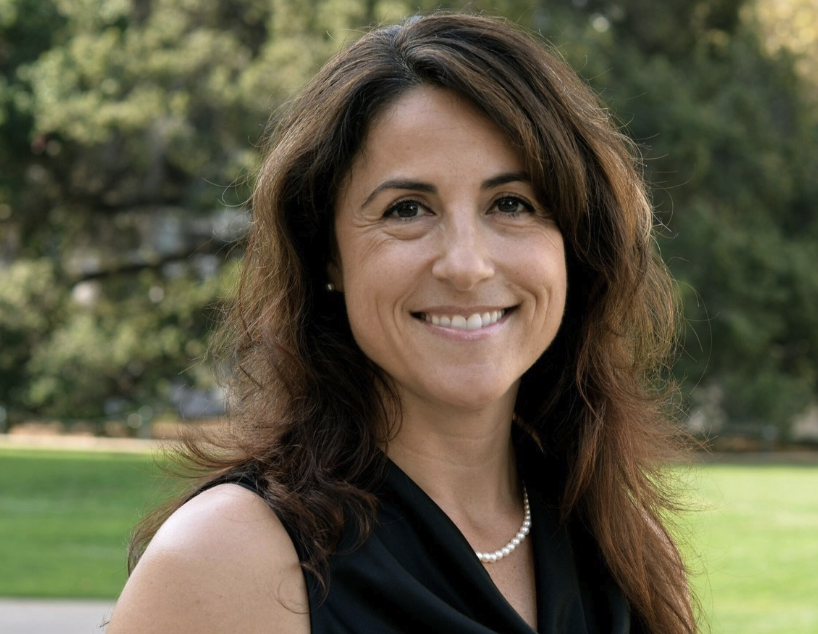
A Shout Out to PCY Founder, Jennifer Peck


By Sam Piha

“After 21 years of incredible service, Jennifer Peck, Partnership for Children & Youth (PCY) founding CEO, will step down from her leadership role in the organization on June 30th. Jennifer will assume the role of Senior Advisor during the transition to support the organization and its new leadership.” 
- Partnership for Children & Youth

I've had the pleasure of working with Jennifer on promoting access to quality afterschool programs for over 20 years. She has partnered with Temescal Associates on several projects throughout the years and has proved to be an incredible leader and innovator. I interviewed Jennifer recently about her career and accomplishments and we will share her responses in a future blog post. Below we hear from afterschool leaders who share their thoughts on Jennifer's impact on the field of afterschool. 


Michael Funk
The creation of a new Division at CDE in 2011 can be entirely credited to Jennifer. The After School Division was created then under the newly elected SSPI Tom Torlakson and Jennifer co-led his Transition Team. I would have never considered serving as the Director of this new division if Jennifer had not twisted both of my arms off to do so! (Thank you, Jennifer.) I have now been in this position for over 10 years and Jennifer (and countless others, have been with me for every step of this amazing journey.) California's communities, schools, families and students owe an incalculable debt of gratitude to Jennifer Peck. Her vision, leadership and tenacity are "hall-of-fame" caliber.” – Michael Funk, Director, Expanded Learning Division, California Department of Education

Jodi Grant
“Jennifer Peck did remarkable work to create, build and strengthen the federal 21st Century Community Learning Centers initiative, which is today a major success that has improved the lives of millions of children and families. After leaving Washington, D.C., Jennifer remained a passionate advocate, working at the local, state and national levels to create after school and summer learning opportunities for students across the country. She had a powerful, holistic vision for out-of-school-time programs that engaged not only with schools, but also with local community organizations. It was a privilege to work with Jennifer for almost two decades. The entire afterschool community will miss her, and her legacy will carry on.” - Jodi Grant, Executive Director, Afterschool Alliance

Eric Gurna
“Jennifer is an amazing leader for our field, and an inspiring colleague for so many of us. I learn so much from working with her. I don't think it is an exaggeration to say that without Jennifer's leadership and vision, the field of expanded learning in California would not have the depth, quality and scale that we see today - that means that she has had a profound impact on so, so many children and families and an entire workforce. And she made that long-term impact with a joyful spirit and great humor! Jennifer you will forever have our gratitude and appreciation.” - Eric Gurna, former Director of LA’s BEST
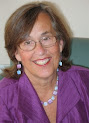
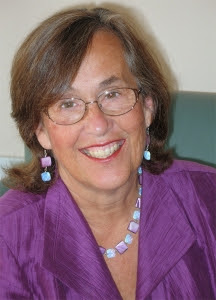
Margaret Brodkin
“Jennifer understood the combined importance of practice, policy and politics. She created an organization that excelled at all three, and each enhanced the other.  Her leadership particularly lifted the quality, visibility and progressive policies in youth development, summer learning, afterschool and community schools. She has been one of the most influential people in California’s children and youth arena. Her legacy is alive and well at the organization she founded.”Margaret Brodkin, Nationally recognized children’s advocate and policy pioneer

Rebecca Goldberg
“Jennifer Peck has left an indelible mark on the California education landscape. Because of her perseverance, foresight, strategy, and leadership, California continues to lead the nation in its investments in kids and serves as a model for all other states that aspire to dedicate significant, ongoing funding for expanded learning and summer learning opportunities. While she will be missed in her role at PCY, I know she will continue to advocate for kids in new and great ways. With California poised to once again realize the largest expansion of publicly funded expanded learning programs in the country, Jennifer should feel nothing but pride in all that she has done to help get the field to where it is to be ready for this type of unprecedented expansion. Thank you, Jennifer!”
– Rebecca Goldberg, Non-profit & philanthropy consultant; Board Member at Forum for Youth Investment, MENTOR California, and Playworks Northern California

Aaron Dworkin
Thank you, Jennifer, for your partnership, leadership and tireless efforts on behalf of young people, families and communities across California and the country. You set a high bar for what is possible, and our field and leaders and partner programs are all stronger for your efforts, passion and wisdom. I personally thank you for helping me grow and learn over so many years. You will be missed but your organization will continue on your legacy.” – Aaron Dworkin, CEO, National Summer Learning Association

Brian Lee
“Jennifer has been an impactful leader in the after school and summer field. With her vision and dedication, she has helped transform California into the national leader on after school and summer, through both her (and her stellar staff’s) close collaboration with California policymakers and her empowerment of voices from the field.”Brian Lee, Policy Advocate previously with Fight Crime: Invest in Kids California


"Millions of professionals and volunteers work with young people every day in the many settings where youth play, learn, and grow outside of the school day. Yet, we have little collective information about this essential workforce. You can help change this!"- California Afterschool Network

Take the survey today, click here.

Thursday, May 25, 2017

Advocating for Sustained Funding of Youth Programs: An Interview with Margaret Brodkin, Part 2

By Sam Piha


Sam Piha
With the call to defund the federal 21st Century Community Learning Centers Initiative, never has it been more important that we act to ensure the sustainability of funding for youth programs. Below, we provide Part 2 of an interview with Margaret Brodkin (view Part 1 here). Ms. Brodkin led a campaign in the early 1990’s to develop a permanent “children’s fund” in San Francisco – a stable and sustainable fund of city tax dollars dedicated to programs that support children and youth. 

Ms. Brodkin has gone on to assist cities and counties across the country to develop their own “children’s fund”. 

Q: Can you give details on what else this “children’s fund” proposal included? 

A: The latest version of the Children’s Fund passed in 2014. There were lots of other provisions in this version, as well as the other versions – although we kept adding stuff each time. Major provisions included:
Photo Credit:
https://cacnc.org

1) Creation of a Children’s Baseline Budget. This required the city to calculate what is being spent on kids every year, and not reducing that amount in each year’s budget. The Baseline could also go up (or down) with the city’s revenues. This turned out to be as valuable as having new revenue. 

2) Creation of an Advisory and Oversight Committee appointed by the Board of Supervisors and the Mayor with the power to oversee the Department of Children, Youth, and Their Families (DCYF) budget, have input into the hiring of the DCYF director, and approve the community needs assessment and allocation plan.


3) Creation of a planning process that required a Community Needs Assessment, defining multiple levels of input from the community and all relevant city departments, and an Allocation Plan that determines what services will be funded and by how much.

4) In 2014, the age range of those served was expanded to age 24, with a special funding stream for transitional age youth.

5) Requires program evaluations for what is funded.

6) Has a specific list of services that can be funded. Services include: youth development, family support, early care and education, career readiness, violence prevention. It also includes services that cannot be funded using Children’s Fund monies. This includes funding for law enforcement. 

7) Creation of a Providers Advisory Committee to DCYF.

8) 25 year sunset.

Q: In what ways was this revolutionary for American cities?
Photo Credit:
http://www.childrensaidsociety.org/

A: We were the first city in the country to do anything like this. Other people looked at it and it got replicated in a number of other places, like Oakland, Portland, and Seattle. I have a project where I’m helping cities and counties around the state do the same thing. 

I work with people now trying to do the same thing and one of the biggest barriers they face are city representatives saying, “that's not our job – it’s not something you use city government dollars to do. That’s the job of state, federal, and foundation dollars. Our job is to provide police and fire and this is somebody else's job”. 

Q: What were some of the bigger challenges and lessons?

A: The challenges we faced were political in nature. When you want to get money out of the government, its politicians that ultimately have to do it, or the public in our case. We had to put the issue before the public with an election. There were a number of things:

1) We are working in a field that has a huge amount of power because there are so many of us - youth workers, child care workers, and parents. What we do is so important but we're not good politicians. One of the challenges is how do you train a field to use its political power? 

It took years and years to get people to feel like “I can go into city hall; I can testify; I can bring parents from my program; I can be part of the budget process; I can walk precincts; I can become a political force for the things that I believe in”. That's a major change in how we think of ourselves, not just as people who care for kids and young people, but people who can use their political power to change policies.
Photo Credit:
http://fonddulac.uwex.edu/
2) Part of the challenge is getting out of our bubble where everybody is a child care worker, and figure out who our allies are. I was in a meeting yesterday in another county where they're trying to do a children's fund and who's at the table? The iron workers. How do we align ourselves with labor? How do we align ourselves with the faith community? How do we develop a broader base of support for the things that we believe in? 

I’m as guilty as anyone. We use a language no one understands. So we have to learn a whole set of new skills. How do you talk to people who have no idea what you're talking about when you actually say “youth development”? It’s not a common phrase. What do you really mean by that? It’s a whole process of learning how to be in a political arena, in an arena where you have to persuade people.


Photo Credit: http://www.margaretbrodkin.com/
3) Another challenge is that the people in our field are really, really nice people. They don't like to talk about money, so they don't like to say we need money. Playing hardball politics is really, really hard. It doesn't come naturally to all people. 

4) How can we all get on the same page? How do we not fight with each other - the child care people fighting with the youth development people, fighting with the family support people? We have to learn how to develop a common agenda and work together or we diffuse our power and our ability to get things done.

-------------------------------
Margaret Brodkin
Margaret Brodkin is a nationally recognized children’s advocate and policy pioneer and known as the “Mother of the San Francisco Children’s Fund,” a multi-million dollar annual fund that made San Francisco the first city in the country to provide local dedicated funding for children. She is currently Founder and Director of Funding the Next Generation.


Ms. Brodkin served 26 years as Director of Coleman Advocates for Children and Youth in San Francisco, California – turning a small community organization into an influential powerhouse for kids and a national model for creating a diverse and lasting local children’s movement. Ms. Brodkin later served as Director of San Francisco’s Department of Children, Youth & Their Families. She then served as the Director of New Day for Learning – an intermediary partnership organization launching San Francisco’s community school initiative, resulting in the institutionalization of community schools as a centerpiece of the SFUSD education reforms.

Thursday, May 18, 2017

Advocating for Sustained Funding of Youth Programs: An Interview with Margaret Brodkin, Part 1

By Sam Piha


Sam Piha
For over 100 years, afterschool and youth development programs have struggled to secure stable, sustainable funding. Why is this? Is it because we don’t value our children or believe in the importance of out-of-school learning and support? Or is it structural? 

We conducted an interview with Margaret Brodkin, who led a campaign in the early 1990’s to develop a permanent “children’s fund” in San Francisco – a stable and sustainable fund of city tax dollars dedicated to programs that support children and youth. Ms. Brodkin has gone on to assist cities and counties across the country to develop their own “children’s fund”. Below, we offer part one of a two-part interview with Ms. Brodkin. 

Q: How did you get into this business? 

A: My first job, in the early 1970s in San Francisco, was to run the children's program at the Jewish Community Center. What we began to notice was that there was a group of parents who would send their kid to the art class on Monday, dance class on Tuesday, gymnastics class on Wednesday, who really needed something every day. 

'Afterschool' wasn't a common word. The idea that someone needed a program every day for their kids was controversial at the time, because women weren't supposed to work. We decided to start this everyday, after school program. We had to get a special grant to do it, I had to get in my car and drive around and pick up all the kids who were in that program.
Photo Credit:
http://www.beyondchron.org/

The program is still in existence and now it is the largest after school program in San Francisco. It started by realizing that kids needed an every day experience. My idea about the importance of community centers - whether its the YMCA or the Boys and Girls Club or the Jewish Community Center or neighborhood center - that kind of community institution was such a fabulous resource. 


The other experience that shaped my perspective was a conference I attended that featured Richard Murphy and Geoffrey Canada. They were talking about the New York Beacon Centers. The idea that a school could be a community center was new. A school could be the place where children and families could come and belong, and it could be the center of the community. It just riveted me, as a model, and came back from the conference and said, “we've got to do this in San Francisco”. 

I think that it is a model for everywhere because every child goes to school. Schools should be the center of neighborhood life. It’s a model that's appropriate for the suburbs, for a city, and particularly appropriate for a rural area. 

Q: You were instrumental in drafting a city proposition to ensure the city had the needed resources to positively impact youth outcomes. What were some of the basic changes that this initiative brought? 

A: At that time, I was the head of a children's advocacy organization in San Francisco where we worked on lots of issues trying to get services and programs for kids but we always hit a brick wall - there was never the money to do it. So we started a crusade to get money for children's services. We introduced the idea of a children's budget and submitted that to the city for three years in a row.


Photo Credit:
https://onpublico.com
We would have some wins, we would have some losses, but we could never really compete with police and fire and the other things the city felt were their responsibility. We got the idea that we would put a measure on the ballot to create a dedicated fund that we call the “children's fund” that would just be for children and youth services. This would be an operating part of how San Francisco did its business.

Everybody in city hall opposed it because they didn't want to carve out money for kids. They wanted the flexibility to add more police, etc. and we said, “no - kids will never be able to compete in the dog eat dog budget process”. We decided to put this on the ballot. We collected 67,000 signatures and it passed. Now its been reauthorized three times - the first time it was passed was in 1991. It became the major source of funding for children's services in San Francisco. 

The children's movement in San Francisco became a political force to be reckoned with and it started with getting this measure passed. We went on for every year getting additional dollars in the budget, getting additional policies changed. 

Q: What did the passage of this proposition change in San Francisco? 

A: There were several changes: 
1) It created this funding stream. The original Children’s Fund was a set aside of 2.5% of the property tax, and we inched it up in each reauthorization campaign, so it is now 4%. The first year it was in effect in 1992, it was $12 million; and within a year it will be $94.7 million.

2) It gave us a huge amount of flexibility with what we could do at the local level. It allowed us to go into neighborhoods that no one had been in before, it allowed us to serve new populations like children with disabilities and LGBTQ young people. That's how we ended up funding the Beacons; that's how we ended up funding health services in the schools; its how we ended up funding arts programs; and more. 
Photo Credit:
http://diycampaigns.com/

3) It allowed us to focus on prevention. So many resources go in to address problems after they exist, like after a child is in trouble, or after someone is sick or involved in the child welfare system. It gave the city the opportunity to invest in prevention.

4) It allowed us to create a new office, the Department of Children, Youth, and Their Families, which I had the opportunity to lead for five years. This office provided the mechanism for planning; for coordinating; for giving out the money; for holding people accountable; for having a transparent process that people can get engaged in. 

5) By having all this local money, people could leverage state and federal money. This was a huge success for the youth and children's movement and we gained a kind of power to continue the good fight.

-------------------------

Margaret Brodkin
Margaret Brodkin is a nationally recognized children’s advocate and policy pioneer and known as the “Mother of the San Francisco Children’s Fund,” a multi-million dollar annual fund that made San Francisco the first city in the country to provide local dedicated funding for children. She is currently Founder and Director of Funding the Next Generation

Ms. Brodkin served 26 years as Director of Coleman Advocates for Children and Youth in San Francisco, California – turning a small community organization into an influential powerhouse for kids and a national model for creating a diverse and lasting local children’s movement. Ms. Brodkin later served as Director of San Francisco’s Department of Children, Youth & Their Families. She then served as the Director of New Day for Learning – an intermediary partnership organization launching San Francisco’s community school initiative, resulting in the institutionalization of community schools as a centerpiece of the SFUSD education reforms.


Voices from the Field: Youth Activist, Hadley Gray

Source: Hadley's Hope By Sam Piha We first learned about Hadley Gray from an article by Giving Tuesday, which we posted last week. She ...