Showing posts with label Dr. Carol Tang. Show all posts

Wednesday, May 13, 2026

Voices from the Field: STEM and STEAM

Source: California Afterschool Network

By Sam Piha

Carol Tang, Ph.D, is an expert on science in afterschool and she is also the Senior Vice President for Learning and Public Engagement at the American Museum of Natural History in New York City. We interviewed Carol regarding STEM and STEAM in afterschool and her responses are below.

Q: Do you think that the movement from STEM to STEAM was a positive one for afterschool providers? What value or advantages did this shift create?

A: The move to broaden the concept of STEM to include arts was really important for afterschool providers and educators in informal organizations. For example, the federal government’s Institute of Museum and Library Services began to fund STEM initiatives in history museums, art museums, and cultural museums beyond science centers, zoos/aquariums, and natural history museums. I think that this helped everyone take STEM out of a silo where it may have seemed inaccessible. 

But what worried me was that STEM and STEAM became acronyms that felt like a checklist of required elements. And I don’t think it should be a strict recipe—my hope is that these concepts are just ways to engage the natural curiosity and foster mastery in young people. I always hope that afterschool providers are inspired by the fact that there are math and science teaching moments everywhere—even during sports, snack time, playground games—and not just during homework help time. When I was the Director of the Coalition for Science Afterschool, we decided to use “science” rather than STEM simply because we were hoping to demystify and personalize the concept and we felt that any acronym made it feel prescribed rather than inclusive.

Q: In your observation of youth programs, what do you think they most often get wrong in the design of STEAM activities? 

A: As always, my personal opinion is that when afterschool experiences prioritize school standards and academic outcomes, we are not doing what we do best for young people. I think when youth programs do not feel confident about leading STEAM activities or where they put cognitive goals first, they rely on activities where there is a clear “answer” or where the result is predictable. This is understandable because no practitioner wants to have an activity that doesn’t fit into the available time slot, are hard to set up/clean up, and where participants don’t get the answers to the questions they raise. This is true for both science AND art projects so it’s not unique to STEAM. 

So, the best STEAM projects might be the ones where youth are exploring their own interests and they may not get the expected results. Or they may want to work at their own pace or in groups or individually. And maybe most importantly, the best projects might be ones where there are more questions at the end than there are easy answers.

We may have to accept in art, science, and STEAM projects that participants may not be satisfied with their results, that they think they “failed,” or they are not finished at the end of the day. I don’t think it’s easy to design high-quality STEAM activities but if one accepts these outcomes as still leading to a growth mindset (so important for STEM!) and that it fosters intrinsic curiosity, that allows us to re-define what “high-quality” means.

Q: In your observation of youth programs, what do you think they most often get right in the design of STEAM activities? 

A: What I’ve enjoyed the most in observing afterschool professionals implementing STEAM is that the providers themselves learn to appreciate what science can be. So many of us had bad experiences at some time with math or science in school ourselves and we bring that fear and frustration unintentionally to our work. So, I absolutely love it when the adults in a program realize that STEAM can be fun and engaging and relevant, not just for youth, but for themselves personally.  

I know it sounds cliche but once you realize how much chemistry there is in baking cookies or how much math is used to knit a beanie (and so many engineering examples all around us!), I think we can all relate to STEM a bit more. So, I think the best part of STEAM is how much it engages educators with a growth mindset about science and math. Once STEAM becomes a habit or part of our everyday practice, it doesn’t feel like a chore to incorporate it into our afterschool programming.

Q: Advocates for STEAM claim that activities are more accessible for girls and kids of color. Do you agree?

A: So many studies show that using STEAM approaches or any other integrated and applied approaches to STEM is much more effective for reaching young people who aren’t already interested in science. In fact, this is documented in our national science standards, NGSS, where a whole appendix is dedicated to this topic. I think it’s not just the addition of arts which brings in kids who claim they are “bad at math,” but it’s the fact that young people can see that STEM can be relevant to their own lives and mental well-being.

In this sense, I think STEM and STEAM in afterschool is so critically important. Learning in out-of-school settings can be more meaningful than learning it in a classroom because afterschool is more aligned to the “real world.” You can succeed in STEAM without rote answers and where failures can be more “educational” than predicted results.

This more accurately reflects what scientific research really is. Scientists will say that what excites them most is what we DON’T know about the world around us! In school, we learn about what we already discovered. In afterschool and in science, we experience and discover new things about the world and about ourselves.

Source: www.pexels.com

Q: STEAM seems to favor collaboration and having young people work on teams. How is this reflected in the adult world of science being conducted?


A: One stereotype of a scientist is a “mad scientist” who works alone in the dark bringing evil to the world! In fact, most science today is done collaboratively either in person or virtually. These days, we are often collaborating with someone who may live thousands of miles away and we connect through virtual meetings, texts, shared documents. So having STEAM activities that are collaborative and project-based is more similar to what professional scientists and engineers do. 

Another similarity is that on many professional work settings, teams are composed of people with different skills and talents. Collectively, they can look at challenges and solutions from different perspectives. Some folks may be computer modelers while others are in the field observing wildlife and yet others are performing chemical extractions in a laboratory. That also can mirror what happens in out-of-school time projects where youth have to discover what they are good at, how those skills complement each other and how they have to learn new skills and vocabulary to finish a project. 

And lastly, what makes afterschool STEAM projects more similar to real world science research is that no one knows what the final product will be or even that it would be a successful result. In school, kids know that the activities probably have an “answer” and there is pressure to get a good grade on that project. In afterschool and in real life, there is no guarantee of a successful completion—but the discovery, growth, resilience, persistence and the collaboration itself can be a reward and should be celebrated and enjoyed.


MORE ABOUT...

Carol Tang, Ph.D.
Carol Tang, Ph.D. is the Senior Vice President for Learning and Public Engagement at the American Museum of Natural History. Carol joined the Museum in 2024 and oversees the Exhibitions, Education, Science Visualization & Public Engagement, Research & Evaluation, and Global Business Development departments. She previously served as executive director of the Children’s Creativity Museum (CCM) in San Francisco, California. Under her decade- long leadership, CCM increased attendance, underwent strategic planning during the COVID-19 pandemic, and greatly expanded its community partnerships and service—earning recognition for advancing diversity, equity, accessibility, and inclusion from the American Alliance of Museums in 2023. Before leading CCM, Tang was the Senior Science Educator at the California Academy of Sciences (Cal Academy) and directed early childhood, youth, lifelong learning, and educator professional development offerings; she then oversaw the development of natural history exhibitions, planetarium and aquarium design, and public art installations when Cal Academy reopened in a new building in 2008. She has also directed the Coalition for Science After School, a national STEM education organization, and was a Program Officer leading Out-of-School Time grantmaking strategy at the S.D. Bechtel, Jr. Foundation.

The American Museum of Natural History in New York City is one of the world’s preeminent scientific and cultural institutions. Since its founding in 1869, the Museum has advanced its global mission to discover, interpret, and disseminate information about human cultures, the natural world, and the universe through a wide-ranging program of scientific research, education, and exhibition. 

Monday, August 7, 2023

The LIAS Learning Principles: Then and Now


By Sam Piha

We launched the Learning in Afterschool & Summer (LIAS) project over ten years ago. The LIAS project was designed to unify the field of afterschool and focus the movement on quality through promoting young people’s learning. The LIAS project promotes five core, evergreen learning principles that should guide the design and implementation of quality afterschool programs. These learning principles are strongly supported by recent research on brain development, education, youth development, and the growing science of learning. The LIAS Learning Principles had a foundational influence on the development of the California Quality Standards for Expanded Learning Programs.

We believe these Learning Principles are still very relevant. Because of the recent turnover of afterschool staff, exacerbated by the COVID pandemic, the LIAS Learning Principles should be foundational to orientation and training of new staff. The Learning Principles are also very relevant to STEM and other trends in afterschool programming. Below we have interviewed several afterschool and educational leaders regarding the relevancy of the LIAS Learning Principles.  

“On June 16, 2010, 20 adult and youth leaders gathered in Oakland to discuss and determine what five principles would be a guide to our community educators as they designed their programs to provide rich learning opportunities. The five principles would communicate to school-day educators how expanded learning was intentionally designed with learning principles that are widely recognized by all educators. At that time, California’s State afterschool funding was $550 million serving about 50 percent of the State’s Local Educational Agencies (LEAs). Now, the State funding is over $4.5 billion, and almost 100 percent of LEAs receive funding.” – Michael Funk, Director of Expanded Learning, California Department of Education

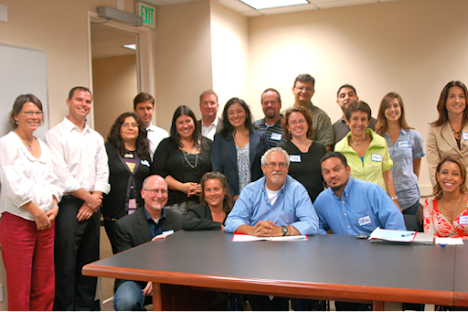
  June 16, 2010, meeting with afterschool leaders to formulate the LIAS Learning Principles. 

At the end of this blog, we review the 5 LIAS Learning Principles. You can learn more about the LIAS Learning Principles by viewing this video. You can also view past LIAS Blogs on this topic here.

“I think that the Learning Principles in the Learning in Afterschool and Summer Project really get at the core of learning for students starting in early childhood going through the university.” – Dr. Deborah Vandell, former Dean of the School of Education, UC Irvine, and leading afterschool researcher

Michael Funk, Director of Expanded Learning, California Department of Education

Q: These principles were developed before the California Expanded Learning Standards. How did they influence the California Standards?

A: In 2014, the California Department of Education worked with the California Afterschool Network and a statewide workgroup of diverse stakeholders to create California’s Quality Standards for Expanded Learning. As the work commenced, I directed this workgroup to use the LIAS Principals and the Youth Development Framework as the foundation for the new Quality Standards.

Q: Why do you believe these learning principles are important?

A: The LIAS principles must be elevated to guide our community and school-day educators as they develop any high-quality Expanded Learning Opportunities Program. When I came to the California Department of Education nearly 12 years ago, hardly anyone understood what a high-quality afterschool program looked like. Furthermore, for summer programs, people only pictured traditional summer school. I set up meetings with other Division Directors, and I presented the LIAS postcard as the vehicle to explain what makes an expanded learning program high-quality. As they reviewed the card, within the first minute I heard, “This is what high-quality teaching looks like during the school day!” The LIAS principles were developed to provide youth workers (community educators) a succinct approach to communicate that afterschool and summer programs were places of learning.

The LIAS principles are more relevant now than ever. With the massive expansion of Expanded Learning in California, there are hundreds of school districts and charter schools that still believe Expanded Learning is “after-care.” The LIAS principles, combined with the quality standards, are necessary to help leaders understand how every student and family should have access to and in fact deserve high-quality Expanded Learning opportunities. 

Dr. Carol Tang, Executive Director at the Children’s Creativity Museum in San Francisco and Former Director of the Coalition for Science After School

Q: Can you briefly speak to the value of the LIAS Learning Principles to the Science, Technology, Engineering & Math (STEM) movement?

A: By coupling STEM with LIAS principles, we elevate the discussion about science in afterschool--rather than debate which topics to cover, we can instead focus on the characteristics evident in high quality science programming. If youth workers embrace LIAS, they will understand the fundamental elements which will make STEM successful in their programs. In this way, we not only increase the quality of afterschool science, but we can also foster an environment where science activities are sustainable in the long-term.

Q: Can you speak a bit more about the need you have experienced for training on Learning Principles to guide the development of quality STEM activities? 

A: There is a misconception that STEM is about imparting a set of facts or concepts. Thus, training staff on effective learning principles in general is a way to guide the selection, development, and implementation of high-quality STEM activities. If youth workers can recognize the factors which promote active engagement and learning, then they can select science activities which engage youth and foster scientific skills--such as asking good questions, sharing ideas and testing hypotheses.

“LIAS principles outline the program characteristics most likely to foster scientific inquiry and sense-making in youth and help them recognize the relevance of science and technology to their future. LIAS principles help clarify what high-quality science in out-of-school settings should look like and makes STEM accessible to youth development and afterschool staff. What I like best about LIAS is that it allows OST professionals to view STEM as a way to achieve their youth outcomes using existing best practices in youth development--science afterschool is seen as part of good youth development, rather than an added burden on afterschool program staff.” - Dr. Carol Tang, former Director of Coalition for Science After School

Bill Fennessy, Program Specialist for Workforce Initiatives, Equity and Quality at the California Afterschool Network (CAN) 

Q: Can you speak to the value of the LIAS Learning Principles for afterschool programs?

A: The LIAS principles speak directly to the components required to create a quality instructional delivery framework. When implemented, programs can truly engage the youth of today. While many successful afterschool and summer programs already embody and demonstrate the LIAS principles, these principles now being clearly identified, defined, and articulated, will provide for an understandable and intentional approach to attain successful quality programming across the field. In addition, the LIAS principles provide a common language for the field of afterschool that has been up until now, missing and desperately needed.   

I have personally seen the LIAS principles easily taught to line staff, which might not have been intuitive to them previously. I have witnessed the empowering affect it has had on them, resulting in improved program quality. The LIAS principles have also given them the ability to understand for themselves, and communicate with others, their vital role and the value of afterschool and summer programming.  

LIAS Learning Principles 

1. Effective Learning is Active: Learning and memory recall of new knowledge is strengthened through different exposures – seeing, hearing, touching, and doing. Afterschool learning should be the result of activities that involve young people in “doing” – activities that allow them to be physically active, stimulate their innate curiosity, and that are hands-on and project-based. 

2. Effective Learning is Collaborative: Knowledge should be socially centered, as collaborative learning provides the best means to explore new information. Afterschool programs are well positioned to build skills that allow young people to learn as a team. 

3. Effective Learning is Meaningful: Young people are intrinsically motivated when they find their learning meaningful. This means having ownership over the learning topic and the means to assess their own progress. Motivation is increased when the learning is relevant to their own interests, experiences, and the real world in which they live. 

4. Effective Learning Supports Mastery: Young people tell us they are most engaged when they are given opportunities to learn new skills. If young people are to learn the importance and joy of mastery, they need the opportunity to learn and practice a full sequence of skills that will allow them to become “really good at something.” 

5. Effective Learning Expands Horizons: Young people benefit by learning opportunities that take them beyond their current experience and expand their horizons. Learning about new things and new places promotes a greater sense of potential of what they can achieve and brings a sense of excitement and discovery to the learning environment.

What We Can Do to Support Children with ADHD Features

Source: www.pexels.com By Sam Piha ADHD can be diagnosed by a mental health professional if a child presents with a number of features liste...