Showing posts with label california quality standards for expanded learning programs. Show all posts

Monday, August 7, 2023

The LIAS Learning Principles: Then and Now


By Sam Piha

We launched the Learning in Afterschool & Summer (LIAS) project over ten years ago. The LIAS project was designed to unify the field of afterschool and focus the movement on quality through promoting young people’s learning. The LIAS project promotes five core, evergreen learning principles that should guide the design and implementation of quality afterschool programs. These learning principles are strongly supported by recent research on brain development, education, youth development, and the growing science of learning. The LIAS Learning Principles had a foundational influence on the development of the California Quality Standards for Expanded Learning Programs.

We believe these Learning Principles are still very relevant. Because of the recent turnover of afterschool staff, exacerbated by the COVID pandemic, the LIAS Learning Principles should be foundational to orientation and training of new staff. The Learning Principles are also very relevant to STEM and other trends in afterschool programming. Below we have interviewed several afterschool and educational leaders regarding the relevancy of the LIAS Learning Principles.  

“On June 16, 2010, 20 adult and youth leaders gathered in Oakland to discuss and determine what five principles would be a guide to our community educators as they designed their programs to provide rich learning opportunities. The five principles would communicate to school-day educators how expanded learning was intentionally designed with learning principles that are widely recognized by all educators. At that time, California’s State afterschool funding was $550 million serving about 50 percent of the State’s Local Educational Agencies (LEAs). Now, the State funding is over $4.5 billion, and almost 100 percent of LEAs receive funding.” – Michael Funk, Director of Expanded Learning, California Department of Education
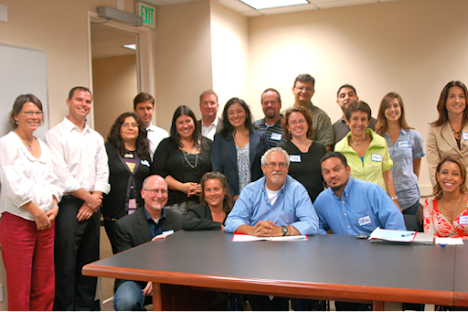
  June 16, 2010, meeting with afterschool leaders to formulate the LIAS Learning Principles. 

At the end of this blog, we review the 5 LIAS Learning Principles. You can learn more about the LIAS Learning Principles by viewing this video. You can also view past LIAS Blogs on this topic here.

“I think that the Learning Principles in the Learning in Afterschool and Summer Project really get at the core of learning for students starting in early childhood going through the university.” – Dr. Deborah Vandell, former Dean of the School of Education, UC Irvine, and leading afterschool researcher

Michael Funk, Director of Expanded Learning, California Department of Education

Q: These principles were developed before the California Expanded Learning Standards. How did they influence the California Standards?

A: In 2014, the California Department of Education worked with the California Afterschool Network and a statewide workgroup of diverse stakeholders to create California’s Quality Standards for Expanded Learning. As the work commenced, I directed this workgroup to use the LIAS Principals and the Youth Development Framework as the foundation for the new Quality Standards.

Q: Why do you believe these learning principles are important?

A: The LIAS principles must be elevated to guide our community and school-day educators as they develop any high-quality Expanded Learning Opportunities Program. When I came to the California Department of Education nearly 12 years ago, hardly anyone understood what a high-quality afterschool program looked like. Furthermore, for summer programs, people only pictured traditional summer school. I set up meetings with other Division Directors, and I presented the LIAS postcard as the vehicle to explain what makes an expanded learning program high-quality. As they reviewed the card, within the first minute I heard, “This is what high-quality teaching looks like during the school day!” The LIAS principles were developed to provide youth workers (community educators) a succinct approach to communicate that afterschool and summer programs were places of learning.

The LIAS principles are more relevant now than ever. With the massive expansion of Expanded Learning in California, there are hundreds of school districts and charter schools that still believe Expanded Learning is “after-care.” The LIAS principles, combined with the quality standards, are necessary to help leaders understand how every student and family should have access to and in fact deserve high-quality Expanded Learning opportunities. 

Dr. Carol Tang, Executive Director at the Children’s Creativity Museum in San Francisco and Former Director of the Coalition for Science After School

Q: Can you briefly speak to the value of the LIAS Learning Principles to the Science, Technology, Engineering & Math (STEM) movement?

A: By coupling STEM with LIAS principles, we elevate the discussion about science in afterschool--rather than debate which topics to cover, we can instead focus on the characteristics evident in high quality science programming. If youth workers embrace LIAS, they will understand the fundamental elements which will make STEM successful in their programs. In this way, we not only increase the quality of afterschool science, but we can also foster an environment where science activities are sustainable in the long-term.

Q: Can you speak a bit more about the need you have experienced for training on Learning Principles to guide the development of quality STEM activities? 

A: There is a misconception that STEM is about imparting a set of facts or concepts. Thus, training staff on effective learning principles in general is a way to guide the selection, development, and implementation of high-quality STEM activities. If youth workers can recognize the factors which promote active engagement and learning, then they can select science activities which engage youth and foster scientific skills--such as asking good questions, sharing ideas and testing hypotheses.

“LIAS principles outline the program characteristics most likely to foster scientific inquiry and sense-making in youth and help them recognize the relevance of science and technology to their future. LIAS principles help clarify what high-quality science in out-of-school settings should look like and makes STEM accessible to youth development and afterschool staff. What I like best about LIAS is that it allows OST professionals to view STEM as a way to achieve their youth outcomes using existing best practices in youth development--science afterschool is seen as part of good youth development, rather than an added burden on afterschool program staff.” - Dr. Carol Tang, former Director of Coalition for Science After School

Bill Fennessy, Program Specialist for Workforce Initiatives, Equity and Quality at the California Afterschool Network (CAN) 

Q: Can you speak to the value of the LIAS Learning Principles for afterschool programs?

A: The LIAS principles speak directly to the components required to create a quality instructional delivery framework. When implemented, programs can truly engage the youth of today. While many successful afterschool and summer programs already embody and demonstrate the LIAS principles, these principles now being clearly identified, defined, and articulated, will provide for an understandable and intentional approach to attain successful quality programming across the field. In addition, the LIAS principles provide a common language for the field of afterschool that has been up until now, missing and desperately needed.   

I have personally seen the LIAS principles easily taught to line staff, which might not have been intuitive to them previously. I have witnessed the empowering affect it has had on them, resulting in improved program quality. The LIAS principles have also given them the ability to understand for themselves, and communicate with others, their vital role and the value of afterschool and summer programming.  

LIAS Learning Principles 

1. Effective Learning is Active: Learning and memory recall of new knowledge is strengthened through different exposures – seeing, hearing, touching, and doing. Afterschool learning should be the result of activities that involve young people in “doing” – activities that allow them to be physically active, stimulate their innate curiosity, and that are hands-on and project-based. 

2. Effective Learning is Collaborative: Knowledge should be socially centered, as collaborative learning provides the best means to explore new information. Afterschool programs are well positioned to build skills that allow young people to learn as a team. 

3. Effective Learning is Meaningful: Young people are intrinsically motivated when they find their learning meaningful. This means having ownership over the learning topic and the means to assess their own progress. Motivation is increased when the learning is relevant to their own interests, experiences, and the real world in which they live. 

4. Effective Learning Supports Mastery: Young people tell us they are most engaged when they are given opportunities to learn new skills. If young people are to learn the importance and joy of mastery, they need the opportunity to learn and practice a full sequence of skills that will allow them to become “really good at something.” 

5. Effective Learning Expands Horizons: Young people benefit by learning opportunities that take them beyond their current experience and expand their horizons. Learning about new things and new places promotes a greater sense of potential of what they can achieve and brings a sense of excitement and discovery to the learning environment.

Tuesday, March 16, 2021

Evergreen Learning Principles for Afterschool Programs

Source: Learning in Afterschool & Summer
By Sam Piha

We launched the Learning in Afterschool & Summer (LIAS) project ten years ago. At the time, there was a great debate as to whether afterschool programs should be focused on academic or youth development outcomes. The LIAS project was designed to unify the field of afterschool and focus the movement on promoting young people’s learning. This is especially important as youth return to afterschool programs after a year of isolation.  

We believe that if afterschool programs are to achieve their full potential, they must be known as important places of learning that excite young people in the building of new skills, the discovery of new interests, and opportunities to achieve a sense of mastery. The LIAS Learning Principles became a foundational part of the California Quality Standards for Expanded Learning Programs.

"We spend so much time focused on 'achievement' and so little time focused on how to motivate students to learn.  The principles advocated by LIAS strikes the right balance and make sense… The principles contained in LIAS promote such an approach, and if applied with fidelity, could lead to real improvements in educational outcomes for kids."
- Pedro Noguera
Dean, USC Rossier School of Education


The LIAS project promotes five core, evergreen learning principles that should guide the design and implementation of afterschool programs. These learning principles are strongly supported by recent research on brain development, education, youth development, and the growing science of learning. They are also well aligned with the 21st century learning skills and workforce skills that young people will need to succeed in the years ahead, as well as efforts to increase young people’s interest in science, technology, engineering, and math (STEM). Each of the learning principles cited below support each other and together provide an important framework for afterschool programming.

"All five principles are critical. They collectively provide the relevance so desperately needed for students to become engaged and for learning to become alive for them. They also provide the deeper understanding and the discovery of learning that is critical for success in school and life."
- Dr. Willard Daggett
Founder and Chairman
Int'l Center for Leadership in Education

Below are the LIAS Learning Principles.

1. Effective Learning is Active: 
Learning and memory recall of new knowledge is strengthened through different exposures – seeing, hearing, touching, and doing. Afterschool learning should be the result of activities that involve young people in “doing” – activities that allow them to be physically active, stimulate their innate curiosity, and that are hands-on and project-based. Hands-on learning involves the child in a total learning experience, which enhances the child’s ability to think critically.


"Either we work to replicate limiting, and even oppressive, conditions for learners or we create experiences that empower them to fully realize their potential as individuals and to engage in transformative action that promotes justice and equity. I think that the LIAS principles are essential to guaranteeing an education for freedom and for fully realizing the promise of all students and that of our great nation of immigrants."
- Pilar O’ Cadiz
Education Director, TANMS Engineering Research Center at UCLA


2. Effective Learning is Collaborative:
Knowledge should be socially centered, as collaborative learning provides the best means to explore new information. Afterschool programs are well positioned to build skills that allow young people to learn as a team. This includes listening to others, supporting group learning goals, resolving differences and conflicts, and making room for each member to contribute his or her individual talents. Collaborative learning happens when learners engage in a common task where each individual depends on and is accountable to each other.
  • 1st degree conn

Source: Club Timberwolf

3. Effective Learning is Meaningful: 
Young people are intrinsically motivated when they find their learning meaningful. This means having ownership over the learning topic and the means to assess their own progress. Motivation is increased when the learning is relevant to their own interests, experiences, and the real world in which they live. Community and cultural relevance is especially important to new immigrant youth and those from minority cultures.

Rather than learning that is focused on academic subjects, young people in afterschool can apply their academic skills to their areas of interest and real world problems. Also, when learning involves responsibility, leadership, and service to others, it is experienced as more meaningful.

4. Effective Learning Supports Mastery: 
Young people tell us they are most engaged when they are given opportunities to learn new skills. If young people are to learn the importance and joy of mastery, they need the opportunity to learn and practice a full sequence of skills that will allow them to become “really good at something.” Afterschool activities should not promote the gathering of random knowledge and skills. Rather, afterschool learning activities should be explicitly sequenced and designed to promote the layering of skills that allows participants to create a product or demonstrate mastery in a way they couldn’t do before. Programs often achieve this by designing activities that lead to a culminating event or product that can be viewed and celebrated by peers and family members. For older youth, many programs are depending on apprenticeship models to assist youth in achieving a sense of mastery.

5. Effective Learning Expands Horizons: 
Young people, especially those from low-income families and neighborhoods, benefit by learning opportunities that take them beyond their current experience and expand their horizons. Learning about new things and new places promotes a greater sense of potential of what they can achieve and brings a sense of excitement and discovery to the learning environment. Afterschool programs have the flexibility to go beyond the walls of their facilities. They can use the surrounding community as a classroom and bring in individuals and businesses that young people may not otherwise come into contact with. Expanding young people’s horizons also includes helping them to develop a global awareness. This includes increasing their knowledge of other cultures and places and their understanding of the issues and problems we have in common across cultural and political divides.

"The five LIAS principles are perfectly aligned with a 21st century learning approach – active, meaningful, collaborative learning projects that provide opportunities to expand one’s horizons and master important knowledge and skills – this is the heart of 21st century learning."
- Bernie Trilling
Founder & CEO,
21st Century Learning Advisors


We have developed a number of resources to guide the design and implementation of afterschool programs. These resources include videos, reports on exemplary practices, educational materials and program guides. These all can be found on our LIAS website.


As schools prepare to re-open, afterschool program staff need to consider the experiences of youth who have been away from school and their friends due to the COVID-19 pandemic. We know these vary greatly depending on family income and racial/ ethnic background. What are young people's needs? What should we, as afterschool staff, do to help youth thrive when they return to afterschool programs post COVID? How might we build back school and program culture and a sense of "family" spirit and connection in our afterschool programs? Join Stu Semigran and a panel of afterschool program experts to learn how best to help youth thrive as they return to school and afterschool. To get more information and to register for our next Speaker's Forum, click here.

Monday, January 16, 2017

Global Competency, Part 1: How it is Part of the Equity Conversation

By Sam Piha
Sam Piha
We hear the words "globalization" and "global economy" a lot these days. Many say that preparing youth for the 21st Century requires a commitment to global learning and the development of global competency. It is important that ALL young people have the opportunity to advance their global competency and expanded learning programs are well positioned to address this. When we say "all", we have to look at the issues of equity.

The Asia Society is leading the charge in helping youth programs advance the global competency of their youth. (Asia Society is the leading educational organization dedicated to promoting mutual understanding and strengthening partnerships among peoples, leaders and institutions of Asia and the United States in a global context.) NOTE: global learning and global competency are well aligned with the California Quality Standards for Expanded Learning Programs.

Heather Loewecke is Senior Program Manager of Afterschool and Youth Leadership Initiatives at Asia Society. Heather will lead a small group session entitled “Increasing Equity through Global Competence” at the upcoming How Kids Learn VI conference in Los Angeles on January 23, 2017. 


Below is part one of an interview that we conducted with Heather around the topic of global competency.


Q: Can you describe the term “Global Competence”? 
Heather Loewecke
A: The Council of Chief State School Officers (CCSSO) and Asia Society convened a national task force that defined global competence as the “knowledge, skills, and dispositions to understand and act creatively on issues of global significance.” 

Globally competent young people are able to: 
• Investigate the World - Young people use a range of methods to research globally significant questions that address important issues and events that are relevant locally or worldwide. They can also draw valid conclusions and develop a position based on that research.
• Recognize Perspectives – Young people recognize and compare their own and others’ perspectives, considering the various factors that influence the development of these perspectives. They can also integrate others' viewpoints with their own, or create new ones, when necessary.
• Communicate Ideas – Young people can effectively communicate with diverse audiences, and they understand that various audiences may perceive different meanings from the same information. Additionally, young people are proficient in English and at least one additional language, and they are technology and media literate within a global communications environment.
• Take Action – Young people see themselves as agents of change. They can create and weigh options for action based on research, evidence, and personal insight, and they assess the potential impact of each option.

Issues of local and global significance can rarely be understood through a single discipline alone. Globally competent young people develop an integrated outlook on the world. Therefore, it's important that youth develop these competencies through both disciplinary and interdisciplinary study — learning and applying that learning as historians, scientists, and artists do within and across subject areas. 


Q: Why is global competence important in the equity conversation?
A: We know that young people from low-income households have less access than their peers in middle- and high-income families to enriching opportunities that increase language, communication, and social skills. As a result, disadvantaged youth have roughly 6000 fewer learning hours by 6th grade than their wealthier peers. On average, black and Latino students are roughly two to three years of learning behind white students of the same age, and nearly50 percent of low-income youth and youth of color drop out. Given that nearly one in two youth attending American public schools lives in a low-income community, and that ethnic and racial minorities now make up the majority of students, it is clear that both the opportunity and the achievement gaps are real challenges facing many across our country.

The opportunity and achievement gaps translate into a skills gap in the American workforce. An increasing number of US high school graduates enter college and the workforce lacking basic reading and math proficiency and 21st century skills such as problem-solving, effective communication, working well in diverse groups, social-emotional skills, and using technology for a wide range of basic tasks required for a middle-class wage. Manpower Group’s 2015 talent shortage survey found that 32 percent of US employers, and around 38 percent of employers worldwide, had difficulty filling jobs due to this skills gap. Additionally, it has been well-documented by the PISA test results that American students’ abilities to apply math, literacy, and science skills to real-world problems are less well-developed in comparison to high-performing countries in Europe and Asia.

Clearly, we need to shift from our 20th century assumptions about work, globalization, demographics, and civic engagement and develop a more innovative and visionary educational response to prepare all young people for the interconnected world and global workforce of the 21st century. Curriculum, instruction, and assessment need to be substantially redesigned to support student mastery and application of core workplace and civic competencies as well as academic knowledge. 

Photo Credit: www.bie.org
More and more, including through the passage of ESSA, there is recognition that schools alone cannot prepare young people for success; it is critical that schools and communities collaborate in order to have the most positive and comprehensive impact on the development of all youth. Out-of-school time programs and networks can help the formal school system address these challenges by providing the opportunities to develop the academic and holistic supports to close the opportunity and achievement gaps and prepare youth for global citizenship. 

All youth deserve to be prepared to compete for high-paying jobs in the global economy and to contribute civically. And, global learning activities help youth look beyond their immediate surroundings and experiences – when their horizons are expanded, they begin to see different possibilities for their futures. In these ways, global learning activities are necessary – not supplemental - and can help address the academic and opportunity gaps of those in underserved communities. 

____________
Heather began her career as an English teacher at a high school in New York City where she implemented interdisciplinary curricula utilizing a workshop format for developing students’ literacy skills. Then she managed capacity building projects and coached educators in various topics such as conflict resolution, lesson planning, social-emotional learning, behavior management, among others. Heather was a member of the Children’s Studies faculty at Brooklyn College and taught an undergraduate course called Perspectives on Childhood. She joined Asia Society in 2012. 

What We Can Do to Support Children with ADHD Features

Source: www.pexels.com By Sam Piha ADHD can be diagnosed by a mental health professional if a child presents with a number of features liste...