Tuesday, September 19, 2017

Youth Voice: "I am not an illegal alien. I am not a terrorist nor lazy. And I am, most definitely, not uneducated."

By Sam Piha


We hear a lot about the plight of undocumented immigrants. But we don’t often hear from young people. Angie’s story in her own words is below. 

In a future post, we will interview an organizational leader on how afterschool programs can support undocumented youth or youth with undocumented family members.

----------------------------

My name is Angie. My preferred gender pronouns are she/her. They/them is also okay with me. 

I was born in Huazuntlan, a small village in Veracruz. In my infant years I didn't know who my mother was, for she had immigrated to the United States after I was born, leaving me and my brother under my grandmother’s wing. For four years I struggled with the faceless image of a mother I had never met, and wondered if I would ever get the privilege of doing so. 

Now that I'm old enough to reflect on my experience, I can fully understand my mother’s reasoning for leaving: all she wanted was to give us the life she never had. Because I was very young, four years old to be exact, my remembrance of my immigration experience is very foggy. 

But this is how it had gone down:

My mother had met a lady in the U.S. not much older than her. She vented to her on the amount of pain she felt every second of every hour because she had left my brother and I. This opened the woman's eyes to what she thought was easy money. My mother ended up paying her $10,000 with the hope that she would see us soon, and that we would finally be reunited. However, things didn't go as planned. 

My brother and I had left our village at four in the morning, way too early for an eight and four year old. We were taken to an airport where we boarded a plane that would take us to Tijuana, where we would meet up with the supposed ‘fairy godmother’ that would ‘reunite’ us with our mom. Meeting her was a very frightening thing. Her face is just another blurry image lost in my head but I remember her skin being lighter than anyone I'd ever met before. Once we greeted her, we were taken to a hotel in which we spent a day. After the day had passed by, we checked out of the hotel and proceeded to face the frightening border. 

During our time with the woman, my brother and I were coached on what we had to say when it came to the border patrol. We were given new identities that we were expected to memorize in one day. This was an easy task for me, but when it came to my brother (who was very sleepy at the time) he ended up messing up.  

Quickly after being caught, we were taken to a detention center. As soon as we entered, our shoelaces were taken off of our shoes and we were put into a windowless room with about 12 other people. There were no beds and the bathrooms had no doors to them. The floor was basically our bed and we were only given one blanket per person. We were held there for three days. 

After the three days had passed, parents began to get called. Of course my mother was in the U.S, so it was impossible for her to pick us up. Because of this, my brother and I were separated and taken to separate orphanages. For a whole week I didn't know anything about my brother. I was back in that state of having no one. I was four years old, and I had now lost both my brother and mom: I was scared, empty, alone. 


When asked, Angie explained her painting (above) by saying, "I feel trapped inside figurative and literal borders. These borders include: attending and graduating college, getting a job, and not being able to visit my family back in Mexico". 


Thankfully, my eldest aunt had a tendency of coming back and forth between the United States and Mexico. She had found out about the situation and was now going to be our savior. Seeing her felt like such a relief because now there was hope. We picked up my brother and he hugged me way harder than he'd ever hugged me before. 

Shortly after, we met up with two coyotes (people who smuggle Latin Americans across the US border) who would, rightfully, do their job in reuniting my family once again. I was the smallest one out of the four of us (my brother, aunt and cousin-who made the decision in crossing with us as well). I had to go first. We were separated once again.

I was put in the trunk of a car, along with one of the coyotes who was there for ‘moral’ support. It was hot and it was very hard to breathe. I was told that I had to remain calm and quiet in order to not get caught once again. I obliged and soon after, the trunk was being opened and I was being released to my ‘new beginning’. This was when I met my mother for the first time. The rest is history. The rest of my family arrived about two weeks later and we began our new life together. 

Being undocumented has, and will always be, a big part of who I am as a person. I have had to face many struggles, but I am thankful that I now have my family to go through it with.

Being an immigrant has always been seen as a ‘negative’ thing, and even was a taboo subject for all of us. But I can now proudly say that I am tired of hiding away my identity. I am not an illegal alien. I am not a terrorist nor lazy. And I am, most definitely not uneducated. 

I am not alone. 
————————————

Angie is 17 years old and a senior in high school. She plans to attend San Jose State University where she hopes to study criminal psychology and childhood development. Angie loves painting and often shares her identity as an undocumented person, and a member of the LGBTQ+ community through her art. Angie hopes to become a voice for undocumented youth who were never encouraged to strive for more, or who were too afraid due to their status.


_________________________

You can read other blogs by the LIAS project by going to: 


  • Expanded Learning 360°/365 Project website
  • LIAS Blog Written for the California Afterschool Network

Tuesday, September 5, 2017

"Taking Off the Mask": Working with School-Age Boys

By Sam Piha


What does it mean to be male? There are many messages that are absorbed by boys and young men - some of which are useful and others that are destructive. 

When Ashanti Branch was a teacher in Oakland, he recognized that boys and young men needed a place to explore this. He left teaching and founded the Ever Forward Club. “At the Ever Forward Club, we believe that all young men have the desire to be fully alive – to be loved, respected, held in high regard, held to high expectations, held accountable for their actions and supported to help achieve their goals.” - Ever Forward Club Website 

In 2014, the Ever Forward Club partnered with The Representation Project to develop the documentary, “The Mask You Live In”. (The Mask You Live In follows boys and young men as they struggle to stay true to themselves while negotiating America’s narrow definition of masculinity. Experts in neuroscience, psychology, sociology, sports, education, and media also weigh in, offering empirical evidence of the “boy crisis” and tactics to combat it.) See the trailer below. 


We invited Mr. Branch to serve as a speaker and workshop leader On October 17, 2017 as part of our Speaker’s Forum series. 

We also recently conducted a video interview with Mr. Branch asking him about his views on the needs of boys and young men and how we can serve these needs in afterschool. Below are some of his responses.
"Taking Off the Mask": Working with School-Age Boys with Ashanti BranchOctober 17, 2017 in Oakland, CA

“I think that after school programs are becoming aware that there is a need to support young men in really specific ways. This is coming out of this idea that for so long there's been just a place of ignoring boys and allowing certain behaviors to be left as 'boys will be boys' or 'that's just the way boys are.' I think that what has happened is that has been let go for so long that young men have found themselves in a crisis. 

Society doesn't give our young men really good tools with dealing with sadness and fear and shame and other kind of emotions like that. They're clear in what you do when you're angry. They're clear about what you do when you're happy. So if you don't fit in happy or angry, what do you do with the other (not so positive) emotions? Usually it comes out as anger. 

Everything is converted to anger or I just pretend like it doesn't matter, then I get checked out to the world. 

They isolate, many feeling that ‘no one cares about me’. They begin to self-medicate, self-fulfill those feelings of not being a part of the group - engaging in drugs, alcohol, rampant unprotected sex, gangs, etc. Many of these behaviors are about  the need to cover up the feelings that they're really trying to figure out. How do I deal with this real feeling?

The afterschool space gives us a space to help our young men know that, ‘You're valuable. You may not do so good in your bookwork, but you've got a lot of skills.’

The afterschool system works because it allows for some students to get a taste for something else, to get to see how good they can be at something that's not going to be marked as a grade. Their creativity is not going to be taken away and crushed when somebody tells you, ‘your drawing is not according to the rubric’. Afterschool just provides a safer space. 

That's what we're trying to do in Ever Forward. We're trying to do more work around the social-emotional development of our young men, teaching them to be social-emotional leaders, so that it doesn't just happen afterschool. It happens all day long.”
-------------------------

Ashanti Branch is Founder and Executive Director of The Ever Forward Club. Ashanti works to change how young men of color interact with their education and how their schools interact with them. Raised in Oakland by a single mother on welfare, Ashanti left the inner city to study civil engineering at Cal Poly – San Luis Obispo. A construction project manager in his first career, his life changed after he tutored struggling students and realized his passion for teaching. In 2004, during Ashanti’s first year teaching high school math, he started The Ever Forward Club to provide support for African American and Latino males who were not achieving to their potential. Since then, Ever Forward has helped all of its more than 150 members graduate from high school, and 93% of them have gone on to attend two- or four-year colleges, military or trade school.


The Ever Forward Club was featured last year in the documentary, “The Mask You Live In,” which premiered at the 2015 Sundance Film Festival. After completing a fellowship at the Stanford d.school in 2016, Ashanti, stepped away from working for a school district and began working as the Founding Executive Director for Ever Forward-Siempre Adelante, in an effort to grow the organization to serve thousands of Bay Area students. In April 2017, Ashanti was awarded a fellowship from the national organization CBMA - Campaign for Black Male Achievement.

Wednesday, August 30, 2017

What's the Evidence?

By Sam Piha


We are partnering with LA's BEST, UCLA, and the LA84 Foundation to sponsor a Speaker's Forum on September 28, 2017 entitled, What’s the Evidence: Do After School Programs Make a Difference for Kids? Click here to register.

The How Kids Learn (HKL) Speaker’s Forums are dedicated to providing those who are interested in improving youth outcomes with thought-provoking, educational opportunities. The HKL educational events offer access to national thinkers and researchers, innovative practitioners, and networking opportunities.


This Forum is being organized by Eric Gurna, President and CEO of LA's BEST and features an esteemed panel of speakers. Below, we asked Eric some questions regarding this event.


Q: Why is the topic of this Forum particularly important at this time? 


A: When the president's budget director announced drastic proposed cuts to the 21st Century Community Learning Center program as well as other critical supports for families living in economic distress, he said, "There's no demonstrable evidence they're actually helping results." While there has been a great bipartisan outpouring of support for after school since that moment, I think that we as a field need to do better at demonstrating how our programs really do make a difference, for both kids and families. We can't rest on our laurels and rely on years old studies, we need to keep fresh and timely and provide current evidence of the difference we know we are making. Given that the pendulum has (finally) swung back in the arena of high stakes testing, I think now is a great time to measure our progress towards the goals we hold most dear - holistic youth development, community and civic engagement, social skills, emotional growth and intellectual strength and courage.


Q: The Forum will feature a number of presenters. Can you say why you chose these individuals? 


A: This panel is like the all-star game of authentic accountability for youth development. Renata Simril is leading the LA84 Foundation into a new era of community leadership. Going far beyond simply funding youth sport, she is playing a leadership role in a region-wide movement to view critical opportunities for youth as social justice. When Renata talks about focusing on accountability in programs, she recognizes that everyone has a role to play in that conversation - service providers, funders, families, policymakers and the young people themselves. 

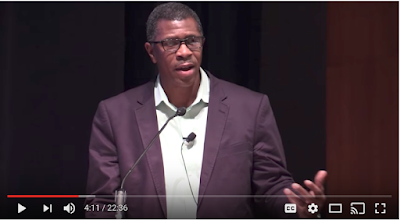
Dr. Pedro Noguera is a nationally recognized expert in youth development and equity. He bridges the gap between the university and the community, and has a critical eye and understanding of quality in youth programs and schools. With his national experience, Pedro helps to broaden this conversation so that in Los Angeles and across California, we can build on the successes of our comrades across the nation. 

Moderator Dr. Julia Phelan is a Senior Research Scientist at UCLA CRESST, which has been LA's BEST's evaluation partner for more than two decades. Julia brings deep expertise in evaluation,  and will guide the conversation to keep us focused on the question of the day.


Q: Who is the intended audience that you recommend attend this Forum?

A: We are especially eager to invite foundations and others who are involved with funding and supporting youth development programs. There are high expectations for program providers to show evidence of success, but there is little investment in the research and evaluation to develop that evidence, so it's important for funders to engage in this critical dialogue. We are also hoping that program and organizational leaders attend, to learn and contribute.  


Q: Will there be an opportunity for attendees to join the discussion? 

A: Yes, the idea of this event is that the panel launches the conversation, and the audience then joins in. It wouldn't be after school if we didn't facilitate collective participation!

Tuesday, August 22, 2017

Now is the Time for Advocacy

By Sam Piha 

I remember the words of a mentor who warned, “Social movements, like the afterschool movement, have a shelf life. Things are going well now, but be prepared to advocate for afterschool resources in the future”.


Now is the time as afterschool providers are under new economic pressures and resources for afterschool programs are being threatened. The California School-Age Consortium (CalSAC) is holding two Advocacy Retreats - one in the Bay Area (September 15-16) and one in Los Angeles (November 4). We think this is very timely and recommend that afterschool stakeholders check it out. Click here for more info. 

We asked representatives at CalSAC to say more about this retreat. Below we offer the responses of Aleah Rosario, Director of Capacity Building Programs at CalSAC.

Q: Why is CalSAC sponsoring this retreat?

A: Every child deserves to experience the enrichment and transformation that out-of-school time programs can offer — no matter their background or zip code.  It’s critical to ensure decision makers understand the importance of these programs and adequately fund them. 

Expanded learning program (ELP) staff, families and youth are the best people to engage as active advocates for policies that value out-of-school time. This retreat is aimed at identifying ways to enhance and grow local, ongoing, grassroots advocacy by empowering those closest to the work.

Q: Is there something in the air that makes advocacy particularly important at this time? 

A: Many people in the field did something new for the first time over the last year – they called or emailed their legislators, collected stories from youth and family members, and they shared actions that their colleagues and communities can take to join the efforts. And this led to results. 

For example, in June, California took a leap forward for students, families, and communities and provided critically needed funding for the After School Education and Safety (ASES) programs that benefit over 600,000 low-income students across California. Governor Jerry Brown signed the California State Budget for Fiscal Year 2017-18, which included an additional $50 million in ongoing funding for the ASES program. This is an essential first step that will allow programs to stay open, and the culmination of a 3-year campaign driven by providers and advocates.

However, the $50 million only goes halfway in meeting the field's current fiscal needs in response to the increased state minimum wage. Furthermore, cuts to the 21st Century Community Learning Centers program, which provides federal afterschool funding for 200,000 young people across the country, continues to be threatened. 

So, it is clear that continued advocacy is needed to protect this investment. Together, we can take advantage of the momentum built to further amplify and empower the voices of our field.

Photo Credit: SaveAfterschool.com
Q: Who should attend this retreat? 

A: The ideal participants are people who can drive and/or contribute to actions on-the-ground at the site or local level, i.e. site coordinator, director, community engagement specialist, family engagement liaison, etc. (not EDs, CEOs, policy experts, etc.). 

There will be people attending from across the state, from a variety of organizations (districts, CBO’s, large, small, with geographic diversity) and participants will have the opportunity to interact with others in their area to identify potential collaborative partners and coordinate efforts. 

It is ideal for folks that are outside of the out-of-school time realm to be positioned to and willing to collaborate with their local ELPs in their efforts. We know we have a ways to go to build a strong base, and that includes engaging with other stakeholders like parents/families, teachers/school admin, early learning, etc. We hope that through capacity building efforts like this retreat, we can build bridges with others that also care about the wellbeing of children, youth and families.

Q: Will you be helping attendees distinguish between advocacy, education, and lobbying?

A: In our experience, and for the intended audience of this retreat, advocacy/lobbying rules aren’t necessarily the biggest deterrent to engaging in advocacy. Rather, giving folks resources, tools and experience helps people feel equipped and inspired to act. Our guest speakers have lots of experience with do’s and don’ts of advocacy, and can help field questions about lobbying rules throughout the retreat as they come up.

Wednesday, August 16, 2017

We Stand with Charlottesville

By Sam Piha

Like many of you, we were horrified and dismayed by the violent events in Charlottesville, VA. Many young people were also a witness to these events through the television and social media, and many will be participating in your youth programs.

We thought it important to address these events and offer resources that can help youth workers respond accordingly. We invited Jessica Donner, Executive Director, Every Hour Counts, to share her comments and some resources. Every Hour Counts is a national coalition of citywide organizations that increases access to learning opportunities, particularly for underserved students. Below are her comments. We also offer links to additional responses and resources. 

Lastly, we want to call your attention to an upcoming Speaker's Forum entitled "Growth Heartset": Establishing a Culture of Caring by Stu Semigran. This is very relevant and will be conducted in both Oakland and Los Angeles.


————————
By Guest Blogger, Jessica Donner


Jessica Donner
Our hearts are heavy with the demonstration of violence, bigotry, hate, and racism in Charlottesville last weekend, and yet we are emboldened to deepen our commitment to fighting hatred and inequality as educators, systems builders, and youth workers. Our network of 23 communities reaching more than 500,000 young people works tirelessly to bring communities and different cultures and ethnicities together. We hold diversity—in cultures, gender, spoken languages, religion, race and ethnic backgrounds—as a treasure to be honored and celebrated in our communities.

Together, we will make sure that young people across the country feel safe and supported during this frightening time. We believe it is critical for all of us—youth leaders, expanded-learning front-line staff, and intermediary and city leaders—to understand the role these events play in the lives of so many young people with whom we work. We will work systemically and more explicitly to create safe and equitable spaces for young people to express their anger, fears, and hopes and dreams.

To help you navigate complex and difficult conversations and grow as advocates and educators, we’ve compiled a starting list of resources for program providers, parents, and educators:

  1. Ten Ways to Fight Hate: A Community Response Guide
  2. Crucial, Courageous Conversations: How to Talk to Kids About Racial Violence
  3. Resources for Educators to Use in the Wake of Charlottesville
  4. Diversity Toolkit: Cultural Competence for Educators
  5. An Equity Action Agenda for Youth Development Professionals
  6. Why the Myth of Meritocracy Hurts Kids of Color 
  7. How to talk to your kids about the violence in Charlottesville
 

Photo credit: Every Hour Counts

We’d love to know what resources you’re using to build a more equitable world for young people in the face of entrenched inequality. Let us know on Twitter using the hashtag #CharlottesvilleCurriculum.

————————
Additional Resources: 


Wednesday, August 9, 2017

Speaker's Forums: Learning Opportunities for Afterschool Professionals

By Sam Piha


We know that due to budget restrictions, afterschool workers have less access to professional development. 

The How Kids Learn Speaker’s Forums are designed to offer expanded learning professionals easy and affordable access to training opportunities led by innovative practitioners. 

Below are some exciting Speaker’s Forums scheduled for this fall. We hope to see you and your staff there. 

"Growth Heartsets": Establishing a Culture of Caring with Stu Semigran

Come and learn skills for developing a new "growth heartset" in our teaching and learning. This interactive session focuses on shaping successful learning environments that thrive upon a foundation infused with caring, connectivity, and proven SEL practices.

Stu Semigran is the co-founder and president of EduCare Foundation and the executive director of EduCare's ACE (Achievement and Commitment to Excellence) Student Success Program, which currently serves more than 35 high schools and middle schools in Southern California.

When: Tuesday, September 19, 2017, 9:00am - 12:30pm - OAKLAND
Thursday, October 5, 2017, 9:00am - 12:00pm - LOS ANGELES
Cost: $11.54 (includes continental breakfast and ticketing fees)


Wrapping Our Heads Around “Fake News” with Elyse Eidman-Aadahl

How do we, as adults, make sense of this rapidly developing media and communications ecology? What does it imply for our work with youth? How can we help young people become more savvy and responsible consumers and producers of media now and into the future? These are the questions we will consider in this forum.

Elyse Eidman-Aadahl is Executive Director of the National Writing Project (NWP), where she draws upon 15 years of experience designing and leading national programs, partnerships, and action-learning efforts for the NWP and other educational organizations.

For more information and to register, click here.

When: Tuesday, October 3, 2017, 9:00am - 12:30pm - OAKLAND
Cost: $11.54 (includes continental breakfast and ticketing fees)


"Taking Off the Mask": Working with School-Age Boys with Ashanti Branch

Through presentation, hands on activities, and film, this workshop will introduce participants to the world of gender-specific support groups, with a focus on school-age boys and our societal notions of "masculinity". 

Ashanti Branch is Founder and Executive Director of The Ever Forward Club. Ashanti was raised in Oakland by a single mother on welfare. In 2004, during Ashanti's first year teaching high school math, he started The Ever Forward Club to provide support for African American and Latino males who were not achieving to their potential. In April 2017, Ashanti was awarded a fellowship from the national organization, CBMA - Campaign for Black Male Achievement. 

For more information and to register, click here.

When: Tuesday, October 17, 2017, 9:00am - 12:30pm - OAKLAND
Cost: $11.54 (includes continental breakfast and ticketing fees)

Wednesday, August 2, 2017

Afterschool Change Maker: An Interview with Terry Peterson

By Sam Piha


Terry Peterson, Board Chair of the Afterschool Alliance, has been a leader in the afterschool movement for many years. We conducted a video interview with Terry after the 2016 elections. Below we have provided an edited version of this video interview. 

We also selected some responses from the longer video interview, which you can read below. 


Q: Can you offer any positive advice with the election of President Trump?

A: Obviously, everybody's tuned into the Presidential results from the 2016 election, and they're very important, but we need to keep in mind that much of the programming, and even funding for afterschool comes locally, from municipalities, school districts, United Way's, and other local foundations. 

In some states such as California, New York, Illinois, Connecticut, Tennessee and others, public funding comes from the city, state, and federal levels. What I would recommend to people is that they work at all those levels to expand the number of programs locally. 

Q: What have we heard from President Trump that may predict future opportunities for afterschool?

A: I would consider the following:
Tax credits: His daughter, actually put forth in the election, a proposal to increase the tax credits in refundable tax credits for families who pay for childcare, which would be a whole new interesting way to support families. They would have to put some out-of-pocket expenses in, but they might get part of it back. Many parents pay 4,000 - 5,000 dollars a year, per child, for afterschool and summer programming. If they could perhaps get some of that back, as a tax deduction, or if they're a low income family, we'd get a tax rebate, that might really help us expand the field. It's a very different way than direct funding, but we need to look at that.

Infrastructure: President Trump has proposed a big infrastructure building program. I don't know what it's going to include, but he has mentioned schools. 

What about if schools that are being remodeled, they create an afterschool community learning wing, with the latest technology for kids and families? That might be a possibility. It is a very different approach, but we need to reiterate, we need to keep working at the local level with local foundations, city, state, and federal levels, maybe in some new ways and see if we can continue to move this field forward.

Q: What are recent developments in the afterschool field that you think are important?

A: We now have what you might call an afterschool infrastructure or platform, but not everywhere. We still have a lot of places where we don't have any programs – places where we might need them the most. 

In many places in the country, we have quality afterschool programs that allow us to use afterschool partnerships and programming to get into new areas where young people need support.  A couple of areas of recent developments that I think are particularly exciting:

College and Career Readiness – There is a growing concern that middle and high school students don't have a real clear path to graduate from high school. "How do I go to college? How do I get a job? What kind of workforce skills could I get, or do I need?" We could start working on those workforce skills and college and career readiness in afterschool programs by partnering with businesses and community colleges. 

STEM and STEAM - There's real interest right now in science, technology, engineering, and math (STEM) fields. When you throw arts in there, it's STEM + the arts, it's STEAM. There is a lot of interest in how you could use afterschool and summer programs to interest students in STEM or STEAM.

Some really good examples around the country have been able to take students that said, "Ooh, science, math, I can't do that". They go through the summer program, afterschool program, build robots, use dance and drama to learn technology or science, or learn coding and come out saying, "I think I can do that". 


Photo Credit: http://www.farbrook.org/
One of the award-winning summer learning programs named by the National Summer Learning Association, was a STEAM Summer Learning Program that I'm very familiar with. They have a five-week program where they teach STEM only through the arts - through dance, drama, visual arts, and music. It's an all day program and attendance is about 90 percent. You walk in there and they're engaged fully. I think we need to find ways to bust out from just sort of our typical way of delivering programs.


Photo Credit: The Star Online
Entrepreneurial education - A lot of young people say, "I don't want to work for a company. I want to start my own business". You can run entrepreneurial learning, community service, and afterschool and summer programs that really help young people engage in their community, and in their growth in some new ways.

Credits for participation – Older youth can earn credits in afterschool and summer programs. For children who are struggling in school, if they fail a subject or two, they never get to interesting advanced content. They bubble along at the bottom of the courses, so they never see the power of taking more advanced courses. They can't get to the design course in arts or career and technical fields. 

A few places are now experimenting with offering credits in afterschool and summer programs. In addition to the credits offered during the school day, they can be involved in another program afterschool, weekends and summer, and earn another credit or two. 

Think about that. For five years, you can earn almost a semester worth of credit. For some kids, those credits are powerful door openers to get into community college or a four-year college. That's another area we need to explore, and there's starting to be interest in.

-------------------------------
Dr. Terry K. Peterson is Board Chair of the Afterschool Alliance and Senior Fellow at the Richard Riley Institute at Furman University and College of Charleston. Former U.S. Secretary of Education Dick Riley has called Terry “the king of afterschool.” During his decades-long tenure in public service, Terry held senior state- and federal-level positions in which he developed numerous education policies and funding streams, including at the U.S. Department of Education where he helped create the 21st Century Community Learning Centers initiative.

_________________________

You can read other blogs by the LIAS project by going to: 

  • Expanded Learning 360°/365 Project website
  • LIAS Blog Written for the California Afterschool Network

Monday, July 31, 2017

Tracking Federal 21st CCLC Funding

By Sam Piha


Sam Piha
We have been following President Trump’s proposed budget which eliminates the 21st Century Community Learning Centers Program. 

Below is an update from Lucy Friedman of ExpandEd Schools.

“The House Appropriations Committee voted to pass a spending bill that would cut $2.4 billion from the Department of Education.


Lucy Friedman
While the House bill improved on the Trump Administration proposal by rejecting its shortsighted attempt to completely eliminate the 21st Century Community Learning Centers (CCLC) Program, it still results in a $191 million cut from the previous year. Ultimately, the House bill falls short in providing the critical support needed to provide high-quality and evidence-based after-school programming for 1.6 million children in families in high-need communities across the country.”

In California alone, this would result in more than a  $20 million cut to 21st CCLC afterschool programs, with a $10 million cut to high school afterschool programs.
Photo Credit: Long Beach Youth Institute
Ms. Friedman goes on to state, “We hope that the Senate will course correct and provide the necessary supports for critical education programs that help all children succeed. ExpandED Schools and our fellow advocates like Every Hour Counts will continue to keep you abreast of federal policy news and ways you can help. Stay up-to-date on the latest news by signing up here and keep calling your senators to let them know you care about education.”

You can also track the budget process and learn how you can add your input by going to the Afterschool Alliance website. 

_________________________

You can read other blogs by the LIAS project by going to: 


  • Expanded Learning 360°/365 Project website
  • LIAS Blog Written for the California Afterschool Network

Wednesday, July 19, 2017

Considering Cultural Context When Promoting SEL

By Sam Piha

Sam Piha
There is a growing consensus among educators and youth development experts that skills related to social emotional learning (SEL) are important to youth’s future success. We see this emphasized in the work promoting a positive school climate and the improvement of afterschool programs.

In fact, the California Department of Education - Expanded Learning Division (EXLD) has pulled together an ongoing SEL Planning Team. This Planning Team will offer recommendations on how best to integrate SEL into the System of Support for Expanded Learning, deepen SEL opportunities for students, and foster alignment around SEL strategies with the school day.

But how do we take into account cultural differences in framing SEL? Are SEL concepts culturally bound? We believe that these are important questions to explore.

In their support of California's CORE Districts and the integration of SEL, the Partnership for Children and Youth (PCY) amended their work on SEL concepts.

Katie Brackenridge
According to Katie Brackenridge (Vice President of Programs at PCY), “Based on input from several large school districts, we are shifting our language, from stressing the 'I' to 'We are, We belong, We can'. This is based on multiple conversations about a collectivist versus individualist world view and the reality that increasingly the kids in our schools are coming from countries and cultures that are more collectivist than the dominant white culture in the US.”

Below are two resources to explore these issues. How would you answer the questions around SEL and cultural differences?

- A brief video presentation, “The Limits and Possibilities of Social Emotional Learning” featuring Dr. Shawn Ginwright from San Francisco State University.


- An article entitled, Why Don’t Students Take Social-Emotional Learning Home? by Vicki Zakrzewski from the Greater Good Science Center at UC Berkeley.


Photo Credit: Hemera, via the Greater Good Science Center
_________________________

You can read other blogs by the LIAS project by going to: 

  • Expanded Learning 360°/365 Project website
  • LIAS Blog Written for the California Afterschool Network

Wednesday, July 5, 2017

Afterschool Change Maker: An Interview with Sylvia Yee, Part 2

By Sam Piha


Sam Piha
Sylvia Yee, Vice President of Programs at the Evelyn & Walter Haas, Jr. Fund, recently retired. She was a strong believer in the importance of schools working closely with the communities they serve, and the power of public and private partnerships. 


We recently conducted a video interview with Ms. Yee before she retired. Below we offer part 2 from that interview. (View Part 1 here.)    

Q: The Beacons were based on a youth development perspective. Can you explain?


Sylvia Yee
A: The Youth Development Movement began during the early 1990s. A number of things came together that really catalyzed a new way of thinking about working with young people. Carnegie released an important report called "A Matter of Time", which argued that  the after school hours were an important time of both opportunity  and of risk for young kids, if they were left to their own devices with nothing to do. 

This report inspired us to think about making the after school hours a time of productive activities, where kids could be safe, and where they could learn in both informal and formal ways. It was a call to take that time and that space seriously.

Youth development wasn’t really about “kids as problems” and the need for services. It was about "How do we engage young people in their own development? How do we tap into their energy, their initiative, their leadership, and their capacity to give back to their peers and communities?" I loved it. It was really exciting. There were a lot of innovative programs that put kids at the center and put kids out front.


This had a really profound effect over the next couple of decades on the kind of programs that public systems support, the kind of policies and money that are now  available for after school programs. It ignited peoples' understanding of what after school programs could do when it's infused with this Youth Development perspective, and the importance of it. 


Q: How did the youth development perspective impact the San Francisco Beacons? 


A: The Youth Development Movement really set the stage for the San Francisco Beacons. The San Francisco Beacons benefited a lot from all this research and discussion about a new way of providing opportunities to young people. They were in  the vanguard of much of this work by establishing models for other places of how this could be done at scale, what the training should look like, the partnerships that it would take, and much more. We are greatly indebted to the Community Network for Youth Development, which managed the Initiative in its founding days and conducted trainings for the Beacon sites.

Q: In what way does the idea of equity intersect with after school?

A: These after school programs  are a way to level the playing field for all kids, so that all kids have the same chances to play leadership roles, to learn life skills, to get academic support.

I think equity is a prime motivating value of  advocates for after school programs. Every kid deserves to have this safe environment where they can learn and stretch their wings to become who they want. 

------------------------
Sylvia Yee, former Vice President of Programs at the Evelyn and Walter Haas, Jr. Fund, started her career as a high school teacher. She moved on to administer educational programs at the elementary, secondary, and university levels in the United States and in China.

Passionate about social justice, Yee has been active in the fight for equal rights and opportunities at the local and national levels, and championed immigrant rights and gay and lesbian rights over the last two decades. A long-time community activist and leader, she was the  chair of the Bernal Heights Neighborhood Center in San Francisco where she led the center’s organizing and other activities aimed at addressing issues such as affordable housing and services for low-income seniors and youth. She also led a community nonprofit agency, Mission Graduates, which provides college going support to low-income, immigrant children in San Francisco and later worked as a program executive in education and health at the San Francisco Foundation.

_________________________

You can read other blogs by the LIAS project by going to: 


  • Expanded Learning 360°/365 Project website
  • LIAS Blog Written for the California Afterschool Network

A Book Drive for Children's Books Makes for a Fabulous Service- Learning Project

Source: The Children's Book Project  By Sam Piha   In our previous paper entitled, Reading Buddies: Promoting Literacy and Community Eng...