Monday, September 25, 2023

Integem Talks About AI for Youth

Source: Integem

By Sam Piha

Dr. Eliza Du is the CEO and co-founder of Integem. Integem creates a cutting-edge AI-driven Holographic AR platform and educational programs, empowering people, including young students, to design and innovate using future technologies. We interviewed her to learn more about AI. We also developed a briefing paper on AI and afterschool which can be viewed here.

Q: Can you define AI?

A: Artificial Intelligence (AI) refers to the simulation of human intelligence in machines that are programmed to think and learn like a human. It encompasses a variety of technologies, including machine learning, natural language processing, computer vision, and robotics. [No changes needed, your definition is clear and concise.]

Q: Can you describe AI literacy offerings in your program?

A: Our program offers a comprehensive AI education, covering topics from the basics of how AI works to advanced project-based learning. This includes courses on machine learning, AI application design, robotics, Augmented Reality (AR), and ethical considerations surrounding AI. 

Q: Are there partners you have enlisted?

A: We have collaborated with numerous AI companies and platforms, including the Google AI platform, NVIDIA AI hardware, ChatGPT, and the IBM AI Cloud platform, among others. These partnerships enrich our curriculum and provide students with exposure to real-world AI tools and systems 

Q: Do you use a curriculum developed by others or have you created your own?

A: Our group of Ph.D. level engineers along with experienced K-12 educators work together and develop our own comprehensive, tailored curriculum that emphasizes hands-on AI experiences and projects. This curriculum is continually updated to reflect the latest advancements in AI technology and pedagogy.

Source: Integem

Q: Are there any resources you recommend for other afterschool programs that are interested in this?

A: We are eager to collaborate with afterschool programs and provide them with curricula and teacher training to teach AI to their students. We offer turnkey-ready AI curricula with hands-on projects for students ages 5-18. No prior knowledge is needed for either teachers or students. We can train the teachers starting from the basics, empowering them to effectively teach AI.

Q: Does your organization offer curriculum or training to prepare afterschool staff to have AI discussions?

A: Yes, we offer professional development and training programs for school and afterschool program staff, ensuring that they are well-prepared to guide students through the complexities of AI in an engaging and informative manner.

MORE ABOUT…

Dr. Eliza Du is the CEO and co-founder of Integem, where she leads the development of the next-generation Holographic AR platform. Previously, she served as a tenured engineering professor and Ph.D. advisor at Purdue University and was an Engineering Director at Qualcomm. Dr. Du's technical expertise spans artificial intelligence (AI), computer vision, sensor fusion, and education. She has authored over 100 top-tier peer-reviewed journal articles and international conference papers and holds more than 30 patents.

Integem is headquartered at Silicon Valley, the innovation center of the world. We were founded in 2015 with the vision to empower people to turn their imagination into reality through the power of Holographic AR. Our founder Dr. Eliza Du’s extensive experience and expertise in the field of artificial intelligence (AI) and computer vision fueled her passion and capability to lead Integem to develop innovative Holographic AR technology, products, and services. We are a group of enthusiastic engineers, designers, and creators. After successfully launching our flagship products iPlayer® and iCreator®, we have introduced Holographic AR education services, and Holographic AR marketing services.

Lights On Afterschool 

Join more than 8,000 communities and 1 million Americans in celebrating afterschool programs for this year's Lights On Afterschool! This nationwide event, organized by the Afterschool Alliance, calls attention to the importance of afterschool programs and the resources required to keep the lights on and the doors open.  Everything you need to plan a successful event, from case studies to sample materials, is available in the Lights On Afterschool Planning Kit.

To learn more about Lights On Afterschool, register an event, access event planning tools, or to find out what’s going on in your area, visit afterschoolalliance.org.

Monday, September 18, 2023

Artificial Intelligence: Terms and Definitions

By Sam Piha

Source: www.pexels.com

Almost every day there is a piece in the news about the opportunities and dangers of Artificial Intelligence (AI). Many young people, even those who are very tech savvy, know little about this topic. Adults, including those in afterschool programs, know even less. Yet, AI is all around us and is being used by companies more and more. 

We believe that youth need to understand more about AI, and afterschool is a perfect place to do this. But are afterschool leaders equipped for this? See our briefing paper on AI and afterschool here.

“It’s important for educators to understand AI so they can help their youth make sense of a technological development that is predicted to be a huge force in the world, experts say. It’s crucial for educators to be AI literate, to be able to explain what it is, and to understand its powers and limitations.” [1]

Below are some common and more esoteric AI terms and definitions that may be helpful.

Artificial Intelligence (AI) - AI is a machine’s ability to perform the cognitive functions we associate with human minds, such as perceiving, reasoning, learning, interacting with an environment, problem solving, and even exercising creativity. You’ve probably interacted with AI even if you didn’t realize it—voice assistants like Siri and Alexa are founded on AI technology, as are some customer service chatbots that pop up to help you navigate websites. [2]

Algorithm - a procedure used for solving a problem or performing a computation. Algorithms act as an exact list of instructions that conduct specified actions step by step in either hardware- or software-based routines. Algorithms are widely used throughout all areas of IT. In mathematics and computer science, an algorithm usually refers to a small procedure that solves a recurrent problem. Algorithms are also used as specifications for performing data processing and play a major role in automated systems. [3]

Deepfake - A deepfake is an image, or a video or audio recording, that has been edited using an algorithm to replace the person in the original with someone else (especially a public figure) in a way that makes it look authentic. [4] 

Strong AI - also known as artificial general intelligence, is a machine that can solve problems it’s never been trained to work on — much like a human can. This is the kind of AI we see in movies, like the robots from Westworld or the character Data from Star Trek: The Next Generation. This type of AI doesn’t actually exist yet. [5] 

Weak AI - sometimes referred to as narrow AI or specialized AI, operates within a limited context and is a simulation of human intelligence applied to a narrowly defined problem (like driving a car, transcribing human speech or curating content on a website). Weak AI is often focused on performing a single task extremely well. While these machines may seem intelligent, they operate under far more constraints and limitations than even the most basic human intelligence. Weak AI examples include: Siri, Alexa and other smart assistants, self-driving cars, Google search, email spam filters, and Netflix’s recommendations. [6]

Machine Learning (ML) - A machine learning algorithm is fed data by a computer and uses statistical techniques to help it “learn” how to get progressively better at a task, without necessarily having been specifically programmed for that task. Instead, ML algorithms use historical data as input to predict new output values. [7] 

Deep Learning - a type of machine learning that runs inputs through a biologically inspired neural network architecture. The neural networks contain a number of hidden layers through which the data is processed, allowing the machine to go “deep” in its learning, making connections and weighing input for the best results. [8]

The Four Types of AI - AI can be divided into four categories, based on the type and complexity of the tasks a system is able to perform. They are reactive machines, limited memory, theory of mind, and self-awareness. [9]

Source: www.pexels.com 

Reactive Machines - A reactive machine follows the most basic of AI principles and, as its name implies, is capable of only using its intelligence to perceive and react to the world in front of it. A reactive machine cannot store a memory and, as a result, cannot rely on past experiences to inform decision making in real time. Perceiving the world directly means that reactive machines are designed to complete only a limited number of specialized duties. Reactive Machine examples include Deep Blue, which was designed by IBM in the 1990s as a chess-playing supercomputer and defeated international grandmaster Gary Kasparov in a game. [10]

Limited Memory - Limited memory AI has the ability to store previous data and predictions when gathering information and weighing potential decisions — essentially looking into the past for clues on what may come next. Limited memory AI is more complex and presents greater possibilities than reactive machines. [11]

Theory of Mind - Theory of mind is just that — theoretical. We have not yet achieved the technological and scientific capabilities necessary to reach this next level of AI. The concept is based on the psychological premise of understanding that other living things have thoughts and emotions that affect the behavior of one’s self. In terms of AI machines, this would mean that AI could comprehend how humans, animals and other machines feel and make decisions through self-reflection and determination, and then utilize that information to make decisions of their own. Essentially, machines would have to be able to grasp and process the concept of “mind,” the fluctuations of emotions in decision-making and a litany of other psychological concepts in real time, creating a two-way relationship between people and AI. [12]

Self-Awareness -  Once theory of mind can be established, sometime well into the future of AI, the final step will be for AI to become self-aware. This kind of AI possesses human-level consciousness and understands its own existence in the world, as well as the presence and emotional state of others. It would be able to understand what others may need based on not just what they communicate to them but how they communicate it. Self-awareness in AI relies both on human researchers understanding the premise of consciousness and then learning how to replicate that so it can be built into machines. [13] 

Stay tuned to the LIAS Blog for more on the topic of AI. 


END NOTES

[1] Inspirit Scholars, What is AI for Kids? An Introduction to Artificial Intelligence for Kids, https://www.inspiritscholars.com/blog/what-is-ai-for-kids/ 

[2] McKinsey & Company, What is AI?, https://www.mckinsey.com/featured-insights/mckinsey-explainers/what-is-ai

[3] Alexander S. Gillis, algorithm, https://www.techtarget.com/whatis/definition/algorithm

[4] Mirriam- Webster, deepfake, https://www.merriam-webster.com/dictionary/deepfake#h1

[5] Alyssa Schroer, What is Artificial Intelligence?, https://builtin.com/artificial-intelligence

[6]-[13] IBID.

Lights On Afterschool 

Join more than 8,000 communities and 1 million Americans in celebrating afterschool programs for this year's Lights On Afterschool! This nationwide event, organized by the Afterschool Alliance, calls attention to the importance of afterschool programs and the resources required to keep the lights on and the doors open.  Everything you need to plan a successful event, from case studies to sample materials, is available in the Lights On Afterschool Planning Kit.

To learn more about Lights On Afterschool, register an event, access event planning tools, or to find out what’s going on in your area, visit afterschoolalliance.org.

Monday, September 11, 2023

What Afterschool Leaders and Kids Need to Know About AI

Source: www.pexels.com

By Sam Piha

Almost every day there is a piece in the news about Artificial Intelligence (AI) and its dangers. AI is all around us, and whether or not you realize it, people use artificial intelligence every single day. Many young people, even those who are very tech savvy, know little about this topic. Adults, including those in afterschool programs, know even less. Yet, AI is being used by companies more and more. 

We believe that youth need to understand more about AI, and afterschool is a perfect place to do this. But are afterschool leaders equipped for this? See our briefing paper on AI and afterschool here.

WHAT IS AI?
According to Inspirit Scholars, Artificial Intelligence (AI) is the ability for a computer to think and learn. 

In Teachers Need PD on Artificial Intelligence. What It Should Look Like, author Lauraine Langreo writes “AI technology:

  • Refers to computers or machines that are programmed to perform tasks that we usually think only humans can do – by copying human thought or behaviour. The technology is used to predict things (e.g. how a virus may spread), make recommendations (e.g. what online videos to watch next), or make decisions (e.g. how an essay should be graded). 

  • Replicates human-like intelligence by training machines and computer systems to do tasks that simulate some of what the human brain can do. It relies on systems that can actually learn, usually by analyzing vast quantities of data and searching out new patterns and relationships. These systems can actually improve over time, becoming more complex and accurate as they take in more information.”

To learn more about introducing AI to young people, check out this brief video by Inspirit Scholars entitled, What is AI for Kids? An Introduction to Artificial Intelligence for Kids.

Source: Inspirit Scholars

EXAMPLES OF AI TECHNOLOGY
All of these examples, below, use artificial intelligence. Many AI computers can perform tasks that are typically done by people, including processing language, problem-solving, and learning. Artificial intelligence examples include:

  • Self-driving cars
  • “Alexa” or Apple’s “Siri”
  • iPhone’s face recognition
  • Movie Recommendations: If you have ever streamed a movie on Netflix, for example, you will receive recommendations for other movies based on what you have watched already. That’s because of AI! 
  • Chatbots: Many websites have chatbots that help answer your questions. Most are run by AI.
  • Search Engines: Search engines, like Google use AI to rank websites in your search results. 

WHAT SHOULD EDUCATORS KNOW ABOUT AI?
It’s important for educators to understand AI so they can help their youth make sense of a technological development that is predicted to be a huge force in the world, experts say. It’s crucial for educators to be AI literate, to be able to explain what it is, and to understand its powers and limitations.

“If students are going to be learning about it, then teachers need to be learning about it.” - Daniela Ganelin, a Stanford University doctoral student who recently co-wrote an educator guide to AI.

ARTIFICIAL INTELLIGENCE COMES WITH RISKS
According to Bernard Marr (Forbes) in The 15 Biggest Risks Of Artificial Intelligence, “AI does present some significant dangers — from job displacement to security and privacy concerns — and encouraging awareness of issues helps us engage in conversations about AI's legal, ethical, and societal implications. 

Marr describes the biggest risks of artificial intelligence:

  • Lack of Transparency
  • Bias and Discrimination
  • Privacy Concerns
  • Ethical Dilemmas
  • Security Risks
  • Concentration of Power
  • Dependence on AI
  • Job Displacement
  • Economic Inequality
  • Legal and Regulatory Challenges
  • AI Arms Race
  • Loss of Human Connection
  • Misinformation and Manipulation
  • Unintended Consequences
  • Existential Risks

Many believe that the best way to mitigate the risks of artificial intelligence is to develop national and international regulations.

Source: www.pexels.com

DISCUSSION QUESTIONS FOR ADULTS AND KIDS
In her article, What is AI for Kids? An Introduction to Artificial Intelligence for Kids, author Maddie Bradshaw presents some discussion questions that are appropriate for adults and youth:

  • What do you think of when someone says AI? 
  • How are AI technologies already a part of your daily life? 
  • What excites and worries you about AI? 
  • What more would you like to learn about AI? 

TO LEARN MORE 

Monday, September 4, 2023

The Power of Work and Afterschool (Part 2)

Source: A World Fit for Kids

By Sam Piha

In his book, The Means to Grow Up: Reinventing Apprenticeship as a Developmental Support in Adolescence, author Robert Halpern describes the developmental tasks of older youth. Halpern’s descriptions of these tasks include:

  • Asserting control over their lives and the forces that affect them and their communities, 
  • Beginning to think about the adult world, how it works, make sense of it, and discern their role 
  • Ability to carry out more complex tasks: to plan, apportion time, sustain attention and effort, gather and organize information, and monitor one’s work.
  • Forging a sense of identity and voice as someone who has power, can positively impact others, and can demonstrate real accomplishment and achievement that has meaning. 

We believe that afterschool programs can play an essential role in workforce development and providing opportunities for older youth to work. We think that youth employment can help address the developmental tasks of older youth as described above. To learn more about this we interview Bill Fennessy, who is an expert on workforce development in afterschool, educational researcher, Regie Stites and Normandie Nigh, Chief Executive Officer and Founder of A World Fit For Kids!.

Q: Do you think young people's engagement in work provides special benefits? 

Bill Fennessy
A: There is no question that young people’s engagement in work provides benefits, and that engagement could be pivotal to their success in life. Most of our students will need a to know how to get job after high school to support themselves or contribute financially to the household. They will also need a job to financially be positioned to be able to attend college and other post-secondary educational opportunities.

Engagement in work is especially important for our students of color. Gallup results show that 65% of students of color will follow the educational and career advice from someone in the workplace, over the advice from their parents, teachers, and counselors combined.

Normandie Nigh

A: (Normandie Nigh) Absolutely! When young people join the workforce they benefit in so many ways, including earning a pay check and experiencing the pride that comes with having a job and learning a variety of skills such as writing a resume, interviewing, expectations, responsibility, punctuality and workplace professionalism. For many of our students they’re also grateful to be able to contribute to their families or save towards their education. At A World Fit For Kids! we believe that it is also important to assist students in learning financial management, time management, safety protocols & procedures, and laws pertaining to teen employment.

Q: How did you discover the power of work for older youth? 

A: (Bill Fennessy) The discovery started with the belief that our programs must be student-driven both in content and delivery, and with we adults serving as facilitators. From there I took the opportunity to require the student leadership to participate in employment skills and position specific trainings to be able to attain those leadership positions. The level of student interest, despite the required training, was incredibly high. So, students that wanted these opportunities, also learned how to get a job.

I also strongly believe that students should be encouraged and supported in looking at what career or careers they are interested in. With that information, students, parents, and counselors can make decisions on the student’s education based, both secondary and post-secondary, on the relevancy to that career. The value of workforce opportunities such as Work Exploration, Work Experience, Internships, Apprenticeships, and Employment is immeasurably positive and will support life changing success.

A: (Normandie Nigh) When I starting working with inner-city teens in Los Angeles in 1994 I saw first hand the power of providing training, requiring community service and then allowing students to apply and get a job in our afterschool programs where they coached and mentored elementary kids. It truly changed both lives in the process!

Q: Do you think that the out-of-school setting is a good place to prepare youth for success in work and career?

Regie Stites
A: (Regie Stites) The simple answer is yes, the out-of-school setting is essential for preparing youth for work and career success. This is so because out-of-school programs can play a key role in supporting the types of integrated learning activities that connect school learning to real-world applications of knowledge and skills. For many young people, especially young people from low-income neighborhoods, one of the most important keys to educational engagement, persistence, and success is relevance. 

Simple common sense (and research) supports the notion that young people who can clearly see the relevance of what they are learning to their own lives and futures are more likely to persist and be successful in education and, as a result, are more likely to be ready for career success. The best methods for connecting school learning to real-world applications of knowledge and skills are well known. These methods include project-based learning, experiential learning, service learning, and a range of work-based learning activities. Some of these integrated learning activities, such as project-based learning and some forms of work-based learning may not require an out-of-school setting, but they are stronger when they do.

A: (Bill Fennessy) Absolutely! The Expanded Learning setting (afterschool) is where young people can feel comfortable to learn and practice the skills they want to experience, in this case “Employability Skills Workshops”. Work is something many of them are curious about or are already very interested in, so it is a very relevant activity for them. For those high school students that will serve at the elementary school Expanded Learning programs, the relationships they have with their own Expanded Learning program staff gives them the great opportunity to watch someone they trust model what would be expected when they work with elementary students. They also are implicitly introduced to the thought of an actual Expanded Learning job after high school, and they will likely need a job if they plan to attend college.

MORE ABOUT…

Regie Stites, Ph.D., is an author, social science researcher, and family historian. He served for twenty years at SRI International as a senior researcher and program manager. He conducted research on policies and practices designed to improve educational quality and outcomes for all students, but particularly for linguistic and racial minority students and for students living in poverty. 


Bill Fennessy currently serves with the California AfterSchool Network (CAN) as a Program Specialist on Equity, Quality and Workforce Development. In 2004 at Blair IB School in Pasadena, CA, Bill launched California’s first ASSETs pilot programs. Bill is recognized as a pioneer, innovator, exemplary practitioner, and thought leader in High School Expanded Learning nationwide. During the pandemic, Bill served as the Director of High School Programs for “A World Fit for Kids!”. 

Normandie Nigh is the Chief Executive Officer and Founder of A World Fit For Kids! (WFIT), a leading youth development organization that has been providing healthy behaviors and self-empowerment programs and training for inner-city youth and their families since 1994. She is an active advocate on behalf of healthy kids, families and communities and is an authority in the program development and training. She currently serves on many distinctive boards and steering committees that influence public policy in regards to physical education, physical activity, nutrition education, workforce development and additional aspects of developing the emotional, mental and physical well-being of kids.

Below are two briefing papers and three webinar recordings you should check out on the topic of youth workforce development in afterschool. 


[New Briefing Paper]

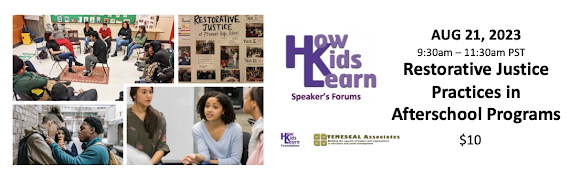
Restorative Justice Practices in Afterschool Programs
Restorative justice is a values-based practice. It creates a safe environment and builds trusting relationships, which are critical features of quality afterschool programs. These are the foundation on which afterschool programs can integrate restorative justice practices.
This paper is designed to raise understanding and awareness of restorative justice practices and identify ways afterschool leaders can integrate them. We recommend that program leaders share this paper with organizational leaders and program staff and consider the best ways to respond to personal harm and conflicts among youth participants.

To view and download this paper, click here.

Monday, August 28, 2023

The Power of Work and Afterschool (Part 1)

Source: Town Kitchen

By Sam Piha

The opportunity to work is a powerful experience. I first learned this in observing the work of my wife, Leslie Gravino, as she used employment as an intervention in the mental health system and community college setting. I have seen the power of work also in afterschool settings. We begin this blog with an interview with Leslie Gravino.

Q: How did you discover the power of work?

Leslie Gravino
A: I first discovered the amazing power of work in a psychiatric halfway house, Conard House, in San Francisco. We started a catering business. As our business grew and we employed more and more clients from the halfway house. With the success of the catering business under our belts, we started a janitorial service and a messenger service, since Conard House was made up of a hallway house and several “single occupancy” hotels. Our premise was to replace any outside contracts Conard House held with residents from our own organization. 

When the catering business grew, we moved to a commercial space in downtown San Francisco. Since the location was central to local businesses, we converted the commercial space into a café and bakery naming it “Expresso Thyself”. We hired professional cooks and bakers and served the financial district with lunch and baked goods for over 5 years. The outcome was a successful business that was able to train and employ many of the Conard House residents, as well as provide vocational counseling to find jobs.

The outcomes from employing adults with psychiatric disabilities revealed themselves every day. The residents gained an income and became more independent. They gained skills that helped them get jobs in the “real world”. When asked about their feelings and thoughts towards working, they often said they felt “normal”, doing what most people do all the time. Feeling included, gaining self-confidence, having a purpose and reaching their highest potential is what I observed as the power of work.

After 18 years in the mental health system, I moved to Las Positas Community College in Livermore, CA where I launched businesses with students and women in the welfare system.  

Q: Can you speak to the benefits that come with work?

A: In my opinion, the benefits of work are invaluable because work not only provides an income but a sense of participating in life. Having established several businesses within the mental health system in San Francisco and Las Positas Community College, I learned that working helped people feel “normal”. Residents felt a reprieve from the symptoms of mental illness when they were engaged in work activities. They not only learned the technical/hard skills of a job, but the ability to communicate and socialize (soft skills) with people in a professional manner.

Q: Much of your work has been with adults. Do you think the power of work applies to older youth? 

A: I most definitely believe that the building of skills and self-esteem that work provides would benefit older youth. To feel that one is part of a community, serving a cause they believe in, or just earning extra income are invaluable assets earned by participating in work. 

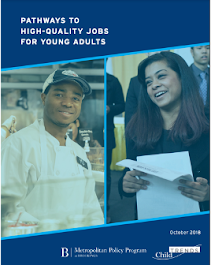
According to a report by the Brookings Institution and Child Trends: Pathways to High-Quality Jobs for Young Adults, the report examined employment outcomes for young people of color and those from low-income backgrounds, finding that:

  • work-based learning experiences in high school, including internships and apprenticeships, that incorporate positive relationships with adults really helps;
  • young people of color and those from low-income backgrounds gain higher-quality jobs by age 30; and
  • having a job as a teenager (ages 16 to 18) predicts higher job quality in adulthood and higher wages at age 23.

The report suggests strengthening work-based learning programs in high schools and helping teens and young adults — particularly those without a post-secondary degree — find on-ramps to employment. 

MORE ABOUT…

Leslie Gravino, MA, is an Art Therapist and adjunct professor at Las Positas Community College in Livermore, CA. She began her work in the mental health field as a counselor in a residential treatment center for adolescents. She then became a therapist at Conard House in San Francisco, where she started a catering business, a café in downtown San Francisco, that employed adults who had been homeless and were psychiatrically disabled. Ms. Gravino later served as the Work Based Learning Coordinator at Las Positas College, where she launched a computer repair business that trained women receiving welfare to gain skills in technology.  

Below are two briefing papers and three webinar recordings you should check out on the topic of youth workforce development in afterschool. 


[New Briefing Paper]

Restorative Justice Practices in Afterschool Programs
Restorative justice is a values-based practice. It creates a safe environment and builds trusting relationships, which are critical features of quality afterschool programs. These are the foundation on which afterschool programs can integrate restorative justice practices.
This paper is designed to raise understanding and awareness of restorative justice practices and identify ways afterschool leaders can integrate them. We recommend that program leaders share this paper with organizational leaders and program staff and consider the best ways to respond to personal harm and conflicts among youth participants.

To view and download this paper, click here.

Monday, August 21, 2023

Young People and Grief

Source: Experience Camps

By Sam Piha

Experience Camps, founded in 2009 as a 501c3 organization, is a national, no-cost program for grieving children who have experienced the death of a parent, sibling or primary caregiver. 

“We know that over 250,000 children are grieving the death of a primary caregiver due to Covid and that 6 million children will have experienced the death of a parent, sibling, or primary care giver by age 18.” - Liza Buck, Experience Camps

Because of the prevalent issue of childhood grief for afterschool participants, we interviewed Liza Buck, the Regional Program Manager for Experience Camps. Below are her responses to our questions.

Q: Can you briefly describe your program, Experience Camps?

A: Experience Camps provide no-cost, one-week sleep away camp programs to kids who have experienced the death of someone significant in their lives. We believe that every child deserves to live a life full of possibility and have seen camp "return" certain elements of childhood to them that may have been consumed by their grief.

Source: Experience Camps

Q: What ages of youth do you serve and how are staff prepared and trained?

A: Our camps welcome kids who will be entering grade 4 through grade 12 - approximately ages 9-18. These campers spend the week with other kids who "get it," who get what it's like to be the only one in class who is grieving someone's death, and who understand that they feel an array of emotions, not always sadness. The bunk counselors who volunteer to staff our camps know how important it is to create that safe space that doesn't always exist outside of camp, and receive training in the months leading up to camp as well as an in-person orientation before the campers arrive. Trainings cover the history of Experience Camps, grief, inclusion, risk management, mandated reporting, and understanding developmental stages. 

Source: Experience Camps

Q: Have you seen an increase in the number of youth who are experiencing grief due to COVID? 

A: Yes, we know that over 250,000 children are grieving the death of a primary caregiver due to Covid and that 6 million children will have experienced the death of a parent, sibling, or primary care giver by age 18. This means that 1 in 5 kids will grieve the death of someone by 18. Most of our campers are grieving the death of a parent, sibling, or primary caregiver.

Q: You are utilizing an online program called ExperienceCraft, a world in Minecraft built with and for grieving kids. Can you say more about this? 

A: As far as we know, we have the first Minecraft server of its kind. It's a safe server which means that kids are unable to participate unless the server is open and monitored by staff. We partnered with Connected Camps to invite kids who have experienced grief to our server and Discord channel (also protected) on Friday, Saturday, and Sundays where they get to interact with peers in a virtual environment. There are different "worlds" within ExperienceCraft, including a creative world where kids can create endlessly and add to a memorial garden and not fear anyone destroying their creations since that feature is disabled in the creative world. It's another way for us to try and reach more kids who either do not want to or cannot attend physical camp. Learn more here

Source: Experience Camps

Q: Afterschool programs include a number of youth who are experiencing grief. Can you offer any advice or activities for afterschool workers to address the grief experienced by their youth?

A: Being there for the child can look different depending on the day and the kiddo you're showing up for. Some days it may look like being a physical presence that they know is there, others it may be intently listening to them as they talk about something they're interested in, and the best days will be when you ask about their person. When you do ask about their person, say their name, say the word "died" or "death," and ensure your face is conveying interest and not pity. Kids are extremely perceptive, and if they see us flinch, they're less likely to share. The more you listen (with your eyes and ears) the easier it will be to follow their lead on how much they want to talk. Again, what’s important is that they show up for these kids, and not just once, but consistently. 

Q: I noted on your website that camps are held in venues across the country. If an afterschool worker wanted to refer youth to attend, are there certain requirements needed and how would they proceed? 

A: A lot of campers are referred by teachers and after school staff or coaches! The best thing to do is introduce them to our website, and if they're interested, directing their caregiver to the online application. If they need assistance they can always reach out to us. Kids who have experienced the death of a parent, sibling, primary caregiver, or another significant figure in their life are eligible to apply and will complete an intake with us to see if camp is a good fit.

Q: Are there any resources to help the youth with transportation required to attend the camp?

A: Campers arrive at each of our six locations and twelve programs by buses chartered by Experience Camps, and each location has several bus stops to try and accommodate as many families as possible. However, we never want transportation to be a barrier so travel scholarships are also available through an application process.

Source: Experience Camps

Q: Do you have any resources you would recommend to assist afterschool leaders in learning more about this work?

A: We have a list of resources, additional information and answers to any of your questions on our website.  

MORE ABOUT… 

Liza Buck (she/her) is the Regional Program Manager for Experience Camps. She has been a teacher, CAD counselor, and has been involved with Experience Camps since 2014, beginning as a bunk counselor and most recently operating as the Program Director for CalEx Girls. In addition to her teaching degrees, she is in the process of completing her MSW at the University of Maine. Liza has a passion for kids and mission-driven work which is why Experience Camps feels like “home.” When she’s not doing “the best work ever,” she is most likely outside with her dog or baking a batch of cookies.

Experience Camps, founded in 2009 as a 501c3, is a national, no-cost program for grieving children who have experienced the death of a parent, sibling or primary caregiver. Their one-week, overnight summer camps, year-round programs, and content help to reframe the experience of grief, and empower kids with the necessary coping skills to move forward with their lives. Through compassion, connection, and play, Experience Camps allows grieving children to embody a life full of hope and possibility.

Friday, August 18, 2023

Restorative Justice is about more than conflict resolution

Source: Oakland Leaf

By Guest Blogger, Melissa Mendez Ochoa, Executive Director, Oakland Leaf (This blog was originally posted on Oakland Leaf's Blog.)

When talking about Oakland Leaf’s approach to youth development, we often use the term restorative justice (RJ). While RJ, as a concept, has become relatively mainstream, most people only have a fuzzy idea of what it is in practice.  In western culture, people tend to think of RJ as a contemporary way of resolving conflict – an alternative to the current punitive justice system. 

At Oakland Leaf, we see RJ as much more than a set of conflict resolution or behavior management tools. We draw from RJ’s roots in indigenous peacemaking practices that provide a holistic framework for not only repairing harm, but also nurturing and sustaining individual relationships and community bonds. Oakland Leaf has RJ Coordinators at all six of our afterschool program sites, and the grounded, loving support they provide our students on a daily basis is some of the most inspiring work I’ve ever observed. 

In conversation with some of our RJ coordinators last week, I was reminded of what a critical resource they have been to our students these past several months. By sharing a few of the interventions they described to me, I hope to shine a spotlight on – and paint a clearer picture of – Oakland Leaf’s restorative justice work: 

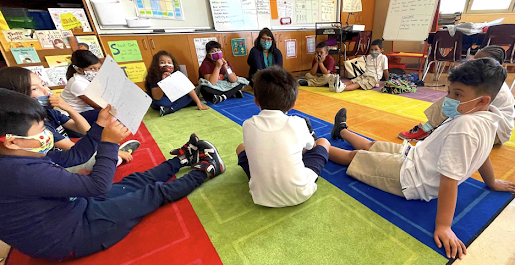
An afterschool program class of 20 students was experiencing ongoing challenges related to bullying behavior and conflict between students. The RJ Coordinator organized a circle about anger and healthy ways of managing and expressing it. Students passed around a talking piece and shared why they were personally having a hard time and why they thought the group was struggling. Consistently, this go-round revealed underlying issues such as hurt feelings or conflict from earlier in the school day, fatigue, or students missing their parents, among other challenges. 

Source: High Speed Training

After this, students shared how they tend to express and respond to different emotions and what the outcomes tend to be for various kinds of expression. Next, the RJ Coordinator said “Now we know what is happening. What do we need for ourselves – from another person, from the instructor, or in general –  to be able to move forward in a positive way?” Students shared things like “When I get mad, I need a break and some alone time”, “I need my friends to say something nice to me”, and “I need some one-on-one time with a grownup”. 

The last part of the circle involved everyone making a commitment to what they would do to help the group move forward in a more healthy way. Students made commitments such as “I will ask for space when I need it”, “I will try to be more understanding when someone says or does something I don’t like”, and “I will share my appreciation when others are stepping up in positive ways”. The RJ Coordinator has since regularly checked in with this group and each student, reminding them of their commitments and creating spaces for them to share progress and challenges.

Source: High Speed Training

A 5th grade teacher reached out to one of our RJ Coordinator’s about a student that she suspected was being bullied during the school day. Our RJ Coordinator was able to build a strong relationship of trust with this student through daily check-ins. The student confided in her that he was having a hard time interacting with his peers and making friends, and that he felt isolated and alone. The student’s dread about school began to wane once he had a caring adult he felt comfortable turning to on a daily basis for support and a sense of safety. Through ongoing coaching from the RJ Coordinator, he began to improve his social and communication skills and started making friends. 

Source: Oakland Leaf

One of our afterschool program soccer teams lost their first two games and students began lashing out, blaming each other for the loss. The negative interactions and hostility began to impact the overall morale of the class. The RJ Coordinator designed and facilitated an RJ circle specifically about teamwork and community. Students talked about what teamwork looks like, sounds like, and feels like. They discussed how they can simultaneously be supportive and hold each other accountable, on and off the field. Students also talked about what can be learned from “losing” in competitive sports and how to deal with hard feelings in healthy ways. They left the circle with renewed bonds and new tools to identify and cope with feelings of disappointment and frustration.

I hope these examples of Oakland Leaf’s every day application of restorative justice principles and practices provide you with a bit more insight into the power and potential of this work. 

MORE ABOUT...

Melissa Mendez Ochoa is the Executive Director of Oakland Leaf. Melissa grew up in Napa Valley and made the move to the East Bay when she decided to attend the University of California, Berkeley. Melissa earned her Masters in Business Administration from the Haas School of Business at UC Berkeley. In the of Spring of 2019, Melissa became Oakland Leaf’s Executive Director. In her free time, Melissa is in active alumna of TRENZA UC Berkeley and an avid sports fan of the Golden State Warriors, San Francisco Giants, and San Francisco Niners.

Oakland Leaf
serves more than 800 students annually through daily afterschool programming at seven high-need East Oakland elementary and middle schools, paid internship programs for high school students, and a summer camp. With an emphasis on social-emotional learning, academic support/literacy, creative expression, movement and sports, connection with nature, STEM, and social justice, we are supporting Oakland youth and families to be lifelong leaders creating positive change in their own lives, their communities, and in the world.


[Upcoming Webinars]

Promoting Financial Literacy for Youth in Afterschool Programs

This webinar will feature afterschool practitioners who have successfully integrated financial literacy in their programs. It will also feature financial literacy experts on why financial literacy is important for youth, available curriculum and materials, and how to get started offering financial literacy in your afterschool program.

To learn more and register, click here.

Restorative Justice Practices in Afterschool Programs

This webinar will feature afterschool practitioners who have successfully integrated restorative justice practices into their programs. It will also feature restorative justice experts on why it is important for youth, available curriculum and materials, and how to get started using restorative justice practices in your afterschool program.

To learn more and register, click here.


A Book Drive for Children's Books Makes for a Fabulous Service- Learning Project

Source: The Children's Book Project  By Sam Piha   In our previous paper entitled, Reading Buddies: Promoting Literacy and Community Eng...