Showing posts with label grief. Show all posts

Monday, August 21, 2023

Young People and Grief

Source: Experience Camps

By Sam Piha

Experience Camps, founded in 2009 as a 501c3 organization, is a national, no-cost program for grieving children who have experienced the death of a parent, sibling or primary caregiver. 

“We know that over 250,000 children are grieving the death of a primary caregiver due to Covid and that 6 million children will have experienced the death of a parent, sibling, or primary care giver by age 18.” - Liza Buck, Experience Camps

Because of the prevalent issue of childhood grief for afterschool participants, we interviewed Liza Buck, the Regional Program Manager for Experience Camps. Below are her responses to our questions.

Q: Can you briefly describe your program, Experience Camps?

A: Experience Camps provide no-cost, one-week sleep away camp programs to kids who have experienced the death of someone significant in their lives. We believe that every child deserves to live a life full of possibility and have seen camp "return" certain elements of childhood to them that may have been consumed by their grief.

Source: Experience Camps

Q: What ages of youth do you serve and how are staff prepared and trained?

A: Our camps welcome kids who will be entering grade 4 through grade 12 - approximately ages 9-18. These campers spend the week with other kids who "get it," who get what it's like to be the only one in class who is grieving someone's death, and who understand that they feel an array of emotions, not always sadness. The bunk counselors who volunteer to staff our camps know how important it is to create that safe space that doesn't always exist outside of camp, and receive training in the months leading up to camp as well as an in-person orientation before the campers arrive. Trainings cover the history of Experience Camps, grief, inclusion, risk management, mandated reporting, and understanding developmental stages. 

Source: Experience Camps

Q: Have you seen an increase in the number of youth who are experiencing grief due to COVID? 

A: Yes, we know that over 250,000 children are grieving the death of a primary caregiver due to Covid and that 6 million children will have experienced the death of a parent, sibling, or primary care giver by age 18. This means that 1 in 5 kids will grieve the death of someone by 18. Most of our campers are grieving the death of a parent, sibling, or primary caregiver.

Q: You are utilizing an online program called ExperienceCraft, a world in Minecraft built with and for grieving kids. Can you say more about this? 

A: As far as we know, we have the first Minecraft server of its kind. It's a safe server which means that kids are unable to participate unless the server is open and monitored by staff. We partnered with Connected Camps to invite kids who have experienced grief to our server and Discord channel (also protected) on Friday, Saturday, and Sundays where they get to interact with peers in a virtual environment. There are different "worlds" within ExperienceCraft, including a creative world where kids can create endlessly and add to a memorial garden and not fear anyone destroying their creations since that feature is disabled in the creative world. It's another way for us to try and reach more kids who either do not want to or cannot attend physical camp. Learn more here. 

Source: Experience Camps

Q: Afterschool programs include a number of youth who are experiencing grief. Can you offer any advice or activities for afterschool workers to address the grief experienced by their youth?

A: Being there for the child can look different depending on the day and the kiddo you're showing up for. Some days it may look like being a physical presence that they know is there, others it may be intently listening to them as they talk about something they're interested in, and the best days will be when you ask about their person. When you do ask about their person, say their name, say the word "died" or "death," and ensure your face is conveying interest and not pity. Kids are extremely perceptive, and if they see us flinch, they're less likely to share. The more you listen (with your eyes and ears) the easier it will be to follow their lead on how much they want to talk. Again, what’s important is that they show up for these kids, and not just once, but consistently. 

Q: I noted on your website that camps are held in venues across the country. If an afterschool worker wanted to refer youth to attend, are there certain requirements needed and how would they proceed? 

A: A lot of campers are referred by teachers and after school staff or coaches! The best thing to do is introduce them to our website, and if they're interested, directing their caregiver to the online application. If they need assistance they can always reach out to us. Kids who have experienced the death of a parent, sibling, primary caregiver, or another significant figure in their life are eligible to apply and will complete an intake with us to see if camp is a good fit.

Q: Are there any resources to help the youth with transportation required to attend the camp?

A: Campers arrive at each of our six locations and twelve programs by buses chartered by Experience Camps, and each location has several bus stops to try and accommodate as many families as possible. However, we never want transportation to be a barrier so travel scholarships are also available through an application process.

Source: Experience Camps

Q: Do you have any resources you would recommend to assist afterschool leaders in learning more about this work?

A: We have a list of resources, additional information and answers to any of your questions on our website.  

MORE ABOUT… 

Liza Buck (she/her) is the Regional Program Manager for Experience Camps. She has been a teacher, CAD counselor, and has been involved with Experience Camps since 2014, beginning as a bunk counselor and most recently operating as the Program Director for CalEx Girls. In addition to her teaching degrees, she is in the process of completing her MSW at the University of Maine. Liza has a passion for kids and mission-driven work which is why Experience Camps feels like “home.” When she’s not doing “the best work ever,” she is most likely outside with her dog or baking a batch of cookies.

Experience Camps, founded in 2009 as a 501c3, is a national, no-cost program for grieving children who have experienced the death of a parent, sibling or primary caregiver. Their one-week, overnight summer camps, year-round programs, and content help to reframe the experience of grief, and empower kids with the necessary coping skills to move forward with their lives. Through compassion, connection, and play, Experience Camps allows grieving children to embody a life full of hope and possibility.

Monday, May 22, 2023

Moving From Grief to Wellness in Our Schools

Source: www.pexels.com

We know that many young people suffer from grief and the loss of loved ones due to COVID, gun violence, etc. In response we have posted several LIAS blogs, a briefing paper and webinar trainings for the afterschool community.

Guest blogger, Vicki Zakrzewski, Education Director for Greater Good Science Center, recently interviewed pediatrician, Dr. David Schonfeld on addressing young people‘s grief in school settings. Below she shares a few excerpts from her interview. (To read the full interview, click here.) 

Zakrzewski: What is the difference between trauma and grief?

Schonfeld: We’ve tried so hard to be trauma-informed that we often forget to also be grief-sensitive. When you’re dealing with trauma, you’re helping people deal with something that happened. When you’re dealing with grief, you’re trying to support them as they face the loss of someone or something important to them. The interventions are very different. And trauma is not intrinsically more important than grief.

Some assume that trauma is more important or serious than grief because it’s been talked about more among mental health professionals. Reactions that are due to trauma are labeled symptoms and may lead to the diagnosis of trauma disorders, and then we recognize the need for mental health treatment from licensed and credentialed professionals. But since bereavement is considered a normative life experience and not a mental illness, even the same reactions aren’t viewed as an illness, and we don’t provide treatment for grief. Instead, we offer support delivered by lay people or faith-based professionals. It’s generally free since most health insurances won’t pay for grief support.

Source: Artwork by Lauren Coakley. Added by Temescal Associates

Zakrzewski: What advice would you give to education professionals who are not sure how to respond to grief and loss? 

Schonfeld: I think we need to acknowledge that it’s OK to be uncomfortable with grief, but that sometimes you have to do things you’re uncomfortable with when they’re important. A lot of times people will share with me this “secret” that it’s hard for them. I tell them that that’s a given.

We just have to acknowledge that this is really tough and it’s all right to feel some discomfort. It’s all right to recognize that you don’t know exactly what to say or how to do it—but it’s not all right to not do anything.

A lot of people think that because they don’t know what to say to a grieving student, it’s better to say nothing. Nothing is exactly the wrong thing to say. It communicates to kids and adults that you’re clueless, you don’t care, you don’t think they can handle it, you can’t handle it, or you don’t want to waste your time. Those are all really horrible messages for people in crisis. So we try to give school professionals basic skills to support students and staff after crisis and loss—but acknowledge that it’s still hard. We let them know that we’re going to help them do it.

“After my brother died, life was so hard to live. There were days that I sat there and I didn’t think I could live anymore without my brother. Whenever a birthday, holiday or special occasion would come along, I would always end up shedding at least a few tears. Nothing was the same without my brother.” —Jeniffer, 16, Children’s Grief Awareness Day (Note: added by Temescal Associates)

Zakrzewski: What kind of support do teachers and students say helps them the most?

Schonfeld: For the education professionals, the common advice given is about self-care. But organizational approaches can be more effective than personal self-care alone. However, you really need both. If we imply that if you are upset when you have an upsetting job it’s because you’re not professional enough and didn’t do enough to take care of yourself, we risk blaming the professional for stress that is inherent in the work. We have to disavow that from the beginning, and instead do our best to establish organizational support structures and minimize the stress associated with the positions and create an organizational culture that values staff support.

I think for a lot of kids, figure out what type of academic and, to some degree, social support to offer, and then be there to listen to them. Be present and empathic, and that’s probably a large part of what an educator has to do.

Zakrzewski: How do you suggest schools respond to the range of cultural approaches to grief within their respective communities? 

Schonfeld: Death is a universal experience, and we should focus more on how it’s the same and less on how it can be manifested in different ways. There’s a tendency for us to feel uncomfortable supporting people of other backgrounds. Start with one culture, maybe your own. If you know how to support a grieving student in that culture, you can do it with students of any culture—you just have to realize that there are differences.

It’s not important that you learn everything about different cultures. Instead, ask them, “Could you help me understand what’s important to you and your family, so I can better understand how to help you?” I’ve never had a family say, “I’m not going to tell you.” They want to share their beliefs and their culture so you can better help them.

After a presentation, people will often come up to me and say, “I said the wrong things.” And I reassure them that even though the advice I gave sounds easy, I’ve made the same mistakes. As long as people know you care and are trying to help them, they’re pretty open to forgiving you. They’re less likely to do so if you appear disinterested or insensitive.

MORE ABOUT…
Vicki Zakrzewski, Ph.D., is a former teacher and school administrator, and the founding education director at the Greater Good Science Center, where she translates the science of compassion, empathy, gratitude, awe, forgiveness, and other social, emotional, and ethical skills to improve the well-being of students and educators. She writes articles, gives talks and workshops all over the world, designs online courses for educators, and is the creative lead for the GGSC’s new online resource for educators, Greater Good in Education. Vicki also serves as the co-associate editor of SEL practice for Social and Emotional Learning: Research, Practice, and Policy, sits on several advisory boards, and consults and collaborates with educational organizations.  

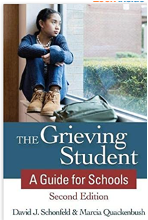
David J Schonfeld, MD, Fellow of the American Academy of Pediatrics (FAAP), is a developmental-behavioral pediatrician; he founded and directs the National Center for School Crisis and Bereavement at Children's Hospital Los Angeles. Dr. Schonfeld is Professor of Clinical Pediatrics at Keck School of Medicine. His recently published book is entitled, The Grieving Student: A Guide for Schools and it can be ordered here.  

The Greater Good Science Center studies the psychology, sociology, and neuroscience of well-being and teaches skills that foster a thriving, resilient, and compassionate society. Based at the University of California, Berkeley, one of the world’s leading institutions of research and higher education, the GGSC is unique in its commitment to both science and practice: They sponsor groundbreaking scientific research into social and emotional well-being and help people apply this research to their personal and professional lives.

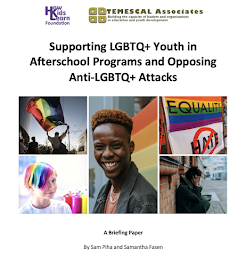
To see additional tools to ensure a sense of safety for all youth, see our Youth Development Guide 2.0 here. Also, a new briefing paper on supporting LGBTQ youth. Feel free to share this resource with your network.


Wednesday, May 25, 2022

Talking with Kids After Tragedy Strikes Again


By Sam Piha

This blog is intended to help afterschool programs promote young people’s learning and healthy development. However, it seems that much of this space is dominated by issues of trauma and violence, from Parkland to Charlottesville to the grief of the COVID pandemic to now the shootings in Buffalo and Uvalde, Tx. 

And now, on top of all those already existing pandemic-related chronic stressors, many children and families may be overwhelmed with the added fear of sending their children to school,” - Katherine Williams, child and adolescent psychologist and professor of psychiatry at UC San Diego

I think Steve Kerr, coach of the NBA Golden State Warriors said it best in his pregame press conference for game 5 of the Western Conference Finals. “I'm not going to talk about basketball. Nothing's happened with our team in the last six hours. We're going to start the same way tonight. Any basketball questions don't matter. When are we going to do something? I'm tired. I'm so tired of getting up here and offering condolences to the devastated families that are out there. I'm so tired. Excuse me. I'm sorry. I'm tired of the moments of silence. Enough!” See the video of his press conference. 


After the tragic shooting in Texas, several articles have offered tips on how to discuss these events with kids, and offer a number of resources for those who want to learn more. Below I summarize tips from two articles, Texas School Shooting: How to Help Kids Get Through Unspeakable Horror and Nine Tips for Talking with Kids About Trauma.

  • Initiate the conversation and talk to kids about their concerns
  • Listen
  • Find out what they know
  • Give kids a sense of control and reassuring facts about their safety
  • Treat children according to their age
  • Limit exposure to media
  • Encourage children to share their feelings
  • Share your feelings
  • Focus on the good
  • Encourage children to act
  • Observe children’s emotional state and seek help if necessary.
  • Model healthy behavior and take care of yourself
  • Maintain routines

After a tragedy, kids will have questions. How do we respond? As much as we might want to, we can’t always protect children from witnessing violence and tragedy in the world, whether it’s mass shootings, terrorist attacks, or war. As parents, teachers, and other supportive adults, what we can do is comfort and communicate with children in the most healing way possible.” – Kira M. Newman, Greater Good Science Center

Tuesday, May 17, 2022

Emerging Issues Impacting Afterschool

By Sam Piha

There are many emerging issues that impact afterschool programs as well as a wealth of articles that focus on them. How do we keep up on reading about issues that you are interested in? Below are some articles and resources arranged by topic. We invite you to click on those that are most relevant to your program. 

YOUTH WHO EXPERIENCE HOUSING INSTABILITY: Housing instability is linked to chronic absenteeism, lower graduation rates, and higher suspension rates among students. Affected students were also disproportionately Latinx, Black, and English language learners.


DECLINING SCHOOL ENROLLMENT: “Kids miss school every day and always have—often for good reasons. But school leaders around the country say they’re struggling with a wave of chronic absenteeism that’s worsened over the course of the pandemic.” 

There are lots of factors, ranging from COVID-specific illness and family disruption to students who have just fallen out of the habit of regular attendance. And while current statistics are scarce, educators say the empty seats don’t make it any easier to get schools back to normal.” – Mark Bomster, Ed Week


YOUTH AND GRIEF: There is a growing awareness of the importance of emotional regulation, social emotional learning, trauma informed practice and healing centered engagement. However, it is important that we understand more about the needs of youth who are grieving or experiencing loss due to the COVID-19 pandemic (deaths and illness, as well as the loss of “normal”), the opioid crisis, the rising gun violence and the racial violence that is plaguing the country.

Source: Ed Week


THE NEEDS OF BOYS: There's an emerging trend in afterschool to focus on the needs of boys, especially boys of color and those from low-income communities.


COVID AND THE MENTAL HEALTH OF CHILDREN AND TEENS: In our work with young people, it is important that we think about the many ways they may have been impacted by COVID-19. According to the Centers for Disease Control (CDC), "Coronavirus disease (COVID-19) can affect adolescents directly and indirectly. Beyond getting sick, many adolescents’ social, emotional and mental well-being has been impacted by the pandemic. Trauma faced at this developmental stage may have long-term consequences across their lifespan."

From the very first waves of school closures and lockdowns in 2020, the pandemic significantly damaged children’s mental health in ways teachers are still coping with and researchers are still struggling to understand.” – Sarah D. Sparks, Ed Week

Source: Ed Week


AFTERSCHOOL WORKER SHORTAGE: Recruiting, hiring, and retaining afterschool workers have been longstanding issues. Then the COVID-19 pandemic hit—and these issues were greatly exacerbated. They had resulted in programs closing, drastically reducing capacity, and adding stress to afterschool workers. Many of these challenges are not unique to the afterschool field- they are being experienced by those in education and a wide range of fields. We know that the issue of staff shortages is not new to veteran afterschool program leaders. However, we felt it is important to summarize what we know in the time of COVID-19.


The most pressing problem facing afterschool is the nationwide shortage of workers.
” – Michael Funk, Director of CDE Expanded Learning Division


YOUTH INVOLVEMENT IN CIVIC ENGAGEMENT: According to the Afterschool Alliance, “The afterschool field is an essential partner in ensuring that all children have the ability to participate in immersive, relevant, and hands-on civic engagement opportunities.” Not only are civic engagement strategies participatory strategies, they contribute to the positive development of youth and the health of our democracy. 

Monday, March 7, 2022

How Can Afterschool Support Grieving Youth (Part 2)

Source: Ed Week

By Sam Piha

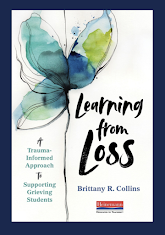
It is important that we understand more about the needs of youth who are grieving or experiencing loss due to the COVID-19 pandemic (deaths and illness, as well as the loss of “normal”), the opioid crisis, the rising gun violence and the racial violence that is plaguing the country. Below we continue our interview with Brittany Collins (read part 1 here), author of the book Learning from Loss: A Trauma-Informed Approach to Supporting Grieving Students. 

Q: What are the effects of grief on young people? Is it a different experience for younger vs. older?
A: There is much similarity between grief responses in all of our brains and bodies; neurologist Lisa Schulman writes in her book Before and After Loss: A Neurologist’s Perspective on Grief, Loss, and Our Brain that grief incites a fight-or-flight response, as well as a depressive response, and impacts nearly every part of the brain. That impact may result in a number of changes in our behavior – from apathy and avoidance to perfectionism and connection-seeking, increased risk-taking to risk aversion. The spectrum is broad and manifests differently in everyone, but in consideration of the ways in which grief impacts young people, it’s especially pertinent to think about the pre-frontal cortex, the part of the brain that controls higher-order functioning – things like forethought, impulse control, emotional regulation. Because children and teens do not yet have a fully developed prefrontal cortex, they may not have full control over these functions even without accounting for grief. But when grief enters the picture and dampens the functioning of the pre-frontal cortex even further, then, especially in adolescent populations, we may see things like an attenuated ability to regulate emotion, attenuated impulse control, increased risk-taking, etc. 

It’s critical to take an adaptation-focused, asset-based lens to these behavioral shifts. Nearly every behavioral change is not only a response to grief but an attempt, and often an innovative attempt, to fulfill an unmet need. For example, a student’s anger might serve them well in a loss context in which they have to defend a parent against an abusive partner; or another student’s connection-seeking behaviors might help them eke out the attention of a bereaved caretaker. In the classroom or afterschool setting, these same behaviors may not prove as helpful because the student is no longer in the context for which the behaviors were developed, but in a grief and trauma context, the brain doesn’t know that – it’s stuck in survival mode. 

Too often, we see grief and trauma responses (e.g. behavioral changes) reprimanded. If we think about issues of restorative justice in schools and the ways in which racialized violence, bias, and assimilation play a role in school discipline, then it becomes even more critical for us to view behavioral changes as adaptations to be respected, not liabilities to control or punish.

Q: What do you mean by "Grief Responsive Teaching"? 
A: Grief-responsive teaching is a pedagogical and interpersonal approach to teaching and learning that integrates science and stories of grief into actionable classroom and program practices that support students’ and educators’ well-being in times of loss.

Because grief impacts the brain, body, and behavior— and, by extension, teaching and learning— grief-responsive teaching seeks to support and empower the whole person, socially, emotionally, culturally, and academically. Recognizing that loss is the most commonly cited traumatic experience among young people, it’s an approach that integrates grief science– and stories of loss– into actionable pedagogical practices that support and sustain all members of a learning community— at and beyond school. For more info and resources, feel free to visit the Grief-Responsive Teaching website here.

Q: Can you give some tips or practices that might apply to afterschool educators?
A: Absolutely. First, I want to acknowledge how critical afterschool programs– and educators– are in grief support. In my book, Learning from Loss, I devote entire sections to the ways in which extracurricular activities like sports, theater, dance, the debate team, etc., can foster a sense of psychologist Mihaly Csikszentmihalyi’s notion of “flow” (which can prove incredibly healing). It can offer students a sense of community and contribution, the attunement and synchronicity that come from working together with others toward a common goal, of feeling like a valued part of a “whole”. It can also provide outlets for positive risk-taking that support identity development and channel grief responses into health-promoting outlets that can serve students across a lifespan; and can restore students’ autonomy, sense of competence, and relatedness– the three tenets of Deci and Ryan’s self-determination theory, all of which can be threatened in a grief context. 

To support all learners, implementing regulatory activities into the program—meditation and mindfulness activities, free-writing, activities that afford students choice or a sense of contribution—on a regular basis, not only in the weeks following a known loss, creates a grief-responsive environment. This offers students strategies that they may turn to in and outside of the classroom to activate their parasympathetic nervous system and enhance their ability to access higher cognitive functioning, from emotional regulation to problem-solving.

If afterschool educators keep the importance of their work in mind and seek to establish a sense of safety (physical and emotional), facilitate connection between students and peers, as well as students and caring adults, and empower students’ self-expression and leadership, they are already on their way to being grief-responsive.

Q: Should we think about how we can support young people beyond our program setting?
A: First, it’s important to recognize the ways in which a program setting can impact young people far beyond, and long after, their time in the program. I write in Learning from Loss:

“Grief outlets might look like rugby, rap, meditation, or the debate team… It’s particularly important to introduce these alternative behaviors during adolescence because the teenage brain undergoes a period of immense neural development comparable only to that which occurs in the first year and a half of life (Spinks 2002). The brain begins ‘pruning,’ or eliminating extra synapses, and the activities and habits of mind teens most frequently engage in determine which synapses remain strong into adulthood (Di Ciacco 2008, 114). The malleability of our brains and our ability to form new neural connections throughout life by changing our behaviors is called neuroplasticity, and it is key in our ability to adapt to, and even recover from, early-life adversity.” 

So, the work that we do with students in our program can, indeed, support them far beyond it. As grief-responsive practitioners, though, whether coaches, youth workers or classroom teachers, it’s always important to consider how we can build students’ webs of connection. Grief support takes a village, so being mindful of the school-based resources and community-based resources available to you and your students, and working to facilitate furthered connection between students and colleagues, students and peers, students and their local communities, can both ensure that they are getting the support and connection they need while also steering clear of a savior mentality, or the idea that we alone must “fix” or heal young people. 

First, grief isn’t a problem to fix or solve or avoid; it is a lifelong process to support one another through. Second, students experiencing grief hold many strengths and insights; when we listen to them and their needs, and work collaboratively with them to widen their worlds, we position ourselves as a trusted teammate, and that’s critical, because, as I write in Learning from Loss, “without trust, attempts at grief support feel like trespassing.”


Brittany Collins
is an author, educator, and curriculum designer dedicated to supporting teachers’ and students’ social and emotional well-being, especially in times of adversity. Her work explores the impacts of grief, loss, and trauma in the school system, as well as how innovative pedagogies—from inquiry-based learning to identity development curricula—can create conditions supportive of all learners. She is the Founder of Grief-Responsive Teaching, a professional learning community and resource hub that supports students' and teachers' well-being in times of loss.

Below are links to purchase her upcoming book and to review some of her earlier writings:
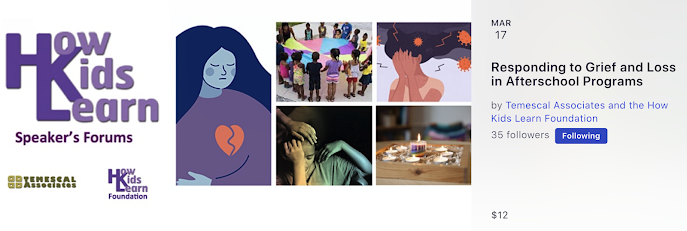
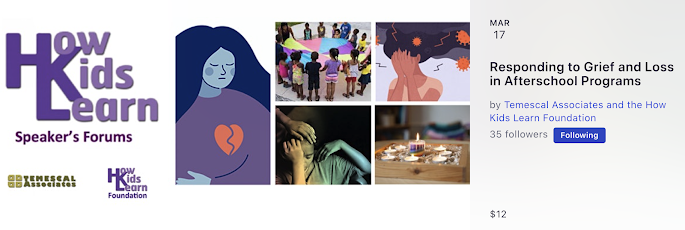
Temescal Associates and The How Kids Learn Foundation will be conducting a webinar featuring a presentation by Brittany Collins and a panel of experts on Responding to Grief and Loss in Afterschool Programs, Thursday, March 17, 2022 from 10:00am - 12:00pm (PST). To learn more and register, click HERE.


Monday, February 28, 2022

How Can Afterschool Support Grieving Youth (Part 1)

Artwork by Lauren Coakley

By Sam Piha

There is a growing awareness of the importance of emotional regulation, social emotional learning, trauma informed practice and healing centered engagement. However it is important that we understand more about the needs of youth who are grieving or experiencing loss due to the COVID-19 pandemic (deaths and illness, as well as the loss of “normal”), the opioid crisis, the rising gun violence and the racial violence that is plaguing the country. Below we interview Brittany Collins, author of the book Learning from Loss: A Trauma-Informed Approach to Supporting Grieving Students. We have divided this interview into 2 parts and part 2 will be released next week. (Ms. Collins will be a guest presenter on an upcoming Speaker’s Forum/ Webinar.) 

Q: Can you briefly describe what your new book is about and why you wrote it?
A: I wrote Learning from Loss because, as a formerly bereaved student turned educator, I have always been keenly aware of both the ways in which teachers, coaches, youth workers, and other caring adults can have a lifelong impact on the lives of young people who are grieving, as well as the ways in which adults are often socialized into spaces of discomfort surrounding students’ grief – not knowing what to say, for example, or not wanting to make things worse and thereby slipping into silence. 

The question that drove my writing process was, in regards to creating learning environments that are supportive of students who are grieving, “How can we do this better?” I was privileged to interview numerous teachers, social workers, guidance and grief counselors who shed light on the intersections of theory and practice, and to offer snapshots of their stories to readers alongside actionable practices for use with young people.

Q: How many young people are actually affected by grief and loss? Is this higher in low-income communities or communities of color?
A: Before the pandemic, we knew that 7 out of 10 teachers had a student in their classroom who was actively grieving. Now, that number has likely risen, as 1.5 million children have lost a primary or secondary caregiver to COVID-19 worldwide, over 140,000 in the U.S. alone, and we are seeing that Black, Indigenous, People Of Color (BIPOC) youth are facing much higher rates of bereavement due to systemic health inequities. Of course, these statistics relate only to grief that is experienced in response to a physical death, but there are many other kinds of losses that can elicit a grief response in our brains and bodies: “living losses” describe things like divorce, a familial falling out, experiences in foster care, a move or change in schooling – transitional losses and absences that are rife in this pandemic moment but that do not involve death. 

We can also experience “anticipatory grief” in expectancy of a loss; “disenfranchised grief” if our grief is not socially or societally acknowledged (e.g. a miscarriage, the death of a loved one to suicide, or other forms of loss/grief that somehow intersect with societally-reinforced silences or taboos); vicarious grief when exposed to others’ losses; and generational grief/trauma in communities that have historically faced brutality and loss. These are just several examples – and when we take them into consideration, the rates of impacted young people are really astronomical. I would bet that it’s safe to say every youth program comprises folks who are grieving.

Q: Is grief and loss only in relation to a death or can it be experienced indirectly? Example: The COVID pandemic fears and the loss of "normal", or racial violence?
A: These types of loss are certainly valid examples and can produce physiological grief responses; for example, COVID pandemic fears may take the form of anticipatory grief regarding one’s own or a loved one’s health and/or mortality. But the pandemic has also incited other forms of living losses, like those caused by a lack of proximity to friends and loved ones; grief for our former life/way of living; grief for growth milestones missed, like a prom or graduation, wedding or job transition – “the loss of ‘normal’” is a great way to put it. 

And then, of course, racial violence connects to all of these forms of grief as well. There is grief for those lost; anticipatory grief, especially in BIPOC communities, about who might be impacted next; generational grief, when we think about the deep roots of racial violence across history; and vicarious grief and trauma for folks of the global majority who see acts of racialized violence committed against those with similar identities. And this isn’t just conceptual; there is much scientific research that explores and explains the ways in which racial violence, discrimination, and bigotry impact the brain and body. Race-based traumatic stress is a public health crisis.

(Part 2 of this interview will be released next week.)


Brittany Collins is an author, educator, and curriculum designer dedicated to supporting teachers’ and students’ social and emotional well-being, especially in times of adversity. Her work explores the impacts of grief, loss, and trauma in the school system, as well as how innovative pedagogies—from inquiry-based learning to identity development curricula—can create conditions supportive of all learners. She is the Founder of Grief-Responsive Teaching, a professional learning community and resource hub that supports students' and educators' well-being in times of loss.

Temescal Associates and The How Kids Learn Foundation will be conducting a webinar featuring a presentation by Brittany Collins and a panel of experts on Responding to Grief and Loss in Afterschool Programs, Thursday, March 17, 2022 from 10:00am - 12:00pm (PST). To learn more and register, click HERE.


Election Ready

Source: Center for Tech and Civic Life By Sam Piha The 2026 election offers a number of opportunities to engage youth people regardless of a...