Showing posts with label trauma. Show all posts

Monday, May 22, 2023

Moving From Grief to Wellness in Our Schools

Source: www.pexels.com

We know that many young people suffer from grief and the loss of loved ones due to COVID, gun violence, etc. In response we have posted several LIAS blogs, a briefing paper and webinar trainings for the afterschool community.

Guest blogger, Vicki Zakrzewski, Education Director for Greater Good Science Center, recently interviewed pediatrician, Dr. David Schonfeld on addressing young people‘s grief in school settings. Below she shares a few excerpts from her interview. (To read the full interview, click here.) 

Zakrzewski: What is the difference between trauma and grief?

Schonfeld: We’ve tried so hard to be trauma-informed that we often forget to also be grief-sensitive. When you’re dealing with trauma, you’re helping people deal with something that happened. When you’re dealing with grief, you’re trying to support them as they face the loss of someone or something important to them. The interventions are very different. And trauma is not intrinsically more important than grief.

Some assume that trauma is more important or serious than grief because it’s been talked about more among mental health professionals. Reactions that are due to trauma are labeled symptoms and may lead to the diagnosis of trauma disorders, and then we recognize the need for mental health treatment from licensed and credentialed professionals. But since bereavement is considered a normative life experience and not a mental illness, even the same reactions aren’t viewed as an illness, and we don’t provide treatment for grief. Instead, we offer support delivered by lay people or faith-based professionals. It’s generally free since most health insurances won’t pay for grief support.

Source: Artwork by Lauren Coakley. Added by Temescal Associates

Zakrzewski: What advice would you give to education professionals who are not sure how to respond to grief and loss? 

Schonfeld: I think we need to acknowledge that it’s OK to be uncomfortable with grief, but that sometimes you have to do things you’re uncomfortable with when they’re important. A lot of times people will share with me this “secret” that it’s hard for them. I tell them that that’s a given.

We just have to acknowledge that this is really tough and it’s all right to feel some discomfort. It’s all right to recognize that you don’t know exactly what to say or how to do it—but it’s not all right to not do anything.

A lot of people think that because they don’t know what to say to a grieving student, it’s better to say nothing. Nothing is exactly the wrong thing to say. It communicates to kids and adults that you’re clueless, you don’t care, you don’t think they can handle it, you can’t handle it, or you don’t want to waste your time. Those are all really horrible messages for people in crisis. So we try to give school professionals basic skills to support students and staff after crisis and loss—but acknowledge that it’s still hard. We let them know that we’re going to help them do it.

“After my brother died, life was so hard to live. There were days that I sat there and I didn’t think I could live anymore without my brother. Whenever a birthday, holiday or special occasion would come along, I would always end up shedding at least a few tears. Nothing was the same without my brother.” —Jeniffer, 16, Children’s Grief Awareness Day (Note: added by Temescal Associates)

Zakrzewski: What kind of support do teachers and students say helps them the most?

Schonfeld: For the education professionals, the common advice given is about self-care. But organizational approaches can be more effective than personal self-care alone. However, you really need both. If we imply that if you are upset when you have an upsetting job it’s because you’re not professional enough and didn’t do enough to take care of yourself, we risk blaming the professional for stress that is inherent in the work. We have to disavow that from the beginning, and instead do our best to establish organizational support structures and minimize the stress associated with the positions and create an organizational culture that values staff support.

I think for a lot of kids, figure out what type of academic and, to some degree, social support to offer, and then be there to listen to them. Be present and empathic, and that’s probably a large part of what an educator has to do.

Zakrzewski: How do you suggest schools respond to the range of cultural approaches to grief within their respective communities? 

Schonfeld: Death is a universal experience, and we should focus more on how it’s the same and less on how it can be manifested in different ways. There’s a tendency for us to feel uncomfortable supporting people of other backgrounds. Start with one culture, maybe your own. If you know how to support a grieving student in that culture, you can do it with students of any culture—you just have to realize that there are differences.

It’s not important that you learn everything about different cultures. Instead, ask them, “Could you help me understand what’s important to you and your family, so I can better understand how to help you?” I’ve never had a family say, “I’m not going to tell you.” They want to share their beliefs and their culture so you can better help them.

After a presentation, people will often come up to me and say, “I said the wrong things.” And I reassure them that even though the advice I gave sounds easy, I’ve made the same mistakes. As long as people know you care and are trying to help them, they’re pretty open to forgiving you. They’re less likely to do so if you appear disinterested or insensitive.

MORE ABOUT…


Vicki Zakrzewski, Ph.D., is a former teacher and school administrator, and the founding education director at the Greater Good Science Center, where she translates the science of compassion, empathy, gratitude, awe, forgiveness, and other social, emotional, and ethical skills to improve the well-being of students and educators. She writes articles, gives talks and workshops all over the world, designs online courses for educators, and is the creative lead for the GGSC’s new online resource for educators, Greater Good in Education. Vicki also serves as the co-associate editor of SEL practice for Social and Emotional Learning: Research, Practice, and Policy, sits on several advisory boards, and consults and collaborates with educational organizations.  

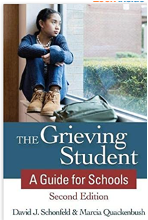
David J Schonfeld, MD, Fellow of the American Academy of Pediatrics (FAAP), is a developmental-behavioral pediatrician; he founded and directs the National Center for School Crisis and Bereavement at Children's Hospital Los Angeles. Dr. Schonfeld is Professor of Clinical Pediatrics at Keck School of Medicine. His recently published book is entitled, The Grieving Student: A Guide for Schools and it can be ordered here.  

The Greater Good Science Center studies the psychology, sociology, and neuroscience of well-being and teaches skills that foster a thriving, resilient, and compassionate society. Based at the University of California, Berkeley, one of the world’s leading institutions of research and higher education, the GGSC is unique in its commitment to both science and practice: They sponsor groundbreaking scientific research into social and emotional well-being and help people apply this research to their personal and professional lives.

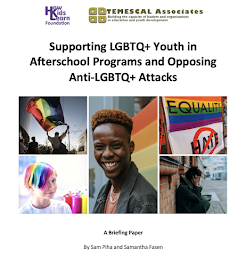
To see additional tools to ensure a sense of safety for all youth, see our Youth Development Guide 2.0 here. Also, a new briefing paper on supporting LGBTQ youth. Feel free to share this resource with your network.
 

Wednesday, May 25, 2022

Talking with Kids After Tragedy Strikes Again


By Sam Piha

This blog is intended to help afterschool programs promote young people’s learning and healthy development. However, it seems that much of this space is dominated by issues of trauma and violence, from Parkland to Charlottesville to the grief of the COVID pandemic to now the shootings in Buffalo and Uvalde, Tx. 

And now, on top of all those already existing pandemic-related chronic stressors, many children and families may be overwhelmed with the added fear of sending their children to school,” - Katherine Williams, child and adolescent psychologist and professor of psychiatry at UC San Diego

I think Steve Kerr, coach of the NBA Golden State Warriors said it best in his pregame press conference for game 5 of the Western Conference Finals. “I'm not going to talk about basketball. Nothing's happened with our team in the last six hours. We're going to start the same way tonight. Any basketball questions don't matter. When are we going to do something? I'm tired. I'm so tired of getting up here and offering condolences to the devastated families that are out there. I'm so tired. Excuse me. I'm sorry. I'm tired of the moments of silence. Enough!” See the video of his press conference


After the tragic shooting in Texas, several articles have offered tips on how to discuss these events with kids, and offer a number of resources for those who want to learn more. Below I summarize tips from two articles, Texas School Shooting: How to Help Kids Get Through Unspeakable Horror and Nine Tips for Talking with Kids About Trauma.

  • Initiate the conversation and talk to kids about their concerns
  • Listen
  • Find out what they know
  • Give kids a sense of control and reassuring facts about their safety
  • Treat children according to their age
  • Limit exposure to media
  • Encourage children to share their feelings
  • Share your feelings
  • Focus on the good
  • Encourage children to act
  • Observe children’s emotional state and seek help if necessary.
  • Model healthy behavior and take care of yourself
  • Maintain routines

After a tragedy, kids will have questions. How do we respond? As much as we might want to, we can’t always protect children from witnessing violence and tragedy in the world, whether it’s mass shootings, terrorist attacks, or war. As parents, teachers, and other supportive adults, what we can do is comfort and communicate with children in the most healing way possible.Kira M. Newman, Greater Good Science Center

Wednesday, June 27, 2018

Family Separation and Childhood Trauma

By Sam Piha

In expanded learning programs, we are seeking to learn the effects of childhood trauma and design programs that integrate trauma informed practice. Thus, we were horrified by the Trump Administration’s practice of “zero tolerance” which inflicts trauma on children and youth. 

Below, we post a statement by our colleagues at the Forum for Youth Investment on this topic. We have also published several LIAS blog posts on the issue of immigration and young people.  
---------

The Forum for Youth Investment stands with our partners and peer organizations in expressing deep concerns over the Trump administration's immigration policy and its impact on children and families.

On June 20, President Trump issued an Executive Order to reverse his administration's policy of separating children from their parents. The "zero tolerance" policy that separated more than 2,300 children from their parents was inhumane and unjustifiable, but the approach that is likely to replace it is only a small improvement and falls far short of what we should demand of our nation.

In particular, the policy to allow indeterminate detention of entire families is morally indefensible.  It is also counter to everything that science tells us about child and youth development, health and well-being and the impact of trauma on young brains. As many physicians' associations have noted, these children are experiencing trauma that will likely follow them for the rest of their lives.


Photo Credit: SparkAction
Therefore, we implore the Trump administration to move swiftly to end this inhumane practice and to focus on reunifying separated children with their families as quickly as possible. We also strongly advocate for the President to work with bipartisan congressional leaders to craft just and responsible long-term immigration solutions that have at their center the health and well-being of children, young people and their families.

Please visit SparkAction's Immigration Resources page for more resources and actions to take.

Wednesday, November 22, 2017

Trauma-Informed Practice, Part 2

Photo Credit: http://www.garfieldcountyprep.org/


By Sam Piha

We know that many of the young people we serve have been affected by trauma - trauma through abuse, through violence in their community, bullying, the threat of deportation, discrimination against LGBTQ youth, racial oppression, and other experiences. How can we be sensitive to and better serve the needs of these youth? What is trauma-informed practice?

Below is part 2 of an interview with Dr. Marnie Curry (UC Santa Cruz) on the topic of trauma-informed practice. (See part 1 here.) 


Dr. Marnie Curry
Q: What does trauma informed practice (TIP) look like in its simplest form? 

A: At its core TIP is about forging reciprocal, trusting relations with children and youth. Ideally, children and youth are empowered to choose, design and possibly lead activities, which allow them to express themselves in creative, meaningful and productive ways. Trauma informed programs provide sanctuaries for children and youth marked by seven cultural commitments: 

  1. Commitment to nonviolence; 
  2. Commitment to emotional intelligence; 
  3. Commitment to social learning; 
  4. Commitment to open communication; 
  5. Commitment to democracy; 
  6. Commitment to social responsibility; and 
  7. Commitment to growth and change (Bloom 2005; Bloom 2007).


Q: In your writings, you use the term "authentic cariño." Can you say what you mean by this?

A: Authentic cariño is a holistic, trauma-informed approach to youth development, which is especially attuned to the needs of low social economic status (SES), Latinx youth and other youth of color. The Spanish word “cariño” translates to caring, affection, or love, but actually is more of a concept than just a word. I use this terminology to signal a departure from Eurocentric, maternal connotations of caring and to emphasize culturally and politically conscious forms of care. 

Adults and organizations that embrace authentic cariño braid together three forms of care: familial, intellectual and critical. Familial cariño emphasizes building robust, respectful and caring relations between and amongst program providers and participants; together as a community all members strive to genuinely support each other’s entire well being. Intellectual cariño involves nurturing the minds of young people and providing opportunities for youth to grapple with, reflect on, and address meaningful issues and perplexing problems. Finally, critical cariño reflects a social justice orientation that demands that care be undertaken with historical, political, and cultural consciousness of youths’ lived realities. 


In one especially powerful after school program authentic cariño surfaced in many arenas. For example, during diá de los muertos I witnessed youth creating elaborately decorated calaveras (skulls) of beloved ancestors and sharing commemorative stories of their loved ones in a community circle. The coach leading this activity was a well-known advocate for his mentees and would shadow them in school if they were struggling academically. He debriefed these observations with his mentees and together they constructed proactive plans to overcome obstacles, often enlisting the partnership of students’ teachers or school-based advisors. 

In this same program, I witnessed a soccer club successfully uniting to write and win a grant to obtain an astro turf field in a schoolyard that previously looked like a prison quad. These same futbolistas sponsored weekend soccer tournaments punctuated by half-time workshops led by youth, who educated players on capitalism and the Dream Act. Perhaps, most compelling was the way in which the youth development coaches from the after school program forged deep partnerships with school personnel in ways that meant that the division between school and after school became blurred. For youth, this meant that they experienced a seamless network of cariño that provided intense levels of safety and affirmation. 

This network of care proved invaluable when tragedies rocked the school community. In one school year, three youth affiliated with the school (a recent graduate, a sibling, and a current student) died by gun violence. The after school program played a central role in coordinating programs and services that not only helped youth process these traumatic events, but also which empowered youth to mobilize a vibrant campaign to address the root causes of violence and promote peace in their city.


-----------------------------

Marnie W. Curry is a researcher at the Center for Educational Research in the Interest of Underserved Students at UC-Santa Cruz. Her areas of specialization include: urban schooling; teaching and learning to support culturally and linguistically diverse learners; and teacher professional communities. She is deeply committed to bridging the worlds of research and practice and promoting educational equity for youth who have been historically underserved by their schools and districts. 

Wednesday, November 15, 2017

Trauma-Informed Practice, Part 1

Photo Credit: www.ambergristoday.com
By Sam Piha

It is very difficult to promote social emotional learning and character building among youth who have suffered trauma. We know that many of the young people we serve have been affected by trauma - trauma through abuse, through violence in their community, bullying, the threat of deportation, discrimination against LGBTQ youth, racial oppression, and other experiences. How can we be sensitive to and better serve the needs of these youth? We asked Dr. Marnie Curry (UC Santa Cruz) to help us answer these questions by presenting at our upcoming How Kids Learn VII conference on December 5, 2017 and being interviewed for this blog post. Below are some of her responses to our interview questions.

Q: How do you define trauma? 
Dr. Marnie Curry

A: Trauma occurs when an individual or community experiences physical or emotional harm or serious threats of such harm. Stressors like community violence, domestic violence, child abuse, chronic neglect, hunger, traumatic loss, severe bullying, household substance abuse, police brutality, homelessness, and racism can by themselves or in combination have lasting adverse effects on children’s development and wellbeing. 

Trauma can be acute (resulting from a single incident), chronic (occurring repeatedly over prolonged time periods or generations), or complex (involving multiple kinds of trauma).

Q: Is being part of a group that suffers oppression included in your definition? 

A: Members of oppressed, nondominant groups, who daily confront racism and discrimination, who are surrounded by media images that criminalize and demonize black and brown people, who are mistreated and marginalized by the education system, justice system, immigration system and economic system, face persistent and toxic experiences that impair their health and wellbeing. However, because trauma is a subjective phenomenon and people respond differently to stressors, I do not assume that membership in an oppressed group automatically translates to trauma. I do, though, believe that many oppressed groups suffer from chronic, complex trauma. 

Additionally, I think the impact of trauma is experienced differently due to the intersectional nature of oppression. Trauma-informed practitioners need to be sensitive to how being, for example, an LGBTQ person of color or an undocumented immigrant woman inevitably involve unique contexts that differently shape a person’s response to trauma.

Q: What is trauma informed practice that is appropriate for afterschool workers? 

A: In some ways, I resist the notion that after-school workers, school-based teachers, hospital clinicians, social workers, etc. each have a different set of trauma-informed practices. For me, the compartmentalization of children’s lives into after school, home, school, community, etc. suggested by these silos, is antithetical to the holistic approach that trauma-informed care demands. 

Instead, I prefer to focus on trauma-informed practices, which prioritize an integrated and coordinated approach to youth development. Within this frame, trauma-informed practice involves adults recognizing the high likelihood that some (or many) youth participants have or are currently experiencing trauma. Skillful adult mentors possess a basic understanding of how trauma can impact children’s behavior and development and they strive to organize a program that is sensitive to the vulnerabilities and triggers of trauma survivors. They focus on providing a safe, supportive environment to promote healing from trauma and healthy development so youth may not only survive, but also thrive. They orchestrate activities and form networks of care aimed at restoring a sense of belonging to young people, their families and communities.


-----------------------------

Marnie W. Curry is a researcher at the Center for Educational Research in the Interest of Underserved Students at UC-Santa Cruz. Her areas of specialization include: urban schooling; teaching and learning to support culturally and linguistically diverse learners; and teacher professional communities. She is deeply committed to bridging the worlds of research and practice and promoting educational equity for youth who have been historically underserved by their schools and districts. 

Wednesday, July 20, 2016

Recent Events of Violence - What Can We Do?

By Sam Piha

Sam Piha
The nation has been rocked by the tragic and violent events of the last two weeks. This includes the afterschool community. In fact, we received an unprecedented number of emails from national and local afterschool organizations offering suggestions and resources of how to deal with the violence we have seen in Baton Rouge, Minnesota, and Dallas. 

It is important that we consider the impact of these events on our staff as well as our youth, and that staff are well-equipped to address the issues if they choose to engage youth. In a subsequent blog post, the LIAS project will offer our own response.  

We reached out to some of our colleagues to respond to a question regarding the role of afterschool and summer youth programs in responding to this unspeakable violence. Below are some of their responses. 

Q: Young people are directly exposed to violence in their community, experience the threat of violence and/or bear witness to horrific violence via social media. Do you believe that afterschool and summer youth programs should, in some way, help young people process their experiences?

Dr. Pedro Noguera,
UCLA
Regardless of whether you teach during the school day or after school, all educators have an obligation to help their students make sense of the violence in our society. The children are certainly aware of it so it is important for them to process and discuss it in a safe and caring setting. Beyond going over the facts related to the incident we must address the moral implications. Violence should never be condoned but to the degree that we can, we should try to understand why it is occurring at such an alarming rate in America today. Silence suggest that violence is "normal" and we must never allow our fear of violence to be interpreted as acquiescence. 


Gina Warner,
National AfterSchool
Association
Events this week have left our small team at the National AfterSchool Association and the members of our community sad, frightened and asking, "What can we do?"

To all who work in this field, our answer is this: Keep doing what you are doing. Keep teaching children that love is greater than hate. Help them understand that violence is never an answer. Teach them to build bridges, not walls. Teach them to love and respect every single person. And above all, keep up the laser focus on developing their skills to acknowledge and manage feelings and use communication, compassion and curiosity to work through adversity.To read more, click here


Dr. Gil Noam,
PEAR at Harvard
University
If children and adolescents are coming into their programs with a need to talk, of course, one should reduce stress by letting them know they are part of a group that cares about the well-being of its members, their families, and their communities. But it should be guided by a sense of what the young people need and it will be quite different depending on age and level of stress (if stress is too high, professionals will be needed).

As with any political matter, opinions will vary and there will have to be room for those students who think differently, or don’t want to engage at all. Afterschool and summer programs are not places for indoctrination, but for dialogue, the emergence of diverse opinions in a civic and democratic process in small communities of learning. So there is the issue of reducing trauma and secondary trauma which is best done through a focus on safety and belonging, not necessarily through deep discussions that can arouse more fear. 

And then there is the issue of thinking about racial inequities and the social fabric of our country. Current events should lead us to strengthen both strands. Trauma sensitivity training can help in regard to the first (the PEAR Institute at Harvard can help with that). Simultaneously, we should think about how to increase the dialogue about social and racial equity in all parts of our lives. But that cannot be done without strong parent and community involvement and needs to be respectful of all and stay away from pushing an agenda that would undermine a pluralistic approach to all voices of staff, students and parents. Better for programs not to rush into this, but to be deliberate and planful.

Unfortunately, those problems will stay with us for a while. And the opportunities for afterschool and summer programs are great.


Joe Hudson,
Region 4 Regional Lead
The goal of human services agencies and programs (including expanded learning/out-of-school time programs) is to promote positive youth development and enhance academic and social/emotional welfare of youth. Youth services staff must possess skills and knowledge that enable them to assist others. Due to the nature of the relationship between youth workers and both children and families, I assert we do have an obligation to 1) prevent and remove harms, and 2) weigh and balance possible benefits against possible risks of an action. 

I contend that providing youth opportunities express their feelings and thoughts, fears and hopes, in safe and constructive manners which is age appropriate, and can be facilitated during after school and/or summer programs. However, I feel it’s best done not as stand-alone activities in response to the crises of the day but rather integrated into high quality arts, music literacy, math and other learning activities with appropriate time provided for large and small group discussions including current events. I also support facilitated community meetings to hear from other stakeholders including parents and to share with them approaches being considered to promote a safe and positive learning environment, which acknowledges current challenges and takes constructive action to promote the heathy social and emotional welfare of youth. 

I’m obliged to caution programs that we must also take care to assess and address “Vicarious Trauma” among the youth workers and other staff undertaking this type of transformative work with youth. Every time we interact from a position of compassion, controlling our empathic response with our clients, colleagues, friends or strangers, we are putting ourselves at risk. Vicarious Trauma is what happens to your neurological (or cognitive), physical, psychological, emotional and spiritual health when you listen to traumatic stories day after day or respond to traumatic situations while having to control your reaction. 


Jodi Grant,
Afterschool Alliance
Afterschool programs provide a safe, supportive setting for children and youth, and are often one of the first places youth feel comfortable asking questions, sharing views and expressing emotions on tough issues like violence and racism. For some, program staff are even like extended family. Such supports are all the more important during challenging times, and we are ever thankful afterschool and summer programs are there for our kids. That said, helping youth address violence, fear, grief and racism is a considerable responsibility and can be challenging itself. Thankfully some excellent resources exist, such as PASE’s list of resources for difficult conversations and Dr. David J. Schonfeld’s advice for afterschool educators on nurturing grieving children. Afterschool programs also serve as a sort of “glue” in the community, bringing various community partners together to support youth. Often law enforcement are one of those partners, and are an increasingly vital one. When police and youth get to know each other in a fun, informal setting, they build positive, personal relationships. Those bridges can help break down stereotypes, provide youth with new trusted mentors and build bonds that strengthen communities. 


Lucy Friedman,
ExpandED Schools
Last week's tragedies deeply impact our communities. In addition to expressing our condolences to those touched personally by these events, we want to share our thinking about how best to move forward. After reflection and discussion, ExpandED Schools is committed to taking action that will help play a modest part in a much needed larger effort in our country. To read more, click here


Resources recommended by ExpandED Schools:

Friday, May 2, 2014

Childhood Trauma: Impediments to Learning

By Sam Piha

Sam Piha
The Learning in Afterschool & Summer project is dedicated to ensuring that afterschool and summer youth programs are strong places of learning. To this end, we are promoting five important principles of learning that should be evident in all youth programs. 

However, it is also important that practitioners understand not only what promotes learning but the environmental factors that impede learning. These factors are related to complex trauma - children who have experienced physical or sexual abuse, abandonment, domestic and neighborhood violence, and/or having a parent or close family member incarcerated. 

"In the brains of traumatized youth, neural pathways associated with fear and survival responses are strongly developed, leaving some children in a state of hyperarousal that causes them to overreact to incidents other children would find nonthreatening, the research shows. Consumed by fear, they find it difficult to achieve a state of calmness that would allow them to process verbal instructions and learn, according to the Child Welfare Information Gateway of the U.S. Department of Health and Human Services.

Dr. Nadine Burke Harris
And many children are experiencing chronic stress, according to data. In 2012,
California child welfare agencies received 487,000 reports of child abuse and neglect. Nationally, an estimated 1 in 4 children has witnessed a violent act and 1 in 10 has seen one family member assault another, according to the federal National Survey of Children’s Exposure to Violence, sponsored by the Office of Juvenile Justice Prevention and Delinquency Prevention and the Centers for Disease Control." (1)

According to Dr. Nadine Burke Harris, Pediatrician at the Bayview Child Health Center in San Francisco, children who had four or more categories of adverse childhood experiences, “their odds of having learning or behavior problems in school were 32 times as high as kids who had no adverse childhood experiences”. (2)

We will explore some of these learning impediments in upcoming blog posts by citing important literature and featuring interviews with field experts. 
______________________
(1) School Promoting 'Trauma-Informed' Teaching to Reach Troubled Students; Adams, Jane Meredith; December 2, 2013; http://edsource.org/today/2013/schools-focus-on-trauma-informed-to-reach-troubled-students#.Up-6QmRDvJ4

(2) The Adverse Childhood Experiences Study — the largest, most important public health study you never heard of — began in an obesity clinic; Stevens, Jane Ellen; October 3, 2013; http://acestoohigh.com/2012/10/03/the-adverse-childhood-experiences-study-the-largest-most-important-public-health-study-you-never-heard-of-began-in-an-obesity-clinic/

A Book Drive for Children's Books Makes for a Fabulous Service- Learning Project

Source: The Children's Book Project  By Sam Piha   In our previous paper entitled, Reading Buddies: Promoting Literacy and Community Eng...