Monday, January 16, 2017

Global Competency, Part 1: How it is Part of the Equity Conversation

By Sam Piha
Sam Piha
We hear the words "globalization" and "global economy" a lot these days. Many say that preparing youth for the 21st Century requires a commitment to global learning and the development of global competency. It is important that ALL young people have the opportunity to advance their global competency and expanded learning programs are well positioned to address this. When we say "all", we have to look at the issues of equity.

The Asia Society is leading the charge in helping youth programs advance the global competency of their youth. (Asia Society is the leading educational organization dedicated to promoting mutual understanding and strengthening partnerships among peoples, leaders and institutions of Asia and the United States in a global context.) NOTE: global learning and global competency are well aligned with the California Quality Standards for Expanded Learning Programs.

Heather Loewecke is Senior Program Manager of Afterschool and Youth Leadership Initiatives at Asia Society. Heather will lead a small group session entitled “Increasing Equity through Global Competence” at the upcoming How Kids Learn VI conference in Los Angeles on January 23, 2017. 


Below is part one of an interview that we conducted with Heather around the topic of global competency.


Q: Can you describe the term “Global Competence”? 
Heather Loewecke
A: The Council of Chief State School Officers (CCSSO) and Asia Society convened a national task force that defined global competence as the “knowledge, skills, and dispositions to understand and act creatively on issues of global significance.” 

Globally competent young people are able to: 
Investigate the World - Young people use a range of methods to research globally significant questions that address important issues and events that are relevant locally or worldwide. They can also draw valid conclusions and develop a position based on that research.
Recognize Perspectives – Young people recognize and compare their own and others’ perspectives, considering the various factors that influence the development of these perspectives. They can also integrate others' viewpoints with their own, or create new ones, when necessary.
Communicate Ideas – Young people can effectively communicate with diverse audiences, and they understand that various audiences may perceive different meanings from the same information. Additionally, young people are proficient in English and at least one additional language, and they are technology and media literate within a global communications environment.
Take Action – Young people see themselves as agents of change. They can create and weigh options for action based on research, evidence, and personal insight, and they assess the potential impact of each option.

Issues of local and global significance can rarely be understood through a single discipline alone. Globally competent young people develop an integrated outlook on the world. Therefore, it's important that youth develop these competencies through both disciplinary and interdisciplinary study — learning and applying that learning as historians, scientists, and artists do within and across subject areas. 


Q: Why is global competence important in the equity conversation?
A: We know that young people from low-income households have less access than their peers in middle- and high-income families to enriching opportunities that increase language, communication, and social skills. As a result, disadvantaged youth have roughly 6000 fewer learning hours by 6th grade than their wealthier peers. On average, black and Latino students are roughly two to three years of learning behind white students of the same age, and nearly50 percent of low-income youth and youth of color drop out. Given that nearly one in two youth attending American public schools lives in a low-income community, and that ethnic and racial minorities now make up the majority of students, it is clear that both the opportunity and the achievement gaps are real challenges facing many across our country.

The opportunity and achievement gaps translate into a skills gap in the American workforce. An increasing number of US high school graduates enter college and the workforce lacking basic reading and math proficiency and 21st century skills such as problem-solving, effective communication, working well in diverse groups, social-emotional skills, and using technology for a wide range of basic tasks required for a middle-class wage. Manpower Group’s 2015 talent shortage survey found that 32 percent of US employers, and around 38 percent of employers worldwide, had difficulty filling jobs due to this skills gap. Additionally, it has been well-documented by the PISA test results that American students’ abilities to apply math, literacy, and science skills to real-world problems are less well-developed in comparison to high-performing countries in Europe and Asia.

Clearly, we need to shift from our 20th century assumptions about work, globalization, demographics, and civic engagement and develop a more innovative and visionary educational response to prepare all young people for the interconnected world and global workforce of the 21st century. Curriculum, instruction, and assessment need to be substantially redesigned to support student mastery and application of core workplace and civic competencies as well as academic knowledge. 

Photo Credit: www.bie.org
More and more, including through the passage of ESSA, there is recognition that schools alone cannot prepare young people for success; it is critical that schools and communities collaborate in order to have the most positive and comprehensive impact on the development of all youth. Out-of-school time programs and networks can help the formal school system address these challenges by providing the opportunities to develop the academic and holistic supports to close the opportunity and achievement gaps and prepare youth for global citizenship. 

All youth deserve to be prepared to compete for high-paying jobs in the global economy and to contribute civically. And, global learning activities help youth look beyond their immediate surroundings and experiences – when their horizons are expanded, they begin to see different possibilities for their futures. In these ways, global learning activities are necessary – not supplemental - and can help address the academic and opportunity gaps of those in underserved communities. 

____________
Heather began her career as an English teacher at a high school in New York City where she implemented interdisciplinary curricula utilizing a workshop format for developing students’ literacy skills. Then she managed capacity building projects and coached educators in various topics such as conflict resolution, lesson planning, social-emotional learning, behavior management, among others. Heather was a member of the Children’s Studies faculty at Brooklyn College and taught an undergraduate course called Perspectives on Childhood. She joined Asia Society in 2012. 

Monday, January 9, 2017

Expanded Learning Leaders Look to 2017

By Sam Piha


Sam Piha
As we look ahead to a new year and a new presidency, we will offer a number of posts on related topics. 

We asked a number of expanded learning/afterschool leaders to offer their thoughts on emerging trends and significant challenges facing the field in 2017. As you will note, many leaders are paying attention to the importance of social-emotional learning. You will also note that a major challenge facing the field in 2017 is the rising cost of workers in the face of stagnant budgets and grants. Below are their responses.  

EMERGING TRENDS IN EXPANDED LEARNING PROGRAMS


Lucy Friedman,
ExpandED Schools
Lucy Friedman: We are heartened by the increasing focus on social-emotional learning, because we know the development of social and emotional “power skills” are critically important for success throughout life. Expanded learning programs provide the ideal setting for social-emotional learning. Expanded learning classes and activities are conducted without a grade book. When that fear of failure is removed, children can relax and reveal their more authentic selves. The expanded day is also taught by educators from youth-serving organizations built around serving the whole child. Social-emotional learning can be offered through a separate curriculum or embedded into other content areas. The practices of teamwork, perseverance, self-control and empathy should be explicitly integrated into all types of learning -- sports, chess and hands-on group projects like robotics and the arts. 
Ellen Gannett,
National Institute
for Out-of-School
Time

Ellen Gannett: Looking ahead to 2017, I see that it will be important for expanded learning to use a continuum approach that is cross sector and builds upon the early childhood field to develop a continuum of care. 

Eric Gurna,
LA's BEST
Eric Gurna: The social-emotional learning movement seems to be the prevailing trend right now, which I think is positive since it potentially gives expanded learning programs more of a seat at the table with mainstream educational leaders. But that is not something we can take for granted - I think we need to be more proactive in getting involved in critical discussions about what high quality SEL is, and how we have been focusing on this for our entire history as a field. 


Bill Fennessy,
THINK Together
Bill Fennessy: I still feel that the recent and continued expansion of College AND Career/Linked Learning/Career Pathways and Academies is a trend that will continue for the foreseeable future, and that Expanded Learning Programs need to become collaboratively involved in those LEA efforts to continue to remain relevant and sustainable.


MOST SIGNIFICANT CHALLENGE FACING THE FIELD OF EXPANDED LEARNING 

Lucy Friedman: Just as in years past, the biggest challenge will be helping the public understand what it is we mean by expanded learning. After school is well understood, but is often viewed as a form of child care or recreation. And although supervised time is needed by working families, we can do so much more. Expanded learning, as we know it, seamlessly integrates learning done during the traditional school day with enrichments offered in expanded learning. Expanded learning is a way to bring equity of opportunity and we need this message to be loud and clear in 2017. All kids, from every zip code, should have access to the types of supports and experiences that they need in order to grow up to become confident, successful adults. 

Ellen Gannett: Children and youth will ultimately benefit from a unified system, and given the funding challenges facing expanded learning in the year ahead, it makes sense financially to eliminate redundancies in funding and tap into federal and state sources that are earmarked for early learning.


Jennifer Peck,
Partnership for
Children and
Youth
Jennifer Peck: I think an enormous challenge for the field in California continues to be the stagnant daily rate of $7.50 a day for our ASES programs, which gets tougher and tougher for providers as the minimum wage increases are phased in. Between cost of living increases since this rate was set more than a decade ago, and the minimum wage increases, providers are struggling more and more each year. We know from extensive field surveys that quality is suffering as a result, and we will likely see some programs shut their doors. The California Afterschool Advocacy Alliance and its partners and allies will once again go to the legislature and governor with a request for a rate increase for ASES. 

Eric Gurna: The most significant challenge I see is not unique to expanded learning - it's the weakening or even dismantling of the federal Department of Education. That potentiality is a threat to dozens of federally funded programs, including 21st Century Community Learning Centers, that serve economically distressed communities. Here in California, our biggest challenge is our state funding situation. Costs have risen dramatically due to important public mandates like minimum wage increases, but the funding has been flat for over ten years. If our political leaders continue to count these programs, which serve close to a half million children across the state, as a low priority, the entire system is at risk of failing. I am hopeful that as a field we can stand in solidarity with other groups with similar goals (early childhood, child care, teachers unions, etc.) and amplify the voices of the communities we serve, so that we get what we need to thrive and survive as a field. 

Bill Fennessy: The most significant challenge, without a doubt, will be having funding sufficient to continue just even compliant program delivery. With the increases in minimum wage and the accompanying “exempt employee” wage minimums there will clearly be only enough money to afford the required student supervision ratios. This means that Site Coordinator hours will probably have to be almost cut to just programming hours, that the next level of support for Site Coordinators and time needed for training and/or professional development will become unaffordable. The loss of these critically important supports for Expanded Learning programs and their staff will definitely have a severely negative impact on program quality and therefore effectiveness. This issue could in fact cause a collapse of Expanded Learning in California as we know it today.

Monday, January 2, 2017

Equity and ELPs: An Interview with Jorge Ruiz de Velasco

By Sam Piha

Sam Piha
Jorge Ruiz de Velasco is Associate Director, John Gardner Center at Stanford University. Jorge is working with Marisa Saunders (Annenberg Institute on School Reform) to co-edit a book entitled Model Approaches for Advancing Equity through Expanded Learning Time: Policy Opportunities and Challenges. Jorge presented at the How Kids Learn VI conference in San Francisco and will also present at the upcoming HKL conference in Los Angeles on January 23, 2017.

Below are some questions and answers from a recent interview with Jorge.

Q: Can you give your definition of "equity" in regards to youth and
Jorge Ruiz de Velasco
youth programs? 

A: In the youth sector, an equity agenda is focused on ensuring that ALL youth have the opportunity to reach their full potential (academically, socially and emotionally), to contribute to society, and have voice in decisions that affect them.

Q: What is the difference between inequity and inequality? Are they interchangeable? 
A: In social and political terms, equality is a concern for “sameness” with respect to access to public goods, rights, and social status. 

Equity is concerned with accepted norms of “fairness.” They are neither the same nor interchangeable, but are both critical components of a democracy. Because they are values that are both socially determined and often in tension, they require social and political commitments (acceptance).


Photo Credit: pdhpe.net
Q: Can you describe the difference between the "achievement gap" and "opportunity gap"? 
A: An achievement gap describes the measurable distance between what one person or group attains relative to other individuals or groups. An opportunity gap describes an often difficult to measure distance created by unequal and/or inequitable conditions that mediate individual effort and achievement.

Q: Can you describe the book you are editing on equity and expanded learning programs? 
A: The book and its authors explore innovative school-community partnerships that demonstrate how time can be expanded and reorganized to provide better learning opportunities in schools serving the nation’s most vulnerable young people. They are finding compelling evidence that expanded and redesigned learning time has real benefits for student achievement and growth, offers teachers more time to collaborate and to personalize instruction, gives working families a better match between their busy lives and their children’s school lives, and provides community organizations more opportunities to participate in youth development. The authors also advance compelling ideas about how to generate public support for these reforms, and how to promote changes in federal, state, and local education policy that will enable these reforms to become normal practice. It is scheduled for publication by the Harvard Education Press in the Fall of 2017.

_________________________
You can read other blogs by the LIAS project by going to: 

  • Expanded Learning 360°/365 Project website
  • LIAS Blog Written for the California Afterschool Network

Thursday, December 15, 2016

Gratitude

All of us at Temescal Associates, the How Kids Learn Foundation, and the Learning in Afterschool & Summer Project wish you a peaceful and restful holiday! On our part, we are most grateful to all of you who work hard to support our youth in out of school time. 


Monday, December 12, 2016

What Can You Do to Implement a Strategy for Racial Justice in the Next 7 days?

By Guest Blogger, Lynn Johnson 


Lynn Johnson, Spotlight: Girls
My plan for the next 7 days was to have a few meetings, do a bunch of busy work on the computer, attend a local theater production, see some friends, read a little. Certainly engage in some Netflix. Pretty standard stuff. Nothing world changing.

Then last week, I attended the How Kids Learn Conference in San Francisco. I heard Dr. Shawn Ginwright of San Francisco State University speak about how youth programs can and should address racial justice. This was one of those paradigm-changing speeches that you remember forever.  


Dr. Shawn Ginwright, SFSU
In it, he calls for us to attend to "radical healing." He charged those of us who work with children and youth to focus our work on two areas:

  1. Collective Healing from the all of the harm that so many of us has suffered due to structural racism and implicit bias
  2. Transforming the Systems that caused the harm in the first place

At the end of his speech, he left us with this challenge - "What can you do to implement a strategy for racial justice in the next 7 days?"

Now, I have a new agenda for the week. 


Thursday, December 8, 2016

The Importance of the Arts

By Sam Piha

Sam Piha
We know that the arts in all forms (digital arts, performing arts, fine arts, etc.) and art making is important in the healthy development of children and youth, in fact our whole society. Art making is truth telling and provides all youth, especially those without a voice, an opportunity to express themselves. 

We want to acknowledge the tragic fire that struck the vibrant arts community in our hometown of Oakland, CA. We are all affected by this tragedy and our hearts go out to the families and friends of those lost and missing in the fire. 

Vigil at Lake Merritt
Photo Credit: ABC News

Mariah Rankine-Landers
We are thankful that the importance of art making was promoted in our recent How Kids Learn VI conference. A special thanks to Mariah Rankine-Landers (Alameda County Office of Education), who spoke on teaching equity through the arts. Also, thanks to Richmond’s RYSE Center for sharing some of the art and videos created by their youth. 


Photo Credit: RYSE Center, Richmond, CA

Thursday, November 17, 2016

The Year of Living Dangerously

By Sam Piha and Stacey Daraio 

The last year has been one of incredible violence and hate speech. Much of this has been graphically reported in the media and has greatly effected young people. There have been a series of mass killings in Charlotte, Orlando, San Bernardino, Paris and elsewhere. There have been a number of shootings by the police of unarmed civilians captured on video. 


This year’s presidential campaign has been filled with hate speech directed at people of color, people of faith, and on. Not to mention threats of deportation of Latino families. Over the last year, we have seen a rise in hate crimes as well as a dramatic spike after the election. One young person asked on the news if “hate is now state-sponsored?” After students chanted, "build a wall" at a school sporting event, Archer City (Texas) school Superintendent C.D. Knobloch apologized, stating heated emotions after the election probably were a factor. 

Photo Credit: Commondreams.org
This is especially difficult for adult youth workers who young people turn to to understand what is happening and how they should respond. A number of students in Des Moines, Iowa; Omaha, Neb., Portland, Ore., Los Angeles and Oakland, Calif., and other cities have walked out of school to protest possible federal policies that promote fear and hate. 

Photo Credit: Omaha.com
First, we want to acknowledge the difficulties and concerns that youth workers have in light of the above. Secondly, we want to offer a few tips for leaders and staff of youth programs. 

1) READ WHAT OTHERS HAVE SAID: Much has been written by educational and afterschool leaders about all of this. We recommend that youth workers read what others have written. Here is a link to a statement by the National AfterSchool Association (NAA): It's Not About Politics. It's About Community. We also recommend articles from UC Berkeley's Greater Good Science Center


2) ADULT SELF-CARE: These events have been very stressful for adult youth workers who often support low-income and youth of color. For many, the quest for social justice is what motivated their engagement. Before talking with young people, it is important that the leaders of youth programs provide a safe place for workers to discuss their own feelings. Secondly, it is important that there is an organizational discussion of what adults should say and how they should address the need for young people to express their thoughts, concerns, and fears, and what they can do if they experience hate speech or actions. Finally, adult youth workers may need access to resources that speak to how to have difficult conversations with groups of youth. For a listing of some resources, see a previous post here.

3) TALKING WITH YOUNG PEOPLE: It is especially useful for programs to have an ongoing place and process where youth can express their thoughts or concerns. This negates the need to convene conversation groups only when there is an event. It is important that adult staff have some training in facilitating conversation groups. It is also important that:
  • Youth are assured that they will be physically and emotionally safe within their program, and that they are valued and loved;   
  • Youth feel safe sharing their thoughts, including those with differing views;
  • Youth understand who they can go to if they experience hate speech or actions; 
  • Youth have opportunities to positively respond to their fears or concerns. This may involve activities that improve the climate of their school and/or community.  

4) A PLAN FOR SUPPORTING UNDOCUMENTED YOUTH: Undocumented youth and their families are experiencing their vulnerability in new ways. Educate yourself first on actions you can take before broaching the subject with youth. Websites like: National Immigration Justice Center and My (Un) Documented Life are great resources.

5) COMMIT TO STOPPING INJUSTICE WHERE YOU SEE IT: We must all, especially white allies, recommit ourselves to stepping in, speaking up, educating our youth and other adults about the injury injustice causes. 

6) BE KIND AND CONNECT: Know that everyone is experiencing the news in their own way. Reach out to youth and other adults. Make time to check in and ask how people are really doing. Respect what they say and just LISTEN. 

These negative events described above are not going away. Thus, it is important that afterschool and community-based youth programs have strategies that are thought through and long-term. This is critically important if youth programs are experienced as safe places.   

Monday, October 10, 2016

Afterschool and Communities of Concentrated Poverty

By Sam Piha

Sam Piha
Afterschool youth programs have been serving low-income youth since the late 1800s. This is well documented in Robert Halpern’s book, Making Play Work. The History of Afterschool in America will also be the subject of a documentary video that we are working on currently. 

The Afterschool Alliance recently published a new report, America After 3PM Special Report: Afterschool in Communities of Concentrated Poverty. According to Nikki Yamashiro, Director of Research at the Afterschool Alliance, “Where you live has direct and indirect impacts on the fundamental resources and opportunities you count on, and which many people may take for granted. Your location affects the quality of schools available to you, your access to healthy and affordable food, and your overall wellbeing and future economic success.This is why the Afterschool Alliance believed it was critical to examine the role that afterschool programs are playing (or not playing) in communities of concentrated poverty.” 

Making Play Work by Robert Halpern and
History of Afterschool Project by The How Kids Learn Foundation

Key findings from the report include:
  • The demand for afterschool and summer learning programs in communities of concentrated poverty is high. Both participation in and the demand for afterschool and summer learning programs is higher in communities of concentrated poverty compared to the national average. 
  • Parents living in communities of concentrated poverty rely on afterschool programs. Parents living in communities of concentrated poverty looked to afterschool programs as a source of support for their family, more so than parents living outside of these communities. 
For more infographics from the Afterschool Alliance, click here.

  • Afterschool programs provide integral supports for children living in communities of concentrated poverty. An overwhelming majority of parents living in communities of concentrated poverty report that their child’s afterschool program provides opportunities for physical activity (87 percent); homework assistance (81 percent); STEM learning opportunities (78 percent); opportunities for reading or writing (76 percent); and beverages, snacks or meals (75 percent).
  • Key barriers exist regarding access to afterschool programs in communities of concentrated poverty. Accessibility and affordability are two major obstacles affecting the ability of parents living in communities of concentrated poverty to enroll their child in an afterschool program. 

Jodi Grant, Executive Director at the Afterschool Alliance, will share some of the findings at our upcoming How Kids Learn VI conference (San Francisco) in December.  


Visit the America After 3PM page where you can read the full report or executive summary.  

Monday, October 3, 2016

LIAS Online Guide with Videos

By Sam Piha
Sam Piha

The Learning in Afterschool & Summer (LIAS) project has posted several video interviews on the relevance of the LIAS learning principles featuring afterschool and educational leaders from across the country. Now we have published an online, magazine-style guide to the LIAS learning principles with mini clips from these video interviews. This guide can be viewed with a computer, smartphone, or tablet. 

We also converted a number of important articles from the LIAS project and the Expanded Learning 360°/365 project. Click here to check it out. 


Friday, September 23, 2016

Remembering the Importance of Relationships and Kindness

By Sam Piha

Sam Piha
I was reminded this week of the importance of adult relationships in young people’s development and the difference we can make by offering understanding, kindness, and acceptance. This is easy to take for granted because of all of the pressure to focus on content and academic/non-academic skills. 

I was reminded of this due to an interview between Terry Gross (NPR) and Ryan Speedo Green. Mr. Green was a violent and troubled youth at an early age. Due to the kindness and acceptance of an elementary school teacher, he is now a singer with New York’s Metropolitan Opera. You too can be inspired - have a listen


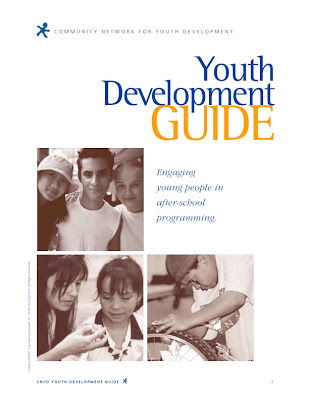
I was also reminded of a chapter in the CNYD Youth Development Guide that focuses on relationship building. You can read this chapter by clicking here. Within this chapter is a staff exercise entitled “Cookie Lady” (page 20 of the PDF). This exercise asks adults to think back to a certain age and identify the adults that were very important to them. One participant identified the lady in the cafeteria that passed out cookies - hence the name “Cookie Lady”.        


Thursday, September 8, 2016

Character Day is September 22nd and Lights On Afterschool! is October 20th


There are two important events coming up that are important for the afterschool community. We urge all afterschool leaders to consider their participation, see below. 

CHARACTER DAY - SEPTEMBER 22, 2016 (#CharacterDay2016)


Two weeks to Character Day! Afterschool and summer youth programs are perfectly positioned to promote their development of important character traits. In fact, many programs do this intentionally as part of their stated mission. We encourage afterschool and summer programs to join over 50,000 events happening around the globe. The hunger for this conversation is incredible! If you are still looking for ideas for your event (whether you have 15 mins, an hour, or a whole day devoted to Character Day), check out Let It Ripple's website, where you can find suggestions for activities, discussion kits, other free materials, and videos for all ages. 


LIGHTS ON AFTERSCHOOL! OCTOBER 20, 2016 

Get Involved! We encourage all afterschool programs to participate in the 17th annual Lights On Afterschool! celebration. This is an important day, sponsored by the Afterschool Alliance, in which thousands of programs make the case for the continued support of afterschool programs for youth. You can find events, gather ideas, and register for Lights On Afterschool and help showcase the benefits of afterschool programs and their need for support. 

Last year, more than 1 million Americans celebrated Lights On Afterschool at more than 8,000 events. Thousands of news outlets shared stories of diverse programs around the country. We know partners like you made this happen.

We can’t wait to see what programs across the country have in store for Lights On Afterschool 2016!


A Book Drive for Children's Books Makes for a Fabulous Service- Learning Project

Source: The Children's Book Project  By Sam Piha   In our previous paper entitled, Reading Buddies: Promoting Literacy and Community Eng...