Thursday, December 15, 2016

Gratitude

All of us at Temescal Associates, the How Kids Learn Foundation, and the Learning in Afterschool & Summer Project wish you a peaceful and restful holiday! On our part, we are most grateful to all of you who work hard to support our youth in out of school time. 


Monday, December 12, 2016

What Can You Do to Implement a Strategy for Racial Justice in the Next 7 days?

By Guest Blogger, Lynn Johnson 


Lynn Johnson, Spotlight: Girls
My plan for the next 7 days was to have a few meetings, do a bunch of busy work on the computer, attend a local theater production, see some friends, read a little. Certainly engage in some Netflix. Pretty standard stuff. Nothing world changing.

Then last week, I attended the How Kids Learn Conference in San Francisco. I heard Dr. Shawn Ginwright of San Francisco State University speak about how youth programs can and should address racial justice. This was one of those paradigm-changing speeches that you remember forever.  


Dr. Shawn Ginwright, SFSU
In it, he calls for us to attend to "radical healing." He charged those of us who work with children and youth to focus our work on two areas:

  1. Collective Healing from the all of the harm that so many of us has suffered due to structural racism and implicit bias
  2. Transforming the Systems that caused the harm in the first place

At the end of his speech, he left us with this challenge - "What can you do to implement a strategy for racial justice in the next 7 days?"

Now, I have a new agenda for the week. 


Thursday, December 8, 2016

The Importance of the Arts

By Sam Piha

Sam Piha
We know that the arts in all forms (digital arts, performing arts, fine arts, etc.) and art making is important in the healthy development of children and youth, in fact our whole society. Art making is truth telling and provides all youth, especially those without a voice, an opportunity to express themselves. 

We want to acknowledge the tragic fire that struck the vibrant arts community in our hometown of Oakland, CA. We are all affected by this tragedy and our hearts go out to the families and friends of those lost and missing in the fire. 

Vigil at Lake Merritt
Photo Credit: ABC News

Mariah Rankine-Landers
We are thankful that the importance of art making was promoted in our recent How Kids Learn VI conference. A special thanks to Mariah Rankine-Landers (Alameda County Office of Education), who spoke on teaching equity through the arts. Also, thanks to Richmond’s RYSE Center for sharing some of the art and videos created by their youth. 


Photo Credit: RYSE Center, Richmond, CA

Thursday, November 17, 2016

The Year of Living Dangerously

By Sam Piha and Stacey Daraio 

The last year has been one of incredible violence and hate speech. Much of this has been graphically reported in the media and has greatly effected young people. There have been a series of mass killings in Charlotte, Orlando, San Bernardino, Paris and elsewhere. There have been a number of shootings by the police of unarmed civilians captured on video. 


This year’s presidential campaign has been filled with hate speech directed at people of color, people of faith, and on. Not to mention threats of deportation of Latino families. Over the last year, we have seen a rise in hate crimes as well as a dramatic spike after the election. One young person asked on the news if “hate is now state-sponsored?” After students chanted, "build a wall" at a school sporting event, Archer City (Texas) school Superintendent C.D. Knobloch apologized, stating heated emotions after the election probably were a factor. 

Photo Credit: Commondreams.org
This is especially difficult for adult youth workers who young people turn to to understand what is happening and how they should respond. A number of students in Des Moines, Iowa; Omaha, Neb., Portland, Ore., Los Angeles and Oakland, Calif., and other cities have walked out of school to protest possible federal policies that promote fear and hate. 

Photo Credit: Omaha.com
First, we want to acknowledge the difficulties and concerns that youth workers have in light of the above. Secondly, we want to offer a few tips for leaders and staff of youth programs. 

1) READ WHAT OTHERS HAVE SAID: Much has been written by educational and afterschool leaders about all of this. We recommend that youth workers read what others have written. Here is a link to a statement by the National AfterSchool Association (NAA): It's Not About Politics. It's About Community. We also recommend articles from UC Berkeley's Greater Good Science Center


2) ADULT SELF-CARE: These events have been very stressful for adult youth workers who often support low-income and youth of color. For many, the quest for social justice is what motivated their engagement. Before talking with young people, it is important that the leaders of youth programs provide a safe place for workers to discuss their own feelings. Secondly, it is important that there is an organizational discussion of what adults should say and how they should address the need for young people to express their thoughts, concerns, and fears, and what they can do if they experience hate speech or actions. Finally, adult youth workers may need access to resources that speak to how to have difficult conversations with groups of youth. For a listing of some resources, see a previous post here.

3) TALKING WITH YOUNG PEOPLE: It is especially useful for programs to have an ongoing place and process where youth can express their thoughts or concerns. This negates the need to convene conversation groups only when there is an event. It is important that adult staff have some training in facilitating conversation groups. It is also important that:
  • Youth are assured that they will be physically and emotionally safe within their program, and that they are valued and loved;   
  • Youth feel safe sharing their thoughts, including those with differing views;
  • Youth understand who they can go to if they experience hate speech or actions; 
  • Youth have opportunities to positively respond to their fears or concerns. This may involve activities that improve the climate of their school and/or community.  

4) A PLAN FOR SUPPORTING UNDOCUMENTED YOUTH: Undocumented youth and their families are experiencing their vulnerability in new ways. Educate yourself first on actions you can take before broaching the subject with youth. Websites like: National Immigration Justice Center and My (Un) Documented Life are great resources.

5) COMMIT TO STOPPING INJUSTICE WHERE YOU SEE IT: We must all, especially white allies, recommit ourselves to stepping in, speaking up, educating our youth and other adults about the injury injustice causes. 

6) BE KIND AND CONNECT: Know that everyone is experiencing the news in their own way. Reach out to youth and other adults. Make time to check in and ask how people are really doing. Respect what they say and just LISTEN. 

These negative events described above are not going away. Thus, it is important that afterschool and community-based youth programs have strategies that are thought through and long-term. This is critically important if youth programs are experienced as safe places.   

Monday, October 10, 2016

Afterschool and Communities of Concentrated Poverty

By Sam Piha

Sam Piha
Afterschool youth programs have been serving low-income youth since the late 1800s. This is well documented in Robert Halpern’s book, Making Play Work. The History of Afterschool in America will also be the subject of a documentary video that we are working on currently. 

The Afterschool Alliance recently published a new report, America After 3PM Special Report: Afterschool in Communities of Concentrated Poverty. According to Nikki Yamashiro, Director of Research at the Afterschool Alliance, “Where you live has direct and indirect impacts on the fundamental resources and opportunities you count on, and which many people may take for granted. Your location affects the quality of schools available to you, your access to healthy and affordable food, and your overall wellbeing and future economic success.This is why the Afterschool Alliance believed it was critical to examine the role that afterschool programs are playing (or not playing) in communities of concentrated poverty.” 

Making Play Work by Robert Halpern and
History of Afterschool Project by The How Kids Learn Foundation

Key findings from the report include:
  • The demand for afterschool and summer learning programs in communities of concentrated poverty is high. Both participation in and the demand for afterschool and summer learning programs is higher in communities of concentrated poverty compared to the national average. 
  • Parents living in communities of concentrated poverty rely on afterschool programs. Parents living in communities of concentrated poverty looked to afterschool programs as a source of support for their family, more so than parents living outside of these communities. 
For more infographics from the Afterschool Alliance, click here.

  • Afterschool programs provide integral supports for children living in communities of concentrated poverty. An overwhelming majority of parents living in communities of concentrated poverty report that their child’s afterschool program provides opportunities for physical activity (87 percent); homework assistance (81 percent); STEM learning opportunities (78 percent); opportunities for reading or writing (76 percent); and beverages, snacks or meals (75 percent).
  • Key barriers exist regarding access to afterschool programs in communities of concentrated poverty. Accessibility and affordability are two major obstacles affecting the ability of parents living in communities of concentrated poverty to enroll their child in an afterschool program. 

Jodi Grant, Executive Director at the Afterschool Alliance, will share some of the findings at our upcoming How Kids Learn VI conference (San Francisco) in December.  


Visit the America After 3PM page where you can read the full report or executive summary.  

Monday, October 3, 2016

LIAS Online Guide with Videos

By Sam Piha
Sam Piha

The Learning in Afterschool & Summer (LIAS) project has posted several video interviews on the relevance of the LIAS learning principles featuring afterschool and educational leaders from across the country. Now we have published an online, magazine-style guide to the LIAS learning principles with mini clips from these video interviews. This guide can be viewed with a computer, smartphone, or tablet. 

We also converted a number of important articles from the LIAS project and the Expanded Learning 360°/365 project. Click here to check it out. 


Friday, September 23, 2016

Remembering the Importance of Relationships and Kindness

By Sam Piha

Sam Piha
I was reminded this week of the importance of adult relationships in young people’s development and the difference we can make by offering understanding, kindness, and acceptance. This is easy to take for granted because of all of the pressure to focus on content and academic/non-academic skills. 

I was reminded of this due to an interview between Terry Gross (NPR) and Ryan Speedo Green. Mr. Green was a violent and troubled youth at an early age. Due to the kindness and acceptance of an elementary school teacher, he is now a singer with New York’s Metropolitan Opera. You too can be inspired - have a listen


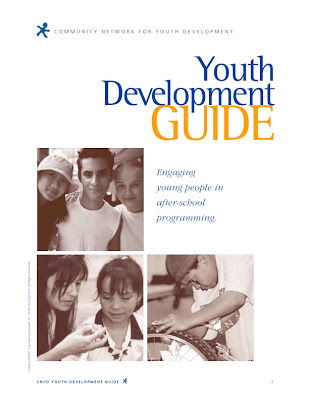
I was also reminded of a chapter in the CNYD Youth Development Guide that focuses on relationship building. You can read this chapter by clicking here. Within this chapter is a staff exercise entitled “Cookie Lady” (page 20 of the PDF). This exercise asks adults to think back to a certain age and identify the adults that were very important to them. One participant identified the lady in the cafeteria that passed out cookies - hence the name “Cookie Lady”.        


Thursday, September 8, 2016

Character Day is September 22nd and Lights On Afterschool! is October 20th


There are two important events coming up that are important for the afterschool community. We urge all afterschool leaders to consider their participation, see below. 

CHARACTER DAY - SEPTEMBER 22, 2016 (#CharacterDay2016)


Two weeks to Character Day! Afterschool and summer youth programs are perfectly positioned to promote their development of important character traits. In fact, many programs do this intentionally as part of their stated mission. We encourage afterschool and summer programs to join over 50,000 events happening around the globe. The hunger for this conversation is incredible! If you are still looking for ideas for your event (whether you have 15 mins, an hour, or a whole day devoted to Character Day), check out Let It Ripple's website, where you can find suggestions for activities, discussion kits, other free materials, and videos for all ages. 


LIGHTS ON AFTERSCHOOL! OCTOBER 20, 2016 

Get Involved! We encourage all afterschool programs to participate in the 17th annual Lights On Afterschool! celebration. This is an important day, sponsored by the Afterschool Alliance, in which thousands of programs make the case for the continued support of afterschool programs for youth. You can find events, gather ideas, and register for Lights On Afterschool and help showcase the benefits of afterschool programs and their need for support. 

Last year, more than 1 million Americans celebrated Lights On Afterschool at more than 8,000 events. Thousands of news outlets shared stories of diverse programs around the country. We know partners like you made this happen.

We can’t wait to see what programs across the country have in store for Lights On Afterschool 2016!


Tuesday, August 23, 2016

ELPs and the Classroom Teacher Shortage, Part 2

By Sam Piha


Sam Piha
With the last economic recession, school districts across the nation and in California laid off large numbers of teachers. The recent uptake of the economy and increased tax dollars for education, districts are now experiencing a large shortage of teachers. We also know that the number of college students who have enrolled in education courses has dropped significantly. 

How can expanded learning programs (ELPs) contribute to solving this shortage? We believe ELPs are perfectly positioned to allow young workers and future teachers the opportunity to learn skills that are very important to classroom work.

In part 2 of ELPs and the Classroom Teacher Shortage, we offer interview responses from young adults who have migrated from ELPs to the teaching profession (René Ly, Graduate Student in Education and Substitute Teacher) and Anna Zimmerman (Graduate Student in Education and Future 4th Grade Teacher). In Part 1, we offered interview responses from ELP leader (Alec Lee, Aim High) and a teacher training leader (Mike Snell, California Teaching Fellows Foundation).

We also want to share this valuable and brief video that features René Ly and other young teachers who have migrated from youth work to teaching careers. 


-----------


Q: Can you say something about why you chose to become a classroom teacher? 

RL: I chose to be a classroom teacher because of the unique experience. As a classroom teacher, I am able to be with my students and have the ability to be in community with them as well as witness their tremendous development throughout the school year. 

AZ: Becoming an educator has always been a passion of mine.  When I was in high school, I joined an ROP class called Careers in Education, I knew that this is what I wanted to do.  Being a classroom teacher is not only about loving children.  It is about loving to see growth in the youth and loving to see the changes that these young lives are going through.  Being an educator means you are a mentor and a role model for the youth.  I chose to become a classroom teacher because I am passionate about making a difference in the lives around me.  

Q: Based on your experience, why are afterschool and summer youth programs well-positioned to serve as good training grounds for young people who want to be teachers? What do they offer that the traditional student-teacher experience doesn't?

RL: Within the afterschool and summer program experiences, I was able to develop lesson plans based off of interests and hobbies all while aligned with the state standards. I remember conducting science experiments, teaching art and dance as well as reading units. Teaching in afterschool capacities allowed me to teach with less pressure in terms of institutionalized expectations. It allowed me to be creative and thoughtful throughout my planning. 

AZ: These programs allow you to experience what its like to be responsible for a group of students.  You learn that not every day is going to go as planned and you learn to be flexible.  One of the greatest lessons I learned in the after school program was to be resilient.  It is so important to know that if a lesson is not as great as you wish it was, or if a student is struggling or being a distraction, it is important to implement classroom management skills that are well suited for the environment you are in.  As an educator you must learn to be resilient and allow yourself to fail so that you can learn from that mistake.  These programs for early teachers are great for supporting teachers in the making and giving them hands on experience with the kids.  While sitting in a lecture class you can learn a lot of valuable information, however, you truly learn the most by working with the kids and learning that each kid learns and retains information differently.  By working hands on in a classroom you are allowing yourself to experience an element of what its like to be a teacher.  

Q: Based on your experience, do you think afterschool and summer youth programs are well-positioned to encourage young people to consider the teaching profession as the next step in their career? Why? 

RL: I believe afterschool and summer youth programs are great stepping stones for young people to explore the route of teaching. Both programming provide opportunities to develop your craft, share it with students and most importantly practice. The leadership within the programs are also beneficial in terms of guidance and mentorship. 

AZ: These programs allow the future teachers to be in the classroom and working with the students in whole class discussions as well as small group. Also, these programs allow the future teacher to experience what its like to see a child's "lightbulb" go off when they grasp a concept.  These are all important concepts for a teacher to see and experience.  Not only is it beneficial to work hands on with the students, but these programs also offer a lot of guidance and structure when going through classes.  The most encouraging and beneficial part for me, was that I was able to connect and build relationships with the staff and administration through different school sites.  These people became friends, mentors, and also an amazing example of what teaching is all about. 

Q: In your own words, can you say something about the value of the Aim High and the Teaching Fellows program to your development as a young teacher? 

RL: Aim High's attention and care of their staff is the first and foremost of my development as a young teacher. I had the pleasure of working with veteran teachers who were open, kind, and willing to share their best practices. Aim High also gave me the opportunity to develop all aspects of my craft as a young teacher. From lesson planning to creating community, Aim High provides a space for that. My biggest take away from Aim High is that learning is FUN, CREATIVE, and MEANINGFUL. A recipe I will carry with me throughout my teaching career. 

AZ: California Teaching Fellows provided me with more than just a classroom setting to work in. This program allowed me to gain a better understanding of the education field and also a foundation for what to expect as a new teacher. Because of this program, I am confident in accepting a position as a 4th grade teacher. I feel confident in my ability to not only deliver meaningful lessons to my students, but also how to manage my classroom and how to build relationships with each of my students.  This program has helped me make connections with valuable people in the field of teaching and it has taught me the professional side of being an educator.   

Tuesday, August 9, 2016

ELPs and the Classroom Teacher Shortage, Part 1

By Sam Piha


Sam Piha
With the last economic recession, school districts across the nation and in California laid off large numbers of teachers. The recent uptick of the economy and increased tax dollars for education, districts are now experiencing a large shortage of teachers. We also know that the number of college students who have enrolled in education courses have dropped significantly. 

How can expanded learning programs (ELPs) contribute to solving this shortage? (By expanded learning programs, we are referring to school and community-based youth programs.) We believe they can help in two ways:

  • Serve as a training ground for students enrolled in education/teacher programs. 
  • Inspire youth workers who may be interested in advancing their careers by entering the teaching profession. 

Photo Credit: Education Week
ELPs are perfectly positioned to allow young workers and future teachers the opportunity to learn skills that are very important to classroom work: 

  • How to build a caring community of youth.
  • How to form meaningful relationships with youth.
  • How to use project based learning to advance engagement and align these experiences with the interests of youth.
  • How to advance social emotional learning and character skills through youth programming.
  • And more…

In Part 1, we offer interview responses from ELP leader (Alec Lee, Aim High) and a teacher training leader (Mike Snell, California Teaching Fellows Foundation). Also, Aim High was featured in Education Week for their success in encouraging youth workers to pursue a career in teaching. Click here to read the article.  

In Part 2, we will feature interview responses from teachers who began their careers as youth workers. 
---------


Q: Can you say something about the recent teacher shortage in California and the Central Valley? What is this and what caused it? 

MS: The teacher shortage is real. In speaking with superintendents and school
district leadership, it is a challenge to fill open teacher positions within the district. This is especially true in our more rural school districts. As increasing waves of baby boomers retire and interest in joining the teaching profession has been in steady decline, the demand and access to the quality gap is huge. 

As I connect with national after school providers across the country, they describe the challenges in their regions as being similar. Plain and simple, there are not enough young people choosing education as a career path, therefore credential programs are not able to produce the number of teachers required to meet the current demand. 

Recent studies suggest that the number of high school students interested in teaching as a career path has declined 55% in the last 10 years, from 9% of graduating seniors wanting to teach, to only 4%. I believe that those of us in the expanded learning space have a huge opportunity to influence young people’s perception of teaching as a career choice. Beyond opportunity, I believe we have a responsibility to all young people to place the best and brightest after school leaders in front of them, and my desired outcome is that this experience influences both the after school leaders as well as our young people, to promote teaching as a career choice. 

Q: How are afterschool and summer youth programs well-positioned to serve as good training grounds for young people who want to be teachers? 

MS: After school and summer present the best opportunities for those interested in education to gain tremendous real life experiences working with young people and working within the K-12 system. Year-round, after-school and summer staff earn hundreds, and in many cases, thousands of hours of classroom experience to build them up and prepare them for their career in education. Beyond experience at the point of service, our staff benefit from additional professional development and training around the systems and strategies that school districts deploy to accomplish their goals for all students.  

This is vital real world experience. They meet the school district support team, they collaborate with seasoned teachers, and often they interface with the superintendent. Developing these relationships while they are attending college and building their professional context for eduction provides a huge ‘foot in the door’ opportunity and will typically provide them advantages when competing for a teaching job against another candidate without after school or summer experience. They learn about the work, the culture, the preparation, the challenges, and they truthfully go into the profession incredibly well prepared. Here at Teaching Fellows we hear regularly from the over 40 superintendents we serve that are absolutely looking to our after school and summer staff as the best training ground and talent pool for future teachers in their respective districts.  

AL: Summer is a time to be different and step away from traditional classroom learning environments. At Aim High, our class size is 15-18 with two or three teachers in each classroom. Our curriculum is project-based and culturally relevant. We do two weeks of professional development before the kids come through the door. As a non-profit, we are freed from the constraints of public schools. We position ourselves at the intersection of rigor and fun. Young people are paired with lead teachers who have the opportunity to mentor. Summer can be a teaching laboratory. Lastly, many summer programs are community based and provide the opportunity to really know kids and their potential, issues and challenges very well.

Q: How are afterschool and summer youth programs well-positioned to encourage young people to consider the teaching profession as the next step in their career? 

MS: The population of millennials, which is our current college-age population, will far outsize the baby boomer numbers. The generation that follows the millennials will be even larger. This population trend coupled with the national rise in after school programs and systems of support will be the key to attracting, train and retain generations of future teachers. With after school and summer staff leaders now in this space, we have the tremendous opportunity to leave a lasting impression and challenge students to follow in our footsteps, to choose a career that shapes careers. 

The Teaching Fellows are uniquely positioned to encourage young people a few different ways; Teaching Fellows match the demographics of the students they serve so there is a built-in level of trust. Furthermore, Teaching Fellows are college-attending role models for young people, students look up to Teaching Fellows and think ‘if they did this, then I can do this too’. That type of influence is powerful. These two factors uniquely position Teaching Fellows, and many other after school and summer staff to be in positions to encourage and inspire young people into the education profession, and to pursue their dreams.

AL: Young youth workers in Aim High are given tremendous responsibility and opportunity. They also experience a culture of feedback and growth. Lastly, they work side by side with professional educators.

———
About Aim High
Aim High is committed to closing the opportunity and achievement gaps in Northern California through their transformative summer learning program. They envision every middle school student having access to joyful summer learning, inspired and innovative teachers, and the support they need to succeed in school and life. Aim High creates life-changing opportunities during the summer and beyond. Their community:

  • Nurtures the promise and potential of middle school students from low-income neighborhoods
  • Prepares students for high school, setting them on the path to college and future success
  • Inspires the next generation of teachers and educational leaders


About The California Teaching Fellows Foundation (CTFF)
CTFF seeks to inspire next-generation leaders with a passion for teaching and learning while impacting the lives of youth. They work to:

  • Develop teachers and leaders who contribute to positive changes in the lives of students, their schools, and their communities.
  • Produce diverse teaching professionals who implement innovative, effective teaching strategies.
  • Fully engage the community in education and supporting future teachers and leaders. 

Wednesday, August 3, 2016

The Gender Creative Child: A Radio Interview with Dr. Diane Ehrensaft

By Sam Piha


Sam Piha
It is important that educators and youth development specialists understand the latest thinking on the needs of transgender youth. To support this, we worked with Diane Ehrensaft to develop a briefing paper entitled Understanding Gender Identity in Young People: A Briefing Paper for Afterschool Programs. We also interviewed Dr. Ehrensaft, which we posted on our LIAS blog in two parts (see Part 1 and Part 2). 

Dr. Ehrensaft, co-founder of UCSF’s Child and Adolescent Gender Center, coined the term “gender creative child” to describe children whose gender identity is not reflected in the male or female box that was checked on their birth certificates. 


Mina Kim (Left) | Dr. Diane Ehrensaft (Right)

Dr. Ehrensaft talked with Mina Kim on KQED’s Forum program about the experience of gender nonconformity and discussed her new book, “The Gender Creative Child: Pathways for Nurturing and Supporting Children Who Live Outside Gender Boxes.” We thought our readers would benefit by hearing Dr. Ehrensaft in her own words. This radio broadcast can be heard by clicking below. 


---------------------------------------------
Diane Ehrensaft, Ph.D. is an associate professor of Pediatrics at the University of California San Francisco and a developmental and clinical psychologist in the San Francisco Bay Area, with a private practice in Oakland, California.  She is Director of Mental Health of the Child and Adolescent Gender Center and chief psychologist at the Child and Adolescent Gender Center Clinic at UCSF Benioff Children’s Hospital. She specializes in research, clinical work, and consultation related to gender-nonconforming children, lecturing, publishing, and serving as an expert witness on both topics nationally and internationally.

Dr. Ehrensaft is author of Gender Born, Gender MadeMommies, Daddies, Donors, SurrogatesBuilding a Home Within (co-edited with Toni Heineman); Spoiling Childhood; Parenting Together; and the new release, The Gender Creative Child.  Dr. Ehrensaft serves on the Board of Directors of Gender Spectrum, a national organization addressing the needs of gender-expansive children and their families. 
---------------------------------------------
You can read other blogs by the LIAS project by going to: 

A Book Drive for Children's Books Makes for a Fabulous Service- Learning Project

Source: The Children's Book Project  By Sam Piha   In our previous paper entitled, Reading Buddies: Promoting Literacy and Community Eng...