Monday, February 23, 2015

Looking into the Future: Words of Important Afterschool and Education Leaders

By Sam Piha


Sam Piha


To welcome in the new year, we posted a blog asking a number of afterschool leaders, "Looking into the future, what do you believe are the most important challenges and opportunities facing the afterschool movement?". Below is part 2, where we share responses of other afterschool leaders. 


Lucy Friedman,
President
The After School Corporation
"The challenge facing the after-school movement is that too many educators, funders and policy makers want to judge its quality by standardized test scores alone. And in the desire to close the achievement gap, there's too much emphasis on test prep and not enough focus on the life-enriching activities that foster curiosity, instill confidence, and ultimately lead to a passion for learning. Research, and anyone who’s ever watched a kid grow up, tells us that these characteristics are critically important for a successful adulthood." 


Pedro Noguera
Professor of Education
New York University
"The biggest challenge facing the afterschool movement involve equity; equity in access, equity in the quality of what is provided to children, equity in the skills and training of those who provide services to children.  Lack of equity is ultimately the critical factor driving disparities in learning outcomes (i.e. the so-called achievement gap), and it is manifest in the afterschool sector as well.  Access to high quality afterschool programs could also play a decisive role in reducing educational disparities but this will only occur if we remain vigilant in advocating for equity in the sector.  Clearly, it's not good enough for afterschool educators to do good work.  We must be sure that access to good, stimulating learning experiences are available to all children, regardless of where they live, what language they speak, who their parents are, or how much money they earn. This is really the civil rights issue of the 21st century.  The question we must ask ourselves is: how can each of us play a role in advancing equity in the communities where we work and live?"


Jane Quinn,
Vice President and Director of
National Center for Community Schools
Children's Aid Society
“Opportunities: Build on the emerging positive results from a variety of approaches, models and programs; capitalize on young people’s interests in high quality, active learning experiences; and help principals, teachers and other educators understand that after-school staff can be allies in helping young people rise to the occasion presented by the Common Core State Standards.

Challenges: Competition for funding; over-emphasis on standardized testing as the only measure of success; policy-makers searching for the quick fix rather than the real deal; and growing inequality as represented in nearly every phase of American life.”

Chris Smith
President & ED
Boston After School
and Beyond
"The greatest opportunity seems to be the broader recognition of the developmental and environmental factors that contribute to learning.  This should create a big opening for those in the after-school movement that are ready to put their approaches to the test in measurable ways.  In Boston, we are measuring critical aspects of the learning environment (aka, program quality) and transferable skills such as self-management, critical thinking, collaboration, and perseverance, which we call “power skills.”  When we begin to use the same vocabulary, we will see that the skills we focus on after school and during the summer are the very same ones that that young people need to succeed in college and the ones that employers value.

The major challenge we face is the field’s fragmented nature.  However, this challenge can become an opportunity when you look see fragmentation as diversity of approach and consider the vastly different learning needs of young people.  For this to happen, we need to unify ourselves in ways that allow policy-makers, school leaders, and funders to pursue a coherent and scalable solution.  In Boston, we do this through common standards and measurement.  In a sense, we are creating the equivalent of a box score for baseball or an exchange for the stock market.  This shared measurement platform allows programs to shine.  More than 50 organizations, serving thousands of young people, have stepped up to meet this challenge by collecting and sharing data so that we can identify programs’ strengths and address challenges, both as individual programs and as a unified network of providers."

Tuesday, February 17, 2015

"Expanded" or "Extended" Learning: An Interview with President and Co-Founder of the National Center on Time & Learning

By Sam Piha

Sam Piha
The afterschool and summer learning movement is not immune from collecting new jargon. As we move forward, there are two new terms that are being used in often confusing ways. Those terms are "expanded learning" and "extended learning". How are these terms different and are they meant to replace "afterschool" and "summer learning" programs. To add to the confusion, they are being used in different ways depending on what part of the country you come from.

To help us better understand these terms, we interviewed a host of afterschool leaders to ask them to help clarify. Below is an interview with Jennifer Davis, Co-Founder & President at The National Center on Time & Learning (NCTL). We offered a previous blog on this topic that included an interview with Jennifer Peck (Partnership for Children and Youth) and a second one that featured Lucy Friedman (TASC). 


Q: The term “expanded learning” is used differently by different people in different parts of the country. Can you give your definition of “expanded learning time and programs”?

Jennifer Davis,
Co-Founder & President
The National Center
on Time & Learning
A: NCTL’s definition of expanded learning time (ELT) is a school redesign model that provides students significantly more and better learning opportunities within an expanded school day and year. High quality expanded learning time schools provide students more individualized instruction and a well-rounded education that includes art, music, robotics, drama, sports, step dance and many other enrichments that make learning fun and engaging. In many ELT schools, community partners run these activities.  Adding significantly more time to the school calendar makes these things possible and also enables teachers to have more collaboration time to strengthen their craft.  Overall these school models are designed to ensure that all children in the high poverty schools have the opportunities they need to succeed. I recommend Wikipedia’s page on expanded learning time since it provides an overview and history of the movement. 

Q: In your mind, what is the difference between the terms “expanded learning” and “extended learning”?

A: In my experience, I have found that parents, teachers, and students rightfully fear “more of the same” and that’s exactly what “extended learning” conveys. However, “expanded learning” connotes offering children broader educational experiences, which is what NCTL advocates for. Everyone agrees, we can’t simply tack time on to the school calendar and expect to see our schools improve and our students to be engaged. Instead, expanded learning time enables schools to truly rethink the entire school day/year and produce significant improvements in the overall design of the school that can result in much more engaged learning that better prepares students for their futures.
   
Q: Are you hoping that the field begins using the terms “expanded learning programs” to replace “afterschool and summer programs”? 

A: No. I think it’s important to differentiate between these terms even though after-school, summer and ELT programs are all important and parents should have choices among these options.  Expanded learning time differs from afterschool and summer programs because ELT requires all students in a given school to attend the longer day and/or year, and the additional time becomes a dependent component of the school’s educational practices and objectives. Afterschool and summer programs are crucial as well but they are voluntary.

___________________
For twenty years, Jennifer Davis has held positions at the federal, state, and local levels focused on improving educational opportunities for children across the United States. Jennifer’s previous positions have included serving as U.S. Department of Education Deputy Assistant Secretary, Special Assistant to U.S. Secretary of Education Richard W. Riley, Special Assistant to the Executive Director of the National Governors Association, and Executive Director of Boston Mayor Tom Menino’s after-school learning initiative.  

In 2000, Jennifer became the co-founder and president of Massachusetts 2020, an education organization dedicated to expanding learning opportunities for children across Massachusetts. Massachusetts 2020 led eight strategic initiatives to improve education and after-school learning opportunities for high poverty students across the state. 


On October 2, 2007, Massachusetts 2020 launched a national organization, the National Center on Time & Learning (NCTL), which is dedicated to expanding and modernizing the American school calendar to meet the needs of students in the 21st century. 

Thursday, January 29, 2015

NOW AVAILABLE: Presentation Videos from the How Kids Learn IV Conference!

By Sam Piha

Sam Piha
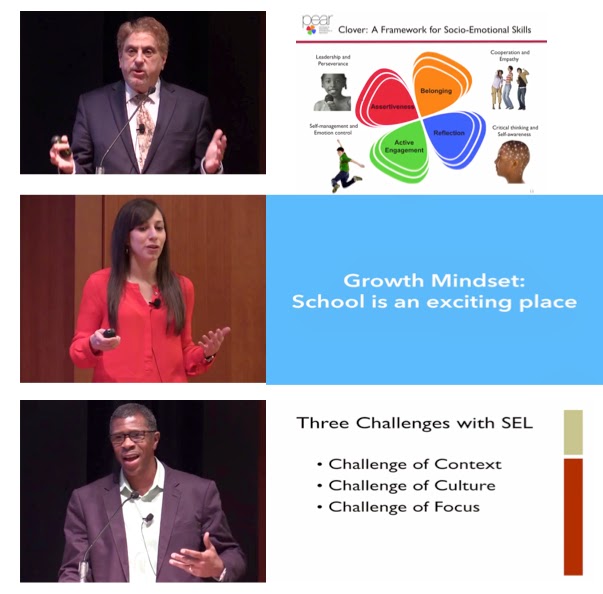
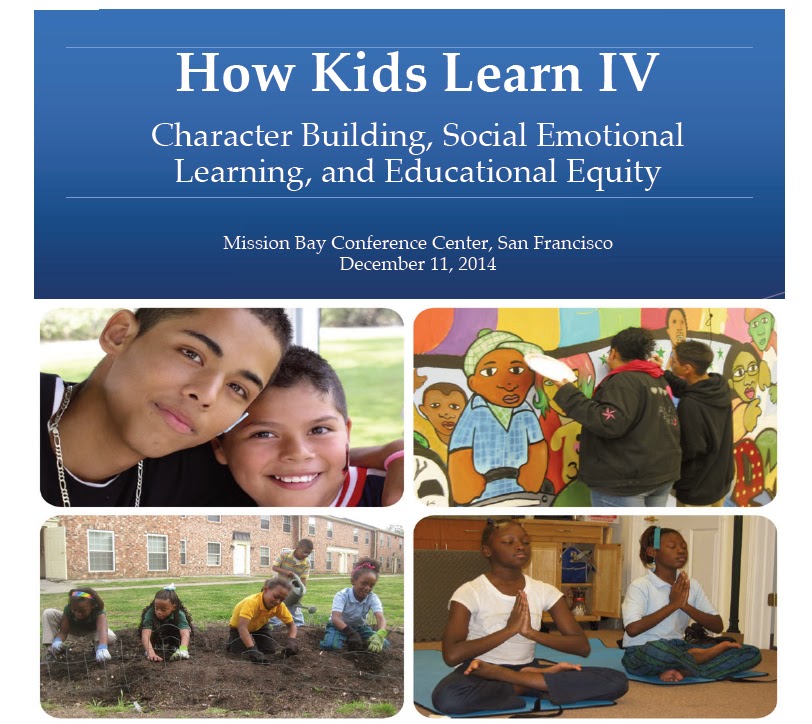
On December 11, 2014, Temescal Associates and the Learning in Afterschool & Summer project sponsored our fourth How Kids Learn conference. This one day conference focused on character building, social emotional learning, and educational equity. 

For those who attended and wished to share the presentations with others and for those who were not able to attend, we have produced videos of the key presentations on our How Kids Learn YouTube channel. On this channel, you can also view presentations from educational and afterschool thinkers from previous conferences. 

Diego Arancibia (ASAPconnect) served as our Master of Ceremonies

Presentations from HKL IV include: 

We also share three videos that were shown at the conference. These can be accessed below:
Photo by Laila Bahman at HKL IV

All of these presentations and videos above serve as great discussion and training tools for educational and afterschool leaders. We encourage you to share them with all of your stakeholders and colleagues using social media. You can also view photos of the conference and participants by clicking here

Photo by Laila Bahman at HKL IV 

Thursday, January 22, 2015

Growth Mindsets: An Interview with Mindset Works CEO, Eduardo Briceño

By Sam Piha

Sam Piha
There has been a great deal of buzz about growth mindsets and its impact on young people's learning and development. Below we offer an interview with Eduardo Briceño.

Eduardo is the CEO of Mindset Works, which he co-founded with Carol Dweck, Lisa Blackwell and others, to help schools cultivate student ownership of their own learning. With his fellow mindsetters, Eduardo helps schools build learner capacity and success through practices that instill growth mindset beliefs and foundational learning skills in students, teachers and the broader community.

We invited Eduardo to speak at our recent How Kids Learn IV conference in San Francisco but he was unable to attend. We featured a video of Eduardo describing growth mindsets and we highly encourage our readers to watch it. Eduardo agreed to participate in an interview in lieu of his attending the conference. His responses are shown below. (Note: Mindset researcher, Carissa Romero at Stanford University, did present at the How Kids Learn IV conference, and a video of her presentation will be featured in an upcoming blog.)

The Power of Belief -- mindset and success | Eduardo Briceño | TEDxManhattanBeach


Q: There is a lot of buzz about the influence of a growth mindset. For those who are new to this concept, can you briefly describe what is meant by “growth mindset”?
A: Yes, growth mindset awareness and practice is multiplying, which is very exciting.  Even the U.S. President and First Lady have incorporated growth mindset language into their speeches!

Eduardo Briceño, CEO
Mindset Works
Photo Credit: tedxmanhattanbeach.com
Discovered by Stanford Professor Carol Dweck, Ph.D., a growth mindset is the understanding that personal qualities are malleable and that we can develop our abilities.  People who understand that they can grow their intelligence (which is our ability to acquire and apply knowledge and skills) and other abilities, behave in learning-oriented ways.  They challenge themselves to learn what they don’t already know, they seek feedback, they reflect, they view effort as something we can all benefit from rather than as a sign of weakness, they value and learn from mistakes, and they persevere in the face of setbacks.  As a result, they achieve higher rates of growth and success.

Q: What is opposite of a “growth mindset”?
A: The opposite of a growth mindset is a fixed mindset, which is seeing personal qualities as fixed.  For example, when people categorize others as “math people”, or “athletic”, or “artistic”, in fixed ways, rather than as competencies they have developed over time, or when they see other people as incapable of developing certain abilities, they’re exhibiting a fixed mindset.  People who are in a fixed mindset tend to want to stay within their comfort zone, they become defensive when they receive feedback, they view effort as a sign of weakness and inability, they see mistakes as evidence of being incapable, and they disengage when things get hard.  As a result, they don’t grow as much as people with a growth mindset and they achieve lower levels of success.
The great news, is that anybody can develop and strengthen their growth mindsets!

Q: There is research that suggest that a growth mindset is a good predictor of improved learning. Can you speak to this research?
A: Yes, there’s a lot of research that show that people with a growth mindset learn and improve more, and as a result they reach higher levels of ability and success.  There is a deep and growing body of research on this, in domains as varied as K-12 education, higher education, the workplace, sports, health, and relationships.  Several of these studies can be accessed from Carol Dweck, Ph.D.’s Stanford profile page.  Another great literature review that summarizes this body of research in K-12 education is: Teaching Adolescents to Become Learners (Farrington et. al.).

Q: How are mindsets developed?
A: Mindsets are beliefs.  They’re developed like any other beliefs: from our observations of the world, ourselves, and people around us.  When other people believe that abilities are fixed, they tend to say and do things that reflect those beliefs and that lead us and others to view abilities as fixed.  For example, if we hear other people talking about who is smart, or attributing our success to being smart, it conveys that intelligence is fixed, which is a fixed mindset.  When our bosses don’t believe people can improve and as a result don’t give and receive constructive feedback, it leads us to believe that people can’t improve.  When we see IQ as something that is fixed, rather than as what it was intended for (to measure cognitive abilities at any point in time), it leads us to foster a fixed mindset.

We can cultivate growth mindsets by learning that intelligence and abilities are malleable.  We can learn the scientific background behind the plasticity of the brain, or how experts develop their high levels of expertise, and how we can do the same.  We can undertake learning oriented behaviors and measure our progress over time.  And we can support one another in our growth journeys.  This is a lifelong undertaking.  If you want to learn more about other strategies, you can start your journey by subscribing to our growth mindset newsletter, or reading the article Mindsets and Student Agency or Carol Dweck’s book Mindset, or taking the Mindset Works EducatorKit growth mindset teacher training course, or doing the Brainology® curriculum with your students.

Q: Does it take a long time to help kids develop a growth mindset? 
A: Research shows quick effects from growth mindset interventions, but developing a growth mindset, and more broadly becoming a better and better learner, is a lifelong journey.  If we reflect throughout our lives about our habits and what’s working and not, we will always continue to improve, to strengthen our mindsets, and to become more effective learners.  The schools that we serve at Mindset Works put a lot of effort to building and deepening growth mindset cultures, which is not a quick fix, is a way of being and aligning as a community.

Q: What can leaders in out-of-school time do to promote a growth mindset in their youth programs?
A: Lots!  As mentioned above, they can teach the scientific background behind the plasticity of the brain, or how experts develop their high levels of expertise, and how we can do the same.  They can speak with students in growth mindset language, teach them how to give and receive growth-oriented feedback and other learning strategies, and help them self-assess their progress and strategies over time.

Q: Are there resources that are available to learn more about the practical application of this research? Where would you send interested out-of-school workers to find these resources?
A: Certainly!  Our whole Mindset Works website is devoted to that.  You can find free-resources including our growth mindset newsletter, and you can register for our Mindset Works EducatorKit teacher training course or Brainology® curriculum.  Check out Carol Dweck’s book Mindset.  Happy learning!

Friday, January 16, 2015

Expanded Learning Time: An Interview with Lucy Friedman, President of TASC

By Sam Piha

Sam Piha

Lucy Friedman is President of The After-School Corporation (TASC) in New York. Lucy continues to be a leader and innovator within the afterschool movement. Recently, Lucy and her organization have been an outspoken advocate for expanded learning and a partnership between schools and community organizations that focus on the healthy development of youth. We asked Lucy to respond to a few questions and her responses are below. 


Lucy Friedman
President
TASC

Q: The term “expanded learning” is used differently by different people in different parts of the country. Can you give your definition of “expanded learning time?" 

A: Expanded learning re-imagines the traditional school day by adding extra hours, partnering schools and community organizations, and enhancing the quality of education. Through this three-pronged approach, students get additional talent and role models in the classroom and a balanced curriculum that includes the arts, physical movement and hands-on, personalized learning. TASC’s model of expanded learning adds the equivalent of 72 more days to the school year.

We define expanded learning time as an integration between the school day and after-school time. The experiences during the traditional day and those typically in the later hours build upon each other. Lessons and activities perceived as "the fun stuff" are connected to core subjects - reinforcing, making relevant or enhancing what a student learns in, say, math or language arts. At the same time, these learning experiences foster social and emotional development and greater student engagement with school, which leads to greater academic outcomes. In this way, kids get the chance to discover their talents and develop their full potential.

Q: In your mind, what is the difference between the terms “expanded learning” and “extended learning”?

A: 'Extended learning' implies more of the same - a longer school day filled with more time at desks or doing test prep. 'Expanded learning,' on the other hand, sees community partners as a critical component to bringing a broader curricular focus on social and emotional learning, hands-on engagement and learning enrichments that expand horizons and opportunities.

Q: Are you hoping that the field begins using the terms “expanded learning programs” to replace “afterschool and summer programs”?

A: Replacing the terms may lead to confusion for schools and families to whom "summer" and "after-school programs" often mean enriched child care during non-school hours. Rather, we'd like to see expanded learning time be not just an option available to schools and communities, but also a movement that raises expectations and makes it the norm for kids in low-income neighborhoods to have access to the same quality of education and enrichment that middle-class kids currently enjoy in and out of school. We’ve calculated that by 6th grade, kids from low-income communities suffer a 6,000-hour learning gap compared with their middle-class peers. Expanded learning time helps close those learning and opportunity gaps.

__________________
Lucy Friedman is the founder and President of The After-School Corporation (TASC). TASC is dedicated to giving all kids opportunities to grow through after-school and summer programs that support, educate and inspire them. She has served on a variety of advisory commissions and boards, including the National Academy of Science, the Afterschool Alliance and Bryn Mawr College. Lucy has been a member of The Coalition for Science After School Steering Committee since 2004 and served as its chair from 2006 to 2008. 

Tuesday, January 13, 2015

New Afterschool Jargon: "Expanded" or "Extended" Learning

By Sam Piha


Sam Piha
The afterschool and summer learning movement is not immune from collecting new jargon. As we move forward, there are two new terms that are being used in often confusing ways. Those terms are "expanded learning" and "extended learning". How are these terms different and are they meant to replace "afterschool" and "summer learning" programs? To add to the confusion, they are being used in different ways depending on what part of the country you come from.

To help us better understand these terms, we interviewed a host of afterschool leaders to ask them to help clarify. We begin with an interview with Jennifer Peck, Executive Director, Partnership for Children and Youth. We will follow this post with interviews with other afterschool leaders. 

Q: The term “expanded learning” is used differently by different people in different parts of the country. Can you give your definition of “expanded learning time and programs"?


Jennifer Peck,
Executive Director
Partnership for
Children and Youth
A: I’m going to refer to the definition developed with the After School Division at California Department of Education (CDE), which I think captures it well: Expanded Learning Time is defined as before and after school, summer and intersession learning programs that focus on developing the academic, social, emotional and physical needs and interests of students through hands-on, engaging learning experiences. Expanded learning programs should be student-centered, results-driven, include community partners, and complement but not replicate learning activities in the regular school day/year.

Q: In your mind, what is the difference between the terms “expanded learning” and “extended learning”? 

A: I want to be careful here because they are just terms, and they often get used interchangably without a lot of intention.  But in my mind, “extended learning” implies an extension of the regular school day or year, or simply more time.  But we know time in and of itself isn’t enough.  When we say “expanded”, it’s not limited to time – it also refers to the different kinds of experiences we want young people to have as part of their overall educational experience.  “Expanding” learning means bringing learning to life in new and different ways that are hopefully engaging and exciting and relevant to young people. Schools and expanded learning programs can and should be expanding learning for all students – and ideally doing it with some coherence and alignment of effort.

Q: Are you hoping that the field begins using the terms “expanded learning programs” to replace “afterschool and summer programs”? 

A: We have certainly been pushing that in our own work, because we believe that the word “learning” is critical to include in descriptions of what we do, especially as we work hard to create more coherence between schools and expanded learning program providers.  However, we will need to continue to articulate the “when”, since the expanded learning term is still relatively new and can be perplexing to our partners in the K-12 education world. 

However, as much as we like the expanded learning language, what we call it isn’t, in the end, the most important thing. Some providers have adopted “extended” because it’s more clear to their school partners.  Whether it’s expanded, extended, or the good old fashioned “after school”, it’s most important that programs are expanding horizons for kids, as well as striving to embody all the principles laid out in the Learning in Afterschool & Summer frame. 

Thursday, January 8, 2015

The Afterschool Movement: Looking into the Future

By Sam Piha


Sam Piha
As we welcome in the new year, we asked a number of afterschool leaders, "Looking into the future, what do you believe are the most important challenges and opportunities facing the afterschool movement?". Below are some of the responses we heard. 

We will include the responses of other leaders in a second blog post.

Jennifer Davis,
Co-Founder & President
The National Center
on Time & Learning
"The economic downturn continues to impact all youth programming in very negative ways and a more conservative Congress could mean cuts to federal programs that will further hurt children and communities.  On the other hand, more and more federal, state and city leaders now recognize the importance of closing BOTH the achievement and opportunity gaps and after-school, summer and expanded learning programs are key to that so new initiatives are being launched around the country to address these gaps. The recent after-school expansion by Mayor de Blasio in New York is just one example."  

Jennifer Peck,
Executive Director
Partnership for
 Children
and Youth
"Even though the context in schools is changing a great deal with the new standards and moving away from a test-focused accountability system, we still have a ways to go to ensure all afterschool and summer programs have the freedom and support from their school partners to provide strong, youth development-based programming that is complementary to classroom learning rather than replicating classroom learning. We now have new California Quality Standards for Expanded Learning Programs and a new accountability structure about to come into place (thanks to recently-approved Senate Bill 1221) that places greater emphasis on quality for all our state and federally funded afterschool and summer programs. 

Our biggest and most daunting challenge in my opinion is on the funding side. Our roughly 4,500 publicly funded expanded learning programs are still operating with $7.50 per child per day, a rate that was set in 2006 and with no cost-of-living increase policy in place. The cost of doing business has clearly risen since then, and on top of that, California has passed a minimum wage increase that will affect the staffing costs of many of our providers across the state. The field will have to get organized to raise awareness about this brewing crisis and assertively pursue solutions." 
Eric Gurna,
President and CEO
LA's BEST
"One overarching challenge is the idea that we can easily quantify either the outcomes or the process of our work. If we try too hard to prove our value towards incremental improvements in scores and grades that reflect a narrow definition of success, we diminish the real outcomes of our work, which are often long term and hard to see, but real nonetheless. If we try too hard to fit into a pseudo-scientific view of education and youth development which treats time as an ingredient in a formula, we forget that we can have an impact that is disproportionate to the amount of time kids spend with us. 


One big opportunity right now is the growing recognition that social, emotional and creative vitality should be a part of a real education. Afterschool has always valued these realms, and now has the opportunity to be the tail that wags the dog, showing other educational players how and why to create warm and engaging environments where young people have agency, make real choices, and are heard."
Karen Pittman,
Co-Founder, President, and CEO
Forum for Youth Investment
 "Broader definitions of readiness (beyond academic achievement) are now widely accepted.  Afterschool leaders are no longer alone in their calls for more attention to the development of social, emotional, and civic competencies.  Those who believe that the amount of learning time doesn’t matter are now in the significant majority.  The present, as a consequence, looks pretty rosy.   A rosy future, however, will take more planning and much more discipline.

The afterschool movement has been steadily supplementing value-add arguments focused primarily on 'when and where' with new arguments focused on 'what and how'.  We now have consensus on quality standards and improvement policies.  The future of the movement, from where I sit, hinges on our ability to articulate a practical theory of how young people gain the transferable skills we value and have practical common measures of both the practices that add up to 'quality' and the skills that add up to 'readiness'." (Note: Karen Pittman is working on a paper which will say more about how to do this. We will provide information on how to access this paper in an upcoming blog post - Sam Piha).
"If afterschool and summer programs are to be successful in the long-run, they
need to be known as important places of learning. This means that we need to be more intentional in communicating the learning goals of our activities and having a way to acknowledge the learning by adult staff and youth participants. We believe that the use of digital badges provides a method of acknowledging learning where it happens. 


Sam Piha, Founder and Co-Director
Temescal Associates and
The LIAS Project
It is also important that we think about 'how children learn', not just what children need to learn. This will guide the development of our learning approaches and activities in afterschool and summer programs. We believe that the Learning in Afterschool & Summer learning principles serves to provide a framework for us to think more about 'how children learn'. 

Lastly, we have new evidence and research telling us how important it is that we promote character development, social and emotional skills, and positive growth mindsets. These things are vital to a child's education and later success. They also fall into the sweet spot of afterschool and summer programs but it requires that we are intentional about promoting these things."
Jodi Grant,
Executive Director
Afterschool Alliance
"The most important challenge facing the afterschool field is increasing the availability of quality afterschool programs for children and families.  We know that for every one child currently in a program, there are 2 more children whose parents say they would enroll their children if more programs were available. Research shows that quality afterschool programs keep kids safe, inspire learning and helping working parents keep working and be more productive while at work. Every child and family that wants an afterschool program should have access to a quality program that meets their needs.  We have a long way to go, but we have made significant progress over the last ten years.  With an afterschool field that is much stronger now than ever before and with strong parent support for public funding for afterschool, I am confident that progress will continue."

Friday, December 5, 2014

#HKL4

By Sam Piha

Sam Piha
For those who are attending the How Kids Learn IV conference next week, you are invited to participate in real time through social media using the hashtag, #HKL4. Use this hashtag when posting your comments and photos. For those not attending, you can still register or peak in by clicking the hashtag on any of your social media accounts. 

Follow us on: 
Instagram: @LIASproject
- Twitter: @LearninginAS
- Facebook: www.facebook.com/LearninginAfterschool


We interviewed our social media expert, Max Piha, and you can find his answers to a couple of our questions below. 

Q: What does the hashtag do? 
Max Piha
A: Hashtags are used to group content regarding a common topic. When clicked on, you will be taken to a feed of all other posts that include the given hashtag. For example, see the posts that included hashtag #HKL3 from last year's conference: https://twitter.com/hashtag/hkl3 - This year we want to have as many posts with #HKL4 as possible so that during and after the conference, people can go back and see who was at HKL4, who was speaking, what the workshops looked like, etc.

Q: To follow #HKL4 on Twitter, do I need a Twitter account? If so, how do I get that?  
A: You do not need a Twitter account to view the feed of all posts under the hashtag. You can just click on https://twitter.com/hashtag/hkl4 to follow the feed. But in order to add to the feed, you will need to set up an account.

Q: If I want to view photos from the HKL conference on Instagram, do I need an account or only a link? 
A: Public Instagram accounts can be seen by anyone. Take www.instagram.com/djmackswell for example. Anyone can see my profile, but in order to follow me, anyone else, leave comments, like photos, post photos etc., they will need an account.

Q: There is growing interest in using social media for non-profit work. What do you think is the most effective use?
A: I think there are a variety of uses, but most importantly, giving your organization an outward facing, fun, social appearance, plus getting in touch with partners and like-minded people and organizations/brands.

Q: If I want to use social media for my non-profit work, what questions should I consider first? 
A: Determine how much time a week are you willing to dedicate towards social media. Also, how much money, if any, are you willing to spend on advertisements or agency/consultant level help to get you started or to run completely.

____
Max Piha graduated from the University of Washington with a major in communications and a minor in Spanish. He serves as a Temescal Associate responsible for the design of our digital badges and the use of social media. Max is also a very successful club DJ, using the name DJ Mackswell, and you can view his work and hear unique mixes by going to this link: www.djmackswell.com

Tuesday, November 25, 2014

Worth Checking Out: Dr. Nadine Burke Harris on the Affects of Childhood Stress

By Sam Piha


Sam Piha
As we learn more about how children learn and what kinds of learning is needed, there is a growing number of radio, television, and film specials that address these issues. We will periodically pass these on to our readers to support their growing knowledge. 

Dr. Nadine Burke Harris is a pediatrician who serves families in the Bayview district of San Francisco. She is also founder and CEO of Center for Youth Wellness (CYW). She has earned international attention for her innovative approach to addressing adverse childhood experiences as a risk factor for adult disease such as heart disease and cancer. Her work has demonstrated that it’s time to reassess the relationship between poverty, child development and health. More recently, she has spoken about "Toxic Stress" and its affect on child development. 

 Dr. Nadine Burke Harris
Photo courtesy of makers.com
Dr. Burke Harris has given fascinating interviews on this topic to KQED. Below are audio and video links to hear and view her interviews. 

Study Links Childhood Trauma to Adult Depression, Physical Ailments (November 2014) 

S.F. Pediatrician on How ‘Toxic Stress’ Affects Children’s Health, Education (February 2014)

First Person: Dr. Nadine Burke (February 2011) 

* * *
Join us at How Kids Learn IV
www.howkidslearn.org


Monday, November 17, 2014

How Kids Learn IV: Character Building, Social Emotional Learning, and Educational Equity

By Sam Piha

Sam Piha
We are excited to see our many afterschool and summer program colleagues at the upcoming How Kids Learn IV conference. We are also excited about our many presenters and workshop leaders who will focus on character building, social emotional learning, and educational equity. 

We are pleased to announce two new speaker sessions: 
  • Kwame Jerry Williams is a group facilitator, drummer, and storyteller at Alchemy, Inc. in Ohio. Jerry and Alchemy, Inc. are featured in a new documentary, Finding the Gold Within, which had its world premiere at the Mill Valley Film Festival.
Kwame Jerry Williams in Finding the Gold Within
Photo courtesy of Karina Films

  • Blanca Burciaga and Benjamin Gonzalez, Jr., youth from Oakland Leaf Foundation, will offer their perspective on our topics. They will be supported by Alex Vila. 

Left: Benjamin Gonzalez, Jr. | Right: Blanca Burciaga

This conference will be attended by youth program leaders, afterschool funders, 10 of California's 11 Regional Leads, 18 staff members from the After School Division at the California Department of Education, and many more. A few tickets are still available. Visit www.howkidslearn.org to see a full list of speakers and to register for the conference. 

Thursday, November 6, 2014

A Long History of Afterschool in America: Who Knew?

By Sam Piha

Sam Piha
Last month, many participated in a national campaign to raise awareness among outsiders of the valuable contribution of afterschool programs in the Lights On celebration. However, it is important that insiders - aftereschool leaders and workers -  know that afterschool has deep and colorful roots in American history. It is a unique institution and every afterschool leader and worker should be literate on its history. 

Robert Halpern
For more than two decades, I have been creating and delivering PowerPoint presentations to afterschool stakeholders across the country. The most popular presentation, regardless of attendees, was a history of afterschool inspired by a book, Making Play Work by Robert Halpern. 

After every presentation, youth workers and program leaders came up to me to say things like, "That was great! It's good to know that I belong to something larger than just an afterschool program - I am participating in continuing the long history that we learned about. Who knew?". The people who were most energized were young afterschool workers!  


I recently placed these History of Afterschool slides on the web-based Slideshare, which have attracted over 500 views (see 3 of the slides above). You can also access the narrative here

I urge you all to read Robert Halpern's book and to share these slides and narrative with program staff and other afterschool stakeholders. 

Why Computer Science Education for Girls?

Source: The Dottie Rose Foundation “Technology is increasingly shaping our future and becoming more important in our daily lives. Once upon ...