Showing posts with label judy willis. Show all posts

Wednesday, February 3, 2016

Looking Back: Some of Our Favorite Interviews

By Sam Piha


Sam Piha
The Learning in Afterschool & Summer project posted our first blog post on October 6, 2010. Since then, we had attracted 142,000 views. The purpose of the blog is to interview thought leaders in the field of afterschool and summer, alert readers to important developments, and provide commentary and an exchange between readers. 

Some of our colleagues have expressed a concern that because so many afterschool workers are young, underpaid, and have a short tenure, they “can’t handle” so much information. We are mindful of this concern, but are convinced that many of the youth worker professionals have made this work a vocation and deserve to have access to leading thinkers and researchers. 

Below (in no particular order) are some of our favorite interviews that we have published on our blog. We urge readers to click on these to go back and view these interviews. (There are many other great blog posts that are not included in this list.)


Monday, February 17, 2014

We Knew That...

By Sam Piha

Sam Piha
The covers of two national magazines serve as a good reminder for those of us who work with young people in afterschool and summer programs. The results of a recent poll also reinforces the Learning in Afterschool & Summer learning principles. 

1. The cover of the most recent TIME magazine features a story on the "Mindful Revolution". It states, "Educators are turning to mindfulness with increasing frequency--perhaps a good thing, considering how digital technology is splitting kids' attention spans too."

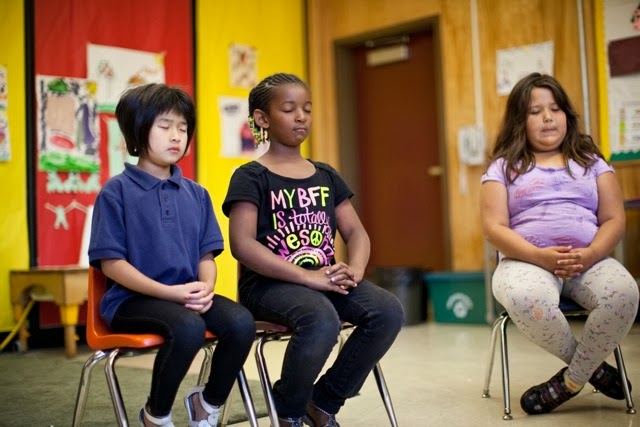
We have been promoting the value of Mindfulness in Afterschool, both as a wellness strategy for adult workers as well as a program for young people. We now have a 16-week curriculum and training that we offer to afterschool programs (now with matching funds from a local foundation). We hope to spread the practice of engaging young people in mindfulness exercises throughout the field of afterschool and summer programming. Below are a few quotes from afterschool practitioners (in Delano and Oakland, CA) who received our Mindfulness in Afterschool training:

- "Mindfulness has helped me in my life as a de-stressor when I’m overwhelmed." 

- "When I’m having a bad day, I realize that there may just be a bad situation or two but that actually there were more good situations than bad ones. It’s helping me focus on the good ones, which is making me happier and less sad."

- "We’ve starting doing mindfulness with the kids for 20 minutes. Doing a body scan and having them focus on their breath. The parents sit down and watch them and they are surprised because they’ve never seen the kids so quiet. It’s working really well."

Photo Credit: Mindful Impact

- "Before P.E., the instructor does mindful breathing. She also relayed that the Kindergarten school-day teacher had started to implement mindfulness when she saw the impact of it on her students. Co-incidentally, this same teacher stopped us in the hallway mid-program to let us know that the school-day teachers were talking about the positive effects of mindfulness on their 1st and 2nd graders who were having a particularly difficult year. When I inquired further to ask what specifically they were seeing as different, this teacher said that the youth were less volatile and less confrontational."

- "Mindfulness is effective in changing student behavior in a short amount of time. Students tell us that they enjoy it and will continue to use it in the future."  

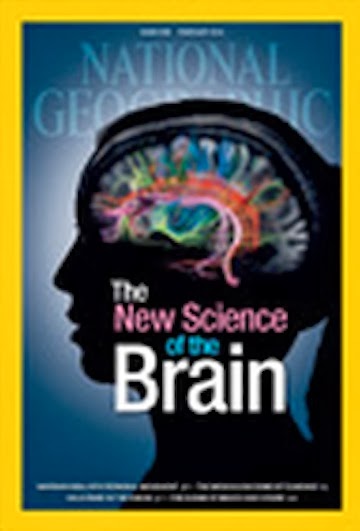
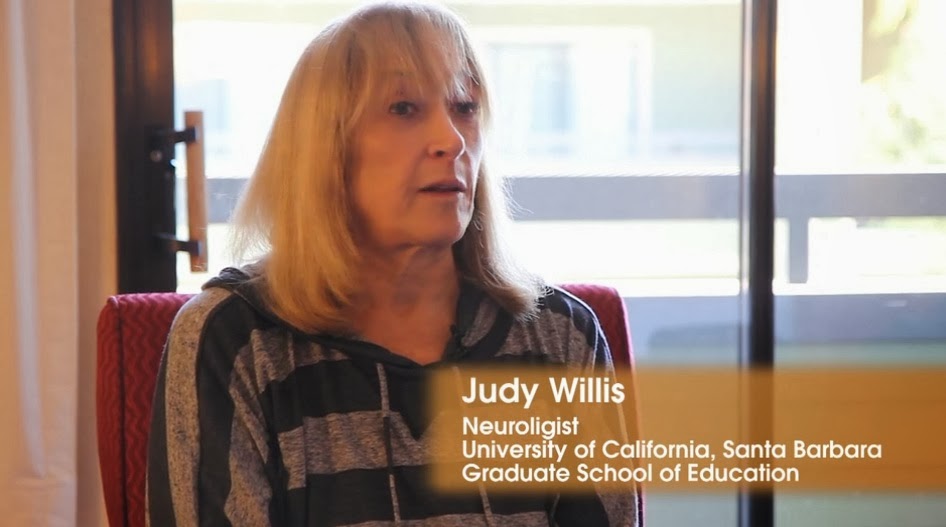
2. The latest cover of National Geographic serves as a reminder that our growing understanding of the brain and how we learn can shape our practices in youth programs. With the help of Youth Radio (Oakland, CA), we conducted two brief interviews with neurologist and classroom teacher, Judy Willis, on how we can use new learnings in brain research in our youth programs. You can view the two videos on our website by clicking here. 

- “As the neuroimaging evidence has shown, the more a student is engaged in a learning activity, especially one with multiple sensory modalities, the more parts of his/her brain are actively stimulated. When this occurs in a positive emotional setting, without stress and anxiety, the result is greater long-term, relational, and retrievable learning.”

- Judy Willis, M.D., M.Ed. , Board-Certified Neurologist, 
           Graduate School of Education, University of California, Santa Barbara


3. "A new survey finds that getting physically involved in learning something trumps reading about it. The results paint a picture of a very different kind of learning than what is typically found in most classrooms. The survey conducted for Everest College by Harris Interactive asked 1,000 adults what methods of learning worked best for them. Here's how the responses break down:" (Article written by Catherine Gewertz, Education Week)


Thursday, December 6, 2012

Ask Dr Judy: The Essential Neuroscience of Learning


We heard from Dr. Judy Willis, a neurologist turned classroom teacher, via video at our first How Kids Learn conference. Dr. Willis was also interviewed in a two-part blog and agreed to a videotaped interview for an upcoming DVD on the Learning in Afterschool & Summer (LIAS) principles. You can hear Dr. Willis in an upcoming, free webinar entitled "Ask Dr. Judy: The Essential Neuroscience of Learning" on December 11, 2012 from 3:00 PM - 4:00 PM EST. You can register by clicking here.

Below, Dr. Willis joins us as a guest blogger. 

Greetings Neuro-Igniters,
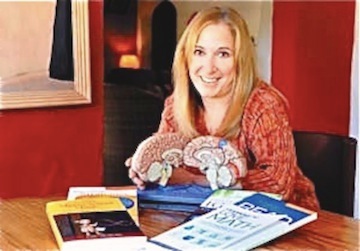
Dr. Judy Willis
I think I have met more of you in the past year than ever before through my presentations and workshops in 25 states and 10 countries in the past 12 months—or "remotely" through television, radio, and online interviews. 

Unfortunately, I will be unable to attend the How Kids Learn II conference due to prior commitments. However, I was able to contribute to an LIAS webinar and an upcoming video promoting the LIAS principles. I am impressed at your interest and your desire to build your knowledge base of the neuroscience of learning. You'll find a list of places where I'll be giving presentations at conferences and workshops at schools on my website. If you are able to attend one of these, please come by and say "hello"!

It seems that we all share the common challenge of TOO MUCH information students are required to memorize and not enough time to be creative and offer the authentic, project-based, inquiry and discovery learning experiences that are so critical if students are to develop their executive functions. 

Executive functions is the neurological term for the highest levels of cognition designed for decision-making and goal achievement. These include judgment, critical analysis, prioritization, deduction, risk assessment, and transfer of knowledge to novel, innovative applications. In the United States, the Common Core Standards call for students to use these very executive functions that have been described by neurology for over 75 years as emblematic of prefrontal cortex neural processing.

As these neural networks undergo their greatest rate of change (maturation with pruning of unused networks and myelination to strengthen the most used networks) during the school years, educators are the caretakers of the development of our students' highest cognitive and emotional neural networks. Not only are these executive functions those delineated in the Common Core Standards, but they are also the qualities now sought by employers in response to globalization of communication, accelerated information dissemination, and technological breakthroughs.

The success of educators to help all children develop these critical 21st century skill sets will increasingly benefit from the continuing acceleration in the quality and quantity of neuroscience research relevant to how the brain learns best. It will be up to educators to "translate" the implications of the research into strategies for planning and teaching.

As I see your efforts to acquire the background knowledge in neuroscience to take on this task of developing applications of this research, I am confident that you will succeed. I look forward to the impact you will have as you continue to learn and collaborate to insure that students are engaged with meaningful, memorable learning experiences that their brains will construct into long-term, concept memory circuits.

Your students will be prepared with the transferable wisdom they will need to solve new problems that have yet to be revealed and expand on new information as they seize the opportunities for creative innovation in their 21st century.

Keep igniting.
___________________________
Dr. Judy Willis, a board-certified neurologist in Santa Barbara, California, has combined her 15 years as a practicing adult and child neurologist with her teacher education training and years of classroom experience. After five years teaching at Santa Barbara Middle School, and ten years of classroom teaching all together, this year Dr. Willis reluctantly left teaching middle school students and dedicated herself full-time to teaching educators. With an adjunct faculty position at the University of California, Santa Barbara graduate school of education, Dr. Willis travels nationally and internationally giving presentations, workshops, and consulting while continuing to write books for parents and educators.

Serving Pregnant Teens in Afterschool Programs

Source: www.azcentral.com By Sam Piha Several years ago we partnered with the Long Beach Youth Institute to film a documentary on high schoo...