Monday, August 14, 2023

Afterschool and Financial Literacy

Source: www.pexels.com

By Sam Piha 

Financial well-being is a growing problem for today's youth. For instance, today’s youth can amass debt quickly, often in the form of school loans or credit card debt.

We know from research that young people who are financially literate make much better decisions regarding their future finances. However, most young people, especially youth of color, lack access to financial literacy information. This is referred to as America’s financial literacy gap.  

“Access to financial literacy is also an equity issue that is directly reflected through racial wealth gaps. Only 27 percent of California high school students attend schools that offer personal finance classes. Ensuring that all young Californians have exposure to financial literacy is a vital step in closing inequality gaps and providing the skills and resources to improve their lives overall.” - Tony Thurmond, California State Superintendent of Public Instruction

Every child and adolescent should be exposed to financial literacy education. One would think that schools are the obvious place for this, which would also address the financial literacy gap. However few states require this as part of their requirements for high school graduation. And because of the concern around COVID learning loss, low test scores in math and reading, and other pressures, many schools are not in a position to add financial literacy to their curriculum.

“While financial education is a growing priority for more schools, districts, and states than ever, gaps in guaranteed access still persist along racial, socio-economic, and geographic lines.”Next Gen Personal Finance’s 2023 State of Financial Education Report 

What is financial literacy? 
According to the U.S. Financial Literacy and Education Commission, financial literacy encompasses the skills, knowledge and tools that people need to take action and make financial decisions that will support their personal goals. 

“Schools teach kids the principles of mathematics but very rarely how to implement those learnings for financial planning. Kids may be good with numbers by the time they graduate, but financial planning has many more concepts such as managing debt, profitable or emergency savings, the time value of money, and efficient budgeting. From counting coins in kindergarten to managing the finances of their own business in the future, the price of money needs to be explained to the young minds being nurtured at present.” – Dr. Nidhi Duggal, Principal

Source: Vermont Afterschool, Inc.

Why Is Financial Literacy Important for Youth? 
Financial literacy is key to helping young people manage money effectively so that they can become financially stable, build assets and achieve their personal goals. The mistakes that youth make can have a great impact in adult life. 

“Research shows that students who have access to high-quality financial education have better financial outcomes as adults that result in less debt and a higher quality of life.” – Tony Thurmond, California State Superintendent of Public Instruction

There are many benefits to being financially literate. According to Financial Coach, Sharath Mascarenhas in Top 5 reasons why financial literacy is important for youth in 2021, they include:

  • “It helps us understand the value of money. When we understand the value of money, we are able to handle our finances in a better way. We will be able to know the importance of budgeting, saving and avoid unnecessary expenditures. 
  • Financial literacy keeps us from being debt slaves. If you are financially literate, you will be able to cut your coat according to your cloth. That means you will only borrow that which you are able to repay. 
  • It empowers us on how to invest and create wealth. Being financially literate generally enlightens us in various ways through which we can invest our money and generate more wealth. 
  • It prevents us from making poor financial decisions. A financially literate person will not be easily lured into Ponzi schemes and gambling. This is because they understand the value of money and how difficult it is to earn it.” 

Source: www.pexels.com

AFTERSCHOOL PROGRAMS
Afterschool programs are especially well positioned to address the need for financial literacy. They have the kids- nationally, 10.2 million young people participate in afterschool programs.  

Afterschool programs have an infrastructure (kids, space, staff, operating protocols etc.) that is already in place to support financial literacy offerings. These programs are more flexible than schools that must get approval on curriculum at the city and district levels. Afterschool programs are also free from the pressures of standardized test scores. 

Where To Start  
Promoting equitable access to financial literacy offerings in afterschool takes work and planning. This means action at the program level and the policy level.  

Program Level

  • Gather ideas and feedback from youth, staff, school personnel and families.
  • Confer with others in the afterschool field: Providers and national organizations can tell you a lot about how other afterschool programs are incorporating financial literacy.
  • Ages served: Some afterschool providers serve both young and older youth. Children benefit from financial literacy and there is plenty of curriculum and course materials designed for young children. Dr. Nidhi Duggal, School Principal, makes the case that it’s never too early to begin financial literacy. Naturally older youth and teens should be engaged in financial literacy offerings. 
  • Family members: Consider offering a financial literacy session(s) for the adult family members of the young people you serve. 
  • Staff leading sessions: Decide if your present staff will lead the financial literacy sessions. Identify organizations that can offer a training for your staff. If you want to bring in financial literacy session leaders, you can identify an organization that provides this service.
  • Identify an organization that has developed curriculum materials and program handouts. 
  • Money Club: The financial literacy offering can be in the form of a “Money Club” where participants can learn about ways to earn money, how to increase their income by investing the savings, the chances of losing the investment money, what to avoid and how to make good investment decisions, credit, and the financial experiences of others and the implications, etc. The Money Club can feature guest speakers from the community, such as bankers, businesspeople, and money savvy members of the neighborhood. 
  • Require financial literacy participation for youth who are employed through the program. Also, you may want to require this of any youth who are engaged in workforce preparation offerings. 

Policy Level 

If we want to see equitable access to financial literacy, we need to convince funders and policy makers to increase funding and support. Afterschool program leaders contact local state and federal policy makers, funders and afterschool networks to make a case for increased financial literacy offerings in afterschool and to ensure that financial literacy is a high school graduation requirement. 


WE WANT TO HEAR FROM YOU!

Source: Temescal Associates

  • What is happening in your area and state regarding youth financial literacy?
  • What kinds of things are you doing to support youth financial literacy in your afterschool program? 
  • Would you add any additional resources that would be valuable to afterschool stakeholders?

Email us at info@temescalassociates.com.


[Upcoming Webinars]

Promoting Financial Literacy for Youth in Afterschool Programs

This webinar will feature afterschool practitioners who have successfully integrated financial literacy in their programs. It will also feature financial literacy experts on why financial literacy is important for youth, available curriculum and materials, and how to get started offering financial literacy in your afterschool program.

To learn more and register, click here.
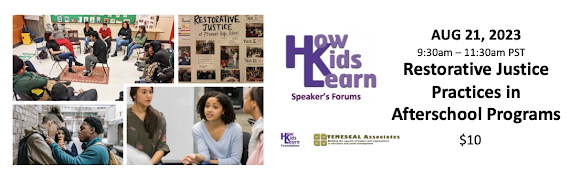
Restorative Justice Practices in Afterschool Programs

This webinar will feature afterschool practitioners who have successfully integrated restorative justice practices into their programs. It will also feature restorative justice experts on why it is important for youth, available curriculum and materials, and how to get started using restorative justice practices in your afterschool program.

To learn more and register, click here.

Monday, August 7, 2023

The LIAS Learning Principles: Then and Now


By Sam Piha

We launched the Learning in Afterschool & Summer (LIAS) project over ten years ago. The LIAS project was designed to unify the field of afterschool and focus the movement on quality through promoting young people’s learning. The LIAS project promotes five core, evergreen learning principles that should guide the design and implementation of quality afterschool programs. These learning principles are strongly supported by recent research on brain development, education, youth development, and the growing science of learning. The LIAS Learning Principles had a foundational influence on the development of the California Quality Standards for Expanded Learning Programs.

We believe these Learning Principles are still very relevant. Because of the recent turnover of afterschool staff, exacerbated by the COVID pandemic, the LIAS Learning Principles should be foundational to orientation and training of new staff. The Learning Principles are also very relevant to STEM and other trends in afterschool programming. Below we have interviewed several afterschool and educational leaders regarding the relevancy of the LIAS Learning Principles.  

“On June 16, 2010, 20 adult and youth leaders gathered in Oakland to discuss and determine what five principles would be a guide to our community educators as they designed their programs to provide rich learning opportunities. The five principles would communicate to school-day educators how expanded learning was intentionally designed with learning principles that are widely recognized by all educators. At that time, California’s State afterschool funding was $550 million serving about 50 percent of the State’s Local Educational Agencies (LEAs). Now, the State funding is over $4.5 billion, and almost 100 percent of LEAs receive funding.” – Michael Funk, Director of Expanded Learning, California Department of Education

  June 16, 2010, meeting with afterschool leaders to formulate the LIAS Learning Principles. 

At the end of this blog, we review the 5 LIAS Learning Principles. You can learn more about the LIAS Learning Principles by viewing this video. You can also view past LIAS Blogs on this topic here.

“I think that the Learning Principles in the Learning in Afterschool and Summer Project really get at the core of learning for students starting in early childhood going through the university.” – Dr. Deborah Vandell, former Dean of the School of Education, UC Irvine, and leading afterschool researcher

Michael Funk, Director of Expanded Learning, California Department of Education

Q: These principles were developed before the California Expanded Learning Standards. How did they influence the California Standards?

A: In 2014, the California Department of Education worked with the California Afterschool Network and a statewide workgroup of diverse stakeholders to create California’s Quality Standards for Expanded Learning. As the work commenced, I directed this workgroup to use the LIAS Principals and the Youth Development Framework as the foundation for the new Quality Standards.

Q: Why do you believe these learning principles are important?

A: The LIAS principles must be elevated to guide our community and school-day educators as they develop any high-quality Expanded Learning Opportunities Program. When I came to the California Department of Education nearly 12 years ago, hardly anyone understood what a high-quality afterschool program looked like. Furthermore, for summer programs, people only pictured traditional summer school. I set up meetings with other Division Directors, and I presented the LIAS postcard as the vehicle to explain what makes an expanded learning program high-quality. As they reviewed the card, within the first minute I heard, “This is what high-quality teaching looks like during the school day!” The LIAS principles were developed to provide youth workers (community educators) a succinct approach to communicate that afterschool and summer programs were places of learning.

The LIAS principles are more relevant now than ever. With the massive expansion of Expanded Learning in California, there are hundreds of school districts and charter schools that still believe Expanded Learning is “after-care.” The LIAS principles, combined with the quality standards, are necessary to help leaders understand how every student and family should have access to and in fact deserve high-quality Expanded Learning opportunities. 

Dr. Carol Tang, Executive Director at the Children’s Creativity Museum in San Francisco and Former Director of the Coalition for Science After School

Q: Can you briefly speak to the value of the LIAS Learning Principles to the Science, Technology, Engineering & Math (STEM) movement?

A: By coupling STEM with LIAS principles, we elevate the discussion about science in afterschool--rather than debate which topics to cover, we can instead focus on the characteristics evident in high quality science programming. If youth workers embrace LIAS, they will understand the fundamental elements which will make STEM successful in their programs. In this way, we not only increase the quality of afterschool science, but we can also foster an environment where science activities are sustainable in the long-term.

Q: Can you speak a bit more about the need you have experienced for training on Learning Principles to guide the development of quality STEM activities? 

A: There is a misconception that STEM is about imparting a set of facts or concepts. Thus, training staff on effective learning principles in general is a way to guide the selection, development, and implementation of high-quality STEM activities. If youth workers can recognize the factors which promote active engagement and learning, then they can select science activities which engage youth and foster scientific skills--such as asking good questions, sharing ideas and testing hypotheses.

“LIAS principles outline the program characteristics most likely to foster scientific inquiry and sense-making in youth and help them recognize the relevance of science and technology to their future. LIAS principles help clarify what high-quality science in out-of-school settings should look like and makes STEM accessible to youth development and afterschool staff. What I like best about LIAS is that it allows OST professionals to view STEM as a way to achieve their youth outcomes using existing best practices in youth development--science afterschool is seen as part of good youth development, rather than an added burden on afterschool program staff.” - Dr. Carol Tang, former Director of Coalition for Science After School

Bill Fennessy, Program Specialist for Workforce Initiatives, Equity and Quality at the California Afterschool Network (CAN) 

Q: Can you speak to the value of the LIAS Learning Principles for afterschool programs?

A: The LIAS principles speak directly to the components required to create a quality instructional delivery framework. When implemented, programs can truly engage the youth of today. While many successful afterschool and summer programs already embody and demonstrate the LIAS principles, these principles now being clearly identified, defined, and articulated, will provide for an understandable and intentional approach to attain successful quality programming across the field. In addition, the LIAS principles provide a common language for the field of afterschool that has been up until now, missing and desperately needed.   

I have personally seen the LIAS principles easily taught to line staff, which might not have been intuitive to them previously. I have witnessed the empowering affect it has had on them, resulting in improved program quality. The LIAS principles have also given them the ability to understand for themselves, and communicate with others, their vital role and the value of afterschool and summer programming.  

LIAS Learning Principles 

1. Effective Learning is Active: Learning and memory recall of new knowledge is strengthened through different exposures – seeing, hearing, touching, and doing. Afterschool learning should be the result of activities that involve young people in “doing” – activities that allow them to be physically active, stimulate their innate curiosity, and that are hands-on and project-based. 

2. Effective Learning is Collaborative: Knowledge should be socially centered, as collaborative learning provides the best means to explore new information. Afterschool programs are well positioned to build skills that allow young people to learn as a team. 

3. Effective Learning is Meaningful: Young people are intrinsically motivated when they find their learning meaningful. This means having ownership over the learning topic and the means to assess their own progress. Motivation is increased when the learning is relevant to their own interests, experiences, and the real world in which they live. 

4. Effective Learning Supports Mastery: Young people tell us they are most engaged when they are given opportunities to learn new skills. If young people are to learn the importance and joy of mastery, they need the opportunity to learn and practice a full sequence of skills that will allow them to become “really good at something.” 

5. Effective Learning Expands Horizons: Young people benefit by learning opportunities that take them beyond their current experience and expand their horizons. Learning about new things and new places promotes a greater sense of potential of what they can achieve and brings a sense of excitement and discovery to the learning environment.

Monday, July 31, 2023

Defending LGBTQ+ Youth: Voices Beyond the Bubble Part 2

Source: www.pexels.com

By Sam Piha

When it comes to LGBTQ+ issues, those of us in California live in somewhat of a progressive bubble. To learn more about how leaders are responding to the recent political attacks on LGBTQ+ youth, we interviewed leaders residing outside of California to hear their views. We continue our interviews with these leaders below.

How can we support LGBTQ+ youth amid these attacks?

“Converse with the community! Educate those who are not aware of the harmful laws that are being placed and help them understand that this will not stop with us; this goes beyond our community. Reassure the youth that you will do your part and actively engage to do better for their community.” – Rex Barnes, Florida 

“Be a visible advocate and accomplice. Demonstrate you’re a supportive person by introducing yourself with your pronouns, incorporating LGBTQ+ themes and figures into your programming, and allowing space for them to process their feelings. Know and share local resources and supports and find ways for them to connect to others who share their identities.” – Nat Duran, Illinois   

What can we do to promote pro-LGBTQ+ policy and/or youth program practice?

 “Contact local organizations in your region or state that combat current legislators who are trying to silence our voices and ask them how you can get involved- whether by donating, spreading awareness, or even participating in marches.” – Rex Barnes, Florida

“Assess programmatic policies and procedures for gender inclusive language and practices - including dress codes, and gender segregated spaces. Learn how to make as many options available to all participants and let them choose their own adventure. Create regular mechanisms to get feedback from youth to ensure they feel affirmed as they move throughout your program. Connect with local LGBTQ+ advocacy organizations to stay informed about local policy changes (including school boards, local government, etc.) and advocacy asks.” – Nat Duran, Illinois   

“Programs can support LGBTQ+ youth by affirming them and creating inclusive spaces in which youth feel safe. Programs can provide spaces that affirm youths’ identities, using preferred pronouns and names, providing materials that represent identities of youth, addressing issues of discrimination openly and immediately when they happen. Inclusive materials can range from providing a variety of identities on a registration form to including members of the LGBTQ+ community in curriculum. Programs can further support LGBTQ+ youth by having explicit messages in program spaces that affirm that all young people are welcome and respected and creating spaces and opportunities for supportive and educational discussions led by experts that involve youth, staff, program leaders, and families. Programs should be educating their staff about appropriate ways to support LGBTQ+ youth from learning the vocabulary, acknowledging mistakes through training and conversation. Finally, be that caring adult and listen. LGBTQ+ youth, like their peers, want to feel heard and listened to without judgment can be what they need to feel supported.” – Patricia McGuiness, Massachusetts

“Everyone can take a step, large or small, to fight for LGBTQ+ rights and affirming policies in their community. In the K-12 school setting, educators, school support staff, and afterschool program leaders play a vital role in both directly supporting LGBTQ+ youth and advocating for better policies. 

LGBTQ+ youth need to feel seen, heard, and loved for who they are – just like any other young person. We know that having just one affirming adult in an LGBTQ+ young person’s life is correlated with a 40% lower likelihood of reporting a suicide attempt in the past year. When LGBTQ+ young people don’t feel safe or supported at home, their only access to forming positive relationships with adults who uplift and affirm their identities is often at school or in an afterschool program. People working in the afterschool space can access resources from GLSEN and local providers of Safe Zone/Safe Space trainings to learn more about being a strong advocate for LGBTQ+ youth.

K-12 school staff and afterschool program leaders also play an important role in setting the tone for LGBTQ+ inclusion at a local level. Folks who work on the ground and in the classroom with young people can directly address anti-LGBTQ+ bullying, proactively introduce positive representations of queer and transgender people in programming, and provide LGBTQ+ young people with access to resources and direct services to improve their health outcomes and help them to feel included. People who work with LGBTQ+ youth can also monitor their local school board meetings and advocate for best practice policies like introducing school Gender Support Plans, updating school dress codes, and making sure transgender students have access to restrooms and locker rooms matching their gender identity. There are lots of other ways that individuals can take action to stop these harmful bills. The Trevor Project has a great list of opportunities to get involved here.” – Brennan Lewis, North Carolina 

Who is responsible for these attacks?  

“Culturally conservative community members on the far right have been organizing for decades now against bodily autonomy. Queer and trans youth leadership programs (such as Gender Justice Leadership Programs) and GSA networks across the country are leading efforts to protect, uplift, and support LGBTQ+ young people.” – Nat Duran, Illinois    

“Many of the attacks on the LGBTQ+ community are a coordinated effort by far-right national political organizations like the Alliance Defending Freedom and Moms for Liberty. The Southern Poverty Law Center tracks these organizations as anti-LGBTQ hate groups.

National LGBTQ+ organizations like the GSA Network and GLSEN offer invaluable resources for afterschool leaders and educators to better support LGBTQ+ students and take action against harmful policy at the state and local level.” – Brennan Lewis, North Carolina

MORE ABOUT…

Rex Barnes (he/they) is the Youth & Family Services Coordinator at Compass LGBTQ+ Community Center in Lake Worth Beach, Florida. Compass is one of the largest gay and lesbian community centers in Florida and the Southeast United States and one of the largest and most respected of its kind in the nation. More than 25,000 people utilize its 14,000 square foot facility, and more than 17,000 referrals are fielded by more than 12,000 volunteer hours graciously contributed by hundreds of community-centered individuals each year.

Nat Duran (they/them) is a compassion-led and dedicated educator focused on community building and social justice across various realms of youth work. Nat has been a champion for putting youth voice to action throughout their career within school, housing, and advocacy settings; most recently they served as the Youth Engagement Manager for the Illinois Safe Schools Alliance providing statewide leadership for the safer schools movement. In addition to their role at Constellation Collective, Nat teaches within the Youth Development Masters program at University of Illinois at Chicago.

Patricia McGuiness-Carmichael MSW (she/her) is a Research Associate at the National Institute on Out-of-School Time (NIOST). Patricia has an extensive background in youth development and family engagement practice, research, and evaluation. She has worked in school and community based out-of-school time (OST) programs, creating and facilitating Social Emotional Learning (SEL) curricula, and coaching OST programs to integrate SEL into their everyday practices. Patricia participated as a National After School Matters Fellow contributing to research in the OST field. She has a background in evaluation of education initiatives, such as Reading First in South Carolina, treatment programs with Children’s Hospital Boston, and OST programs in and around Boston. As a Licensed Certified Social Worker (LCSW), Patricia began her career in the mental health and juvenile justice field before focusing on roles in prevention. 

Brennan Lewis (they/them) is Equality North Carolina's Education Policy Associate. They manage Equality NC's programs serving youth, students, and families, including the statewide Rural Youth Empowerment Fellowship. Previously, they served as the Regional Manager for the U.S. & Canada at Peace First, a global nonprofit that coaches and funds young people to create social action projects. Through work with Peace First, Equality NC, and as the founder of the Raleigh-based LGBTQ youth group QueerNC. Brennan is dedicated to mobilizing young people to lead change both in North Carolina and globally. They envision helping to build a North Carolina that elevates the voices, work, and lives of LGBTQ youth.

To see additional tools to ensure a sense of safety for all youth, see our Youth Development Guide 2.0 here. Also, we’ve developed a series of LIAS Blogs and a new briefing paper on supporting LGBTQ youth. Feel free to share these resources with your network.
Monday, July 24, 2023

Defending LGBTQ+ Youth: Voices Beyond the Bubble Part 1

Source: www.pexels.com

By Sam Piha

Recent attacks, in political rhetoric and state house legislation, are targeting LGBTQ+ young people. When it comes to LBGTQ+ issues, those of us in California live in somewhat of a progressive bubble. To learn more, we interviewed leaders residing outside of California to hear their views on the current political attacks.

Why are the political attacks on LGBTQ+ youth happening now? 

“Attacks on LGBTQ+ youth are nothing new, but the sheer number of bills introduced this year that are designed to remove rights and protections for LGBTQ+ people is staggering. As of May 1st, 2023, the ACLU is tracking 469 anti-LGBTQ+ bills introduced in the country since January, a record which more than doubles the number of bills introduced in all of 2022. The Equality Federation puts the total number at over 500. The good news is that advocates, much like our team at Equality NC, worked together to defeat nearly 90% of the harmful bills considered in 2022. 

These bills are based on mis/dis/malinformation and mischaracterization of transgender and LGBTQ+ people. Many of the bills introduced include bill text which is based on false information about fairness, societal dangers, and fear-based tactics to attack the most marginalized of our community. As we've seen the number of anti-LGBTQ+ bills increase since 2018, we've seen steady trends in attempts to strip rights away from LGBTQ+ youth and adults, such as prohibiting access to gender-affirming care for transgender youth and young adults, banning transgender students from playing on sports teams, forcing school educators and state employees to “out” LGBTQ youth, and limiting topics in school curriculum relating to race, equity, gender, LGBTQ+ topics, and systemic inequities and oppression.” – Brennan Lewis, North Carolina

What impact do you think the current political attacks are having on the LGBTQ+ youth community and the programs that serve them? 

“The impact happening now is that our trans youth who have been under gender-affirming care have been dropped from their doctors. We are hearing that a lot of doctors are worried about losing their licenses even though it's legal for youth who have been grandfathered in. This loss of treatment has been devastating four our youth and families.” – Rex Barnes, Florida

“Young people are scared. And angry. Especially trans, nonbinary, and gender expansive youth who have to witness nearly daily attacks on their rights to affirming medical care, and participation in athletic programs. More broadly, LGBTQ+ youth are actively being told they are not welcome in their home and school communities as their full and authentic selves - this is gravely impacting their mental and emotional health.” – Nat Duran, Illinois

 “Youth in the LGBTQ+ community are likely feeling unsafe and uncertain about the people in the community around them, unsure about how people are going to treat them. Even if they have safe spaces and trusted people they go to, others in those settings could create uncertain environments where youth don’t feel safe and supported. This vulnerability can lead youth to disengage from programs that are there to support them. Living daily with the stress and anxiety of knowing that other people in and around your own community are legislating against you or forming policy that is intended to limit your ability to live your life securely and equally just because of who you are, can be devastating and a continuous source of depression and pain. Young people and the programs that support them can feel targeted and experience unresolvable anger and hopelessness.

Additionally, LGBTQ+ youth are dealing with a heightened prevalence of mental health concerns, further exacerbated by the pandemic, and compounded now by an uptick in targeted attacks toward their community. According to the Trevor Project (2022), 73% of LGBTQ youth reported experiencing symptoms of anxiety, 58% experienced symptoms of depression, and 45% considered suicide in the past year. These experiences can make it both more difficult for youth to participate successfully in programming, as well as for staff to meet their needs as their experiences may be more than the program is equipped to address. Programs may face challenges in areas where policies and legislation discriminating against LGBTQ+ communities threaten to impact funding and even what can be taught or discussed within programming.” – Patricia McGuiness, Massachusetts

“LGBTQ+ youth across the country are significantly impacted by the introduction of anti-LGBTQ legislation. According to the results of a national survey of LGBTQ youth ages 13 to 24, released on May 1st by the Trevor Project, almost two thirds of respondents reported that "hearing about potential state or local laws banning people from discussing LGBTQ people at school (also known as 'Don't Say Gay') made their mental health a lot worse." Mental health impacts on transgender youth are exacerbated by high numbers of bills specifically targeting gender-affirming care, participation of transgender youth athletes in school sports teams, and protections for LGBTQ youth in K-12 schools.

For organizations and educators serving LGBTQ young people, it can be difficult to navigate the rapidly changing policy landscape. In states like Florida, where the state Board of Education approved a ban on classroom instruction about sexual orientation and gender identity in all grades, some LGBTQ teachers and allies have moved out of state or left the profession entirely amidst confusion and backlash caused by the policy. 21% of the LGBTQ population in the U.S. lives in a state that censors discussions of LGBTQ people or issues in schools (known as “Don’t Say Gay” policies), and more states are considering similar bills this legislative session.” – Brennan Lewis, North Carolina

(Note: A complete list of bios can be found at the end of part 2.) 

To see additional tools to ensure a sense of safety for all youth, see our Youth Development Guide 2.0 here. Also, we’ve developed a series of LIAS Blogs and a new briefing paper on supporting LGBTQ youth. Feel free to share these resources with your network.

Monday, July 17, 2023

How Educators, School Administrators and Families Can Thwart an Anti-Equity Agenda

Source: www.pexels.com

By Sam Piha 

Katy Swalwell & Noreen Naseem Rodríguez authored an article, How To Thwart An Anti-Equity Agenda: Advice For Teachers, Administrators, And Families published in Education Weekly (April 18, 2023) subtitled Ignoring Right-Wing Smear Campaigns Won’t Make Them Go Away.

The authors warn, “Coordinated, well-funded campaigns by conservative lawmakers across the United States are fast-tracking a radical agenda to shut down diversity, equity, and inclusion initiatives in schools. Book bans, rules for restroom and pronoun use, regulations against rainbow flags, restrictions on curriculum addressing race and gender, and other efforts fly in the face of facts, logic, democratic norms, and basic humanity.” 

“Many youth are already strategically advocating equity and justice, organizing and building coalitions while too many adults stay silent.” - Katy Swalwell & Noreen Naseem Rodríguez, How to Thwart an Anti-Equity Agenda: Advice for Teachers, Administrators, and Families

They offer advice for teachers, school administrators, and families and community members on they how they can respond to anti-equity actions. Some of their recommendations are cited below. (You can view the entire article and full set of recommendations here.)

Source: www.pexels.com

For educators 

  • Connect with people who show up to support efforts that center marginalized students and communities, including members of local organizations and online networks.
  • Engage students in primary-source inquiry, allowing them to draw their own conclusions to compelling questions. Couple this inquiry with lessons about critical media literacy and the civics of technology so their claims utilize credible evidence.
  • Review district policies and state legislation carefully so you can avoid the chilling effect of ill-informed or bogus interpretations of new rules and keep school leadership in the loop about your students’ engagement and success. This provides evidence if they need to defend you and gives them time to prepare for pushback. Build trust by communicating with families about your appreciation for their child, what you’re doing, and why—not just when controversies arise.


For school administrators 

  • Develop a detailed plan for how to support and protect staff and students if they get targeted by community members, media, or lawmakers on the anti-equity bandwagon.
  • Educate staff about the political climate so they can be more proactive about the support students and colleagues in targeted groups need.
  • Celebrate and allocate resources for staff and youth defending educational equity.

“Even the best, bravest educators in the world can only do so much if no one has their backs. Every single one of us has a role to play in helping make the work of educators less fraught and dangerous.”- Katy Swalwell & Noreen Naseem Rodríguez, How to Thwart an Anti-Equity Agenda: Advice for Teachers, Administrators, and Families


Source: www.pexels.com

For families and community members 

  • Ask young people what they need from you to feel safe and supported.
  • Support local and national organizations defending teachers and librarians’ efforts to make schools more inclusive and just.
  • Donate or request books at libraries from banned lists.”

“Whatever we do, we cannot choose to ignore this moment or shrink from scrutiny. That will not make these problems go away. It simply offloads them onto the shoulders of youth. And of any of the options before us right now, that is the least conscionable.” - Katy Swalwell & Noreen Naseem Rodríguez, How to Thwart an Anti-Equity Agenda: Advice for Teachers, Administrators, and Families


MORE ABOUT THE AUTHORS

Katy Swalwell is a former classroom teacher and professor who leads professional development, creates curriculum, and coaches leaders in schools and districts across the United States. She is a co-author of the forthcoming Fix Injustice Not Kids and Other Principles for Transformative Equity Leadership (ASCD, 2023) with Paul Gorski and co- editor of Anti-Oppressive Education in ‘Elite’ Schools: Promising Practices and Cautionary Tales from the Field (Teachers College Press, 2021) with Daniel Spikes. 

Noreen Naseem Rodríguez is an assistant professor of Teacher Learning, Research, and Practice in the School of Education at the University of Colorado Boulder and was a bilingual elementary teacher in Texas for nine years. Together, Katy and Noreen, are the authors of Social Studies for a Better World: An Anti- Oppressive Approach for Elementary Educators (Norton, 2022)


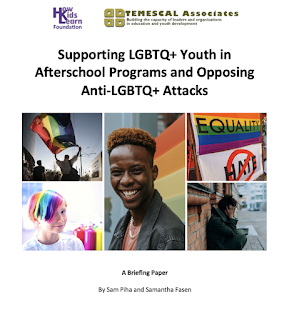
In an effort to speak out against recent political attacks on LGBTQ+ youth, Temescal Associates and The How Kids Learn Foundation have posted several LIAS blogs and authored a briefing paper entitled, Supporting LGBTQ+ Youth in Afterschool Programs and Opposing Anti-LGBTQ+ Attacks. Feel free to share these resources with your network. 

Monday, July 10, 2023

The Importance of Routines and Rituals in Afterschool Programs

Source: www.pexels.com

By Guest Blogger: Rebecca Fabiano, MSED, Executive Director of FAB Youth Philly
 
I saw this tweet several years ago and it’s stayed with me: “Structure provides predictability. Predictability enables preparation. Preparation raises confidence. Confidence is energy.” It made me think about the ways afterschool and out-of-school time (OST) programs use rituals and routines to achieve similar results for the children and youth we serve. They even often benefit our adult staff.
 
Routines are the day-to-day habits that help create and maintain structure and predictability, thus, leading to better preparation. This could be standing at the door and saying hello to everyone as they enter your space.
 
Or adhering to a specific schedule, daily chores, etc. Routines create a sense of predictability, which is very important to children and youth of all ages. 
 
“Predictability, or being able to know what to expect, is an important ingredient for healthy development. Predictable routines and consistent relationships provide a foundation of trust and security for children. When children know what to expect and who they can rely on, they have the confidence to explore the world around them and develop new skills.” - Future Learn, Predictability and Development

Predictability can help children who need consistency every day to stay on task, and routines can help reduce off-task behaviors, especially during transitions, which is when children tend to be most off track (think in between classes in the hallways, transitioning from independent stations to group work). Predictability provides those who need a sense of control something they can count on. Routines also become the ‘boss’ and they can diminish arguments about what is and isn’t fair, and what is and isn’t going to happen, or how it is or isn’t going to happen. This is important both for younger children who care about right and wrong from the perspective of concrete thinking to older teens who are trying to understand the nuances of right and wrong.

“Predictability is a stabilizing force for teens, but it’s been disrupted by the pandemic.” - Teen Mental Health: A Vulnerable Stage of Life

Here are a few more examples of routines you may expect to see in an OST program:
  • Procedures are in place for getting materials, sharpening pencils, discarding paper, etc.
  • Group leaders use signals and/or cues (clapping, music, chimes, quotes, etc.) to gain students’ attention.
  • Expectations for productive group work are established and clearly communicated orally and/or in writing.  
Adults benefit from routines too (and naps!), and the predictability of them can help them to better prepare. Having a deadline to submit lesson plans, a weekly learning community meeting with peers, scheduled prep time, are all examples of routines that provide structure for adults. Think about how more confident you often feel when you are prepared. Children and youth also feel more confident when they are prepared. OST programs by nature are designed to help children and youth to build confidence and that happens most when we implement intentional strategies like rituals and routines.

Different from a routine (the day-to-day things that create predictability), a ritual is something that has special meaning. For example, on the first day of the program, roll out a ‘red carpet’ and have people dance into the building or classroom. Decorate a classroom or library door to celebrate historical figures during Black History Month. When distributing certificates of completion, give them out in alphabetical order by participant to participant, starting with the person with the last name starting with an “A” and them giving the certificate to the person with the last name starting with a “B”; and have that person give to the person with a last name starting with “C” and so on. Rituals can also be energizing because they evoke a different energy from the day-to-day routines. Think campfires at the end of a long week of summer camp, or an end of semester talent showcase by the senior class.
 
If you’re looking to re-energize your OST program, or to inspire more confidence, or looking to add a little more structure to your program, take some time to assess what rituals and routines you have in place. Ask your staff if they have any favorite rituals from when they were in school, or summer camp or as an OST participant themselves. Try them out! Assess whether your current routines are effectively creating structure and predictability, or if they just create bureaucracy. If people aren’t feeling prepared or energized by them, maybe it’s time to find new routines for your OST program.
 
[Note: Pictures and quotes added by Temescal Associates.] 

MORE ABOUT…

For nearly 25 years, Rebecca Fabiano has worked in various capacities across nonprofit and youth-serving organizations, served on boards and helped to build solid youth programs that engage, encourage, and create spaces for positive development. As a program leader, she has successfully raised funds and managed program budgets; hired and supervised staff; developed and sustained strong community partnerships and designed award-winning programming.
 
Fab Youth Philly (FYP) has a unique, holistic model for youth development. Their three-pronged approach to youth development is aimed at creating relevant, engaging, and empowering learning opportunities at the individual, professional, and community level. First, they provide innovative, award-winning summer and afterschool programs for teens with a focus on workforce development programming. Second, they connect with youth development professionals working with or on behalf of youth through their Center for Youth Development Professionals (CYDP), which offers competency-based professional development and networking opportunities. Third, they consult with other youth-serving organizations to provide a range of consulting services, ranging from curriculum development to retreats and small conferences.

To see additional tools to ensure a sense of safety for all youth, see our Youth Development Guide 2.0 here. Also, a new briefing paper on supporting LGBTQ youth. Feel free to share this resource with your network.


Monday, July 3, 2023

You Can't "De-Gay" Our GSA

There have been many attacks on LGBTQ+ youth in political rhetoric and state house legislation recently. This blog was written by Joshua Kilburn when he was a student at South Garland High School in Garland, Texas. It was originally published by the Texas ACLU

YOU CAN'T "DE-GAY" OUR GSA By Joshua Kilburn 

Joshua Kilburn
My school, South Garland High School in Garland, Texas, is really large and diverse. It’s also right outside of Dallas, so it’s not like the fact that gay people exist is something new here. But I do still sometimes hear the word “faggot” thrown around in the hallway. Sometimes it can be a scary place to be gay.

That’s why I decided to start a Gay-Straight Alliance. GSAs can provide a safe space for LGBT students and their friends to be who they are without having to hear that kind of thing. They make schools a safer place for everyone, and thankfully, they’re in thousands of schools all over the country and have been around since the 1990s.

With over 2,000 students here, it’s not surprising that we have more than 50 different student clubs and organizations. There are cultural groups like Sabor Latino and religious clubs like Fellowship of Christian Athletes. And, there are all sorts of clubs that are just about things people are interested in like: Table-Top Gaming Club, Fashion Club, Chess Club, and Comedy Improv Troupe. With so many clubs at our school, my friends and I didn’t think getting approval for a GSA would be a problem at all.

We lined up four faculty sponsors who were willing to help us out and came up with a plan to call our club the PRIDE (Promoting Relationships in Diversity Education) GSA. We planned a bunch of activities like a Rainbow Day in the spring when we’d all wear rainbow t-shirts and have a little pride party after school with snacks and music. One of the first things we wanted to do this semester was Ally Week. Created by the Network (GLSEN), it’s a time to talk about how we can all be better allies to LGBT students while helping to fight bullying and harassment.

There was some confusion while we were trying to make plans for the year, and for a while there we thought the school wasn’t going to let us call it a Gay-Straight Alliance, so the name would have to be just PRIDE. We also were told it shouldn’t be about LGBT stuff, but more of a general diversity club, doing stuff about Latino American culture and Black History Month even though there are already clubs that celebrate those things. And we were under the impression that we couldn’t have Rainbow Day or Ally Week.

I went to the GLSEN website looking for help, and that’s when I found a link to the ACLU’s resources for LGBT students. I learned that federal law says that if a public school allows any noncurricular clubs like Table-Top Gaming Club or Fellowship of Christian Athletes, then it can’t say no when students want to start other noncurricular clubs like a GSA. The school also can’t act like it’s allowing a GSA and then just de-gay everything about our club – including the name. And best of all, I found out how to contact the ACLU for help.

So that’s why the ACLU LGBT Project and the ACLU of Texas worked with my school district last week to make sure they understood we have the legal right to form a club with GSA in the name and talk about LGBTQ issues. And, it was a big relief when the school told us that we could do all of the things we’d hoped for, including hosting Ally Week and Rainbow Day. More importantly, I learned that we had a right to equality, and I wasn’t alone.

All we want is to make South Garland High School a safer school, not just for LGBT students but for everyone. We’re glad our school has decided to become an ally, too, and help us make that happen, especially to take the “scary” away from being gay at South Garland High.

Learn more about LGBTQ news and other civil liberties issues: Sign up for breaking news alerts, follow the Texas ACLU on Twitter, and like them on Facebook

In an effort to speak out against recent political attacks on LGBTQ+ youth, Temescal Associates and The How Kids Learn Foundation have posted several LIAS blogs and authored a briefing paper entitled, Supporting LGBTQ+ Youth in Afterschool Programs and Opposing Anti-LGBTQ+ Attacks. Feel free to share these resources with your network. 


Understanding Attention-Deficit Hyperactivity Disorder

Source: www.pexels.com By Sam Piha PURPOSE The purpose of this blog is to advance understanding of Attention- Deficit Hyperactivity Disorder...