Friday, June 26, 2015

Promoting Social Emotional Skills

By Guest Blogger, Jennifer Peck, Executive Director, Partnership for Children and Youth

(Note: Much of this commentary first appeared on EdSource on April 29, 2015. To view the entire article, along with others, please click here.)


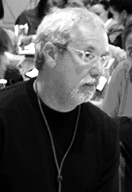
Jennifer Peck
With the introduction of new Common Core State Standards, teachers and administrators can concentrate on helping students develop the ability to collaborate, create, communicate and think critically. There is growing recognition that strengthening students’ social and emotional skills is essential to developing those abilities, and thus critical to success in school, the workplace, and in life generally.

Further good news is that schools don’t have to do this work on their own. In California, a strong network of expanded learning programs – operating after school and in the summer – are already experienced at helping young people build social-emotional skills. Their practices are specifically designed to help children:

learn about themselves,
relate to other people, and
develop confidence about learning.


This work by California’s expanded learning community is guided by new Quality Standards for Expanded Learning. The state is using these standards to inform its decisions about program funding, and schools, program providers and parents can use them to identify high quality programs and practices.

A robust after-school and summer strategy helps ensure that all children are developing the social-emotional skills they need to function well in the classroom. It also adds at least 740 hours to the 1,080 hours of school year learning. That extra learning time is not a luxury. The research on summer learning loss, for example, documents that the failure to use this time well has significant negative impacts on children, particularly those whose families cannot afford to pay for camps, trips, and other enriching activities.


California has more than 4,500 publicly funded expanded learning programs, most of which are located in schools in our state’s lowest-income communities. These programs add great value to the work of schools, but too often work in isolation. As a recent Partnership for Children and Youth report documents, when schools think outside the classroom and develop partnerships that expand the day and the year and offer opportunities to learn in different ways, kids benefit.

Let’s use this additional learning time to make sure all children have the social-emotional skills they need to thrive in school, work and life.
_______________________
Jennifer Peck was a founding staff member of the Partnership in 2001 and became its executive director in 2003.  Through her leadership, the Partnership has developed and implemented initiatives to finance and build after-school and summer-learning programs, and increase access to school meals and nutrition education programs in the Bay Area’s lowest-income communities. Jennifer leads a coalition of California organizations advocating for new federal policies to improve the effectiveness of after-school and summer-learning programs. To learn more about the Partnership and sign up for their e-newsletter, visit their website

Friday, June 19, 2015

Having a Conversation About Race in Expanded Learning Programs

By Sam Piha


Sam Piha
Several years ago, I sat in a circle of afterschool leaders across the country. This learning circle was hosted by the National Institute on Out of School Time (NIOST) and we met several times. Along with my friend, Greg Roberts, former Director of the Muhammad Ali Foundation, we insisted that it was important that we discuss the impact of race within our conversations and within our programs. 

The recent tragedy in Charleston follows many others and is a stark reminder that we must engage in a discussion of race with our staff and our youth. To this end, Temescal Associates and LIAS sponsored a number of film screenings of Finding the Gold Within for the afterschool community in the Bay Area. This is a documentary about young men in transition to college, the support they received from their afterschool program, Alchemy, Inc., and their confronting the issue of race. These screenings were followed by discussions led by the young men portrayed in the documentary and the film’s director. These screenings were very powerful and the discussions that followed were very important. If you are interested in screening this film and supporting conversation afterward, please email us, and we can share our learnings and loan you a blu-ray DVD of the film. 

Photo credit: NY Daily News
Below, we offer a statement from a leader from the Alameda County Office of Education, followed by a few comments from afterschool stakeholders.

“I was truly honored to have the opportunity to again work with and support this project.  I believe that this can be one of those rare transformative experiences, that allow youth and supportive adults to look both internally and externally at themselves and their environments and decide to engage in agency, for the betterment of themselves and their communities.  I thoroughly enjoyed meeting and getting to know Karina and I’m definitely interested in supporting getting this film and conversation/study guide into schools and afterschool programs.”  
- Joe Hudson,
Region 4 Lead & Program Manager
Expanded Learning Program Office

“I had been especially bowled over by Darius in the film, so imagine my delight that he was one of the representatives there. I was so impressed by how well articulated all their struggles were, and by the ways that Alchemy is working to shepherd these boys and young men through the dangerous waters of society and through the shoals of their own emotions.  Anyway, I just wanted to say ‘Bravo’.  This film goes a long way to expressing how imperative learning outside of the confines of school is.  And so much more.”

“Amazing vantage point for an issue that has exploded across America.”

“Thank you so much for making this screening happen! It is a beautifully crafted film – great stories and great breaking down of stereotypes. I love the Alchemy program – myths and drumming, young black men, multi-generational.”

“Powerful. Honest. Painful. Real. Thank you for insisting we hear and see this rare perspective.”

“The film was very moving because of the strong sense of community displayed in the movie.”

“Well done. You can really feel the struggle and journey of the young men and get a glimpse of where they were at the time. Thank you for introducing us to Alchemy, it seems like a powerful program.”

“This film broke stereotypes of young black men; the need for society to set higher expectations for young black men and view them as the gold within.”

“A sensitive and authentic portrayal of the Alchemy program. I’d love to have access to this film in a medium for use with men’s circles.”

“Great focus on emotion and long-lasting impact.”

Friday, May 29, 2015

What it Means to be a Poor Child in America

Sam Piha
Many of our afterschool and summer programs are serving youth from low-income communities. We believe that poverty is a major issue affecting the learning of these youth.

Below, we repost a newsletter from the Broader, Bolder Approach to Education (BBA) on the topic of children in poverty. The BBA has been a strong supporter of the afterschool and summer movement, and of LIAS, specifically. Read the BBA Mission Statement and Accountability Statement to learn more. Use the BBA short video and infographic to spread the word. We urge you to visit their website and reflect on this issue.


This month we explore what it means to be poor in America and how that affects students and their families and schools. Growing up in poverty often means not having enough money for rent or food, but it’s much more than that. We devote this newsletter to various perspectives on the issue. In doing so, we hope to underscore the urgent need for a multifaceted, sustained approach to addressing the barriers to success that poverty poses and reducing its prevalence. Such an approach is critical not only to improving our children’s academic future, but a brighter future for our democracy.

We begin with thanks to Robert Putnam, whose seminal 2000 book, Bowling Alone, documented the growing fragmentation of American society, and the dangers to a democracy when its residents no longer interact regularly with people who have different political, economic, and cultural perspectives. Fifteen years later, Putnam’s warnings have come home to roost, as he writes in Our Kids: The American Dream in Crisis:  

It’s the American dream: get a good education, work hard, buy a house, and achieve prosperity and success. This is the America we believe in—a nation of opportunity, constrained only by ability and effort. But during the last twenty-five years we have seen a disturbing “opportunity gap” emerge. Americans have always believed in equality of opportunity, the idea that all kids, regardless of their family background, should have a decent chance to improve their lot in life. Now, this central tenet of the American dream seems no longer true or at the least, much less true than it was.

recent commentary for Spotlight on Poverty and Opportunity shows that the US stands out not only for high rates of general and child poverty. We are also an outlier in how narrowly we define poverty. A “consensual” measure of poverty pioneered in Britain in 1983 and now employed across a range of nations – from wealthy Japan to Bangladesh – “measures poverty using the public’s views on what is an acceptable standard of living in contemporary society.” Based on the majority’s views of life necessities, poverty is defined as the point at which adults lack three or more necessities and children lack two or more, “a level of deprivation at which households are much more likely to experience a range of other significant disadvantages including poor health and serious financial difficulties.” The authors note that, while that standard “has support from all social groups, across classes, gender, age and, importantly, political affiliation,” the US stubbornly clings to an outdated definition laden with value judgments.

So while “the public endorses the idea that in a wealthy country such as Britain, no child should have to do without a decent minimum of essential clothing, or be prevented from going on a school trip because their parents can’t afford it,” a growing share of children in our even wealthier country grow up in exactly those deprived circumstances. Moreover, many politicians suggest that there is nothing we should do about it.

Indeed, music education, which many of us take for granted, isn’t a given among poor students, since “Music classes are usually cut first when schools reevaluate their budget.” This is especially upsetting given a new study showing that music classes enabled low-income students who would otherwise lose ground in reading to maintain their skill level. As the study protocol illustrates, children in low-income communities must rely on private organizations to fill that critical gap: “Forty-two children between the ages 6 and 9 were recruited from the waitlist of the Harmony Project, an organization that offers free music education to children from low-income communities. Children were then randomly placed in a music place or not, with none of the children having previously received music education.”

Last month, the Annie E. Casey Foundation looked back on its 25 years of investments in  documenting what it means to be a poor child in America.  In 2003, Casey popularized the term “the high cost of being poor,” spurring a host of federal, state, and local policies to address problems from predatory lending to food deserts. Perhaps most critical, the Foundation has provided advocates and policymakers with detailed state-by-state information to advance policies that help families avoid and stay out of poverty. Indeed, Casey President and CEO Patrick McCarthy joined The Hill to “explore policy ideas aimed at expanding opportunity for low-income children and their families -- from early childhood education and children's healthcare, to expanding the Child Tax Credit and Earned Income Tax Credit, to strengthening food assistance programs.” Check out the April 29 event summary here.

Finally, educators have weighed in on what education policy would look like if we were to take seriously the need to address these aspects of poverty and their impacts on students and schools. The Education Opportunity Network touts the California Build-and-Support model, and the Opportunity Dashboard advanced by Linda Darling-Hammond, over what it terms our current “test-and-punish” model. Targeted support for teachers is critical if school improvements are to succeed, given the difficult conditions teachers face every day in high-poverty schools, and the resulting low morale and high rates of turnover. In her recent YEP-DC Recess blog, a DCPS elementary school teacher agrees, pointing out Congress’ failure to include teachers in requests for “expert” input, and resulting wrongheaded policy choices.
______________________
About the Broader, Bolder Approach to Education (BBA) 
The BBA is a national campaign that acknowledges the impact of social and economic disadvantage on schools and students and proposes evidence-based policies to improve schools and remedy conditions that limit many children’s readiness to learn. 


Monday, May 18, 2015

Digital Badges in Expanded Learning Programs

By Sam Piha
Sam Piha
If the expanded learning movement is to continue to prosper, these programs must be recognized as important places of learning. The use and awarding of digital badges to recognize the learning that takes place within these programs represents an excellent strategy to accomplish this. Digital badges can be used to recognize exemplar programs, staff trainers, program staff, and volunteers who have completed professional development and youth who have acquired new knowledge and skills through participation in expanded learning activities. 


What is a Digital Badge?
“Digital badges are an assessment and credentialing mechanism that is housed and managed online. Badges are designed to make visible and validate learning in both formal and informal settings, and hold the potential to help transform where and how learning is valued.”[1] 

What are the Benefits of Digital Badges?
The Center for Digital Badges (CDB) and our partners believe that by using digital badges to acknowledge the learning of staff and youth participants, these programs will benefit in the following ways: 
  • Because program leaders must think through and explicitly state what learning will take place in program activities or clubs that are to be recognized by a digital badge; this specificity raises the bar for learning accountability. 
  • The awarding of digital badges defines the learning that goes on within a program for outsiders, which is vital if expanded learning programs are to be recognized as important places of learning. Badges can become important, visible evidence that expanded learning programs take learning seriously and apply rigorous standards to learning outcomes. 
  • The adult program staff members often acquire important knowledge and skills through professional development and years of experience. Youth acquire valuable skills and knowledge through their participation in specific expanded learning activities. Both deserve an artifact that documents their learning and—importantly—can be shared with peers, future employers, and those allowing admittance to higher education. 

What are the Steps in Creating a Digital Badge System?
  1. Ask “why?”;
  2. Determine which activities will be included in the first round of digital badges;
  3. Determine the specifics - learning goals, criteria, and evidence;
  4. Determine how the badges will be awarded and managed;
  5. Determine who will create and how the badges will be created;
  6. Design the badge by considering image, shape, color, etc.;
  7. Deliver the digital badge to the recipient using a “digital backpack”; and
  8. How recipients can make use of the digital badges.
For more detailed information, go to http://www.temescalassoc.com/db/.

What Expanded Learning Programs Are Using Digital Badges?
California School-Age Consortium 
CalSAC awards digital badges to their trainers and the afterschool staff that participate in their professional development training and programs.

Given the breadth, scale and depth of training and leadership development opportunities that staff and programs access from CalSAC any given year, it seemed clear that there should be a way for them to capture the investment they’re making toward providing quality services for children and youth.” 
- CalSAC Executive Director, Ruth Obel-Jorgensen

Central Valley Digital Badge Project 
This group used digital badges to recognize high school afterschool programs that are exemplar in demonstrating the Learning in Afterschool & Summer (LIAS) learning principles.


“Based on anecdotal evidence, the digital badge program assessments assisted program leaders and youth identify strengths and weaknesses in activity content and delivery.” - Lori Carr, Fresno County Office of Education

Youth Institute (YMCA of Greater Long Beach) and Replication Sites
 The use of digital badges by the Youth Institute acknowledges the learning of their program alumni and newer youth participants who complete program courses, projects and experiences.

“We saw digital badges as a perfect opportunity for our youth to be recognized for their knowledge and expertise in digital media and the ability to demonstrate mastery of skills in a workforce setting. Every activity in the summer and year-round is product-based; the youth need to show expertise of a subject matter by completing the project. Our program and curriculum model blend perfectly with the badge system.”  – Les Peters, Executive Director, Youth Institute

Other Expanded Learning Programs Awarding Digital Badges
_________________
The Center for Digital Badges serves as a clearinghouse for information and research on digital badges. It also offers a number of case studies on the use of digital badges by expanded learning programs. It was created by Temescal Associates and offers badge design and implementation support for expanded learning programs. 

[1] Digital Badges; MacArthur Foundation; [http://www.macfound.org/programs/digital-badges/]; April 2015

Monday, May 11, 2015

HKL: Providing Thought-Provoking, Educational Opportunities

By Sam Piha

Sam Piha
The Learning in Afterschool & Summer (LIAS) Project and Temescal Associates has sponsored an annual conference since 2012 under the banner of “How Kids Learn” (HKL). These gatherings were designed to provide youth workers and their educational stakeholders with thought-provoking, educational opportunities. 

We are happy to announce that we are expanding our “How Kids Learn” events. In addition to sponsoring an annual conference, we will also sponsor smaller, local events designed to offer access to national thinkers and researchers, innovative practitioners, and networking opportunities. Below, is preview of our upcoming How Kids Learn events scheduled to date. You can get more information on the HKL initiative by clicking here

HKL V: Preparing Youth for Work and Career Success
Our fifth How Kids Learn conference will focus on workforce readiness issues by offering presentations by experts in the field and from the business community. We will also feature practitioners who have developed innovative programs to prepare children and adolescents for the world of work. This conference will be conducted in the Bay Area on December 10, 2015 and in Los Angeles on January 21, 2016. Please save these dates and we will provide more information later. (To view video presentations from our previous conferences, click here.) 


Special, free screenings of Finding the Gold Within 
This feature film documentary had its world premiere recently at the Mill Valley California film festival. It features a program from Akron, OH named Alchemy, Inc. This group uses drumming, mythology, and journaling to promote the healthy development of inner city African-American children and youth. Following the film, we will host a Q&A session with the film director and young people who are featured in the film. To view a trailer of the film, click here.

These screenings are intended for Bay Area youth program providers and youth leaders from those programs, and will be conducted between May 17-19th in San Francisco and Berkeley. It is especially appropriate for programs that serve older youth. We also encourage program staff to bring youth representatives. For more details, visit www.bit.ly/goldwithin2015


Monday, May 4, 2015

Dr. Tony Smith - Former OUSD Superintendent Now State Superintendent of Education, Illinois

By Sam Piha

Sam Piha


Oakland Unified School District lost a superb superintendent when Tony Smith left in 2013. He recently resurfaced as new State Superintendent of Education in Illinois this April 2015.

Below we share an interview we did with Dr. Smith when he was in Oakland. You can also view this interview in a 2-part video with Dr. Smith by clicking here and here


Q: The LIAS learning principles were not intended to apply to strictly afterschool settings. In your experience, how are these principles, when taken together, relevant to young people’s learning? 
Dr. Tony Smith, State Superintendent of Education, Illinois
Photo Credit: http://www.chicagotribune.com/
A: I think the principles about learning and afterschool time are really about engaging the whole child, which is what I think good educators do and good school systems should be thinking about all the time. The research that has been happening reminds us that young people are active learners in the larger world around them and that we, as adults and communities, must support young people in their learning as they become more pro-socially integrated into the life of our communities.

Q: How are these LIAS principles related to what we are doing in school reform efforts? 
A: The guiding principles that have been pushed forward recently in the afterschool time are helping us think more about the whole child, about community schools, and connecting the world that our young people and families live in with the school house. We have to get much more thoughtful by engaging with community. We want to advance reform so that it’s not just about school reform, its about changing our notions of learning, engaging and inviting a fuller experience for what learning can be. The afterschool time is really pushing that and helping change ideas about what we should be doing inside of school.  

Q: We are focusing our efforts on the idea of improving our approaches to how children learn. Do you see this as an important shift in how we talk about learning in afterschool and summer programs? 
A: The really exciting part of what’s coming from brain research and our knowledge of how young people learn is that we need to change the daily experience inside of school and also remember that kids are in school for only a very short amount of their time. So how are we supporting young people to know, learn, and be productive citizens? 

Photo Credit: http://www.techbridgegirls.org/
Adults  have to start thinking differently. All of us need to stay close to learning theory and realize that there is more to learn about learning. If we can continue to basically teach and help people who are responsible for education know that they have to be learners themselves, I think that helps us change the conversation. I think staying grounded in the research and talking about the ideas of learning help to change the conversation over time. Then, with more evidence, we can change our behaviors and begin saying, “Hey the whole community should be the learning environment”. We should have more structured opportunities for kids to take the lead on stuff and bring what they’re learning outside of the school back in. That way, I think educators can be the learners also.  

Q: Can you speak to one or more of the LIAS principles that most resonate for you when you think about creating learning environments and activities for kids? 
A: I think the guiding principles are essential. I think it’s so important to have a set of core ideas that you can work around. The way these principles have been compiled are really important. 

Obviously the work of being in a relationship with people, working deeply on stuff, really stuff you care about, matters.  The principle that is fundamentally important to me though is about expanding horizons, about the opportunity for young people to see possible futures. Sometimes, particularly in the urban setting or quite frankly in any setting, young people don’t have folks around them that are helping to expand the notions of what’s possible for them, who are looking into their eyes and saying, “I see greatness in you, and I see more than you see in yourself right now”. 

I think that afterschool time should offer those opportunities. Those in afterschool are less tethered to the school building, can do other stuff, can get further a field and actually get into some uncomfortable and different situations that provoke “huh, I never really thought about it like that”, or maybe “I could”, or “I really liked when we went there”. I think that when you have young people who only know a few square blocks, exposing them to new things can be fundamentally transformative. All of the other guiding principles are really important, but taking seriously that we have a responsibility to encourage, activate, and energize notions of possible futures, expanding horizons, that’s the one where I really think afterschool is uniquely and importantly positioned to do. 

Photo credit: http://content.time.com/
Q:What happens when we structure youth programs without paying attention to these learning principles? 
A: I think when we don’t pay attention to what really works for young people - about developing mastery, about caring about things, about working closely with others - then we create the conditions for young people to disengage.  This idea of young people dropping out of high school is a slow process of pushing kids out of the system.  If we don’t pay attention to what we know works for human beings, what we’re learning about human development, and all the learning research, then we’re responsible for making it less likely that young people realize their potential, that they’re connected, that they take leadership in positive ways.  

Young people are powerful and they want to have agency and exert energy on the world. Unless we’re helping them do that, working together, and helping with some boundaries,  I think we’re responsible for young people checking out and being outside of the system. 

Q: Which principle do you ultimately want every student to walk away with, more than any other principle?
A: At the end of the day, there’s no excuse for a young person or anybody not developing mastery over time. Many of these principles are facilitating conditions to develop mastery over time.  If in fact we don’t hold ourselves as a community, as adults, as educators, responsible for ensuring that people develop mastery, then we’ve failed in our responsibility. Having some sense of strength and agency is critical for every young person. It is not about seat time, it is about competence. It’s not about how long you did it, it’s about how well you do it. And we need to find ways to help every young person be great at something. 

Monday, April 27, 2015

Youth Voice: A Perspective on Hiring Young People in Afterschool Programs

By Sam Piha

Sam Piha

One important way of affecting afterschool quality and its attractiveness to young people is to engage older youth and program alumni in the operation of the program. There are multiple benefits - both to the program and the young adults who are engaged as leaders or hired as staff. 

Who would know better about the benefits of hiring youth and program alumni than the young people who were granted this employment opportunity? Below are some of their statements regarding their experiences. 


Lorena Retano, Program Alumni, Youth Institute

Lorena Retano, Age 18
Youth Institute Program Alumni
Being a Youth Institute alumnus is probably one of the best things I’ve experienced. I’ve had the opportunity to work on multiple jobs teaching kids, younger than me, how to use movie and photograph editing software. The best example I have for what I experienced when being hired to work in an afterschool program was when I went to Richmond two summers ago to go teach iMovie, Adobe Photoshop, Adobe Illustrator, and Adobe InDesign. A team of three other people and myself spent about six hours a day teaching kids in middle school and high school how to use the different software. It was really exciting to share my knowledge with other people.

To work in an afterschool program you need to have confidence in what you are doing with your students so that you are not only successful but so that your students respect you. Supporting youth and program alumni in practicing different skills is definitely a great way to develop that confidence.


David Montoya, Age 20
arc Program Alumni

David Montoya, Program Alumni, arc 
I was a student of the after school program for 4 years. After I graduated, the program offered me a job. It was a great opportunity since I was pretty familiar with the program - I knew what was going on and what needed to happen. At the beginning, it was a bit weird since I went from being a student to a staff. The staff was very supportive, the students saw me as their friend. It took me a while to set myself aside from them and to build a line and to show them that I am a staff now.

Being hired allowed me to go to school, have a job, and do something that I love. I brought everything that I knew about the after school program. As a student participant, I gained leadership skills, which I used in my community, and most importantly at my school.

I think when people think of young adults they think of people who have no experience, who don’t know what they’re doing. But I think we are capable of taking on bigger responsibilities. We just need someone that would trust us and give us a chance.


Skhy Felder, Age 17
Youth Institute Program Alumni
Skhy Felder, Program Alumni, Youth Institute
Employing program alumni gives them the opportunity to grow and gives them the feeling of being an adult. They understand the younger youth better because they, in a way, know the struggle they go through.

From this experience, I have an advantage for future jobs. I can’t wait to be a full staff member, give back to the youth and give them my knowledge. I want to be that staff that a youth would say, "I remember when so and so helped me through this".


Jon Cabral, Age 18
Youth Institute Program Alumni
Jon Cabral, Program Alumni, Youth Institute 
The addition of older youth and program alumni into the team of afterschool professionals greatly affects the dynamic of the experience for both youth and staff alike. Working this past summer as technical instructor after finishing my third year as a high school program alumni student, it shifted from being the student inspired by mentors to the mentor inspiring students. Having been with the YMCA and its branches since sixth grade and having grown up with the program, I’ve definitely benefitted from having a young, relatable staff person, which I saw as my older sibling. Largely of who I am today is a result of the many young mentors I have had through the YMCA.

My responsibilities range from afterschool tutor assisting in homework questions and project help, to a mentor lending advice - a hand for help, a shoulder to cry on, or whatever else an adolescent teenager navigating through middle and high school would need. 

Coming back and being able to give back to the program that helped me grow gives me the gift of now being the person I needed when I was young. This job equipped me with technical, child development, and professional skill sets and provided me with advantages leading to my being a well-rounded person and professional.

Adriana Zuniga, Age 17
Youth Institute Program Alumni
Adriana Zuniga, Program Alumni, Youth Institute
While working as an intern for the program, I experienced many benefits. I was able to get hands-on training from the staff and also teach younger kids the basics of computer literacy and camera functions. It gave me a chance to learn technological skills and help develop my social skills. Having been involved with the program for four years, I already know how the program runs, what is expected and how to do certain things that incoming interns are not familiar with yet. Because I already have experience, I can lead my own group of people on projects or inform them on how to use a Canon camera or edit a photograph on Photoshop.


David Molina, Program Alumni, A World Fit For Kids! 
David Molina, Age 27
WFIT Program Alumni
I am an alumnus from A World Fit For Kids! Mentors In Motion (MIM) program at Belmont High School. I was a part of the program for 3 years. The Assistant Coach position was my first job that I held and I began to do it when I was 15 years old. The position was the dip of my toe in the water that is the real world. This position provided me my first professional experience that I ever had; it was a great learning platform.

When I graduated high school, I was fortunate enough to be asked to coach soccer at Lawrence Middle School, while I attended California State University Northridge. I was able to bring my 3 years of experience into the fields right off the bat. I knew the high standard of performance I had to deliver to the kids that I coached.

The wealth of knowledge that I gained was immense from the time I was a MIM. I always felt that the MIM program is a great resource to groom future coaches because the lessons taught are specific to the afterschool program and their expectations. These types of positions are usually entry level positions and they are usually a stepping stone to students’ eventual careers.


Jacob Reyes, Age 21
arc Program Alumni
Jacob Reyes, Program Alumni, arc
The impact we have made is amazing. Hiring older youth helps communicate more with the students because we know how it is to be a student, we understand their feelings, and we can help them in the best possible way that we can.

I think that hiring program alumni is an important practice because the communications between alumni and students are close and more responsive. Students can go up to us and talk. They don't have to fear oppression of what a teacher or an adult might give them. They feel a sense of trust in us, which is good for a student.

Monday, April 20, 2015

Time to Raise the Funding Rate for ASES Programs

By Guest Blogger, Jessica Gunderson, Partnership for Children and Youth

Jessica Gunderson, Policy Director
Partnership for Children and Youth
After School Education and Safety (ASES) programs’ funding rate of $7.50 per student daily rate has not changed since 2006, despite a 17% increase in the cost of living and increases in the minimum wage. Without an increase to ASES funding, it will be difficult to sustain quality after-school programs and there is risk that some programs might have to close. There is evidence that some programs are already having to consider shutting their doors due to the inadequate funding.

In February 2015, the Partnership for Children and Youth (PCY) and key partners, distributed a short online survey to programs across the state to gain insight on the impact of the current ASES daily rate. In only two weeks, 588 respondents from over 300 school districts completed the survey. 

The results clearly laid out the urgent need to increase the daily rate. Some of the key findings included:
  • 89% of ASES-funded programs have been negatively impacted by the flat ASES funding formula
  • More than 75% of ASES-funding programs have found it more difficult to retain and attract quality staff
  • 75% of programs are having to reduce the number of enrichment activities offered
  • Nearly 50% of respondents have had to reduce staff hours.

What does this mean for our field? This survey demonstrated that the current ASES funding policy is negatively impacting students and parents that rely on these vital services. For the students we serve, the waiting lists are getting longer; programs are no longer able to provide field trips and an array of enrichment activities; student safety is threatened with transportation reductions, there is a revolving door of staff, and the quality of academic supports is being reduced. Click here to view our survey results memo.

There is a need for the field at-large to take action NOW:
  • Sign-up and get involved in educating policymakers regarding legislative (SB 645 – Hancock) and budget efforts underway to increase the daily rate.
  • Advocate to legislators directly by participating in the CalSac Challenge on May 11 and 12th at the State Capitol.
  • Share out the survey results and policy actions far and wide with your networks.
For more information on the full survey results and/or related policy efforts, please contact Jessica Gunderson at jessica@partnerforchildren.org.

________________

Jessica Gunderson is the Policy Director at the Partnership for Children & Youth dedicated to  shaping and managing their expanded learning time and community school advocacy and policy work. Before joining PCY, Jessica worked as a senior planner at the Vera Institute of Justice in New York City. While at Vera, she led research and planning efforts to address educational neglect and chronic absenteeism among teenagers resulting in two publications, Getting Teenagers to School and Rethinking Educational Neglect. Jessica received her Master of Public Administration and Non-profit Management degree at the Robert F. Wagner School of Public Service at NYU.

Monday, April 13, 2015

A Win-Win: Employing Older Youth in Afterschool Programs

By Sam Piha


Sam Piha
"The Assistant Coach position with A World Fit For Kids! was my first professional experience that I ever had. The position was my dip of my toe in the water that is the real world. It was a great learning platform." - David Molina, Program Alumni, Student at California State University at Northridge

If afterschool programs are to be meaningful, they must offer youth opportunities to build their workforce skills. And what better setting to learn and practice these skills than an afterschool program? Normandie Nigh and A World Fit For Kids! is a true pioneer in training youth to work successfully in afterschool programs. She has been training and hiring older youth to work in afterschool programs since 1994. Below is an interview with Ms. Nigh focused on what she has learned in her years of this practice. 

Q: Can you describe the impact you have seen or experienced on the topic of hiring older youth and program alumni to work within afterschool programs? 

A: A World Fit For Kids! (WFIT) provides older youth with training and support and place them in our afterschool program where they can become role models and mentors to their peers and younger children. 


Normandie Nigh, CEO
A World Fit For Kids!
During the 21 years that we have employed this model, I have seen how it truly changes the lives of both the kids who come to our afterschool program and the teens themselves. In some cases, high school students who were on the verge of dropping out have stayed in school and raised their grades because the work they have done with us made them feel empowered. That feeling of personal pride and confidence inspires their commitment to get a job after completing their training and volunteer service, and it also ignites a desire to take their studies more seriously. 

With teens who are already good students, by hiring them and giving them responsibility we are showing them that we trust and believe in them, and by working in afterschool programs they are gaining valuable experiences for their resumes that will give them an advantage when they graduate and pursue personal ambitions, be it applying for the college or finding a job in a field of their choosing. 

The example they set is also very motivating for the younger students they work with in afterschool programs. Kids in the program relate to their teen Coach-Mentors in a very specific way. These teens are from their community and they share the same circumstances and challenges, so when kids see what a peer is accomplishing, they know they can do it too. There is also a natural affinity between kids who are close in age, and our youth Coach-Mentors can help us connect a little deeper with kids who are reluctant or reticent about communicating with adults. 

In 2011 an outside evaluator confirmed that more than 96% of students who completed WFIT’s teen training and internship program graduated from high school and 76% were currently enrolled in or had completed community college or university degrees. I’m very proud that 18% of our current Coach-Mentors in our afterschool programs were participants in our teen training and many of them were also participants in our own elementary and/or middle school programs when they were younger. 


Teens who have been trained and hired by WFIT described several skills they gained through the experience including responsibility and patience, leadership and self-confidence as well as practical skills on how to work with children.  They also described how they applied the skills and confidence they gained in WFIT to their school behavior. Teens said they are more likely to initiate participating and helping in class and improved how they make presentations, communicate with others, and manage their time.


Q: Why do you think this is an important practice? 

A: A World Fit for Kids! works primarily with disadvantaged and underserved populations, and the kids we serve are often from communities where there are not a lot of role models. Sometimes the message they receive, both implicit and explicit, is that they shouldn’t expect much, from themselves or from life. Training and hiring teens delivers a different message. The kids learn that they do have what it takes to be responsible and successful, and that allows them to think differently about the future. WFIT programs are based in healthy behaviors and physical activity, and what we believe is that when kids learn that they can take more control over their bodies, they will realize they can also take control in other areas of their lives, and that is really what we want for them. That is the foundation we want to establish in our afterschool programs. 

From there, teen training is the next leap. It gives those kids who want it a place to build confidence and exercise control over their life by reaching beyond themselves. One of the most important reasons the older youth say they want to work for WFIT is because they want to contribute to their community. To me, this is a demonstration of leadership, personal empowerment and a clear indication of a successful future. 

Q: What preparation, training, or support do you think older youth and program alumni need in order to succeed? 

A: I believe that youth are most successful when the adults in their lives have high expectations of them. WFIT’s programs let teens know that we believe in them, that we trust them to take on responsibility, and we encourage them to reach higher.

Teens working at WFIT school sites must first participate in our 38-hour comprehensive healthy behaviors and personal empowerment training. Throughout the training, participants engage in interactive exercises designed to promote success and increase self-awareness, build confidence and strengthen interpersonal skills, all of which prepares them to become successful in the workplace.

More specifically, the training components recommended are: personal empowerment; being a positive role model/mentor; effective communication; leadership/advocacy; healthy behaviors (physical activity leadership/nutrition); conflict resolution; work readiness; First aid/CPR; and a minimum of 30 hours of community service.
_______________
Normandie Nigh is CEO of A World Fit For Kids! and has worked with corporations, sports teams, fitness professionals, community organizations and individuals of all ages, but her passion is working with kids. Before taking the helm at A World Fit For Kids! (WFIT) in 1994, she founded Fit For Success, a Boston-based consulting company specializing in the design and delivery of physical activity, sports, fitness, and personal development programs. She was certified as a Personal Development Consultant for Tony Robbins and Associates, and is also the former International Fitness Marketing Manager for Reebok. 

An active advocate for youth services and programs, she meets regularly with local, state and national officials and serves on a number of boards and steering committees. Some of her past and present affiliations include: Co-Chair of the Nutrition and Physical Activity Committee of the California AfterSchool Network; the California Department of Education After School Physical Activity Steering Committee; the California Association for Health, Physical Education, Recreation and Dance; CA ‘Project LEAN’ (Leaders Encouraging Activity & Nutrition) State Steering Committee; CAHPERD State Legislative Committee; and the CA Healthy Eating / Active Communities Initiative.

Voices from the Field: Youth Activist, Hadley Gray

Source: Hadley's Hope By Sam Piha We first learned about Hadley Gray from an article by Giving Tuesday, which we posted last week. She ...