Tuesday, April 9, 2019

What does new brain science tell us about collaborative learning?

By Sam Piha

Sam Piha
Dr. Judy Willis is a board certified neurologist, who turned her attention to becoming a classroom teacher. Her goal was to apply what she knew about the brain and learning to strategies that could be developed for the classroom. She is now an educational consultant who speaks to groups of people from around the world about the interface between the new knowledge of neuroscience and learning. We were particularly interested in her work regarding why collaborative learning works. 


What does new brain science tell us about collaborative learning? 
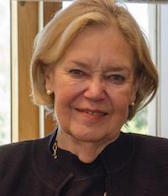
Dr. Judy Willis
When youth participate in engaging learning activities in well-designed, supportive cooperative groups, their affective filters are not blocking the flow of knowledge. When you plan your group such that each member’s strengths have authentic importance to the ultimate success of the group’s activity, you have created a situation where individual learning styles, skills, and talents are valued and youth shine in their fortes and learn from each other in the areas where they are not as expert. They call on each other's guidance to solve pertinent and compelling problems and develop their interpersonal skills by communicating their ideas to partners. 

The brain scans of subjects learning in this type of supportive and social learning situation show facilitated passage of information from the intake areas into the memory storage regions of the brain. This is consistent with the original cognitive psychology research and theories of Steven Krashen about the affective filter - that learning associated with positive emotion is retained longer and visa versa.

Many of the motivating factors that have been found to release dopamine are intrinsic to successful cooperative or collaborative group work such as social collaboration, motivation, and expectation of success or authentic praise from peers. Because dopamine is also the neurotransmitter associated with attention, memory, learning, and executive function, it follows that when the brain releases dopamine during or in expectation of a pleasurable experience or reward, that this dopamine will be available to increase the processing of new information. That is what occurs when a young person enjoys a positive cooperative learning experience, and even when s/he anticipates participation in that type of activity sometime during the class or program.

Successfully planned group work can help to support adolescent youth by reducing a fear of failure that can cause them to avoid academic challenges. Well-structured cooperative group activities build supportive peer communities, which in turn increase self-esteem and academic performance.” 

– Dr. Judy Willis, Neurologist and Classroom Teacher

Tuesday, April 2, 2019

Youth Speak About the Importance of Afterschool

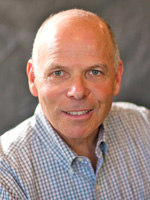
By Guest Blogger, Stu Semigran, EduCare Foundation


Stu Semigran
When FOX TV (Los Angeles affiliate) asked local high school students to speak about the importance of Afterschool Programs, they said "Yes!" On Sunday, March 24, Alvaro Cortes, Senior Executive Director of LAUSD's Beyond the Bell – along with students Abigail Miranda (Sylmar HS) and Lynn Kim (North Hollywood HS) – talked with Hal Eisner, the host of FOX 11's News in Depth.


They told Eisner how much Afterschool Programs have meant to them and their fellow students. They stated what a drastic blow it would be if there should be a cut to funding for these critical programs. Both Abigail and Lynn were articulate and passionate, and spoke from their hearts. All of the state's high school afterschool programs would be eliminated if President Trump's budget is approved. According to Abigail's EduCare Site Coordinator, Viancha Carchi, everyone listening was touched by her story. We're sure you will be, too! 


To see a brief clip of the broadcast, click here.

 To view the full segment which  aired on Sunday, March 24, click here.


-------------
Stu Semigran is the co-founder and president of EduCare Foundation and the executive director of EduCare’s ACE (Achievement and Commitment to Excellence) Student Success Program. Currently providing student support services at more than 100 high schools and middle schools in Southern California, EduCare also is the grant manager for the ASSETs after school programs at 17 LAUSD Beyond the Bell high schools and 1 middle school. Over 30,000 students are served each year through EduCare afterschool and youth development programs.

Tuesday, March 26, 2019

GRIT: Thinking More Deeply

By Sam Piha

Angela Duckworth’s "grit" has captured the imagination of educators, youth program leaders, and policymakers alike, leading many to agree that we should seek to cultivate grit in our youth. According to The Character Lab, grit is correlated with success and defined as "perseverance and passion for long-term goals”. It was further popularized by author Paul Tough (How Children Succeed: Grit, Curiosity, and the Hidden Power of Character, 2012) and others. 


Source: eschoolnews.com


Like others, we have written a lot about grit in our LIAS blog. But others have called on us to look more closely at the notion of grit and how it intersects with issues of bias, poverty, inequality, deficit thinking, and race.
"Educational outcome disparities are not the result of deficiencies in marginalized communities' cultures, mindsets, or grittiness, but rather of inequities."
- Paul Gorski in Reaching and Teaching Students in Poverty

We believe that we can think more deeply about grit by reviewing these writings below:


Tuesday, March 19, 2019

HERE WE GO AGAIN: Trump says eliminate afterschool in 2020!

Source: pressfrom.info

By Sam Piha


Sam Piha
Afterschool programs are now a part of the community landscape. Afterschool has been around for over a hundred years, making important contributions to families and the larger society. 

This next year, under President Trump, federal support of afterschool is again threatened. According to our partners at the Afterschool Alliance


“President Trump’s budget calls for eliminating federal funding for local afterschool and summer programs. If the funding is not maintained, nearly two million children and families would be left without reliable afterschool choices.  
More than 19 million families want and need more afterschool and summer learning opportunities. For every child in a program, two are waiting to get in. Closing 10,000+ afterschool programs will hurt families and children in every part of the country. 
You can make a difference: call on Congress to protect funding for afterschool and summer learning programs.”

According to the Trump Administration budget summary, the justification for eliminating the 21st CCLC is, “This program (21st CCLC) lacks strong evidence of meeting its objectives, such as improving student achievement.” Research has shown that this is patently untrue. 

The Afterschool Alliance has made it easy to tell your representatives in Congress to stand up for the programs America's children and families rely on. CLICK HERE


Source: CalSAC


Tuesday, March 12, 2019

Afterschool Professionals Appreciation Week

Source: National AfterSchool Association
By Sam Piha

Afterschool programs are now a part of the community landscape, with over 10.2 million young participants. Few are even aware that afterschool has been around for over a hundred years, making important contributions to families and the larger society.

Afterschool professionals, numbering over 850,000, are often not acknowledged. But we can change that! Afterschool Professionals Appreciation Week is April 22-26. 

According to the National AfterSchool Association (NAA), “this is a joint effort of community partners, afterschool programs, youth and child development workers and individuals who have committed to declaring the last full week of April each year as a time to recognize and appreciate those who work with youth during out-of-school hours.” 

There are a number of ways organizations, schools, parents and program leaders can recognize and appreciate afterschool workers: 

  • Issue an appreciation shout out 
  • “Thank you” card for afterschool program staff 
  • Watch and share the brief Afterschool Professionals Appreciation Week video produced by NAA


  • Plan a “Thank You” activity or event 
  • Appreciate the long history and contributions of afterschool youth programs in America: Few are aware that afterschool has been around for over a hundred years, making important contributions to families and the larger society. To ensure that afterschool stakeholders appreciate the long history of afterschool youth programs in America, Temescal Associates and the How Kids Learn Foundation have created a video to document this history, as well as a trailer, media kit and learning guide. 

Join in the celebrations and display your appreciation of afterschool professionals who make a difference in the lives of young people. NAA has developed a toolkit and a number of ideas for AfterSchool Professionals Appreciation Week. 

Wednesday, March 6, 2019

An Interview with Ivan Garcia, Youth Activist

By Sam Piha

Ivan Garcia
Ivan Garcia is a youth activist in Oakland. We first heard about Ivan’s work through a program by a local NPR station. This program was later turned into a brief video. At the How Kids Learn VIII conference, Ivan was a presenter and panelist on the subject of youth activism. 


We interviewed Ivan and some of his responses are below. 

Q: How did you become active in social causes?

A: I first became involved in 2016, following the Presidential Election. All my classmates and I felt that we needed to speak up and use our voices to share our opinions. I took it upon myself, to create a class video, titled “Dear Mr. Trump” which is a video of our opinions, fears, and hopes for President-Elect Donald Trump at the time. The video has now garnered over 4,000 views and it served as a way for me to connect with many young people who felt as though their voices weren’t being heard.

Q: What are you doing currently?

A: Currently, I serve on the Oakland Youth Commission, serve on the Youth Advisory Board for Youth + Tech + Health, and am an intern for Mayor Libby Schaaf. The Oakland Youth Commission is a group of young people who advise the City Council and Mayor on issues affecting youth in Oakland. With that also comes the task of writing policy and doing lots of outreach to community groups. Youth + Tech + Health, is an organization that provides mental health and sexual health resources to young people all around the world, especially developing nations. Most recently, I helped with a text campaign they have going on in Honduras currently, which tackles the issue of teen dating violence. Lastly, working with the Mayors office, I have a chance to hear from many constituents and learn the inner workings of City Hall.

“I love Ivan. He's a leader. I can't wait for him to sit in my office. And I mean be the mayor. He's going to be an amazing mayor.
And maybe [to Ivan] you're going to bring your talents to some better pursuit besides politics. Whatever it's gonna be, it's gonna be amazing. And you always do it, Ivan, with love and respect.”
-Oakland Mayor Libby Schaaf

Q:In your view, why is youth voice and youth activism important? 

A: Youth activism, in my view is crucial as it gives young people the opportunity to have their voice heard while expressing themselves in a way that is unique. Being an “activist” can be anything from being an artist to working with lawmakers to create policies that will benefit all people. It also equips youth with many skills that are essential, such as networking, organizing, public speaking, and much more. It’s important for young people to feel as though they have a say in the policies that will affect them in the long run.

Ivan Garcia at HKL VIII Conference
Q: What advice do you have for afterschool programs who want to provide opportunities for youth to become actively involved?

A: I would tell afterschool programs to give students the freedom to try different methods of expression. Don’t limit a young person’s perspective and provide safe spaces where they can feel free to be themselves. Creating an environment that encourages truth and honesty can go a long way for young people who want to be active in their communities. Furthermore, I think it’s important to note that adult allies, should support the work of young people, but not take over and determine the way that work should be done. That should be done by the students, themselves. Lastly, bring people in who are doing this work as an example to motivate other students. It’s not a competition, but it’s one way that students can often see what’s possible when they think about more than just themselves.

Q: What activities and issues do you think youth are most interested in? 

A: Most recently, I think youth have been invested in gun violence, given the many incidents that have rocked our nation. Following Parkland, many young people created groups and organizations that are still doing meaningful work in their communities. Some other areas of interest for youth, I think are: criminal justice reform, sexual assault and harassment, and education (especially in places where schools are underfunded and under resourced).

Q: Looking ahead, what are your plans for continuing your activism? 

A: To be honest, I’m not quite sure what plans I have next. Lately, I’ve taken a step back from some of the work I was previously doing and have engaged in deep discussions with many of my peers. It’s been humbling to be in spaces with people my age, discussing things that matter to us. I hope to continue to touch the hearts of people along the way and work on a project that helps all young people find what it is that they love to do and are inspired by.

------------------------
Ivan Garcia is a freshman at Head-Royce School in Oakland. Ivan is a member of the Oakland Youth Advisory Committee. He played a key role in the March for Our Lives Oakland rally and is a Youth Ambassador for Litterati, an app that makes it easy for anyone to create an environmental impact around the world. Ivan is proud to be a part of the LGBTQ+ community. He hopes to inspire others to love themselves for who they are and fight for a better tomorrow.

Wednesday, February 20, 2019

An Interview with Youth Development Researcher, Reed Larson

By Sam Piha

According to the Chronicle of Evidence-Based Mentoring, "Reed Larson’s seminal research on the lives of teenagers helped to launch the field of positive youth development, and his insights and findings continue to enrich the work of mentoring researchers. His work explores the contexts of daily life and how developmental processes unfold in extra-curricular activities."

Researcher, Deborah Vandell (UC Irvine), stated, "Reed Larson did some really  important work looking at the development of initiative and engagement. What he found is that when children are in school what they often are doing is putting forth a lot of effort, but they're not really motivated. What happens in afterschool activities, when they're really working, when they're active, they're choosing those activities and they are also focused on them. It's the best combination for learning."


Reed Larson will share his work at a Speaker's Forum entitled, "How Demanding Program Roles Can Facilitate Youth’s Positive Development" on April 19, 2019 in Oakland, CA. You can register here. We recently interviewed Reed and some of his responses are below.


Reed Larson
Q: You have been a pioneer in the field of youth development. What drew you to this work? 
A: I have done research and teaching on the age period of adolescence all my life. We know it is a time of enormous potentials for growth. Yet our society does not get that. Teens are disrespected, misunderstood, and terribly underestimated. As a result, they are not given the opportunities to develop their potentials. I discovered that after school and out of school programs were the main exception. They are a part of teens’ lives where they have opportunities to develop their full potentials.

Q: The work of promoting youth development is not easy. In your research, what did you find to be the greatest challenges facing youth workers? 
A: There are a lot of challenges: being present and attuned to youth, being both a friend and a mentor, teacher, or sometimes parent; seeing societal injustice and hurt in teens; having too few resources; taking care of yourself at the same time you are engaged in caring relationships with others. 

Q: What settings and practices are most successful in engaging youth? 
A: I don’t claim to have all the answers. But in our research, youth have described becoming highly motivated in youth program settings where they feel safe, feel they belong, experience positive relationships, and experience a culture that supports these positive ways of being. Further, in settings where they are engaged in activities: that have meaningful goals, are challenging while allowing them to experience competence, and involve high-functioning collaborative relationships. I’ve also observed that high quality programs provide an environment that helps youth disengage from distractions and anxieties in their lives at the beginning of the program session, and reflect on what they have learned at the end.  

Q: What is the most important lesson that you learned in your research? 
A: I have seen again and again that young people have enormous resources. They can be extremely resilient. They are eager, active learners who learn from experiences. They are ready to have deep insights about complex social and emotional truths. We just need to provide the right conditions for them to feel save, loved, and to see a way forward. 

Q: What most surprised you? 
A: It is maybe not a surprise, but I have been impressed by meeting many, many wonderful, smart, and caring people who have devoted themselves to working with young people. It has been increasingly clear to me that to improve programs the field needs to seek out, understand, and draw on the expertise of experienced youth development practitioners. Communication between researchers and practitioners need to involve two-way conversations. 

Q: What are you working on currently? 
A: We just finished a research paper on how “substantive demanding roles” can provide powerful opportunities for youth’s development of new competencies, including responsibility to others. (This will be the main topic of my Speaker's Forum presentation). Although my research has been mainly focused on processes of positive development, I am currently interested in times when youth in programs experience “psychological meltdowns” from a setback or being overwhelmed, and how staff are effective in helping youth respond with resiliency. 

----------------
Reed Larson’s seminal research on the lives of teenagers helped to launch the field of positive youth development, and his insights and findings continue to enrich this field. His work has involved over a thousand interviews with youth and front line staff in diverse youth development programs. It has focused on understanding how developmental experiences unfold in programs (including extracurricular activities) and how program staff are effective in supporting these learning processes. His team’s research was the basis for the Weikart Foundation’s research-practitioner collaboration that identified effective staff practices for supporting social emotional learning in programs. Reed is a professor in the Department of Human Development and Family Studies at the University of Illinois at Urbana-Champaign and was recently the President of the Society for Research on Adolescence. He also served as Editor-in-Chief of New Directions for Child and Adolescent Development (with Lene Jensen).

Friday, February 15, 2019

Collaboration Leads to Successful SEL Implementation

By Guest Blogger, Jennifer Peck

Jennifer Peck
As educators, afterschool providers, and advocates for children, we know social emotional learning (SEL) is the foundation for academic success for all students — especially children experiencing trauma and extreme stress. The challenge we face today is implementation and that challenge is why we joined others (ASAPconnect, CalSAC, California AfterSchool Network, and Temescal Associates) in forming the Expanded Learning 360°/365 initiative in 2015. That challenge is why The Aspen Institute released its recommendations for SEL implementation earlier this month, and why our partner, Temescal Associates researched and published Promoting SEL and Character Skills in Expanded Learning Programs.

Partnership for Children and Youth’s focus within the 360°/365 initiative is to assist California school districts with SEL implementation across the school day, afterschool, and summer. The American Institutes for Research evaluated Expanded Learning 360°/365’s work and saw impact like:

  • Increased Professional Development: Monthly videos, articles, and activities to build common SEL understanding; meetings to align practices; and sessions to build culturally responsive teaching practices and student and adult SEL strategies.
Source (clockwise): LA's BEST; Kimochi Dolls; and Educare Foundation
  • Collaboration Between School-Day & Expanded Learning Staff: Deliberate efforts built into SEL action plans included joint classroom walkthroughs and expanded learning staff participating in school-day staff meetings.
  • Stronger Data Usage & Sharing: Engaged in a cycle of continuous improvement using student data to establish system- and site-level goals, assess readiness, and track progress; including pre-post measures of relationship skill-building, SEL competencies, school climate, and program observations.

This evaluation affirms that collaboration and accountability are powerful forces for change — and that skilled facilitation is an essential catalyst for deep, effective collaboration. We are eager to share the lessons learned from the Expanded Learning 360°/365 initiative and hope you find this to be a useful resource as you expand SEL in your community.

If you have questions or are interested in partnering with us, please don’t hesitate to reach out. Thank you for everything you do for California’s students. Please share the findings widely! Here is a sample tweet you can customize:

Quality #SEL implementation takes collaboration between school-day, #afterschool, and summer staff, according to a new evaluation: https://www.partnerforchildren.org/resources/2019/1/29/the-key-to-bringing-social-emotional-learning-to-life #edchat #k12  

-----
Jennifer Peck, Executive Director, has led the Partnership for Children & Youth (PCY) since the organization’s founding in 2001.  During this time, she has grown PCY to be the leading California intermediary building access to high quality expanded learning opportunities for students living in our state’s lowest-income communities. Jennifer led the creation of the California Afterschool Advocacy Alliance, the California Summer Matters Campaign, the California Community Schools Network, and HousED which builds on-site learning supports for students living in public and affordable housing. 
------

Dr. Shawn Ginwright
Temescal Associates recently sponsored a Speaker’s Forum led by Dr. Shawn Ginwright on the topic of Healing Centered Engagement.  For those that were unable to attend, Flourish Agenda is sponsoring a webinar on March 21st, 2019 at 10am PST on Healing Centered Engagement facilitated by Dr. Ginwright. This is a free online event but space is limited and filling up fast. To learn more, click here.

Tuesday, February 5, 2019

Best Posts of 2018


By Sam Piha

Since we launched the Learning in Afterschool & Summer (LIAS) project, we have published over 354 blog posts, attracting 410,062 views. In 2018, we published 34 blog posts, attracting 57,050 views. Below, we list some of our favorites and most viewed posts.

FAVORITES
Photo Credit: ResponsiveClassroom.org
The Power of Sharing Circles (May 2018)
We know that bringing together young people and offering them the opportunity to have their individual voices heard in the larger community is an important practice. We are referring to “talking or sharing circles” - bringing youth together in a circle and asking each individual to speak while the rest of the group practices active listening. Read more.

New Educational Trends and Terms (April 2018)
In America, educational trends and thinking don’t evolve. Instead, they tend to swing like a pendulum or cycle back and forth. To see a good example, just look at the writings of John Dewey from the early 1900s. Read more.

Shawn Ginwright
Shifting From Trauma Informed Care to Healing Centered Engagement (August 2018) 

Dr. Ginwright recently authored an article entitled Shifting From Trauma Informed Care to Healing Centered Engagement. In this post, we offer a few excerpts from his article and urge everyone to read it in its entirety. Read more.

MOST VIEWED
In the Aftermath of Parkland: What is the Role of Expanded Learning Programs? (March 2018)
We were shocked and dismayed by another mass shooting, this one at  Stoneman Douglas High School in Parkland, FL. As a field that promotes safety, youth voice, and youth civic engagement, we commend the students that have spoken up about gun violence. Read more.

HEARTSET: Transforming Teaching & Learning (March 2018) 
Have you ever thought that the challenges that educators face today are different from any in modern time?  With political and social unrest creating a stressful environment, how can we best uplift ourselves and assist our young people deal with life and learning? Read more.

How Not to Lose Your Mind Over Every New Trend in Your Field (March 2018)
It sometimes feels like risking whiplash to try to follow all the emerging trends in our field and the potential funding, resources and opportunities that come along with them. Every few years, sometimes more often, there are new trends that are often accompanied by or are a part of funding opportunities. Some of these trends stick around for awhile until something newer, younger and sexier gets introduced. Some trends seem to come around in cycles. Read more.

Johanna Masis
PRACTITIONER GUEST BLOGGERS
Johanna Masis Sharing Circles: Cyphers (May 2018)
At Oakland Leaf, all of our programs incorporate the practice of Cyphers. We believe in the power of people's stories and life experiences regardless of how many years they have been alive.  There is a collective wisdom that exists and needs to be honored. When we practice Cyphers, or community circles, the benefits are immense. Read more.

INTERVIEWS WITH FIELD LEADERS
An Interview with Researcher Deborah Lowe Vandell (October 2018)
Deborah Lowe Vandell has been a leading researcher on expanded learning programs since 1985. Dr. Vandell agreed to respond to our interview questions regarding her research on the field of afterschool. Read more.

What Difference Does It Make? An Interview with Milbrey McLaughlin
Milbrey McLaguhlin
(June 2018)

Dr. McLaughlin recently released a new book entitled, You Can’t Be What You Can’t See: The Power of Opportunity to Change Young Lives. In this post, we offer her responses to a few questions regarding her work. Read more.

INTERVIEWS WITH PRACTITIONERS
Practitioners Speak Out: Serving the Needs of Immigrant Youth (February 2018)
We previously published a blog post on the issue of supporting immigrant families and their children in afterschool. We want to follow this up by hearing directly from youth practitioners from Educators For Fair Consideration (E4FC) that specialize in serving this population. Read more.


A Book Drive for Children's Books Makes for a Fabulous Service- Learning Project

Source: The Children's Book Project  By Sam Piha   In our previous paper entitled, Reading Buddies: Promoting Literacy and Community Eng...