Monday, April 13, 2015

A Win-Win: Employing Older Youth in Afterschool Programs

By Sam Piha


Sam Piha
"The Assistant Coach position with A World Fit For Kids! was my first professional experience that I ever had. The position was my dip of my toe in the water that is the real world. It was a great learning platform." - David Molina, Program Alumni, Student at California State University at Northridge

If afterschool programs are to be meaningful, they must offer youth opportunities to build their workforce skills. And what better setting to learn and practice these skills than an afterschool program? Normandie Nigh and A World Fit For Kids! is a true pioneer in training youth to work successfully in afterschool programs. She has been training and hiring older youth to work in afterschool programs since 1994. Below is an interview with Ms. Nigh focused on what she has learned in her years of this practice. 

Q: Can you describe the impact you have seen or experienced on the topic of hiring older youth and program alumni to work within afterschool programs? 

A: A World Fit For Kids! (WFIT) provides older youth with training and support and place them in our afterschool program where they can become role models and mentors to their peers and younger children. 


Normandie Nigh, CEO
A World Fit For Kids!
During the 21 years that we have employed this model, I have seen how it truly changes the lives of both the kids who come to our afterschool program and the teens themselves. In some cases, high school students who were on the verge of dropping out have stayed in school and raised their grades because the work they have done with us made them feel empowered. That feeling of personal pride and confidence inspires their commitment to get a job after completing their training and volunteer service, and it also ignites a desire to take their studies more seriously. 

With teens who are already good students, by hiring them and giving them responsibility we are showing them that we trust and believe in them, and by working in afterschool programs they are gaining valuable experiences for their resumes that will give them an advantage when they graduate and pursue personal ambitions, be it applying for the college or finding a job in a field of their choosing. 

The example they set is also very motivating for the younger students they work with in afterschool programs. Kids in the program relate to their teen Coach-Mentors in a very specific way. These teens are from their community and they share the same circumstances and challenges, so when kids see what a peer is accomplishing, they know they can do it too. There is also a natural affinity between kids who are close in age, and our youth Coach-Mentors can help us connect a little deeper with kids who are reluctant or reticent about communicating with adults. 

In 2011 an outside evaluator confirmed that more than 96% of students who completed WFIT’s teen training and internship program graduated from high school and 76% were currently enrolled in or had completed community college or university degrees. I’m very proud that 18% of our current Coach-Mentors in our afterschool programs were participants in our teen training and many of them were also participants in our own elementary and/or middle school programs when they were younger. 


Teens who have been trained and hired by WFIT described several skills they gained through the experience including responsibility and patience, leadership and self-confidence as well as practical skills on how to work with children.  They also described how they applied the skills and confidence they gained in WFIT to their school behavior. Teens said they are more likely to initiate participating and helping in class and improved how they make presentations, communicate with others, and manage their time.


Q: Why do you think this is an important practice? 

A: A World Fit for Kids! works primarily with disadvantaged and underserved populations, and the kids we serve are often from communities where there are not a lot of role models. Sometimes the message they receive, both implicit and explicit, is that they shouldn’t expect much, from themselves or from life. Training and hiring teens delivers a different message. The kids learn that they do have what it takes to be responsible and successful, and that allows them to think differently about the future. WFIT programs are based in healthy behaviors and physical activity, and what we believe is that when kids learn that they can take more control over their bodies, they will realize they can also take control in other areas of their lives, and that is really what we want for them. That is the foundation we want to establish in our afterschool programs. 

From there, teen training is the next leap. It gives those kids who want it a place to build confidence and exercise control over their life by reaching beyond themselves. One of the most important reasons the older youth say they want to work for WFIT is because they want to contribute to their community. To me, this is a demonstration of leadership, personal empowerment and a clear indication of a successful future. 

Q: What preparation, training, or support do you think older youth and program alumni need in order to succeed? 

A: I believe that youth are most successful when the adults in their lives have high expectations of them. WFIT’s programs let teens know that we believe in them, that we trust them to take on responsibility, and we encourage them to reach higher.

Teens working at WFIT school sites must first participate in our 38-hour comprehensive healthy behaviors and personal empowerment training. Throughout the training, participants engage in interactive exercises designed to promote success and increase self-awareness, build confidence and strengthen interpersonal skills, all of which prepares them to become successful in the workplace.

More specifically, the training components recommended are: personal empowerment; being a positive role model/mentor; effective communication; leadership/advocacy; healthy behaviors (physical activity leadership/nutrition); conflict resolution; work readiness; First aid/CPR; and a minimum of 30 hours of community service.
_______________
Normandie Nigh is CEO of A World Fit For Kids! and has worked with corporations, sports teams, fitness professionals, community organizations and individuals of all ages, but her passion is working with kids. Before taking the helm at A World Fit For Kids! (WFIT) in 1994, she founded Fit For Success, a Boston-based consulting company specializing in the design and delivery of physical activity, sports, fitness, and personal development programs. She was certified as a Personal Development Consultant for Tony Robbins and Associates, and is also the former International Fitness Marketing Manager for Reebok. 

An active advocate for youth services and programs, she meets regularly with local, state and national officials and serves on a number of boards and steering committees. Some of her past and present affiliations include: Co-Chair of the Nutrition and Physical Activity Committee of the California AfterSchool Network; the California Department of Education After School Physical Activity Steering Committee; the California Association for Health, Physical Education, Recreation and Dance; CA ‘Project LEAN’ (Leaders Encouraging Activity & Nutrition) State Steering Committee; CAHPERD State Legislative Committee; and the CA Healthy Eating / Active Communities Initiative.

Thursday, April 2, 2015

Hiring Young People in Afterschool Programs

By Sam Piha

“Nothing affects after-school program quality more than the workforce.” Michael Funk, Director, After School Division, 
California Department of Education

Sam Piha
One important way of affecting afterschool quality and its attractiveness to young people is to engage older youth and program alumni in the operation of the program. There are multiple benefits - both to the program and the young adults who are engaged as leaders or hired as staff. 

A couple of years ago, we conducted research on high school afterschool programs that engaged youth leaders and hired youth as staff. We published a comprehensive briefing paper that examined ways to compensate the youth, the legal issues involved, program examples, and what youth have to say about their experience. You can review this paper by clicking here. While most afterschool staff are between the ages of 20-29 (63%), few are under the age of 20 (just over 8%).  

Source: Examining the Future of the After-School Workforce (2012) 
www.californiawin.org 
Below we offer the perspective of a program leader who is a leading practitioner and proponent of this idea. In an upcoming blog, we will offer the views of older youth and program alumni who have been impacted by the opportunity to work within afterschool programs. 

Bob Cabeza
"Over my 34 years working in the after school and youth development fields, I have personally witnessed children become confident, young leaders within our youth development programs. 

Then, finish college and become professional staff within our agency. I have seen our low income youth of color go from being disenfranchised to now entering the upper middle class and becoming a professional engineer, doctor, social worker, architect. I presently have 20 Board Members, seven of which are professionals who were once youth in our programs and now are capable adults doing extremely well financially and paying it forward by both volunteering and donating generously to our programs.

The moral to this story is that we need progressive, seamless programming for our young people to have a place to grow up in throughout their childhood and adolescence and into young adulthood. When we can support, nurture, develop skills and mentor our youth and young adults, then we create a new generation of activists and supporters of the cause of youth development. These young adults are the ones that we need to have take over the leadership of our programs and become our volunteer board members and advocates for the next generation of youth. That is the ultimate visionary goal and I have seen it come to life before my eyes over the past 22 years here in Long Beach. In my experience, that is why after school programs are so important for youth. Providing ladders of leadership for youth is the next strategic step in that continuum.

Youth Institute at YMCA of Greater Long Beach

Engaging youth in the operations of programs is important because it provides young adult mentors for our children who come from the same neighborhood, culture, ethnicity and relatable experiences as those children. It provides appropriate role models for children who model high school graduation, college attendance, etc. It provides hope and examples for our children that they can achieve further education. 

Lastly, young people in adolescence and post adolescence are seen by children as popular and cool! This dynamic enriches the lives of the children by providing a big brother/sister dynamic and enriches the lives of the young adult by them as they become mentors and leaders to younger children. It is much more of a personal and intimate relationship than the institutional teacher/student relationship. It creates a 'camp' positive group dynamic at a school site." 
- Bob Cabeza

___________________
Bob Cabeza is Vice President of Community Development at the YMCA of Greater Long Beach & Change Agent Productions. Mr. Cabeza has over thirty years experience in youth development, community development and digital media arts programming, resulting in the ability to build and lead unique programs designed to better the lives of children, youth and families.  Mr. Cabeza has a special focus on youth development and technology equity for underserved communities as it relates to developing both academic and workforce success. 

Thursday, March 26, 2015

Saving 21st CCLC Funding

By Sam Piha

Sam Piha
Members of the US Senate are, again, threatening funding for the 21st CCLC program. The funding would be consolidated into a block grant available to school districts to use for multiple purposes.

To oppose this, the New York State Afterschool Network  (NYSAN) advises “Taking action is FREE and generates IMMEDIATE RESULTS!
  • Call your two senators and your representative! Calls take about 30 seconds and they matter. Offices track how many calls they get about each issue – we need more calls supporting 21st CCLC! All you have to say to the receptionist is 'Please maintain funding for 21st Century Community Learning Centers in the ESEA reauthorization.' That’s it! You can call again weekly to maximize your impact.
  • Forward this email to your contacts! Program staff, parents, grandparents, and even participants can make a difference!"

Afterschool advocates have recommended that rather than focusing on the negative evidence that is being cited by 21st CCLC opponents, familiarize yourself and make use of the evaluation literature that supports the effectiveness of 21st CCLCs. You can go to the Afterschool Alliance website to find important research. 

We reached out to Jodi Grant, Executive Director of the Afterschool Alliance, to gather additional evaluation information. She replied:

“Here are the specific findings from other evaluations you can point to:
    Jodi Grant, ED
    Afterschool Alliance
  • An evaluation of Texas 21st Century Community Learning Centers found that the program positively impacted students’ school day performance. Students attending the program—both students with low levels and high levels of participation in the program— were more likely to be promoted to the next grade. The likelihood of being promoted to the next grade increased by 43 percent for students with low levels of participation in the program, and 47 percent for students with high levels of participation. Additionally, ACE students saw improvements in their Texas Assessment of Knowledge and Skills (TAKS) reading and math scores. (American Institutes for Research, 2013)
  • Students regularly attending Washington’s 21st CCLC afterschool programs saw improvements in their reading and math achievement, as well as a positive impact on their overall GPA, compared to their non-participating peers. (American Institutes for Research, 2014)
  • A statewide longitudinal evaluation of the After School Safety and Enrichment for Teens (ASSETs) program—California’s high school component of the 21st CCLC program— found that students participating in the ASSETs program received higher ELA and math assessment scores, and performed better on the ELA and math sections of the CAHSEE than non-participants. (CRESST, 2012)
  • Teachers of students participating in Wisconsin 21st CCLC programs reported more than two-thirds improved their class participation, 60 percent saw improvements in their motivation to learn and 55 percent improved their behavior in class. Teachers also reported that 48 percent of students improved in volunteering for extra credit or responsibility. (Wisconsin Department of Instruction, 2014)
These are just a few studies that show that 21st CCLC programs work.”

She also suggested this fact sheet and a briefing paper on afterschool evaluations.   


Thursday, March 19, 2015

Race and Afterschool: Finding the Gold Within

By Sam Piha

Sam Piha
Much of our afterschool programs are situated in low income schools, which means schools with a high number of black and brown kids. We all acknowledge the issues surrounding the achievement gap and have conveniently reframed it as the opportunity gap. We design programs to close this gap but rarely do we talk about race and the needs and lives of those same black and brown youth. 

If minority youth are to take advantage of the opportunities we offer, to what extent do they need help understanding their experience being black or brown in America? Stories like the one that came out of Ferguson, MO remind our society that something is going on that we're not talking about. We rarely talk about race in afterschool circles. 


To promote a discussion, we have partnered with Karina Epperlein, the Director of Finding the Gold Within, to offer a number of screenings for the Bay Area afterschool community. Following the film, we will host a Q&A session with the film director and young people who are featured in the film. To view a trailer of the film, click here. (As some of you may know, Ms. Epperlein and Kwame Jerry Williams, Drummer and Storyteller featured in the film, presented at our How Kids Learn IV conference in San Francisco. Their presentation can be viewed by clicking here. The conference also featured a presentation by Dr. Shawn Ginwright on the considerations of social emotional learning when engaging youth of color. It can be viewed here. We also offer another presentation by Dr. Ginwright at the first How Kids Learn conference, which you can view here and here.) 


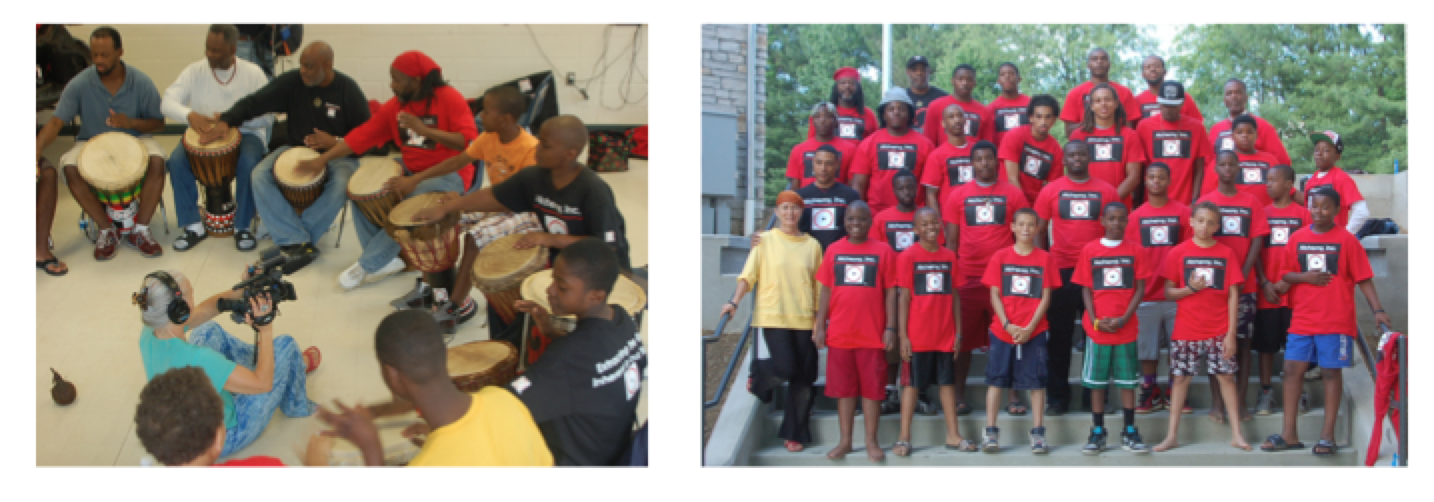
Finding the Gold Within is a feature film documentary that had its world premiere recently at the Mill Valley California film festival. It features a program from Akron, OH named Alchemy, Inc. This group uses drumming, mythology, and journaling to promote the healthy development of inner city African-American children and youth. 


Screenings of Finding the Gold Within will be offered at no cost to afterschool workers and advocates, as well as older youth from those programs. While there is no cost, registration is required. Screening times and registration information is below:

These screening events are sponsored by Temescal Associates, the Learning in Afterschool & Summer (LIAS) Project, and the Expanded Learning 360/365 Project. Supporters include the Oakland Unified School District; Alameda County Office of Education/Region 4; the S.D. Bechtel, Jr. Foundation; the David Brower Center; the RYSE Youth Center; and the San Francisco Department of Children, Youth, and Their Families. 


Monday, March 16, 2015

Afterschool in California and "Expanded Learning": An Interview with Jodi Grant, Part 2

By Sam Piha


Sam Piha
At the end of last year, the Afterschool Alliance released an important study entitled America After 3PM. This study included a report on the state of afterschool for every state including California. There were also reports on afterschool with African-American and Hispanic communities and a special report on summer learning.

California was declared the number one state in providing afterschool learning opportunities. Below, we cite some key findings from the California study, which can serve as a pocket guide for every afterschool program leader and advocate. We also share part 2 of an interview with Jodi Grant, Executive Director of the Afterschool Alliance.

Key Findings from Afterschool in California

Participation and Costs

  • 1 out of 4 children in California participate in afterschool programs, up 5% in 2009
  • 31% of children in grades K-5, 29% grades 6-8 and 15% in grades 9-12 participate in afterschool programs
  • Most families piece together a variety of afterschool solutions such as 66% of California’s K-12 children spend some hours in the care of a parent or guardian, 33% with non-parental adult care, 19% sibling care, and 12% in traditional child care centers
  • The average weekly cost of after school programs was $126, up from the national average of $113
  • The top 5 factors in a parents’ selection of an afterschool program is their child’s enjoyment, safety, knowledgeable and trained staff, convenient location, and quality of care 
  • 47% of California children in an afterschool program qualify for Federal Free and Reduced Price Lunch Program

Benefits

  • 73% of parents agree that afterschool programs help children gain workforce skills
  • 4 out of 5 parents agree that afterschool programs reduce the likelihood of youth engaging in risky behavior
  • 72% of parents agree that afterschool programs excite children and learning
  • 80% of California parents agree that afterschool programs help give working parents peace of mind about their children when they are at work; 82% agree it helps parents keep their job

Program Characteristics and Quality

  • Top 5 activities/services offered include: homework assistance (81%), physical activity (80%), reading or writing (75%), STEM learning opportunities (74%), and academic programs (74%)
  • 90% of parents are satisfied with their child’s afterschool program, down 9% in 2009
  • 92% of parents are satisfied with the quality of care; 90% are satisfied with the safe environment

Demand and Barriers

  • If an afterschool program was available, 49% of children would participate
  • 19% of California’s children are alone and unsupervised between 3 and 6PM; 3% of children in grades K-5, 9% grades 6-8, and 44% of students in grades 9 – 12 
  • The average time children spend alone and unsupervised is 6 hours a week
  • Parents noted preference for alternative activities and high costs as reasons their child does not participate in California’s afterschool programs
  • 86% of California parents support public funding for afterschool programs


Part 2 of an Interview with Jodi Grant, Executive Director, Afterschool Alliance

Q: California received a number one ranking in afterschool. What was this ranking based on?
Jodi Grant
Executive Director
Afterschool Alliance
A: California’s top ranking is driven primarily by the state’s strong afterschool program participation rate and the high percentage of parents satisfied with their child’s afterschool program. The state has one of the highest percentages of children in an afterschool program in the country—25 percent. That’s 7 percentage points higher than the national average of 18 percent, and 6 percentage points higher than its afterschool program participation rate in 2009.  America After 3PM also found that more than 9 in 10 California parents are satisfied with their afterschool program’s quality of care, 86 percent are satisfied with the variety of activities and 4 in 5 are satisfied with the cost of their afterschool program.  
California has made significant investments in afterschool programs over the years—funding both the After School Education and Safety (ASES) program and reserving half of the state’s 21st Century Community Learning Centers federal funding for the High School After School Education and Safety for Teens (ASSETs) program—as well as placing an emphasis on the quality of afterschool programs, creating the California Department of Education After School Division.  

We have seen California make great progress creating afterschool opportunities for its children, but, as in the case across the country, there are still a significant number of children in the state whose parents would enroll them in an afterschool program if one were available to them.  

Q: The term “expanded learning” is used differently by different people in different parts of the country. Can you give your definition of “expanded learning time and programs”?
A: Nearly three years ago, the Afterschool Alliance published “Principles of Effective Expanded Learning Programs”, a document that is incredibly relevant to the field and policy makers. In this document, we offer a vision of expanded learning opportunities that encompasses afterschool, summer, and expanded learning time programs. Afterschool and summer programs are well known and highly in demand across the country – half of all school age children are either in an afterschool program or would be if more programs were available.  

Expanded learning time —adding time to the school day, week or year—is a relatively new approach to expanding learning opportunities. Yet, across all the approaches to expanding learning there are essential principles of that increase the likelihood of success. At a minimum, all types of expanded learning programs should go beyond simply providing more time and incorporate successful afterschool practices: engaging students in their own education by providing hands-on, experiential learning opportunities through community partnerships that build on—but do not replicate—learning that happens during the school day. 

In our “Principles” document, we define and outline the eight principles of afterschool best practices that are key to developing successful expanded learning programs.  These principles build off more than a decade of research telling us what works in afterschool and include school-community partnerships, engaged learning, family engagement, intentional programming, diverse prepared staff, participation and access, safety, health and wellness and ongoing assessment and improvement.

Likewise, the Expanded Learning and Afterschool Project, a 50-state initiative designed to harness the power of networks and leaders to help schools and communities leverage the time beyond school to accelerate student achievement also has a set of principles that closely mirror ours.  They include: school-community partnerships, engaged learning, affordability and scalability, learning time after school and during the summer, family engagement, and health and wellness. 


Q: In your mind, what is the difference between the terms “expanded learning” and “extended learning”?
A: When I hear extended learning, my attention is immediately focused on the notion of merely extending the learning that happens during the regular school day by providing more time. Advocates for expanded learning opportunities are unanimous in their agreement that more time is not enough. For example, The Ford Foundation has organized its grant making in this area around the two pillars of more and better learning time. In our “Principles” document, we reinforce how important it is not to just provide more learning time, but to significantly expand on the learning that happens during the regular school day by providing learning opportunities that too often are not available to students during the regular day. We know from our recent America After 3PM report that the idea of providing opportunities that go beyond the regular school day has appeal with parents.  Six in ten parents with children in an afterschool program report that “providing learning opportunities that are not available during the regular school day” is an important reason for selecting their afterschool program.


Q: Are you hoping that the field begins using “expanded learning programs” to replace “afterschool and summer programs”?
A: We know from years of public polling that afterschool is a term that resonates with American parents and voters.  The term expanded learning opportunities provides an organizing umbrella term to allow us to talk about the components of any effective approach to expanding learning. So, whether you call your program afterschool, summer learning, expanded time, expanded learning or any other term used in our field is a matter of preference, but how you design that program should be based on research and what works. That’s why we and others talk about principles of effective expanded learning opportunities – it’s a way to embrace all approaches and help ensure that no matter what you call your program, you are working to provide the best possible program to children, youth and families. 

Tuesday, March 10, 2015

Announcing an Exclusive LIAS Blog for the California AfterSchool Network

By Sam Piha

Sam Piha
We are pleased to announce that once a month, we will be publishing an exclusive blog post for the California Afterschool Network (CAN). 

Our latest blog for CAN features a two-part interview with Michael Funk, Director of the After School Division at CDE. These interviews focus on expanded learning, SB1221, California’s Quality Standards, program improvement, and the LIAS learning principles. 

You can view this interview, by visiting the CAN March 10th newsletter. 

Michael Funk, Director
After School Division at CDE


Thursday, March 5, 2015

America After 3PM: An Interview with Afterschool Alliance Executive Director, Jodi Grant

By Sam Piha


Sam Piha
At the end of last year, the Afterschool Alliance released an important study entitled America After 3PM. They began issuing this study in 2004. This report included key 2014 findings on the use and demand for afterschool programs and a state-by-state review of the status of afterschool. Below, we cite some key findings from the national study, which can serve as a pocket guide for every afterschool program leader and advocate. We also share part 1 of an interview with Jodi Grant, Executive Director of the Afterschool Alliance.


Participation and Costs

  • Nearly 1 in 4 families currently have a child enrolled in afterschool programs and its only increasing
  • Parents reported spending an average of $113.50 per week on afterschool programs, an increase from $74.41 in 2009
  • 1 in 5 parents survey report receiving government assistance to pay for afterschool; 25% of parents reported their program was free

Demand and Barriers

  • 2 in 5 children would participate if the programs were available and more than half of all school-age children in 2014 had some measure of demand for after school programs
  • 1 in 5 children spend time alone and supervised during after school hours (3PM – 6PM); 3% of elementary-aged children and 19% of middle school students  
  • Demand for afterschool programs is higher among low-income families; Hispanic (29%) and African-American children (24%) are at least 2x more likely to participate than Caucasian children (12%)
  • 56% of low-income households report that cost is the factor in their decision to enroll their child; 54% of low-income households report the lack of a safe way for a child to get to and come home from afterschool program as a barrier for enrollment
  • 81% of parents report that their child’s enjoyment is very important in selecting an afterschool program; 71% find a variety of activities offered as very important, and 61% report physical activity as very important, 62% cite providing learning activities that are not offered during the regular school day as important
  • 84% of parents report that they favor public funding for afterschool opportunities
  • 7 in 10 parents surveyed agree that afterschool program should offer opportunities to explore STEM learning; 69% report that their program offers STEM

Benefits

  • Afterschool programs help 83% of parents keep their jobs and gives 75% peace of mind when they are at work; this is extremely high among working mothers (80%), African-American parents (80%), and Hispanic parents (76%)
  • 9 in 10 parents are satisfied with their afterschool program; 81% believe that afterschool programs provide high quality of care and 84% believe they keep kids safe and out of trouble, which is higher than previous years
  • 79% of parents (88% with participation) agree that afterschool programs can help develop social skills
  • 73% of parents (83% with whom children participate) agree afterschool programs reduce risky behavior
  • 64% of parents (82% with parents who participate) agree afterschool program can excite children about learning
  • 71% agree that afterschool program should help children develop workforce skills such as teamwork, leadership, and critical thinking
  • 65% agree the programs can help children gain interest and skills related to STEM

Summer Learning

  • 85% of parents indicate support for public funding for summer learning programs
  • 1/3 of families report at least one child participated in a summer learning program, up from 25% in 2009
  • The average weekly per-child cost of summer learning program was $250

Interview with Jodi Grant, Executive Director, Afterschool Alliance


Jodi Grant
Executive Director
Afterschool Alliance
Q: The Alliance recently published an important report entitled America After 3PM. Can you briefly describe what this report is about and who is it intended to reach? 
A: America After 3PM is the largest household survey on what children are doing between the hours of 3 and 6 p.m.–after the last school bell of the day rings and before parents typically return home from work.  The goal of our survey is to not only document the number of children who are alone and unsupervised during the after school hours and the number of children who are in an afterschool program, but to quantify the need for afterschool programs in communities across the country.

America After 3PM is the opportunity to capture the information necessary to better understand what the demand for afterschool programs is, both nationally and at the state level. It is intended to serve as a resource for the afterschool field, advocates, educators, parents and policy makers, providing them with the data that can help them make informed decisions on how to best support the children and families in their communities when it comes to the after school hours. 


Q: Can you explain why the Alliance researched and published this report?  
A: We first embarked on this research back in 2004, when important questions regarding the number of children in afterschool programs, the number of children who are alone, and the number of children who want to participate in an afterschool program, but are unable to, were raised time and time again, and each time, no definitive informational source was available to answer these questions. We went into the field in 2004 to collect what would be our baseline data, and again in 2009. This year, our research and report spans a decade worth of data and builds off of what we learned through previous editions of the research. 

The report examines participation disparities by income and race and ethnicity. We also believe that the quality of afterschool programs is incredibly important, which is why we ask parents about their experience with their child’s afterschool program and report on parental satisfaction with their afterschool program, the types of activities offered in programs, and the outcomes and benefits associated with participation in afterschool programs.  
Q: Were there any surprises that came as a result of your research?
A: When we first started on America After 3PM, one of our hypotheses was that as participation in afterschool programs increased, the unmet demand for afterschool programs would decrease—a basic supply versus demand scenario. Over the past 10 years, afterschool program participation has increased by more than 50 percent–from 6.5 million children in 2004 to more than 10 million children in 2014. 

But, we found that unmet demand for afterschool programs has also seen a steady increase over the past decade, growing from parents of 15.3 million children saying they would enroll their child in an afterschool program if one were available to them, to parents of close to 20 million children in 2014.

The fact that unmet demand continues to grow while participation is also growing may be a sign that afterschool is becoming more of an expectation among parents.  

We found that this year more than half of all school-age children in the U.S. either are in an afterschool program or would be if more afterschool programs were available. That means that there are close to 30 million students who have some form of demand for afterschool programs.


Q: What do you believe is the most important takeaway from this report?
A: The most important takeaway from this report is that while we have seen much progress in the number of children and youth taking part in afterschool programs, we still have so much more work to do. For every one child in an afterschool program, two more children are waiting to get in based on parents surveyed. We need increased investments in afterschool at all levels—federal, state, local and private—to ensure that all children are able to take part in an afterschool program that keeps them safe, inspires learning and supports working families.  

Thursday, February 26, 2015

Let's Welcome Back Eric Gurna, LA's BEST New President & CEO

By Sam Piha


Sam Piha
Eric Gurna returns to LA's BEST and his old stomping ground to serve as President & CEO of LA's BEST, one of the largest and most influential afterschool initiatives in the country. LA's BEST was founded by Carla Sanger, who was a strong leader in California and across the country, helping to propel the afterschool movement.

Eric has been a long-time friend and colleague and we are excited to have him back on the West Coast. Below, we asked Eric a few questions about his transition to LA's BEST. You can learn more about Eric by clicking here.

Eric Gurna
President & CEO
LA's BEST
Q: Welcome back to California. Can you say a little bit about your roots in California and with LA’s BEST? 
A: Thank you! I definitely consider myself a California boy. While I was born in New York and have lived on the East Coast for many years, I moved to Oakland, CA when I was nine years old, and graduated from public high school and university here. My family still lives in the Bay Area, so even when I’ve been living in the East I’ve always been out West on a regular basis. 

I moved to Los Angeles shortly after finishing graduate school in New York City, in 1998. I met with a few people in the youth development field and all of them mentioned LA’s BEST, so I knew I had to learn more. I joined the organization as Director of Staff Development and though I only worked in that position for a couple of years, I was lucky enough to be around for one of the first major organizational growth periods, and gained incredible experience being part of a team that was dedicated to increasing access and the scale of the program, while maintaining the spirit, culture and values that had made the program great to begin with. I continued working with the LA’s BEST team over the years from the outside, assisting with staff development, curriculum and other program resources.

Q: You created a very successful organization in New York, Development Without Limits, providing training and curriculum for afterschool programs. Can you say a little about why you left this to take over the reins at LA’s BEST? 
A: This was too huge of an honor, and opportunity, to pass up. I loved the work I was doing with the Development Without Limits (DWL) team, and am thrilled that the organization is in great hands and continues to thrive. Now I am so excited to get to work with the LA’s BEST team and all its partners, and the chance to lead the organization through this transition, and into the future. 

For the past fifteen years with DWL, I have worked with dozens of youth organizations and programs across the country in all kinds of settings, so I also see this new role as a chance to incorporate some of the innovative practices I’ve seen into LA’s BEST. Really what I’m most excited about, and what made me feel it was worth it to uproot my family and move across the country, is the LA’s BEST team – it is in amazing group of people who put young people and community at the center of everything they do.

Q: You are stepping into some large shoes. I am referring to the shoes of Carla Sanger. Can you say something about her influence on the field? 
Carla Sanger
Founder & Former CEO
LA's BEST
A: Throughout this transition, it is amazing how many times people mention Carla’s shoes! Carla’s influence on the field is tremendous - she has been a key part of the driving force that has created statewide and local afterschool infrastructure and resources in California that just don’t exist (yet!) in other states. 

She’s been a force nationally as well – bringing the fresh air of honest dialogue, humility and inspiration to every conversation and collaboration she is a part of. But I think her biggest influence is on the many individuals she has worked with – she’s shown that you can be courageous and outspoken without having a large ego, that you can be sensitive enough to care deeply about how young people feel, but fierce enough to fight the good fight when you have to. For me personally, she has been my most important mentor, and someone I admire endlessly. To my good fortune, I still have her number, and I plan to use it as needed!

Q: What do you see as the next step for LA’s BEST? 
A: I don’t know yet! I only just started in this role February 17, and I don’t come into this with a preconceived notion of what changes are needed, or next steps. I need to learn a lot more about how things work – and maybe what isn’t working so well internally and in the field, before I can have that sort of plan. I do know that I want us always to be striving to create even warmer environments for kids, to listen closer to young people and to each other, and to be more creative in how we do so much with relatively little. In terms of the field, I’d love for LA’s BEST to connect with other afterschool programs more, to collaborate and build us all stronger.

Q: Could you comment on the LIAS learning principles?
A: I’ve been a fan of the LIAS learning principles from the beginning. I think they are a clear and succinct articulation of the values of most out of school time programs, and I think providing that language is very helpful as youth professionals interact with all the important stakeholders, and need to express what we are about and what we do. 
_________________________
Eric Gurna joined LA’s BEST as CEO and President in February 2015. LA’s BEST Afterschool Enrichment Program, is a partnership between the City of Los Angeles, the Los Angeles Unified School District and the private sector that operates in 195 schools. 

Previous to his arrival, Eric founded DWL in 2000 with the vision of supporting youth programs and schools to improve the quality of their work and create more youth-centered environments. There, he hosted the podcast, Please Speak Freely: Honest Conversations About Youth Development and Education, during which he interviews leaders and practitioners to shed light on key issues and explore different perspectives. Before founding DWL, Eric served as Director of Staff Development for LA´s BEST. He cofounded the LA Partnership for After School Education. Eric also worked for Educators for Social Responsibility and Rheedlen Centers for Children and Families (now Harlem Children’s Zone).

Eric holds a B.A. in Political Science from the University of California at Irvine and an M.S. in Urban Policy Analysis and Management from the New School for Social Research. He lives in Los Angeles, CA with his wife Elia, who is an artist, their two children, Rosalie and Rafael, and their two cats.

Building a Trauma Informed Care Approach for Afterschool Programs

Source: www.pexels.com Many of the young people we work with in afterschool have suffered from individual or collective trauma. Below we sha...