Thursday, February 23, 2012

A Response to an Interview with Alfie Kohn

Sam Piha
In our blog posted on October 11, 2011, we alerted our readers that Eric Gurna and his organization, Development Without Limits, is now offering Please Speak Freely, podcasts of interviews with afterschool and educational thought leaders. After a recent interview with education thinker, Alfie Kohn, Eric asked me to listen to the interview and respond as a guest blogger. My response follows below. 


A Critical Voice
By Sam Piha, Director of Temescal Associates
Over the last 25 years, Alfie Kohn has been a critical voice in education. He has, through his writings and presentations, urged us to focus on the child instead of the student; on learning instead of achievements. As the pressures of No Child Left Behind increased, he was unafraid to speak freely about these topics. Thus, it is most appropriate that he is featured on “Please Speak Freely.”
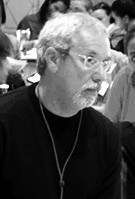
Alfie Kohn
I greatly enjoyed the lively exchange between Eric Gurna and Alfie Kohn, in particular their discussion of extended learning time, creativity, and motivating kids without the use of rewards or punishments. (If you also enjoyed the podcast, I highly recommend that you view some of Alfie Kohn’s video presentations on YouTube). 
The latest rage in educational reform seems to be the notion of extended learning time (ELT). We have known for some time that children learn regardless of the time of day or the particular season. This idea is not new to those in the afterschool and summer learning movements. However, ELT for many appears to be about extended seat time and extending the school day. In my recent interview with Karen Pittman (Forum for Youth Investment), she cautioned, “The most important thing to remember is simply that more time doesn’t necessarily equal more learning. Learning opportunities must be high quality if they are going to produce more learning – whether they happen in classrooms or CBOs.”
By Alfie Kohn
The critical questions facing those who are considering extending the school day, are who will be involved, what methods will be used, and what guidelines will shape quality learning experiences? In California, the Learning in Afterschool & Summer project is promoting that all extended learning be active, collaborative, meaningful, support mastery, and expanding the horizons of the participants.
Alfie Kohn and Eric also talked about the importance of promoting young people’s creativity. Creativity is re-entering the educational debate as evidence by two recent articles in Education Week. According to Sarah D. Sparks, “Teaching creativity has been a hot-button topic this fall, from the National Academy of Education's annual meeting in Washington to a Learning and the Brain conference in Boston. Yet researchers are just beginning to determine what makes some students more creative than their peers, and how the classroom environment can nurture or smother that ability.” You can also view an entertaining presentation by Sir Ken Robinson on how we can kill young people’s creativity.
By Alfie Kohn
Alfie Kohn also talked about how rewards and punishment for academic achievement do not motivate or increase young people’s learning. We know that young people have a built-in drive to learn about and master their environment and they experience an innate joy in this. The question for educators inside and outside of school, is how to tap into, and not extinguish, this natural drive. 
Daniel Pink and RSAnimate created an entertaining and brief video entitled “The Surprising Truth About What Motivates Us.” He presents evidence that shows that being self-directed, the joy of mastery, and the sense of purpose trumps the offering of rewards. To only offer carrots and sticks for performance “assumes that we are just better smelling horses”.  His video provides good food for thought and I highly recommend afterschool program and educational leaders share it with their staff and facilitate the hearty discussions that will follow.

Friday, February 17, 2012

Measuring Soft Skills in OST Programs: An Interview with Nicole Yohalem, Part 2

By Sam Piha


The Learning in Afterschool project is promoting five learning principles that are well rooted in education and youth development research. Teachers and youth workers alike know that these principles are important to engaging young people in learning. Although these principles are vital to developing important skills, sometimes referred to as 21st century skills, many refer to them as “soft”. Further, the lack of accessible tools that measure these skills has been a problem for the OST field. 

Recently the Forum for Youth Investment published From Soft Skills to Hard Data: Measuring Youth Program Outcomes, which offers a survey of measurement instruments that measure many of these skills. They include:

Nicole Yohalem

  •      Communication
  •      Relationships & Collaboration
  •      Critical Thinking & Decision-making
  •      Initiative & Self-direction


Below, we interview Nicole Yohalem (Forum for Youth Investment) one of the co-authors of this report.


Q: What criteria did you use in selecting instruments?

A: We considered several factors. First we looked for measures where a majority of the contents mapped directly onto one of our four areas of interest. We looked for measures that were appropriate for use in a range of settings, including OST programs, and focused on tools that can be used with upper elementary through high school age youth, since a lot of useful work has already been done by CASEL to review measures for use with younger children. We also prioritized measures that are accessible to practitioners and relatively easy to use. Because we are committed to ensuring practitioners have access to tools that yield reliable (consistent) and valid information, we also looked for instruments that at a minimum, had been investigated for scale reliability, factor structure and sensitivity to OST program impact. 

Q: How might the guide be helpful for OST programs?

A: In selecting measures there are some important things for program leaders to consider. First and foremost, outcome measures should reflect the goals and activities of the program. Programs should measure outcomes that they value and that they are actively trying to influence. Second, it is important to select measures that will yield reliable and valid information. Finally, there are all the practical issues to consider – cost, ease of administration and accessibility. 

The guide includes information about all of these considerations. For each instrument we summarize the origins and focus on the tool, include sample items, and discuss user and technical considerations. Where possible we also include information about length, cost, format, supplemental tools, and training. Our technical reviews focus on the extent to which reliability and validity have been established. 

Q: Finally, do you see this new resource helping to address any important risks or opportunities facing the OST/afterschool movement at this time? 

A: Unfortunately we haven’t done a good job of coming to consensus on what to call important skills like critical thinking and decision-making, relationships and collaboration, communication and initiative and self-direction. I hear these referred to as social-emotional skills, soft skills, 21st century skills, new basic skills, higher-order thinking, non-academic outcomes…the list goes on. 

If we could get more consistent about naming these and measuring them, programs will be more likely to identify them as target outcomes and demonstrate their ability to move the dial on these skills. At the policy level, we have historically under-invested in programs that are good at developing these skills. With the education and business sectors increasingly recognizing their value to school and workplace success, we have a unique window of opportunity to demonstrate the important role that afterschool programs play in supporting learning and development. 


________________________________________________________________
Nicole Yohalem
Director of Special Projects, The Forum for Youth Investment
Nicole oversees Forum projects on out-of-school time, postsecondary success and bridging research, policy and practice; speaks on behalf of the Forum at national conferences and events; and serves as an advisor to several foundations, organizations and initiatives connected to the Forum. She has authored numerous reports, articles and commentaries, and oversees several regular Forum publications, such as the Ready by 21, Credentialed by 26 issue brief series.

Friday, February 10, 2012

Measuring Soft Skills in OST Programs: An Interview with Nicole Yohalem, Part 1

By Sam Piha


The Learning in Afterschool project is promoting five learning principles that are well rooted in education and youth development research. Teachers and youth workers alike know that these principles are important to engaging young people in learning. Although these principles are vital to developing important skills, sometimes referred to as 21st century skills, many refer to them as “soft”. Further, the lack of accessible tools that measure these skills has been a problem for the OST field. 

Recently the Forum for Youth Investment published From Soft Skills to Hard Data: Measuring Youth Program Outcomes, which offers a survey of measurement instruments that measure many of these skills. They include:

Nicole Yohalem

  •      Communication
  •      Relationships & Collaboration
  •      Critical Thinking & Decision-making
  •      Initiative & Self-direction


Below, we interview Nicole Yohalem (Forum for Youth Investment) one of the co-authors of this report.

Q: Of the many important skills, why did you focus on the four skill areas presented in your paper?

A: We didn’t want to create a new framework because there is so much good 
existing work out there.  So in identifying these four areas to focus on, we reviewed commonly used and cited frameworks from the Collaboration for Academic, Social and Emotional Learning (CASEL); the Partnership for 21st Century Skills; and the U.S. Department of Labor. We identified the common constructs across those frameworks, focusing specifically on skill-oriented outcomes and those that are amenable to intervention by afterschool programs. We also focused on skills that are cross-cutting, which means we left some things out that relate to specific content knowledge (e.g., technology, global awareness). That’s how we came to communication, relationships & collaboration, critical thinking & decision-making and initiative & self-direction. We aren’t suggesting this is a comprehensive list of important skills, or that these are the only skills afterschool programs should focus on. We may tackle additional areas in an updated report next year.

Q: Why are these “soft skills” deemed important?

A: There is growing evidence and recognition that these skills and dispositions are critical – to academic success, workplace success, and to overall wellbeing.  Teachers, students, parents and Fortune 500 companies all think these kinds of skills are critical. In a 2006 national survey of employers, collaboration, work ethic and communication were among the most important skills necessary to succeed in the workplace. On the academic side, focusing on social skills is linked with developing a positive connection to school, improved behavior, and increased achievement.

Q: What do you see as the role of OST programs to build these skills? In other words, why are OST programs well positioned to build these skills?

A: We feel these kinds of outcome areas could really be a strategic niche – in economic terms – a “comparative advantage” for many youth programs. Afterschool programs operate with limited resources yet have significant flexibility compared to schools. These are skills that youth programs are good at building and supporting, and they matter for learning and development.

Q: Why did you think it was important to identify instruments to measure these skills?

A: We know that high quality afterschool programs can help young people develop these and other skills, but to live up to this potential, activities need to align with outcomes and programs need tools that are accessible and that do a good job of measuring them. When you are tracking things like attendance, grades or standardized test scores, which many afterschool programs do, data are typically obtained from school records, which means program leaders and evaluators rarely face decisions about what instrument to use.

To be continued in Part 2

________________________________________________________________
Nicole Yohalem
Director of Special Projects, The Forum for Youth Investment
Nicole oversees Forum projects on out-of-school time, postsecondary success and bridging research, policy and practice; speaks on behalf of the Forum at national conferences and events; and serves as an advisor to several foundations, organizations and initiatives connected to the Forum. She has authored numerous reports, articles and commentaries, and oversees several regular Forum publications, such as the Ready by 21, Credentialed by 26 issue brief series.

Friday, February 3, 2012

How Kids Learn: LIA's First Conference

By Sam Piha

On January 27th, over 180 people from across California and the country met at the David Brower Center in Berkeley to hear from experts on How Kids Learn - the first conference sponsored by the Learning in Afterschool project. Participants included representatives from school districts, youth organizations, private funders, the State Department of Education, and afterschool advocates.

Experts shared their best thinking and recent research in 20 minute presentations to the audience. Speakers included Paul Heckman, Associate Dean of Education at UC Davis; Michael Merzenich, a leading brain researcher at UC San Francisco; Alexis Menten from the Asia Society; Shawn Ginwright, a professor and community practitioner from San Francisco State University; youth from San Francisco's Youth Empowerment Fund; Carol Tang from the Coalition for Science After School; and many others. For a complete list of presenters, see the How Kids Learn website.


Thanks to the youth and young adults of Change Agents, we will feature a videotape of each presentation on our Learning in Afterschool YouTube channel in the very near future.
Clockwise: Paul Heckman, Michael Merzenich, Alexis Menten,
Shawn Ginwright, Youth Empowerment Fund, and Carol Tang.

Thursday, January 26, 2012

Afterschool for Older Youth and More: An Interview with Karen Pittman, Part 2


By Sam Piha

Karen Pittman
Karen Pittman is President and CEO of Forum for Youth Investment and is known nationally as the leading advocate for youth development. Many credit her with launching the youth development movement and being an important thought leader promoting policies and systemic approaches to supporting young people's development, including the Ready By 21 initiative. See her full bio below. 

Q: In California, all the dollars supporting afterschool learning opportunities for high school youth come from federal 21st CCLC funds (most of the funding for elementary and middle school programs   come from protected state funds); how important do you think it is that we include high school age youth in the afterschool equation?

A: It’s critically important that teenagers, and especially our most vulnerable youth, have access to supports and opportunities geared toward helping them build skills, connect with positive adults, and navigate the transition to adulthood. This is especially important given how many young people are not on track to graduate and how many more are not on track to graduate college and career-ready. California’s funneling all of its 21st CCLC dollars to high school programming has been a boost for the field as you all have had a chance to innovate programmatically and experiment with things like credit recovery.


Q: What do you see as the major risks and opportunities facing the out-of-school time (OST) movement?

A: I think the conversation that is unfolding about expanded learning opportunities represents a real opportunity for the field. The education community is acknowledging schools alone cannot ensure all young people are ready for college, work and life. The business community is acknowledging that young people need more opportunities to develop 21st century skills. Communities are building infrastructure to support broad goals, meaningful partnerships, and shared data. Now is the time for OST programs to shore up their commitment to quality and to put a stake in the ground about the kinds of outcomes they want to be held accountable for. If test scores and grades are not necessarily the best things to measure success by – what is? The development of communication, collaboration, and critical thinking skills? Creativity? Hope? We need to do a better job of naming and measuring outcomes we know are critical to youth success and that programs can influence.   


_________________________________________________________________________
Karen Pittman is a co-founder, President and CEO of the Forum for Youth Investment. She started her career at the Urban Institute, conducting numerous studies on social services for children and families. Karen later moved to the Children’s Defense Fund, launching its adolescent pregnancy prevention initiatives and helping to create its adolescent policy agenda. In 1990 she became a vice president at the Academy for Educational Development, where she founded and directed the Center for Youth Development and Policy Research and its spin-off, the National Training Institute for Community Youth Work.
In 1995 Karen joined the Clinton administration as director of the President's Crime Prevention Council, where she worked with 13 cabinet secretaries to create a coordinated prevention agenda. From there she moved to the executive team of the International Youth Foundation (IYF), charged with helping the organization strengthen its program content and develop an evaluation strategy. In 1998 she and Rick Little, head of the foundation, took a leave of absence to work with ret. Gen. Colin Powell to create America’s Promise. Upon her return, she and Irby launched the Forum, which later became an entity separate from IYF.

Thursday, January 19, 2012

Extended Learning Time and More: An Interview with Karen Pittman, Part 1

Karen Pittman
By Sam Piha


Karen Pittman is President and CEO of Forum for Youth Investment and is known nationally as the leading advocate for youth development. Many credit her with launching the youth development movement and being an important thought leader promoting policies and systemic approaches to supporting young people's development, including the Ready By 21 initiative. See her full bio below. 


Q: You have recently cautioned us to think more clearly about diverting funds and efforts to expand learning time by expanding the school day.  Can you briefly summarize your concerns?

A: Ensuring that all young people are ready for college, work and life requires integrated communitywide commitments to learning. While the current push to expand learning time offers some great opportunities, it could actually have the opposite effect of decreasing overall learning time in communities. This is because if public funding currently available to community-based organizations through programs like the 21st Century Community Learning Centers is redirected toward schools, some CBOs will have to reduce their programming or even shut down.  


Also, a shift toward schools alone being held accountable for expanded learning time could destabilize effective collaborations that are finally in place, actively supporting effective community-school partnerships. But the most important thing to remember is simply that more time doesn’t necessarily equal more learning. Learning opportunities must be high quality if they are going to produce more learning – whether they happen in classrooms or CBOs. 

Q: The Learning in Afterschool Project is stressing the need to increase learning engagement in OST programs by promoting 5 learning principles that should characterize how we design activities in afterschool programs.  These principles are: learning that is active, collaborative, meaningful, supports mastery and expands horizons. Can you comment on which of these you think are most important?

A: They are all critical. Your principles reflect what our own field experience and research suggest about the characteristics of effective learning environments. They speak to both staff practices and program content, which is important. I think that working toward mastery, which goes right to the intersection of program content and staff practices – is something we need to be more intentional about in out-of-school time (OST) settings. Ensuring that young people have opportunities to engage in activities that build their skills and interests over time can be difficult in settings where participation and staffing patterns aren’t always as consistent as school.


Q: Do you have any advice of how best to get these principles better integrated in our expectations of afterschool programs?

A: In our experience generating data that give staff concrete feedback about the extent to which they are implementing these principles and the kinds of practices that support them is extremely  powerful. We know that professional development as usual – sending staff off to a training here and a training there – does not change organizational practice in sustained ways.  The Forum’s Center for Youth Program Quality is working with over 60 networks of OST programs around the country to build their capacity to do this kind of continuous quality improvement work. This kind of data-driven continuous quality improvement approach is the direction that education and other human services fields are moving as well.

___________________________________________________________________
Karen Pittman is a co-founder, President and CEO of the Forum for Youth Investment. She started her career at the Urban Institute, conducting numerous studies on social services for children and families. Karen later moved to the Children’s Defense Fund, launching its adolescent pregnancy prevention initiatives and helping to create its adolescent policy agenda. In 1990 she became a vice president at the Academy for Educational Development, where she founded and directed the Center for Youth Development and Policy Research and its spin-off, the National Training Institute for Community Youth Work.
In 1995 Karen joined the Clinton administration as director of the President's Crime Prevention Council, where she worked with 13 cabinet secretaries to create a coordinated prevention agenda. From there she moved to the executive team of the International Youth Foundation (IYF), charged with helping the organization strengthen its program content and develop an evaluation strategy. In 1998 she and Rick Little, head of the foundation, took a leave of absence to work with ret. Gen. Colin Powell to create America’s Promise. Upon her return, she and Irby launched the Forum, which later became an entity separate from IYF.

Friday, January 13, 2012

Ongoing Debate On Using 21st CCLC Funds for Extending the School Day

By Sam Piha


On this blog we have been following the discussions nationwide about whether or not to allow 21st CCLC funds for afterschool to be diverted to extending the school day. We have interviewed several advocates, including Jennifer Davis and Carla Sanger, about this topic. 


Recently, the Washington Post posted a blog that featured differing views authored by Jennifer Davis, co-founder and president of the National Center on Time & Learning, and Jodi Grant, executive director of the nonprofit Afterschool Alliance. To read their comments and the comments of many readers, click here


Monday, January 9, 2012

Adding Arts to STEM: Making STEAM

By Sam Piha


Thinking about how to promote STEM (Science, Technology, Engineering, and Mathematics) in afterschool is a topic that has everybody talking; this includes activities during the school year and in the summer. A recent article in Education Week focused on efforts to gauge girls in STEM activities, and featured Techbridge, a Bay Area program.

The Afterschool Alliance recently published a paper offering an analysis of the impact and outcomes of attending a high-quality afterschool program that emphasizes STEM activities. They found that “attending high-quality STEM afterschool programs yields STEM-specific benefits that can be organized under three broad categories: improved attitudes toward STEM fields and careers; increased STEM knowledge and skills; and higher likelihood of graduation and pursuing a STEM career.”

Now many STEM advocates are making the case that adding the disciplines of art and design to STEM activities (STEAM) greatly enhances the learning experience. A recent EdWeek article explored the idea of merging the arts with STEM to further unlock students’ creativity and innovation.

The National Science Foundation has underwritten a number of conferences on this subject, including hosting a forum at Rhode Island School of Design titled, “Bridging STEM to STEAM: Developing New Frameworks for Art-Science-Design Pedagogy.”

What do you think? Should the arts be integrated into afterschool STEM activities?

Monday, January 2, 2012

Addressing the Afterschool Needs of Youth in Rural Settings

By Sam Piha

There has been a growing interest in the needs of rural youth and how we can better serve their needs through afterschool programs. We want to call your attention to a number of new resources that can serve to support this work:

  • A new blog titled “Rural Education”offers new important information on the needs of rural youth. The latest blog informs us of recent research that reveals that rural youth have a greater incidence of substance abuse and a lower rate of college enrollment. 
  • The California Afterschool Network website offers a number of articles and relevant events that promote the importance of quality afterschool programs in rural settings.

Monday, December 19, 2011

New California After School Division Chief


By Sam Piha

Michael Funk
On December 15, 2011, Tom Torlakson, State Superintendent of Schools, announced that Michael Funk will head the new After School Division within the California Department of Education (which until the recent CDE realignment had been a unit of another division).

Michael Funk served as the founder and Executive Director for the Sunset Neighborhood Beacon Center since 1996 and has served on the California Advisory Committee on Before and After School since its inception. He has also been the co-director for the Learning in Afterschool Project (LIA).

Michael has been a strong advocate for quality afterschool programs that reflect the learning principles of the LIA Project – learning that is active, collaborative, meaningful to the participants, promotes mastery, and expands horizons. We congratulate Michael on this appointment and look forward to his leadership of the California Afterschool movement. 

Friday, December 16, 2011

Expanding Horizons and Global Learning


By Sam Piha

On January 27, 2012, the Learning in Afterschool Project will sponsor a one-day conference entitled How Kids Learn.  One of our featured speakers will be Alexis Menten from the Asia Society.

Alexis Menten, Asia Society

Learning that expands young people's horizons is one of the five key learning principles of the Learning in Afterschool Project. This includes the promotion of global learning and understanding. You can read Alexis’ views on expanding horizons, lengthening the school day, and global competencies by viewing her post on the Global Learning blog. The Asia Society also offers a resource website to guide afterschool programs in promoting global learning entitled Expanding Horizons

To learn more about an award-winning youth program that is focused on developing young people’s global competencies and view some of their resources, check out Global Kids

A new publication entitled Virtual Vacation: A Leader's Guide offers an integrated approach to promoting global awareness. It will be available from Temescal Associates very shortly. This approach was developed by the NHP Foundation and implemented in afterschool programs near New Orleans.  

     ___________________________________________________________
Alexis Menten is a Director in Asia Society’s Education division, where she leads afterschool and youth leadership initiatives for the Partnership for Global Learning. The Partnership connects educators, business leaders, and policymakers to share best practices, build partnerships, and advance policies to ensure that all students are prepared for work and citizenship in the global 21st century. In support of this mission, Alexis directs Asia Society’s Expanding Horizons initiative, which provides technical assistance, professional development trainings, and resource publications that advance global learning as an essential approach for all high-quality afterschool and summer programs, and as a means to build collaboration between schools and community partners. She is a graduate of Bryn Mawr College.

A Book Drive for Children's Books Makes for a Fabulous Service- Learning Project

Source: The Children's Book Project  By Sam Piha   In our previous paper entitled, Reading Buddies: Promoting Literacy and Community Eng...