Showing posts with label dr. dale blyth. Show all posts

Monday, May 9, 2022

Social Emotional Learning and Teens: The Importance of Adult Staff and Focused Program Practices


By Sam Piha

For successful delivery of SEL content has to do with the need to model it to the students to effectively teach it. SEL is necessarily responsive and works moment-to-moment over time; because it’s all about behaving and interacting, a “do as I say, not as I do” approach doesn’t work. Students learn and emulate self-awareness from someone who is demonstrating it. For this reason, educators must continue to develop their own social emotional skills so they can set the example — working on their personal development, becoming more self- and socially aware, learning how to manage their own stress, and walking the talk.”  - Heather Daly, Courageous Hearts and Normandie Nigh,  A World Fit for Kids 

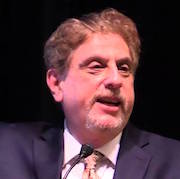
Dr. Dale Blyth
Dr. Dale Blyth, University of Minnesota, emphasizes that social emotional skills are “taught” through direct instruction and “caught” through adult modeling and the program values and culture. We know that the success of any program to promote social emotional and character skills is partially dependent on the social emotional and character skills of the adult leaders. 

Whoever our students may be, whatever subject we teach, ultimately we teach who we are.” - Parker Palmer, Educator


Below is a reflection from Stu Semigran, Founder of EduCare Foundation, on the importance of adult staff and their social emotional skills. 

Stu Semigran
“We can only truly teach or impact our students in the value and competencies of SEL to the degree that SEL is becoming part of our own repertoire… our own way of being.  As we commit to our personal SEL self-development, this naturally influences our instructional practices, programs, and decisions. SEL becomes more than a collection of lesson plans, activities, or programs. It becomes a way of teaching… a way of being… a way of living. Then we as role models can deeply assist our students as they evolve in their own mastership of SEL. This has implications for how we hire and provide professional development.

There are a variety of valuable SEL skills that can be addressed through staff professional development. EduCare Foundation teaches “Eight Skills for Heartset® Education”.  Some of these include tools for self-awareness, mindfulness, self-forgiveness, and empathetic listening.  When these and other SEL skills are personalized and become our baseline, then we are more equipped to create an SEL styled climate with SEL curriculum and activities that can really “stick with” and impact our students.”


FOCUSED PROGRAM PRACTICES

Social emotional learning (SEL) is very important for teens and afterschool programs are well equipped to promote SEL skills. Below are some social emotional learning practices and activities for older youth that can be seamlessly incorporated into afterschool programs:

Mindfulness - The term ‘mindfulness’ is often associated with calm or total peace. But that’s not what it’s about. Mindfulness is a practice — meaning, something to be returned to again and again — that involves focusing on the present moment and accepting whatever is showing up. Doing this each day can help foster a feeling of centeredness, which in turn can result in reduced stress and more regulated emotions.  

You can register for Integrating Mindfulness into Afterschool Youth Programs: A Mini-Course to learn more here.


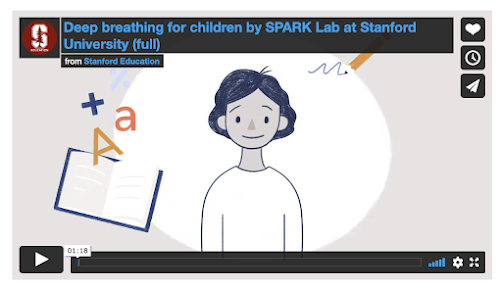
This animated video shows young children how to slowly inhale by pretending to smell a flower and to exhale by pretending to blow out a candle. The video was developed for a study by the Stanford Project on Adaptation and Resilience in Kids (SPARK Lab) at Stanford University.


Engaging Youth in Civic Action - In her article, How to Teach Older Students Social-Emotional Skills? Try Civics,  Arianna Prothero makes the case that “Understanding other points of view, solving problems collaboratively, and building relationship skills all come to mind [in teaching civics]. For many educators, those skills will sound familiar, because they’re many of the same taught through social-emotional learning…Civic engagement can be a meaningful way to teach and reinforce social and emotional skills. That’s especially true for middle and high schoolers who are searching for their place in their communities and the world and might not otherwise connect with traditional social-emotional lessons.” 


Source: Ever Forward Club
Circle Meetings - We know that bringing together young people and offering them the opportunity to have their individual voices heard in the larger community is an important practice. We are referring to ‘talking or sharing circles’ - bringing youth together in a circle and asking each individual to speak while the rest of the group practices active listening. In youth programs, these circle meetings are often called ‘sharing circles’ or ‘community circles.’ Click here to read more about sharing circles.


Source: Ever Forward Club
"Who I Am" Masks - The Ever Forward Club developed an exercise where young people write down words that describe who they are on the outside (the outside mask) and words that describe who they are on the inside (the inside mask)- the things that no one sees. (On their website, Ever Forward Club offers a curriculum on how to utilize this exercise). 

According to Darius Simpson, a former Ever Forward staff member, “A mask is a metaphor representing what we allow the world to see about ourselves. We all wear masks for different reasons, at Ever Forward we don't believe the mask is an inherently bad thing. Sometimes a mask is necessary to survive, get from one place to the next. What we've found is that when people, young men specifically, don't have a space to take off their masks and deal with what’s really happening for them, the mask becomes a part of them. That's where the conversation about what is living in what we call ‘the back of the mask’ comes into our workshops and circles.”

* * *


Tuesday, February 16, 2021

2021: Expectations from Afterschool Leaders

By Sam Piha

Source: jackuldrich.com
In a recent blog we shared responses from afterschool workers on their lessons and take-aways from a turbulent 2020. Below we asked two respected leaders in the afterschool field, Dale Blyth (University of Minnesota) and Stu Semigran (EduCare Foundation), to look forward and share their thoughts regarding 2021. 

Can you name one challenge that we will face in 2021? 

Stu Semigran

"One major challenge will be the essential need for students and staff to reconnect and reestablish their relationships with one another and with their school community as a whole.  We will be faced with how to effectively process all that has taken place... for us individually, within our families, our communities, and our nation.  There will be attention needed on addressing trauma and concerns about learning loss.  There will be a need for deep listening and increased sensitivity to how individuals are doing, along with a boost of vitality, enthusiasm, and a strong sense of purpose as reassuring adults and positive role models." – Stu Semigran

Dr. Dale Blyth
"Uniting the many different parts of the youth sector and community youth programs so that we are able to be both more visible to the community as necessary not just nice and more powerful in creating learning and development opportunities that matter in these challenging times and complement and expand beyond those schools can offer." – Dale Blyth

Can you name one opportunity that you see in 2021? 

"These same challenges can be turned into uplifting and exciting opportunities that are in front of us in afterschool in 2021.  Within EduCare, we are actively developing our "return to school" (3Rs- Reconnect- Reinspire- Reignite learning) model for high school students returning back onto school sites hopefully in early 2021. The intent is to provide essential mental health support and social-emotional skills development while reestablishing a positive school culture that assists students restore themselves, renew their relationships, and step forward into learning." – Stu Semigran   

"I believe learning and development, both how important they are and how hard they are to do intentionally, has dramatically increased as a result of 2020. The opportunity for afterschool in 2021 is to position itself as a viable, valuable and versatile place where such learning and development can and is being done." – Dale Blyth

Source: eenews.net

What do you think we should be thinking about as we look forward to a new presidential administration?

"With the possibility of broader government support for social causes such as afterschool and expanded learning, we need to keep building our collective voices and advocacy for the essential increased funding for expanded learning programs." – Stu Semigran

"I think now is the time to push for a significant children and youth cabinet with a lead "czar" that focuses on what is best for the learning and development of children and youth in America. the type of people and places where real, forward thinking policy and practices might be promoted and resourced. Such a cabinet and czar needs to explicitly recognize and engage families but also child care and youth development programs in the community. A focus on all adults, all settings, and all approaches to learning and development in a strength- based approach." – Dale Blyth


As schools prepare to re-open, afterschool program staff need to consider the experiences of youth who have been away from school and their friends due to the COVID-19 pandemic. We know these vary greatly depending on family income and racial/ ethnic background. What are young people's needs? What should we, as afterschool staff, do to help youth thrive when they return to afterschool programs post COVID? How might we build back school and program culture and a sense of "family" spirit and connection in our afterschool programs? Join Stu Semigran and a panel of afterschool program experts to learn how best to help youth thrive as they return to school and afterschool. To get more information and to register for our next Speaker's Forum, click here.

Stu Semigran is the co-founder and president of EduCare Foundation and the executive director of EduCare’s ACE (Achievement and Commitment to Excellence) Student Success Program. Currently serving more than 45 high schools and middle schools in Southern California, EduCare also is the grant manager for the ASSETs after school programs at 17 LAUSD Beyond the Bell high schools and 1 middle school. Over 30,000 students are served each year through EduCare afterschool and youth development programs.

Dr. Dale Blyth is a senior research consultant and advisor who recently retired as Extension Professor in the College of Education & Human Development at the University of Minnesota where he served as the Howland Endowed Chair in Youth Development Leadership and Senior Research Fellow with the Center for Applied Research and Educational Improvement. For 15 years he served as Associate Dean directing the Center for Youth Development. The Center was home for the Minnesota 4-H Program, the Youth Work Institute, Youth Community Connections (then the statewide Mott network), and conducting applied research and evaluation. Recently he led an initiative to advance social & emotional learning outcomes. He serves on several community, state and national groups related to out of school time, data systems, and youth development.


Tuesday, April 7, 2020

Dr. Dale Blyth on Afterschool 2020 and Beyond

By Sam Piha
(Note: The COVID-19 pandemic has been very disruptive to afterschool providers and we will cover this topic ongoing. However, as afterschool leaders plan for Summer and next Fall, we will also offer posts that advances thinking for the afterschool movement.)

Dr. Dale Blyth has been a leader in the fields of youth development and afterschool for many years, and has many accomplishments. In late 2019, we asked Dr. Blyth a few questions and to look ahead as we enter a new decade of the afterschool movement. Below are some of his responses.

Q: In looking ahead to 2020 and beyond, what do you see as the important emerging trends in expanded learning programs?

DALE: Three emerging trends are on my radar screen. First, the growing international work on creating a field of youth work and youth development. We have much to learn from other countries and how they support young people and how the workforce working with young people are prepared and supported. It has great implications for our field.

Q: How might international work be collected and disseminated to practitioners?

Dr. Dale Blyth
DALE: There are at least three ways we can increase our knowledge of what is happening internationally in our field: (1) consider joining the new World Education Research Association’s Extended Learning International Research Network.

While more research focused, it does provide a connection to what is happening in other places; (2) consider traveling, particularly to Europe, and explore their rich history in youth work. This can be done through the National Afterschool Association’s International Learning Exchange which travels to a country every June. This year we are going to Berlin, Germany – and also meeting the leads of the Extended Learning group noted above.

This is a great way to make connections and meet new colleagues that can become a great source of international information. The web site also includes information from previous visits; (3) the journals, magazines, and meetings in our field need to seek out and publish more news from abroad in ways that provide insights and ideas for practice. This can happen by inviting international practice leaders and researchers to our conferences as well as devoting space to regular international perspectives or doing a special issue.

Q: What is the second trend you would like to share?

DALE: As schools discover / rediscover the importance of the social and emotional dimensions of learning and development and as more and more national groups bring attention to the science of learning and development, it offers new opportunities for our field.

Our field can shine a light on what we do and build on the capacities we have in these critical areas and help avoid an overly content and school-centric approach to developing these skills. This will help schools and communities find a new and more balanced partnership. Some are calling for new forms of practice research partnerships that are less driven by a research study and more about engaging together to better understand and advance practice.

Q: How might practitioners get involved with researchers to form these partnerships?

DALE: Searching out the right research partner can be difficult but rewarding. Start by identifying what you want to learn and looking at who is doing work in this area in bridging journals such as the Journal of Youth Development. Contact these folks to find out who else might be doing work in this area close to home.  Check with colleges and universities in your area as well as research and evaluation organizations. Look for people interested in applied research and/or evaluation. Also contact your state afterschool network and/or associations for possible leads and perhaps consider joining a learning cohort or professional learning community that is looking at practice issues through many lenses – including research. Like all good partnerships, you need to develop a relationship with the researchers and affirm your mutual commitment to the project which can be time intensive but enormously valuable.

Q: What is the third trend you would like to share? 


DALE: The role of data to both inform, shape and even inspire practice is at a turning point in our field where we need to move from just evaluating what we do to be accountable to others to the point where we are using data to complement our deep and rich understanding of youth and the ways we work with them.

Q: Can you give an example of what this might look like?
Dr. Gil Noam
DALE: The work of Gil Noam and colleagues at the PEAR (Partnerships for Education and Resilience) Institute at Harvard is a good example of how getting data on STEM and social emotional learning can both inform and change practice. Seeing the youth in your program through data that you can sort by topic and look at individuals can reshape how you approach practice. Another good set of examples comes from the work on social and emotional learning that was part of the SEL Challenge created by the Susan Crown Exchange and captured in Preparing Youth to Thrive.

Q: Looking ahead to 2020 and beyond, what do you see as the most significant challenge facing the field of expanded learning? 

DALE: The major challenge I see is the very fragmented nature of the field's people working with youth and the lack of a clear taxonomy that addresses our commonalities as well as unique contributions as professionals and as programs and activities of different types. This includes the lack of a coherent identity for youth workers.  Understanding the workforce - from paid to volunteers - and the settings and purposes of their work with young people requires our attention.

If we are to be a force in the future and mobilize the types of resources needed to both open education and support high quality youth work, we need to better understand, promote and improve the workforce delivering opportunities to young people.

Q: We know that improving the afterschool work force is challenging because of the lack of program funding (due to the reduced number of funders interested in youth development and the increase in minimum wage), the lack of time, and staff turnover. Do you have any thoughts on how these challenges can be overcome?

DALE: While the challenges are real and difficult to meet one program at a time, I am inspired by the work of intermediaries, local systems, networks, and associations to create meaningful opportunities.  Also some of the national youth serving programs offer training that others can sometimes tap – for example, 4-H and related university extension services and the YMCA Character Development Learning Institute. I would start by making sure my organization was connected to these networks and local leaders to best discover what I need.
.................................
For a full bio on Dr. Dale Blyth, click here.

How the Meta Settlement Can Benefit Afterschool Programs

Source: www.pexels.com This blog by Dan Gilbert has been reposted from Afterschool Alliance’s Afterschool Snack Blog. Meta's new settlem...