Showing posts with label civil rights movement. Show all posts

Monday, June 16, 2025

Diversity, Equity and Inclusion

Source: www.pexels.com

By Sam Piha

“Donald Trump kicked off the campaign to abolish diversity, equity and inclusion initiatives during his first term. Now he's back in the Oval Office to finish the job. During an address Tuesday night before a joint session of Congress, the president claimed his administration had eliminated DEI. Just hours after he took the oath of office on Jan. 20, Trump began issuing executive orders to dismantle programs, put pressure on federal contractors to end “illegal DEI discrimination” and direct federal agencies to draw up lists of private companies that could be investigated for their DEI policies.” [i]

There is a lot of confusion around this attack on DEI. This blog seeks to clarify some of the misunderstandings about DEI, its history and the importance of DEI in youth programs. 

TERMS & DEFINITIONS

DEI: “This stands for Diversity, Equity, and Inclusion, is a framework that promotes fair treatment and full participation of all people, especially those who have historically been underrepresented or discriminated against, by fostering a respectful and inclusive environment.” [ii] 

DEI Hire: "’Diversity hire’, ‘equity hire’, or ‘DEI hire’, are disparaging and controversial labels for persons from underrepresented groups, which are, according to this label, assumed to be less qualified and have supposedly received preferential treatment due to DEI policies.” [iii] 

“The 'DEI hire' label was recently applied by President Trump in his comments on the tragic plane crash at Reagan National Airport. Trump claimed, without citing evidence, that DEI policies and programs mandated for air traffic controllers at the Federal Aviation Administration were partly to blame for the tragic plane and helicopter collision. Trump’s comments appear to have been a criticism of the Federal Aviation Administration’s (FAA) DEI policy of welcoming disabled persons to apply for FAA air traffic control positions.” [iv]

Diversity: Recognizing and valuing the unique characteristics of individuals, including race, ethnicity, gender, ability, socioeconomic status, and other differences. 

Equity: Ensuring that all youth have access to the resources and opportunities they need to succeed, regardless of their background or circumstances. 

Executive Order: “An executive order is a signed, written, and published directive from the President of the United States that manages operations of the federal government. They are numbered consecutively, so executive orders may be referenced by their assigned number, or their topic. Executive orders are not legislation; they require no approval from Congress, and Congress cannot simply overturn them. Congress may pass legislation that might make it difficult, or even impossible, to carry out the order, such as removing funding. Only a sitting U.S. President may overturn an existing executive order by issuing another executive order to that effect.” [v] 

Inclusion: Creating a sense of belonging and making sure that all youth feel valued, respected, and empowered to participate fully in the program. 

Meritocracy: “Is the notion of a political system in which economic goods or political power are vested in individual people based on ability and talent, rather than wealth or social class. Advancement in such a system is based on performance, as measured through examination or demonstrated achievement.” [vi] 

Woke: “The definition of ‘woke’ changes depending on who you ask. The term has recently been used by some conservatives as an umbrella term for progressive values, often using it with negative connotations. However, the term was originally coined by progressive Black Americans and used in racial justice movements in the early to mid-1900s.” [vii]

THE HISTORY OF DEI


According to DiversityResources.com, “The history of DEI in the workplace has been marred by racial discrimination, making it difficult for everyone to feel included, as equality wasn’t always part of the equation. A significant turning point in the history of DEI came with the Civil Rights Act of 1964, which made discrimination in the hiring and promotion process illegal. This was the first of many steps toward creating a more equitable workplace. Following the Civil Rights Movement, the concepts of equality and inclusiveness gained traction and became central to the history of DEI. Advocates began promoting the idea that everyone deserves to be treated with the same respect and opportunities as others.” [viii]  

Below is a video produced by PBS News Hour on the history of diversity, equity and inclusion efforts in America. To view this video, click here.

Source: PBS News Hour

DEI IN YOUTH PROGRAMS 

In youth programs, DEI focuses on creating inclusive environments that value and celebrate diverse backgrounds, experiences, and perspectives, ensuring equitable access to opportunities and resources for all participants. 

Here's a more detailed breakdown of DEI in youth programs:

  • “The program actively recruits and hires staff that reflects the community of the students served.
  • The program states its explicit commitment to diversity and equity in its outreach materials and/or policies. 
  • The program is aware of and seeks information and strategies to support all participant needs. 
  • The program creates a welcoming environment by representing the diversity of the participants through program materials, displays, etc.  
  • The program implements a plan that outreaches to all students at the school site. 
  • The program celebrates diversity related to participants’ race, color, religion, sex, age, income level, national origin, physical ability, sexual orientation, and/or gender identity and expression. Staff participate in on-going diversity and sensitivity training. 
  • Staff adapt activities to accommodate the physical and developmental abilities of all participants, and actively encourage their participation in the program. 
  • Participants and staff are comfortable sharing, and are given opportunities to share, from their diverse experiences and backgrounds.” [ix] 

WHY DEI MATTERS IN YOUTH PROGRAMS

Diversity, Access and Equity is integral to afterschool programming. In fact, it is a quality standard for expanded learning programs in California. This standard reads, “The program creates an environment in which students experience values that embrace diversity and equity regardless of race, color, religion, sex, age, income level, national origin, physical ability, sexual orientation and/or gender identity and expression. Diversity, access, and equity in action.” [x] 

Program Benefits
According to Google AI, program benefits of DEI include:
  • Promotes a positive and supportive environment: DEI initiatives help create a safe and inclusive space where youth feel comfortable being themselves and participating fully. 
  • Enhances learning and development: Exposure to diverse perspectives and experiences can broaden horizons, foster empathy, and promote critical thinking skills. 
  • Prepares youth for a diverse world: By learning to work with and appreciate people from different backgrounds, youth are better equipped to navigate a diverse and complex world. 
  • Builds stronger communities: DEI in youth programs can help foster stronger relationships between youth, families, and communities. 
  • Improves program effectiveness: When programs are inclusive and equitable, they are more likely to reach and engage a wider range of youth, leading to better outcomes. 

Examples of DEI in Youth Programs:

  • Recruitment and Retention: Actively recruiting youth from diverse backgrounds and implementing strategies to ensure their retention in the program. 
  • Curriculum and Activities: Ensuring that program activities and materials are inclusive and relevant to the diverse needs and interests of the youth. 
  • Staff Training: Providing staff with training on DEI principles and best practices to help them create a more inclusive environment. 
  • Parent/Guardian Involvement: Engaging parents and guardians in DEI initiatives to ensure that they are aware of the program's commitment to diversity, equity, and inclusion. 
  • Accessibility: Making sure that programs are accessible to youth with disabilities and other special needs. 
  • Language Access: Providing language services to youth who are not proficient in the primary language of the program.” [xi]  

BE HEARD BY COMPANIES THAT HAVE BACKED AWAY FROM DEI

Some companies under pressure canceled DEI programs altogether to align themselves with the Trump administration. If you wish to express your disapproval or approval, these companies are shown in the chart below. If you wish to write them, you can find their addresses here.

Source: Yahoo Finance


For a full briefing paper on diversity, equity & inclusion, click here.


END NOTES:
[i] Jessica Guynn, DEI explained: What is DEI and why is it so divisive? What you need to know.
[ii] Google AI, What is DEI?
[iii] Wikipedia, Diversity, Equity & Inclusion
[iv] Jessica Guynn, DEI explained: What is DEI and why is it so divisive? What you need to know.
[v] American Bar Association, What is an Executive Order?
[vi] Wikipedia, Meritocracy
[vii] Kiara Alfonseca, What does 'woke' mean and why are some conservatives using it?
[viii] Kendal Roney, The History of DEI
[ix] Unknown
[x] California Afterschool Network & The California Department of Education, Quality Standards for Expanded Learning in California
[xi] Google AI, DEI in Youth Programs


Tuesday, November 6, 2018

Youth Activism: A Historical Perspective

By Sam Piha

In the lead up to the mid-terms and the response of young people to gun violence, we have all become more aware of youth activism and civic engagement. On this election day we were curious about how youth have been involved historically in social movements, and the impact of social media. We interviewed Gordon Alexandre, a historian and activist, about these issues. You can see below some of his responses. 

Q: Can you distinguish between social activism and social movements? 

A: This is an excellent question. Many confuse social-political activism with participation in a social-political protest movement (SPM). The two are not the same. Being politically active may mean simply voting yourself and getting others to vote. These are important but minimalist and conventional activities well within the bounds of establishment politics. 

Voting is designed to support the system and often leads to the absorption of
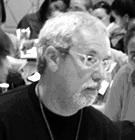
Gordon Alexandre
the activists into one or the other established political parties. For example, the student led ‘Never Again’ gun control activities has as its goal the passage of ‘common-sense’ gun control legislation and urging folks to get out and vote for Democrats. Their goals and their urgings seek modest changes in the status-quo and well within the bounds of what is acceptable. ‘Never Again’ is not radical nor does it threaten many of those who are in power. It does not call for repeal of the 2nd amendment, a plan for getting rid of the millions of guns already out there in our society, or in tying the gun control folks in with other social protest movements.


A social protest movement, on the other hand, is an organized movement of ‘outsiders’ designed to pressure those in power to do what they would not otherwise do. The goal is fundamental change and SPMs often use unconventional methods to achieve their goals like acts of civil disobedience. They operate outside the two established political parties. 

The Civil Rights Movement of the 1950’s is a good example of this. It challenged the white power structure of the South and forced the South to desegregate and the federal government to pass civil rights laws it did not want to do. They used ‘direct-action’ including sit-ins, marches, Freedom Rides, and directly challenged the regular Democratic Party of Mississippi in 1964 to fundamentally change the policy system. 

Q: Can you comment on the youth organized activities in regards to the shootings in Parkland and Chicago and the Black Lives Matter movement? 

A: There is no question that young people are becoming more politically active in places like Parkland and Chicago. But how universal is this? Students at Santa Fe High School in Texas, also victims of a mass shooting, did not respond by becoming politically active. 

Source: Medium.com
We will also see after the midterm elections whether the push to get young people to vote will be realized. I think that youth activism and the eventual formation of an SPM will not be based on some kind of national ‘wave’, but rather on the specific set of socio-economic, cultural, and political circumstances communities find themselves in. 

Black Lives Matter (BLM) started to emerge after the murder of 17-year old Trayvon Martin on Feb. 26, 2012 in Sanford, Florida. In the summer of 2014 it became an important force as the number of young unarmed African-American men and boys (Eric Garner, Michael Brown, Tamir Rice, and others) seemed to be reaching epidemic proportions. 

Source: Washington Post
It is a social protest movement made up mainly, but not exclusively, of young African-Americans. The movement seeks to expose the murder of unarmed young black men by the police and bring pressure on local, state, and the federal government to put an end to it. Their goal is not to encourage people to vote for democrats, but much like the Civil Rights and black power movements of the 1960’s they use ‘direct action’ to bring pressure on those in power to do the right thing. I see BLM as a continuation of those two previous movements. Unlike ‘Never Again’, they do not see common-sense reforms and voting as the-be-all-and-end-all. 


How BLM evolves in the future is yet to be determined. They may remain outside the two-party system, join with other social protest movements, and build a more broadly based movement or they may decide the best way to foster change is to work within the system or they may fade away. 

Q: Are there other contemporary social movements that have attracted the participation of young people?

A: When one looks at political activism right now, young people are not the primary movers. The #MeToo movement has eclipsed all other, for the moment, and it is not primarily youth driven. The labor movement has also had a resurgence lately and it, too, is not youth driven. 

In addition, much emphasis has been placed on getting young people to vote in the 2018 midterms and neither those getting young people to vote nor young people voting is, in and of itself, a sign of social activism. Voting is an institutional response within the bounds of expected behavior and not an ‘outsiders’ response of social activism. This is not to say that the spotlight won’t return to youth activism. It’s just not there right now.

Q: What do you believe are the pros and cons of technology-driven social movements? 

A: I do not believe social media drives social justice movements. Technology can assist social movements - spreading the word, capturing events in real time, encouraging folks to get out and protest, and the like. What drives social movements are causes themselves being fought for and the personal relationships developed between those involved. 

Technology is not a substitute for the bonds developed during political struggle and the movement culture that results from that. To do this, people need to be brought together whether it be the union halls of the 1930’s, the black churches of the civil rights movement of the 1950’s and 1960’s, and the anti-Vietnam War movement on college campuses in the 1960’s. Also in the 1960’s we saw the importance of gay night clubs of the gay rights movement and women’s consciousness raising groups of the women’s empowerment movement. More recently, we have seen activism around the issues of gun control and “get out the vote” efforts on high school campuses in 2018. 

Some would say that today’s social media is the equivalent to yesterday’s black churches or college campuses. It is not. Communicating with someone on social media is ‘virtual’ and you cannot have a ‘virtual’ social movement and movement culture.

Q:  Looking back in our history, are there other social movements that have attracted the participation of young people? 

Source: www.drdlpenwell.wordpress.com
A: Let’s define “young people” to include young adults. They have been the main participants in social justice movements since, but not before, the 1960’s. Most of the activists in the civil rights movement were young. MLK was in his mid-twenties when he burst onto the scene in 1955.

The feminist movement and gay empowerment movements were also led by young people. Later on, the environmental movement of the 1970’s and after, the anti-World Trade Organization movement of the late 1990’s and early 2000’s, and Occupy Wall Street of 2011 were all youth driven, with varying degrees of success. 

Q: What do you believe are the pros and cons of young people participating in social movements? Does it matter what age the young people are? 

A: The advantages of youth driven social protest movements are varied and many. Young people have passion, energy, time, and not much to lose. They often possess the idealism and optimism that accompanies youthful inexperience. They can take more risks with fewer consequences. 

On the other hand, they often lack the virtue of patience, wisdom, and experience, all of which are necessary for success in the long run. Obviously, the best recipe for a social movement is to combine the advantages of youth with the advantages of those who have engaged in social movements in the past. But this much easier said than done.
Source: The Atlantic
Let me be clear: age does matter. Those involved in social movements of the 1960’s were mostly college age, while the Parkland students are of high school age. This doesn’t sound like much of an age difference, but it is. Most college students don’t live at home and by not living at home can develop their own autonomous movement culture. High school students still live at home and under parental supervision, no matter how supportive the parents may be. This mitigates against the development of an independent and autonomous culture. In addition, high-schoolers will be dispersing in a year or so, going off into the larger world, dissolving whatever community they had built in high school. 

Finally, I am trying to answer these questions as a social scientist and progressive historian, trying not to project what I wish onto what I actually analyze. I do not want to exaggerate hopeful signs and read too much into events we see. We need to keep fighting, organizing, and resisting, building the kind of movement that can move us past the evil and danger we are now in. 

—————
Gordon Alexandre taught U.S. history and political science at Glendale Community College (outside Los Angeles) from 1985 to 2015. His main area of interest was on social reform movements of the Twentieth Century. While at GCC, Gordon was either chief negotiator or president of their American Federation of Teachers chapter for twenty years. Prior to his teaching, Gordon was a labor organizer and activist. Since retiring in 2015, Gordon has delivered several lectures to graduate students at Antioch University on “Trumpism: A Historical Perspective” and “Student Protest Movements: 1968 to 2018".

Best of 2026 from Temescal Associates and The How Kids Learn Foundation

By Sam Piha  Temescal Associates and The How Kids Learn Foundation have created a large number of resources over the years. They are catalog...