Showing posts with label #neveragain. Show all posts

Tuesday, November 6, 2018

Youth Activism: A Historical Perspective

By Sam Piha

In the lead up to the mid-terms and the response of young people to gun violence, we have all become more aware of youth activism and civic engagement. On this election day we were curious about how youth have been involved historically in social movements, and the impact of social media. We interviewed Gordon Alexandre, a historian and activist, about these issues. You can see below some of his responses. 

Q: Can you distinguish between social activism and social movements? 

A: This is an excellent question. Many confuse social-political activism with participation in a social-political protest movement (SPM). The two are not the same. Being politically active may mean simply voting yourself and getting others to vote. These are important but minimalist and conventional activities well within the bounds of establishment politics. 

Voting is designed to support the system and often leads to the absorption of
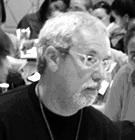
Gordon Alexandre
the activists into one or the other established political parties. For example, the student led ‘Never Again’ gun control activities has as its goal the passage of ‘common-sense’ gun control legislation and urging folks to get out and vote for Democrats. Their goals and their urgings seek modest changes in the status-quo and well within the bounds of what is acceptable. ‘Never Again’ is not radical nor does it threaten many of those who are in power. It does not call for repeal of the 2nd amendment, a plan for getting rid of the millions of guns already out there in our society, or in tying the gun control folks in with other social protest movements.


A social protest movement, on the other hand, is an organized movement of ‘outsiders’ designed to pressure those in power to do what they would not otherwise do. The goal is fundamental change and SPMs often use unconventional methods to achieve their goals like acts of civil disobedience. They operate outside the two established political parties. 

The Civil Rights Movement of the 1950’s is a good example of this. It challenged the white power structure of the South and forced the South to desegregate and the federal government to pass civil rights laws it did not want to do. They used ‘direct-action’ including sit-ins, marches, Freedom Rides, and directly challenged the regular Democratic Party of Mississippi in 1964 to fundamentally change the policy system. 

Q: Can you comment on the youth organized activities in regards to the shootings in Parkland and Chicago and the Black Lives Matter movement? 

A: There is no question that young people are becoming more politically active in places like Parkland and Chicago. But how universal is this? Students at Santa Fe High School in Texas, also victims of a mass shooting, did not respond by becoming politically active. 

Source: Medium.com
We will also see after the midterm elections whether the push to get young people to vote will be realized. I think that youth activism and the eventual formation of an SPM will not be based on some kind of national ‘wave’, but rather on the specific set of socio-economic, cultural, and political circumstances communities find themselves in. 

Black Lives Matter (BLM) started to emerge after the murder of 17-year old Trayvon Martin on Feb. 26, 2012 in Sanford, Florida. In the summer of 2014 it became an important force as the number of young unarmed African-American men and boys (Eric Garner, Michael Brown, Tamir Rice, and others) seemed to be reaching epidemic proportions. 

Source: Washington Post
It is a social protest movement made up mainly, but not exclusively, of young African-Americans. The movement seeks to expose the murder of unarmed young black men by the police and bring pressure on local, state, and the federal government to put an end to it. Their goal is not to encourage people to vote for democrats, but much like the Civil Rights and black power movements of the 1960’s they use ‘direct action’ to bring pressure on those in power to do the right thing. I see BLM as a continuation of those two previous movements. Unlike ‘Never Again’, they do not see common-sense reforms and voting as the-be-all-and-end-all. 


How BLM evolves in the future is yet to be determined. They may remain outside the two-party system, join with other social protest movements, and build a more broadly based movement or they may decide the best way to foster change is to work within the system or they may fade away. 

Q: Are there other contemporary social movements that have attracted the participation of young people?

A: When one looks at political activism right now, young people are not the primary movers. The #MeToo movement has eclipsed all other, for the moment, and it is not primarily youth driven. The labor movement has also had a resurgence lately and it, too, is not youth driven. 

In addition, much emphasis has been placed on getting young people to vote in the 2018 midterms and neither those getting young people to vote nor young people voting is, in and of itself, a sign of social activism. Voting is an institutional response within the bounds of expected behavior and not an ‘outsiders’ response of social activism. This is not to say that the spotlight won’t return to youth activism. It’s just not there right now.

Q: What do you believe are the pros and cons of technology-driven social movements? 

A: I do not believe social media drives social justice movements. Technology can assist social movements - spreading the word, capturing events in real time, encouraging folks to get out and protest, and the like. What drives social movements are causes themselves being fought for and the personal relationships developed between those involved. 

Technology is not a substitute for the bonds developed during political struggle and the movement culture that results from that. To do this, people need to be brought together whether it be the union halls of the 1930’s, the black churches of the civil rights movement of the 1950’s and 1960’s, and the anti-Vietnam War movement on college campuses in the 1960’s. Also in the 1960’s we saw the importance of gay night clubs of the gay rights movement and women’s consciousness raising groups of the women’s empowerment movement. More recently, we have seen activism around the issues of gun control and “get out the vote” efforts on high school campuses in 2018. 

Some would say that today’s social media is the equivalent to yesterday’s black churches or college campuses. It is not. Communicating with someone on social media is ‘virtual’ and you cannot have a ‘virtual’ social movement and movement culture.

Q:  Looking back in our history, are there other social movements that have attracted the participation of young people? 

Source: www.drdlpenwell.wordpress.com
A: Let’s define “young people” to include young adults. They have been the main participants in social justice movements since, but not before, the 1960’s. Most of the activists in the civil rights movement were young. MLK was in his mid-twenties when he burst onto the scene in 1955.

The feminist movement and gay empowerment movements were also led by young people. Later on, the environmental movement of the 1970’s and after, the anti-World Trade Organization movement of the late 1990’s and early 2000’s, and Occupy Wall Street of 2011 were all youth driven, with varying degrees of success. 

Q: What do you believe are the pros and cons of young people participating in social movements? Does it matter what age the young people are? 

A: The advantages of youth driven social protest movements are varied and many. Young people have passion, energy, time, and not much to lose. They often possess the idealism and optimism that accompanies youthful inexperience. They can take more risks with fewer consequences. 

On the other hand, they often lack the virtue of patience, wisdom, and experience, all of which are necessary for success in the long run. Obviously, the best recipe for a social movement is to combine the advantages of youth with the advantages of those who have engaged in social movements in the past. But this much easier said than done.
Source: The Atlantic
Let me be clear: age does matter. Those involved in social movements of the 1960’s were mostly college age, while the Parkland students are of high school age. This doesn’t sound like much of an age difference, but it is. Most college students don’t live at home and by not living at home can develop their own autonomous movement culture. High school students still live at home and under parental supervision, no matter how supportive the parents may be. This mitigates against the development of an independent and autonomous culture. In addition, high-schoolers will be dispersing in a year or so, going off into the larger world, dissolving whatever community they had built in high school. 

Finally, I am trying to answer these questions as a social scientist and progressive historian, trying not to project what I wish onto what I actually analyze. I do not want to exaggerate hopeful signs and read too much into events we see. We need to keep fighting, organizing, and resisting, building the kind of movement that can move us past the evil and danger we are now in. 

—————
Gordon Alexandre taught U.S. history and political science at Glendale Community College (outside Los Angeles) from 1985 to 2015. His main area of interest was on social reform movements of the Twentieth Century. While at GCC, Gordon was either chief negotiator or president of their American Federation of Teachers chapter for twenty years. Prior to his teaching, Gordon was a labor organizer and activist. Since retiring in 2015, Gordon has delivered several lectures to graduate students at Antioch University on “Trumpism: A Historical Perspective” and “Student Protest Movements: 1968 to 2018".

Monday, March 12, 2018

In the Aftermath of Parkland: What is the Role of Expanded Learning Programs?

By Sam Piha

We were shocked and dismayed by another mass shooting, this one at  Stoneman Douglas High School in Parkland, FL. As a field that promotes safety, youth voice, and youth civic engagement, we commend the students that have spoken up about gun violence. 


Photo Credit: Rolling Stone

Since the shooting, we have heard a lot about school safety, but little about the role of expanded learning program providers. To gather perspective on this, we created a survey and distributed to our stakeholders. Below is what we learned. 

We received 29 responses from leaders representing state and national expanded learning intermediaries, educational organizations (principals, county offices of education, school districts, and higher education), expanded learning program providers, program trainers, and expanded learning advocates. We asked the respondents what age level of youth they focus on. They reported Elementary age children (75%); Middle school age children (54%); and High school age youth (36%). (Note: The percentages cited in this report exceed 100% as many respondents selected more than one option.) 

We asked respondents to identify what actions expanded learning programs should take. Of the options we provided, respondents selected:
  • Review safety plans with larger school or organization (93%)
  • Develop/review safety plans and train adult staff (89%)
  • Develop/review safety plans with youth participants (85%)
  • Facilitate discussions with youth regarding any feelings about the recent school shooting (78%)
  • Assist program participants in becoming civically engaged to voice their thoughts on school safety (78%)
  • Assist program participants (if they desire) in communicating directly with school shooting survivors (56%)
Photo Credit: cnn.com

Additional Write In Action Items (33%) included:


Continue to develop our professional skill set for connecting with students and providing them with the opportunities to build deeper, authentic connections with one another.


Create a Youth Voice Advocacy team for Peer to Peer Support through school day and provide safe place for youth to share.


Engage families and community organizations in all of the above! 


We are focused on STEM and our instructors don't have a lot of training in social-emotional learning.


Train adult staff in building strong and supportive school and program cultures and create consistent opportunities for inclusion amongst all youth.


Offer strategies to prevent and/or reduce youth violence (life skills, character education, bullying prevention, social emotional learning, etc.).


We allowed respondents to express their own recommendations. Some of these are cited below. 

I know how challenging our work may be at times, but being there when our children need a caring person makes a tremendous difference. As our society is grappling with essential issues such as gun control and caring for mentally ill persons, we need to also keep in mind our basic human connection, including between adults and kids. I am reminded to take time to connect and "see" one another — to stop and see even those students who may want to remain invisible as they dangerously slip through the cracks and have forgotten that they are valued and loved. My invitation is for us to keep "seeing" their goodness. Please acknowledge yourselves for who you are and all you do. I thank you for your dedication to young people.

Align safety plans with district/ school day; promote emotional safety by focusing on SEL and positive school climate; and collaborate with school-day to responsive solutions for at-risk youth.

Be informed of the signs of mental instability and report to proper agencies; have an emergency protocol that is rehearsed; create opportunities for youth to discuss their opinions and feelings about and experiences with gun violence.

Create safe spaces for children and foster relationships with them and their families. Additionally, we need to give students voice by teaching them how to positively express their view points as students from Parkland have been able to do. They are eloquent and their arguments are sound without being disrespectful.

Implement trauma-informed policies and practices in the programs, in coordination with school and district efforts around trauma.

Protect our youth, provide activities and lessons that promote self regulation, educate students on the effects of bullying, and watch for red flag behavior.

Raise awareness and promote safety in Expanded Learning programs. Receive any necessary training to know what to do in a crisis situation. Make sure the youth have a voice and that they feel like they are in a safe and supportive environment.

We acknowledge that the number of responses were small and that we only had one youth from an expanded learning program respond. We invite adult stakeholders and youth participants to share their views in a second round at this link.


Below are some resources that may be useful: 


Best of 2026 from Temescal Associates and The How Kids Learn Foundation

By Sam Piha  Temescal Associates and The How Kids Learn Foundation have created a large number of resources over the years. They are catalog...