Monday, June 27, 2016

Preparing Youth for Work and Career Success

By Sam Piha

Sam Piha
I first met Bill Fennessy when he innovated a new high school afterschool program in Pasadena, CA. Bill was part of the first run of ASSETs programs - before people knew what high school afterschool was. He subsequently joined THINK Together as their Director of Community Engagement. 

At THINK Together, Bill continued his work as an innovator when he introduced a comprehensive approach to workforce preparation within their high school afterschool programs. We invited him to present at our last How Kids Learn Conference and write a paper on the topic of preparing youth for work and career success. Below is an excerpt from his paper and a link to the entire paper


PREPARING YOUTH FOR WORK AND CAREER SUCCESS IS THE RIGHT ROLE FOR EXPANDED LEARNING PROGRAMS
By Bill Fennessy

Preparing youth for work and career is now rapidly becoming an integral part in
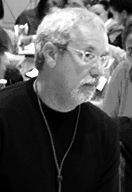
Bill Fennessy
preparing youth with the skills they will need in school and life.  This is clearly supported by the most current research such as RTI International’s “Employability Skills Framework”, as well as the “Foundations For Young Adult Success, A Developmental Framework” from the University of Chicago.  In addition and very importantly to the Expanded Learning Field, preparing youth for work and career clearly aligns with what should now be the very familiar “LIAS Learning Principles”, “Youth Development Framework”, and the “California Standards for Expanded Learning Programs”.

All youth regardless of their age can begin expanding their ideas of what they might do as adults. Coupling those ideas with the experience of related work in the real world brings the important relevance which results in greater engagement in their work at school.  This is clearly embodied by California’s Linked Learning approach to education, which has now demonstrated clear evidence of effectiveness as students in Linked Learning pathways have shown substantially positive shifts in credits accumulated, attendance, A-G completion, and reduced drop-out rates.   The result of this data has spawned an exponential growth in the numbers of schools and school districts that are now offering or planning to use the Linked Learning approach.


Recent and intentional changes made by the CDE Afterschool Division has made allowable work-based learning as a potential ASES and ASSETs grant foci.  These changes well position the Expanded Learning field to do more than just put work-based learning components into their programs, it actually encourages the field to collaborate in building work-based learning platforms from which to support many new programming opportunities and engage many other partners in this important work.  

-----
About the Author
Bill Fennessy is Director of Community Engagement and Work-Based Learning at THINK Together. Bill began his career as the PasadenaLEARNs Site Coordinator for Blair International Baccalaureate Magnet School, serving grades 7 – 12. Bill was the leader of BlairLEARNs, a middle school afterschool program. He was a pioneer in the high school afterschool movement and was part of the first cohort of ASSETs programs.


Bill is also a Temescal Associate. He has conducted a number of training sessions on high school afterschool and was a presenter at one of the recent How Kids Learn Conferences focused on Preparing Youth For Work And Career Success.

Monday, June 13, 2016

The Battle Over Bathroom Access

By Guest Blogger, Rozel Cruz of Temescal Associates


Rozel Cruz,
Temescal Associates
The topic of transgender youth continues to be one of discussion for educators and youth program professionals. To educate people on this topic, we issued a briefing paper entitled Understanding Gender Identity in Young People. It includes an interview with Dr. Diane Ehrensaft. Click here to download the paper. 


We also offer this video from PBS Newshour.


Monday, June 6, 2016

Master of Mindfulness

By Sam Piha


Sam Piha
We have seen through research and practice that mindfulness can be a very effective tool for schools and afterschool programs to promote social emotional learning (SEL) skills and "grit". 

In a previous post, we have described "Master of Mindfulness" - a book created by youth from Reach Academy in East Oakland, CA and our Mindfulness in Afterschool partner, Laurie Grossman. The book is in its third printing and is available on AmazonThe majority of royalties from the sales of this book will be donated to a fund to support the post high-school educational or vocational endeavors of the twenty five authors who co-wrote the book. 


These young authors, their book, and the power of mindfulness was featured in a recent piece aired on KTVU TV. You can check it out by clicking on the images below. 

Part 1
Part 2

For more information on how to bring mindfulness into your afterschool program, contact us by writing to info@temescalassociates.com

Thursday, May 26, 2016

Youth Stories


Sam Piha
By Sam Piha

It's so simple! Whether in a one-to-one or crowded conference hall, listening to youth and their stories are a source of inspiration. We don't need a research report or framework, we just need to listen. 

The Long Beach Youth Institute has produced a number of videos of youth simply telling their stories. Bob Cabeza, Founder of the Youth Institute and Vice President of Community Development for the YMCA of Greater Long Beach, answered our questions regarding these youth stories. 

Below, we've embedded one of these video stories. You can view the others by clicking on each of their names: 

Q: Why did you decide to record these stories? 
A: In my years of experience in youth development, I find that young people need their stories told from their own perspective in order to help others understand their struggles, passions, strengths and issues. This is about growing up from an adolescent to a young adult. These are stories about issues of poverty and disengagement as much as strength and overcoming institutional oppression. 

If a young person can tell their story as a way of helping practitioners learn how to positively engage youth and provide supports for them, then these stories have tremendous meaning and value for the field of youth development. These stories help practitioners understand the human side of their work as well as to greater their knowledge of what it takes to help young people succeed over time.

Q: What benefits came to the youth as their stories were validated by this project? 
Bob Cabeza and YI Youth
A: The thing I heard over and over again is that their stories give them power - power to express themselves about their lives, power to make change in their communities, and power to help other youth by telling their life experiences. By telling their own stories, they also gain a better sense of what supports gave them strength during critical and traumatic times in their lives and what they believe should be given to other youth struggling through the same issues. Lastly, their stories help them gain leadership in knowing that they come from the same space as many of our youth and they are proof that one can make it through difficulties.

Q: What benefits do you think come from those who listen to these stories? 
A: Listeners of these stories will gain unique insight into the lives of youth in poverty and youth of color, their humanity, their struggles and their wisdom, and advice. These youth want to help others, especially urban youth. 

Hopefully, practitioners can use these stories as training tools for their staff who work directly with youth. If we are to effectively help youth face the tremendous barriers in their lives that cause trauma and a lack of hope, we must be able to empathize with them. These stories are testaments to their social and emotional learning and resiliency. 

Tuesday, May 17, 2016

Digital Badges In Education: Trends, Issues, and Cases

By Sam Piha


Sam Piha
We were very pleased to author a chapter in a new publication entitled Digital Badges in Education: Trends, Issues, and Cases. Our chapter, entitled Afterschool and Digital Badging: Recognizing Learning Where It Happens, offers two case studies of our work with the California School-Age Consortium (CalSAC) and the Central Valley Digital Badge (CVDB) project. You can learn more about how CalSAC is using digital badges by clicking here

Temescal Associates / LIAS believes that digital badges are a very important method for motivating and acknowledging the learning of adult staff and youth. To this end, we developed the Center for Digital Badges. There you will find a number of valuable resources and implementation services.


Below is a detailed description of this new publication: 
In recent years, digital badging systems have become a credible means through which learners can establish portfolios and articulate knowledge and skills for both academic and professional settings. Digital Badges in Education provides the first comprehensive overview of this emerging tool. A digital badge is an online-based visual representation that uses detailed metadata to signify learners’ specific achievements and credentials in a variety of subjects across K-12 classrooms, higher education, and workplace learning. Focusing on learning design, assessment, and concrete cases in various contexts, this book explores the necessary components of badging systems, their functions and value, and the possible problems they face. These twenty-five chapters illustrate a range of successful applications of digital badges to address a broad spectrum of learning challenges and to help readers formulate solutions during the development of their digital badges learning projects. Click here to learn more.

Thursday, May 5, 2016

The LIAS Principles and the CA Quality Standards for Expanded Learning Programs

By Sam Piha


Sam Piha
In 2010, the Learning in Afterschool & Summer (LIAS) project was launched to offer five research based principles that serves as a guide for programs wishing to increase the engagement, motivation, and learning of their young participants. 

Four years later, the California Department of Education (CDE)/After School Division released the California Quality Standards for Expanded Learning Programs (CA Quality Standards). LIAS staff served on all three phases of the development of these standards to ensure that the LIAS principles were embedded. These standards focused on points of direct service with youth (#1-6) and standards that are intended to guide program managers (#7-12). 

Many afterschool and summer leaders asked how the LIAS learning principles correspond to the CA Quality Standards. To address this question, we issued a “crosswalk” paper, which correlated the LIAS learning principles with the CA Quality Standards for points of service with young people. This “crosswalk” paper can be found on the LIAS website here.


Below we offer a summary of this crosswalk. 

Learning that is Active: 
Learning and memory recall of new knowledge is strengthened through different exposures – seeing, hearing, touching, and doing. Afterschool and summer learning should be the result of activities that involve young people in “doing” – activities that allow them to be physically active, stimulate their innate curiosity, and that are hands-on and project-based. 


Learning that is Collaborative: 
Afterschool and summer programs should help young people build team skills that include listening to others, supporting group-learning goals, and resolving differences and conflicts. Collaborative learning happens when learners engage in a common task where each individual depends on and is accountable to each other.


Learning that is Meaningful: 
Learning is meaningful when youth have some ownership over the learning topic, the means to assess their own progress, and when the learning is relevant to their own interests, experiences, and the real world in which they live. Community and cultural relevance is important to all youth. 


Learning that Supports Mastery: 
If young people are to learn the importance and joy of mastery, they need the opportunity to learn and practice a full sequence of skills that will allow them to become “really good at something.” Afterschool and summer activities should be explicitly sequenced and designed to promote the layering of new skills. 


Learning that Expands Horizons: 
Afterschool and summer programs should provide learning opportunities that take youth beyond their current experience and expand their horizons. They should go beyond the walls of their facilities to increase young people’s knowledge of their surrounding neighborhood and the larger global community. 


•••
You can read other blogs by the LIAS project by going to: 
  • Expanded Learning 360°/365 Project website 
  • LIAS Blog Written for the California Afterschool Network

A Book Drive for Children's Books Makes for a Fabulous Service- Learning Project

Source: The Children's Book Project  By Sam Piha   In our previous paper entitled, Reading Buddies: Promoting Literacy and Community Eng...