Monday, February 13, 2023

Addressing COVID Isolation: Get Kids Moving! (Part 1)

Source: A World Fit for Kids

By Sam Piha

Many youth who returned to school this year were socially isolated due to the pandemic. While schools are concerned with academic learning loss, schools need to understand that young people may be fearful and anxious. How can we help? Get kids moving!

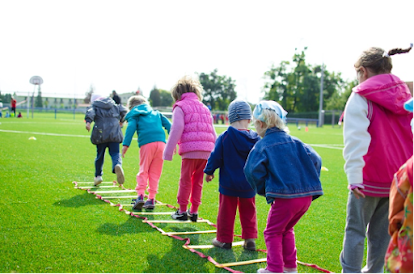
During the COVID shutdowns young people had few opportunities for exercise and playing with friends. 

Research suggests that physical activity can help young people recover from isolation experienced due to the COVID pandemic. Research also suggests that physical activity in nature can help young people recover from the isolation and fear experienced due to the COVID pandemic. To learn more, check out our LIAS Blogs on Play and Nature.

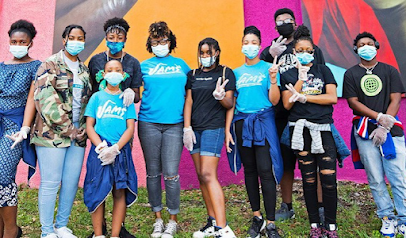
Source: Girls Inc.

“Our results suggest for those students that are returning to school and that were socially isolated ,” Enrique Pérez-Cardona, a professor, and the chairman of the education department at the University of Puerto Rico said. “The school has to be prepared and define a good physical education program, so those children can try to release those negative effects of isolation.” - Sarah D. Sparks, Kids Are Feeling Isolated. P.E. May Help Them Bounce Back 

“At a time when recess and physical education programs may feel a squeeze from schools seeking more time for reading or math, studies suggest boosting students’ physical activity time also has an important role. It may help students rebound from the social isolation many have experienced during the pandemic.”Sarah D. Sparks, Kids Are Feeling Isolated. P.E. May Help Them Bounce Back 

To learn more, we interviewed three youth development experts: Ed Center from The Village Well and Brad Lupien and Bob Lund from ARC Experience. You can find a complete bio for these experts at the end of Part 2 of this blog.

Q: Research suggests that physical activity can help young people recover from isolation experienced due to the COVID pandemic. Do you believe this is true?

Ed- This is key in a biological and a sociological way. Stress itself is not a bad thing. Stressful events are part of life and can help us build assets and resiliency. Stress becomes toxic when we are unable to complete stress cycles, meaning that our fight-flight systems kick in with adrenaline and cortisol, but we don't move through them into safety, resolution, and calmness. 

The simplest way to complete a stress cycle is to move. A brisk walk is great, dancing is phenomenal, soccer is transformative. Physiologically, this metabolizes the stress hormones and brings us back to equilibrium. The social components of physical activity are equally important. Young people connect through physical play, whether through organized sports, dance, or skipping stones across an urban lake. 

Source: NHP Foundation

Every teacher and afterschool leader reports that we've seen a delay in social skills over the last three years. Outdoor play, supported by nurturing adults, offers a perfect environment for kids to build these skills and form the connections with peers and adults that are the hallmark of positive youth development.

Brad and Bob- Absolutely. We are seeing that, in addition to learning loss and socialization issues caused by the COVID pandemic, many of our students have seen downgrades in their physical fitness. Getting outside and moving around, especially with a group of friends, allows many of our students to not only improve their physical health, but also their mental health and feelings of connectedness as well.

Q: Research also suggests that physical activity in nature can help young people recover from isolation and fear experienced due to the COVID pandemic. Do you believe this is true?  

Brad and Bob- Outdoor education is a great way to experience the world around them while affording opportunities to socialize in a safe manner. When properly done, guided physical activity in the outdoors has a litany of benefits, including building community and trust with peers, reducing feelings of isolation as well as providing opportunities for self-control and to demonstrate grit.

Q: There is pressure for afterschool programs to divert their resources away from things like physical activities and outdoor ed to address academic learning loss. What are your thoughts on this?

Ed- Yes, we have a learning loss crisis and need to address that. What perpetuates that crisis? In large part, we have a mental health services gap, a connection gap, and a lingering malaise for black and brown youth whose families bore the brunt of pandemic sickness, death, and economic difficulty. My son goes to a tony private school. Are they freaking out about learning loss? No. They are giving themselves years to help their students catch up, in the meantime they continue to emphasize field trips, experiential learning, service learning, sports, dances, and social activities. Let's stop quantifying poor kids as numbers that need to be improved and start creating rich learning experiences to prepare them for life. These experiences include connection, wonder, play, and movement.

Brad and Bob- We’ve all heard the saying “what gets measured gets done” and this is often all too true in K-12 education. Unfortunately, this has meant a shift towards standardized testing and numerical evaluation of our students and those numbers—which get measured very precisely—become the focus rather than on building whole, well rounded individuals. 

Physical activity and exercise are important parts of the human experience, even if they aren’t as easily quantifiable as a math test. Programs that encourage students to move and play provide a wealth of positive results, including improving student’s mental health, and can provide a force multiplier effect, increasing the student’s performance in the other parts of their school day.

TO BE CONTINUED IN PART 2.


UPCOMING WEBINARS:


Do your children or students trigger you? Do you match anger with more anger? Or do you want to hide from conflict? When we face certain situations, our bodies react with fight/flight reactions. You CAN interrupt these reactions and replace them with productive responses. You can hold calm power, both inside and out.

This webinar will dive into the habits, tools, and techniques that help both you and your kiddos stay regulated. We’ll cover:
  • Your reactivity profile,
  • Closing the stress cycle,
  • Regulation techniques for kids and grown-ups,
  • Mindfulness for the fidgety,
  • Personal wellness plans,
  • What to do when the sh*t hits the fan
To learn more and register, click here.

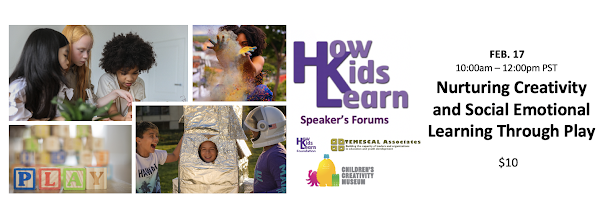
Play comes natural to kids and to out-of-school time educators! Research across youth development and education fields have identified principles that define playful learning and the positive youth outcomes that can come from intentional play. In this webinar, we will explore this topic and learn about free resources you can use to incorporate high-quality playful learning opportunities into your programs and how to advocate for more play in the lives of children. To learn more and register, click here.

Wednesday, February 8, 2023

The Radical Power of Kindness and Joy in Afterschool Programs


By Sam Piha

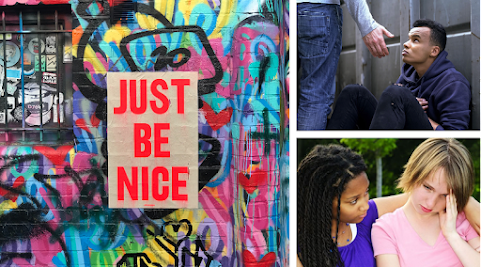
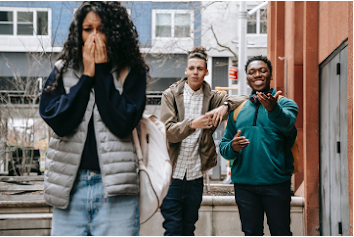
It seems we live in a time in which meanness is in vogue, whether it's social media, political discourse, cyber bullying, violent actions, or hate crimes. To learn more we interviewed Stu Semigran, Co-Founder and President of the EduCare Foundation. His responses are below.

Q: Do you agree that meanness is in vogue? And why do you think this is so?

A: It certainly appears as if discord, againstness, and striking back is increasingly evident in our world.  Many people are feeling threatened and fearful with a great need for power, to gain control, and stake out positions of being “right” and claiming others as “wrong”. Righteous judgment is on the loose. On one level, people are dealing with more stress and are looking to feel more secure. One misdirected approach for establishing a sense of personal security may be to stake out a position, hold on tight and defend it, and then combat anything that might shake that position- threaten that false sense of inner security.


Source: www.pexels.com

It takes a strong sense of self (apart from our righteous beliefs) and a solid foundation to withstand and be receptive to other points of view. Building that deeper core of self-awareness and self-acceptance leads to a freedom to step into a world where opposing opinions, beliefs, and points of view are not threatening. 

Building greater self-acceptance and self-compassion opens the way to more readily respond to others with more acceptance and kindness. The path out from meanness- to tolerance, to understanding, and to compassion- is each person’s responsibility. Educating towards that is the aim of Heartset® education.

Q: How would you define “Kindness”?

A: Kindness is a generosity of heart. It is expression of loving in action. It has infinite expressions. It may be a mere thought, a wish, or prayer for another. It is a willingness to risk sharing love and compassion and perhaps being rejected or misunderstood. Kindness can be expressed quietly or very demonstratively. It may be seen or go unnoticed. Nonetheless, it is setting a tone, a pervasive foundation of caring and unconditional love. 

Kindness provides the encouragement and the fortitude to keep going when life is tough by knowing that you are valued, supported, and cared for. 


“Do your little bit of good where you are; it’s those little bits of good put together that overwhelm the world.”- Desmond Tutu


Q: What can we do in afterschool to prevent meanness? What can we do in afterschool to promote kindness?

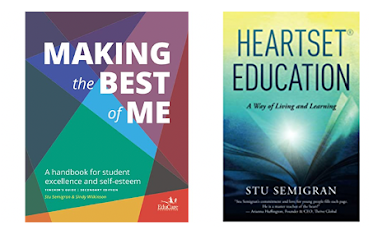
A: As adults we can promote kindness by taking care of ourselves, expressing kindness with others, encouraging our students to treat themselves kindly, and by teaching kindness activities on a regular basis so it becomes a way of relating. There are many excellent resources for teaching compassion, empathy, and kindness. One, developed through EduCare, is Making the Best of Me: A handbook for student excellence and self-esteem, that includes over 200 easy-to-use, engaging activities for afterschool and school day classes.

Community service projects are terrific opportunities for students to build the lifestyle habit of expressing kindness. Practicing acts of kindness individually and as a group or class are impactful, joyful ways to begin to redirect a pattern of meanness to one of acceptance and compassion. Acts of kindness and community building become important parts of the kindness formula. The mindset and heartset of giving and receiving kindness set a personal habit and lay a solid foundation for students to continue to develop throughout their lives.)

Source: EduCare, Lynwood, Ca.

Q: Can you give an example of kindness between youth and their peers or community?

A: One example is the Take Action Campaign (TAC), a far-reaching initiative launched in 2008 by Los Angeles Unified School District’s (LAUSD’s) Beyond the Bell and facilitated by EduCare and several community partners. TAC gives thousands of high school students leadership opportunities by celebrating the arts, serving their schools & their local communities, and empowering them to mentor their peers. Projects have included volunteering at homeless shelters & food banks, environmental cleanups, tree planting, food and clothing drives, unity building events, and student led advocacy campaigns around issues important to them. In school year 2022-23, students from 37 LAUSD high schools are participating in TAC.

Q: You recently wrote a book Heartset Education: A Way of Living and Learning. Can you say a little about the book and whether it would be useful for afterschool leaders?

A: Students need to have their minds ready to learn. However, to become active learners, a lot of our young people need more than that. They don’t just need a new mindset; they need a new heartset. When the heart is set in a good place, the mind is open and receptive. When heart is troubled, the mind is cluttered. So heart and mind have to go hand in hand. 

Q: Can you describe what the Educare Foundation does? 

A: EduCare Foundation’s mission is “to inspire and support young people in empowering themselves to become responsible citizens, courageous and compassionate leaders, and live their dreams.” In 1987, EduCare piloted the ACE (Achievement and Commitment to Excellence) Program in one Los Angeles Unified School District (LAUSD) middle school. ACE focuses on the social-emotional learning (SEL) elements of character development, personal management, emotional intelligence, and interpersonal skills. EduCare’s flagship ACE Program became the forerunner to the educational movements that today bear many names: Character Education, Social-Emotional Learning (SEL), and Trauma-Informed Teaching. To learn more about EduCare’s efforts, check out their website here.

Q: Why did you start this organization? 

A: Why EduCare? It was a chance, an opportunity, a pressing need that I saw to do something that I thought was missing in education- to address an obvious need of my students who were coming into my classroom when I was a middle school teacher in LA. I could see that they were lost in many ways. For many, their wholistic needs, not just physical needs, but their emotional, mental and social needs as well, we're not being addressed and attended to.

I wanted them to be healthier and happier and be in a place to succeed academically. I felt they needed to develop greater self-awareness and personal development tools so they could believe in themselves, ignite their desire, and gain the skills for creating a successful and fulfilling life. I wanted the chance to touch their hearts, open their minds, and hopefully assist them in empowering themselves to transform the trajectory of their lives. 

Michael Funk
“As I drove up to the school, the blighted neighborhood was giving off all the signals of distress. But when I walked into the school, it was like when the Wizard of Oz turned from black and white to color! You could feel the positive energy, the love. I have been around high quality after school and youth development work for over 25 years. What I witnessed while visiting the ACE Program was some of the most transformational and powerful moments I have ever seen.”- Michael Funk, Director of Expanded Learning Division, California Department of Education 

[You can view a Zoom webinar featuring Stu on this topic, by clicking here.]

MORE ABOUT…

Stu Semigran is the Co-Founder and President of the EduCare Foundation. With over 35 years of experience as an educator, he has facilitated thousands of youth, professionals, educators and parents in Heartset® education, SEL, leadership development, and afterschool management. His new book, Heartset® Education: A Way of Living and Learning, has been rated a #1 Amazon New Release Bestseller. His previous book, Making the Best of Me: A Handbook for Student Excellence and Self-Esteem, is used in schools worldwide. He was recognized in 2012 as a David Chow Humanitarian Award Foundation recipient for his service to youth. 


UPCOMING WEBINARS:

Play comes natural to kids and to out-of-school time educators! Research across youth development and education fields have identified principles that define playful learning and the positive youth outcomes that can come from intentional play. In this webinar, we will explore this topic and learn about free resources you can use to incorporate high-quality playful learning opportunities into your programs and how to advocate for more play in the lives of children. To learn more and register, click here.


Do your children or students trigger you? Do you match anger with more anger? Or do you want to hide from conflict? When we face certain situations, our bodies react with fight/flight reactions. You CAN interrupt these reactions and replace them with productive responses. You can hold calm power, both inside and out.

This webinar will dive into the habits, tools, and techniques that help both you and your kiddos stay regulated. We’ll cover:
  • Your reactivity profile,
  • Closing the stress cycle,
  • Regulation techniques for kids and grown-ups,
  • Mindfulness for the fidgety,
  • Personal wellness plans,
  • What to do when the sh*t hits the fan
To learn more and register, click here.

Sunday, January 29, 2023

Youth Mental Health: What Can We Do in Afterschool (Part 2)

By Sam Piha 

“These [afterschool] programs are uniquely positioned to support and promote children’s healthy development, inclusive of mental health needs instigated by trauma. Children are not the only recipients; parents and the OST workforce can benefit from mental health supports provided directly or indirectly in these environments.”Child Care Technical Assistance Network

In Part 1 of Youth Mental Health: What Can We Do in Afterschool, we explored which afterschool superpowers can be applied to address the youth mental health crisis. Below we offer additional ideas on how afterschool programs can lean into their strengths to improve youth mental health and COVID recovery. (Note: learning loss indicated by lower reading and math scores should not be the focus of afterschool.)

Predictability and Rituals

“Predictability, or being able to know what to expect, is an important ingredient for healthy development. Predictable routines and consistent relationships provide a foundation of trust and security for children. When children know what to expect and who they can rely on, they have the confidence to explore the world around them and develop new skills.”Future Learn, Predictability and Development

Predictability reduces stress because children want to know what is going to happen next and what to expect. Familiar patterns are calming. This is especially true for young people who have experienced trauma. 

“Provide a consistent, predictable pattern for the day. Make sure the child knows the pattern. When the day includes new or different activities, tell the child beforehand and explain why this day’s pattern is different. Don’t underestimate how important it is for children to know that their caretakers are “in control.” It is frightening for traumatized children (who are sensitive to control) to sense that the people caring for them are, themselves, disorganized, confused and anxious. There is no expectation of perfection, however, when caretakers are overwhelmed, irritable or anxious; simply help the child understand why, and that these reactions are normal and will pass.”Dr. Bruce Perry, Importance of Predictability

When we repeat important activities on a regular basis, they become rituals that young participants can depend on. These activities include talking or check-in circles, particular ways that you always open or close the program, activities that acknowledge youth or staff that are departing the program, birthdays, etc. 

“Predictability is a stabilizing force for teens, but it’s been disrupted by the pandemic.” - Teen Mental Health: A Vulnerable Stage of Life

Promote Peer Interaction and Support
To address COVID-19 isolation, afterschool programs can help by emphasizing activities that promote peer interaction. Activities include check-in circles, group play and games and group projects.

Source: www.pexels.com

“The global pandemic, even though it affected all of us, especially caused children and teenagers to be isolated from their peers for prolonged periods of time—and especially during these developmental periods that they showed the most intense need for interactions with peers.”Sarah D. Sparks, ED Week

Educate Youth and Normalize the Issue of “Mental Health”
It is important that youth understand that “mental health” does not mean “crazy”. They should understand that the impacts of COVID and isolation are real. These conversations can happen in group meetings and individual conversations. 

Create Opportunities for Youth to Contribute to Youth Mental Health
“Youth express a collective desire – they even demand – that adults involve them in creating a more responsive education system so that they can, as one student put it, ‘find our way back to loving learning.’”Youth Truth Survey

Young people want to be involved in a way that’s meaningful.

“ASK FOR STUDENT INPUT. The fact that we don’t even get a say in what we want to discuss ... is frustrating.” — 12th grade student

Consider training students to spot peers with mental health struggles and guide them to help.

“I wish the school did more to train and educate its students on how to identify ... warning signs of deteriorating mental health, abuse, self-harm, and violence within their peers - and respond appropriately and compassionately.” —12th grade student

 “'Some students won’t get help because they’re just afraid to ask for it,' said Sofia, a senior at Davidson. 'But if a peer knows, and if their struggle is seen and heard, then they’re able to say, OK, yes, I do need the help. And we can get them to go to an adult themselves.'” - Students Train to Spot Peers with Mental Health Struggles and Guide Them

Provide Daily Exercise Activities
During the COVID shutdowns young people had few opportunities for exercise and playing with friends. It has been suggested that youth who suffered from COVID-19 isolation can benefit from physical exercise.  

“At a time when recess and physical education programs may feel a squeeze from schools seeking more time for reading or math, studies suggest boosting students’ physical activity time also has an important role. It may help students rebound from the social isolation many have experienced during the pandemic.”Sarah D. Sparks, Kids Are Feeling Isolated. P.E. May Help Them Bounce Back

Source: www.pexels.com

We also know from research that free play and activities that introduce young people to the natural world are also healing. To learn more, check out our LIAS Blogs on Play and Nature.

“At Lawrence Family Development Charter School, Art, Music and Physical Education (Gym) are important to helping students interact with friends while participating in activities that take them away from desks and screens. These classes teach critical thinking, decision making and use a separate set of skills to interact with others. Gym in particular has an important role to play in helping children reduce anxiety and stress.” - Susan Dion Earabino, Ed.D, Principal at Lawrence Family Development Charter School 

Know How and When to Collaborate with the School and Parents and When to Refer to a Professional
It is recommended that program leaders check with their schools or organizations to see if there are policies that lay out protocols for this. Many schools have IEP or Care Team meetings that identify strategies for particular youth who are experiencing problems. Afterschool leaders should attend these meetings as they have a unique perspective to bring. 

Afterschool staff shall also receive training on when and how to collaborate with parents, the school and/or mental health professionals.  

A Word About Confidentiality and Referrals 
As you get to know young people in the program and they develop trust with you, many may share personal information, assuming it will be kept confidential. Older youth may feel safer knowing that you can and will keep their conversations confidential. However, there are certain times when you will not be able to keep confidentiality—such as when a young person lets you know that someone is hurting them, or that they are going to hurt someone else. 

It is important that adult staff understand the legal reporting responsibilities regarding child abuse and endangerment. If your program is addressing personal, sensitive issues with young people, it is important to have a clear policy on confidentiality that you can share openly with participants. It is particularly important with adolescents that they understand you will respect their privacy, and that there are limits regarding ensuring their safety.  There will be times when a young participant’s issues are beyond the scope of your program practice. It is important that staff members receive guidance on how to handle these situations and have access to their program supervisors to discuss situations where referrals to other professionals may be in order. 


UPCOMING WEBINAR

Play comes natural to kids and to out-of-school time educators! Research across youth development and education fields have identified principles that define playful learning and the positive youth outcomes that can come from intentional play. In this webinar, we will explore this topic and learn about free resources you can use to incorporate high-quality playful learning opportunities into your programs and how to advocate for more play in the lives of children.

Our featured speaker will be Dr. Carol Tang, the Executive Director of the Children's Creativity Museum, a member of LEGO's Playful Learning Museum Network. Tang is a Board Member of the How Kids Learn Foundation and the Association of Children's Museums. She previously led the Coalition of Science After School and was a program officer at a family foundation.

To learn more and register, click here.


Monday, January 23, 2023

Youth Mental Health: What Can We Do in Afterschool? (Part 1)

Source: www.pexels.com


By Sam Piha
 
Since the return of young people to school and afterschool programs after the COVID shutdowns, there have been major concerns raised by educators and youth workers regarding youth mental health, the increase of challenging behavior and a decrease in acts of kindness shown to peers.
 
"Broadly speaking, after school is mental health, as both promote enriching opportunities for growth and healthy development, thus preventing problems and promoting possibilities for children living in urban poverty." - Linking Mental Health and After School Systems for Children in Urban Poverty: Preventing Problems, Promoting Possibilities
 
Afterschool programs are not equipped to solve the youth mental health crisis. However, afterschool programs are well positioned to promote positive mental health. To do this we should lean into our strengths. Below we offer some ideas on how afterschool programs can lean into their strengths to improve youth mental health and COVID recovery. (Note: learning loss indicated by lower reading and math scores should not be the focus of afterschool.) We recently sponsored two webinars focusing on youth mental health, and the full webinar recordings can be viewed here.
 

The Importance of Positive Relationships in Afterschool
We know in afterschool programs that relationships are key. By working to build positive relationships with youth we can ensure that everyone has “someone to talk to.” 
 
“The percentage of elementary students who report that they have an adult they can talk to at school when they are upset drops steadily from third grade (61 percent) to fourth grade (55 percent) to fifth grade (50 percent). Fewer than half of secondary students, regardless of grade level, gender, race, or LGBTQ+ status, report that they have an adult at school they can talk to when they feel upset, stressed, or have a problem.” - Youth Truth: Emotional and Mental Health
 
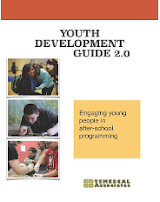
It would be useful to review the Youth Development Guide 2.0, which speaks to the importance of building positive relationships and other important topics.

Provide Opportunities for Youth to Express Themselves 
Quality afterschool programs place an emphasis on opportunities for youth to express themselves. These include things like:
  • Check-in Circles - This doesn’t need to take very long and can greatly benefit both young people and program staff. In small groups (20 or fewer), begin the day by sitting quietly in a circle and letting each person speak briefly. Sometimes it helps to have a special item to pass around the group like a talking stick that identifies the one who has the “rapt attention” of the group. You can learn more by reviewing our LIAS Blogs on this.
“Listening to youth is essential to effectively addressing the youth mental health crisis that is setting off alarms across America.”  - Youth Truth Survey
  • Journals - Journal writing is a good way for youth to freely express themselves. Afterschool leaders can use journal writing prompts and/or just offer free writing. You can learn more by reviewing our LIAS Blogs on this topic.
  • Art - Art is a good way that youth can express themselves without words. These can be art projects or opportunities to do free art.
“Bring healing and joy through art… Evidence shows that engaging in the arts—simply for the experience and pleasure of it—is therapeutic. Yet many schools, especially in under resourced communities, have extinguished this opportunity. Make art a regular part of every child’s school experience.” - Mental Health Crises Are Bombarding Our Schools. Here’s What We Can Do 

When asked, Angie (17-year-old) explained her painting (above) by saying, "I feel
trapped inside figurative and literal borders. These borders include: attending
and graduating college, getting a job, and not being able to visit my family
back in Mexico"

Tuesday, January 17, 2023

Bay Area Afterschool Pioneer to Retire

Martin Weinstein

By Sam Piha

Forty years ago, Martin Weinstein founded New Perspectives, a Marin-based youth drug & alcohol abuse prevention program. New Perspectives expanded to serve youth across the San Francisco Bay area and changed its name to Bay Area Community Resources (BACR)

Marty pioneered school-based afterschool programs. He saw the importance of integrating mental health services by hiring staff with a counseling and social work background. He was also known for collaborating with other organizations in service delivery. (Note: Martin Weinstein helped launched my career in afterschool when he hired me in 1987. I worked for Marty for 8 years, managing BACR programs in the East Bay.)

Upon learning of his plans to retire, we interviewed Marty about his career and accomplishments, as well as other afterschool leaders, on his impact on the afterschool field. 

Q: Marty, what drew you to the field of youth prevention and positive development? 
A: In the early 1970s I decided I wanted to do something in my life that would benefit others, and I fortunately was given the opportunity to become the executive director of New Perspectives, which is now BACR. 

Q: Can you name one thing during your career that you were surprised by? 
A: I am surprised by the great careers built at BACR. Many of our staff make BACR their lifelong professional home.

Q: Was there an innovation you engineered that stands out to you? 
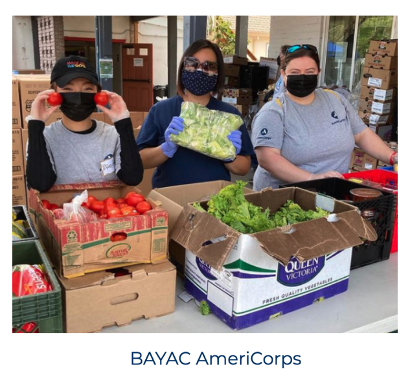
A: We created what is now known as an intermediary when AmeriCorps first started, and we are the longest running AmeriCorps program in California. Initially, the AmeriCorps agency didn't understand the value of this model.

Q: What is one of your fondest memories? 
A: I was visiting an afterschool program at an elementary school. The instructor was working with students on the concept of community. He asked the question, "how can we build a strong community?" A third-grade boy jumped up and said, "we gotta start doing push ups!" That is what I call a literal response.

Q: What are you most proud of? 
A: I am most proud of having had the opportunity to work with so many wonderful people who have become both leaders in the field and dear friends of mine. 

Q: Looking ahead to the future of afterschool, what do you believe will be the challenges and opportunities? 
A: Recruiting and retaining high quality staff has become a significant challenge as a result of the cost structure of expanded learning programs. The opportunities in after school are great. We have the potential to totally and positively impact the lives of countless youth through the work of committed and passionate people working in our most vulnerable schools. 


"Over 25 years ago in the Bay Area, Marty became a mentor, then a collaborator, and most importantly, my friend. Marty is leaving an impressive legacy in California that has touched and changed thousands of lives. Mine included. I love and appreciate you, Marty!"
- Michael Funk, Director, Afterschool Division, California Department of Education

Jennifer Peck
It's hard to imagine BACR without Marty. He's been the steady, strategic, patient, driving force behind this organization for longer than most of us can remember. Marty has never veered from his mission, but always found ways to adjust and adapt based on community needs and remains a reliable, impactful force in so many communities. I am especially grateful for Marty's understanding of the importance of nonprofits serving kids and being active and engaged advocates at the local, state and federal level. Marty invested time and resources in advocacy coalitions that leveraged the strength of many other organizations, which made a real difference with AmeriCorps funding at the national level and ASES funding in California. Marty will certainly be missed, and he's leaving a solid organization with a great reputation. BACR will undoubtedly continue to be a huge asset in Bay Area communities.” – Jennifer Peck, Founder of Partnership for Children & Youth 

Don Lau
I was introduced to Marty around 1986 by my YMCA's Y- Team Director, Alf Johnson. Marty and Alf had an idea to have the YMCA and New Perspectives (now BACR) partner on a prevention program targeting middle school students at risk of getting involved with "gateway" drugs. That was how the innovative Gateway Program was started by our two agencies. Gateway provided individual and group counseling, social services and recreation therapy. Each agency would provide services that were a part of their expertise. The Gateway Project was very successful in helping adolescents turn away from the drug and gang infested neighborhoods they lived in by exposing them to positive alternatives and giving them the tools needed to make good decisions. Gateway was an effective collaborative program model that was ahead of its time and I want to thank Marty for taking the risk with Alf and me to make it happen. All the best to you in your retirement Marty and hope you enjoy it as much as I do.” - Don Lau, former West Contra Costa YMCA, Executive Director & President/CEO YMCA of the East Bay


MORE ABOUT

Martin Weinstein is the Chief Executive Officer of Bay Area Community Resources and has been a leader within the organization and the community for over 40 years. With his guidance, BACR has developed into a dynamic and highly diversified nonprofit agency. Martin's professional history combines a solid theoretical background in business and a successful application in the social service arena. He holds an undergraduate degree from the Wharton School of Finance, University of Pennsylvania, and an MBA from New York University.

Thursday, January 12, 2023

The COVID Pandemic and Youth Mental Health: Know the Facts

By Sam Piha 

Source: www.pexels.com

Young people have proven to be especially vulnerable to mental health issues related to the COVID-19 pandemic. School closures, having to learn remotely, and isolating from friends due to physical distancing have been sources of stress and loneliness. While COVID learning loss in math and reading are of high concern, research about how students are doing mentally and emotionally since the coronavirus pandemic began indicates they are not doing well. 

We are still learning about how the pandemic has impacted young people’s mental health. It is important that youth workers and afterschool leaders are aware of the facts. Below we cite some of what we know about mental health and the impact of the COVID pandemic. NOTE: It is important that we not over pathologize young people's mental health, but remember to identify and tap into their assets. 

Obstacles To Learning
In a recent survey of youth (222,837 students at 845 schools across 20 states) reported that “…depression, stress, and anxiety are the biggest barriers to their learning. Teachers have also noted that dealing with student behavioral and mental health issues has been the biggest barrier to addressing unfinished learning.” - Arianna Prothero, ED Week


Know The Signs to Look For
Youth workers are not trained mental health experts. They do not have the training to diagnose mental health problems, however it is important to know the signs and symptoms to look out for. Below we cite a list of symptoms to look out for, originally published by Mental Health America.

“Symptoms that happen across multiple conditions:

  • Problems with concentration, memory, or ability to think clearly
  • Changes in appetite
  • Feeling sad, empty, hopeless, or worthless
  • Loss of interest in things that they used to enjoy
  • Excessive worry
  • Irritability or restlessness
  • Changes in sleep
  • Angry outbursts
  • Not wanting to be around people or take part in activities

Other things to look out for:

  • Hearing or seeing things that other people don’t
  • Extreme panic
  • Onset of new behaviors or rituals that are repeated
  • Mood swings or frequent shifts in energy
  • Changes in how they dress –if your child is wearing long pants and sleeves in hot weather, or hats all of a sudden, they could be hiding signs of self-injury like cutting or hair pulling.”

Risk Factors
We know that all youth who suffered as a result of the COVID-19 pandemic are at risk for mental health issues. However, not all youth are at the same level of risk. We cite some risk factors that youth workers should be aware of. According to the U.S. Surgeon General’s Advisory on Protecting Youth Mental Health, these are the risk factors contributing to youth mental health symptoms during the pandemic: 

  • Having mental health challenges before the pandemic 
  • Living in an urban area or an area with more severe COVID-19 outbreaks
  • Having parents or caregivers who were frontline workers
  • Having parents or caregivers at elevated risk of burnout (for example, due to parenting demands) 
  • Being worried about COVID-19
  • Experiencing disruptions in routine, such as not seeing friends or going to school in person
  • Experiencing more adverse childhood experiences (ACEs) such as abuse, neglect, community violence, and discrimination
  • Experiencing more financial instability, food shortages, or housing instability 
  • Experiencing trauma, such as losing a family member or caregiver to COVID-19

(Note: Not a comprehensive list of risk factors)

Who Are Most at Risk?
Recent studies are showing that at highest risk are youth in foster care, and youth in poverty.  And LGBTQ+ youth.  

Foster Care: “Young people placed in foster care are already dealing with a higher level of uncertainty than other young people. Placement in foster care can be disruptive and traumatizing, requiring enormous adjustments. Adding the upheaval caused by the pandemic can increase the feelings of instability for those in foster care.”National Library of Medicine

Urban Poverty: “The current mental health system is failing to meet the extensive needs of children living in urban poverty. After school programs, whose mission includes children's socialization, peer relations, and adaptive functioning, are uniquely positioned to support and promote children's healthy development.” – National Library of Medicine

Source: www.pexels.com

LGBTQ+ Youth
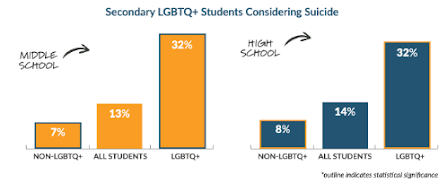
LGBTQ+ youth are at higher risk for experiences leading to learning obstacles, bullying, and higher rates of depression, stress, anxiety, suicidal thinking and behavior. To raise awareness, we cite some findings from Youth Truth: Emotional and Mental Health.

On Obstacles to Learning:

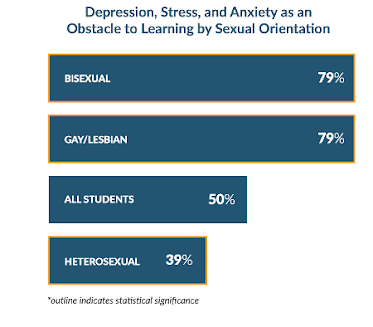
“Sexual orientation matters when considering obstacles to learning, particularly for middle school students. At the middle-school level, gay or lesbian students (79 percent) and bisexual students (79 percent) report at more than double the percentage of their heterosexual classmates (39 percent) that depression, stress, and anxiety impede their learning.” 

Source: Youth Truth: Emotional and Mental Health

On Bullying:

“Over a quarter of our youngest secondary students identify bullying as a top five obstacle to learning… For gender non-binary and LGBTQ+ youth, bullying is a formidable weight that adds to their overall obstacle- to-learning load.

The only high school group to report at a significantly larger percentage than the overall (8 percent) that bullying is an obstacle to learning are non- binary students (17 percent). And at the middle-school level the only two groups to report that bullying is an obstacle to learning at a significantly higher rate than the overall (19 percent) are LGBTQ+ students (27 percent) and non- binary students (34 percent).” 

On Suicidality:

“There is no significant difference in the percentage of youth reporting that they have considered suicide in the previous year by grade level or by race; however, there are alarming differences by gender identity and LGBTQ+ status. 

A full 32 percent of LGBTQ+ middle school students report that they have considered suicide, four and half times higher that their non-LGBTQ+ peers (7 percent). And this pattern holds in high school where again 32 percent of LGBTQ+ students report that they have seriously considered suicide compared to their peers (8 percent).” 

Source: Youth Truth: Emotional and Mental Health


UPCOMING WEBINARS:


MANAGING CHALLENGING BEHAVIOR IN AFTERSCHOOL: This webinar will focus on managing challenging behavior, supporting kids who struggle, finding your footing (spot) when the behavior of certain kids (or parents!) pushes your buttons. Our featured presenter will be family therapist and school consultant, Sheri Glucoft Wong, LCSW. We will then hear from a panel of afterschool leaders and ask for comments and questions of the registrants. To learn more and register, click here.


PROMOTING KINDNESS IN AFTERSCHOOL PROGRAMS: This webinar will focus on strategies of how we can promote kindness in our afterschool programs. Our featured presenter will be Stu Semigran, Co- Founder and President of The EduCare Foundation. He just authored a book entitled, Heartset Education: A Way of Living and Learning. Following his presentation, registrants will have the opportunity to share their strategies and ask questions. To learn more and register, click here.

Tuesday, January 3, 2023

Best of 2022

By Sam Piha

Temescal Associates and The How Kids Learn Foundation have created a large number of resources over the years. They are catalogued here. Below we have listed several of our favorites from 2022. 

Blogs


Blog Interviews


Guest Blogs


Most Viewed Blogs


Briefing Papers


Speaker’s Forums/ Webinar Recordings


A Book Drive for Children's Books Makes for a Fabulous Service- Learning Project

Source: The Children's Book Project  By Sam Piha   In our previous paper entitled, Reading Buddies: Promoting Literacy and Community Eng...