Tuesday, January 14, 2020

Afterschool Ignored in the 2020 Political Conversation

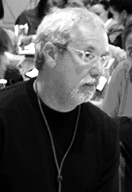
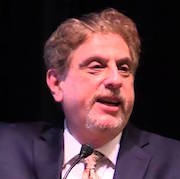
Guest Blogger, Dr. Gil Noam

Dr. Gil Noam
The election season is upon us. As a researcher in the field of education, I pay close attention to the ways education and youth development are discussed and framed on large policy platforms. This year, I have noticed one area consistently neglected in these high-profile discussions: educational settings that care for school-aged children and adolescents beyond the school day. These spaces are often referred to as afterschool programs, out-of-school time, summer experiences, or extended education.

This year, the Democratic candidates have largely focused their talking points on health care, immigration, trade, and gun violence with education in the periphery. When education came up in the first five debates, the most discussed issues were universal pre-K and tuition-free public colleges and universities. Some candidates also argued for raising teacher salaries and increasing funding for low-income students and schools.  But every family in this country has to figure out what to do when school is out and how to pay for high quality and safe environments for learning and care.

Source: Getty Images

Some Democratic candidates have more detailed platforms that include expanded learning opportunities. For example, Bernie Sanders has proposed spending $5 billion annually to expand summer and afterschool programs and youth centers in particular. Elizabeth Warren’s platform includes investing $100 billion over ten years to restore and implement in-school and out-of-school programs. Amy Klobuchar also has had a record of speaking up in favor of increasing access to afterschool programs and community hubs. On the other side of the political aisle, President Trump’s campaign platform does not specifically mention afterschool programming, but his administration did attempt to cut the only federal funding stream dedicated to afterschool and summer programs (21st Century Community Learning Centers) on three occasions. 

Source: metro.co.uk
I believe that out-of-school time should be treated with the same attention as current education hot topics like pre-K and college tuition costs. Often times, when politicians debate over resource allocation or ways to increase the quality of education, they focus on the start and end of a child’s educational journey (i.e. universal pre-school and college access). This approach often overlooks the many opportunities that could be improved upon in elementary, middle, and high school years. For example, the three months of vacation between each school year can lead to “summer slide,” which denotes the loss of academic gains during the summer months when young people are often less engaged with academic material.  Also, the opportunity divide during the summer between children who grow up in poverty and those who have affluent parents is enormous.

Candidates in any party would be well-served by putting more emphasis on this topic. Unlike debates surrounding healthcare or gun regulations, it is not a matter of taking away or replacing something, but rather about the expansion and supplementation of new programs. There are more than 30 million families with children under the age of 18 in America, with the majority being employed. The workday does not correspond with the school day and that is a very serious matter. Many of these voters are in essential primary and swing states and know whether a leader takes their situation seriously. Ultimately, this is a low-risk, high-yield topic, and it’s time to give it the deserved place on the debate floor. If you don’t discuss your plan, you will be seen as being out of touch with a very significant need of every family in our nation. READ MORE

.............................
Gil Noam, Ed.D., is the founder and director of The PEAR Institute (Partnerships in Education and Resilience) at Harvard University and McLean Hospital. The PEAR Institute is a translational center that connects research to practice and is dedicated to serving “the whole child-the whole day.” An Associate Professor at Harvard Medical School focusing on prevention and resilience, Dr. Noam trained as a clinical and developmental psychologist and psychoanalyst in both Europe and the United States. Dr. Noam has a strong interest in translating research and innovation to support resilience in youth in educational settings.

Tuesday, January 7, 2020

Best Posts of 2019

By Sam Piha

Since we launched the Learning in Afterschool & Summer (LIAS) project, we have published over 381 blog posts, attracting over 500,000 views. In 2019, we published over 40 blog posts and below, we list some of our favorites.

INTERVIEWS
Ivan Garcia at HKL VIII Conference
An Interview with Ivan Garcia, Youth Activist (March 2019)
Ivan Garcia is a youth activist in Oakland. We first heard about Ivan’s work through a program by a local NPR station. This program was later turned into a brief video. At the How Kids Learn VIII conference, Ivan was a presenter and panelist on the subject of youth activism. According to Oakland Mayor Libby Schaaf, “I love Ivan. He's a leader. I can't wait for him to sit in my office. And I mean be the mayor. He's going to be an amazing mayor. And maybe [to Ivan] you're going to bring your talents to some better pursuit besides politics. Whatever it's gonna be, it's gonna be amazing. And you always do it, Ivan, with love and respect.” Read more.


Reed Larson

An Interview with Youth Development Researcher, Reed Larson (February 2019)
According to the Chronicle of Evidence-Based Mentoring, "Reed Larson’s seminal research on the lives of teenagers helped to launch the field of positive youth development, and his insights and findings continue to enrich the work of mentoring researchers. His work explores the contexts of daily life and how developmental processes unfold in extra-curricular activities." Read more.

Youth Activism and Social Media: An Interview with Historian Gordon Alexandre (April 2019)
Since the school shooting in Parkland, FL and the response of young people to gun violence, we have all become more aware of youth activism and civic engagement. We were curious about how youth have been involved historically in social movements, and the effect of social media on social movements. Thus, we interviewed Gordon Alexandre, a historian and activist about these questions. Read more.

A Mindfulness Story For Kids By Kids: An Interview with Laurie Grossman, Inner Explorer (January 2019)
We have been promoting the use of mindfulness techniques in afterschool, for both young people and adult staff self-care, for many years. We are happy to announce that a second book created by young people on this topic was recently released. “From the creators of the hugely successful Master of Mindfulness, this charming children’s book for readers ages 4 to 7 tells the story of Nessa and Leo’s friendship, and how mindfulness helps them deal with strong emotions such as fear, shyness, and anger.” -Greater Good Science Center, UC Berkeley. Read more.


GUEST BLOGGERS
Youth Speak About the Importance of Afterschool: Guest Blogger Stu Semigran, Educare Foundation (April 2019)

Local high school students spoke with Hal Eisner, FOX 11 about how much Afterschool Programs have meant to them and their fellow students. They stated what a drastic blow it would be if there should be a cut to funding for these critical programs. Both Abigail Miranda and Lynn Kim were articulate and passionate, and spoke from their hearts. All of the state's high school afterschool programs would be eliminated if President Trump's budget is approved. According to Abigail's EduCare Site Coordinator, Viancha Carchi, everyone listening was touched by her story. We're sure you will be, too! 

Read more

Learning From a Monumental Philanthropic Leader: Bill White's Legacy to Advance Our Field: Guest Blogger Terry K. Peterson (November 2019)

Source: Youthtoday.org
William S. White, addressing the 
European Foundation Centre in 2009
William S. White, the Chairman of the Charles Stewart Mott Foundation passed away on October 9, 2019.  Bill was a monumental leader in the world of philanthropy. Working with many of you as well as many other foundations and organizations, he and the Mott Foundation have had and are continuing to have a tremendous positive impact on the afterschool and community learning center movement. Read more.


OTHER FAVORITES
Is Play a “Waste”? (October 2019)
Source: Joel deWaard
There is an inscription over a public school in northern Washington state that reads “Waste Not Thy Hour”. It reminds me of how young people’s play is often regarded as a waste. For many, play is the antithesis of learning time, however, there is growing evidence that there is a great deal of learning in play. Now is the time to reexamine the value of play, educate our stakeholders, and be unashamed to make play an important part of our afterschool programs. Read more.


Teacher Strikes and Afterschool (January 2019)

Source: Dania Maxwell
 Los Angeles Times
Teacher strikes are not new, but they are on the increase. In 2018, teacher strikes occurred in West Virginia, Oklahoma and Arizona. They also inspired smaller-scale protests by school staff in Kentucky, North Carolina, and Colorado. In 2019, we have seen strikes in Los Angeles (which appear to be settled), and there are rumblings in Denver, Chicago, and Oakland. Motivations for the strikes include increased wages for teachers and support staff, larger school budgets, and smaller class sizes. Read more.

Afterschool Learning that Supports Mastery (May 2019)


Source: Stacey Daraio,
Temescal Associates
Young people tell us they are most engaged when they are given opportunities to learn new skills. If young people are to learn the importance and joy of mastery, they need the opportunity to learn and practice a full sequence of skills that will allow them to become “really good at something.” Afterschool activities should not promote the gathering of random knowledge and skills. Rather, afterschool learning activities should be explicitly sequenced and designed to promote the layering of skills that allows participants to create a product or demonstrate mastery in a way they couldn’t do before. Read more.

Tuesday, December 17, 2019

Happy Holidays

All of us at Temescal Associates, the How Kids Learn Foundation, the Expanded Learning 360/ 365 team and the Learning in Afterschool & Summer Project wish you a peaceful and restful holiday! We are most grateful for all of you who work hard to support our youth in out of school time. 


Tuesday, December 10, 2019

Engaged Learning is Active Learning

By Sam Piha

Sam Piha
An important part of engaged learning is ensuring that the learning experience is active. We know that young people tend to be wiggly and need to be physically active and that they learn best when they are allowed to learn by “doing”. We also know that they are more difficult to manage when we allow them to be who they are, and hands-on projects are messier and pose greater challenges in planning and implementing activities. It is important that we accept the need for young people to be active learners and take on the challenge of designing activities that meet these needs. 


What does new brain science tell us about active learning?
As the neuroimaging evidence has shown, the more a student is engaged in a learning activity, especially one with multiple sensory modalities, the more parts of his/her brain are actively stimulated. When this occurs in a positive emotional setting, without stress and anxiety, the result is greater long-term, relational, and retrievable learning.” – Dr. Judy Willis, Neurologist and Classroom Teacher


What ACTIVE learning looks like:
  • Young people are involved in activities that are hands-on and project-based 
  • Young people are involved in activities that result in a finished project
  • Young people participate in activities that allow them to be fully physically active to their ability
  • When young people’s curiosity is peaked within an activity, they are able to express and explore this 
  • Young people are involved in activities that require and encourage them to think critically (asking open ended questions, categorizing and classifying, working in groups, making decisions, and finding patterns)
  • Young people are allowed to explore things in ways that are self-directed
  • Young people appear excited about what they are doing or learning 

Four things program leaders can do to begin promoting active learning:   
1. Explore and assess: It is important that you take the time with your staff to explore and assess your alignment with this first learning principle. 

2. Project-based learning: If your program is lacking the use of this teaching and learning method, offer a training in project-based learning for your staff. Try adding one club that features project-based learning. The Sunset Neighborhood Beacon Center in San Francisco, CA features a large number of project-based clubs for their middle school youth. They published a great guide entitled The Best of Both Worlds: Aligning Afterschool Programs with Youth Development Principles and Academic Standards. Click here to purchase. 

3. Promoting positive behavior: When young people are physically active and engaged in hands-on activities, they become excited. It is important that program staff are skilled in behavior management, which is often the result of good training. You can contact Temescal Associates if you wish help in offering a training in promoting positive behavior.  
4. Activity planning: Active learning requires that activities are carefully planned and the right materials are available to ensure the activity is a success. It can be very useful to require that program staff develop clear lesson plans that articulate the sequence of the activity and activity directions and list the needed materials. This takes time and it is important that the organization provides staff with training and additional time to develop these plans.


Below is a good program example of active learning:


Techbridge; Oakland, San Lorenzo, Fremont, and Concord School Districts; (Grades 6 – 8) Techbridge offers hands-on summer academies that inspire middle school youth (particularly girls and those underrepresented in STEM) a chance to explore science, technology, and engineering. Curriculum is developed with girls in mind, and includes projects like remotely operated vehicles where girls design and construct their own remotely operated boats and test them out on water; Electrical Engineering, where girls build solar night lights and learn to solder; Cleantech, where girls build solar cells and learn about renewable energy; and AppInventor, where students use creativity and technology to create their own Android app. In addition to the learning being very active, the youth also expand their horizons as staff provide career exploration to help students make the connection between STEM projects and careers. Role models and field trips are key to their success.

Tuesday, December 3, 2019

What is HOMAGO?


By Guest Blogger Rebecca Fabiano

Rebecca Fabiano
Bryan Belknap has worked at the McPherson branch of the Free Library of Philadelphia since 2015. The McPherson branch provides a safe haven for children in the Kensington area of North Philadelphia, PA, which is known as the epicenter of the opioid crisis in Philadelphia. Bryan is the Lead Maker Jawn Instructor with the library. Jawn is a Philly colloquialism to mean just about anything (space, things, place, person, etc.). Monday through Thursday children and teens can drop in to the library’s Maker Jawn space.  

I’ve known Bryan for a couple of years and hold him in high regard. Earlier this summer he dropped the term HOMAGO in one of our conversations “HO, what,” I thought? I had to know more. This is what I learned from our conversation where he schooled me on this framework:

“HO-MA-GO” comes from the field of youth media and is an approach that Bryan and his colleagues at the Free Library of Philadelphia have been utilizing for the past couple of years.
  • They [youth] “hang out” with friends in virtual social spaces such as Facebook, Twitter, and Instagram.
  • They [youth] “mess around” or tinker with digital media, making simple videos, playing online games, or posting pictures on social media.
  • McPherson Square Library
    Source: whyy.org
  • They [youth] “geek out” in online groups that facilitate exploration of their core interests.

“HOMAGO fits well at this particular library because its structure provides a safe place for youth to be, and the neighborhood is often unsafe for residents of all ages,” says Bryan. He goes on to say: “Providing a safe place has always been the top priority, and you’re [youth] free to come in here and you can get comfortable here and feel safe here you can just come hang out. There’s no additional requirement other than contributing to the atmosphere of safety and welcoming.” And while Bryan received training on HOMAGO from the Free Library when he started, they’re not just using it related to youth media, but more an approach to youth engagement. HOMAGO is backed by research, which demonstrates high retention of learning, development of problem-solving skills, and critical thinking skills. Though they are a drop-in program, offering clubs and ‘free’ time in the Maker Jawn, the participants attendance tends to be cyclical, it is also predictable.

In fact, HOMAGO aligns well with the three core protective factors developed by using a Positive Youth Development framework: positive relationships (hang out), clear, fair and high expectations (mess around, understanding how to use the materials and tools) and opportunities to connect, navigate and to be productive (geek out). While I visited Bryan, I saw several of the projects the participants were working on including a jacket a young person had taught herself how to make through trial and error, getting to know how to use the sewing machine, watching YouTube videos and lots of encouragement.

Source: springboardexchange.org

To facilitate HOMAGO, they set up work stations with sewing machines, cardboard, hot glue guns with popsicle sticks, snap circuits are always out and something messy like slime or painting.  There’s also a computer where youth can play video games, which they usually do in a small group huddled around the computer. Having these all out all the time, youth see each other messing around and get inspired to try new things.

Things to consider if you want to try HOMAGO at your drop-in or afterschool program:
·      Learning and exploring is self-directed by the participants
·      There’s a lot of organized chaos; what makes it organized is the clear expectations for how to use the space, the tools and materials.

…………….
Rebecca Fabiano, MS in education, is the founder and president of Fab Youth Philly, a small, woman-owned business that supports youth-serving organizations and serves as a lab to create programming for and with youth.


Understanding Attention-Deficit Hyperactivity Disorder

Source: www.pexels.com By Sam Piha PURPOSE The purpose of this blog is to advance understanding of Attention- Deficit Hyperactivity Disorder...