Wednesday, July 18, 2012

What New Brain Research Tells Us About How Children Learn: An Interview with Dr. Judy Willis, Part 2


By Sam Piha


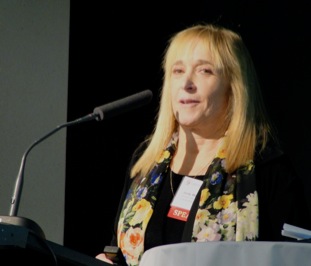
Judy Willis is a leading thinker on how to apply new brain research to better promote children's learning. Below is part 2 of an interview with Dr. Willis. Check out her video on Edutopia, which we aired at the How Kids Learn conference.
Q: You make the case that collaborative learning opportunities are particularly important during adolescence. Why is this? 

A: Consider the increased comfort and enjoyment that youth have when pleasurable social interaction is incorporated into their learning experience. This is especially true during adolescence when peer group influence plays such an important developmental role in the psychosocial process of separation from parents along the road to individualization. For example, in early elementary school youth often raise up from their seats when they wave their hands enthusiastically in hopes of being called upon to answer a question. By middle school some youth consider it uncool to volunteer answers or even appear smart in class. These same youth are more willing to participate and even show enthusiasm about challenging tasks when they are engaged in learning activities with supportive cooperative groups. 

Erik Erikson’s theorized that the developmental crises of adolescence are turning points during periods of increased vulnerability and these turning points present opportunities for the development of psychosocial strength. He proposed that during these developmental stages the adolescent develops new capacities and psychosocial strengths by working through these crises. Inclusion, a sense of belonging to a group where a student feels valued, builds resiliency. Resilient adolescents have greater success, social competence, empathy, responsiveness, and communication skills. They also demonstrate greater flexibility, self-reflection, and ability to conceptualize abstractly when solving problems. 

Successfully planned group work can help to support youth during these developmental crisis opportunities by reducing the fear of failure that can cause them to avoid academic challenges. Well-structured cooperative group activities build supportive peer communities, which in turn increase self-esteem and academic performance.

Q: Youth development specialists and educators have been saying for some time that creating a positive, low stress environment enhances the opportunities for young people to learn. Is this now confirmed by recent brain research?
A: Neuroimaging and neurochemical investigation provide evidence of the brain’s response to stress as well as to pleasure and positive social interaction. Research on the amygdala reveals it to be one location of an affective filter in the brain. During the periods of the high stress or anxiety, that some youth might feel when asked to do a math problem on the board or make an oral presentation to the class, their emotional state is associated with greatly heightened metabolism (more glucose/oxygen use) flooding this “emotional” portion of the limbic system on Functional Magnetic Resonance Imaging (fMRI) studies. 

When the amygdala is in this hyperexcitable anxiety-provoked state there is profound reduction in the neural activity indicative of information flow into and out of the amygdala. In the normal, relaxed state the brain receive information as sensory input (hearing, vision, etc.) into specific sensory receptive centers. From these areas, neural pathways project this information to the amygdala. In the amygdala emotional meaning may be linked to the information and connections are made with previously stored, related knowledge. The new information, now enhanced with emotional or relational data, then travels along specific neuronal circuits to the higher cognitive centers of the brain, such as the prefrontal cortex, where information is processed, associated, and stored for later retrieval and executive functioning. 

In MRI scans of adolescents in states of affective, emotional anxiety, when the amygdala metabolically hyperactive, the pathways that normally conduct information in and out of the amygdala show greatly reduced activity. Thus new information/learning is blocked from entering the memory banks by this metabolic blockade of the hyperactive amygdala. 

Q: How does well-designed collaborative learning help create a positive learning environment?
A: When youth participate in engaging learning activities in well-designed, supportive cooperative groups, their affective filters are not blocking the flow of knowledge. When you plan your group such that each member’s strengths have authentic importance to the ultimate success of the group’s activity, you have created a situation where individual learning styles, skills, and talents are valued and youth shine in their fortes and learn from each other in the areas where they are not as expert. They call on each other's guidance to solve pertinent and compelling problems and develop their interpersonal skills by communicating their ideas to partners. 

The brain scans of subjects learning in this type of supportive and social learning situation show facilitated passage of information from the intake areas into the memory storage regions of the brain. This is consistent with the original cognitive psychology research and theories of Steven Krashen about the affective filter - that learning associated with positive emotion is retained longer and visa versa. 


Q: Here, I’m going to apologize to our readers for getting somewhat technical, by asking you to explain in simple terms how information travels in the brain and the role of neurotransmitters. 

A: Information travels along nerve cells’ branching and communicating sprouts (axons and dendrites) as electrical impulses. However, where these sprouting arms connect to the next neuron in the circuit, the information has to travel through a gap between the end of one nerve and the beginning of the next one. In these gaps, called synapses, there are no physical structures, like the wires that connect appliances to electric outlets, along which the electric impulses can travel. 

When crossing over synaptic gaps, the information impulse must be temporarily converted from an electric one into a chemical one. Neurotransmitters are brain proteins released by the electrical impulse on one side of the synapse, to then float across the synaptic gap, carrying the information with them to stimulate the next nerve ending in the pathway. Once the neurotransmitter is taken up by the next nerve ending, the electric impulse is reactivated to travel along to the next nerve cell.
Dopamine is the chemical neurotransmitter most closely associated with attention, memory storage, comprehension, and executive function. The theory of reward-stimulated learning and other reinforcement learning theories are based on the assumption that the brain finds some states of stimulation to be more desirable than others. The brain is believed to make associations between specific cues and these desirable states or goals. Dopamine activity can be evaluated on neuroimaging.

Q: How is the release of dopamine related to learning? How is this related to collaborative learning activities? 
A: It has been found that dopamine release is increased in brain centers associated with learning and memory in response to rewards and positive experiences. Research found that the brain released more dopamine into these learning circuits when the individual was playing, laughing, exercising, and receiving acknowledgement (e.g. praise) for achievement. These frontal lobe dopamine sensitive regions are seen on neuroimaging as activated in pleasure and reward, wakefulness, and satiety. 

Many of the motivating factors that have been found to release this dopamine are intrinsic to successful cooperative or collaborative group work such as social collaboration, motivation, and expectation of success or authentic praise from peers. Because dopamine is also the neurotransmitter associated with attention, memory, learning, and executive function, it follows that when the brain releases dopamine during or in expectation of a pleasurable experience or reward, that this dopamine will be available to increase the processing of new information. That is what occurs when a young person enjoys a positive cooperative learning experience, and even when s/he anticipates participation in that type of activity sometime during the class or program.

_____________________
Dr. Judy Willis, a board-certified neurologist in Santa Barbara, California, has combined her 15 years as a practicing adult and child neurologist with her teacher education training and years of classroom experience. After five years teaching at Santa Barbara Middle School, and ten years of classroom teaching all together, this year Dr. Willis reluctantly left teaching middle school students and dedicated herself full-time to teaching educators. With an adjunct faculty position at the University of California, Santa Barbara graduate school of education, Dr. Willis travels nationally and internationally giving presentations, workshops, and consulting while continuing to write books for parents and educators.

Wednesday, July 11, 2012

Ode to Site Supervisors


The following was shared with the BOOST Conference attendees by a dear colleague, Diego Arancibia. It was also posted in the BOOST Breakfast Club Blog. With Diego's permission, we reposted it here in order that it could be shared even further. Diego's bio can be found below - Sam Piha
Ode to Site Supervisors
By Diego Arancibia
Diego Arancibia
I began to reflect on my career and realized that
my days as a site coordinator have been the most defining and empowering.
I dare say that this experience,
as a site coordinator,
prepared me for the biggest challenges of not only my career…
but my life.
So, I have written this ode,
in honor of the site coordinator...
The one who is a part time employee with a full time attitude.
The one who has survived the bullets of lock downs
and who also rose to the occasion
to help supervise 1400 students
in the midst of a teacher walk out.
The one who has had to call 911 because of broken bones...
and at the same time worried that the family didn't have insurance.
The site coordinator who realized they are,
in essence,
the bridge between
the school and
family...
When they heard a father say
"I got the message from the school but if i left work,
I wouldn't get paid and
my family won't eat... tu sabes?"
The one who spent a sleepless night in the emergency room because of one their students laid in one of those rooms.
The one who a can name every kid in their program....
Along with their nickname.
The one who made the call to child protective services…
and even with promise of "confidentiality"....
everyone knew it was you…
even the parent.
But you still don't regret making the call,
because you took a stand for those that couldn't.
To the one who has heard of their former student being shot
or killed in a car accident.
The one who also tears up when they hear one of their students just graduated.
To the one who heard their former student,
who didn't have papers,
didn't have a dad,
and didn't do time
still joined the marines to serve "his" country
and was shipped to Iraq.
To the one who made magic happen with 200 students, $20 bucks, and a 99cent store.
The one who gave their last $10 bucks to a student
so they could go on that field trip.
The one who has survived countless site visits... and yet still has to justify the work they do.
The one that has brought in thousands of dollars if not millions because of the program they run.
Only to become the scape-goat of disconnected administrators.
The site coordinator who knows the utter excitement of finding "that staff member" who has "it"
and the shot to the gut
when you had to fire,
let go,
reassign, or
whatever term you want to use
to let a staff member know they lost their "juice".
To the site coordinator who has dealt with the stress
of trying to accomplish
in 3 hours
what others
have trouble in 8.
The site coordinator who has mopped floors, cleaned bathrooms
and was still yelled at for moving a chair in a classroom.
To the one who initially was not
from of the community
but in time
earned the trust and respect
and became part of that community.
To the site coordinator who has failed.
but failed forward
and had humility and courage
to stand up...
and triumph.
The one who goes by that saying of Admiral Grace Hopper
If it's a good idea, go ahead and do it. It is much easier to apologize than it is to get permission.
To the site coordinator who created a 3rd place... not really home, not really school...
but really like home and really like school.
To the site coordinator who has seen their front line staff be transformed.
To the site coordinators,
who in reality
are the backbone of
any program
any organization
and of this movement.
To you
I say…
Thank you.
____________________
Diego Arancibia has worked in the field of After-School for over 15 years.  His experience ranges from working with elementary, middle school and high school students at the various programmatic and administrative levels.   His innovative methods in marketing and programming has produced some of the most successful programs in the nation. Also, he has traveled across the nation training youth program advocates in consensus building, action planning, programming.  Currently, Diego is the Coordinator with ASAPconnect and lives in the Bay Area with his beautiful wife and his amazing son and daughter.

Wednesday, July 4, 2012

A Virtual Vacation to Build Global Awareness

By Guest Blogger Susan Neufeld 

Susan Neufeld
At the Best of Out of School Time (BOOST) Conference this past April, I had the pleasure of hearing Diego Arancibia (ASAPConnect) read “Ode to Site Supervisors,” a poem that captures the complexity of youth work. In our jobs, we feel the urgency to squeeze all that we can – accountability, life skills, love, validation – into a 3 to 6 p.m. schedule that also needs to offer a healthy snack and homework help. Our urgency is motivated by a realization that we want kids to find their voice and vision now while they are quickly changing. It’s a bit like building a ship while it sails.
Only, we don’t have to worry about building the ship. The LIAS Principles – that learning is active, collaborative, meaningful, supportive of mastery, and focused on expanding horizons – remind us that kids are the captains of their own development. Our role is not to fill kids with knowledge and skills but to be a compass that offers direction, guidance, opportunities, and support to find their own way. 
Doing this is harder than it seems, particularly when most of us have a lifetime of assignment-driven schooling. Our instinct is to mimic a controlled, tightly scheduled, and rigid learning environment. But true learning is messy: it isn’t quiet or neat or easily captured in a worksheet. It is noisy, dynamic, and full of mistakes and spills and arguments. It is engaging, passionate, and so exciting that kids don’t want to go home.
Virtual Vacation Leader's Guide
In our organization, we use Virtual Vacation (VV) to help create this learning environment for kids. VV is not a curriculum but a methodology for creating vibrant learning opportunities for youth. A Virtual Vacation Leader's Guide, developed in partnership between Temescal Associates and Chris Bentivegna,  is available at this link.  It is open-ended, hands-on, affordable (!), accessible to all ages, and allows kids to freely explore their world. In VV, youth determine where they would like to travel. They can go to a country (China!), a time in history (era of dinosaurs!), or a destination (under the ocean!) to explore, learn about other cultures, develop skills, and discover new interests. The staff’s role is to guide and facilitate what the group decides to see, do, understand, or create. 
An Example
A Virtual Vacation to Japan
At one of our sites, the youth decided that they wanted to visit Japan. As part of their trip, the children learned key Japanese words, made obis out of scrap cloth, celebrated the Lotus festival, made vegetable sushi rolls, practiced Japanese calligraphy, and researched the recent tsunami. Along this journey, they practiced soft skills (working and playing well with others, communication, negotiation, decision-making, leadership) and academic skills (internet research, reading, art, math, history). They also had a chance to visit a world outside their own, building their global and cultural awareness. For our youth, who all reside in or near low-income apartment housing, Virtual Vacations gives them opportunities once reserved for middle or upper income youth. 
The Virtual Vacation approach is something I would recommend to any youth organization that seeks to engage youth in learning about the larger world. This approach weaves in a variety of academic disciplines and offers activities that bring distant people and places alive. 

__________________________
Prior to her current position at The HOPE Through Housing Foundation, Ms. Neufeld served as the Collaboration Manager for Mustangs on the Move, a consortium of community-based organizations that provides after school programming to high school youth in Northwest Pasadena. She also worked for Communities Organizing Resources to Advance Learning (CORAL) Pasadena, a multi-city after school initiative launched by the Irvine Foundation, first as a program evaluator then as Associate Director. Ms. Neufeld holds a Master’s degree in Applied Developmental Psychology from Claremont Graduate University in Claremont, California. She currently serves on the Si Se Puede! Learning Centers Advisory Council of the Cesar Chavez Foundation, on the 2012 BOOST (Best of Out of School Time) Conference Leadership Team, and is a part of the Learning in Afterschool & Summer Work Group. 

Wednesday, June 27, 2012

All Things Girls and STEM: An Interview With Linda Kekelis of Techbridge, Part 2


By Sam Piha

Last spring, President Obama stated emphatically that, “Emphasizing STEM education—especially to girls and minority students–is one of the most important efforts the U.S. can make if it hopes to produce college- and career-ready students”. Linda Kekelis, Executive Director of Techbridge, a local STEM afterschool program for girls, is a leading innovator of how to do this successfully. Below we offer an interview with Linda Kekelis.

Q: The Learning in Afterschool & Summer learning principles state that learning should be active, collaborative, meaningful to the participants, support mastery, and expand the horizons of those who participate. Can you comment on how important these principles are to facilitating young people’s learning?

Linda Kekelis
A: Techbridge believes in the importance of building a strong network of support for girls that provides them with experiences that support mastery, are relevant to their interests, and expand their options. Many of the girls in Techbridge have aspirations to do well in school and find a career that is personally and professionally rewarding. Unfortunately, without academic and career guidance along with enrichment opportunities, many girls in our community lose their dreams of higher education and drop out of the technology or engineering pipeline. Techbridge creates a network of support on which peers model appropriate behavior, positive attitudes toward learning and work, and caring behavior toward others. The rules of behavior are established at the start of each Techbridge program by the girls themselves through rule and expectations they jointly develop in a respect statement. “It’s a safe place to explore things and try to develop skills and stuff …It’s a place where if you mess up, it’s okay,” shared a Techbridge student.

While hands-on projects can spark an interest in a young girl, we have found that role models and field trips to worksites are instrumental in getting girls interested in a career in a technical field. This is particularly important for girls who are the first in their families to attend college, or who don’t have role models who are in professional careers. Last year on evaluation surveys, 83% of Techbridge participants cited a greater interest in a career in technology, science or engineering because of a role model they met or a company they visited.  The opportunity to see real-world applications of technology, science, and engineering and meet with role models is rare for most of our girls, yet as we have seen, can be a very impactful influence in expanding their horizons.

Q: As you look forward to the future of out-of-school learning, what is most on your mind?

A: Techbridge has seen firsthand the importance of sustained STEM programming for girls and recognizes that our success has been due to innovative curricula that inspire youth and that make connections to STEM careers, role models that are well trained, and personnel that are confident and supported in delivering STEM programming.

As I look to the future of OST learning, I believe it is important that training and resources are provided to those who support after-school programs. Since 2010, Techbridge has partnered with the Oakland After-School Programs Office on the Frontiers for Urban Science Exploration (FUSE) project to develop a professional learning community for introducing informal science education to after-school programs in elementary schools in Oakland. Monthly trainings are held to enhance teaching inquiry-based science, promote science career exploration, and engage families. Coaching is provided to improve science teaching.  The results of this project have been very positive and for me, highlight the importance of providing sustained support for staff that want to bring STEM to youth in their after-school programs but may not have the experience or expertise in these fields. Additionally, it is important to make connections between activities and career opportunities. Resources to support career exploration and the inclusion of role models in after-school are needed to make them successful.

Q: What do you see as the risks and opportunities for afterschool programs in the decade ahead?

A: I see lots of opportunities for after-school programs ahead. After-school programs can allow students to spend more time beyond the school day interacting with their teachers and peers. Through the curriculum and hands-on projects, instructors have the opportunity to provide a caring, supportive environment to nurture and engage youth’s interest in STEM.  The close-knit environment of after-school programs can enable students to develop positive, nurturing relationships with adults.

Most of our students are multi-cultural, from many different ethnicities and backgrounds. While most students segregate by race in their lunchrooms and classrooms during the school day, they can be encouraged to work together in after-school programs. Through icebreakers and team projects, after-school programs can give youth the opportunity to work with students they don’t know, and who might be very different from them culturally. This can help to increase knowledge and comfort with diversity in ethnicity, culture, and social class.

In terms of risks, I think it is important to maintain the “fun” in after-school and not try and make after-school programming more of the school day experience. Kids need choice and voice in the planning and programming of their after-school programs. It is also important to keep in mind what the goals for after-school programming are so that evaluation measures the impact on attitudes, confidence, self-efficacy and interests in STEM studies and careers.

______________________
Linda Kekelis is the Executive Director of Techbridge. As an advocate of girls' engagement in science, technology, and engineering, Linda has been a Principal Investigator on five NSF-funded projects that have supported out-of-school programs for girls and training and resources for role models. She has translated research into practical applications for parents, teachers, and role models. She serves on numerous panels and advisory boards for programs designed to increase the participation of females in technology and engineering. Linda also has conducted research on children with special needs and has published resources to promote the development of children who are visual impaired. She has a Master's degree in Linguistics from the University of Southern California and a Doctorate in Special Education from the University of California, Berkeley.


Wednesday, June 20, 2012

All Things Girls and STEM, Part 1


By Sam Piha

Last spring, President Obama stated emphatically that, “Emphasizing STEM education—especially to girls and minority students–is one of the most important efforts the U.S. can make if it hopes to produce college- and career-ready students”. Linda Kekelis, Executive Director of Techbridge, a local STEM afterschool program for girls, is a leading innovator of how to do this successfully. Below we offer an interview with Linda Kekelis.

Q: Techbridge is a program that has attracted national attention. Could you say a word describing the program and highlighting why it has attracted so much attention?

Linda Kekelis
A: Techbridge empowers girls to realize their dreams through science, technology, and engineering. Techbridge offers after-school and summer programs with hands-on projects, career exploration opportunities, and academic and career guidance to expand girls’ interests and options. Since 2000, Techbridge has served over 3,000 girls in grades 5-12 primarily in socio-economically disadvantaged areas in Oakland and surrounding communities.  Curricula are developed with input from girls and findings from the research community, and include projects like Electrical Engineering, in which girls build solar night lights and learn about circuits; Chemical Engineering, in which girls work with polymers to create bouncy balls and learn about the engineering design process; and Clean Tech, in which girls build solar cells and learn about renewable energy. Techbridge also introduces computer science projects.

We don’t want our girls to be just consumers or users of technology, but programmers too. For girls who have limited access to computers at home and school and even more limited exposure to programming, the projects expand their understanding of the promise of technology.  By working on hands-on projects such as building robots and designing computer games, girls have a specific goal to work towards, increasing their motivation to persevere and complete a successful project. We promote the “growth mindset” and teach girls that the brain is like a muscle that gets stronger and works better the more it is exercised. We have heard from teachers and parents alike that the strong engagement and motivation that girls demonstrate in Techbridge carry over into their school work and classrooms. For example, we often hear of a girl who started off in Techbridge unsure of her abilities is transformed by her experience in Techbridge. By the end of the year, she is more confident, speaking up in classes and working through problems instead of giving up.

Q: Do you expose program participants to experiences beyond the walls of your program?

A: While hands-on projects can spark an interest in a young girl, we have found that role models and field trips to worksites are instrumental in getting girls interested in a career in a technical field.  The opportunity to see real-world applications of technology, science, and engineering and meet with role models is rare for most of our girls, yet as we have seen, can be a very impactful influence. Techbridge partners with leading technology, science, and engineering firms around the San Francisco Bay Area to bring girls to corporate worksites, where they can see firsthand what engineers and scientists do, and interact with role models who share inspiring stories and provide academic and career guidance. 

Q: There is a growing interest in exposing youth, especially girls, to STEM activities and careers. Do you help other organizations take on this challenge?

A: Through the delivery, evaluation and refinement of its program over the past 12 years, Techbridge has gained a wealth of experience and has become a leader in role model training, working with organizations nationwide. Techbridge’s training and resources are designed to help volunteers effectively engage and relate to youth so that the experience is mutually rewarding.  In addition, Techbridge provides training for girl-serving organizations who wish to recruit, train and retain role models for their programs.  These resources are available free of charge on the Techbridge website, for organizations or individuals seeking help in these areas.
Techbridge also has a partnership with Girl Scout councils nationwide to provide programs-in-a-box and trainings for Girl Scout staff, leaders and volunteers. This partnership has scaled up to 15 councils nationwide, with an estimated reach of over 15,000 girls by 2013. Girls Go Techbridge is providing training and engineering activities and supporting the capacity of councils to work with partners like the Society of Women Engineers to introduce many more girls to engineering.

Q: There are those who claim that real learning takes place within the school day and the learning in youth programs outside of school lacks rigor. How do you know whether or not you are being successful?

A: We take evaluation seriously and invest time and resources into measuring the impact of all that we do. The evaluation goals of Techbridge are to 1) increase students’ technical and scientific skills; 2) increase confidence levels; 3) enhance academic and career guidance to expand career options; 4) promote greater interest in careers in technology, science, and engineering; and 5) develop a strong and effective network of support for girls by offering training and resources to teachers, role models, families, and partners.  Techbridge utilizes both quantitative and qualitative evaluation methods to track progress toward achieving our goals. These include pre- and post-surveys, focus groups with girls, teachers, and families, and program observations and coaching. Our outside evaluator collects and analyzes data for the programs. 

Evaluation results demonstrate the success of Techbridge. Last year, 95% of participating students knew more about how things work (like simple machines), 89% felt more confident trying new things, 95% believed that engineering is a good career for women, 96% knew more about different kinds of jobs, and 89% planned to study harder so they can go to college. We also conducted a three-year longitudinal study that showed evidence of long-term impact on girls: 82% reported a greater interest in a career in technology, science and engineering, 86% had more confidence in themselves, and 87% have more career options than they otherwise would have as a result of having participated in Techbridge.

Q: Can you tell us about the recognition that Techbridge has received because of its innovation and success?

A: Techbridge has been nationally recognized for its work.  In 2011, Techbridge received the Inclusion Champion Award from Mitsubishi Electric America Foundation for supporting students in STEM who are visually impaired.  Techbridge’s Executive Director spoke at a White House Convening for the Educate to Innovate initiative on the importance of role models for promoting girls in STEM fields.  In addition, Techbridge was featured by Bayer Corporation in a national forum showcasing best practice K-12 STEM education programs.

______________________
Linda Kekelis is the Executive Director of Techbridge. As an advocate of girls' engagement in science, technology, and engineering, Linda has been a Principal Investigator on five NSF-funded projects that have supported out-of-school programs for girls and training and resources for role models. She has translated research into practical applications for parents, teachers, and role models. She serves on numerous panels and advisory boards for programs designed to increase the participation of females in technology and engineering. Linda also has conducted research on children with special needs and has published resources to promote the development of children who are visual impaired. She has a Master's degree in Linguistics from the University of Southern California and a Doctorate in Special Education from the University of California, Berkeley.

Monday, June 18, 2012

June 21st is National Summer Learning Day


By Sam Piha

In our last blog post, we featured two LIAS Youth Ambassadors from Azusa High School who talked about their experience at the CalSAC Afterschool Challenge. They traveled to Sacramento to advocate for afterschool programs by offering training to other youth participants, hosting an evening youth social event, and sharing their personal stories with California Legislators. 

June 21st is National Summer Learning Day. Please consider allowing staff and youth to travel to Sacramento to support and celebrate summer learning opportunities. Summer Matters will host a rally on the North Capitol steps beginning at 10:00am, followed by science, technology, engineering and math (STEM) student activities on the Capitol lawn. Picnic lunch begins at noon. Participants include State Superintendent Tom Torlakson, students, teachers, education officials, policymakers and more. 

Please RSVP to Beth Zygielbaum at beth@partnerforchildren.org or 510.830.4200 x1602. 

For more information on California's Summer Matters Initiative, visit their website. For a video on the value of summer learning, click here.

Thursday, June 14, 2012

LIAS Youth Ambassadors Attend the CalSAC Afterschool Challenge


By Guest Bloggers Jonathan Colquitt and Elizabeth Bello, Azusa High School Students 


During the month of March we were selected for the great opportunity of going to Sacramento for two days to attend a conference and meetings on afterschool programs.  

Elizabeth Bello
Jonathan Colquitt
On Monday May 21st we arrived in Sacramento around 10am. Much of the conference was led by high school youth, who were Learning in Afterschool & Summer Youth Ambassadors. We were introduced to what we would be covering over the next 28 hours. We also were given the opportunity to see the people behind the event, CalSAC. In this meeting we heard other people share their afterschool program stories, their afterschool achievements, and the importance of these programs. In the meeting we also covered the budget cuts that the assembly members and senators were discussing. The woman in charge of the meeting explained to us how it was being considered that those who have a low income would only have the opportunity to participate in afterschool programs. This was ruled unfair because then the kids who do not come from a low income family would not be able to have the afterschool experience, and just because they don’t come from a low income family does not mean their parents can afford to put them in afterschool care.  During this meeting, we discussed that we were going to be marching to the capitol.

After our group meeting the youths were separated from the program leaders to discuss what they would be doing the following day. We met with kids from other schools and programs from within the state of California. In this meeting with our fellow students we were able to learn a little bit more about the big impact that afterschool programs have on children.  Many of the programs were just beginning their journeys at the schools within their district. Even though all the programs had different names, they all stood for one purpose – to provide a safe environment for which kids can receive help and at the same time enjoy themselves.  Speaking to the others kids and sharing our experiences at our schools and in our programs gave us knowledge on how important these programs are to them and their schools.  The impact that these programs have had on these students within these schools is apparent. For example, there was a student from the LA County who had a classmate stabbed at the beginning of the school year. The afterschool program provided the students with the emotional support they needed in order to overcome the fatality. Because of the afterschool program the students were able to be more aware of their environment and realize there is a safe place available for them. Later we were informed of the next day events, where we would meet the staff members of the senators and assembly members. We would discuss issues about the afterschool programs and how crucial it was to maintain program funding and prevent budget cuts. 

The next morning we discussed how we would approach the issues to the government officials. We were separated into groups in our districts so we could all relate to each other and the staff. We went over their profiles in order to get a better understanding of their background in comparison to ours. Then we were appointed certain jobs and had the task to choose which one we could most relate to. Based on that, we came up with separate stories in which we told our own experiences at the afterschool program. After this we were led in a rally with an elementary school marching band ahead of us. We marched to Capitol Hill, and stood in front of the capitol with posters and leaders surrounding us. We then went inside ready to tell our stories and how afterschool programs have a great importance in our lives. We spoke to about six staff members such as, Chris Corgas representing Curt Hagman from the 60th district, Mary June Flores with Roger Hernandez from the 57th district, and lastly Annabel Snider representing Ed Hernandez from the 24th district. All of them were considerate of our issues, some more than others. We had the opportunity to get their contact information and invite their senators to meet with us at our school in the near future. 


Overall, it was a very good experience that would have not been available if it wasn’t for the THINK Together program (our after school program) and the Learning in Afterschool & Summer project. This trip really helped us realize that afterschool programs have made a great impact in our lives and other student’s lives. It has impacted our futures and has guided us on the path to success. As young adults we tend to take things for granted and this was an experience for us to share with others, the importance of afterschool programs. We expect our program will continue to prosper even after we’re gone and it will continue to make Azusa High School a better place. 

Wednesday, June 6, 2012

Summer Learning Meets The LIAS Principles


By Guest Blogger, Katie Brackenridge, The Partnership for Children and Youth 

Katie Brackenridge
A child’s need for meaningful learning and enrichment experiences does not end in June when the school doors close for summer vacation. All children need to be engaged and active during the summer months in order to be on track when they return to school in the fall. Whether these needs are being met may boil down to a child’s neighborhood or family income level. Without summer learning opportunities, children—especially children in low-income communities— can fall dramatically behind academically. 

More than 100 years of research about this phenomenon – known as summer learning loss –paints a clear and compelling picture.  A longitudinal study from Johns Hopkins University found that low-income children lose about 2 months in their reading levels each summer.   By 5th grade, the cumulative learning loss puts them nearly three grade level equivalents behind their more affluent peers.[1]   Unequal summer learning opportunities during elementary school years are responsible for about two-thirds of the ninth-grade achievement gap between lower- and higher-income youth. As a result, low-income youth are less likely to graduate from high school or enter college.[2]

Given this data, communities across the country are working hard to build high quality summer learning opportunities.  They are quickly discovering that summer is the perfect time to put the Learning in Afterschool and Summer principles into action.  Children don’t need or want more traditional school time during the summer.  In fact, because summer programming is often voluntary, many children and youth won’t participate unless their experience is fun and engaging.  In Making Summer Count, researchers from the RAND Corporation found – not surprisingly – that consistent attendance is a key indicator of a program’s ability to impact participant learning.[3]  Summer learning programs have to inspire and motivate in order to succeed.

Besides the imperative around attendance, the time and flexibility in summer programming also lends itself well to the LIAS principles.

·       Learning that is Active - Summer curriculum can involve long-term projects that allow students to experiment, explore and discover.  Projects that might take too much time or are too complicated for the school year become possible during the summer.

·       Learning that is Collaborative – Quality summer learning programs encourage participants to experiment, explore and discover together.  Throughout a summer, participants can be placed in a whole variety of different groupings that allow them to learn from each other, practice communication and negotiation skills and feel ownership for their work.

·       Learning that is Meaningful - While quality programs plan their schedule and curriculum before summer begins, well-trained staff know how and when to adjust lessons and schedules to respond to participants’ interests and to allow deeper inquiry and the expression of youth voice.  This flexibility ensures that activities and projects are meaningful to participants.

·       Learning that Promotes Mastery – More time means more opportunity to support participants in building skills, particularly around projects that they want to be doing.  Quality programs provide opportunities for participants to showcase their skills and accomplishments.

·       Learning that Expands Horizons – Summer is also a natural time for programs to expose participants to new people and places.  Visiting artists, lecturers and teachers offer different perspectives, ideas and experiences.  Field trips allow participants to visit places – even in their own communities – that they may never have seen and where they are able to return after the program ends.  Many summer programs take young people on their first overnight camping trips, which is invariably an awe-inspiring, bonding experience for participants. 


[1] National Summer Learning Association, 2009.                 
[2] Alexander, et al, 2007.
[3] Sloan, Jennifer McComb, Making Summer Count, RAND Corporation, 2010.

___________________________
Katie Brackenridge is Senior Director, Out of School Time Initiatives at the Partnership for Children and Youth. She joined the Partnership in 2004 and directs the Out of School Time initiatives. She has helped hundreds of school and community-based after school programs develop sustainability plans, plan and submit 21st CCLC and Prop 49/ASES grants, access additional funding sources and improve their program practices for after school and summer programming. 

Katie also supports the Partnership’s work to develop and improve policies that make out-of-school-time programming more accessible and effective. She serves as Co-Chair of the Quality Committee of the California Afterschool Network, working to advise and inform the Network, the California Department of Education and other stakeholders about systems and strategies to support quality programming across the state. 

A Book Drive for Children's Books Makes for a Fabulous Service- Learning Project

Source: The Children's Book Project  By Sam Piha   In our previous paper entitled, Reading Buddies: Promoting Literacy and Community Eng...