Showing posts with label brain based teaching. Show all posts

Wednesday, July 25, 2012

What New Brain Research Tells Us About How Children Learn: An Interview with Dr. Judy Willis, Part 3


By Sam Piha


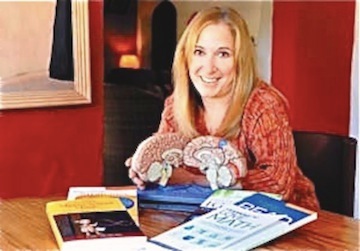
Dr. Judy Willis
Judy Willis is a leading thinker on how to apply new brain research to better promote children's learning. Below is part 3 of an interview with Dr. Willis. Check out her video on Edutopia, which we aired at the How Kids Learn conference.
Q: There are those who say that when young people are participating in collaborative learning groups, they are less engaged in real learning. How would you respond to this? 
A: Collaborative group activities, unlike whole class discussions or independent work, provide the most opportunities for youth to express their ideas, questions, conclusions, and associations verbally. Jeanne Gibbs, in her book Tribes reported that in traditionally structured classes each student has about 5-10 minutes of individual time to engage in classroom academic discourse. In group work that amount of time increases dramatically. She found that youth experienced a greater level of understanding of concepts and ideas when they talked, explained, and argued about them with their group, instead of just passively listening to a lecture or reading a text. 


This is again supported by the accelerated metabolic brain activity during active constructive thinking, such as planning, gathering data, analyzing, inferring, and strategizing versus passive information acquisition. When the verbal center becomes engaged while information or a task is being learned, more neural activity travels between the left and right brain. Thus when a student describes his/her thinking verbally to the group or works on a group chart, diagram, or project, the new information becomes embedded in multiple brain sites, such as the auditory and visual memory storage areas. Now, with neuroimaging, we know that this multicentered brain communication circuitry enhances comprehension, making new material be more accessible for future use, because it is stored in redundant brain areas. 

Q: Can you give concrete examples of how this might look in a classroom setting?
A: In mathematical collaboration youth learn to test one another’s conjectures and identify valid or invalid solutions. Group members are all engaged as they discover techniques to test one member’s strategy. If it doesn’t work on repeated tries, they invalidate that strategy and try another. Youth who just “don’t get it” via a group leader’s didactic lecture benefit from the different perspective classmates with similar knowledge banks have on the subject. 

In literature and social studies youth have a small, safer place to try out ideas they might not express to the entire class. They learn that there is validity to personal interpretation and they can experiment with critical thinking in a structured small group setting, with scaffolding provided as needed via group leader prompts about what to discuss and how to run the discussion. This process empowers these youth to become more active in not only whole class discussions, but in their homework, and in speaking their opinion outside of the classroom. This is especially critical during adolescence when “fitting in” is such a strong need, that individuality can become stifled. 

Q: One of the LIAS learning principles says that learning should be active and utilize all of the senses. Do you agree with this?
A: Yes, as the neuroimaging evidence has shown, the more a student is engaged in a learning activity, especially one with multiple sensory modalities, the more parts of his/her brain are actively stimulated. When this occurs in a positive emotional setting, without stress and anxiety, the result is greater long-term, relational, and retrievable learning. 

Q: You have talked about cooperative work groups as needing to be well planned. Can you be more specific about what you mean?
A: To qualify as cooperative work, rather than individuals working in parallel in a group, youth should need each other to complete the task. Youth are expected to participate in tasks that are clearly constructed and necessary for the group’s success. The group leader should remain active as a circulating resource and when necessary, an arbitrator, but youth should be capable of carrying out their tasks without constant, direct intrusion by the group leader. Youth and not the group leader are responsible for accomplishing their tasks in the way they think best, with accountability to each other and to the group leader’s standards. Ideally there is a clear rubric for individual and group assessment and the youth and the group leader take part in the assessment process. 

Q: Can you offer us some specific guidelines to follow when developing collaborative working groups?
A: When setting up lessons for successful collaborative learning in groups, consider the following guidelines. I will expand on these and offer specific cooperative group activities (which can be found here) that emphasize each of the following five characteristics:
  • All members have opportunities and capabilities, frontloaded if necessary, such that different youth can make their own special contributions. This may require planning ways for youth with different learning/intelligence styles to make special contributions to the group task. 
  • Youth learn to respect each other as group members. Often this requires group leader demonstration with role-playing.
  • The group negotiates roles with guidance from the group leader. Designated roles can include recorder, participation monitor (someone who keeps track of who is participating such that if one member has already given three suggestions and others have not had a chance, the overly active participant is asked to give others time to present their views), creative director (if a physical product such as a poster or computer presentation is part of the project), materials director (as might be needed for science or art projects).
  • There should be more than one answer or more than one way to solve the problem or create the project.
  • The activity should be intrinsically interesting, challenging, and rewarding.

_____________________


Dr. Judy Willis, a board-certified neurologist in Santa Barbara, California, has combined her 15 years as a practicing adult and child neurologist with her teacher education training and years of classroom experience. After five years teaching at Santa Barbara Middle School, and ten years of classroom teaching all together, this year Dr. Willis reluctantly left teaching middle school students and dedicated herself full-time to teaching educators. With an adjunct faculty position at the University of California, Santa Barbara graduate school of education, Dr. Willis travels nationally and internationally giving presentations, workshops, and consulting while continuing to write books for parents and educators.

Wednesday, July 18, 2012

What New Brain Research Tells Us About How Children Learn: An Interview with Dr. Judy Willis, Part 2


By Sam Piha


Judy Willis is a leading thinker on how to apply new brain research to better promote children's learning. Below is part 2 of an interview with Dr. Willis. Check out her video on Edutopia, which we aired at the How Kids Learn conference.
Q: You make the case that collaborative learning opportunities are particularly important during adolescence. Why is this? 

A: Consider the increased comfort and enjoyment that youth have when pleasurable social interaction is incorporated into their learning experience. This is especially true during adolescence when peer group influence plays such an important developmental role in the psychosocial process of separation from parents along the road to individualization. For example, in early elementary school youth often raise up from their seats when they wave their hands enthusiastically in hopes of being called upon to answer a question. By middle school some youth consider it uncool to volunteer answers or even appear smart in class. These same youth are more willing to participate and even show enthusiasm about challenging tasks when they are engaged in learning activities with supportive cooperative groups. 

Erik Erikson’s theorized that the developmental crises of adolescence are turning points during periods of increased vulnerability and these turning points present opportunities for the development of psychosocial strength. He proposed that during these developmental stages the adolescent develops new capacities and psychosocial strengths by working through these crises. Inclusion, a sense of belonging to a group where a student feels valued, builds resiliency. Resilient adolescents have greater success, social competence, empathy, responsiveness, and communication skills. They also demonstrate greater flexibility, self-reflection, and ability to conceptualize abstractly when solving problems. 

Successfully planned group work can help to support youth during these developmental crisis opportunities by reducing the fear of failure that can cause them to avoid academic challenges. Well-structured cooperative group activities build supportive peer communities, which in turn increase self-esteem and academic performance.

Q: Youth development specialists and educators have been saying for some time that creating a positive, low stress environment enhances the opportunities for young people to learn. Is this now confirmed by recent brain research?
A: Neuroimaging and neurochemical investigation provide evidence of the brain’s response to stress as well as to pleasure and positive social interaction. Research on the amygdala reveals it to be one location of an affective filter in the brain. During the periods of the high stress or anxiety, that some youth might feel when asked to do a math problem on the board or make an oral presentation to the class, their emotional state is associated with greatly heightened metabolism (more glucose/oxygen use) flooding this “emotional” portion of the limbic system on Functional Magnetic Resonance Imaging (fMRI) studies. 

When the amygdala is in this hyperexcitable anxiety-provoked state there is profound reduction in the neural activity indicative of information flow into and out of the amygdala. In the normal, relaxed state the brain receive information as sensory input (hearing, vision, etc.) into specific sensory receptive centers. From these areas, neural pathways project this information to the amygdala. In the amygdala emotional meaning may be linked to the information and connections are made with previously stored, related knowledge. The new information, now enhanced with emotional or relational data, then travels along specific neuronal circuits to the higher cognitive centers of the brain, such as the prefrontal cortex, where information is processed, associated, and stored for later retrieval and executive functioning. 

In MRI scans of adolescents in states of affective, emotional anxiety, when the amygdala metabolically hyperactive, the pathways that normally conduct information in and out of the amygdala show greatly reduced activity. Thus new information/learning is blocked from entering the memory banks by this metabolic blockade of the hyperactive amygdala. 

Q: How does well-designed collaborative learning help create a positive learning environment?
A: When youth participate in engaging learning activities in well-designed, supportive cooperative groups, their affective filters are not blocking the flow of knowledge. When you plan your group such that each member’s strengths have authentic importance to the ultimate success of the group’s activity, you have created a situation where individual learning styles, skills, and talents are valued and youth shine in their fortes and learn from each other in the areas where they are not as expert. They call on each other's guidance to solve pertinent and compelling problems and develop their interpersonal skills by communicating their ideas to partners. 

The brain scans of subjects learning in this type of supportive and social learning situation show facilitated passage of information from the intake areas into the memory storage regions of the brain. This is consistent with the original cognitive psychology research and theories of Steven Krashen about the affective filter - that learning associated with positive emotion is retained longer and visa versa. 


Q: Here, I’m going to apologize to our readers for getting somewhat technical, by asking you to explain in simple terms how information travels in the brain and the role of neurotransmitters. 

A: Information travels along nerve cells’ branching and communicating sprouts (axons and dendrites) as electrical impulses. However, where these sprouting arms connect to the next neuron in the circuit, the information has to travel through a gap between the end of one nerve and the beginning of the next one. In these gaps, called synapses, there are no physical structures, like the wires that connect appliances to electric outlets, along which the electric impulses can travel. 

When crossing over synaptic gaps, the information impulse must be temporarily converted from an electric one into a chemical one. Neurotransmitters are brain proteins released by the electrical impulse on one side of the synapse, to then float across the synaptic gap, carrying the information with them to stimulate the next nerve ending in the pathway. Once the neurotransmitter is taken up by the next nerve ending, the electric impulse is reactivated to travel along to the next nerve cell.
Dopamine is the chemical neurotransmitter most closely associated with attention, memory storage, comprehension, and executive function. The theory of reward-stimulated learning and other reinforcement learning theories are based on the assumption that the brain finds some states of stimulation to be more desirable than others. The brain is believed to make associations between specific cues and these desirable states or goals. Dopamine activity can be evaluated on neuroimaging.

Q: How is the release of dopamine related to learning? How is this related to collaborative learning activities? 
A: It has been found that dopamine release is increased in brain centers associated with learning and memory in response to rewards and positive experiences. Research found that the brain released more dopamine into these learning circuits when the individual was playing, laughing, exercising, and receiving acknowledgement (e.g. praise) for achievement. These frontal lobe dopamine sensitive regions are seen on neuroimaging as activated in pleasure and reward, wakefulness, and satiety. 

Many of the motivating factors that have been found to release this dopamine are intrinsic to successful cooperative or collaborative group work such as social collaboration, motivation, and expectation of success or authentic praise from peers. Because dopamine is also the neurotransmitter associated with attention, memory, learning, and executive function, it follows that when the brain releases dopamine during or in expectation of a pleasurable experience or reward, that this dopamine will be available to increase the processing of new information. That is what occurs when a young person enjoys a positive cooperative learning experience, and even when s/he anticipates participation in that type of activity sometime during the class or program.

_____________________
Dr. Judy Willis, a board-certified neurologist in Santa Barbara, California, has combined her 15 years as a practicing adult and child neurologist with her teacher education training and years of classroom experience. After five years teaching at Santa Barbara Middle School, and ten years of classroom teaching all together, this year Dr. Willis reluctantly left teaching middle school students and dedicated herself full-time to teaching educators. With an adjunct faculty position at the University of California, Santa Barbara graduate school of education, Dr. Willis travels nationally and internationally giving presentations, workshops, and consulting while continuing to write books for parents and educators.
Voices from the Field: Youth Activist, Hadley Gray

Source: Hadley's Hope By Sam Piha We first learned about Hadley Gray from an article by Giving Tuesday, which we posted last week. She ...