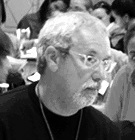
I first met Ben Kirshner in
2002 when he was working alongside Milbrey McLaughlin (Stanford University) on a qualitative evaluation of
the San Francisco Beacon Centers. This evaluation was unique in that it relied
on the experiences of youth and the collection of data by youth ethnographers.
After graduate school, Ben went on to join the faculty at the University of
Colorado (CU- Boulder). Because he is a champion of youth development and youth
organizing and participatory action research, we chose to interview him. Below
are some of his responses to our questions.
 |
| Ben Kirshner |
Q: Throughout your career,
you have focused on youth development and the learning within out-of-school
time programs. Why is that and who were your major influences?
A: My early career experiences working in out of
school youth programs (New Orleans, Providence, and eventually San Francisco)
shaped my subsequent interest in youth programs as contexts for learning. I saw
how out of school spaces could prioritize community, relationships, and
belonging. I gained personal fulfillment being part of those spaces and I was
inspired by the kinds of intergenerational partnerships that happened
organically as youth and adults worked on projects with shared goals and
values.
I especially want to credit four talented mentors and colleagues from San Francisco’s youth development scene--Tom Ahn, Anthony Mickens, Teresa Arriaga, and McCrae Parker—for seeing how youth work could embody a powerful intersection of social justice, creative design, and community.
When I found my way into academic spaces I found a new set of mentors in Na’ilah Nasir, Shawn Ginwright, Milbrey McLaughlin, and many others who showed me ways to design, study, and understand powerful and equity-driven youth development spaces.

Q: You have studied why
youth activism and civic engagement are important avenues for youth
development. Can you share some of your findings?
A: In my initial research I wanted to challenge
dominant frameworks for youth civic engagement and community service, which were
based on middle class and affluent assumptions about “service”, and were not
capturing the kinds of community resilience and youth activism happening in
communities of color.
My research carried out with multiracial youth organizing groups in the Bay Area showed how youth participants developed a capacity for critique and collective agency to challenge unjust systems and negative stereotypes. These developmental achievements, it turned out, also spoke to unique elements of learning environments in youth organizing groups. Through peer to peer mentoring, apprenticeship learning, and commitments to young people’s dignity, these settings offer great promise for learning environments in and out of school.
Since then I’ve developed
more strategic research collaborations with youth organizations and schools, in
which we use research to understand and address compelling challenges jointly
identified with youth or organization leaders. For example, I was part of a
participatory action research team to study the impact of a high school closure
on students, which showed students’ creative and resilient adaptations but also
the stressors that displacement added to their lives.
More recent work extended
core findings about youth organizing groups as developmental settings and
tested out their relevance for classroom learning in collaborative work with
high school educators.
Q: You have promoted the engagement of youth in gathering data for program evaluation. Why do you believe this is an effective/important strategy?
Youth are the best reporters and advisors
on whether and how an environment feels
welcoming, safe, supportive and fun. - Youth Voices
A: Youth participation in program evaluators is
smart for several reasons: first, it’s a terrific learning opportunity for
youth to do that kind of research and analysis in partnership with adults. Just
as important, good evaluation centers the experiences and goals of its target
population, and so it makes sense to me that youth would have a say in figuring
out optimal ways to define and evaluate the quality of their experiences.
Research by others (such as Shepherd Zeldin) has shown that organizations that
engage youth in governance and evaluation tend to show more accountability to
their mission.
Q: You have studied program
attributes that attract youth participation in afterschool. Can you share some
of your findings?
A: One thing we know is that this varies a bit by
age group, such as whether youth are elementary, middle school, or high school
age. My work has tended to focus on high schoolers, and has looked at a few
different kinds of contexts, ranging from community centers to more focused
digital media programs.
Some of the key ingredients are general and might strike readers as obvious: compelling programs provide a sense of community and belonging, treat youth with dignity and respect, and offer activities that are aligned to their interests, such as music making, creative writing, or social justice activism. High school youth, particularly those living in marginalized communities, tend to avoid programs that have a deficit or savior orientation.
But I should add that there
is not one cookie cutter rule for programs that attract youth – some youth may
be drawn to highly structured, adult-directed environments (such as competitive
sports), and others want to be in youth-driven spaces that enable flexible
participation, from hanging out, to exploring new activities, to geeking out in
fields like tech or art (as Mimi Ito and colleagues write about). Because teenagers
tend to have more autonomy over how they spend their time, it’s important that
schools and neighborhoods offer plentiful and varied opportunities for youth.
Q: It is often said by youth that the climate and behavior of adults in afterschool programs are very different than those from in school. Is this true in your studies? If so, can you elaborate? And why do you think this is true?
A: Yes, in my experience it is true that youth
programs enable adults and youth to interact differently relative to school
teachers or school administrators. Some of the differences are visible in
concrete ways: youth program staff tend to go by first names, they often are
more representative of young people’s communities, and they skew younger. But
the underlying structures and job responsibilities are also different. Many youth
programs have less obligation to teach specific content, which frees them up to
prioritize relationships and mentoring. And, because, in most cases young
people are there voluntarily, some of the underlying power dynamics that show
up during the (mandatory) school day are absent.
Of course, there can still be tensions, and power imbalances, but on the whole the vocation of “youth work” calls for an approach that is more relational and empowering than what is permitted by the job responsibilities of teachers in typical comprehensive high schools.
------------------------

Ben Kirshner moved to the
San Francisco Bay Area in his twenties, where he was a youth worker. These
experiences motivated him to study educational equity and the design of
learning environments, which he pursued at Stanford's Graduate School of
Education. Ben is now a Professor in the School of Education at CU-Boulder and
serves as Faculty Director for CU Engage: Center
for Community-Based Learning and Research.
In his work with CU Engage Ben supports programs and people who develop
and sustain university-community research partnerships that address persistent
public challenges guided by values of social justice and grassroots democracy.
Ben's research examines youth organizing, critical participatory action research, and new forms of digital media as contexts for learning, development, and social change. His 2015 book, Youth Activism in an Era of Education Inequality, received the social policy award for best authored book from the Society of Research on Adolescence. Ben is Editor for the Information Age Press Series on Adolescence and Education. His new projects involve collaborations with youth organizing groups that use research to build organizational capacity and campaign strategy, and partnerships with school districts that promote transformative student voice. In his spare time Ben enjoys listening to South African jazz, trail running, and hanging out with his family.