Friday, January 21, 2011

Sunset Neighborhood Beacon Center Toolkit Aligns with LIA Learning Principles

By Sam Piha


Program leaders at the Sunset Neighborhood Beacon Center (San Francisco, CA) learned early on that if they were going to successfully enlist the ongoing participation of their middle school youth, the program activities needed to be active, project-based, socially centered, and meaningful to the youth. They also knew that they needed to use "education speak" in communicating the value of their program to the administration and teachers of A.P. Giannini Middle School. Their learnings were beautifully captured in their publication, The Best of Both Worlds: Aligning Afterschool Programs with Youth Development Principles and Academic Standards.


This program toolkit outlines lesson plans from seven of their most popular project-based learning clubs, complete with a listing of the academic standards that each club addresses. It also provides planning templates to help others design their afterschool activities. While they are not referenced specifically, one can see how the Learning in Afterschool learning principles are artfully applied within this program. 


We highly recommend that you check out this publication. Staff training on how to design standards-based clubs are also available. 

Thursday, January 6, 2011

Sen. Barbara Boxer named co-chair of Senate's Afterschool Caucus

Sen. Barbara Boxer
By Sam Piha 
California's U.S. Senator Barbara Boxer has been named co-chair of the Senate's Afterschool Caucus. "As co-chair of the Afterschool Caucus, I will keep fighting to increase funding for vital afterschool programs because too many children still come home to empty houses in the afternoon and too many families cannot afford to pay for afterschool care," Boxer said in a statement.


Click here for a full blog post from the Beyond School blog that discusses Senator Boxer's afterschool leadership role (EdWeek). 

21st Century Learning Skills and Mastery

By Sam Piha


On December 29, 2010, KQED radio featured a forum on 21st Century Learning Skills: creativity, innovation, critical thinking, communication, and collaboration. We believe that afterschool programs have a unique role in developing these skills.

The forum speakers discussed the importance of developing these skills in order to prepare young people for the modern workplace. They also spoke of the importance of helping young people develop a sense of mastery. 

"If you could help someone master one thing, whatever that one thing is - needlepoint or skate boarding or video editing - being at the top of the mountain gives them the opportunity to see what it’s like to get to the top of the mountain. We always say at Pixar and DreamWorks, if you give me someone who has mastered something, we can help them master almost anything else....because every kid is different, having a full range of different pathways to different mountains is absolutely critical to having the broad dimensional workforce." - Randy Nelson, Head of Artistic Development and Training at DreamWorks Animation and former Dean of Pixar University. 

To listen to the comments of Randy Nelson, Bernie Trilling, author of "21st Century Skills: Learning for Life in Our Times," and Miguel Salinas, senior manager of Adobe Youth Voices, click here. 

Monday, December 20, 2010

Serving the Needs of Latino Youth: Part 2

By Sam Piha

Below is a continuation of an interview with Pilar O'Cadiz on serving the needs of Latino youth in afterschool programs. We abbreviated the interview answers for the blog, but you can read the complete interview by clicking here. For a listing of curriculum and resources that Pilar has recommended for afterschool leaders serving Latino youth, click here. A more complete bio of Pilar follows this interview. 

Q: What advice can you give to afterschool program leaders who want to better serve the needs of their Latino youth and their families
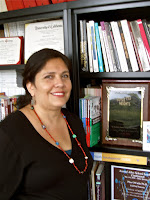
Pilar O'Cadiz
A: Talk to them, hire from their community so staff can communicate with Latino parents and understand their cultural background, appreciate their cultural knowledge, and know how to bring it into the afterschool program as an asset and resource for effectively implementing a culturally competent youth development approach. Make their history and knowledge part of the curriculum by having students interview their family members, document their oral histories, gather the artifacts of their culture, learn about their origins, the geography of their immigrant journey, and the narrative of their story. Use an interdisciplinary approach that takes from the universe of academic knowledge, concepts, tools and strategies for recording, organizing, and analyzing the everyday experiences, and rich histories of your students and their families.

They will then find greater purpose in learning to read and write, doing math and studying geography and history. They will see themselves reflected in the curriculum more than ever before; and you will be surprised how powerful that is for many immigrant children who often are implicitly or explicitly made to feel “alien” through curriculum practices that make no reference to who they are and where they come from, and far too often disparage them. 

I recall, for example, how my 7th grade teacher announced at the beginning of our World History course, how we would skip the chapter on Latin American ancient civilizations as “that chapter is not important,” and go straight to studying about the Greeks. I knew this was wrong, but I was afraid to protest. Fortunately, I was able to overcome that trauma when I ran an afterschool program in the early 1990s in Boyle Heights, a Latino immigrant enclave east of downtown Los Angeles. There, we (students, parents and UCLA undergraduates) all dove into an exploration of our historical heritage, family histories and community reality using art as an expressive vehicle (O'Cadiz, 2003). That was redemption! This experience solidified my faith in afterschool as an alternative educational space that can help shape the learning experiences of Latino and other so called minority, at-risk youth, by shifting from a deficit paradigm to a focus on our assets.

Q: Do Latino youth have unique needs that we should be aware of in afterschool? What role is afterschool uniquely positioned to take on to address the needs of these youth? 

A: I think Latino youth have many of the same needs of all youth: to be respected, nurtured, and intellectually challenged, to be creative and physically active, to be lovingly guided toward independence while developing a healthy sense of self and civic consciousness, to navigate and actively take part in an increasingly technological and global society. 

Despite the fact that Latino youth now represent the majority of students in California public schools, they still experience discrimination from the dominant mainstream society. Afterschool programs need to highlight contemporary and historical leaders, scientists and artists from our immensely diverse communities for Latino youth to recognize role models they can look up to, and bring them face to face with their community leaders through field trips to museums, concerts and visits with elected officials, professionals, artists and community activists. In this way, afterschool has an essential role as a “transformative space” (Noam, 2004) for immigrant youth and their families to embrace their humanity, navigate the broader society with confidence, and assert their citizenship.

The afterschool space should be one where Latino youth can express their unique identities and interests and take on leadership roles—especially through arts-based curriculum and service learning. Afterschool programs can allow Latino youth to explore beyond the barrio boundaries. This is particularly important since many Latino and immigrant families hesitate to leave the haven of their enclave, and often lack the means of transportation, economic resources and social network to offer their children experiences outside the community. 

Q: What role should afterschool assume for assisting ELL youth?

A: Make it safe to speak Spanish. Provide examples of the benefits of bilingualism by keeping adults (young and older) that are fluent in both languages in their midst. Give them plenty of opportunity to speak English, through collaborative group work, and performance [art, music, plays, singing, poetry readings etc.]. Make literacy an integral part of the afterschool program culture and curriculum. Always be reading, writing, speaking without judgment for accents or a loss of words or use of Spanglish. Provide the peer and adult mentorship that will allow English Language Learners to learn English well, without feeling shame for their Spanish ability. Promote bilingualism as a valuable asset.

Q: Which of the Learning in Afterschool principles do you deem relevant to Latino youth? 

A: They are all relevant. None are more so than others. I would only emphasize that as educators we need to recognize that culture and politics matter. There is no education without culture and there is no apolitical education, as Freire (1970) asserts. Either we work to replicate limiting, and even oppressive, conditions for learners or we create experiences that empower them to fully realize their potential as individuals and to engage in transformative action that promotes justice and equity. I think that the LIA principles are essential to guaranteeing an education for freedom and for fully realizing the promise of all students and that of our great nation of immigrants. 

-------------
A first generation Mexican American, Maria del Pilar O’Cadiz completed her MA in Latin American Studies along with an M.Ed. in Curriculum, Administration, and Teaching at UCLA, where she earned a doctorate in 1996. In 2000, she became executive director of the California After School Project (CASP) at the University of California, Irvine and later at California State Polytechnic University, Pomona, working in partnership with the Los Angeles County Office of Education (LACOE) providing trainings and technical assistance for after school programs across Los Angeles County. She currently works as a Project Scientist at the University of California, Irvine in the Department of Education. 


Wednesday, December 15, 2010

Senate To Vote on 21st CCLC and Role of Community Organizations

By Sam Piha

After much feedback from the field, the Senate is poised to vote on increasing funding for 21st CCLCs. They have also required partnerships with community organizations on the use of 21st CCLC funds to expand the school day – a concern that was discussed in prior posts on this blog. Use this link to get a full summary on this language from the Afterschool Alliance. You can click here.

Tuesday, December 14, 2010

Serving the Needs of Latino Youth

By Sam Piha

Pilar O'Cadiz
The California Department of Education recently announced that Latino students now represent the majority of students in our public schools. We asked Pilar O'Cadiz, from the University of California at Irvine and a longtime researcher and evaluator of afterschool programs, to share her thoughts on the implications of this announcement for afterschool program providers. We abbreviated Pilar's answers, but we offer the complete text of her responses to our questions. A more complete bio follows this interview. 

Q: What do you think are the implications for this recent announcement by CDE?
A: Given that over half of this “new” majority of students will drop out by the time they reach high school (Orfield, 2004), a huge implication is the need to resurrect the vast research and practical knowledge base on the essential role of culturally relevant approaches in all educational endeavors. 

A key role for afterschool is to act as a liaison between the school and community. This means working to integrate the history, knowledge and resources of the community into the afterschool curriculum and program. It also means serving as a gateway into the institutional culture of the school, taking advantage of the fact that afterschool workers see the parents on a daily basis, are more likely to be from the community, and speak their native language.

The afterschool community must continue to create career pathways for the immense talent pool that exists within the Latino community. This will allow us to advance and carry the afterschool movement using the imagination and perseverance that our youth and young adults working in the afterschool field have already demonstrated. This is why I love the LIA Youth Ambassadors. We need more of these types of opportunities for Latino and all youth and young adults working in the field. 


Q: Over the last 20 years you have been researching the views and needs of Latino parents in regards to afterschool programs. What have you learned?

A: Nearly all the Latino parents I have interviewed and worked with over the years expressed as the most important reason for coming to this country, the betterment of future prospects for their child, their education, and quality of life. They fully recognize the value of afterschool programs in helping them achieve their dreams. 

Parents also express a desire to be involved in their child’s afterschool program, but opportunities are rarely afforded. I believe that this is largely due to language and cultural barriers, or erroneous assumptions about their lack of disposition. Afterschool programs need to create opportunities for Latino parents to be involved in a range of ways; not only as volunteers helping with fundraising events or watching kids during snack time, but also as educators. Program leaders can help parents define their aspirations for their children, identify their own talents and ways they can offer enrichment experiences for youth, and develop a voice in the advocacy for their children’s education. 

I think that it is important that the afterschool field help Latino parents comprehend what constitutes quality programming, as delineated in the LIA principles. Too often, Latino parents confuse homework completion with program quality. They should be made aware of the valuable learning that can take place during a good, interactive enrichment activity. The best way to do this is by engaging parents in similar activities as a parent group or alongside children and youth.

TO BE CONTINUED...
-------------

A first generation Mexican American, Maria del Pilar O’Cadiz completed her MA in Latin American Studies along with an M.Ed. in Curriculum, Administration, and Teaching at UCLA, where she earned a doctorate in 1996. In 2000, she became executive director of the California After School Project (CASP) at the University of California, Irvine and later at California State Polytechnic University, Pomona, working in partnership with the Los Angeles County Office of Education (LACOE) providing trainings and technical assistance for after school programs across Los Angeles County. She currently works as a Project Scientist at the University of California, Irvine in the Department of Education. 


Monday, November 29, 2010

Interview with Dr. Willard Daggett

Dr. Willard Daggett
By Sam Piha and Michael Funk

Before founding the International Center for Leadership in Education in 1991, Willard R. Daggett, Ed.D., was a teacher, administrator, and director with the New York State Education Department, where he spearheaded restructuring initiatives to focus the state's education system on the skills and knowledge students need in a technological, information-based society. We caught up with Dr. Daggett at the Step Up high school afterschool conference in San Diego, where he served as keynote speaker. He agreed to answer some questions regarding the learning principles promoted by the Learning in Afterschool project. 

Q: Can you talk about the role of afterschool in education? 
A: Learning in afterschool provides a valuable resource to extend the educational experience of students. We at the International Center for Leadership in Education have identified through our extensive research that for students to maximize their potential, their educational experience must be both rigorous and relevant. The afterschool program provides valuable relevant experiences that help students become engaged in a meaningful way, ultimately leading to success in both school and life.

Q:
What do you see as the unique contributions that afterschool can offer those who are seeking to improve youth academic and developmental outcomes? 
A: During the school day, students are exposed to academics that are important that they master to be successful in school and in life. The reality, however, is that unless students can see relevance to what they are learning and become personally engaged in the learning process, they will seldom achieve success in their academic programs. Afterschool programs provide both this relevance and personal involvement so critical to learning.

Q: Which of the five Learning in Afterschool learning principles do you think are important in efforts to reengage young people in their education?
A:
All five principles are critical. They collectively provide the relevance so desperately needed for students to become engaged and for learning to become alive for them. They also provide the deeper understanding and the discovery of learning that is critical for success in school and life.

Q: Are there important trends in school reform that afterschool program leaders should keep their eye on? 
A: Thirty-eight of our 50 states have agreed to adopt a new set of Common Core State Standards over the next three years. Accompanying these standards will be a series of new assessments that are both more rigorous and, equally as important, application based. The afterschool programs will provide the application of those academic skills that will be essential for students to be able to be successful on the new assessments. 

-----------------
Dr. Daggett is CEO of the International Center for Leadership in Education and is recognized worldwide for his proven ability to move education systems towards more rigorous and relevant skills and knowledge for all students. He has assisted a number of states and hundreds of school districts with their school improvement initiatives. Dr. Daggett has also collaborated with education ministries in several countries and with the Council of Chief State School Officers, the Bill & Melinda Gates Foundation, the National Governors Association, and many other national organizations.

Monday, November 22, 2010

The Importance of Recess

By Sam Piha


Nicholas Thacher is the head of school at Dedham Country Day School in Dedham, Mass. and has been a school principal or headmaster for more than 30 years. He writes a compelling defense of the place of recess in young people's learning, entitled "Eliminating Recess Hurts Kids".

"The latest research on learning and cognition, summarized in a recent New York Times Magazine article online, gives increasingly persuasive evidence that exercise and fitness have positive effects on the immature human brain," Mr. Thacher writes.

As schools back away from recognizing the importance of fitness and play, and inner city kids have less access to safe spaces for play, how should we respond in our afterschool programs?

Thursday, November 18, 2010

The Importance of Movement and Dance

By Sam Piha


The front page of Education Week (November 17, 2010) featured an article entitled "Schools Integrate Dance Into Lessons," citing that "the infusion of the arts appears to be gaining a stronger foothold at a time when advocates are struggling to ensure time and support for their disciplines."

We know through Howard Gardner's work and new brain research that movement is an important reinforcement for learning. We also know that young people do not get the opportunity to be as physically active as they should be. It is important that afterschool programs are not shy or apologetic about integrating movement and physical activity into learning in the afterschool hours. How does your program use physical activity to contribute to the learning experience?

Learning in Afterschool Ambassadors
demonstrating that learning is active

Tuesday, November 9, 2010

November 2010 Election Results and Afterschool

By Sam Piha

The November 2010 election results will definitely impact conversations in Washington, D.C. and Sacramento regarding education and afterschool programming. Followers of the Learning in Afterschool project can go to the "New Developments in Education and Afterschool" link on the Learning in Afterschool website. This page offers links to afterschool advocacy groups that are following these developments closely. We invite any comments from our readers regarding the changing political landscape at the state or national level.

Monday, November 1, 2010

Interview with Lucy Friedman (TASC) on ELT and Future Trends in Afterschool


By Sam Piha
Redefining afterschool programs as “expanded learning time” (ELT) has made its way into discussions regarding the reauthorization of No Child Left Behind and the 21st CCLCs. Below is a brief interview with Lucy Friedman, President of The After-School Corporation (TASC) in which she offers her views on the growing ELT conversation and on important new trends in the field of afterschool programming. Lucy is a member of the National Advisory Group for the Learning in Afterschool project. A more complete bio follows this interview.

Q: How do we maximize the opportunities and minimize the threats that ELT presents to afterschool program providers?
Lucy Friedman
A: Those of us who have been working in the after-school hours know that schools can’t provide all kids with opportunities for active learning, exposure to new horizons, and support for their healthy development in a 6-hour school day, 180 days a year.We maximize this opportunity and minimize risks by unleashing the power of community partners to help schools expand not just the hours, but the quality of kids’ learning experiences. If we want to find ways to deepen student engagement, to give kids a greater sense of ownership over their learning and to tap into their dreams and aspirations, we need to re-engineer the school day so that it’s not just more of the same. We need to engage parents and community partners, which is the foundation for TASC’s Expanded Learning Time / New York City model.

Thus, federal policy on 21CCLC should clearly state that:
  • Schools that expand learning time should partner with community organizations.
  • Community organizations have a right to apply for 21CCLC funds.
  • States and localities will have flexible choice in how they deploy 21CCLC.
As you know, the evidence is compelling that the social, emotional and other supports community organizations offer students contribute significantly to their cognitive growth and academic success. The best expanded learning time approaches will embrace and build on effective after-school programs through genuine, fully integrated school and community partnerships.

Q: How might the Learning in Afterschool principles be useful in framing the ELT conversation?
A: The LIA principles make concrete the kind of learning that can and should happen beyond traditional school hours: active, collaborative learning that prepares kids for careers we can’t even imagine.


Q: There is always a lot going on in the growing and changing afterschool movement. What is most on your mind right now outside of ELT?
A: I’m excited by the growing enthusiasm I see among policymakers, educators and community leaders for greater informal science opportunities in the hours beyond the traditional school day. We know now that with the right training, community educators can be terrific informal science leaders and role models for kids who have been under-represented on science and technology career tracks.

Q: What do you see as the approaching trends in the field that we should keep an eye on?
A: The optimist in me believes that the pressure on state and local budgets will cause more leaders to want to work at rationalizing funding streams and building partnerships. We’ve got to do that if we want to reach more kids and get better results from every dollar we invest in out-of-school time opportunities.
In New York City, we see more principals developing an appreciation for what community partners can do to support kids’ development and higher achievement. That trend will continue to grow.

--------------------
Lucy Friedman is the founder and President of The After-School Corporation (TASC). TASC is dedicated to giving all kids opportunities to grow through after-school and summer programs that support, educate and inspire them. She has served on a variety of advisory commissions and boards, including the National Academy of Science, the Afterschool Alliance and Bryn Mawr College. Lucy has been a member of The Coalition for Science After School Steering Committee since 2004 and served as its chair from 2006 to 2008. 

How the Meta Settlement Can Benefit Afterschool Programs

Source: www.pexels.com This blog by Dan Gilbert has been reposted from Afterschool Alliance’s Afterschool Snack Blog. Meta's new settlem...