Monday, April 25, 2022

Rethinking Afterschool

By Sam Piha

Michael Funk
Michael Funk joined the California Department of Education (CDE) in 2012 to serve as the director of the expanded learning division. He oversees over $800 million in state and federal grants supporting over 4,500 afterschool programs in California. He also leads the newly created $1.75 billion Expanded Learning Opportunities Program, which funds every local educational agency in California. The Governor's current budget proposal for 2022-23 expands that funding to $4.4 billion.

Michael recently joined other afterschool leaders in a discussion addressing the worker shortage in afterschool. During this webinar, Michael offered several interesting comments, some of which are presented below. 

AFTERSCHOOL WORKERS as "COMMUNITY EDUCATORS"
What I saw during the pandemic were K-12 educators who were all of a sudden working alongside afterschool workers. Suddenly districts and education leaders were calling on afterschool community educators because they really knew the families and communities. And what I saw was, especially in these learning hubs, when schools closed, there was no division between school and afterschool or "community educators." And that's the phrase I'm using now more than school-based, expanded learning time workers. I'm using the phrase community educators. We are using that phrase more than youth workers or afterschool workers. They are educators, and they are from the community. 

THE VALUE OF AFTERSCHOOL
Most of our professional K-12 educators, not all, are from outside the neighborhood surrounding our schools. They drive in from other areas, while most of our community educators are from the neighborhood that houses our students' families. What we saw during the pandemic was a recognition from K-12 educators that "Wow, these people have something to bring. These people have something to offer that can help support the whole child in a compelling way." I am heartened that expanded learning time is increasingly being recognized as something powerful, effective, and transformative. Since the beginning of the pandemic, I'm seeing more educational leaders look at expanded learning as a field differently. Over time, will gravity try to pull us back to those old divisions? Yes, but I'm also seeing us working with great enthusiasm and passion for seizing this moment and not going back to how things were.

Source: Play Captains
AFTERSCHOOL WORKERS: SHOWING UP AS WHO WE ARE
We've often talked about afterschool as a teacher pathway as if we're going to turn these afterschool folks into K-12 teachers and help them fit into the educational system. While I have seen community educators become amazing teachers, that can’t be the only pathway into education. We need to have community educators/ afterschool workers in the educational system, showing up as who they are and not trying to turn them into something else.

I've said this for years now that afterschool workers were always told they need to align themselves to the school day and they need to ask the school administrators what they want them to do. They need to show up, hat in hand, and say "We're here to serve, what do you want us to do?" I think it's time to stop that. They need to show up as their best selves, as who they are with their assets and know-how.

RETIREES AND THE AFTERSCHOOL WORKFORCE
I think we've often overlooked some of the places with the most fertile potential for future afterschool workers, because, as a field, we tend to have a bias about who should be an afterschool worker. It's an implicit bias I'm sure, but how many of us think about recruiting retirees? When I managed the Sunset Neighborhood Beacon Center in San Francisco, we launched Experience Core Bay Area. We launched this effort to target retired adults to be line staff and site coordinators in our afterschool programs in Oakland. And what a phenomenal experience that was to see people with 20 years left of active, engaged energy working in afterschool programs.

Source: AARP
In our programs, we had retired professionals, many people of color from that neighborhood. I contend that one of the keys to program quality is an intergenerational workforce. Imagine how rich it would be if you had a 55-year-old retired executive working with children alongside a 25-year-old college student. Imagine the cross-mentoring potential between the younger staff and the older staff. One of my fondest memories was when one of the older staff, about 15 years ago, brought a portable record player to the elementary afterschool program. The kids were fascinated because they had never seen a record player before. And it opened this amazing world of opportunity. 

PURPOSE, NOT DOLLARS
Often, I hear people talk about the afterschool workforce shortage, they speak in technical terms - "They're going to get $2 more an hour at Starbucks," or "This company is going to give them a little bit more money here or there," or "They can get a scholarship over here." I had this compelling sense that we're missing the opportunity if we don't invite people to a higher purpose. If we see youth work not as a job, but as a pathway to their purpose, we can frame an expanded learning job as a portal to a career in education or transforming young people's lives. 

I suspect that the people you want working in your programs are the people who have a sense of purpose and care more about that than what the wage is. I'm not saying we shouldn't pay people well. Youth work has to be a purpose-driven occupation. I've talked with many after school leaders this week about how to get their afterschool staff into a living wage with the resources we have and I'm committed to that, also.


Michael Funk
, Director of the Expanded Learning Division (EXLD) for the California Department of Education (CDE), was appointed in January 2012. He was charged with developing a strategic plan building upon Expanded Learning to create programs that maximize outcomes for youth, families, schools, and communities. This work led to the Statement of Strategic Direction, identifying four key strategic initiatives. Michael brought together stakeholders from the EXLD field to finalize the plan and has continued to prioritize incorporating those principles of high-quality learning into all aspects of the work of EXLD. Michael is leading the effort to support Local Educational Agencies across California to implement the new Expanded Learning Opportunities Program. 

Prior to this role, Michael was the Founder and Executive Director of the Sunset Neighborhood Beacon Center in San Francisco, which provides engaging programs to youth and adults. While serving at SNBC, Michael founded Experience Corps Bay Area and represented Community Based Organizations on the California Utilities Commission, Teleconnect Fund Administrative Committee, and served on CDE's Before and After School Advisory Committee. Michael also co-led the Learning In Afterschool and Summer initiative, a partnership with Temescal Associates.

Monday, April 18, 2022

COVID and Afterschool: Long Term Effects

Source: Good Morning America

By Sam Piha

When the COVID-19 pandemic struck in 2019, many of us thought that this would only last a couple weeks. For some time, we thought of it as an acute crisis, as opposed to a chronic crisis. When communities were locked down and schools were closed, our views changed. Afterschool programs quickly pivoted to ensure that their youth and their families received food, supplies and needed resources for learning.

Recently we surveyed 37 afterschool leaders (directors, coordinators, trainers, etc.) to learn more about how afterschool programs were affected by the pandemic over time. We asked two questions: “How has COVID-19 changed your afterschool program?” and “Do you think these changes are permanent?”

Below we offer a summary of what we learned and cite some direct quotes from respondents. 

Negative Impacts

Many responded that the pandemic created a staffing shortage (over 59%) and resulted in a reduction of afterschool services and attendance (both 30%). They reported other negative impacts on their programs, including

  • the elimination of field trips, 
  • decrease in budget and volunteer resources, 
  • decreased connection with the community, parents, and youth, 
  • increase in participant waitlists, 
  • increase in the need for SEL services, and
  • staff burnout.
Source: www.ibcces.org
"It has increased our waitlist significantly, which wouldn't be quite as severe, but hiring has been increasingly difficult and I need to open another class, but I can't find anyone to hire. Without staff I have to keep 20-22 kids on the waitlist that would otherwise be enrolled." – Afterschool Program Coordinator, California

"Covid protocols have changed the family interaction with our program as we have not been able to hold our in-person family events." – Afterschool Program Administrative Secretary, California

Source: Middlesex YMCA

The negative impact on schools included a shortage of teachers, substitutes, and school-bus drivers. The negative impact on youth included 

  • loss of school and peer relationships, 
  • fear of COVID, and 
  • learning loss. 

"COVID has shifted our focus to social and emotional support to students throughout the school day, especially in their classrooms and during non-structured times like lunch. Intentional community building is a big part of this kind of support -- with school-wide activities and initiatives to promote a sense of well-being. We are using contract funds to bring in mental health clinicians to support both students and families." – Afterschool Program Director, California

They also reported negative impacts on families, including family relationships and an increased demand for afterschool programs.

"COVID-19 has created a demand from families for after school care, families need a safe place for their children to be while they work. Families have more needs, not only for children to be safe after school, but for a place that is able to provide supper/snacks, assistance with homework and before school care as more and more families begin to work either graveyard or 2nd shifts in places of employment. Before and after school care programs offer many families working in education the ability to drop off their children at their own schools where they work." – Afterschool Program Staff, California

Positive Impacts

Many also reported positive impacts including a stronger relationship with host schools and a greater appreciation among parents and educators regarding the support offered by afterschool programs.

"The families in the community are coming to realize how important after school programs are for them to be able to have a safe place for their children." – Afterschool Program Coordinator, California

"When the pandemic started and schools were closed, the afterschool coordinators were key players on making sure the families received information and schools knew what families needed to support learning at home. From there, the leader’s roles changed to case management and technology ambassadors. We partnered with the district and other CBOs to ensure the families could have their basic needs met. These actions strengthened our relationship with teachers, school administrators and families." – Afterschool Program Director, California

"We developed more flexibility and creativity in delivering programs and serving our students. Our adapting to create and provide a large number of valuable virtual classes was greatly appreciated by students, parents, and school administrators." – Afterschool Provider, California 

Permanent?

When asked if these impacts were permanent, most thought they would eventually fade, but not for 2 or more years.

"I am hopeful that these impacts are not permanent, however, I expect it to take roughly 2 years to get back to where we need to be." – Afterschool Program Director, California

"I don't think that these negative impacts will be permanent. However, I do think that, academically, it will take a considerable amount of time to get these students back up to grade level. Emotionally, it may take years for these kids to recuperate from having a stifled social life due to the pandemic." –Afterschool Program Coach, California


YOU CAN SAY THANKS!

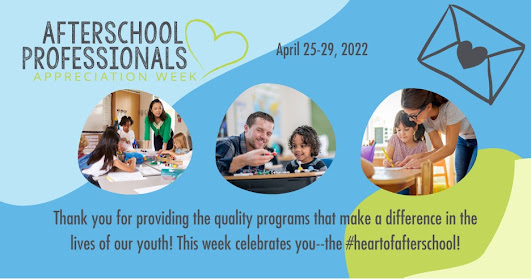
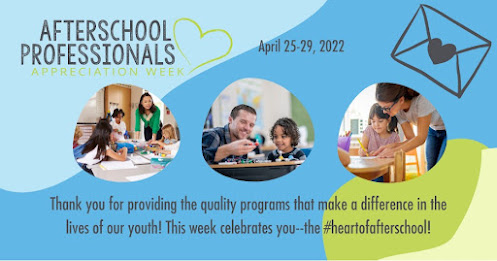
When the COVID-19 pandemic struck in 2019, we gained a new understanding of why afterschool workers are essential workers. Over the last two years, afterschool programs have pivoted to meet the new needs of schools, youth and their families. Afterschool Professionals Appreciation Week (April 25 – 29, 2022) is a perfect time to say “thanks” to afterschool workers. 

Begin planning how you will celebrate and acknowledge afterschool programs. To learn more, access talking points and a communication toolkit, go to https://naaweb.org/ideas.


Monday, April 11, 2022

Why Write? “Poetry Is the New Best Medicine”

By Sam Piha

Providing opportunities for youth to reflect on and express their thoughts and feelings are critical strategies for any afterschool program. These opportunities are essential to promoting youth voice, healthy youth development, social emotional skills and resiliency, especially for those who have experienced trauma. The integration of writing is a very powerful way to do this. Strategies and activities include poetry, spoken word and journaling. Previous LIAS blogs focused on poetry and journal writing. 

“Offering young people meaningful writing opportunities allows them to share their ideas and using their voice helps them communicate and feel agency.” – Afterschool Provider ED, California

Peter Kahn
Peter Kahn has taught English and spoken word poetry to thousands of students at Chicago's Oak Park and River Forest High School since 1994. We first became aware of Peter’s work while listening to NPR. We contacted Peter and he agreed to participate in a Speaker’s Forum entitled, Meaningful Writing in Afterschool: Poetry, Spoken Word and Journaling. 


Later we saw him featured on the PBS Newshour where he gave his Brief But Spectacular take on how spoken word poetry amplifies student voice. “I used to hate poetry. I hated it as a student. I hated it as a teacher”, he said. “I was inept at teaching it. And in the mid-’90s, I brought in a former student, Jonathan Vaughn, to help me out. And he came in. And he mentioned the idea of a poetry slam. And my students asked if we could do that. So, we went ahead and did a poetry slam. And the student with the lowest grade in my class ended up winning it. And everybody looked at the kid differently after that. And he looked at himself differently, more importantly.”

Source: PBS


Inspired by the potential of spoken-word poetry to engage youth, Kahn created an afterschool spoken word club at his high school. And for over 20 years, the club has created space for students to engage in storytelling.

In collaboration with his current and former students, Kahn has released an anthology, Respect the Mic: Celebrating 20 Years of Poetry from a Chicagoland High School. 


Below is a poem by one of Kahn’s former student poets, Abby Govea, high school class of 2021.

WHY WRITE?

I write because laughter is not the best medicine.
I used to spew jokes sporadically because I thought it was.
The more I puppeteered my smile
the further I was convinced
my anxiety would peel away like old skin.
Humor was a succulent treat my irrational nerves craved.

There were too many thoughts I wanted to disperse
that couldn’t be glazed in giggles.
They crammed in my brain like paper in Dad’s file cabinet
never to be seen or read aloud.
So I turned to the unexplored source
I knew comforts my brother.

Euphoria jerked through the grooves of my palms
watching my brother aggressively
write away his emotions and craft perfection.
I wanted to feel the same way.

Fingers clenched the pencil
as my hand synched with the rhythm
of my thoughts thudding against my skull.
Anxiety leaped into the creases of the paper
as confidence skimmed the doubt of writing’s benefits
and inscribed the cemented sentence:
It’s no joke that poetry is the new best medicine.

Excerpted from Respect The Mic: Celebrating 20 Years of Poetry From A Chicagoland High School. Copyright © 2022 by authors. Excerpted by permission of Penguin Workshop. All rights reserved.

Monday, April 4, 2022

A Time to Say "Thanks"


By Sam Piha

When the COVID-19 pandemic struck in 2019, we gained a new understanding of why afterschool workers are essential workers. Over the last two years, afterschool programs have pivoted to meet the new needs of schools, youth and their families. 

“What we saw during the pandemic was a recognition from K-12 educators of, ‘Wow, afterschool staff have something to bring. These people have something to offer that can help support the whole child in a compelling way.’ I am heartened that expanded learning time is increasingly being recognized as something powerful, effective, and transformative. Since the beginning of the pandemic, I'm seeing more educational leaders look at expanded learning as a field, differently.” – Michael Funk, Director of Expanded Learning, California Department of Education 

Afterschool Professionals Appreciation Week (April 25 – 29, 2022) is a perfect time to say “thanks” to afterschool workers. 

According to the National Afterschool Association, “Afterschool Professionals Appreciation Week is a time to recognize, appreciate and advocate for those who work with young people during out-of-school hours. The week is marked by celebrations and public relations efforts encouraging appreciation and support for all the afterschool professionals who make a profound difference in the lives of young people.

Afterschool Professionals are skilled individuals who work with children and youth in diverse school and community-based settings to provide a wide variety of positive developmental relationships and experiences during out-of-school hours. Currently, in the U.S., an estimated 850,000 individuals are practicing members of the afterschool profession.

An estimated 10.2 million children participate in afterschool programs each year, and for every child in an afterschool program, there are two more waiting to get in. Every young person deserves quality afterschool experiences that positively impact their development. It takes skilled professionals to create these experiences. Because of the important role afterschool professionals play in the lives of kids, they deserve recognition and support.” 

“When the pandemic started and schools were closed in March 2020, the afterschool coordinators were key players in making sure the families receive information, and schools knew what families needed to support learning at home. From there, our program leaders' role changed to case management and technology ambassadors. We partnered with the district and other CBO's to ensure the families could have their basic needs met. These actions strengthened our relationship with teachers, school administrators and families.” – Youth Worker, Bay Area Community Resources

Begin planning how you will celebrate and acknowledge afterschool programs. To learn more, access talking points and a communication toolkit, go to https://naaweb.org/ideas.


COMING SOON, April 13, 2022 - Meaningful Writing in Afterschool: Poetry, Spoken Word and Journaling
Providing opportunities for youth to reflect on and express their thoughts and feelings are critical strategies for any afterschool program. These opportunities are essential to promoting youth voice, healthy youth development, social emotional skills and resiliency, especially for those who have experienced trauma.

The integration of writing is a very powerful way to do this. Strategies and activities include poetry, spoken word and journaling. This Speaker's Forum will focus on the above strategies. To learn more and register, click here.


Monday, March 28, 2022

California Teaching Fellows: Afterschool as a Teaching Practicum (Part 2)

Source: www.ctff.us

By Sam Piha

We interviewed Malia Villarreal (Public & Strategic Development Manager) and Mike Snell (CEO) at California Teaching Fellows Foundation (CTFF) which views afterschool programs as a valuable experience for future teachers. Below is part 2 of this interview. You can view part 1 here.

You can view our paper on this topic here. We also conducted a webinar, which you can view here.

Q: What are the responses of teaching fellow participants to the afterschool experience and what results have you seen?    

A: Reflecting on her experience as a student-teacher during the pandemic, Erika made connections on how her experience and training in the afterschool program enabled her to rise to the occasion. Erika expressed that the culture of afterschool taught her some very important lessons, “afterschool never happens how it is supposed to, but I was taught no matter what, it (the after-school program) needs to work out for the students.” She learned early on that she must always have a plan A, B, C, and D. Her experience as a tutor first, and later as a site coordinator taught her to think on the spot and basic classroom management skills; which she admitted didn’t come naturally to her in the beginning. It took a lot of coaching and patience to master those skills. Looking back on her journey in afterschool, Erika revealed she never would have gone through with pursuing a teaching career if she didn’t have the opportunity to practice and receive consistent feedback. 

Trainings during the Teaching Fellow Academies really stuck with me, and I had the opportunity to directly apply it. There were Ah-ha moments when I went back to my school site and would witness how what I was taught was all true.”                  – Erika Martinez


Erika stated the cycle of training, hands-on practice, and feedback were the keys to her success. Needless to say, Erika credits much of her current success to her time spent working in expanded learning programs. 

Source: www.ctff.us

Q: Is this program particularly important now as a result of the COVID pandemic?

A: COVID-19 continues to teach us many new lessons while reinforcing much of what we already knew as educators and humans. Now more than ever, students need social and emotional support from our expanded learning and school staff, and our working parents need a safe and supportive environment for their children during the critical out-of-school time hours. 

COVID-19 has exacerbated the teacher shortage crisis and we’re seeing record college dropout rates which is a recipe for a student equity disaster (Carver-Thomas et al, 2021). Our role as a community benefit organization is to elevate the voices of our two critical stakeholders: K-12 students and our college students (Teaching Fellows). We know our community needs and deserves highly qualified and diverse teachers, especially in our historically underserved communities. Our experience working with diverse first-gen college students for the last 20 years has taught us that despite their navigational capital, managing the process of graduating college and entering a credential program is complex. 

The pandemic has made college even less accessible to students. When we ask Teaching Fellows why they’re dropping out of college and teacher credential programs, they say “I can’t afford college anymore.” Being mostly first-gen college students, our Teaching Fellows need to be able to work and support their families while they attend college. They say their largest barriers are test and tuition costs, inconsistent class schedules that don’t allow them to work, credential programs/college classes being (geographically) too far from where they live, and an overwhelming feeling that they do not belong. 

Expanded Learning programs and models like the CTFF have tremendous opportunities to challenge traditional teacher education models, to work to align systems that serve youth and communities and share our knowledge and experiences to further this important work and foster a sense of belonging.

MORE ABOUT... 

Malia Villarreal, Public & Strategic Development Manager, California Teaching Fellows Foundation has worked in the expanded learning field for six years at the CTFF where she has worked on a plethora of projects and strategic initiatives. She has graduated over 100 college interns in an innovative pipeline that yields talent and champions of the out-of-school time field in the Central Valley, and has built relationships with local, state, and federal elected officials, multisector stakeholders, and community influencers to promote afterschool programs and the California Teaching Fellows model in the San Joaquin Valley and beyond.

Mike Snell, CEO, California Teaching Fellows Foundation is the Chief Executive Officer of CTFF. The mission of CTFF is to inspire next-generation leaders with a passion for teaching and learning while impacting the lives of youth. Mike’s personal mission is to link talent to opportunity in the kindergarten through the college pipeline. Mike invests a significant portion of his off-work hours serving and supporting organizations aligned with his personal and professional goals and making a significant impact in California’s Central Valley. Mike serves and has served on various committees at the California Department of Education Expanded                                     Learning Division.

Erika Martinez, Teaching Credential Candidate and Former Teaching Fellow, is a first year, first-grade teacher at Williams Elementary. She is currently working on her Master’s in Social-Emotional Learning. She recently graduated from the Fresno Unified Teacher Residency Program through National University, where she obtained her Multiple Subject Teaching Credentials. Prior to that, she attended Fresno Pacific University, where she completed her Bachelor’s in Liberal Studies. She has two years of experience teaching Drama through Fresno Unified School District (FUSD), and six years of experience working in afterschool programs through California Teaching Fellows Foundation (CTFF) where she gained nearly 3,000 hours of hands-on experience and more than 120 hours of professional and personal development. 

Tuesday, March 22, 2022

The War in Ukraine and Afterschool

Source: How to Talk to Kids About the War in Ukraine:
4 Answers & Tools Parents Need, From a Parenting Educator
By Sam Piha
The coverage of the Russian invasion of Ukraine has dominated TV and social media, resulting in horrific images of buildings exploding in fire, families bloodied and injured from missile attacks, and fearful children and parents attempting to flee to safety. This is being viewed by children and teenagers as well as adults. 

Foundation to every afterschool program is promoting a sense of emotional safety and reliable information. We believe this includes how to talk to kids about war and how to decipher real vs. fake news. Below we offer some thoughts and resources to assist afterschool leaders. 

Speaking With Kids About the Ukraine War

Below are some tips on how to discuss the Ukraine war:
  • First and foremost, educate yourself on Ukraine’s history and the war itself (there are good articles and videos on the internet- be sure they are reliable) and process your emotions first.
  • Consider the developmental and age levels of your youth.
  • Ask what your children have heard already?  How did that make them feel?
  • Where did they get this info?
  • Validate feelings while stressing safety.
  • Ask them if they have any questions about what is going on. 
  • Respond with honest reassurance & don't discount fears. 
  • Encourage youth to feel a sense of agency about how they can make a difference. 
  • Avoid exposure to graphic images & repetitive media coverage. 
  • Recognize that some children may be at greater risk of distress (especially true of youth who have experienced trauma or a family history of fleeing danger).
Additional Resources: 
(Note: Some of these resources are written for family members and would serve as a good handout.)

Source: New York Times
Social Media

The Russian invasion of Ukraine has also brought with it a deluge of disinformation and misinformation, and fabricated news, images, and video, via social media platforms. 

“One big difference with the war in Ukraine is how prominent TikTok has suddenly become in spreading information via video—both real and fake. TikTok is a major source for news for teens and young adults.” - Eisha Buch, Common Sense Media 


Addressing Disinformation

“If the Russia-Ukraine conflict is the world’s first TikTok war, then your youth may be unwittingly taking in a lot of mis- and disinformation. This article, “TikTok Is Gripped by the Violence and Misinformation of Ukraine War,” might be a useful starting point for raising the topic with them, perhaps after first asking students to share some of what they know — or think they know — about the war from their social media feeds.”
- New York Times

Abigail Gewirtz, author of How to Talk with Kids About Scary News, advises, “You start by talking about social media. In times of war and threat, social media can be an incredibly valuable tool for people who don’t have access to regular news, like those in Ukraine, to be able to communicate with others. However, as we all know, social media can be a very dangerous source of misinformation, and our kids are vulnerable to that misinformation because they don’t know what’s fact and what’s fiction...and sometimes we don’t either. It’s really important for parents of kids of all ages to help children understand that there is fact and there is hearsay—and for them always to come to you to check the facts.”

Additional Resources:
One way to support kids to help them feel part of the solution is by offering opportunities to express support or “help”. Obviously, any activities should be aligned with the age of the participants. For example, youth could:
  • Create pictures or posters to express support or educate others. 
  • Look for age-appropriate information together.
  • Do projects to raise money for charities supporting Ukraine.
  • Send pictures or letters to refugee families.
  • Middle- and high-schoolers might participate in a peaceful demonstration of support for Ukraine.
  • Families can also join together to attend a local Ukrainian vigil or send money to charitable organizations.
“A lot of children want to help—and it’s important to provide ways for them to do so in an age-appropriate way…Turn the problems into ‘what can I do?’ The healthiest thing that helps people cope is action.”- Mary Alvord, PhD, Founder of Resilience Across Borders

Additional Resources:
Source: #KidsDrawPeace4Ukraine


Bias, Race and Discrimination 

Source: www.cnn.com

“Some have criticized certain reporting on Ukraine as racist and called attention to story framing and word choices that portray 'the invasion as the sort of thing that happens in poor countries, but not in Europe.' Even just the sheer amount of coverage, critics say, reveals a double standard in how Western media has covered this war compared to conflicts in other parts of the world.” - The Sift: An educator's guide to the week in news literacy, March 21, 2022

It is important to know that reaction to the war in Ukraine is not without controversy. Many feel that the crisis and war in Syria did not attract the same worldwide support. Also, there were reports that people of color did not receive the same treatment while attempting to flee the violence in Ukraine. 

“If we decide to help Ukrainians in their desperate time of need because they happen to look like 'us' or dress like 'us' or pray like 'us,' or if we reserve our help exclusively for them while denying the same help to others, then we have not only chosen the wrong reasons to support another human being. We have also, and I’m choosing these words carefully, shown ourselves as giving up on civilization and opting for barbarism instead ... The BBC interviewed a former deputy prosecutor general of Ukraine, who told the network: “It’s very emotional for me because I see European people with blue eyes and blond hair … being killed every day.” - Moustafa Bayoumi, The Guardian

Additional Resources:

Monday, March 14, 2022

California Teaching Fellows: Afterschool as a Teaching Practicum (Part 1)

Source: www.ctff.us

By Sam Piha

We interviewed Malia Villarreal (Public & Strategic Development Manager) and Mike Snell (CEO) at California Teaching Fellows Foundation (CTFF) which views afterschool programs as a valuable experience for future teachers. Below are their responses.


You can view our paper on Afterschool as a Teacher Pathway here. We also conducted a webinar on this topic, which you can view here.


Q: Can you describe how the California Teaching Fellows Foundation (CTFF) works?
A: CTFF at Fresno State University (FSU) links college students with opportunities for paid placements working in afterschool, summer, and regular school day programs in public schools, charter schools, and community centers. These college students gain experience working with school site leaders, students, and families so they know the climate and culture of the school well before becoming a teacher. They’re diverse and have built relationships so they’re well prepared and reflect the community they serve. We also provide ongoing monthly paid professional development via our Teaching Fellow Academies; where tutors gain access to incredible out-of-school time professionals as well as K-12 and Higher Education leaders who help professionally develop them. 

The Teaching Fellow Academies have intentionally provided additional content and training around social and emotional learning supports, trauma-informed practices, and social and cultural pedagogy. In addition to the Teaching Fellows Academies, CTFF offers the DREAM Initiative which provides personal development to Teaching Fellows. Examples of DREAM services are one on one life coaching, CBEST prep workshops, group meet-ups, home buying workshops, financial literacy, a care fund, and so many other great benefits that help Teaching Fellows reach their full potential.

Q: Can you give an example of how CTFF works from the perspective of a teaching fellow?
Erika Martinez
A:
The story of Erika Martinez is a powerful illustration of the Teaching Fellows program and our quest to strengthen and diversify the pipeline of future teachers in the Central Valley. Erika is currently in the Fresno Unified Teacher Residency Program and will be a credentialed teacher with a Master’s in Social and Emotional Learning upon graduation from the school district’s program. Erika will soon join the ranks of hundreds of teachers in the Central Valley who gained early field experience working in afterschool programs through the CTFF. We are proud to call Erika a Teaching Fellows Alumni.

Erika started as a Teaching Fellow tutor working in an afterschool program in 2014. After over two years as a tutor managing a classroom of 20 students, then Erika was promoted to a Site Coordinator where she served for two more years. As a Site Coordinator, Erika managed the school’s afterschool program and a team of 12 tutors and one ASL. Her school site regularly served 220 students a day. In 2020, Erika earned a bachelor's degree in Liberal Studies. While Erika’s story is amazing, she is not unlike many amazing Teaching Fellows who take advantage of CTFF’s model. 

Q: Can you explain how the experience of afterschool workers are relevant to becoming a teacher. What advantages do these experiences offer? 
A: As Erika leaves the CTFF, she takes with her nearly 3,000 hours of hands-on classroom experience, more than 120 hours of professional and personal development via the Teaching Fellows Academies (paid professional development), and a deep understanding of school systems and the communities they serve. Erika represents the demographics we see throughout the Teaching Fellows program: diverse, educated, first-generation, bi-lingual college students, and highly motivated to make a difference in her community. As she graduates from her Teacher Residency program, Erika will be day 1 ready to teach. Erika, like so many Teaching Fellows, has tremendous capital; she is culturally competent, linguistically diverse, aspires for a better future, and is acutely aware of what it takes to work with school-age youth, families, and educational professionals. Erika’s experiences’ like so many others who work in afterschool programs, perfectly prepare her to take advantage of career path opportunities in education and position them well to navigate it. 

Erika Martinez practicing "youth voice and leadership" by signing up her students to attend the Afterschool and Summer Challenge at the state capitol to talk to Legislators and the Governor's Office about the importance of afterschool.  
(Pictured left to right back row: Sanger High School student, Malia Villarreal, Senator Melissa Hurtado, Mike Snell, Erika Martinez, front row: West Fresno Elementary School students)


While teachers have the California Standards for the Teaching Profession (CSTP), fortunately, afterschool (also referred to as expanded learning professionals) have the Learning In Afterschool & Summer’s Principles (LIAS) and California Quality Standards for Expanded Learning Programs. The LIAS and quality standards are the framework we provided to Teaching Fellows who are serving as educators and leaders for students. There are natural similarities between the standards in afterschool and the standards of the teaching profession. While more research needs to be done to connect the afterschool quality standards to the teaching profession standards, it is clear that the pre-service experiences in afterschool programs help leaders like Erika in their pursuits of becoming a teacher. 

END OF PART 1


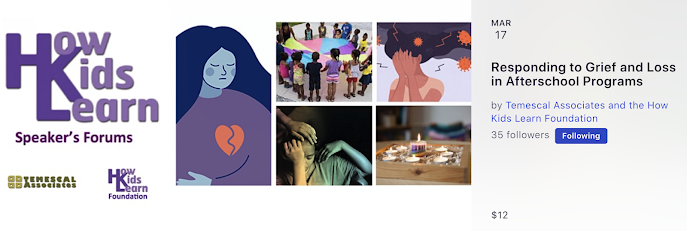
Temescal Associates and The How Kids Learn Foundation will be conducting a webinar featuring a presentation by Brittany Collins and a panel of experts on Responding to Grief and Loss in Afterschool Programs, Thursday, March 17, 2022 from 10:00am - 12:00pm (PST). To learn more and register, click HERE.


Monday, March 7, 2022

How Can Afterschool Support Grieving Youth (Part 2)

Source: Ed Week

By Sam Piha

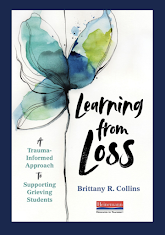
It is important that we understand more about the needs of youth who are grieving or experiencing loss due to the COVID-19 pandemic (deaths and illness, as well as the loss of “normal”), the opioid crisis, the rising gun violence and the racial violence that is plaguing the country. Below we continue our interview with Brittany Collins (read part 1 here), author of the book Learning from Loss: A Trauma-Informed Approach to Supporting Grieving Students. 

Q: What are the effects of grief on young people? Is it a different experience for younger vs. older?
A: There is much similarity between grief responses in all of our brains and bodies; neurologist Lisa Schulman writes in her book Before and After Loss: A Neurologist’s Perspective on Grief, Loss, and Our Brain that grief incites a fight-or-flight response, as well as a depressive response, and impacts nearly every part of the brain. That impact may result in a number of changes in our behavior – from apathy and avoidance to perfectionism and connection-seeking, increased risk-taking to risk aversion. The spectrum is broad and manifests differently in everyone, but in consideration of the ways in which grief impacts young people, it’s especially pertinent to think about the pre-frontal cortex, the part of the brain that controls higher-order functioning – things like forethought, impulse control, emotional regulation. Because children and teens do not yet have a fully developed prefrontal cortex, they may not have full control over these functions even without accounting for grief. But when grief enters the picture and dampens the functioning of the pre-frontal cortex even further, then, especially in adolescent populations, we may see things like an attenuated ability to regulate emotion, attenuated impulse control, increased risk-taking, etc. 

It’s critical to take an adaptation-focused, asset-based lens to these behavioral shifts. Nearly every behavioral change is not only a response to grief but an attempt, and often an innovative attempt, to fulfill an unmet need. For example, a student’s anger might serve them well in a loss context in which they have to defend a parent against an abusive partner; or another student’s connection-seeking behaviors might help them eke out the attention of a bereaved caretaker. In the classroom or afterschool setting, these same behaviors may not prove as helpful because the student is no longer in the context for which the behaviors were developed, but in a grief and trauma context, the brain doesn’t know that – it’s stuck in survival mode. 

Too often, we see grief and trauma responses (e.g. behavioral changes) reprimanded. If we think about issues of restorative justice in schools and the ways in which racialized violence, bias, and assimilation play a role in school discipline, then it becomes even more critical for us to view behavioral changes as adaptations to be respected, not liabilities to control or punish.

Q: What do you mean by "Grief Responsive Teaching"? 
A: Grief-responsive teaching is a pedagogical and interpersonal approach to teaching and learning that integrates science and stories of grief into actionable classroom and program practices that support students’ and educators’ well-being in times of loss.

Because grief impacts the brain, body, and behavior— and, by extension, teaching and learning— grief-responsive teaching seeks to support and empower the whole person, socially, emotionally, culturally, and academically. Recognizing that loss is the most commonly cited traumatic experience among young people, it’s an approach that integrates grief science– and stories of loss– into actionable pedagogical practices that support and sustain all members of a learning community— at and beyond school. For more info and resources, feel free to visit the Grief-Responsive Teaching website here.

Q: Can you give some tips or practices that might apply to afterschool educators?
A: Absolutely. First, I want to acknowledge how critical afterschool programs– and educators– are in grief support. In my book, Learning from Loss, I devote entire sections to the ways in which extracurricular activities like sports, theater, dance, the debate team, etc., can foster a sense of psychologist Mihaly Csikszentmihalyi’s notion of “flow” (which can prove incredibly healing). It can offer students a sense of community and contribution, the attunement and synchronicity that come from working together with others toward a common goal, of feeling like a valued part of a “whole”. It can also provide outlets for positive risk-taking that support identity development and channel grief responses into health-promoting outlets that can serve students across a lifespan; and can restore students’ autonomy, sense of competence, and relatedness– the three tenets of Deci and Ryan’s self-determination theory, all of which can be threatened in a grief context. 

To support all learners, implementing regulatory activities into the program—meditation and mindfulness activities, free-writing, activities that afford students choice or a sense of contribution—on a regular basis, not only in the weeks following a known loss, creates a grief-responsive environment. This offers students strategies that they may turn to in and outside of the classroom to activate their parasympathetic nervous system and enhance their ability to access higher cognitive functioning, from emotional regulation to problem-solving.

If afterschool educators keep the importance of their work in mind and seek to establish a sense of safety (physical and emotional), facilitate connection between students and peers, as well as students and caring adults, and empower students’ self-expression and leadership, they are already on their way to being grief-responsive.

Q: Should we think about how we can support young people beyond our program setting?
A: First, it’s important to recognize the ways in which a program setting can impact young people far beyond, and long after, their time in the program. I write in Learning from Loss:

“Grief outlets might look like rugby, rap, meditation, or the debate team… It’s particularly important to introduce these alternative behaviors during adolescence because the teenage brain undergoes a period of immense neural development comparable only to that which occurs in the first year and a half of life (Spinks 2002). The brain begins ‘pruning,’ or eliminating extra synapses, and the activities and habits of mind teens most frequently engage in determine which synapses remain strong into adulthood (Di Ciacco 2008, 114). The malleability of our brains and our ability to form new neural connections throughout life by changing our behaviors is called neuroplasticity, and it is key in our ability to adapt to, and even recover from, early-life adversity.” 

So, the work that we do with students in our program can, indeed, support them far beyond it. As grief-responsive practitioners, though, whether coaches, youth workers or classroom teachers, it’s always important to consider how we can build students’ webs of connection. Grief support takes a village, so being mindful of the school-based resources and community-based resources available to you and your students, and working to facilitate furthered connection between students and colleagues, students and peers, students and their local communities, can both ensure that they are getting the support and connection they need while also steering clear of a savior mentality, or the idea that we alone must “fix” or heal young people. 

First, grief isn’t a problem to fix or solve or avoid; it is a lifelong process to support one another through. Second, students experiencing grief hold many strengths and insights; when we listen to them and their needs, and work collaboratively with them to widen their worlds, we position ourselves as a trusted teammate, and that’s critical, because, as I write in Learning from Loss, “without trust, attempts at grief support feel like trespassing.”


Brittany Collins
is an author, educator, and curriculum designer dedicated to supporting teachers’ and students’ social and emotional well-being, especially in times of adversity. Her work explores the impacts of grief, loss, and trauma in the school system, as well as how innovative pedagogies—from inquiry-based learning to identity development curricula—can create conditions supportive of all learners. She is the Founder of Grief-Responsive Teaching, a professional learning community and resource hub that supports students' and teachers' well-being in times of loss.

Below are links to purchase her upcoming book and to review some of her earlier writings:
Temescal Associates and The How Kids Learn Foundation will be conducting a webinar featuring a presentation by Brittany Collins and a panel of experts on Responding to Grief and Loss in Afterschool Programs, Thursday, March 17, 2022 from 10:00am - 12:00pm (PST). To learn more and register, click HERE.


How the Meta Settlement Can Benefit Afterschool Programs

Source: www.pexels.com This blog by Dan Gilbert has been reposted from Afterschool Alliance’s Afterschool Snack Blog. Meta's new settlem...