Showing posts with label COVID Impacts. Show all posts

Monday, March 4, 2024

I lost myself during the pandemic: How I found my way back to me

Source: www.pexels.com

By Nadia Pulu

Nadia Pulu writes about the impact of the COVID pandemic on her. She is a fourth-year humanities and communications major with a concentration in journalism and media studies at California State University, Monterey Bay and is a member of EdSource’s California Student Journalism Corps. This article was originally published by EdSource.


My first semester of college at California State University, Monterey Bay was one of the best times of my life.

It can be difficult acclimating to university life, but everything felt natural and exhilarating for me. I made great friends during my Educational Opportunity Program’s Summer Bridge Program and even more once the semester started. One of my professors referred me to an internship at the campus’ Cross Cultural Center, where I still work today. I was even able to maintain a balance between my social life and my academics. I was happy, thriving and on a journey of getting to know myself better.

Then came early spring of 2020. A friend had mentioned a “new virus” he read about that was spreading in China and could be serious. I probably replied with a passive “Oh, that’s interesting,” went about my day, and well, you know the rest of that story.

Almost two years later, in fall 2021, I returned to that same campus, the place I had fallen deeply in love with and, even in a short time, invested much of myself into. Yet, the person I had begun to find there two years prior was gone. As I began to navigate this new version of the home I had begun to build but could never finish, I learned I couldn’t just pick up where I left off.

Reconnecting with old friends and acquaintances was harder than I imagined, especially when a common trend among them was commenting about how different I was. Many people said things like, “You’re less extroverted,” or “I can tell you’re a homebody now” — all of which I internalized as “you’re uninteresting and socially awkward.” Whether they meant it that way or not didn’t matter; that was what I believed, and that way of thinking was debilitating to my already struggling effort to rebuild connections. I became less confident in myself to the point that I wasn’t really sure of who I was at all.

Before the pandemic, my entire identity was built upon my ability to connect with others. I clung to that part of myself with pride, so when I no longer knew how to be that person, I felt lost. And since I had become more guarded and introverted, I didn’t really talk to anyone about how I was feeling. Instead, I tried to deal with these changes alone, regularly wondering if other people also felt this way.

Because everyone experienced isolation and shutdowns, I assumed we all would be a little changed; the problem was no one talked about it. It felt as if we all came back to campus from this extremely traumatic experience and just decided to put it behind us instead of processing what we went through. According to the National Institutes of Health, “rates of anxiety, depression and substance use disorder have increased since the beginning of the pandemic.”

I believe that is because our society has not taken the steps to collectively process what we have been through. Maybe it’s because the change was so sudden that everyone sort of rolled with the punches and processed things day-to-day, or maybe it was just a touchy subject in general.

I clung to who I was before the pandemic because all my best memories were tied to that old version of myself. But I also began to own the “new me” and accepted the new parts of myself. I began to put myself into social situations so that I could practice being more extroverted again. What helped me most in navigating this internal journey was — to my surprise — a job. In summer 2022 I worked on a diversity, equity and inclusion initiative for the city manager’s office in Monterey. I felt like what I was doing mattered, and it gave me a sense of fulfillment.

After the internship was over I found myself slowly falling back into those old feelings of self-doubt and insecurity. But I now understand that the lessons I learned along the way this past year will keep me afloat.

If my experience resonates with you, remember that you don’t have to go it alone. Talking to friends and family, reaching out to counselors on campus or even forcing yourself to be out around other people can make a huge difference in easing the isolation.

And try not to get discouraged or give up on yourself. Specifically, I found you sometimes have to get comfortable with being uncomfortable in order to transform into who you’re meant to be. A shift in perspective can go a long way. Where I thought I was lost was really where I was finding myself.

My strongest resources to learn these lessons were books like “The Mountain is You,” by Brianna Wiest, podcasts such as “The Psychology of your 20s” by iHeartPodcasts, and most importantly, a strong support system made up of my friends, family and mentors. Slowly with time, patience and compassion for myself, I grew my self-confidence and found balance.

Today I know that growth comes with growing pains, and it should be embraced. Once I stopped fighting the person I was growing into, let go of what didn’t serve me, and began to be true to myself, I flourished. Now I have a home at California State University, Monterey Bay again and the best time of my life is today.


To learn more and donate virtually, click here.


Monday, August 21, 2023

Young People and Grief

Source: Experience Camps

By Sam Piha

Experience Camps, founded in 2009 as a 501c3 organization, is a national, no-cost program for grieving children who have experienced the death of a parent, sibling or primary caregiver. 

“We know that over 250,000 children are grieving the death of a primary caregiver due to Covid and that 6 million children will have experienced the death of a parent, sibling, or primary care giver by age 18.” - Liza Buck, Experience Camps

Because of the prevalent issue of childhood grief for afterschool participants, we interviewed Liza Buck, the Regional Program Manager for Experience Camps. Below are her responses to our questions.

Q: Can you briefly describe your program, Experience Camps?

A: Experience Camps provide no-cost, one-week sleep away camp programs to kids who have experienced the death of someone significant in their lives. We believe that every child deserves to live a life full of possibility and have seen camp "return" certain elements of childhood to them that may have been consumed by their grief.

Source: Experience Camps

Q: What ages of youth do you serve and how are staff prepared and trained?

A: Our camps welcome kids who will be entering grade 4 through grade 12 - approximately ages 9-18. These campers spend the week with other kids who "get it," who get what it's like to be the only one in class who is grieving someone's death, and who understand that they feel an array of emotions, not always sadness. The bunk counselors who volunteer to staff our camps know how important it is to create that safe space that doesn't always exist outside of camp, and receive training in the months leading up to camp as well as an in-person orientation before the campers arrive. Trainings cover the history of Experience Camps, grief, inclusion, risk management, mandated reporting, and understanding developmental stages. 

Source: Experience Camps

Q: Have you seen an increase in the number of youth who are experiencing grief due to COVID? 

A: Yes, we know that over 250,000 children are grieving the death of a primary caregiver due to Covid and that 6 million children will have experienced the death of a parent, sibling, or primary care giver by age 18. This means that 1 in 5 kids will grieve the death of someone by 18. Most of our campers are grieving the death of a parent, sibling, or primary caregiver.

Q: You are utilizing an online program called ExperienceCraft, a world in Minecraft built with and for grieving kids. Can you say more about this? 

A: As far as we know, we have the first Minecraft server of its kind. It's a safe server which means that kids are unable to participate unless the server is open and monitored by staff. We partnered with Connected Camps to invite kids who have experienced grief to our server and Discord channel (also protected) on Friday, Saturday, and Sundays where they get to interact with peers in a virtual environment. There are different "worlds" within ExperienceCraft, including a creative world where kids can create endlessly and add to a memorial garden and not fear anyone destroying their creations since that feature is disabled in the creative world. It's another way for us to try and reach more kids who either do not want to or cannot attend physical camp. Learn more here. 

Source: Experience Camps

Q: Afterschool programs include a number of youth who are experiencing grief. Can you offer any advice or activities for afterschool workers to address the grief experienced by their youth?

A: Being there for the child can look different depending on the day and the kiddo you're showing up for. Some days it may look like being a physical presence that they know is there, others it may be intently listening to them as they talk about something they're interested in, and the best days will be when you ask about their person. When you do ask about their person, say their name, say the word "died" or "death," and ensure your face is conveying interest and not pity. Kids are extremely perceptive, and if they see us flinch, they're less likely to share. The more you listen (with your eyes and ears) the easier it will be to follow their lead on how much they want to talk. Again, what’s important is that they show up for these kids, and not just once, but consistently. 

Q: I noted on your website that camps are held in venues across the country. If an afterschool worker wanted to refer youth to attend, are there certain requirements needed and how would they proceed? 

A: A lot of campers are referred by teachers and after school staff or coaches! The best thing to do is introduce them to our website, and if they're interested, directing their caregiver to the online application. If they need assistance they can always reach out to us. Kids who have experienced the death of a parent, sibling, primary caregiver, or another significant figure in their life are eligible to apply and will complete an intake with us to see if camp is a good fit.

Q: Are there any resources to help the youth with transportation required to attend the camp?

A: Campers arrive at each of our six locations and twelve programs by buses chartered by Experience Camps, and each location has several bus stops to try and accommodate as many families as possible. However, we never want transportation to be a barrier so travel scholarships are also available through an application process.

Source: Experience Camps

Q: Do you have any resources you would recommend to assist afterschool leaders in learning more about this work?

A: We have a list of resources, additional information and answers to any of your questions on our website.  

MORE ABOUT… 

Liza Buck (she/her) is the Regional Program Manager for Experience Camps. She has been a teacher, CAD counselor, and has been involved with Experience Camps since 2014, beginning as a bunk counselor and most recently operating as the Program Director for CalEx Girls. In addition to her teaching degrees, she is in the process of completing her MSW at the University of Maine. Liza has a passion for kids and mission-driven work which is why Experience Camps feels like “home.” When she’s not doing “the best work ever,” she is most likely outside with her dog or baking a batch of cookies.

Experience Camps, founded in 2009 as a 501c3, is a national, no-cost program for grieving children who have experienced the death of a parent, sibling or primary caregiver. Their one-week, overnight summer camps, year-round programs, and content help to reframe the experience of grief, and empower kids with the necessary coping skills to move forward with their lives. Through compassion, connection, and play, Experience Camps allows grieving children to embody a life full of hope and possibility.

Monday, March 27, 2023

A Case for Involving Youth to Address the Youth Mental Health Crisis (Part 2)

 
Youth are clear: they want to be involved as part of the mental health solution!
 
In part 1 of A Case for Involving Youth to Address the Youth Mental Health Crisis, we focused on reasons to involve youth in efforts to address the youth mental health crisis. Below we profile some youth-led efforts dedicated to this. We hear directly from involved youth leaders through our interviews or informational videos.
 
Hope Squad
According to the Hope Squad National Council, the Hope Squad program is a school-based peer support team that partners with local mental health agencies. Hope Squads seek to reduce self-destructive behavior and youth suicide by training, building and creating change in schools and communities. 
 
Source: Grant Us Hope

Peers select students who are trustworthy and caring individuals to join the Hope Squad. Squad members are trained to watch for at-risk students, provide friendship, identify suicide-warning signs, and seek help from adults. HOPE Squad members are NOT taught to act as counselors but are educated on recognizing suicide warning signs and how to properly and respectfully report concerns to an adult.
 
“Some students won’t get help because they’re just afraid to ask for it,” said Sofia, a senior at Hilliard Davidson High School. But if a peer knows, and if their struggle is seen and heard, then they’re able to say, OK, yes, I do need the help. And we can get them to go to an adult themselves.” - Students Train to Spot Peers with Mental Health Struggles and Guide Them

Click on the image below to view a video of statements by Hope Squad youth volunteers.

According to their website, Grant Us Hope is a change agent for teen suicide prevention in the Greater Cincinnati region. They are passionate about providing a platform for teens, parents, and families to engage in pro-mental health conversations, activities, and solutions, and they’re committed to expanding the availability, reach, and impact of mental health services for teens in distress. 

Grant Us Hope also implements a Hope Squad program, which they describe as “an evidence-based peer-to-peer suicide prevention program. This school-based initiative includes ongoing mental health/suicide prevention curriculum and empowers youth to apply the lessons using their own creativity”.

“Seven out of 10 youth say that when they are struggling with something, they are more likely to confide in a peer than a trusted adult.” - Grant Us Hope 

You can click on the image below to view a video to learn more about their youth-led efforts.

Source: Grant Us Hope- Hope Squad


YouthLine
YouthLine’s website describes their program this way: “We are teens helping teens. YouthLine is a teen-to-teen youth crisis and support service provided by Lines for Life—a non-profit dedicated to preventing substance abuse and suicide. 

YouthLine operates a national helpline that provides crisis support and referrals via call, text, and chat. The YouthLine is answered by teen volunteers daily from 4pm-10pm PST (and by adults at all other times!). Translation services are available upon request. YouthLine also operates a peer-supported outreach program to destigmatize mental health challenges, increase awareness for mental health and wellness, and encourage youth to reach out for help. YouthLine’s helpline and outreach programs are supported by their youth development program, which builds skills and confidence around mental health and wellness. 
 
In the Portland YouthLine program each youth volunteer gets more than 60 hours of training, and master's level supervisors are constantly on standby in the room, listening in and reading along, ready at a moment's notice to step in if needed. The PBS News Hour recently toured the Portland YouthLine program. You can click on the image below to view their broadcast. 

Source: PBS News Hour

Simply Wholehearted 
Simply Wholehearted is a non-profit organization providing leadership opportunities to historically excluded students in low-income communities, creating game-changers who live, lead, and inspire. Their goal and mission are to provide equal access leadership with no borders because they believe that leadership shouldn’t be exclusive to specific communities. Simply Wholehearted was founded by Axel Perez. He was 18 when Simply Wholehearted was formally founded (15 if you count the first version created, which stems from his podcast).
 
Simply Wholehearted supports the youth mental health crisis by connecting them with extracurricular activities that can help boost their mental health and provide resources for organizations servicing mental health. In doing so, they have connected youth to soccer, dance, and student government opportunities. Additionally, Simply Wholehearted has hosted mental health workshops for middle and high school students during the summer in partnership with local school districts.
 
“Youth can get involved by becoming advocates of change and mental health. It is vital that youth speak up and destigmatize mental health, but most importantly, amongst their peers. Sharing their stories and what has helped improve their mental health is a great start, as well as creating school-wide campaigns to recognize mental health and share resources with the school community. Reaching out to school staff, district services, and community organizations and collaboratively bringing them all together to create an awareness event creates an opportunity for youth leadership, especially when it’s student-run and organized.” - Axel Perez, Co-Founder and President, Simply Wholehearted


WEBINAR RECORDING
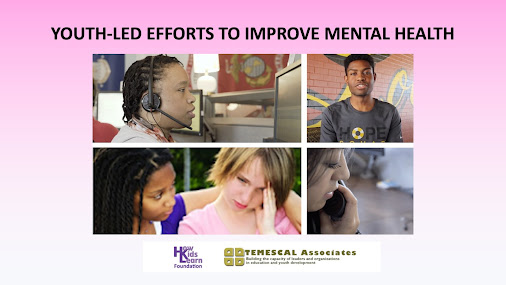
This webinar features youth leaders who have worked to improve youth mental health and are associated with Simply Wholehearted, Hope Squad and YouthLine (providing peer-to-peer mental health support). We hear their perspectives on the importance of engaging youth in mental health initiatives. Our speakers share their programs they are involved with, direct participants to resources, and answer any questions. To watch this webinar, click here.

Monday, March 20, 2023

A Case for Involving Youth to Address the Youth Mental Health Crisis (Part 1)

By Sam Piha

The concerns of youth declining mental health are not new. Nor is the shortage of mental health professionals in our schools and communities. Both were issues before the pandemic and as a result of the pandemic these issues are of greater concern.

Youth are clear: they want to be involved as part of the solution. There are several reasons to involve youth directly:

The Shortage of Adult Helpers.

“On average, there is only one school psychologist for every 1,200 students, far from the 1-to-500 ratio recommended by the National Association of School Psychologists. There are currently 427 school counselors for every student, but the American School Counselor Association recommends one per every 250 children.”

And the need is clearly growing. For instance, Oregon Youth Line, a teen-to-teen youth crisis and support service, received roughly 1,400 contacts, many coming from in the state of Oregon. But, by 2021, things had exploded, with almost 25,000 annual contacts from all across the country.

“This issue has intensified in a COVID world, where teens have lost access to school counselors and support systems. Their journey with mental illness or mental health concerns is made much harder, and they are struggling severely with few ways to feel better.” - Youth Crisis Line Volunteer, Tales of a Teen Crisis Worker 

Youth are Effective.

Source: www.pexels.com

Teens cope better with stress when they interact with their peers, rather than adults. Seven out of 10 youth say that when they are struggling with something, they are more likely to confide in a peer than a trusted adult. 

“We just have a much better perspective on what it's like to be a teenager today and the complexities that comes with and the strain that that can put on your mental health.” – Fiona, Youth Line Volunteer

“Teens are more likely to communicate with their peers than with their parents or teachers. Peer-led counseling programs show promise in helping to detect mental health concerns in younger students.” – Tonya Russell, Peer Counseling May Reach Teens in Ways That Adults Can't

Youth Want to be Part of the Solution.

“Youth express a collective desire – they even demand – that adults involve them in creating a more responsive education system so that they can, as one student put it, ‘find our way back to loving learning.’” – Youth Truth Survey

“I wish the school did more to train and educate its students on how to identify ... warning signs of deteriorating mental health, abuse, self-harm, and violence within their peers - and respond appropriately and compassionately.” – 12th grade student

Youth Can Handle the Responsibility.

“If you’re still uneasy about the idea of youth supporting other youth, I understand, but I challenge you to think of us not as kids thrown on a crisis line, but as trained specialists, adequately prepared and supported in doing life-changing (and at times, life-saving) work on both sides of the phone.” – Youth Line Volunteer

“I asked students, is this too much to take on? But I realized that they’re having these conversations with their peers on a daily basis. In the absence of formal training, they very much carry the weight on their shoulders that they have to fix their friends’ problems. If we’re not engaging them and giving them the right tools and training to engage in those conversations, we’re missing the boat.” - Suzanna Davis, vice president of operations and programs, Grant Us Hope, and former high school principal

There are Benefits Accrued by Youth Helpers.

“Most nights I leave my shift feeling more energized than when I came. Sitting in that virtual space, talking to those most interesting and dynamic teens, clears my heart of a heavy day and wipes my head of the weight of the world. There is no feeling comparable to being a part of someoneʼs journey to self-love, self-acceptance, and healing, and I gain far much more from the teens I talk to than I could ever give.” - Youth Crisis Line Volunteer, Tales of a Teen Crisis Worker

Stay tuned for part 2 of this blog where we will explore different youth-led programs that are addressing the youth mental health crisis. 


WEBINAR RECORDING
To watch this webinar, click here.


UPCOMING WEBINAR

Play comes natural to kids and to out-of-school time educators! Research across youth development and education fields have identified principles that define playful learning and the positive youth outcomes that can come from intentional play. In this webinar, we will explore this topic and learn about free resources you can use to incorporate high-quality playful learning opportunities into your programs and how to advocate for more play in the lives of children. To learn more and register, click here.

Tuesday, November 29, 2022

More On Learning Loss and Afterschool

Source: Fab Youth Philly

By Sam Piha

There is a lot of concern that the COVID disruption resulted in significant learning loss and mental health issues (anxiety, depression, etc.). Should afterschool shift their focus to learning loss and academic support and move away from promoting a sense of safety, belonging and offering learning in non- academic areas?

Rebecca Fabiano
We asked Rebecca Fabiano, who is a respected afterschool leader and founder of FAB Youth Philly, to share her thoughts on these questions. Fab Youth Philly focuses three things: support youth-serving organizations through a variety of consulting services; connect youth development professionals to training and networking, and innovate summer and afterschool programming for children & teens. Rebecca has over 25 years of experience working in the afterschool field.


"I think afterschool should lean into its tradition of supporting Social and Emotional Learning (SEL) and promoting a sense of safety & belonging as a primary goal and supporting academics as a secondary goal. The afterschool field has a long history of creating spaces that encourage and promote physical and emotional safety and center relationship building as a key tool in this effort. 

Source: Fab Youth Philly

Afterschool staff often serve as critical supports and advocates for youths’ social and mental well-being and should continue to do so. They can also serve as a bridge between the school day and non-school day activities, such as academic support, including things like SAT test prep. They can partner with other organizations that provide tutoring or special academic supports to offer that either during the day or afterschool, as afterschool programs often have flexibility in terms of partnerships, hiring, funding, etc. that school systems do not have.   

Afterschool programs should respond to learning loss and mental health concerns by continuing to center positive, trusting relationships between young people and their peers and with caring adults. They should also include youth in conversations about their own mental health needs and wishes. From there, they may offer, depending on their expertise and comfort, workshops or counseling services to meet these requests. Afterschool programs can also do some additional leg work to identify resources for youth that include multilingual resources, supports for LGBTQ, undocumented and other particularly and traditionally vulnerable youth. This might include resources for the whole family."

To learn more about Rebecca Fabiano and Fab Youth Philly, click here.

MORE ABOUT
For nearly 25 years, Rebecca Fabiano (She/Her/Hers) has worked in various capacities across nonprofit and youth-serving organizations, served on boards and helped to build solid youth programs that engage, encourage, and create spaces for positive development. As a program leader, she has successfully raised funds and managed program budgets; hired and supervised staff; developed and sustained strong community partnerships and designed award-winning programming. 

Monday, April 18, 2022

COVID and Afterschool: Long Term Effects

Source: Good Morning America

By Sam Piha

When the COVID-19 pandemic struck in 2019, many of us thought that this would only last a couple weeks. For some time, we thought of it as an acute crisis, as opposed to a chronic crisis. When communities were locked down and schools were closed, our views changed. Afterschool programs quickly pivoted to ensure that their youth and their families received food, supplies and needed resources for learning.

Recently we surveyed 37 afterschool leaders (directors, coordinators, trainers, etc.) to learn more about how afterschool programs were affected by the pandemic over time. We asked two questions: “How has COVID-19 changed your afterschool program?” and “Do you think these changes are permanent?”

Below we offer a summary of what we learned and cite some direct quotes from respondents. 

Negative Impacts

Many responded that the pandemic created a staffing shortage (over 59%) and resulted in a reduction of afterschool services and attendance (both 30%). They reported other negative impacts on their programs, including

  • the elimination of field trips, 
  • decrease in budget and volunteer resources, 
  • decreased connection with the community, parents, and youth, 
  • increase in participant waitlists, 
  • increase in the need for SEL services, and
  • staff burnout.
Source: www.ibcces.org
"It has increased our waitlist significantly, which wouldn't be quite as severe, but hiring has been increasingly difficult and I need to open another class, but I can't find anyone to hire. Without staff I have to keep 20-22 kids on the waitlist that would otherwise be enrolled." – Afterschool Program Coordinator, California

"Covid protocols have changed the family interaction with our program as we have not been able to hold our in-person family events." – Afterschool Program Administrative Secretary, California

Source: Middlesex YMCA

The negative impact on schools included a shortage of teachers, substitutes, and school-bus drivers. The negative impact on youth included 

  • loss of school and peer relationships, 
  • fear of COVID, and 
  • learning loss. 

"COVID has shifted our focus to social and emotional support to students throughout the school day, especially in their classrooms and during non-structured times like lunch. Intentional community building is a big part of this kind of support -- with school-wide activities and initiatives to promote a sense of well-being. We are using contract funds to bring in mental health clinicians to support both students and families." – Afterschool Program Director, California

They also reported negative impacts on families, including family relationships and an increased demand for afterschool programs.

"COVID-19 has created a demand from families for after school care, families need a safe place for their children to be while they work. Families have more needs, not only for children to be safe after school, but for a place that is able to provide supper/snacks, assistance with homework and before school care as more and more families begin to work either graveyard or 2nd shifts in places of employment. Before and after school care programs offer many families working in education the ability to drop off their children at their own schools where they work." – Afterschool Program Staff, California

Positive Impacts

Many also reported positive impacts including a stronger relationship with host schools and a greater appreciation among parents and educators regarding the support offered by afterschool programs.

"The families in the community are coming to realize how important after school programs are for them to be able to have a safe place for their children." – Afterschool Program Coordinator, California

"When the pandemic started and schools were closed, the afterschool coordinators were key players on making sure the families received information and schools knew what families needed to support learning at home. From there, the leader’s roles changed to case management and technology ambassadors. We partnered with the district and other CBOs to ensure the families could have their basic needs met. These actions strengthened our relationship with teachers, school administrators and families." – Afterschool Program Director, California

"We developed more flexibility and creativity in delivering programs and serving our students. Our adapting to create and provide a large number of valuable virtual classes was greatly appreciated by students, parents, and school administrators." – Afterschool Provider, California 

Permanent?

When asked if these impacts were permanent, most thought they would eventually fade, but not for 2 or more years.

"I am hopeful that these impacts are not permanent, however, I expect it to take roughly 2 years to get back to where we need to be." – Afterschool Program Director, California

"I don't think that these negative impacts will be permanent. However, I do think that, academically, it will take a considerable amount of time to get these students back up to grade level. Emotionally, it may take years for these kids to recuperate from having a stifled social life due to the pandemic." –Afterschool Program Coach, California


YOU CAN SAY THANKS!

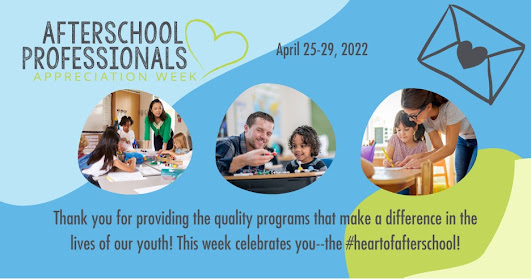
When the COVID-19 pandemic struck in 2019, we gained a new understanding of why afterschool workers are essential workers. Over the last two years, afterschool programs have pivoted to meet the new needs of schools, youth and their families. Afterschool Professionals Appreciation Week (April 25 – 29, 2022) is a perfect time to say “thanks” to afterschool workers. 

Begin planning how you will celebrate and acknowledge afterschool programs. To learn more, access talking points and a communication toolkit, go to https://naaweb.org/ideas.


Tuesday, March 9, 2021

The Impact of COVID-19 on Families

By Sam Piha

Many of the young people we serve in afterschool come from low-income communities, in both urban and rural settings. Many of these are communities of color. These communities have been disproportionately impacted by COVID-19. Afterschool and summer learning programs were a lifeline for underserved communities before the pandemic and now they are more important than ever as families with limited resources struggle to adapt to newly designed school days and years. 

Source: www.hrw.org

Expanded learning opportunities that complement the school day will be key to helping all young people and their families through this crisis. In preparing for young people to return to our programs, it is important that we have a snapshot of how our children and families have been impacted by the pandemic.
 
“One of the certainties as we navigate through this pandemic is that all children will benefit from being well known, well cared for, and well prepared. Afterschool programs have a long history of designing programs based on what young people need in order to help them be healthier and more ready to learn. Together schools and community organizations can co-design the future of learning in ways that interrupt historic inequities and help all young people emerge from this crisis strong, resilient and hopeful.” 
- Tony Smith, former Illinois State Superintendent and Oakland Unified School District Superintendent 

“The Impact of Coronavirus”, a five-part poll conducted by NPR, the Harvard T.H. Chan School of Public Health, and the Robert Wood Johnson Foundation, offers a national look at the problems emerging from the pandemic relating to household finances, jobs, health care, housing, transportation, caregiving, and well-being. Below are some of their key findings and you can learn more here.

Source: Getty Images

Key Findings 
  • At least half of households in the four largest U.S. cities—New York City (53%), Los Angeles (56%), Chicago (50%), and Houston (63%)—report serious financial problems including depleted savings, and trouble paying bills or affording medical care. 
  • Many of these experiences are concentrated among Black and Latino households; households with annual incomes below $100,000; and households experiencing job or wage losses since the start of the outbreak. 
  • At least four in ten Latino, Black, and Native American households report using up all or most of their household savings during this time. 
  • One in five households in the United States (20%) report household members unable to get medical care for serious problems. A majority unable to get care when needed (57%) report negative health consequences as a result. 
Source: www.nationalnews.com
  • More than 1 in 3 households that include anyone with a disability report facing serious financial problems, many experiencing difficulty affording utilities and food. 
  • More than one in three (36%) households with children face serious problems keeping their children’s education going, and among working households, nearly one in five (18%) report serious problems getting childcare when adults need to work. 
  • About one in three households with children (34%) either do not have a high-speed internet connection at home or report serious problems with their connection while doing schoolwork or their jobs during the pandemic. 
  • 43 percent of rural households report adult household members have lost their jobs, been furloughed, or had wages or hours reduced since the start of the outbreak, with two- thirds of these households (66%) reporting serious financial problems. 
The next step is considering what we need to do in afterschool to address the stresses related to these findings. To this end, we are sponsoring a webinar on Monday, March 29, 2021 entitled, “Helping Youth Thrive When They Return to Afterschool Programs Post COVID.” This webinar will be facilitated by Stu Semigran (EduCare Foundation) and features panelists Dr. Gil Noam (Harvard), Gloria Halley (Butte County Office of Education), Jose Luis Navarro IV (Principal and former California Teacher of the Year), and Autrilla Gillis (Director of Expanded Learning, ISANA Academies). You can click here to learn more about the webinar. 


How the Meta Settlement Can Benefit Afterschool Programs

Source: www.pexels.com This blog by Dan Gilbert has been reposted from Afterschool Alliance’s Afterschool Snack Blog. Meta's new settlem...