Monday, March 28, 2022

California Teaching Fellows: Afterschool as a Teaching Practicum (Part 2)

Source: www.ctff.us

By Sam Piha

We interviewed Malia Villarreal (Public & Strategic Development Manager) and Mike Snell (CEO) at California Teaching Fellows Foundation (CTFF) which views afterschool programs as a valuable experience for future teachers. Below is part 2 of this interview. You can view part 1 here.

You can view our paper on this topic here. We also conducted a webinar, which you can view here.

Q: What are the responses of teaching fellow participants to the afterschool experience and what results have you seen?    

A: Reflecting on her experience as a student-teacher during the pandemic, Erika made connections on how her experience and training in the afterschool program enabled her to rise to the occasion. Erika expressed that the culture of afterschool taught her some very important lessons, “afterschool never happens how it is supposed to, but I was taught no matter what, it (the after-school program) needs to work out for the students.” She learned early on that she must always have a plan A, B, C, and D. Her experience as a tutor first, and later as a site coordinator taught her to think on the spot and basic classroom management skills; which she admitted didn’t come naturally to her in the beginning. It took a lot of coaching and patience to master those skills. Looking back on her journey in afterschool, Erika revealed she never would have gone through with pursuing a teaching career if she didn’t have the opportunity to practice and receive consistent feedback. 

Trainings during the Teaching Fellow Academies really stuck with me, and I had the opportunity to directly apply it. There were Ah-ha moments when I went back to my school site and would witness how what I was taught was all true.”                  – Erika Martinez


Erika stated the cycle of training, hands-on practice, and feedback were the keys to her success. Needless to say, Erika credits much of her current success to her time spent working in expanded learning programs. 

Source: www.ctff.us

Q: Is this program particularly important now as a result of the COVID pandemic?

A: COVID-19 continues to teach us many new lessons while reinforcing much of what we already knew as educators and humans. Now more than ever, students need social and emotional support from our expanded learning and school staff, and our working parents need a safe and supportive environment for their children during the critical out-of-school time hours. 

COVID-19 has exacerbated the teacher shortage crisis and we’re seeing record college dropout rates which is a recipe for a student equity disaster (Carver-Thomas et al, 2021). Our role as a community benefit organization is to elevate the voices of our two critical stakeholders: K-12 students and our college students (Teaching Fellows). We know our community needs and deserves highly qualified and diverse teachers, especially in our historically underserved communities. Our experience working with diverse first-gen college students for the last 20 years has taught us that despite their navigational capital, managing the process of graduating college and entering a credential program is complex. 

The pandemic has made college even less accessible to students. When we ask Teaching Fellows why they’re dropping out of college and teacher credential programs, they say “I can’t afford college anymore.” Being mostly first-gen college students, our Teaching Fellows need to be able to work and support their families while they attend college. They say their largest barriers are test and tuition costs, inconsistent class schedules that don’t allow them to work, credential programs/college classes being (geographically) too far from where they live, and an overwhelming feeling that they do not belong. 

Expanded Learning programs and models like the CTFF have tremendous opportunities to challenge traditional teacher education models, to work to align systems that serve youth and communities and share our knowledge and experiences to further this important work and foster a sense of belonging.

MORE ABOUT... 

Malia Villarreal, Public & Strategic Development Manager, California Teaching Fellows Foundation has worked in the expanded learning field for six years at the CTFF where she has worked on a plethora of projects and strategic initiatives. She has graduated over 100 college interns in an innovative pipeline that yields talent and champions of the out-of-school time field in the Central Valley, and has built relationships with local, state, and federal elected officials, multisector stakeholders, and community influencers to promote afterschool programs and the California Teaching Fellows model in the San Joaquin Valley and beyond.

Mike Snell, CEO, California Teaching Fellows Foundation is the Chief Executive Officer of CTFF. The mission of CTFF is to inspire next-generation leaders with a passion for teaching and learning while impacting the lives of youth. Mike’s personal mission is to link talent to opportunity in the kindergarten through the college pipeline. Mike invests a significant portion of his off-work hours serving and supporting organizations aligned with his personal and professional goals and making a significant impact in California’s Central Valley. Mike serves and has served on various committees at the California Department of Education Expanded                                     Learning Division.

Erika Martinez, Teaching Credential Candidate and Former Teaching Fellow, is a first year, first-grade teacher at Williams Elementary. She is currently working on her Master’s in Social-Emotional Learning. She recently graduated from the Fresno Unified Teacher Residency Program through National University, where she obtained her Multiple Subject Teaching Credentials. Prior to that, she attended Fresno Pacific University, where she completed her Bachelor’s in Liberal Studies. She has two years of experience teaching Drama through Fresno Unified School District (FUSD), and six years of experience working in afterschool programs through California Teaching Fellows Foundation (CTFF) where she gained nearly 3,000 hours of hands-on experience and more than 120 hours of professional and personal development. 

Tuesday, March 22, 2022

The War in Ukraine and Afterschool

Source: How to Talk to Kids About the War in Ukraine:
4 Answers & Tools Parents Need, From a Parenting Educator
By Sam Piha
The coverage of the Russian invasion of Ukraine has dominated TV and social media, resulting in horrific images of buildings exploding in fire, families bloodied and injured from missile attacks, and fearful children and parents attempting to flee to safety. This is being viewed by children and teenagers as well as adults. 

Foundation to every afterschool program is promoting a sense of emotional safety and reliable information. We believe this includes how to talk to kids about war and how to decipher real vs. fake news. Below we offer some thoughts and resources to assist afterschool leaders. 

Speaking With Kids About the Ukraine War

Below are some tips on how to discuss the Ukraine war:
  • First and foremost, educate yourself on Ukraine’s history and the war itself (there are good articles and videos on the internet- be sure they are reliable) and process your emotions first.
  • Consider the developmental and age levels of your youth.
  • Ask what your children have heard already?  How did that make them feel?
  • Where did they get this info?
  • Validate feelings while stressing safety.
  • Ask them if they have any questions about what is going on. 
  • Respond with honest reassurance & don't discount fears. 
  • Encourage youth to feel a sense of agency about how they can make a difference. 
  • Avoid exposure to graphic images & repetitive media coverage. 
  • Recognize that some children may be at greater risk of distress (especially true of youth who have experienced trauma or a family history of fleeing danger).
Additional Resources: 
(Note: Some of these resources are written for family members and would serve as a good handout.)

Source: New York Times
Social Media

The Russian invasion of Ukraine has also brought with it a deluge of disinformation and misinformation, and fabricated news, images, and video, via social media platforms. 

One big difference with the war in Ukraine is how prominent TikTok has suddenly become in spreading information via video—both real and fake. TikTok is a major source for news for teens and young adults.” - Eisha Buch, Common Sense Media 


Addressing Disinformation

If the Russia-Ukraine conflict is the world’s first TikTok war, then your youth may be unwittingly taking in a lot of mis- and disinformation. This article, “TikTok Is Gripped by the Violence and Misinformation of Ukraine War,” might be a useful starting point for raising the topic with them, perhaps after first asking students to share some of what they know — or think they know — about the war from their social media feeds.
- New York Times

Abigail Gewirtz, author of How to Talk with Kids About Scary News, advises, “You start by talking about social media. In times of war and threat, social media can be an incredibly valuable tool for people who don’t have access to regular news, like those in Ukraine, to be able to communicate with others. However, as we all know, social media can be a very dangerous source of misinformation, and our kids are vulnerable to that misinformation because they don’t know what’s fact and what’s fiction...and sometimes we don’t either. It’s really important for parents of kids of all ages to help children understand that there is fact and there is hearsay—and for them always to come to you to check the facts.

Additional Resources:
One way to support kids to help them feel part of the solution is by offering opportunities to express support or “help”. Obviously, any activities should be aligned with the age of the participants. For example, youth could:
  • Create pictures or posters to express support or educate others. 
  • Look for age-appropriate information together.
  • Do projects to raise money for charities supporting Ukraine.
  • Send pictures or letters to refugee families.
  • Middle- and high-schoolers might participate in a peaceful demonstration of support for Ukraine.
  • Families can also join together to attend a local Ukrainian vigil or send money to charitable organizations.
A lot of children want to help—and it’s important to provide ways for them to do so in an age-appropriate way…Turn the problems into ‘what can I do?’ The healthiest thing that helps people cope is action.- Mary Alvord, PhD, Founder of Resilience Across Borders

Additional Resources:
Source: #KidsDrawPeace4Ukraine


Bias, Race and Discrimination 

Source: www.cnn.com

Some have criticized certain reporting on Ukraine as racist and called attention to story framing and word choices that portray 'the invasion as the sort of thing that happens in poor countries, but not in Europe.' Even just the sheer amount of coverage, critics say, reveals a double standard in how Western media has covered this war compared to conflicts in other parts of the world. - The Sift: An educator's guide to the week in news literacy, March 21, 2022

It is important to know that reaction to the war in Ukraine is not without controversy. Many feel that the crisis and war in Syria did not attract the same worldwide support. Also, there were reports that people of color did not receive the same treatment while attempting to flee the violence in Ukraine. 

If we decide to help Ukrainians in their desperate time of need because they happen to look like 'us' or dress like 'us' or pray like 'us,' or if we reserve our help exclusively for them while denying the same help to others, then we have not only chosen the wrong reasons to support another human being. We have also, and I’m choosing these words carefully, shown ourselves as giving up on civilization and opting for barbarism instead ... The BBC interviewed a former deputy prosecutor general of Ukraine, who told the network: “It’s very emotional for me because I see European people with blue eyes and blond hair … being killed every day. - Moustafa Bayoumi, The Guardian

Additional Resources:

Monday, March 14, 2022

California Teaching Fellows: Afterschool as a Teaching Practicum (Part 1)

Source: www.ctff.us

By Sam Piha

We interviewed Malia Villarreal (Public & Strategic Development Manager) and Mike Snell (CEO) at California Teaching Fellows Foundation (CTFF) which views afterschool programs as a valuable experience for future teachers. Below are their responses.


You can view our paper on Afterschool as a Teacher Pathway here. We also conducted a webinar on this topic, which you can view here.


Q: Can you describe how the California Teaching Fellows Foundation (CTFF) works?
A: CTFF at Fresno State University (FSU) links college students with opportunities for paid placements working in afterschool, summer, and regular school day programs in public schools, charter schools, and community centers. These college students gain experience working with school site leaders, students, and families so they know the climate and culture of the school well before becoming a teacher. They’re diverse and have built relationships so they’re well prepared and reflect the community they serve. We also provide ongoing monthly paid professional development via our Teaching Fellow Academies; where tutors gain access to incredible out-of-school time professionals as well as K-12 and Higher Education leaders who help professionally develop them. 

The Teaching Fellow Academies have intentionally provided additional content and training around social and emotional learning supports, trauma-informed practices, and social and cultural pedagogy. In addition to the Teaching Fellows Academies, CTFF offers the DREAM Initiative which provides personal development to Teaching Fellows. Examples of DREAM services are one on one life coaching, CBEST prep workshops, group meet-ups, home buying workshops, financial literacy, a care fund, and so many other great benefits that help Teaching Fellows reach their full potential.

Q: Can you give an example of how CTFF works from the perspective of a teaching fellow?
Erika Martinez
A:
The story of Erika Martinez is a powerful illustration of the Teaching Fellows program and our quest to strengthen and diversify the pipeline of future teachers in the Central Valley. Erika is currently in the Fresno Unified Teacher Residency Program and will be a credentialed teacher with a Master’s in Social and Emotional Learning upon graduation from the school district’s program. Erika will soon join the ranks of hundreds of teachers in the Central Valley who gained early field experience working in afterschool programs through the CTFF. We are proud to call Erika a Teaching Fellows Alumni.

Erika started as a Teaching Fellow tutor working in an afterschool program in 2014. After over two years as a tutor managing a classroom of 20 students, then Erika was promoted to a Site Coordinator where she served for two more years. As a Site Coordinator, Erika managed the school’s afterschool program and a team of 12 tutors and one ASL. Her school site regularly served 220 students a day. In 2020, Erika earned a bachelor's degree in Liberal Studies. While Erika’s story is amazing, she is not unlike many amazing Teaching Fellows who take advantage of CTFF’s model. 

Q: Can you explain how the experience of afterschool workers are relevant to becoming a teacher. What advantages do these experiences offer? 
A: As Erika leaves the CTFF, she takes with her nearly 3,000 hours of hands-on classroom experience, more than 120 hours of professional and personal development via the Teaching Fellows Academies (paid professional development), and a deep understanding of school systems and the communities they serve. Erika represents the demographics we see throughout the Teaching Fellows program: diverse, educated, first-generation, bi-lingual college students, and highly motivated to make a difference in her community. As she graduates from her Teacher Residency program, Erika will be day 1 ready to teach. Erika, like so many Teaching Fellows, has tremendous capital; she is culturally competent, linguistically diverse, aspires for a better future, and is acutely aware of what it takes to work with school-age youth, families, and educational professionals. Erika’s experiences’ like so many others who work in afterschool programs, perfectly prepare her to take advantage of career path opportunities in education and position them well to navigate it. 

Erika Martinez practicing "youth voice and leadership" by signing up her students to attend the Afterschool and Summer Challenge at the state capitol to talk to Legislators and the Governor's Office about the importance of afterschool.  
(Pictured left to right back row: Sanger High School student, Malia Villarreal, Senator Melissa Hurtado, Mike Snell, Erika Martinez, front row: West Fresno Elementary School students)


While teachers have the California Standards for the Teaching Profession (CSTP), fortunately, afterschool (also referred to as expanded learning professionals) have the Learning In Afterschool & Summer’s Principles (LIAS) and California Quality Standards for Expanded Learning Programs. The LIAS and quality standards are the framework we provided to Teaching Fellows who are serving as educators and leaders for students. There are natural similarities between the standards in afterschool and the standards of the teaching profession. While more research needs to be done to connect the afterschool quality standards to the teaching profession standards, it is clear that the pre-service experiences in afterschool programs help leaders like Erika in their pursuits of becoming a teacher. 

END OF PART 1


Temescal Associates and The How Kids Learn Foundation will be conducting a webinar featuring a presentation by Brittany Collins and a panel of experts on Responding to Grief and Loss in Afterschool Programs, Thursday, March 17, 2022 from 10:00am - 12:00pm (PST). To learn more and register, click HERE.


Monday, March 7, 2022

How Can Afterschool Support Grieving Youth (Part 2)

Source: Ed Week

By Sam Piha

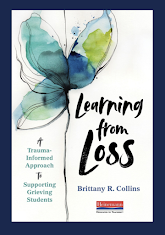
It is important that we understand more about the needs of youth who are grieving or experiencing loss due to the COVID-19 pandemic (deaths and illness, as well as the loss of “normal”), the opioid crisis, the rising gun violence and the racial violence that is plaguing the country. Below we continue our interview with Brittany Collins (read part 1 here), author of the book Learning from Loss: A Trauma-Informed Approach to Supporting Grieving Students

Q: What are the effects of grief on young people? Is it a different experience for younger vs. older?
A: There is much similarity between grief responses in all of our brains and bodies; neurologist Lisa Schulman writes in her book Before and After Loss: A Neurologist’s Perspective on Grief, Loss, and Our Brain that grief incites a fight-or-flight response, as well as a depressive response, and impacts nearly every part of the brain. That impact may result in a number of changes in our behavior – from apathy and avoidance to perfectionism and connection-seeking, increased risk-taking to risk aversion. The spectrum is broad and manifests differently in everyone, but in consideration of the ways in which grief impacts young people, it’s especially pertinent to think about the pre-frontal cortex, the part of the brain that controls higher-order functioning – things like forethought, impulse control, emotional regulation. Because children and teens do not yet have a fully developed prefrontal cortex, they may not have full control over these functions even without accounting for grief. But when grief enters the picture and dampens the functioning of the pre-frontal cortex even further, then, especially in adolescent populations, we may see things like an attenuated ability to regulate emotion, attenuated impulse control, increased risk-taking, etc. 

It’s critical to take an adaptation-focused, asset-based lens to these behavioral shifts. Nearly every behavioral change is not only a response to grief but an attempt, and often an innovative attempt, to fulfill an unmet need. For example, a student’s anger might serve them well in a loss context in which they have to defend a parent against an abusive partner; or another student’s connection-seeking behaviors might help them eke out the attention of a bereaved caretaker. In the classroom or afterschool setting, these same behaviors may not prove as helpful because the student is no longer in the context for which the behaviors were developed, but in a grief and trauma context, the brain doesn’t know that – it’s stuck in survival mode. 

Too often, we see grief and trauma responses (e.g. behavioral changes) reprimanded. If we think about issues of restorative justice in schools and the ways in which racialized violence, bias, and assimilation play a role in school discipline, then it becomes even more critical for us to view behavioral changes as adaptations to be respected, not liabilities to control or punish.

Q: What do you mean by "Grief Responsive Teaching"? 
A: Grief-responsive teaching is a pedagogical and interpersonal approach to teaching and learning that integrates science and stories of grief into actionable classroom and program practices that support students’ and educators’ well-being in times of loss.

Because grief impacts the brain, body, and behavior— and, by extension, teaching and learning— grief-responsive teaching seeks to support and empower the whole person, socially, emotionally, culturally, and academically. Recognizing that loss is the most commonly cited traumatic experience among young people, it’s an approach that integrates grief science– and stories of loss– into actionable pedagogical practices that support and sustain all members of a learning community— at and beyond school. For more info and resources, feel free to visit the Grief-Responsive Teaching website here.

Q: Can you give some tips or practices that might apply to afterschool educators?
A: Absolutely. First, I want to acknowledge how critical afterschool programs– and educators– are in grief support. In my book, Learning from Loss, I devote entire sections to the ways in which extracurricular activities like sports, theater, dance, the debate team, etc., can foster a sense of psychologist Mihaly Csikszentmihalyi’s notion of “flow” (which can prove incredibly healing). It can offer students a sense of community and contribution, the attunement and synchronicity that come from working together with others toward a common goal, of feeling like a valued part of a “whole”. It can also provide outlets for positive risk-taking that support identity development and channel grief responses into health-promoting outlets that can serve students across a lifespan; and can restore students’ autonomy, sense of competence, and relatedness– the three tenets of Deci and Ryan’s self-determination theory, all of which can be threatened in a grief context. 

To support all learners, implementing regulatory activities into the program—meditation and mindfulness activities, free-writing, activities that afford students choice or a sense of contribution—on a regular basis, not only in the weeks following a known loss, creates a grief-responsive environment. This offers students strategies that they may turn to in and outside of the classroom to activate their parasympathetic nervous system and enhance their ability to access higher cognitive functioning, from emotional regulation to problem-solving.

If afterschool educators keep the importance of their work in mind and seek to establish a sense of safety (physical and emotional), facilitate connection between students and peers, as well as students and caring adults, and empower students’ self-expression and leadership, they are already on their way to being grief-responsive.

Q: Should we think about how we can support young people beyond our program setting?
A: First, it’s important to recognize the ways in which a program setting can impact young people far beyond, and long after, their time in the program. I write in Learning from Loss:

Grief outlets might look like rugby, rap, meditation, or the debate team… It’s particularly important to introduce these alternative behaviors during adolescence because the teenage brain undergoes a period of immense neural development comparable only to that which occurs in the first year and a half of life (Spinks 2002). The brain begins ‘pruning,’ or eliminating extra synapses, and the activities and habits of mind teens most frequently engage in determine which synapses remain strong into adulthood (Di Ciacco 2008, 114). The malleability of our brains and our ability to form new neural connections throughout life by changing our behaviors is called neuroplasticity, and it is key in our ability to adapt to, and even recover from, early-life adversity.” 

So, the work that we do with students in our program can, indeed, support them far beyond it. As grief-responsive practitioners, though, whether coaches, youth workers or classroom teachers, it’s always important to consider how we can build students’ webs of connection. Grief support takes a village, so being mindful of the school-based resources and community-based resources available to you and your students, and working to facilitate furthered connection between students and colleagues, students and peers, students and their local communities, can both ensure that they are getting the support and connection they need while also steering clear of a savior mentality, or the idea that we alone must “fix” or heal young people. 

First, grief isn’t a problem to fix or solve or avoid; it is a lifelong process to support one another through. Second, students experiencing grief hold many strengths and insights; when we listen to them and their needs, and work collaboratively with them to widen their worlds, we position ourselves as a trusted teammate, and that’s critical, because, as I write in Learning from Loss, “without trust, attempts at grief support feel like trespassing.”


Brittany Collins
is an author, educator, and curriculum designer dedicated to supporting teachers’ and students’ social and emotional well-being, especially in times of adversity. Her work explores the impacts of grief, loss, and trauma in the school system, as well as how innovative pedagogies—from inquiry-based learning to identity development curricula—can create conditions supportive of all learners. She is the Founder of Grief-Responsive Teaching, a professional learning community and resource hub that supports students' and teachers' well-being in times of loss.

Below are links to purchase her upcoming book and to review some of her earlier writings:
Temescal Associates and The How Kids Learn Foundation will be conducting a webinar featuring a presentation by Brittany Collins and a panel of experts on Responding to Grief and Loss in Afterschool Programs, Thursday, March 17, 2022 from 10:00am - 12:00pm (PST). To learn more and register, click HERE.


Monday, February 28, 2022

How Can Afterschool Support Grieving Youth (Part 1)

Artwork by Lauren Coakley

By Sam Piha

There is a growing awareness of the importance of emotional regulation, social emotional learning, trauma informed practice and healing centered engagement. However it is important that we understand more about the needs of youth who are grieving or experiencing loss due to the COVID-19 pandemic (deaths and illness, as well as the loss of “normal”), the opioid crisis, the rising gun violence and the racial violence that is plaguing the country. Below we interview Brittany Collins, author of the book Learning from Loss: A Trauma-Informed Approach to Supporting Grieving Students. We have divided this interview into 2 parts and part 2 will be released next week. (Ms. Collins will be a guest presenter on an upcoming Speaker’s Forum/ Webinar.) 

Q: Can you briefly describe what your new book is about and why you wrote it?
A: I wrote Learning from Loss because, as a formerly bereaved student turned educator, I have always been keenly aware of both the ways in which teachers, coaches, youth workers, and other caring adults can have a lifelong impact on the lives of young people who are grieving, as well as the ways in which adults are often socialized into spaces of discomfort surrounding students’ grief – not knowing what to say, for example, or not wanting to make things worse and thereby slipping into silence. 

The question that drove my writing process was, in regards to creating learning environments that are supportive of students who are grieving, “How can we do this better?” I was privileged to interview numerous teachers, social workers, guidance and grief counselors who shed light on the intersections of theory and practice, and to offer snapshots of their stories to readers alongside actionable practices for use with young people.

Q: How many young people are actually affected by grief and loss? Is this higher in low-income communities or communities of color?
A: Before the pandemic, we knew that 7 out of 10 teachers had a student in their classroom who was actively grieving. Now, that number has likely risen, as 1.5 million children have lost a primary or secondary caregiver to COVID-19 worldwide, over 140,000 in the U.S. alone, and we are seeing that Black, Indigenous, People Of Color (BIPOC) youth are facing much higher rates of bereavement due to systemic health inequities. Of course, these statistics relate only to grief that is experienced in response to a physical death, but there are many other kinds of losses that can elicit a grief response in our brains and bodies: “living losses” describe things like divorce, a familial falling out, experiences in foster care, a move or change in schooling – transitional losses and absences that are rife in this pandemic moment but that do not involve death. 

We can also experience “anticipatory grief” in expectancy of a loss; “disenfranchised grief” if our grief is not socially or societally acknowledged (e.g. a miscarriage, the death of a loved one to suicide, or other forms of loss/grief that somehow intersect with societally-reinforced silences or taboos); vicarious grief when exposed to others’ losses; and generational grief/trauma in communities that have historically faced brutality and loss. These are just several examples – and when we take them into consideration, the rates of impacted young people are really astronomical. I would bet that it’s safe to say every youth program comprises folks who are grieving.

Q: Is grief and loss only in relation to a death or can it be experienced indirectly? Example: The COVID pandemic fears and the loss of "normal", or racial violence?
A: These types of loss are certainly valid examples and can produce physiological grief responses; for example, COVID pandemic fears may take the form of anticipatory grief regarding one’s own or a loved one’s health and/or mortality. But the pandemic has also incited other forms of living losses, like those caused by a lack of proximity to friends and loved ones; grief for our former life/way of living; grief for growth milestones missed, like a prom or graduation, wedding or job transition – “the loss of ‘normal’” is a great way to put it. 

And then, of course, racial violence connects to all of these forms of grief as well. There is grief for those lost; anticipatory grief, especially in BIPOC communities, about who might be impacted next; generational grief, when we think about the deep roots of racial violence across history; and vicarious grief and trauma for folks of the global majority who see acts of racialized violence committed against those with similar identities. And this isn’t just conceptual; there is much scientific research that explores and explains the ways in which racial violence, discrimination, and bigotry impact the brain and body. Race-based traumatic stress is a public health crisis.

(Part 2 of this interview will be released next week.)


Brittany Collins is an author, educator, and curriculum designer dedicated to supporting teachers’ and students’ social and emotional well-being, especially in times of adversity. Her work explores the impacts of grief, loss, and trauma in the school system, as well as how innovative pedagogies—from inquiry-based learning to identity development curricula—can create conditions supportive of all learners. She is the Founder of Grief-Responsive Teaching, a professional learning community and resource hub that supports students' and educators' well-being in times of loss.

Temescal Associates and The How Kids Learn Foundation will be conducting a webinar featuring a presentation by Brittany Collins and a panel of experts on Responding to Grief and Loss in Afterschool Programs, Thursday, March 17, 2022 from 10:00am - 12:00pm (PST). To learn more and register, click HERE.


Monday, February 21, 2022

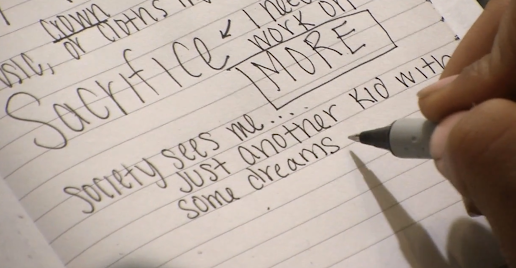
Journaling with Teens to Promote Mental Health and SEL


By Sam Piha

Introducing journal writing, whether it’s once a week or daily, is good for all, and fosters social emotional learning (SEL) skills, especially self-awareness. “Journaling activities can be designed to help young people gain insights into the major areas of their lives. Its purpose is to help adolescents gain a more positive perspective on their lives by developing an awareness of events, memories and feelings in their lives and learn coping skills that can be used throughout life. At the same time, journaling can also help adolescents to use their imaginations and natural creative talents, to improve their communication skills, and to realize self-interests and possibilities.” – Lynn Blinn Pike, Human Development and Family Studies

“It is important to provide youth with opportunities to reflect on and/or express themselves and their feelings because they HAVE them and don't always have space to express them. Journal writing is a good way to provide these opportunities. Even if it's just a stream of consciousness writing. Journaling allows you to slow down and notice yourself and your thoughts, which is greatly therapeutic!”Daniel Summerhill, California State University, Monterey Bay


Tips for Journaling with Teens

  • Ignore outsiders who proclaim “those kids won’t go along” [referring to adolescent boys or boys of color].
  • Agree with your teens whether their journals will be fully private or if the adult leaders are allowed to read them. Remember that entries may involve things that adults are required to report, such as endangerment or abuse. 
  • To personalize and encourage buy-in, begin by asking youth to decorate and personalize the cover of their journal. Be sure to have art materials and magazines with photos if some prefer to create collages. 
  • Choose a sturdy and inexpensive journal book, like a composition book.
  • Journal entries can take many forms: writing, drawing, collage, etc. Youth will be more interested if they don’t have to worry about spelling or grammar. They can use “inventive spelling.”
  • “A writing prompt is an excellent tool to get kids of all ages putting pencils to pages! Since it’s not always easy to think of something specific to write about, it’s not a bad idea to make a Journal Jar and fill it with ideas.” Youth can add their own ideas to the journal jar and be invited to pull out the journal prompts. There are many ideas for journal prompts on the internet, such as Daring to Live Fully. 

After doing these (journaling) activities I am glad...because it's good for me to think about myself and my thoughts and feelings, which I don't always do on a regular basis.— youth, 17-year-old


Temescal Associates and The How Kids Learn Foundation will be conducting a webinar featuring a presentation by Stu Semigran and his team from the EduCare Foundation on Heartset® for Self-Care and Resiliency on Wednesday, February 23, 2022 from 10:00am - 11:30am (PST). To learn more and register, click HERE.


Wednesday, February 9, 2022

Afterschool Worker Shortage: Voices from the Field


by Sam Piha

We thought it is important to understand the issue of worker shortages from afterschool practitioners. To accomplish this, we issued a “snap” field survey in which we received 44 responses from practitioners across the country in 12 hours. Below we share some of the responses from our “snap” survey as well as from a survey from the East Bay Asian Youth Center (representing a collective of 13 lead agencies providing afterschool programs to a total of 76 OUSD schools.


SURVEY OF AFTERSCHOOL PRACTITIONERS CONDUCTED BY TEMESCAL ASSOCIATES ON 12/6/21: 


What are the reasons for the worker shortage? 

I believe many of the people that worked for us before the 2020-21 school year went on to find other work. I also believe that some have enrolled in college and some no longer are able to live in the area due to being priced out of the housing market.” – School District Coordinator, California

1. Competitive hiring market with higher pay than pre-pandemic. 2. Not all youth are vaccinated and fear of contracting or passing Covid. 3. High cost of Bay Area living and relocation of workers. 4. Work from home job options more prevalent. 5. Stimulus checks led to savings for some and not needing to immediately return to the workforce. 6. Secured alternate work with higher wages instead of returning to the afterschool field.” – Afterschool Program Staff, California

After school programs generally do not pay well, and we're dealing with a major inflation. Also, I think fear of exposure to COVID plays a large part, too. Working with a large number of mostly unvaccinated people, even if they're kids, is scary sometimes.” – Afterschool Program Staff, California

Low wages, part-time work (only), no benefits; perception of lack of career path (rather, just a part time, temp job on the way to something more permanent. People staying home to take care of own kids.” – Afterschool Provider CEO, Pennsylvania

There are a variety of stressors that bring about this shortage: loss of work hours, loss of loved ones and family members, mental exhaustion, and lack of adequate health care and better wages.”- Afterschool Provider CEO, Florida

We had trouble finding qualified staff who were also fully vaccinated.” – Afterschool Program Staff, Ohio


How has your program been impacted by the worker shortage?

Programs have had to limit youth attendees in some programs, sometimes programs have had to cancel a day or so due to lack of substitute staff, and less activities are offered in some sites due to lack of instructors.” – Afterschool Evaluator and Consultant, California

We are serving less students than we have spaces for. The staff is overwhelmed, and the program quality has decreased.”- Afterschool Program Director, California

Depending on the site location, we are at 50%-75% of capacity to serve youth after school. Fewer students are being served which jeopardizes our local/state/federal grant awards.” – Afterschool Program Staff, California

The current staff shortage has prevented our 13 programs from fully enrolling our ASES funded sites. We are at about 50% capacity at this time. It is very distressing to not be able to serve the maximum number of families.” – School District Coordinator, California

We’ve had substantial turnover at our site coordinator level, and front-line staff is more of a revolving door than before.” – Afterschool Program Director, Michigan

Our enrollment is low because we only have 2-3 staff per site (as opposed to 5-6).” – Afterschool Program Director, Utah


What are some things that the field can do to address the impacts of a worker shortage? 

I believe we were better positioned than many organizations to hire because we budgeted for a higher wage than many other youth programs. I think increasing wages and explaining the necessity of that to funders so that they can support the organizations they fund in that increase. Afterschool and youth development work also need to be seen as a viable career path with professional training and education.” – Afterschool Program Director, Ohio

Hire high school students who are 18+ to work at elementary sites, provide university credit for field service hours, increase pay rates.” – Afterschool Program Director, Michigan

Formal pipelines for after school to educators. Schools facing the same concerns. Increasing wages is tough - in our area, California’s Afterschool Education and Safety (ASES) program will not cover the full cost of the program nor will parents be able to afford the true cost of program.” – Afterschool Provider, California

Beyond livable wages? Benefits that compensate for the low pay such as full-time employment, fully paid medical and dental, free childcare, reimbursed college tuition, access to robust mental health coverage.” – Afterschool Program Director, California

We need more money. We are criminally underpaid and overworked.” – Afterschool Program Coordinator, California


Any suggestions on how we can improve the worker shortage at the policy/systems level? 

Could give credit for high school students that work in afterschool programs under an elective or community service requirement.” – Afterschool Evaluator and Consultant, California

Funders and contracting organizations like Starting Point and Say Yes could set a $15 minimum wage for afterschool program work and fund programs accordingly. Local colleges could offer Youth Development degrees/certifications and place students in afterschool programs for field experience.” – Afterschool Program Director, Ohio

Encourage funders to raise grant amounts to get to living wages. Create full time jobs. Consider hybrid work schedules if appropriate. Paid training and prep-time.” - Afterschool Provider CEO, Pennsylvania

The California Department of Education has to truly make it a pathway to education careers and the Unions should let LEAs and CBOs hire combined positions, so both the school and the afterschool program are fully staffed, because offering more hours attracts more staff. Higher compensation.”- Afterschool Program Director, California

Bring back funding to invest in and manage workforce development by building a formal pipeline between high school to community colleges and state universities, including the UC system and tap into the resources of private universities.” – Afterschool Program Staff, California

Loan forgiveness or tuition credits as many part time afterschool workers are in school. Regional or statewide benefits packages as the cost to smaller orgs is tremendous but better benefits could entice workers to stay in or take these jobs. Ensure the jobs are pipelines to full time opportunities and careers.” – Afterschool Program Staff, California


SURVEY OF 13 AFTERSCHOOL PROGRAM LEAD AGENCIES CONDUCTED BY THE EAST BAY ASIAN YOUTH CENTER: 


What program strategies are being implemented to hire staff?:

  • 92% Use of “Indeed”
  • 85% Recruitment through Colleges & Universities
  • 85% Recruitment through Personal Network
  • 77% Recruitment through Professional Network
  • 77% Increase Hourly Wage
  • 62% Recruitment through social media (Facebook, Etc.)
  • 54% Referral Bonus
  • 31% Idealist
  • 23% Paid Recruiter
  • 15% Sign-on Bonus
  • 23% Other 

Temescal Associates and The How Kids Learn Foundation will be conducting a webinar featuring a presentation by Stu Semigran and his team from the EduCare Foundation on Heartset® for Self-Care and Resiliency on Wednesday, February 23, 2022 from 10:00am - 11:30am (PST). To learn more and register, click HERE.


Monday, February 7, 2022

Addressing the Afterschool Worker Shortage: Keeping Equity in Mind


by Sam Piha

The emergency triggered by COVID-19 lays bare the structural failures of a nation where the most vulnerable continue to be the worst hit. To realize the promise of equity, every policy and investment must provide significant, sustained support to the people hurting most; and serve as a bridge to creating an equitable economy…” Policylink.org

Turning an equity lens on the recovery of afterschool is critical in order to not recreate past equity issues. According to California Afterschool Network (CAN), “Communities of color and low-income communities––the very same communities that make-up a large percentage of the expanded learning workforce––are being disproportionately impacted by COVID-19.”

These same communities now have disproportionately less access to afterschool programs than before. Recent studies reveal that:

  • low-income students are far less likely to have access to afterschool programs in person this fall, compared with children and youths from higher-income families.
  • 45% of providers serving mostly high-income families report plans to provide fall in-person services, compared with only 15% of providers serving mostly low-income families.
  • The disparities across income levels to in-person after-school program access reflect trends showing that race is a strong predictor of access to in-person schooling, with predominantly white schools being more likely to offer in-person or hybrid schooling options rather than being fully online.

As programs respond to the crisis by shrinking their footprint, Felicia Young, Senior Manager of Education, Training and Program Development at the Metro United Way in Louisville, KY, notes that site closures have been concentrated in marginalized neighborhoods of Louisville, creating significant barriers for the communities that need them most.” Desiree Morales

The California Afterschool Network (CAN) formed a Workforce Strategy Committee which developed recommendations and resources (such as Considerations for an Equitable Recovery for the Expanded Learning Workforce) to assist afterschool programs to make changes, taking equity into account. It is recommended that the reader references their website. 

Source: Seattle Times

PROGRAM TOOLS
These are some program tools that leaders can use to ensure that their programs do not advance inequities. 

  • Equity Screen Tool: A statewide committee of out-of-school time stakeholders, convened by the California Afterschool Network, develop a tool that agencies can use to ensure that recovery decisions, policies, and strategies best meet the needs of employees most negatively impacted by COVID-19.
  • AWAKE to WOKE to WORK: Building a Race Equity Culture: This tool was developed by Equity in the Center to provide evidence-based guidance for leaders working to advance race equity in their organizations.

Temescal Associates and The How Kids Learn Foundation will be conducting a webinar featuring a presentation by Stu Semigran and his team from the EduCare Foundation on Heartset® for Self-Care and Resiliency on Wednesday, February 23, 2022 from 10:00am - 11:30am (PST). To learn more and register, click HERE.


A Book Drive for Children's Books Makes for a Fabulous Service- Learning Project

Source: The Children's Book Project  By Sam Piha   In our previous paper entitled, Reading Buddies: Promoting Literacy and Community Eng...