Friday, May 23, 2014

Saving the Arts in Afterschool - Thank Goodness

By Sam Piha

Sam Piha
Youth arts programming continues to be in the news. Just when we hear about new research of how arts programming supports academic progress and the development of  important life skills, we hear about programs that are being cut out of schools because of budget woes and the over emphasis on literacy and math.

Photo Credit: vimeo.com


I had the pleasure recently of watching a high school presentation of Spring Awakening at Berkeley High School. This is the play that was a big success recently on Broadway and gave Lea Michele, star  of Glee, her start. Last week, I attended the annual dance performance by students from the San Francisco School of the Arts. The experience was the same - I was bowled over by the young people's intense commitment to mastery and commitment to the goal they shared with their group. Talk about developing a sense of purpose - a sense of mastery and agency - it was quite amazing. So enough of having to defend having arts programming, particularly performing arts, in our afterschool programs. 

Bob Cabeza
Bob Cabeza, Vice President of Community Development at the YMCA of Greater Long Beach, passionately agrees:  "When you're doing a play, you're learning critical thinking skills, you're learning sequential thinking  skills, you're learning group work, and literacy - reading, memorizing that reading - but because it is project-based learning, the enthusiasm and also the focus on learning goes up tremendously."

Want more: Oakland Technical High School's drama program was recently featured on KQED's California Report. It has risen from the ashes to be acknowledged as one of the best in the country and it has had a big effect on students. Take a listen.

"Before I lived here, when I didn't have theater, my GPA was below a 1. Then I just got into reading, working, and learning because that's what you have to do to be in theater - you have to learn a lot about everything to be in the play. So I just kind of got into doing work because it really built a lot of that integrity and now I'm like a 3.5 GPA, which is really weird for me because that's never happened before." - Jacob Moore, Senior at Oakland Technical High School  

Dennis Creedon
Photo Credit: thenotebook.org
Want more: Watch this video of Philadelphia Assistant Superintendent of Schools explain why arts programming is essential to teaching kids how to reach their full potential. 


Want more: Read about the rationale for cuts in arts programming and why the arts are essential. 

Want more: I do! Let's celebrate the arts in afterschool and shout out all the good reasons why we have saved them.

Monday, May 19, 2014

In STEM, Content is Not Enough

By Sam Piha


The post below is a reprint of my Op-Ed that was published in Youth Today on May 5, 2014. 

In STEM, Content is Not Enough

There has been an explosion of interest in providing young people with learning opportunities in science, technology, engineering and math (STEM). Many have argued correctly that afterschool and summer programs are perfectly situated to respond to this interest.  After all, the out-of-school (OST) environment provides the teacher and learner with a flexibility not found in school – the freedom to choose interesting topics, the ability to extend the learning activities across time (days or even weeks), the advantage of working in smaller groups, and use of the larger community and their surroundings as a classroom. However, the rush to offer STEM-related activities has not necessarily resulted in quality programming.

Many OST managers figured that STEM activities meant a focus on content, without an eye on what makes for a good learning experience. But successful STEM activities are more than content. They are designed to ignite young people’s imagination and involve them in ways that excite them as learners. Those responsible for providing STEM activities need to provide staff training using a framework for learning and engagement. 

Research on learning and engagement suggest several principles to guide the design and implementation of activities. To begin, learning activities must be active. They must be collaborative and meaningful to the participant. They should support mastery and they should expand the horizons of participants. These principles have become influential in how the state of California now defines quality OST learning programs.

According to Carol Tang, former Director of the Coalition for Science After School, these principles are relevant when applied to STEM.  She says, “A lot of young people are turned off because they had bad experiences learning about science.  If you look at these learning principles, I think it’s a way to really look at science education, and take a step back and say it is really about doing science.  If you think about what scientists do, they are active and hands on, they make things and break things, they talk to their peers, they learn from their mistakes, and they get better with time. If we don’t get kids excited about science then they can learn as many facts and figures that their brains can hold, but that’s not really going to help us.” (You could also view an interview with Carol Tang by clicking here.)

SRI International recently published the first part of a 5-year National Science Foundation funded research project, the Afterschool Science Networks study. In this important report, SRI presented case studies of science activities in California afterschool programs and identified “staff capacity” as one of several limitations. Many of the issues in staff capacity involved the failure to engage and can be addressed through staff development on how to engage young people as learners. Part of this is allowing young people to learn in a hands-on fashion and facilitating questions instead of giving answers.

Dr. Ann House,
SRI International
According to Dr. Ann House, leader of the SRI study, “We believe that the learning principles developed by the Learning in Afterschool & Summer project are very well aligned with inquiry science activities. For example, conducting investigations, collecting data, and designing solutions make learning activities active, meaningful, and support mastery. Engaging in scientific reasoning and argument deepens the meaningfulness of activities and often involves collaboration. Finally, investigating science phenomena and designing solutions broadens youth’s horizons. Their horizons can also be broadened as they learn more about STEM-related careers and how STEM skills and knowledge can help them become more informed citizens.” (To view our interview with Dr. Ann House, click here.)


The growing number of afterschool programs focused on STEM is an exciting development. But if children are to develop a growing interest in STEM topics, we need to think about how children learn when we design the activities and prepare adult staff to facilitate them. This can be accomplished through training and materials that offer a framework for learning and engagement.

Friday, May 9, 2014

Tom Little: A Champion for Progressive Education and Youth Development

By Sam Piha


Sam Piha
Those of us who are committed to progressive education principles and their use in classroom and out-of-school learning programs lost a great friend last week with the passing of Tom Little.

Tom was one of three founding teachers of Park Day School in 1976, a progressive K-6 school in Oakland, CA. I had the pleasure of teaching at Park Day School for five years, two of those years as a co-teacher with Tom. Nearly everything I know about youth and youth development came from this experience. 
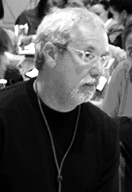
Tom Little - Photo by Benjamin Smith


Tom went on to become the Director of Park Day in 1986. Under his leadership, Park Day expanded to include a middle school and managed to buy the property that is now their beautiful campus.

I also had the opportunity to experience Tom's leadership as a parent at Park Day. Tom was masterful at creating a sense of community and ensuring that all children engaged in what we now call social emotional learning (SEL). We used to think of Park Day School as our church in passing along the values of citizenship and social justice. 

Tom was a relentless defender of youth development and progressive education. While at CNYD, I led several tours of afterschool practitioners through Park Day classrooms to allow practitioners to see youth development in action within a classroom setting. 
Park Day School
Photo Credit: Progressive Education Network

In partnership with Temescal Associates and the Learning in Afterschool & Summer project, Tom hosted a public showing of Brooklyn Castle, participated in an LIAS video, speaking in support of the LIAS learning principles, and provided access to the Park Day campus for the taping of several other interviews with afterschool leaders. He was committed to equity in education and freed up teachers and youth to provide support to local public schools. 

Last year, Tom used his sabbatical to visit progressive schools across the country. He wrote a book about this experience, which will be published in the near future. Tom's legacy will live on for a long time, through the demonstration by the practices at Park Day School. He was a good friend and inspiration to a large number of East Bay families, youth, and educators. He will be sorely missed. 


___________________________
In 2001, Tom Little was awarded a Klingenstein Visiting Heads Fellowship. From 1997-2003, he served as the Private School Representative on the Mayor's Oakland Education Cabinet. He served on the Board of Directors for the Oakland Academic Stars, an organization providing college scholarships for public school students in Oakland. He also served on the Board of Wingspan, a national organization sponsoring public and private school partnerships. He served on the Board of the Progressive Education Network, a national organization of educators working to advance progressive educational practices throughout the United States. Tom consulted on educational matters with public and private schools in the Bay Area and in Ireland. 

Friday, May 2, 2014

Childhood Trauma: Impediments to Learning

By Sam Piha

Sam Piha
The Learning in Afterschool & Summer project is dedicated to ensuring that afterschool and summer youth programs are strong places of learning. To this end, we are promoting five important principles of learning that should be evident in all youth programs. 

However, it is also important that practitioners understand not only what promotes learning but the environmental factors that impede learning. These factors are related to complex trauma - children who have experienced physical or sexual abuse, abandonment, domestic and neighborhood violence, and/or having a parent or close family member incarcerated. 

"In the brains of traumatized youth, neural pathways associated with fear and survival responses are strongly developed, leaving some children in a state of hyperarousal that causes them to overreact to incidents other children would find nonthreatening, the research shows. Consumed by fear, they find it difficult to achieve a state of calmness that would allow them to process verbal instructions and learn, according to the Child Welfare Information Gateway of the U.S. Department of Health and Human Services.

Dr. Nadine Burke Harris
And many children are experiencing chronic stress, according to data. In 2012,
California child welfare agencies received 487,000 reports of child abuse and neglect. Nationally, an estimated 1 in 4 children has witnessed a violent act and 1 in 10 has seen one family member assault another, according to the federal National Survey of Children’s Exposure to Violence, sponsored by the Office of Juvenile Justice Prevention and Delinquency Prevention and the Centers for Disease Control." (1)

According to Dr. Nadine Burke Harris, Pediatrician at the Bayview Child Health Center in San Francisco, children who had four or more categories of adverse childhood experiences, “their odds of having learning or behavior problems in school were 32 times as high as kids who had no adverse childhood experiences”. (2)

We will explore some of these learning impediments in upcoming blog posts by citing important literature and featuring interviews with field experts. 
______________________
(1) School Promoting 'Trauma-Informed' Teaching to Reach Troubled Students; Adams, Jane Meredith; December 2, 2013; http://edsource.org/today/2013/schools-focus-on-trauma-informed-to-reach-troubled-students#.Up-6QmRDvJ4

(2) The Adverse Childhood Experiences Study — the largest, most important public health study you never heard of — began in an obesity clinic; Stevens, Jane Ellen; October 3, 2013; http://acestoohigh.com/2012/10/03/the-adverse-childhood-experiences-study-the-largest-most-important-public-health-study-you-never-heard-of-began-in-an-obesity-clinic/

Friday, April 25, 2014

Playing to Win: Competitive Kid Capital

By Sam Piha


Sam Piha
In August of 2013, author Hilary Levey Friedman published her new book entitled Playing to Win: Raising Children in a Competitive Culture. In her book and subsequent article in the November issue of The Atlantic, Ms. Friedman contends that parents send their children to competitive afterschool programs to gain advantages that they can utilize when they enter the workforce. In interviewing middle-class and affluent parents, she learned that there are five skills that parents hope their kids will acquire, which she calls "Competitive Kid Capital". 


  • "The importance of winning: Friedman writes, 'Such an attitude prepares children for winner-take-all settings like the school system and lucrative labor markets.'
  • Learning from loss: This teaches kids perseverance and focus—traits that are valuable as children move through life if they want to work toward successful outcomes.
  • Time management: 'Children need to learn how to manage their own schedules,' writes Friedman, 'something they may have to do some day as busy consultants and CEOs.'
  • Adaptability: Participation in competitive out-of-school activities teaches children how to perform and compete in environments that require adaptation, such as taking the SAT, the LSAT or the bar exam, according to Friedman. 
  • Grace under pressure: For example, the grace a student learns to maintain when performing in a ballet recital will serve that student well when interviewing for a job."(1)

Are these skills truly important for young people's success? Can we teach them in afterschool and summer programs that include kids from all economic backgrounds? Or are they skills that can only be acquired in "pay-to-play" afterschool programs? 

We contacted Hilary Levey Friedman to ask about the history of competitive activities in afterschool programs and issues regarding their accessibility. She was very gracious in answering our questions, some of which is cited below. 
Hilary Levey Friedman

Q: You write about the intentions of middle to upper class parents regarding competitive afterschool youth programs. Did you find some programs that were more diverse in the participants?

A:  Dance parents that I interviewed offered the most diversity, with several working class families. They valued the same skill set of competitive kid capital, but they did not know how to leverage it as well in terms of college admissions. I like to say that ALL parents want what is best for their kids, and they make choices based on what is available and realistic for their families. I write more about this issue here, which I think is helpful to highlight.  

Q: Can you comment on the differences between free and "pay-to-play" afterschool programs? 

A: ALL afterschool programs offer invaluable skill development and life lessons. But not all free programs are able to offer the same level of developed, organized competition. Chess provides one way to do this, as it costs less than, say, soccer or other sports activities. Services by community non-profits are incredibly important for other reasons (like giving kids a safe space in the afterschool hours), but they can't always fill the competitive void-- even though historically this is where competitive afterschool activities come from, as I detail in Chapter 1 of the book. If you don't have the book the full chapter is available for download on UC Press' website

Q: This was not always true historically. Can you speak to this?  

A:  About a hundred years ago, it would have been the lower-class children competing under nonparental adult supervision while their upper-class counterparts participated in noncompetitive activities, often in their homes. Children’s tournaments, especially athletic ones, came first to poor children—often immigrants—living in big cities.

With the simultaneous rise of mandatory schooling and laws restricting child labor, worry mounted over the idle hours of children, which many assumed would be filled with delinquent or self-destructive activities. Urban reformers were particularly preoccupied with poor immigrant boys who, because of overcrowding in tenements, were often on the streets.

Reformers’ focus was less on age-specific activities and more generally on “removing urban children from city streets.”  Initial efforts focused on the establishment of parks and playgrounds, and powerful, organized playground movements developed in New York City and Boston. But because adults “did not trust city boys to play unsupervised,” attention soon shifted to organized sports.


By the 1930s this pattern began to shift as a consequence of the Great Depression and as educational philosophies changed. During the Depression many clubs with competitive leagues suffered financially and had to close, so poorer children from urban areas began to lose sites for competitive athletic contests organized by adults. Fee-based groups, such as the YMCA, began to fill the void, but usually only middle-class kids could afford to participate. 

_____________________
Dr. Levey Friedman matriculated at Princeton University, from which she earned a PhD in Sociology in 2009 as both a Spencer Dissertation Fellow and as a Harold W. Dodds fellow. During graduate school her research focused on competitive after-school activities (chess, dance, Kumon enrichment classes, and soccer), children’s work, and university commencement speakers. Dr. Levey Friedman recently completed a post-doctoral fellowship at Harvard University quantitatively studying youth sports injuries, supported by the Robert Wood Johnson Foundation. 

Friday, April 18, 2014

Kids Speak Out on Student Engagement


Below is an excerpt from a blog by middle school teacher, Heather Wolpert-Gawron, that was posted on the Edutopia website. You can get the whole piece by clicking here. This posting began with her asking 220 8th graders "What engages students?". We believe that these responses affirm the Learning in Afterschool & Summer principles. Below are some of their responses (see the complete article to review all the responses).
Kids Speak Out on Student Engagement  
By Heather Wolpert-Gawron
1. Working with their peers
"Middle-school students are growing learners who require and want interaction with other people to fully attain their potential."
"Teens find it most interesting and exciting when there is a little bit of talking involved. Discussions help clear the tense atmosphere in a classroom and allow students to participate in their own learning." 
2. Working with technology
"I believe that when students participate in "learning by doing" it helps them focus more. Technology helps them to do that. Students will always be extremely excited when using technology."
"We have entered a digital age of video, Facebook, Twitter, etc., and they [have] become more of a daily thing for teens and students. When we use tech, it engages me more and lets me understand the concept more clearly."
3. Connecting the real world to the work we do/project-based learning
"I believe that it all boils down to relationships. Not relationships from teacher to student or relationships from student to student, but rather relations between the text and the outside world. For example, I was in a history class last year and my teacher would always explain what happens in the Medieval World and the Renaissance. And after every lesson, every essay, every assignment, he asked us, "How does this event relate to current times?" It brought me to a greater thinking, a kind of thinking where I can relate the past to the present and how closely they are bonded together."

"If you relate the topic to the students' lives, then it makes the concept easier to grasp."

"Students are most interested when the curriculum applies to more than just the textbook. The book is there -- we can read a book. If we're given projects that expand into other subjects and make us think, it'll help us understand the information."

"What I think engages a student most is interactions with real-life dilemmas and an opportunity to learn how to solve them. Also, projects that are unique and one of a kind that other schools would never think of. Also something challenging and not easy, something to test your strengths as a student and stimulate your brain, so it becomes easier to deal with similar problems when you are grown up and have a job. Something so interesting that you could never ever forget."

"I like to explore beyond the range of what normal textbooks allow us to do through hands-on techniques such as project-based learning. Whenever I do a project, I always seem to remember the material better than if I just read the information straight out of a textbook."

"I, myself, find a deeper connection when I'm able to see what I'm learning about eye-to-eye. It's more memorable and interesting to see all the contours and details of it all. To be able to understand and connect with the moment is what will make students three times more enthusiastic about learning beyond the black and white of the Times New Roman text."

5. Get me out of my seat!
"When a student is active they learn in a deeper way than sitting. For example, in my history class, we had a debate on whether SOPA and PIPA were good ideas. My teacher had us stand on either ends of the room to state whether we agree or disagree with the proposition. By doing this, I was able to listen to what all my classmates had to say."
7. Student choice
"I think having freedom in assignments, project directions, and more choices would engage students...More variety = more space for creativity."
"Giving students choices helps us use our strengths and gives us freedom to make a project the way we want it to. When we do something we like, we're more focused and enjoy school more."
"Another way is to make the curriculum flexible for students who are more/less advanced. There could be a list of project choices and student can pick from that according to their level."
8. Understand your clients -- the kids
"Encourage students to voice their opinions as you may never know what you can learn from your students."
"If the teacher shows us that they are confident in our abilities and has a welcoming and well-spirited personality towards us, we feel more capable of doing the things we couldn't do...What I'm trying to say is students are more engaged when they feel they are in a "partnership" with their teacher."
"Personally, I think that students don't really like to be treated as 'students.' Teachers can learn from us students. They need to ask for our input on how the students feel about a project, a test, etc. Most importantly, teachers need to ask themselves, "How would I feel if I were this student?" See from our point of view and embrace it."
"Students are engaged in learning when they are taught by teachers who really connect with their students and make the whole class feel like one big family. Teachers should understand how the mind of a child or teenager works and should be able to connect with their students because everyone should feel comfortable so that they are encouraged to raise their hands to ask questions or ask for help."
"Teachers should know that within every class they teach, the students are all different."
9. Mix it up!
"I don't like doing only one constant activity...a variety will keep me engaged in the topic. It's not just for work, but also for other things such as food. Eating the same foods constantly makes you not want to eat!"
"Fun experiments in science class...acting out little skits in history...if students are going to remember something, they need visuals, some auditory lessons, and some emotions."
I'd like to end this post with one more quote, this one from my student, Sharon: "The thing is, every student is engaged differently...but, that is okay. There is always a way to keep a student interested and lively, ready to embark on the journey of education. 'What is that way?' some teachers may ask eagerly. Now, read closely... Are you ready? That way is to ask them. Ask. Them. Get their input on how they learn. It's just as simple as that."

Go on. Try it. Ask.

Friday, April 11, 2014

The NAA Top 25 Most Influential People in Afterschool, 2014

By Sam Piha

Sam Piha
I felt truly honored when I was notified by the National AfterSchool Association that I was listed as one of the top 25 most influential people in afterschool. 

Gina Warner
“As nominations poured in from NAA members around the country, we focused our selection on those leaders whose service, research, and action influence and impact large numbers of children and families,” said Gina Warner, National AfterSchool Association executive director. “In so doing, these leaders bring positive attention and investment to the field of afterschool.”  

In looking at the full list, I was pleased that several of my long-time colleagues were also listed. It is important to note that the leaders of today's afterschool movement stand on the shoulders of many brave pioneers such as Michelle Cahill, Jane Quinn, Richard Murphy, and others. 


In California, the afterschool movement has been greatly influenced by many people including Jennifer Peck (Partnership for Children and Youth), Brian Lee (Fight Crime - Invest in Kids), and Michael Funk (formerly from the Sunset Neighborhood Beacon Center and current Director of the After School Division at CDE). We can all give thanks for their contributions to afterschool.

Below is the full list of those who were honored:


Lucy Friedman
  • MATTHEW BOULAY | Founder, Chairman of the Board of Directors, National Summer Learning Association 
  • JIM CLARK | President and CEO, Boys & Girls Clubs of America
  • JESSICA DONNER | Director, Every Hour Counts 
  • TERRI FERINDE DUNHAM |Partner, Collaborative Communications / Lead, National Network of Statewide Afterschool Networks
  • AYEOLA FORTUNE | Director, Education Team, United Way Worldwide
  • LUCY N. FRIEDMAN | Founding President, TASC (The After-School Corporation)
  • ELLEN S. GANNETT, M.ED. | Director, National Institute on Out-of-School Time (NIOST), Wellesley Centers for Women at Wellesley College
  • JODI GRANT | Executive Director, Afterschool Alliance
  • ROBERT HALPERN | Professor and Chair of Research Council, Erikson Institute  
  • CLIFF JOHNSON | Executive Director, Institute for Youth, Education and Families, National League of Cities 
    Terry Peterson
  • SYLVIA LYLES, PhD | Director, Academic Improvement and Teacher Quality Programs, U.S. Department of Education 
  • JIM MURPHY | Senior Manager, Child and Youth Development Program, Council on Accreditation 
  • JUDY NEE | Executive Vice President and General Manager, AlphaBEST Education, Inc. 
  • NEIL NICOLL | President and CEO, YMCA of the USA
  • GIL NOAM, Ed.D, PhD | Founder and Director, Program in Education, Afterschool and Resiliency, Harvard University  
  • BEN PAUL | President and CEO, After-School All-Stars
  • TERRY PETERSON, PhD | Director, Afterschool and Community Learning Network 
  • SAM PIHA | Founder and Principal, Director, Temescal Associates, Learning in Afterschool & Summer Project
  • KAREN J. PITTMAN | President and CEO, The Forum for Youth Investment 
    Karen Pittman
  • SHANNON RUDISILL | Director, Office of Child Care, U.S. Department of Health and Human Services 
  • CARLA SANGER, M.ED. | President and CEO, LA’s BEST After School Enrichment Program
  • JENNIFER SIRANGELO | President and CEO, National 4-H Council  
  • CHARLES SMITH, PhD | Executive Director, David P. Weikart Center for Youth Program Quality
  • DEBORAH LOWE VANDELL | Founding Dean, School of Education,
    University of California Irvine 
  • TOM WYATT | Chief Executive Officer, Knowledge Universe-United States 

Friday, April 4, 2014

Learnings from a Study of Science Offerings in Afterschool Programs

By Sam Piha

Sam Piha
SRI International recently published the first part of a 5-year National Science Foundation funded research project, the Afterschool Science Networks study. In this important report, SRI presented case studies of science activities in California afterschool programs and identified the source of limitations of the various programs. Limitations were often related to:
  • Lack of time
  • Staff capacity
  • Instructional materials
  • Lack of support through external partnerships

Below, we interviewed SRI’s Ann House (Project Director of this study) to learn more. The results and implications of this study is a subject of several forums hosted by the California AfterSchool Network. Click here to learn more.  

Q: What were you seeking to learn in your study, Case Studies of Science Offerings in Afterschool Programs?  

Ann House, SRI International
A: Our case studies were conducted within a larger, 5-year NSF-funded research project, the Afterschool Science Networks study. The project set out to examine the extent and types of opportunities for inquiry science learning in California’s large, publicly funded afterschool system. It explored the science offerings available to young people, and sought to understand the role partnerships and networks play in supporting science offerings. The case studies were an important component, providing an opportunity to observe science programming, and to better understand the contexts of the afterschool sites. We selected case study sites we felt were providing rich, interesting, and frequent science offerings with good support, to help us identify the key factors relating to strong afterschool science. 

Q: What were the primary findings of your study?

A: While the overwhelming majority of sites we studied offered some science programming, the afterschool science learning opportunities were constrained and shaped by limited time, and staff comfort with science. Sites tended to have 45 minutes to an hour for science activities, which after setting up and taking down, ended up sometimes amounting to no more than half an hour or so of actual activity. Another time limitation was that about half offered science once a week or more. The other half offered science less often. 

The fact that staff did not have training in leading science activities meant that science tended to be focused on keeping young people active and interested. This meant, for example, focusing on enjoying the reaction produced when you combine vinegar and baking soda, rather than exploring the underlying science content or providing opportunities to participate in inquiry practices. In the two cases where observed science activities were fairly rich, the facilitators of the activities had participated in professional development focused on how to facilitate science activities – an unusual opportunity. Facilitators at other sites did not have access to such training. 

Q: In terms of the limitations that were the result of staff capacity, do you think that the absence of skills on “inquiry-based activities” were more or less important than a background in science content? Can you say something about what you mean by “inquiry-based activities”?

A: When we talk about “inquiry-based activities” we were primarily guided by the National Research Council’s 2009 report, Learning science in informal environments: People, places, and pursuits, and framed inquiry in terms of:
  • Working on extended investigations or projects
  • Designing or implementing their own investigation
  • Allowing for children to choose their own activities
  • Providing leadership opportunities for children
  • Posing questions or setting up a scientific investigation
  • Enabling children to connect science to their real lives
  • Making connections to children's interests
  • Working in small groups or teams
Facilitating children’s engagement in inquiry takes specific skills and insights that staff can learn. We believe the case study findings show that a science background is less important than having access to professional development focused on how to engage and lead children through inquiry-based activities. Someone with a science background may or may not have such skills. Furthermore, we believe that inquiry practices and mindsets are not specific to science, but can be applied to a range of other subjects and activities and empower youth and facilitators to be more skilled in problem solving, collaborating, and reflecting on the world around them. 

Q: Specifically, what core skills are required in leading effective “inquiry-based activities”?

A: This is beyond the specific scope of our study, but our experience from this and other projects suggest that it’s important for staff in afterschool settings to understand their role as a facilitator of the children’s experiences rather than a teacher who delivers knowledge. We saw some instances of science activities that resembled unruly classrooms, where the children were primarily asked to sit still, listen, and follow directions. This did not allow for the kind of learner-centered approach that is essential both to good inquiry learning and good youth development practice. 

Some of the concrete skills we believe are important are:
  • Asking constructive questions; 
  • Addressing children’s questions in ways that build on and deepen their engagement; 
  • Facilitating children’s group work and collaboration; 
  • Supporting children in asking questions about their world and building answers to those questions; and 
  • Facilitating discussions that help children synthesize their learning and experiences. 

Q: The LIAS project takes the position that youth workers need to make learning activities active, collaborative, meaningful, support mastery, and expand the horizons of the participants. This means everything from hands-on learning to knowing how to work as a unified group; from drawing on prior knowledge to working on real world issues; and working on activities over time that results in an accumulation of knowledge and skills. How do you think the LIAS principles relate to leading STEM activities?

A: We believe that LIAS principles are very well aligned with inquiry science activities. For example, conducting investigations, collecting data, and designing solutions make learning activities active, meaningful, and support mastery. Engaging in scientific reasoning and argument provides additional skill development, deepens the meaningfulness of activities and often involves collaboration. Finally, while investigating science phenomena and designing solutions in and of themselves broaden youth’s horizons in terms of opening up their understanding of the world and empowering youth to engage with the world, their horizons can also be broadened in terms of learning more about STEM-related careers and how STEM skills and knowledge can help them become more informed citizens. 

It’s important to note that STEM activities need to be facilitated in ways that attend to children’s thinking, interests, and learning process. Asking youth to follow specific instructions without providing the opportunity to learn about or explore their world using scientific practices does not deeply address LIAS or STEM learning principles, even if the activity covers science topics. 

______________________
Ann House, Ph.D., the project director of this study, is a senior research social scientist at the Center for Technology in Learning at SRI International. Her research and evaluation experience covers both informal and formal education environments using mixed methods of investigation. She holds a Ph.D. in speech communication from the University of Texas at Austin.

Friday, March 28, 2014

The Top 5 Women in STEM Making a Difference – Coding Edition


By Guest Blogger, Samantha Walters

Samantha Walters
In 2012, to celebrate International Women’s Day, I decided to span the internet and find the Top 5 Most Influential Women in the Data Center Industry. After hours upon hours of research I finally found the top 5 women who would make my list. However, through all that research, what I really discovered was actually a complete lack of women being represented in tech companies! Sure, there were women on almost every executive team but they held the position of Marketing, Human Resources, or Legal Counsel and not the positions which would enable them to make innovative products or technological decisions that would influence their company and the world.

This concerned and perplexed me – if women made up half of the world, why were there so few in science, technology, engineering, and mathematics (STEM) related companies?

Turns out, women truly are underrepresented – only 25% of IT jobs are held by women. Then again, this statistic should not surprise us. The young women of today are not always encouraged to consider a career in STEM; only 10% of all girls say their parents encouraged them to think about an engineering career (Harris Interactive for the American Society for Quality, 2009). Thankfully people are starting to take notice. In February 2013, President Barack Obama stated, “we’ve got half the population that is way underrepresented in [STEM] fields and that means that we’ve got a whole bunch of talent… that is not being encouraged…” (White House Correspondence, June 2013).

Fueled by the words of President Obama and the real women in STEM, leading thought leaders have come up with a solution: jump-start girl’s interest in STEM subjects, boost the percentage of women scientist and engineers, and give great prominence to strong role models. This is “… not just the right thing to do, but the smart thing to do,” (White House Correspondence, June 2013).

We, as a nation, must continue to encourage our young girls to get involved in STEM related fields and support them in any way possible. The women spotlighted below are doing just this. These women have taken the issue of underrepresentation of women in STEM fields head on by creating programs and nonprofits that encourage and give young women the opportunity to learn and discover their own STEM-related passions. This article is to celebrate their accomplishments and that of other women working within the field who are inspiring young women around the world.

Reshma Saujani (@reshmasaujani), Founder and Chief Executive Officer of Girls Who Code (@GirlsWhoCode)

Reshma Saujani
 Before founding and becoming CEO of Girls Who Code, whose mission is to inspire, educate, and equip girls with the computing skills to pursue 21st century opportunities, Saujani was the former Deputy Public Advocate of New York City. In this position, Saujani was responsible for bringing together public and private sectors to encourage entrepreneurship and civil engagement across NYC. In 2010, Saujani became the first South Asian women to run for Congress but by 2012, when she founded Girls Who Code, she shifted her focus to closing the gender gap in STEM education. In just one year, Girls Who Code expanded into 8 programs in 5 cities nationwide.


For her commitment in making it ok for girls to “fail fast, fail hard, and fail often,” we salute you!

Vanessa Hurst (@DBNess), Co-Founder of Girl Develop It (@girldevelopit)

Vanessa Hurst
Hurst is a self-proclaimed “advocate of coding for humanity.” Over the last 4 years Hurst has been founding and developing non-profit organizations and programs that use technology to make the world a better place. As a computer programmer, lifetime girl scout, and social entrepreneur, Hurst has made a difference in the world as co-founder of Girl Develop It, a judgment-free learning opportunity focused on results and supporting women teaching and learning from one another, founder and CEO of CodeMontage, which empowers coders to improve their impact on the word, and founder and organizer of Developers for Good, a NYC-based network of technologist who meet monthly to share social impact opportunities, guide nonprofits, and make the world a better place.

For her commitment to encouraging young women to get involved in coding and for adult-coders to make a difference in the world, we salute you!

Samantha John (@SamJ0hn) and Jocelyn Leavitt (@JocelynLeavitt), Co-Founders of Hopscotch (@hopscotch)

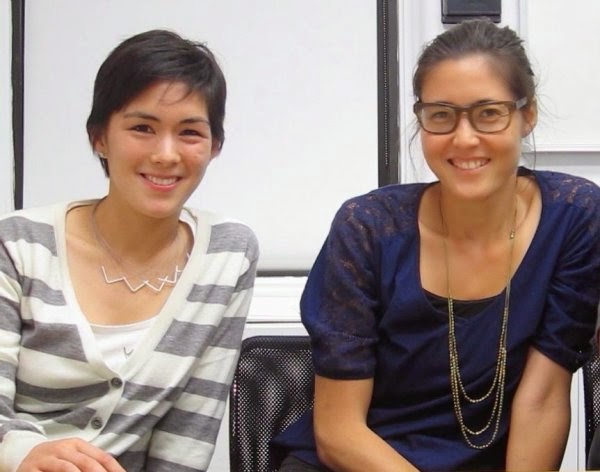
Samantha John and Jocelyn Leavitt
For John and Leavitt, creating Hopscotch, an iPad app designed to teach kids how to code, just made sense. The first of its kind, this free app teaches kids the fundamental components of programming languages.  Although both John and Leavitt work within the tech industry, they did not even consider programming as a career until after college. This late exposure to the programming world fueled their drive to create a project-based learning tool that will help inspire and encourage young women to get involved with programming earlier rather than later in life. So far, their concept is work. Hopscotch was the winner of the 2013 “Parent’s Choice Gold Aware for Mobile Apps” by the Parent’s Choice Foundation and the 2014 KAPi Award for “Best Educational Technology.”

For their commitment in teaching the youth, at an early age, to solve problems through coding, we salute you!

Kimberly Bryant (@6Gems), Founder and Executive Director of Black Girls Code (@BlackGirlsCode)

Bryant is the founder of Black Girls Code, an organization dedicated to
Kimberly Bryant
empowering girls of color to become innovators in STEM fields, leaders in their community, and builders of their own future through computer science and technology. Since her college days, Bryant has first-handedly experienced the dearth of African-American women in the STEM fields. Feeling that the problem is not a lack of interest but rather a lack of exposure and access, Bryant created Black Girls Code to create a big impact in the smallest demographic represented in the STEM-related fields. In 2013, Bryant was honored at the White House as a “Champion of Change for Tech Inclusion” for her work in encouraging the next generation of innovators.

For her commitment in expanding the minds of young women, regardless of background, we salute you!

Heather Payne (@heatherpayne), Founder of Ladies Learning Code (@llcodedotcom) 

Heather Payne
In 2011 Payne founded Ladies Learning Code, a Canadian not-for-profit organization that runs workshops for women (and men) who want to learn computer programming and other technical skills. Since then, Ladies Learning Code has grown into over a dozen cities and continues to educate youth in a social and collaborative way. Beyond her work with Ladies Learning Code, Payne spent a year working on a project for Mozilla Foundation where she was responsible for building a community of people and organizations in Toronto who care about raising youth as creators of technology and the web. Payne is also the CEO of HackerYou, one of only a dozen programming boot camps in North America founded by a woman, and she operates a 7000-square foot digital literacy education facility in downtown Toronto called The Lab. She was also recently named one of Canada’s “Top 100 Most Powerful Women.”  To sum it up, Payne is one of the forces behind the Women in STEM movement in Canada. 

For her commitment in fueling the next generation of tech entrepreneurs we salute you!

______________________________
Samantha Walters is the Vice President of Online Strategies at Colocation America. While getting her B.A. in Sociology from the University of Arizona, Samantha started working as a Social Media Consultant for a nonprofit organization. This experience led her to pursue a Master’s degree in Social Entrepreneurship and Change from Pepperdine University.

Today, she is involved in branding a LA-based tech company, Colocation America, into new markets and forming new strategic partnerships by conducting and analyzing internal and external evaluations. She also spearheaded her company’s Corporate Social Responsibility by developing a strategic plan resulting in numerous partnerships between Colocation America and Los Angeles based nonprofits. These partnerships have led to innovative STEM programming for young adults in the greater Los Angeles area.

Recently she was welcomed onto a nonprofit board for an afterschool program in LA, Big Up Kidz. There she helps with fundraising efforts and evaluations.


When she is not in the office or aiding Big Up Kidz, she can be found on the basketball court teaching young girls how to play. When basketball is out of season, Samantha is spanning the globe helping nonprofit organizations make an impact in the online world.


A Book Drive for Children's Books Makes for a Fabulous Service- Learning Project

Source: The Children's Book Project  By Sam Piha   In our previous paper entitled, Reading Buddies: Promoting Literacy and Community Eng...