Showing posts with label tom little. Show all posts

Friday, May 9, 2014

Tom Little: A Champion for Progressive Education and Youth Development

By Sam Piha


Sam Piha
Those of us who are committed to progressive education principles and their use in classroom and out-of-school learning programs lost a great friend last week with the passing of Tom Little.

Tom was one of three founding teachers of Park Day School in 1976, a progressive K-6 school in Oakland, CA. I had the pleasure of teaching at Park Day School for five years, two of those years as a co-teacher with Tom. Nearly everything I know about youth and youth development came from this experience. 
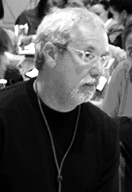
Tom Little - Photo by Benjamin Smith


Tom went on to become the Director of Park Day in 1986. Under his leadership, Park Day expanded to include a middle school and managed to buy the property that is now their beautiful campus.

I also had the opportunity to experience Tom's leadership as a parent at Park Day. Tom was masterful at creating a sense of community and ensuring that all children engaged in what we now call social emotional learning (SEL). We used to think of Park Day School as our church in passing along the values of citizenship and social justice. 

Tom was a relentless defender of youth development and progressive education. While at CNYD, I led several tours of afterschool practitioners through Park Day classrooms to allow practitioners to see youth development in action within a classroom setting. 
Park Day School
Photo Credit: Progressive Education Network

In partnership with Temescal Associates and the Learning in Afterschool & Summer project, Tom hosted a public showing of Brooklyn Castle, participated in an LIAS video, speaking in support of the LIAS learning principles, and provided access to the Park Day campus for the taping of several other interviews with afterschool leaders. He was committed to equity in education and freed up teachers and youth to provide support to local public schools. 

Last year, Tom used his sabbatical to visit progressive schools across the country. He wrote a book about this experience, which will be published in the near future. Tom's legacy will live on for a long time, through the demonstration by the practices at Park Day School. He was a good friend and inspiration to a large number of East Bay families, youth, and educators. He will be sorely missed. 


___________________________
In 2001, Tom Little was awarded a Klingenstein Visiting Heads Fellowship. From 1997-2003, he served as the Private School Representative on the Mayor's Oakland Education Cabinet. He served on the Board of Directors for the Oakland Academic Stars, an organization providing college scholarships for public school students in Oakland. He also served on the Board of Wingspan, a national organization sponsoring public and private school partnerships. He served on the Board of the Progressive Education Network, a national organization of educators working to advance progressive educational practices throughout the United States. Tom consulted on educational matters with public and private schools in the Bay Area and in Ireland. 

Monday, January 13, 2014

Progressive Education and the World of Afterschool

By Sam Piha

Sam Piha
I recently had the opportunity to hear a talk by Consulting Head of School, Tom Little, from Park Day School. Tom and I were co-teachers for two years back in the day, and he went on to serve as the Head of School for 28 years. Tom recently completed a sabbatical in which he visited progressive schools across the country. In this talk at Berkeley Rep, he shared some of his insights, which will be the focus of a book that he is currently working on. At a recent lunch, I asked Tom a couple questions about progressive education and afterschool. 


Q: How do you define progressive education?
Tom Little - Photo by Benjamin Smith
A: I define it in three parts. Progressive education starts with the notion that we are preparing students for their active participation in their democratic society. To me, that is really fundamental to students' experience in school and throughout their whole educational experience in afterschool. That to me is primary. The second component of progressive education is that it starts with the experience of the student - that comes under the category of student centered or child centered approach where instead of having the curriculum and the subject matter as the center of gravity in an educational setting, what you have are the interests, abilities, capabilities, and strengths of the student. This is what should define the material and curriculum content that is going to be administered in an educational setting. It's a different center of gravity where the interests and proclivities of the child should direct where the learning will go. Third, is the historic abiding commitment to social justice. Progressive education is, at its heart, a part of a movement that holds dearly that there are injustices that occur in the world and that is the responsibility of our educational establishment to be exposing students to the realities that exist in their society and the world. Further, to make a commitment, within their educational program, to consider how we resolve these injustices. 

Roof Playground - Irene Kaufman Settlement - 1924
Photo credit: Jewish Women's Archive
Q: Does early afterschool have roots from progressive education?
A: The progressive education arose during a time when the progressive political movement in this country was underway. The legacy goes back into the late 1800s. Settlement houses in Chicago and NY, even some of the west coast as well, were built upon a social justice mission and an abiding commitment to resolve them. And, we all know that the settlement houses offered important out-of-school experiences for young people.

The inextricable link between the political movement and progressive educational movement has sometimes been at the heart of its glory and sometimes been its achilles heel. I think over the century the progressive educational movement has tried to extricate itself at times from the association with the political movement. But we know that its foundation is really in the philosophy of the political system. At the heart of it, it seeks to be a full ranging approach to education well beyond the school site, well beyond the curriculum. So even today in the Harlem Children's project, we can look at it as a progressive movement - even though some of the pedagogy may be traditional. If you look at those efforts, they bring together health care, afterschool care, and prenatal care. There have been times in its history that the progressive education movement could have paid a little more attention to learning outside of school. It became more tied to the curriculum and attached to schools. But true progressive education speaks to learning more far reaching - learning beyond the school house. 

Q: Can you recommend three books that better help us understand progressive education?
A: To understand the early history, Transformation of the School by Lawrence Cremin, offers a definitive history between 1870 and the 1950s when the progressive education association met its demise. It is a very accessible book written in the 1960s. Second, What to Look for in a Classroom by Alfie Kohn, is a very practical book for a teacher as it lays out a nice template of what you would find in a classroom or school. Third, Schools Where Children Learn by Joseph Featherstone. A classic, beautifully written book that outlines some of the history of progressive education but talks more in depth of the nature of child-rearing and how the ancient philosophers embraced this philosophy. 


Q: Are the Learning in Afterschool & Summer (LIAS) learning principles aligned with the principles of progressive education? 
A: The new era of 21st century learning which combines the LIAS principles - analytical thinking, collaboration, communication - first I think they find a lot of their historical roots in the philosophy and in the pedagogy of progressive education. In some ways its a new vocabulary that we're finding, and I think it really nicely defines where education has to go. It puts education in a new context that is more palatable I think for people. "Progressive Education" can be alienating for some. 

When you're talking about expanding horizons, looking at students differently and thinking about how they'll be engaged, I think that's where education is going nowadays. This is at the heart of the new common core standards. But I think the common core pedagogy is far from being implemented because it is likely to take years to train teachers and fully implement the curriculum and programs. The whole mindset of education is being switched around. I do believe that the LIAS principles are aligned with those of progressive education.
__________________________
Tom Little is a founding teacher and the Consulting Head of School at Park Day School in Oakland, Ca., and the current President of the Board of the Progressive Education Network. During the months of February and March, 2013, Tom toured the country visiting over 40 progressive schools and studying the current state of Progressive Education in America.

A Book Drive for Children's Books Makes for a Fabulous Service- Learning Project

Source: The Children's Book Project  By Sam Piha   In our previous paper entitled, Reading Buddies: Promoting Literacy and Community Eng...