Showing posts with label positive youth development. Show all posts

Monday, September 16, 2024

Looking at Riley’s outer world in ‘Inside Out 2′


Source: ©Pixar Animation Studios

Inside Out 2 is the follow-up to Disney and Pixar’s Inside Out. Below guest blogger, Naomi Schaefer Riley, a senior fellow at the American Enterprise Institute, reviews “Inside Out 2”. It was originally published on Deseret News. This sequel, which was recently released, takes place inside the head of Riley, a 13-year-old girl who has just hit puberty.

Naomi Schaefer Riley
As in the first installment, this movie includes the personified “emotion” characters of Joy, Sadness, Anger, Disgust and Fear living inside Riley’s brain. But now, thanks to raging hormones, presumably, those characters are joined by Anxiety, Envy, Ennui and Embarrassment. Anxiety is the main antagonist in the new movie, and that’s not surprising, given how many teens (and especially girls) are suffering under the weight of that feeling these days.

There are plenty of clever moments in the movie, which turns our metaphors about the brain into a physical landscape with a “sar-chasm” and the “stream of consciousness.” But the most brilliant moment comes when we find out that Anxiety has taken over Riley’s imagination and is now employing all the little creatures who used to come up with fun stories or ideas to draw sketches of all the terrible possibilities that could result from any of Riley’s actions. If you’ve ever talked to a teenager paralyzed by anxiety, this is exactly what it seems like. You can keep telling them that those things won’t happen — or that if they do, things will still be OK — but they seem to come up with new worst-case scenarios faster than you can argue with them.

It is worth taking note of what’s going on outside Riley’s head, too. Because while one shouldn’t underestimate the power of puberty to make adolescents behave strangely, that has actually been the case for some time. Adolescents today, though, are experiencing an unprecedented mental health crisis. What is happening now that’s new? Is there anything in Riley’s outer life worth our notice?

The first thing you might notice about Riley is that she’s an only child. There are no siblings to compete with or horse around with or tease. She is an A student and a precocious hockey player. She has experienced, from what we can tell, almost no failure in her life. Her parents’ lives revolve around her. They both tuck her in at night. They come to her hockey games, wearing team jerseys and cheering her on. When she goes off to a weekend hockey camp, her mother and father are not quite sure what to do with themselves.

Riley does have friends, but the main activity she does with her friends is play hockey. If Riley has free time, we don’t see it. We see her buried under piles of homework and we see her at the ice rink, but that’s about it. This is all a recipe for anxiety. Riley is under a lot of pressure to perform and has experienced almost no independence. Though her parents are constantly trying to reassure her that they will love her no matter what, it’s hard to be the focus of all that adult attention.

Source: ©Pixar Animation Studios

At one point in the movie, even Joy recognizes that the steps she is taking to help Riley — getting rid of all of her bad memories — are actually hurting her. Those moments, when Riley has been embarrassed or done something that disappoints her parents, actually — to borrow a phrase — build character. It is notable that the word “character” does not appear in the movie. There are beliefs and dreams and memories and a “sense of self,” but character — something traditionally thought of as being forged through adversity — is not part of the landscape. It is not that Riley doesn’t work hard. She clearly does. But she is working as hard as she can taking directions from adults. She is playing high-level organized sports.

Robert Pondiscio, my colleague at the American Enterprise Institute, recently defended the importance of organized sports for shaping young people — noting “competitive sports remain unabashedly old school. Kids are held directly accountable. You show up, work hard and perform, or else you sit; the scoreboard is the last word in accountability and resiliency.” But it is also hard to dismiss the complaint that these activities are completely adult-directed and consume time that kids in previous eras would have spent figuring out how to play and get along on their own.

A final note. Like just about every other 13-year-old, Riley has a smartphone. We see her using it to take selfies, but the coach at the hockey camp takes all the phones away at the beginning of the weekend (Go, coach!). If Riley has this much anxiety without a phone, imagine what she would be like if she were constantly checking one. It is perfect that the only emotion associated with her own device is Ennui. Because, frankly, ennui was really not an emotion associated with teenagers until fairly recently.

“For elementary kids and tweens especially, the movie has proved to be an exceptionally great starting point for important conversations about anxiety and self-esteem. ‘These films are just such a great segue for talking about all the different kinds of feelings and really allowing for and normalizing them,’ says Jenn Wert, a parenting coach and educator who specializes in family relationships and communication.” [1]

For Gen Xers like me, and the Boomers before us, teen years may have been filled with the extremes of joy and sadness and anger, the deep desire for independence and especially risk taking. But rarely was it boring. What would it take to get us back to that kind of childhood? Turning our world inside out.


DISCUSSION QUESTIONS FOR 'INSIDE OUT 2'

  • “Who was your favorite character in Inside Out 2? Why did you like them?
  • Can you tell me about a time when you felt like one of the characters in the movie?
  • What do you think caused Riley to start changing what she believed about herself?
  • Have you ever felt emotions that surprised you?
  • Can you think of a time when you felt a mix of different emotions at the same time?
  • How did Riley act when her anxiety was at the ‘control panel’? What did you think about how she responded to that feeling?
  • If you were to make a movie like this with you as the main character instead of Riley, what other emotion might you add?” [2]

RESOURCES

VIDEOS


MORE ABOUT…

Naomi Schaefer Riley is a senior fellow at the American Enterprise Institute, where she focuses on child welfare and foster care issues. Specifically, her work analyzes the role of faith-based and community organizations in changing the foster care and adoption services landscape. She also studies how race, class and family structure affect foster care placement and services and the impact of the drug crisis on child welfare. She is concurrently a senior fellow at the Independent Women’s Forum. She is the author of “No Way to Treat a Child: How the Foster Care System, Family Courts, and Racial Activists Are Wrecking Young Lives,” among other books.

The American Enterprise Institute is a public policy think tank dedicated to defending human dignity, expanding human potential, and building a freer and safer world. The work of our scholars and staff advances ideas rooted in our belief in democracy, free enterprise, American strength and global leadership, solidarity with those at the periphery of our society, and a pluralistic, entrepreneurial culture.


The Greater Good Science Center is unique in its commitment to both science and practice: Not only do they sponsor groundbreaking scientific research into social and emotional well‐being, they help people apply this research to their personal and professional lives.


END NOTES

Sunday, January 29, 2023

Youth Mental Health: What Can We Do in Afterschool (Part 2)


By Sam Piha 

“These [afterschool] programs are uniquely positioned to support and promote children’s healthy development, inclusive of mental health needs instigated by trauma. Children are not the only recipients; parents and the OST workforce can benefit from mental health supports provided directly or indirectly in these environments.” – Child Care Technical Assistance Network

In Part 1 of Youth Mental Health: What Can We Do in Afterschool, we explored which afterschool superpowers can be applied to address the youth mental health crisis. Below we offer additional ideas on how afterschool programs can lean into their strengths to improve youth mental health and COVID recovery. (Note: learning loss indicated by lower reading and math scores should not be the focus of afterschool.)

Predictability and Rituals

“Predictability, or being able to know what to expect, is an important ingredient for healthy development. Predictable routines and consistent relationships provide a foundation of trust and security for children. When children know what to expect and who they can rely on, they have the confidence to explore the world around them and develop new skills.” – Future Learn, Predictability and Development

Predictability reduces stress because children want to know what is going to happen next and what to expect. Familiar patterns are calming. This is especially true for young people who have experienced trauma. 

“Provide a consistent, predictable pattern for the day. Make sure the child knows the pattern. When the day includes new or different activities, tell the child beforehand and explain why this day’s pattern is different. Don’t underestimate how important it is for children to know that their caretakers are “in control.” It is frightening for traumatized children (who are sensitive to control) to sense that the people caring for them are, themselves, disorganized, confused and anxious. There is no expectation of perfection, however, when caretakers are overwhelmed, irritable or anxious; simply help the child understand why, and that these reactions are normal and will pass.” -  Dr. Bruce Perry, Importance of Predictability

When we repeat important activities on a regular basis, they become rituals that young participants can depend on. These activities include talking or check-in circles, particular ways that you always open or close the program, activities that acknowledge youth or staff that are departing the program, birthdays, etc. 

“Predictability is a stabilizing force for teens, but it’s been disrupted by the pandemic.” - Teen Mental Health: A Vulnerable Stage of Life

Promote Peer Interaction and Support
To address COVID-19 isolation, afterschool programs can help by emphasizing activities that promote peer interaction. Activities include check-in circles, group play and games and group projects.

Source: www.pexels.com

“The global pandemic, even though it affected all of us, especially caused children and teenagers to be isolated from their peers for prolonged periods of time—and especially during these developmental periods that they showed the most intense need for interactions with peers.” – Sarah D. Sparks, ED Week

Educate Youth and Normalize the Issue of “Mental Health”
It is important that youth understand that “mental health” does not mean “crazy”. They should understand that the impacts of COVID and isolation are real. These conversations can happen in group meetings and individual conversations. 

Create Opportunities for Youth to Contribute to Youth Mental Health
“Youth express a collective desire – they even demand – that adults involve them in creating a more responsive education system so that they can, as one student put it, ‘find our way back to loving learning.’” – Youth Truth Survey

Young people want to be involved in a way that’s meaningful.

“ASK FOR STUDENT INPUT. The fact that we don’t even get a say in what we want to discuss ... is frustrating.” — 12th grade student

Consider training students to spot peers with mental health struggles and guide them to help.

“I wish the school did more to train and educate its students on how to identify ... warning signs of deteriorating mental health, abuse, self-harm, and violence within their peers - and respond appropriately and compassionately.” —12th grade student

 “'Some students won’t get help because they’re just afraid to ask for it,' said Sofia, a senior at Davidson. 'But if a peer knows, and if their struggle is seen and heard, then they’re able to say, OK, yes, I do need the help. And we can get them to go to an adult themselves.'” - Students Train to Spot Peers with Mental Health Struggles and Guide Them

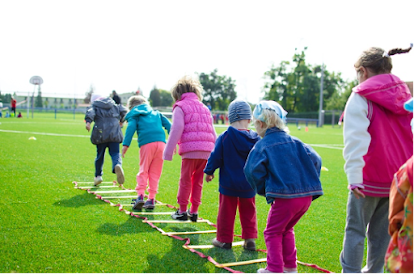
Provide Daily Exercise Activities
During the COVID shutdowns young people had few opportunities for exercise and playing with friends. It has been suggested that youth who suffered from COVID-19 isolation can benefit from physical exercise.  

“At a time when recess and physical education programs may feel a squeeze from schools seeking more time for reading or math, studies suggest boosting students’ physical activity time also has an important role. It may help students rebound from the social isolation many have experienced during the pandemic.” – Sarah D. Sparks, Kids Are Feeling Isolated. P.E. May Help Them Bounce Back

Source: www.pexels.com

We also know from research that free play and activities that introduce young people to the natural world are also healing. To learn more, check out our LIAS Blogs on Play and Nature.

“At Lawrence Family Development Charter School, Art, Music and Physical Education (Gym) are important to helping students interact with friends while participating in activities that take them away from desks and screens. These classes teach critical thinking, decision making and use a separate set of skills to interact with others. Gym in particular has an important role to play in helping children reduce anxiety and stress.” - Susan Dion Earabino, Ed.D, Principal at Lawrence Family Development Charter School 

Know How and When to Collaborate with the School and Parents and When to Refer to a Professional
It is recommended that program leaders check with their schools or organizations to see if there are policies that lay out protocols for this. Many schools have IEP or Care Team meetings that identify strategies for particular youth who are experiencing problems. Afterschool leaders should attend these meetings as they have a unique perspective to bring. 

Afterschool staff shall also receive training on when and how to collaborate with parents, the school and/or mental health professionals.  

A Word About Confidentiality and Referrals 
As you get to know young people in the program and they develop trust with you, many may share personal information, assuming it will be kept confidential. Older youth may feel safer knowing that you can and will keep their conversations confidential. However, there are certain times when you will not be able to keep confidentiality—such as when a young person lets you know that someone is hurting them, or that they are going to hurt someone else. 

It is important that adult staff understand the legal reporting responsibilities regarding child abuse and endangerment. If your program is addressing personal, sensitive issues with young people, it is important to have a clear policy on confidentiality that you can share openly with participants. It is particularly important with adolescents that they understand you will respect their privacy, and that there are limits regarding ensuring their safety.  There will be times when a young participant’s issues are beyond the scope of your program practice. It is important that staff members receive guidance on how to handle these situations and have access to their program supervisors to discuss situations where referrals to other professionals may be in order. 


UPCOMING WEBINAR

Play comes natural to kids and to out-of-school time educators! Research across youth development and education fields have identified principles that define playful learning and the positive youth outcomes that can come from intentional play. In this webinar, we will explore this topic and learn about free resources you can use to incorporate high-quality playful learning opportunities into your programs and how to advocate for more play in the lives of children.

Our featured speaker will be Dr. Carol Tang, the Executive Director of the Children's Creativity Museum, a member of LEGO's Playful Learning Museum Network. Tang is a Board Member of the How Kids Learn Foundation and the Association of Children's Museums. She previously led the Coalition of Science After School and was a program officer at a family foundation.

To learn more and register, click here.


Monday, October 11, 2021

Policy Recommendations to Promote Youth Employment in Afterschool Programs

By Sam Piha

Involving older youth as workers within afterschool programs makes a great deal of sense. Engaging youth in this way addresses their developmental tasks and personal interests, helps develop their workforce skills, offers opportunities for leadership and service to others, and brings youth input, making the program more relevant. 

This is even more important post COVID. A recent study entitled, The State of Youth Employment-Navigating the World of Work During COVID-19 found:

  1. Young people in America are struggling—they are financially strained, emotionally drained, and facing significant barriers to employment. 
  2. COVID-19 and the related economic recession have disrupted young people’s work lives in myriad ways and prompted extraordinary levels of concern about the future. 
  3. The professional connections and supportive relationships that can help young people advance their work-related goals are out of reach for most youth. 
  4. Young people’s hope about their future work lives is in jeopardy. 
Afterschool programs can be part of the solution. Based on our conversations with program providers, we offer the following recommendations to policy makers:

  1. State departments of education develop and distribute clear policies and guidelines on the use of 21st CCLC funds to engage youth as workers within the afterschool program. They should issue guidelines for the use of government funding to support high school workers within elementary and middle school programs. These guidelines should be designed to encourage, not restrict, programs from using the funds for this purpose. 
  2. Document promising practices being successfully used at afterschool programs and share them with those who are seeking to expand their programs’ capacity to engage youth as workers. This can be done by those who support the implementation of high school afterschool programs, including state afterschool networks, and those who receive technical assistance funds from private sources. 
  3. Identify supplemental funding to support career pathways to engage older youth working within afterschool settings. If needed, policy changes should be enacted to encourage access or eliminate any barriers impeding access to these funds by afterschool programs. Identifying funds is a form of technical assistance and can be done by those named in recommendation #2, above. Efforts needed to change policy can be led by afterschool advocacy organizations within your state. 
  4. Assist afterschool leaders in identifying and obtaining workforce and other supplemental dollars to support efforts that engage youth as workers in the afterschool setting. If needed, policy changes should be enacted to encourage access or eliminate any barriers impeding access to these funds by afterschool programs. 
  5. Incorporate into existing studies or identify dedicated funding to evaluate the efficacy in providing youth with work opportunities within afterschool settings. This can be achieved by local afterschool grantees who are charged with evaluating their programs, as well as larger evaluations that are funded by state departments or private sources. 

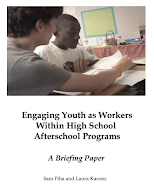
We wrote a detailed briefing paper on this topic to guide afterschool programs. The paper entitled, Engaging Youth as Workers Within High School Afterschool Programs, which includes discussion of policies and guidelines regarding youth employment, use of stipends and other forms of compensation. It also includes examples from actual programs and quotes from youth employed in their afterschool program. You can download this briefing paper here.
We also developed a less detailed paper on this topic, which can be downloaded here.


We are hosting a webinar/ Speaker’s Forum on Wednesday, October 20, 2021 from 10:00am- 12:00pm (PST) entitled, Engaging Youth as Workers in Afterschool. The purpose of this webinar is to inform and encourage afterschool programs to offer youth opportunities to serve as workers within these programs. It is our intention to capture and share valuable and intriguing ideas and information to help programs enlist youth as workers. To learn more and register, click the banner below.

Thursday, April 23, 2020

Can Youth "Check-in" Remotely? There's an App for That

By Sam Piha
Source: L- weareteachers.org, R- HelloYello

One of the most important things about expanded learning programs (ELP) is for youth to have the opportunity to check-in with a trusted, caring adult. This is reinforced by the literature on positive youth development, social emotional learning (SEL) and trauma informed practice. We have written several blogs and articles on the importance of checking-in with youth.

But how can we continue that when our programs are closed due to COVID-19 and our afterschool participants are sheltering in place?

Source: Temescal Associates
Brandon and Ryan Sportel,  brothers and educators, developed an online application to allow young people to check in, called HelloYello. We first learned about HelloYello while researching our paper “Promoting SEL and Character Skills in Expanded Learning Programs.” We will offer a webinar introducing this application and showing afterschool practitioners how to use it. Below we include some responses from an interview we did with Brandon. (Because this was developed for teachers, they use the terms “student” instead of “youth,” and “teacher” instead of “youth program leader”).

Q: Can you briefly describe what the Hello Yello app is for? 

A: The HelloYello App is for strengthening student/staff relationships. It is a web-based app that students use to "check- in" with their teachers to express their thoughts and feelings, and share their daily experiences. Teachers, educators, counselors, and afterschool staff use HelloYello to understand all of their students from a "whole child" perspective, monitor their students' emotional wellness, and sustain trusting relationships.

Q: Can you briefly tell us the origin story about the development of the app? 

A: Our work began with students that struggle with emotions and behaviors.  As Education Specialists, we noticed that students benefited significantly when given opportunities to send us confidential messages about their feelings and experiences. So, we created a platform that validates student voices, and guides educators to be mentors and support staff. To read more about the origin story, click here.
To register and learn more, click here.

Q: During this time of the COVID-19 pandemic, do you think this would be a good resource for afterschool programs that are shuttered, but want to maintain contact with their youth participants?

A: Yes, especially because it allows meaningful connections but maintains important social boundaries.

Q: Can you briefly describe how the HelloYello app works?  

A: Students login and are invited to share their feelings (using emoticons), thoughts and/or experiences; program leaders view a feed of student comments, and respond by simply letting the student know they got their message. We invite people to visit our website to learn more.

Source: HelloYello
Q: Is the app easy and safe for children to use?

A: The app is designed to be very easy to use and is completely safe since students can only share information with the leaders/coordinators in their ELP.  HelloYello is also registered with The Student Data Privacy Consortium (SDPC).


Q: If program leaders are interested in contacting HelloYello, can you provide an email address/ name?
A: helloyelloteam@gmail.com Brandon Sportel, CEO

___________________
Ryan Sportel is a Dean of Students at Goleta Valley Junior High and Brandon Sportel is an Educational Specialist that runs a Learning Center at Barbara Webster Elementary. Both have combined experience of over 37 years in education. Brandon was the 2014 Milken Educator for CA, 2015 Santa Barbara County Teacher of the Year, and 2014 Carpinteria Teacher of the Year. Ryan was the Principal at Deveruex of Santa Barbara, a non-public school that served students at all grade levels. Both are highly regarded as pioneers in the social emotional learning space, and have had significant success in leading professional development training for districts on how to work with students that need mental health and behavior support.
___________________
Click here to review a recent article entitled, "There's An App for That- School Counseling and SEL Go Online."


How the Meta Settlement Can Benefit Afterschool Programs

Source: www.pexels.com This blog by Dan Gilbert has been reposted from Afterschool Alliance’s Afterschool Snack Blog. Meta's new settlem...