Showing posts with label grit. Show all posts

Tuesday, March 26, 2019

GRIT: Thinking More Deeply

By Sam Piha

Angela Duckworth’s "grit" has captured the imagination of educators, youth program leaders, and policymakers alike, leading many to agree that we should seek to cultivate grit in our youth. According to The Character Lab, grit is correlated with success and defined as "perseverance and passion for long-term goals”. It was further popularized by author Paul Tough (How Children Succeed: Grit, Curiosity, and the Hidden Power of Character, 2012) and others. 


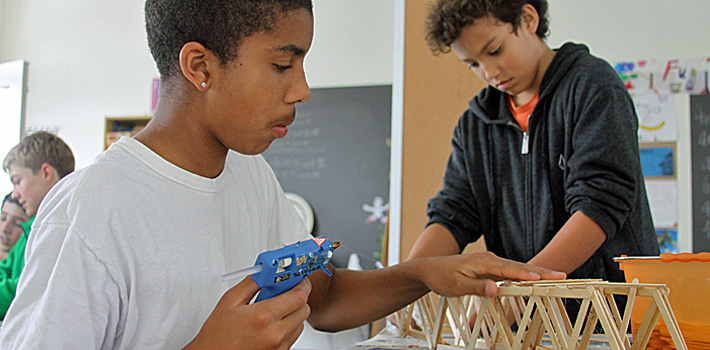
Source: eschoolnews.com


Like others, we have written a lot about grit in our LIAS blog. But others have called on us to look more closely at the notion of grit and how it intersects with issues of bias, poverty, inequality, deficit thinking, and race.
"Educational outcome disparities are not the result of deficiencies in marginalized communities' cultures, mindsets, or grittiness, but rather of inequities."
- Paul Gorski in Reaching and Teaching Students in Poverty

We believe that we can think more deeply about grit by reviewing these writings below:


Monday, June 6, 2016

Master of Mindfulness

By Sam Piha


Sam Piha
We have seen through research and practice that mindfulness can be a very effective tool for schools and afterschool programs to promote social emotional learning (SEL) skills and "grit". 

In a previous post, we have described "Master of Mindfulness" - a book created by youth from Reach Academy in East Oakland, CA and our Mindfulness in Afterschool partner, Laurie Grossman. The book is in its third printing and is available on Amazon. The majority of royalties from the sales of this book will be donated to a fund to support the post high-school educational or vocational endeavors of the twenty five authors who co-wrote the book. 


These young authors, their book, and the power of mindfulness was featured in a recent piece aired on KTVU TV. You can check it out by clicking on the images below. 

Part 1
Part 2

For more information on how to bring mindfulness into your afterschool program, contact us by writing to info@temescalassociates.com. 

Monday, February 10, 2014

More Resources on the Role of "Grit" in Learning

By Sam Piha


Sam Piha
Over the past year, we have dedicated several blog posts and portions of our last two How Kids Learn conferences to explore the importance of "grit" and persistence in young people's learning. According to research, grit is a strong indicator of GPA and graduation rates. And as we have noted in our exploration of grit, it is something that can be cultivated and taught. Part of this is developing in young people a "growth mindset", which Stanford Professor, Carol Dweck, claims is highly correlated with success. Below are some valuable resources that will help our readers continue their learning about grit and how to teach it. 


Carol Dweck, Author, Mindset: The New Psychology of Success 

True Grit: The Best Measure of Success and How to Teach It: A blog post from Edutopia, January 9, 2014. This post lists several other resources about "grit".

TED Video: Angela Lee Duckworth: The key to success? Grit: In this TED Talk, Ms. Duckworth discusses her experience regarding the role of grit in learning.  

Angela Lee Duckworth - TED Talk


Grit Scale: This survey, developed by Angela Duckworth and Chris Peterson, attempts to measure a person's "grit" and ability to persevere when challenged.

Resilience and Grit - Resource Roundup: This listing was assembled and published by Edutopia. It is a "curated collection of blogs, articles, interviews, and videos with information for parents and educators about the associated concepts of resilience and grit."


Monday, January 6, 2014

A Federal Study on Grit: An Interview with Researcher, Nikki Shechtman (Part 2)

By Sam Piha


Sam Piha
Nikki Shechtman is a researcher at SRI International. She recently led a study for the Department of Education on the influence of grit, tenacity, and perseverance on learning. In addition to presenting at the How Kids Learn III conference, Nikki was interviewed for this blog. In part 1, we asked for a clear definition of terms, why study grit, and asked Nikki for a brief overview of her study. In part 2, we asked how these traits can be taught, the value of informal learning within afterschool and summer programs, examples of useful practices, and the role of mindfulness. 

Q: There are some who say these things are important, but they are inherent traits that can’t be taught. How do you respond to this?

A: I think that is not only inaccurate, but it’s also a potentially damaging perspective. There is overwhelming evidence that how persistent an individual is will depend to a great extent on the circumstances. We found research to suggest that important factors in the environment can have a huge influence on whether or not a student will persist in the face of challenges and setbacks—whether the goals are important to them, how much support they have from others around them, and whether they have the appropriate tools and skills to deal with challenges. For example, it happens all the time that the same student will persistent in one class but not another because of the way teachers make a topic interesting or connected to real life.
Nikki Shechtman

There are also many skills and psychological resources that contribute to grit, tenacity, and perseverance that can be learned and cultivated. For example, how students learn to deal with failures and what skills they have for monitoring progress and changing course when necessary, these can strongly influence how they’ll fair when the going gets tough. One of the most important research areas is around the “growth mindset,” the belief that intelligence grows with effort. There is wonderful research by Carol Dweck at Stanford University, and others, to show that not only does having a growth mindset make students more likely to persist when work gets difficult, but it’s also a mindset that can be learned.

It’s potentially damaging to look at grit, tenacity, and perseverance as inherent traits that can’t be taught. If teachers or parents believe that children are not persisting because they are just inherently lacking grit, there’s little motivation to try to understand what’s going on with the student and what changes, big or small, to the learning environment or particularly new skills might promote a different way for the student to interact with the environment. Even worse, if the child herself starts believing she just doesn’t have grit in general, it can become a self-fulfilling prophesy. Who wants to try to persevere in the face of challenge when they think they just aren’t capable of doing so? That’s not a good position to put a human being in.

Q: Do you think informal learning settings like afterschool and summer programs are well-suited to promote these traits? If so, why?

A: Absolutely. In Chapter 2, we lay out a model for the kinds of factors in a learning environment that can promote grit, tenacity, and perseverance. Two factors that our research suggested were important were that students have opportunities to take on worthwhile long-term goals and that they have a rigorous and supportive place to pursue them. Many informal learning settings do exactly this—whether the goal is to do something like a complex programming project, make a film, get into college, or a wide variety of others. These settings can also provide the means to help students actually accomplish these goals—through materials supports such as technologies or workspaces, human supports such as peer-based communities or adult mentors, and time to work through difficult tasks. When students have the opportunities to take on and accomplish big goals, not only do they get the satisfaction of the achievement, they also take with them the knowledge that they can do it.

A major theme that came up in our research was that informal setting can support these factors in ways that might be limited in formal settings that have more constraints (e.g., accountability and limited resources to give students individualized attention).

Q: Can you give us an example of practices that encourage the development of grit, tenacity, and/or perseverance that is relevant to afterschool workers?

A: We made some specific recommendations for practitioners based on the research. And just to be clear, we consider these promising but not proven; evidence of impact at scale is still limited. These recommendations are:

a. Educators should provide students with opportunities to take on worthwhile long-term or higher-order goals that are optimally challenging (i.e., not too easy, not too difficult) and/or aligned with the students’ own interests or values.

b. Educators should provide students with a rigorous and supportive context for pursuing these goals. They should have high expectations for students and provide encouragement and resources. They should promote collaboration and social support among students.

c. To the extent possible, educators should provide the tangible resources—materials, human support, and time—necessary to overcome challenges and accomplish their goals.

Educators can also support students in developing the psychological resources that can promote grit, tenacity, and perseverance. We found three broad categories:

a. Academic mindsets. These are how students frame themselves as learners, their learning environment, and their relationships to the learning environment. They include beliefs, attitudes, dispositions, values, and ways of perceiving oneself. There are important examples of short-term interventions that are being developed to “teach” and cultivate the most productive mindsets. Educators should first make sure that they themselves have productive mindsets, and they can learn to apply good strategies to foster them in their students.

b. Effortful control. Students are constantly faced with tasks that are important for long-term goals but that in the short term do not feel desirable or intrinsically motivating. Successful students marshal willpower and regulate their attention during such tasks and in the face of distractions. Although this can seem austere or no fun, research shows that students stronger in these skills are happier and better able to handle stress. Educators can look to examples of research and practice for how to foster these. Mindfulness practices are one example (see the question below).

c. Strategies and tactics. Students are also more likely to persevere when they can draw on specific strategies and tactics to deal with challenges and setbacks. They need actionable skills for taking responsibility and initiative and for being productive under conditions of uncertainty—for example, defining tasks, planning, monitoring, changing course of action, and dealing with specific obstacles. Educators can intentionally teach these skills as part of the work they do with students.

By the way, we also recommend that practitioners be mindful of potential risks or costs for students of pushing them in ways inappropriate for their needs. For example, persevering in the face of challenges or setbacks to accomplish goals that are extrinsically motivated, unimportant to the student, or in some way inappropriate for the student can potentially have detrimental impacts on students’ long-term retention in school, conceptual learning, and psychological well-being.

Q: Your study mentions mindfulness practice as useful. Can you say more?

A: Interesting that you should ask, because it only got one sentence in the brief but it’s actually an area of particular interest to me. In fact, I worked on a project a few years ago in which we taught mindfulness to students in an afterschool academic program.

Here’s my take. Mindfulness is a practice of learning to pay attention in the present moment nonjudgmentally. Why would you want to do that? Well, there is a huge body of research showing that people who cultivate mindfulness through practices such as meditation and yoga are better able to pay attention in the face of distraction (i.e., effortful control), are happier, are less prone to depression and anxiety, have a stronger immune system, get along with people better, and cope with serious life stresses more easily. Mindfulness helps people take difficulties in stride, to step back and problem-solve without getting as stressed out, to pause and think before engaging in conflict, and to approach challenges with curiosity instead of defeat. You can imagine the potential of these types of benefits for promoting grit, tenacity, and perseverance in the face of all kinds of challenges and setbacks!

What’s also important is that these skills are completely learnable by almost everyone, as far as I can see in the research. There are research-based programs coming out of many prestigious universities, like Stanford and Harvard, that teach these life-changing skills in a very short period of time. There are also several organizations around the country going into schools and teaching them to children at all ages and settings. Many are taking very seriously the potential of mindfulness to help develop resiliency for underserved students.
______________________
Nikki Shechtman, Ph.D. is Senior Educational Researcher at SRI International, Center for Technology in Learning. Nikki explores research-based, theory-driven approaches to understanding and improving engagement, teaching, and learning in mathematics—particularly for the most disadvantaged students. Her work has focused on productive dispositions for teaching and learning, mathematical argumentation, use of dynamic representational technology, and introducing productive playfulness into serious classrooms. Among several other projects, Nikki led a team to lead a Department of Education study entitled “Promoting Grit, Tenacity, and Perseverance—Critical Factors for Success in the 21st Century”. Her work has been published in journals in educational research, learning sciences, mathematics education, educational technology design, psychology, human-computer interaction, and play studies.

Thursday, December 5, 2013

A Federal Study on Grit: An Interview with Researcher, Nikki Shechtman (Part 1)

By Sam Piha

Sam Piha
Nikki Shechtman is a researcher at SRI International. She recently led a study for the Department of Education on the influence of grit, tenacity, and perseverance on learning. In addition to presenting at the How Kids Learn III conference, Nikki was interviewed for this blog. In part 1, we asked for a clear definition of terms, why study grit, and asked Nikki for a brief overview of her study. Practitioners should also view The 7 Habits of Happy Kids. 

In part 2, we asked how these traits can be taught, the value of informal learning within afterschool and summer programs, examples of useful practices, and the role of mindfulness. 

Q: First, can you give us a rough definition of grit, tenacity, and perseverance? And describe if and how they are different from one another. 

A: When we first started out to do our research for the Grit Brief, the first challenge we ran into was that there were so many different terms that are similar or overlapping in meaning. Researchers have actually come up with a term for this phenomenon—it’s called the “Jingle/Jangle” Problem. “Jingle” is when the same term is used to refer to different concepts, and “jangle” is when different terms are used for the same concept. And it’s actually deeper than just words, because each term comes from a particular community of practice and speaks to their needs and culture. Many terms have long traditions of research or practice behind them. Are we talking about grit, tenacity, persistence, perseverance? Or other very closely related terms like conscientiousness, engagement, agency, and resilience?
Nikki Shechtman

What we decided to do was synthesize what we saw as key facets of these terms together to develop our own working definition of “grit” that we would use throughout the brief:

Perseverance to accomplish long-term or higher-order goals in the face of challenges and setbacks, engaging students’ psychological resources, such as their academic mindsets, effortful control, and strategies and tactics.

For folks who are interested, in Chapter 2 of the brief we have a table of all these different terms and how people have defined them. It’s very interesting to look at them next to each other to see what’s similar and different. I think what they all have in common is the notion of carrying on to success in the face of challenge.


Q: Why is it important to study grit, tenacity, and perseverance?

A: This has become an important and popular focus in education. All over the country, educational, research, professional, technical, and policy communities are recognizing that children and adolescents simply must have stronger preparation for the challenges of 21st century life. Learning about the content of the disciplines is necessary, but it’s not sufficient for success in school and life. Children need skills to deal with the difficulties and challenges they face as students and will face as adults, and they need support to take on and achieve big and meaningful goals in their academic and professional lives. I don’t think it’s a coincidence that this has arisen so prominently in the public discourse at a time of intense economic volatility and rapidly changing workforce needs. I also think the opportunities afforded by new and emerging technologies are opening new doors of possibility for this.

A critical need in our country, of course, is to support underserved student populations. Students dealing with conditions of poverty are especially in need of support—they can face acute challenges of stress, limited social support, lack of critical resources, and psychological disempowerment and disenfranchisement. Educators can play an important role in closing unacceptable achievement gaps and helping these students get on a positive track and hold the course to succeed at school and beyond.

But kids across the socioeconomic spectrum need to develop mature ways of dealing with challenges. All kids need to learn conceptually complex material that takes time and attention, they need to learn to persist through academic assignments that are important but not necessarily intrinsically interesting to them, and they need to be able to manage competing demands across coursework from multiple classes and extracurricular activities. Students need to learn skills for the 21st-century workplace that require complex knowledge work and collaboration. Lots of students will be preparing for STEM careers that require complicated training pathways over many years and mastery of extensive and difficult disciplinary material. And, of course, nobody is exempt from life’s random and unexpected challenges and setbacks—from illness to financial trouble to interpersonal conflict—that often need to be dealt with at the same time.

It’s an exciting and promising time. There’s growing recognition that educators can play an important role in promoting these factors for students. There’s already been a tremendous amount of research in this area. A broad range of programs in different educational settings have been implementing a variety of approaches to promoting these factors. Many foundations and federal agencies are investing resources in figuring out the best ways to do this. Also, there are many new technologies that are providing opportunities to significantly advance our capability to address these issues—there is great potential in technologies, for example, that are adaptive to student needs, help students manage their lives better, and provide access to a wealth of material and human resources over the internet. Having these resources can help students get past typical “stuck” points and move toward much bigger goals.


Q: Could you summarize your report? 

A: Here’s a quick overview of what we cover. For a summary of the major findings in each, I’d recommend reading the Executive Summary—it’s pretty short!

Chapter 1. This introductory chapter provides the broad context for what’s going on in the field right now and discusses the research methods used to develop the brief.

Chapter 2. This chapter addresses questions around theory: What are grit, tenacity, and perseverance? What are the key components of these competencies? What psychological and contextual factors support and promote them?

Chapter 3. This chapter addresses questions around measurement: How are these factors measured currently? How can they be measured in the future? How can technology provide new tools and strategies?

Chapter 4. This chapter addresses questions around existing approaches: What types of programs, approaches, and technologies have been developed to promote these factors for a wide variety of learners?

Chapter 5. This culminating chapter addresses the needs of practitioners, researchers, and policymakers: What are key conclusions and recommendations for practice, research, and policy?
______________________

Nikki Shechtman, Ph.D. is Senior Educational Researcher at SRI International, Center for Technology in Learning. Nikki explores research-based, theory-driven approaches to understanding and improving engagement, teaching, and learning in mathematics—particularly for the most disadvantaged students. Her work has focused on productive dispositions for teaching and learning, mathematical argumentation, use of dynamic representational technology, and introducing productive playfulness into serious classrooms. Among several other projects, Nikki led a team to lead a Department of Education study entitled “Promoting Grit, Tenacity, and Perseverance—Critical Factors for Success in the 21st Century”. Her work has been published in journals in educational research, learning sciences, mathematics education, educational technology design, psychology, human-computer interaction, and play studies.

Wednesday, May 8, 2013

Promoting Grit and Delayed Gratification


Titus Dalisay

We received the following message and article from one of our followers, which we print below. 

My name is Titus and I am an avid reader of Learning in After School & Summer. I loved reading your articles there and since your blog are also about education and learning I thought I'd share this article that my colleague wrote about, Promoting Grit and Delayed Gratification in the Classroom. 

Thanks. Titus Dalisay,
Community Outreach Specialist, Open Colleges


Promoting Grit and Delayed Gratification in the ClassroomI

In psychology, intelligence is not the primary predictor of success. It is the ability to persevere in hardship, persist and learn after failure, and have a resilient spirit in the face of obstacles. Intelligence is a gift that can be developed and nurtured, but continuing on a difficult path when the gratification is far away? That is an invaluable skill for all of us to learn.

Even though resilience is partly a genetic trait, you can teach this skill in the classroom. It is imperative that you do, because many lessons and concepts require days, weeks, and months of practice before your student will feel that warm feeling of satisfaction. In a world filled with streaming Internet and fast food joints on every corner, you’re going to have to deliberately make it a topic point.

Here are some ideas to get you started.

1. End of the day reward
Set up simple (and frequent) opportunities for your students to practice delayed gratification. If you have young children in the classroom, it can be something as simple as an end-of-the-day reward. If your students had a good day, offer them a token that goes towards a free homework pass (10 tokens = pass). Most kids will want to take that token and start building their cash flow, but offer something a bit better if they wait.

For example, if they forfeit the free homework pass each day for a week, at the end of the week, the kids who did get an extra 15 minutes of recess. You’ll quickly see who likes the immediate gratification and who is willing to wait it out.

2. Visual savings
Use a jar of marbles or some sort of visual so your students can watch it get filled up as they perform tasks, help each other, and showcase good behavior. A full jar can equal an ice cream party or some other special reward.

3. Math fact practice
If your goal as a teacher is to have your student fill out 100 multiplication facts in five minutes, use it as an opportunity to teach resilience. Rather than waiting until you’re sure they can meet the goal easily, set up a chart for practice and growth. Explain to them that you don’t expect them to meet the goal, but to simply record the time it takes to do the 100 problems.

First time around, it may take the student 15 minutes. Have him/her write it in the chart. Each day or week, have them redo the exercise and record the time – watching as it slowly gets lower and lower as the days pass. When he/she finally reaches that 5-minute mark, there will be tremendous sense of accomplishment.

4. Break down big projects
First, you need to make sure your students are engaged in a long-term project. Just like running, athletes train very differently for a sprint than a marathon. The long project will help them to learn about process, mini-goals, and step-by-step persistence to a final destination.

5. Give an assignment that isn’t meant to have a perfect ending
In other words, once in awhile it will benefit your students to give them a problem or worksheet that they cannot complete perfectly. Warn them ahead of time that the goal of this exercise is simply to try – not to succeed. At the end, hand out a reward or grade that is dependent on their effort, not the aptitude.

6. Group assignments
Nothing promotes learning how to “grit your teeth” and get through it more than group work. In these situations, kids must not only produce a product or presentation, they must also learn to work with other students and use teamwork to accomplish the goal.

7. Create a classroom bank
If you have the time and motivation to set up a classroom bank, you can teach all sorts of delayed gratification lessons. In one corner of the room, set up a store. You can sell homework passes, pencils, Chapstick, etc. Each child starts out the year with a certain amount of classroom cash. They can earn more throughout the year doing various things, but as you add new and better “items” in your store, the students will have to forgo the immediate reward in order to save up for the item they really want.

8. Use educational simulation computer games
The Oregon Trail is a classic example of this type of game. You have to get your family to the West Coast safely, and budget your supplies and money accordingly. The same principle works in games like SimCity, where the student is master over a domain and must learn how to manage his/her resources.

9. Group competitions
If you have the students’ desks arranged in groups, have them participate in friendly competitions. For example, to encourage healthy snacking, have each team earn a point every day the whole group brings in a healthy snack. The reward will be something that happens in the future (like an ice cream party or movie). In this case, students will have to be mindful of their snack each morning at home when they pack it.

10. Offer positive distractors to help during difficult tasks
During long state mandated testing or big tests, offer the students the chance to chew gum, something that isn’t normally allowed but might help with focus and/or concentration. The same goes for listening to music in earbuds (provided you can trust them to not cheat).

11. Play-it-out visual exercises
When children can imagine and follow through with a scenario in the mind, it is easier to make a decision that delays gratification. For example, if you are offering a child a free recess instead of a chip in a jar, walk through with them how it will feel on that day when the sun is beating on their arms and the smell of fresh grass signals spring. Engage the senses so they have motivation to wait it out.

12. Delayed gratification in physical education
Sports like golf and cross-country running help develop an appreciation for long-term rewards.

13. Write down goals and hang them up
If the children have a concrete reminder of what it is they are reaching for, they are more likely to wait it out. When you are helping your students assess their goals, have them decorate a paper and keep it in front of the room or in their cubby. It should be seen daily.

14. When a student doesn’t show grit, offer a time of reflection
Help him/her to see how it feels when the immediate reward wears off. Usually a disappointment sets in because it wasn’t part of the ultimate goal. If they can remember that feeling, it might deter them in the future.

15. Avoid the “all or nothing” disease
Children can see things in black and white. If they haven’t gotten a 100 on a test, it might as well be a zero. It helps to model a positive attitude of progress. Getting some right is better than nothing.

16. Don’t test willpower to the point of exhaustion
These sorts of activities mentioned above must be balanced with positive reinforcement. Just like dieting can induce binge eating, you want to make sure the stress isn’t going to lead to a pendulum swing in the opposite direction. A good mixture of delayed and immediate rewards are the best way to keep a student motivated.

Julie DeNeen

Julie DeNeen has her bachelor's degree in Clinical Psychology from the University of New Haven. She spent several years working for a local Connecticut school at the district level, implementing new technologies to help students and teachers in the classroom. She also taught workshops to teachers about the importance of digital student management software, designed to keep students, parents, and teachers connected to the learning process.
You can find out more about her @jdeneen4 and Google+.
Cited From: http://www.opencolleges.edu.au/informed/features/16-ways-to-promote-grit-and-delayed-gratification-in-the-classroom/#ixzz2QpomBKt1

Wednesday, January 16, 2013

All About Character


Long ago, I had the pleasure of co-teaching with Tom Little for 2 years. Most recently, Tom and Park Day School co-hosted a screening of Brooklyn Castle, a feature film that details the grit of a national championship chess team from a public middle school in Brooklyn. This chess team was also featured in a new book by Paul Tough, which Tom comments on below. We will interview Paul Tough in an upcoming post. - Sam Piha

By Guest Blogger, Tom Little, Head of School at Park Day School

Tom Little
Much is being made these days about character. Especially those virtues of character related to grit, perseverance and all manner of a person’s capacity to persist and endure. Educators across the country are making waves in schools and school districts on the heels of the release of How Children Succeed: Grit, Curiosity, and the Hidden Power of Character by Paul Tough. Tough is a writer for the N.Y. Times who wrote an article last year presaging the publication of his book. Pulling together findings from various fields, Tough makes the case that there are traits beyond cognitive ability, namely perseverance, resiliency and optimism, necessary for academic success. 

Even before his book was released, I could see the tides rising. Last year I wrote an article for Park Central asking to what extent the development of character was the province of a school, using as examples Tough’s description of schools in New York which have embarked on efforts to make character development essential to their mission.

Angela Duckworth, a professor at the University of Pennsylvania is featured prominently in Tough’s book (see her 2009 TEDtalk on the subject of Grit here). Duckworth’s research focuses on hundreds of subjects who had achieved measurable success, and revealed that the most successful individuals have in common character traits such as perseverance, grit, and diligence. More than intelligence or talent, in study after study these attributes demonstrated that the “grittier” a person is, the more he or she is likely to succeed. Both Tough and Duckworth make the distinction between two categories of character: moral character and performance character. Moral character embodies ethical values like fairness, generosity, compassion and integrity, while performance character refers to values such as effort, diligence, and grit.

So, what is grit? In her tool measuring this attribute in children and adults, Duckworth looks at a person’s reaction to very difficult or challenging tasks; how does one respond to failure? Does one have the capacity to stick with projects that require perseverance and hard work? Grit is a measurement of how one endures and pushes through obstacles in pursuit of a goal or passion.

It’s no surprise if you are asking (as I have been), “so, how can we teach grit?” Are there teacher parenting or educational strategies that seem to foster these virtues in our children?

In his book, Tough illustrates that the most important factors in a child’s early life are close, loving, nurturing, and attached relationships with a parent (or guardian). Ironically, the need to pull back becomes vital as the children grow. Resisting the temptation to intervene, we need to allow children to stumble and fall, experience failure, have lots of frustrations and disappointments, then to dust off and carry on, learning something about themselves in the process.

Progressive educators have resonated strongly with Tough’s premise and the recent research in the measurement of student success. We understand the need to partner with parents in the challenging task of child rearing. Weighing on us is the tension between wanting to pave the way for children and allowing them to experience disappointment and failure. As parents, we can feel it viscerally – the pain of failure – we want to fix it or make it better. This tendency is quintessential to parenting. Teachers also face this struggle.

In part, the teaching of character arises situation by situation. I spoke recently with a parent whose daughter had “hit a wall” while trying to learn a new skill.  Though she wanted to quit, he pushed her to stick with it and she finally succeeded in learning the process. It was difficult for him to watch her angst and resistance. Similarly, I recently observed a teacher who insisted that two students who were involved in a conflict sit as long as necessary for them to resolve their issue. I saw the students’ transition from a fevered pitch of anger and venom to a reasonable place of calm and measured discussion and problem solving. In these situations, had it not been for the parent and the teacher, the players would have walked away from an important learning opportunity.

I recommend that folks read Paul Tough’s book. It has spawned countless blogs and commentary such as this. The book validates our mission of holding children’s social and emotional development, and brings into relief the importance of encouraging the development of their character. These virtues are important to their success as students, but equally to their success at life.
_____________________________
Tom Little was a founding teacher at Park Day School in 1976, and taught for ten years before becoming the Director in 1986. He earned his Masters Degree in Educational Leadership at Teachers College, Columbia, at the Klingenstein Leadership Academy. In 2001, Tom was awarded a Klingenstein Visiting Heads Fellowship. From 1997-2003, he served as the Private School Representative on the Mayor's Oakland Education Cabinet. He currently serves on the Board of Directors for the Oakland Academic Stars, an organization providing college scholarships for public school students in Oakland. Tom is also on the Board of Wingspan, a national organization sponsoring public and private school partnerships. He serves on the Board of the Progressive Education Network, a national organization of educators working to advance progressive educational practices throughout the United States. Tom has consulted on educational matters with public and private schools in the Bay Area and in Ireland. He and his wife, Elizabeth, have two grown children, both of whom are Park Day School graduates, Courtney ('93) and Matthew ('00). 

How the Meta Settlement Can Benefit Afterschool Programs

Source: www.pexels.com This blog by Dan Gilbert has been reposted from Afterschool Alliance’s Afterschool Snack Blog. Meta's new settlem...